



Fast Delivery
Quick, reliable shipping to any location.

Free & easy returns
Return this item by mail or in store within 90 days for a full refund.
Voltage and language configured to destination before build — every CNC Automatic Knife Brocade Fabric Cutting Machine ships with confirmed electrical schematic and control panel language, eliminating on-site rewiring and operator confusion.
Technical Specifications
| Parameter | Value |
|---|---|
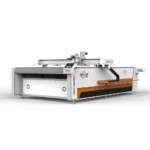
| Product Type | CNC Oscillating Knife Cutting Machine |
| Working Area | 1600 × 2500 mm |
| Cutting Thickness | Up to 30 mm |
| Cutting Accuracy | ±0.1 mm |
| Tool Head Options | Oscillating knife, driven rotary knife, creasing wheel, kiss cutting tool, pneumatic knife, milling tool, V-groove knife |
| Applicable Materials | Fabric, cardboard, carton, mats, PVC, EVA, leather, acrylic, foam, PTFE, rubber |
| Profile Format | PLT, DXF, AI, PDF |
| Vacuum Pump | 9 kW |
| Vacuum Table | Aluminum bellows vacuum table |
| Voltage Options | 110V, 220V, 380V (configurable) |
| Safety Device | Infrared sensor device and emergency stop device |
| Machine Size | 3300 × 2100 × 1350 mm |
| Control System | PLC control panel with optional display languages |
| Language Options | English, Russian, Italian, Chinese (customizable) |
| Servo Motor Options | Panasonic, Delta, Dorna (source value — verify against manufacturer catalog) |
| Standards | CE |
Application Suitability
| Application | Material or Output |
|---|---|
| Apparel manufacturing | Suits, knitwear, lace, complex brocade fabrics, pattern-matching layouts |
| Automotive interiors | Seat fabrics, carpets, PVC mats requiring burr-free edges |
| Home textiles | Sofa fabrics, curtains, rugs in single or multi-layer cutting |
| Composite material processing | Carbon fiber prepreg, aramid, specialty technical textiles |
The Gap Between Table Size and Real Cutting Capacity
A buyer selects a CNC oscillating knife cutting machine for sale based on a 1600×2500 mm working area, only to discover the chosen tool head cannot cleanly shear through 25 mm laminated brocade at production speed.
Capacity is determined by the combination of tool head stroke, vacuum hold-down force, and blade geometry — not by the footprint of the table. I have watched fabric producers lose two full production days swapping a standard oscillating knife for a pneumatic knife after the initial configuration left ragged edges on composite-layered automotive seat material. The vacuum table zoning also matters: small gasket patterns lift off the surface if the zones are not segmented to match the nest layout [NEED_CITE: vacuum table zoning practices in flatbed digital cutting]. Matching the machine to the actual material stack — not just the sheet dimensions — prevents unplanned downtime and scrap.
Matching Tool Heads to Brocade and Layered Fabrics
Brocade fabric presents a unique challenge: the woven surface layer is often bonded to a foam or non-woven backing, creating a composite that responds differently to each blade type. The oscillating knife handles single-layer brocade cleanly, while the driven rotary knife suits continuous long cuts on knitwear without fraying the selvedge. For multi-layer stacks reaching the 30 mm thickness limit, the pneumatic knife provides the downward force needed to compress and shear without crushing the decorative weave. A CNC oscillating knife cutting machine for sale configured with the correct tool head for your specific material eliminates edge defects before they reach the sewing line.
Vacuum Hold-Down and Material Stability
The 9 kW pump paired with the aluminum bellows vacuum table generates full-surface adsorption across flexible textiles. Brocade and lace tend to shift under the lateral force of a high-speed oscillating stroke, particularly when cutting intricate curves for garment patterns. The aluminum bellows design maintains consistent suction even when the cutting head traverses away from the table center, preventing localized lifting that produces dimensional drift beyond the ±0.1 mm accuracy specification [NEED_CITE: vacuum adsorption requirements for flexible textile cutting].
Decoding the Specification Sheet for Production Reality
The 0–2000 mm/s cutting speed rating applies to single-layer, low-resistance materials; dense multi-layer brocade stacks require reduced traversal to maintain edge quality. The 1600×2500 mm working area accommodates standard fabric roll widths, but usable cutting width depends on how the material is fed and clamped at the edges. File format support across PLT, DXF, AI, and PDF means most pattern files from apparel CAD systems import without conversion, and the intelligent nesting software with automatic defect avoidance maximizes yield from expensive brocade stock. The PLC control panel with selectable languages ensures operators in different markets can navigate parameters without translation errors, which reduces setup mistakes on the shop floor.
The Hidden Cost of a Mismatched Configuration
Selecting a tool head based on price rather than material behavior leads to compressed foam backing, delaminated brocade surfaces, and rejected panels that must be recut. A vacuum table without adequate zoning allows small pattern pieces to drift during the final pass, pushing dimensions outside tolerance. Voltage mismatches discovered after arrival require transformer rentals or rewiring, adding weeks to commissioning [NEED_CITE: electrical compliance requirements for imported industrial machinery]. Software that cannot import the buyer’s existing nesting files forces manual re-drawing, negating any throughput advantage the machine was supposed to deliver.
Why Source This CNC Oscillating Knife Cutting Machine for Sale Here
In-house design and production cover both knife and laser technologies, so the cutting method is matched to brocade and composite materials rather than forced through a single process. Tool head and table configurations are specified per material sample, not chosen from a fixed menu. CCD camera positioning is available for printed contour work where registration marks guide the cut path. Software compatibility is confirmed against the buyer’s existing file formats before the order is released to production. Voltage, plug type, and control language are locked in during the specification review, not assumed. Sample cutting on the buyer’s actual brocade or layered fabric is completed before any commitment, so edge quality and dimensional accuracy are verified on real production material.
Documentation & Verification
- Machine specification sheet listing tool head and table configuration matched to your brocade fabric thickness
- Electrical schematic confirming voltage, plug type, and circuit requirements for your facility
- Sample cutting report on your own layered fabric stock showing edge quality and dimensional accuracy
- Software licence and file format compatibility note verifying your existing PLT or DXF pattern files import correctly
- Factory test record documenting cutting accuracy across the 1600 × 2500 mm working area before dispatch
- Operation and maintenance manual in the confirmed control language with spare parts list
Installation, Commissioning & Support
- Foundation must support the 3300 × 2100 × 1350 mm machine footprint with level tolerance for the aluminum bellows vacuum table
- Dedicated circuit matching confirmed voltage (110V, 220V, or 380V) with correct plug type installed before delivery
- Machine arrives partially assembled; vacuum pump and tool head carriage require on-site mounting and alignment
- First-run commissioning includes calibration of cutting accuracy across the full 1600 × 2500 mm working area
- Operator training covers PLC control panel navigation, tool head changeover, and nesting software workflow
- Spare oscillating and rotary knife blades included for initial production runs and scheduled replacement cycles
What We Need to Configure Your Machine
Provide the exact material composition — single-layer brocade, laminated composite, or multi-layer stack — along with the maximum thickness you plan to cut in regular production. Share your daily volume target and the typical pattern complexity so the correct tool head and nesting configuration can be specified. Confirm the voltage and frequency standard at your facility, along with the preferred control panel language for your operators.
Frequently Asked Questions
Q: How do I choose between knife and laser cutting for brocade fabric?
A: Knife cutting avoids the heat-affected zone that laser produces, preserving the woven texture and preventing sealed edges on brocade that must remain soft for garment sewing. Laser suits synthetic textiles where edge sealing prevents fraying. Your material composition and downstream finishing requirements determine which method is appropriate, and sample cutting on your actual fabric confirms the result before commitment.
Q: What working area and tool head do I need for my fabric sheets?
A: The 1600 × 2500 mm working area handles standard fabric roll widths. Tool head selection depends on material type and thickness: oscillating knife for single-layer brocade, driven rotary knife for continuous knitwear cuts, and pneumatic knife for multi-layer stacks up to 30 mm. Your sheet dimensions and layer count determine the optimal configuration.
Q: Which voltage and control language will be set before shipment?
A: Voltage is configurable across 110V, 220V, and 380V to match your facility’s electrical standard. Control panel language options include English, Russian, Italian, and Chinese, with additional languages available on request. Both are confirmed during the specification review stage and documented in the electrical schematic before production begins.
Q: Can I compare all available models across the knife cutting range?
A: The full catalogue covers working areas from compact to large format, single and multi-head configurations, and tool head options spanning oscillating knife, drag knife, creasing wheel, milling, and pen tools. A side-by-side comparison matched to your material and production volume is available during the inquiry stage to narrow the selection.
Q: What software file formats and nesting workflows are supported?
A: The system imports PLT, DXF, AI, and PDF files directly from most apparel and industrial CAD platforms. Intelligent nesting with automatic defect avoidance optimizes material yield from expensive brocade stock. File format compatibility is verified against your existing workflow before order confirmation to ensure seamless import.










商品评价
There are no reviews yet.