



Fast Delivery
Quick, reliable shipping to any location.

Free & easy returns
Return this item by mail or in store within 90 days for a full refund.
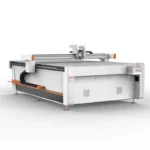
Integrated Tooling Architecture — The RT-D2516/RT-S2516 platform consolidates oscillating knife, drag knife, creasing wheel, and V-cutting heads on a single chassis, allowing packaging sample makers and composite fabricators to switch processes without changing machines.
Technical Specifications
| Parameter | Value |
|---|---|
| Product Type | CNC Flatbed Digital Cutting Machine |
| Model | RT-D2516/RT-S2516 |
| Working Area | 1600×2500 mm |
| Overall Dimensions | 3450×2300×1250 mm |
| Rated Power | 9 kW |
| Voltage | 380V±10% |
| Transmission System | Digital servo motor, linear guide, synchronous belt, ball screw |
| Servo Motor Options | Delta or Panasonic (IP67 rating) |
| Vacuum Pump | 7.5 kW, integrated aviation aluminum shell with built-in silencer |
| Vacuum Table | Magnesium-aluminum alloy with PVDF powder coating, anodic and hard oxidation treatment |
| Table Configuration | Flat working table or auto-feeding table (with German imported conveyor belt) |
| Translational Velocity | 800–2000 mm/s |
| Cutting Speed | 200–800 mm/s (basis to be confirmed by material and block format) |
| Repeatability | ≤0.1 mm |
| Tool Head Options | Oscillating, pneumatic, high-power vibrating, circular, V-cutting, drag knife, creasing wheel, dotted line, punching, brush |
| Visual Positioning | Small CCD mark point, panoramic camera, or projection positioning |
| Machine Frame | Thick-walled seamless steel, high-temperature tempering, CNC machining center finished |
| Linear Guide | Taiwan Hiwin rail |
| Control Interface | Touch screen, HP-GL compatible, PLT/DXF/AI format support |
Application Suitability
| Application | Material or Output |
|---|---|
| Packaging Sample Making | Corrugated cardboard, honeycomb board, gray board |
| Carton Creasing & Slotting | Folding carton stock, PVC blister materials |
| Graphic Arts & Signage | Vinyl, sticker film, magnetic sheet, PP hollow board |
| Soft Furnishings | PU leather, fabric, non-woven textile, carpet |
| Automotive Interiors | Foam, sponge, fiberglass, sound-deadening composites |
| Gaskets & Seals | Rubber, PTFE, ETFE, XPE, EVA sealing pads |
Why "Working Area" Is Not Enough to Specify a CNC Digital Cutting Machine Manufacturer Order
The physical footprint of the table is only the first variable; the tool head configuration and vacuum zoning determine whether the machine can actually hold and cut the material.
When buyers focus solely on the 1600×2500 mm bed size, they often overlook the interaction between material density and holding force. Small, intricate gasket parts require multi-zone vacuum adsorption to prevent lifting during high-speed oscillating knife passes, while heavy corrugated boards need the full suction of a 7.5 kW pump to stay flat against the magnesium-aluminum table. Without matching the tool head—such as a creasing wheel for carton folds or a V-cutting knife for honeycomb—edge quality suffers and production stalls. [NEED_CITE: vacuum adsorption requirements for varied material densities in flatbed cutting]
Navigating the Knife Versus Laser Decision Matrix
Within the complete cutting equipment range, the choice between a knife-based system and a laser cutter is dictated by material response rather than operator preference. Synthetic textiles and acrylics often benefit from the edge-sealing properties of CO2 lasers, whereas layered composites, foam, and thick corrugated materials require the mechanical shearing force of an oscillating or pneumatic knife. The RT-D2516/RT-S2516 serves as the primary CNC digital cutting machine manufacturer solution for non-metal materials where thermal burning or edge melting would compromise the structural integrity of the part.
Matching Tool Heads to Production Volume and Material Yield
The multifunctional head system on this flatbed platform allows operators to execute full cutting, kiss cutting, and creasing in a single setup. For packaging sample makers, this means transitioning from a drag knife for vinyl weeding to a high-power vibrating knife for thick foam without manual tool changes. The availability of Swiss imported knife components ensures that vibration full cutting and half cutting maintain a repeatability of ≤0.1 mm across long production runs. Selecting the correct tool head prevents the ragged edges and crushed material cores that often plague generic flatbed setups. [NEED_CITE: tool head selection guidelines for composite material processing]
Engineering Details That Dictate Cutting Quality
The thick-walled seamless steel frame undergoes high-temperature tempering and CNC machining center finishing, which is critical for maintaining the 1600×2500 mm gantry squareness over years of operation. If the frame lacks this stress-relief treatment, the linear guides—sourced from Taiwan Hiwin—will experience uneven wear, leading to dimensional drift in packaging die-lines. Furthermore, the choice between a flat table and an auto-feeding table with a German imported conveyor belt directly impacts the throughput of roll-fed materials like PU leather and non-woven fabrics. The integrated 7.5 kW vacuum pump features an aviation aluminum shell with a built-in silencer sponge, reducing the acoustic footprint in enclosed sample rooms while maintaining the necessary suction for porous materials like cardboard and sponge.
The Cost of Unverified Electrical and Software Specifications
Failing to confirm the 380V±10% requirement or the specific plug type before shipment can result in a machine that sits idle for weeks while transformers are sourced locally. Similarly, if the control software cannot import the buyer’s existing PLT or DXF nesting files, the automatic typesetting features become inaccessible, forcing manual layout and increasing material waste. [NEED_CITE: electrical standardization challenges in industrial machinery export]
Sourcing From the Core Factory
Realtop operates as a core factory with an in-house design team, meaning the CNC digital cutting machine manufacturer configuration is built to order rather than pulled from a generic stockpile. The design team specifies the tool head and table zoning per material sample, ensuring the vacuum pump capacity matches the porosity of the buyer’s specific substrate. Every unit undergoes a factory test using the buyer’s own material file to verify CCD camera contour recognition and cutting depth before crating. The ability to customize voltage, control language (including English, Russian, Italian, and Chinese), and software licenses ensures the machine integrates into the buyer’s existing workflow without auxiliary purchases.
Documentation & Verification
- Machine specification sheet detailing the selected tool head and table zoning configuration
- Electrical schematic confirming 380V±10% or custom voltage and plug type
- Sample cutting report on buyer-provided material showing edge quality and tolerance
- Software licence and file format compatibility note for PLT, DXF, and AI imports
- Factory test record verifying Panasonic/Delta servo performance and vacuum pressure
Installation, Commissioning & Support
- Foundation must be level to support the 3450×2300×1250 mm footprint and 9 kW load
- Dedicated 380V±10% circuit required for the digital servo motors and 7.5 kW vacuum pump
- Assembly of the magnesium-aluminum vacuum table and Hiwin linear rails on-site
- Calibration of the CCD mark point or panoramic camera for printed contour registration
- Training on nesting software and tool head offset settings for creasing and V-cutting
- Scheduled inspection of the synchronous belt tension and silencer sponge in the vacuum pump
Preparing Your Material Profile for Quotation
To accurately specify the RT-D2516/RT-S2516 from the full catalogue, buyers should provide the material type, maximum thickness, and sheet dimensions. We also need to know the target market’s voltage standard and the preferred control language to finalize the electrical schematic. If the production involves printed materials, specify which camera positioning system—mark point, panoramic, or projection—best fits the current workflow.
Frequently Asked Questions
Q: How do I choose between knife cutting and laser cutting for my material?
A: The choice depends on the material’s thermal properties and thickness. Lasers are suitable for sealing edges on synthetics and engraving acrylics, while knife cutting is necessary for thick foams, composites, and corrugated boards where heat would cause melting or structural damage. The catalogue separates these technologies by material family to guide the selection.
Q: Which tool head is best for corrugated cardboard versus foam?
A: Corrugated cardboard typically requires a creasing wheel for fold lines and a drag knife or oscillating knife for the outline. Dense foams and gaskets often require a high-power vibrating knife or pneumatic knife to penetrate the full thickness without crushing the cellular structure, ensuring a clean, perpendicular edge.
Q: How do the different CCD camera positioning options work?
A: Small CCD mark point positioning is used for registering specific printed fiducials on sheets. Panoramic camera recognition captures the entire printed contour for high-speed cutting of complex graphics, while projection positioning allows the operator to visually align the cutting path with the material manually.
Q: Should I choose a flat table or an auto-feeding configuration?
A: A flat table is standard for rigid sheets like honeycomb board or thick gaskets. An auto-feeding table with a conveyor belt is specified for roll-fed materials like fabric, PU leather, or vinyl, allowing for continuous cutting cycles and higher material yield in high-volume production environments.
Q: What happens if my voltage differs from 380V?
A: Voltage must be confirmed before production. If the local grid operates at a different standard, the electrical schematic and servo motor configuration are adjusted at the factory to ensure the 9 kW system and 7.5 kW vacuum pump function correctly upon arrival, preventing on-site electrical failures.










商品评价
There are no reviews yet.