

Fast Delivery
Quick, reliable shipping to any location.

Free & easy returns
Return this item by mail or in store within 90 days for a full refund.
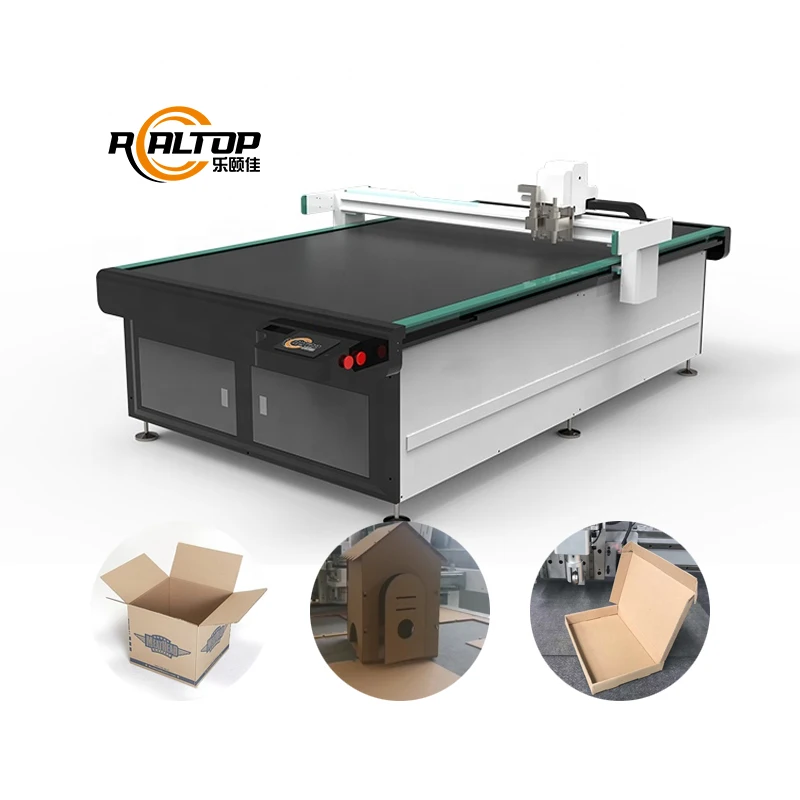
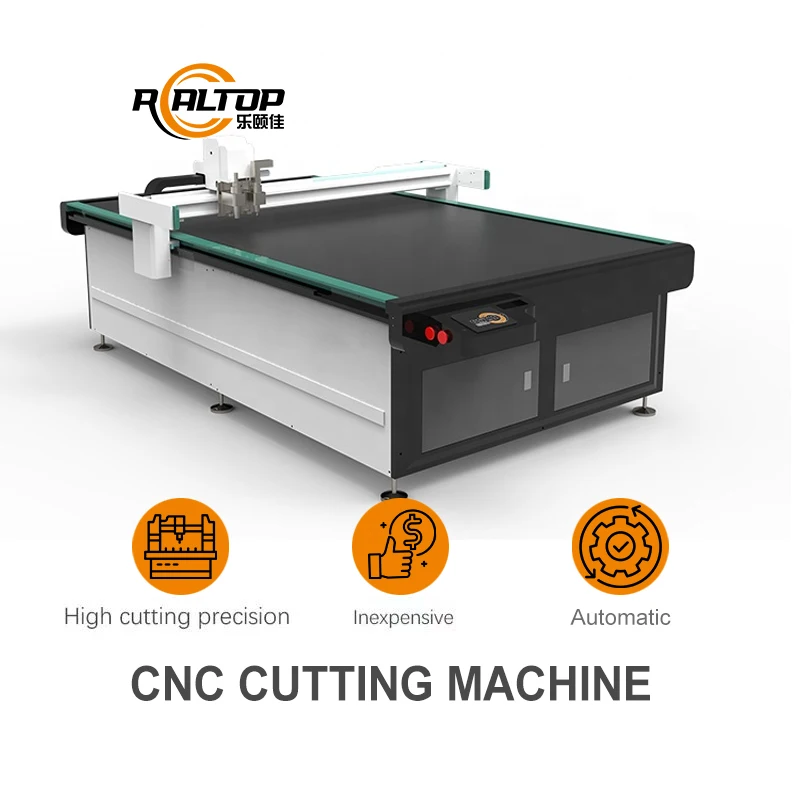
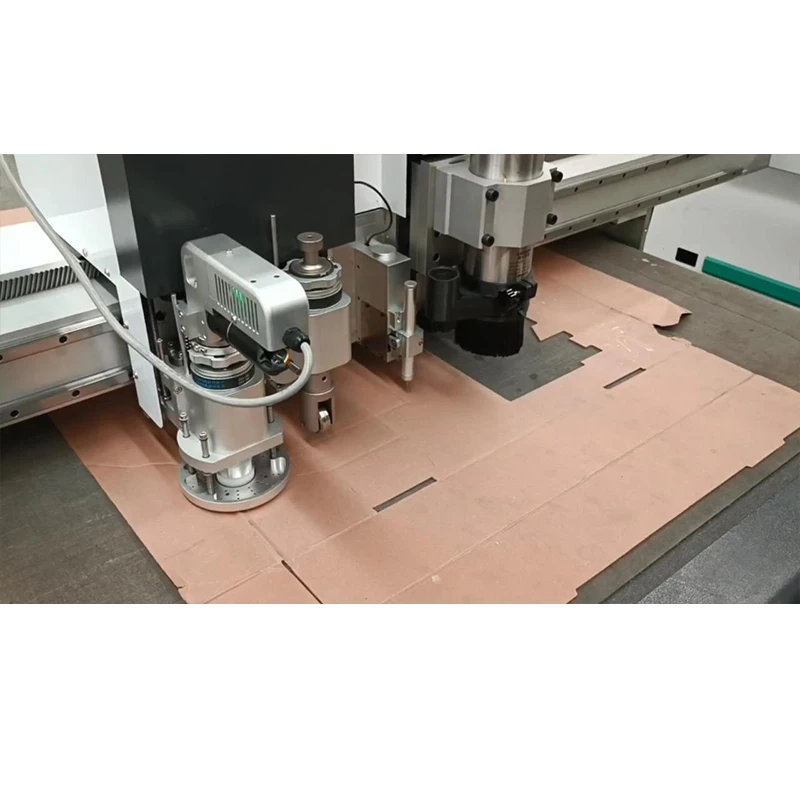
Multifunctional cutting capability — The RT-D2516/RT-S2516 CNC oscillating knife cutting table supports vibration full-cut, half-cut, and cursor location from a single Swiss-imported knife head, letting packaging and signage producers handle cardboard, sticker, and PVC without swapping tooling mid-job.
Technical Specifications
| Parameter | Value |
|---|---|
| Model | RT-D2516/RT-S2516 |
| Product Type | CNC Oscillating Knife Cutting Table |
| Working Area | 1600 × 2500 mm |
| Overall Dimensions (L × W × H) | 3450 × 2300 × 1250 mm |
| Rated Power | 9 kW |
| Voltage | 380V ±10% (50/60 Hz to be confirmed) |
| Vacuum Pump | 7.5 kW |
| Translational Velocity | 800 – 1200 mm/s |
| Cutting Speed | 200 – 800 mm/s (material dependent) |
| Repeatability | ≤0.1 mm |
| Servo Motor & Driver | Taiwan Delta |
| Linear Guide | Taiwan Hiwin rail |
| Vacuum Table | Aluminum alloy honeycomb, automatic zoning follow-cut adsorption |
| Machine Frame | Thick square seamless steel welded structure, high-temperature treated |
| Control / Instruction System | HP-GL compatible format |
| Safety Device | Infrared sensors and emergency stop |
Application Suitability
| Application | Material or Output |
|---|---|
| Packaging carton and corrugated sample making | Cardboard, corrugated board, paper |
| Sticker, label, and printed contour cutting | Vinyl, sticker, adhesive film |
| Signage and billboard production | PVC, soft board, billboard material |
| Garment and footwear pattern making | Leather, flexible garment materials, sponge composite leather |
| Gasket and industrial part cutting | Rubber, silicone, soft glass |
Why the Thickness Question Must Come Before the Working Area
A machine specified on working area alone often fails on the actual material thickness.
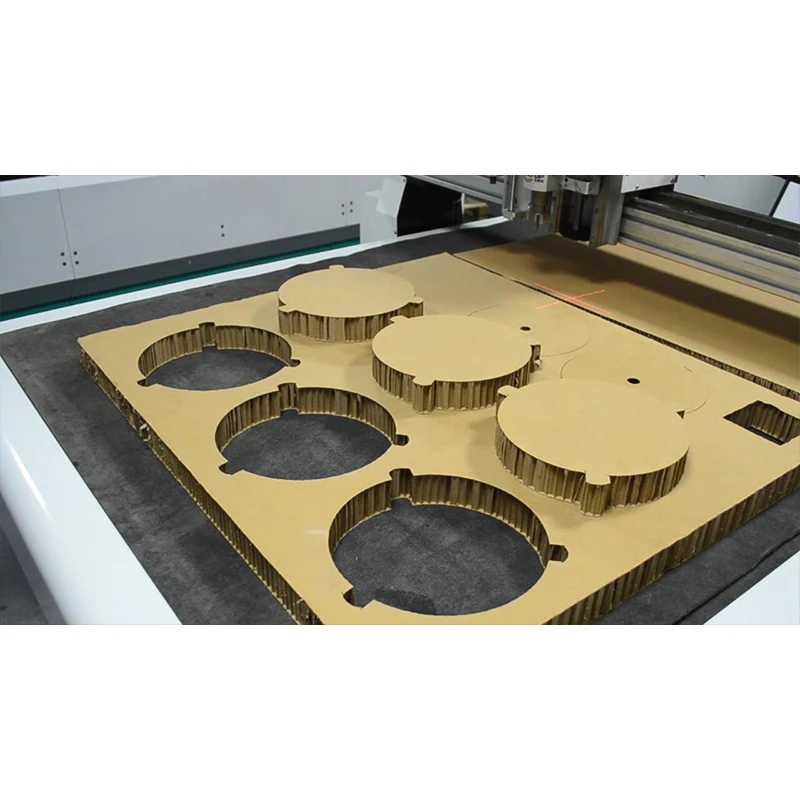
Many packaging producers I have visited in workshops across Latin America ordered a flatbed simply because the table size fit their sheets, only to discover the oscillating knife could not push through their specific corrugated flute or laminate. The cutting thickness capability depends on knife stroke, oscillation frequency, and material density, not just the blade length listed on a spec sheet [NEED_CITE: cutting force and stroke requirements for multi-layer corrugated materials]. When the tool head cannot complete the cut on the second pass, the edges tear, the vacuum table loses grip, and the entire sheet is scrapped. As a CNC Oscillating Knife Cutting Table manufacturer, Realtop requires a sample of the buyer’s actual material before confirming the tool head and stroke configuration, preventing this mismatch before production begins.
Knife Head Selection by Material Type
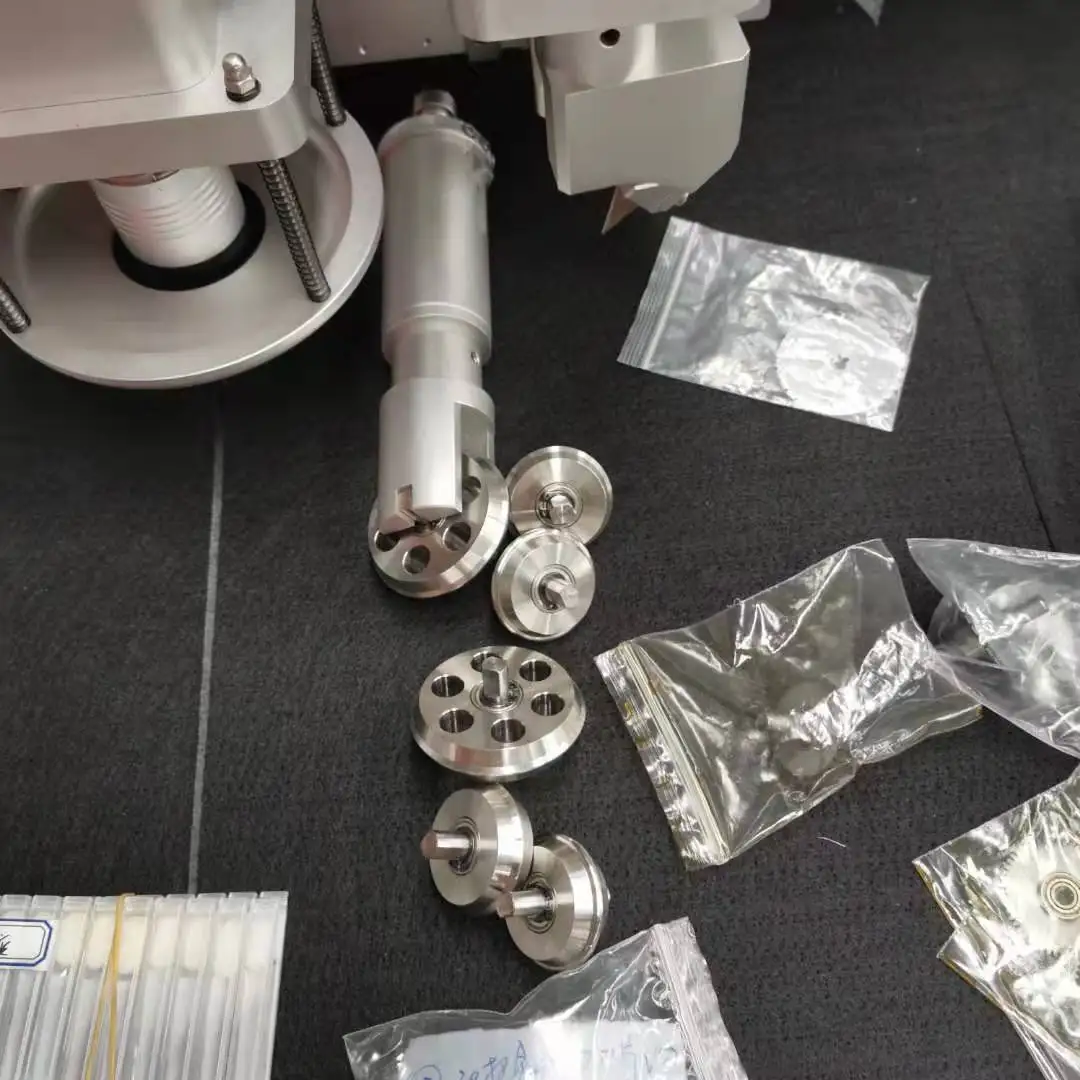
The multifunctional Swiss-imported knife head on the RT-D2516/RT-S2516 handles vibration full-cut, vibration half-cut, and cursor location without requiring manual tool changes between operations. For packaging carton makers cutting corrugated board, the full-cut mode drives through fluted layers cleanly, while half-cut scores crease lines for folding without penetrating the full depth. This CNC Oscillating Knife Cutting Table manufacturer configures the oscillation frequency to match material density, so rigid PVC signage board and soft sponge composite leather each receive the correct stroke profile rather than a compromise setting.
Vacuum Table Zoning for Small-Part Stability
The aluminum alloy honeycomb vacuum table uses automatic zoning follow-cut adsorption, meaning only the section directly under the knife head draws suction at any moment. This keeps small packaging components and sticker shapes held flat without requiring the full 7.5 kW pump to run across the entire 1600 × 2500 mm surface. In my experience fitting out carton sample rooms, a table that sucks everywhere wastes energy and still lifts thin vinyl at the edges; zoned adsorption solves both problems [NEED_CITE: vacuum hold-down principles for flatbed digital cutting].
How Specs Translate to Daily Output
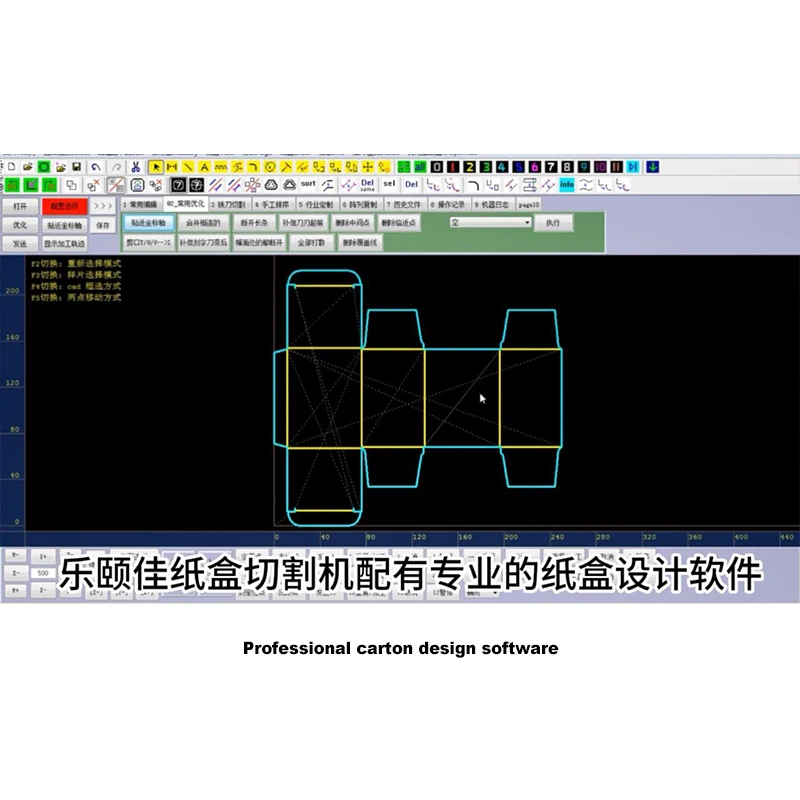
The Delta servo motors and Hiwin linear rails deliver ≤0.1 mm repeatability, which matters when a carton sample requires multiple nested pieces that must fit together precisely after cutting. The cutting speed range of 200–800 mm/s varies with material, so a sheet of thin sticker film processes faster than a 30 mm slab of sponge composite leather. The HP-GL compatible instruction system accepts standard CAD output, and the included professional carton nesting software handles layout optimization so that material yield stays high across short-run packaging jobs. Buyers moving from die-based to digital sample making will find the software workflow familiar once file format compatibility is confirmed.
The Cost of Skipping the Sample Cut
When a buyer confirms an order based on a datasheet without sending material for a trial, several things can go wrong on arrival. A CNC Oscillating Knife Cutting Table manufacturer that does not test the actual corrugated grade may ship a standard knife that crushes double-wall flutes instead of slicing them. Vacuum zoning may be set for large sheets and leave small hang-tag pieces drifting during high-speed travel. These issues are not machine defects; they are configuration gaps that a pre-shipment sample cut would have caught [NEED_CITE: material testing best practices before equipment purchase].
Why Source From This CNC Oscillating Knife Cutting Table Manufacturer
In-house design covers both knife and laser cutting technologies, so the buyer selects the correct method for the material rather than forcing one. The tool head and vacuum table configuration are specified per material and daily volume, not left to a default build. CCD camera positioning is available for printed contour work when the application requires it. Software compatibility is confirmed before order placement, matching the buyer’s existing CAD and nesting workflow. Voltage, plug type, and control panel language are verified against the destination market’s standards before the machine leaves the factory.
Documentation & Verification
- Machine specification sheet listing working area, tool head options, and vacuum pump rating for the RT-D2516/RT-S2516
- Electrical schematic confirming 380V ±10% and plug type for the destination country
- Sample cutting report run on the buyer’s own corrugated or sticker material before dispatch
- Software licence and HP-GL file format compatibility note matching the buyer’s CAD workflow
- Operation and maintenance manual available in English, Russian, Italian, or Chinese
- Factory test record documenting cutting speed and edge quality on confirmed materials
Installation, Commissioning & Support
- The 3450 × 2300 × 1250 mm footprint requires a level concrete floor with clearance for auto-feeding conveyor access
- A dedicated 380V circuit with adequate capacity for the 9 kW machine plus the 7.5 kW vacuum pump is required
- Machine ships fully assembled; the buyer connects power, vacuum hoses, and grounding before first start
- Initial commissioning includes vacuum zoning calibration and knife stroke adjustment for the buyer’s confirmed materials
- Operator training covers the carton nesting software interface, HP-GL file import, and tool head changeover procedures
- Spare parts list includes Swiss knife blades, vacuum seals, and synchronous belt segments
Preparing Your Inquiry
To receive an accurate configuration, share the material type, thickness, maximum sheet size, and daily cutting volume for your packaging or signage production. Specify the local voltage and frequency, the control language preference, and the CAD or nesting software you currently use. If you can send a roll or sheet sample of your actual material, the sample cutting test will confirm edge quality and speed before the order is finalized.
Frequently Asked Questions
Q: How do I verify the cutting thickness for my specific corrugated board?
A: Send a sample sheet of your actual material, including any lamination or coating. The cutting test will determine whether the Swiss knife head at its maximum stroke can push through cleanly and what cutting speed produces acceptable edge quality. Results are documented in a sample cutting report before you commit to the order.
Q: What voltage and language options are confirmed before shipment?
A: The standard 380V ±10% configuration is verified against the destination market’s frequency, either 50 Hz or 60 Hz. Plug type is matched to the local standard. Control panel language is set to English, Russian, Italian, or Chinese, with other languages available upon request and confirmed before dispatch.
Q: How does vacuum zoning affect small sticker and label parts?
A: The automatic zoning follow-cut adsorption activates only the vacuum zone under the active knife path. Small parts stay held flat without requiring the full 7.5 kW pump across the entire honeycomb surface, reducing energy draw and preventing lift during high-speed directional changes.
Q: Will the software accept my existing CAD file formats?
A: The included carton nesting and cutting design software accepts HP-GL compatible output. Before order, confirm the exact file format your current design system exports so that import compatibility is verified and documented in the software licence note.
Q: Where does this knife table fit compared to CO2 or fiber laser options?
A: Oscillating knife cutting produces clean, non-burnt edges on cardboard, PVC, leather, and composites, making it suitable for packaging and signage. CO2 laser is preferred for acrylic and textile engraving, while fiber laser handles sheet metal. The correct method depends on your material and edge quality requirement.
Multifunctional cutting capability — The RT-D2516/RT-S2516 CNC oscillating knife cutting table supports vibration full-cut, half-cut, and cursor location from a single Swiss-imported knife head, letting packaging and signage producers handle cardboard, sticker, and PVC without swapping tooling mid-job.
Technical Specifications
| Parameter | Value |
|---|---|
| Model | RT-D2516/RT-S2516 |
| Product Type | CNC Oscillating Knife Cutting Table |
| Working Area | 1600 × 2500 mm |
| Overall Dimensions (L × W × H) | 3450 × 2300 × 1250 mm |
| Rated Power | 9 kW |
| Voltage | 380V ±10% (50/60 Hz to be confirmed) |
| Vacuum Pump | 7.5 kW |
| Translational Velocity | 800 – 1200 mm/s |
| Cutting Speed | 200 – 800 mm/s (material dependent) |
| Repeatability | ≤0.1 mm |
| Servo Motor & Driver | Taiwan Delta |
| Linear Guide | Taiwan Hiwin rail |
| Vacuum Table | Aluminum alloy honeycomb, automatic zoning follow-cut adsorption |
| Machine Frame | Thick square seamless steel welded structure, high-temperature treated |
| Control / Instruction System | HP-GL compatible format |
| Safety Device | Infrared sensors and emergency stop |
Application Suitability
| Application | Material or Output |
|---|---|
| Packaging carton and corrugated sample making | Cardboard, corrugated board, paper |
| Sticker, label, and printed contour cutting | Vinyl, sticker, adhesive film |
| Signage and billboard production | PVC, soft board, billboard material |
| Garment and footwear pattern making | Leather, flexible garment materials, sponge composite leather |
| Gasket and industrial part cutting | Rubber, silicone, soft glass |
Why the Thickness Question Must Come Before the Working Area
A machine specified on working area alone often fails on the actual material thickness.
Many packaging producers I have visited in workshops across Latin America ordered a flatbed simply because the table size fit their sheets, only to discover the oscillating knife could not push through their specific corrugated flute or laminate. The cutting thickness capability depends on knife stroke, oscillation frequency, and material density, not just the blade length listed on a spec sheet [NEED_CITE: cutting force and stroke requirements for multi-layer corrugated materials]. When the tool head cannot complete the cut on the second pass, the edges tear, the vacuum table loses grip, and the entire sheet is scrapped. As a CNC Oscillating Knife Cutting Table manufacturer, Realtop requires a sample of the buyer’s actual material before confirming the tool head and stroke configuration, preventing this mismatch before production begins.
Knife Head Selection by Material Type
The multifunctional Swiss-imported knife head on the RT-D2516/RT-S2516 handles vibration full-cut, vibration half-cut, and cursor location without requiring manual tool changes between operations. For packaging carton makers cutting corrugated board, the full-cut mode drives through fluted layers cleanly, while half-cut scores crease lines for folding without penetrating the full depth. This CNC Oscillating Knife Cutting Table manufacturer configures the oscillation frequency to match material density, so rigid PVC signage board and soft sponge composite leather each receive the correct stroke profile rather than a compromise setting.
Vacuum Table Zoning for Small-Part Stability
The aluminum alloy honeycomb vacuum table uses automatic zoning follow-cut adsorption, meaning only the section directly under the knife head draws suction at any moment. This keeps small packaging components and sticker shapes held flat without requiring the full 7.5 kW pump to run across the entire 1600 × 2500 mm surface. In my experience fitting out carton sample rooms, a table that sucks everywhere wastes energy and still lifts thin vinyl at the edges; zoned adsorption solves both problems [NEED_CITE: vacuum hold-down principles for flatbed digital cutting].
How Specs Translate to Daily Output
The Delta servo motors and Hiwin linear rails deliver ≤0.1 mm repeatability, which matters when a carton sample requires multiple nested pieces that must fit together precisely after cutting. The cutting speed range of 200–800 mm/s varies with material, so a sheet of thin sticker film processes faster than a 30 mm slab of sponge composite leather. The HP-GL compatible instruction system accepts standard CAD output, and the included professional carton nesting software handles layout optimization so that material yield stays high across short-run packaging jobs. Buyers moving from die-based to digital sample making will find the software workflow familiar once file format compatibility is confirmed.
The Cost of Skipping the Sample Cut
When a buyer confirms an order based on a datasheet without sending material for a trial, several things can go wrong on arrival. A CNC Oscillating Knife Cutting Table manufacturer that does not test the actual corrugated grade may ship a standard knife that crushes double-wall flutes instead of slicing them. Vacuum zoning may be set for large sheets and leave small hang-tag pieces drifting during high-speed travel. These issues are not machine defects; they are configuration gaps that a pre-shipment sample cut would have caught [NEED_CITE: material testing best practices before equipment purchase].
Why Source From This CNC Oscillating Knife Cutting Table Manufacturer
In-house design covers both knife and laser cutting technologies, so the buyer selects the correct method for the material rather than forcing one. The tool head and vacuum table configuration are specified per material and daily volume, not left to a default build. CCD camera positioning is available for printed contour work when the application requires it. Software compatibility is confirmed before order placement, matching the buyer’s existing CAD and nesting workflow. Voltage, plug type, and control panel language are verified against the destination market’s standards before the machine leaves the factory.
Documentation & Verification
- Machine specification sheet listing working area, tool head options, and vacuum pump rating for the RT-D2516/RT-S2516
- Electrical schematic confirming 380V ±10% and plug type for the destination country
- Sample cutting report run on the buyer’s own corrugated or sticker material before dispatch
- Software licence and HP-GL file format compatibility note matching the buyer’s CAD workflow
- Operation and maintenance manual available in English, Russian, Italian, or Chinese
- Factory test record documenting cutting speed and edge quality on confirmed materials
Installation, Commissioning & Support
- The 3450 × 2300 × 1250 mm footprint requires a level concrete floor with clearance for auto-feeding conveyor access
- A dedicated 380V circuit with adequate capacity for the 9 kW machine plus the 7.5 kW vacuum pump is required
- Machine ships fully assembled; the buyer connects power, vacuum hoses, and grounding before first start
- Initial commissioning includes vacuum zoning calibration and knife stroke adjustment for the buyer’s confirmed materials
- Operator training covers the carton nesting software interface, HP-GL file import, and tool head changeover procedures
- Spare parts list includes Swiss knife blades, vacuum seals, and synchronous belt segments
Preparing Your Inquiry
To receive an accurate configuration, share the material type, thickness, maximum sheet size, and daily cutting volume for your packaging or signage production. Specify the local voltage and frequency, the control language preference, and the CAD or nesting software you currently use. If you can send a roll or sheet sample of your actual material, the sample cutting test will confirm edge quality and speed before the order is finalized.
Frequently Asked Questions
Q: How do I verify the cutting thickness for my specific corrugated board?
A: Send a sample sheet of your actual material, including any lamination or coating. The cutting test will determine whether the Swiss knife head at its maximum stroke can push through cleanly and what cutting speed produces acceptable edge quality. Results are documented in a sample cutting report before you commit to the order.
Q: What voltage and language options are confirmed before shipment?
A: The standard 380V ±10% configuration is verified against the destination market’s frequency, either 50 Hz or 60 Hz. Plug type is matched to the local standard. Control panel language is set to English, Russian, Italian, or Chinese, with other languages available upon request and confirmed before dispatch.
Q: How does vacuum zoning affect small sticker and label parts?
A: The automatic zoning follow-cut adsorption activates only the vacuum zone under the active knife path. Small parts stay held flat without requiring the full 7.5 kW pump across the entire honeycomb surface, reducing energy draw and preventing lift during high-speed directional changes.
Q: Will the software accept my existing CAD file formats?
A: The included carton nesting and cutting design software accepts HP-GL compatible output. Before order, confirm the exact file format your current design system exports so that import compatibility is verified and documented in the software licence note.
Q: Where does this knife table fit compared to CO2 or fiber laser options?
A: Oscillating knife cutting produces clean, non-burnt edges on cardboard, PVC, leather, and composites, making it suitable for packaging and signage. CO2 laser is preferred for acrylic and textile engraving, while fiber laser handles sheet metal. The correct method depends on your material and edge quality requirement.










商品评价
There are no reviews yet.