

Fast Delivery
Quick, reliable shipping to any location.

Free & easy returns
Return this item by mail or in store within 90 days for a full refund.
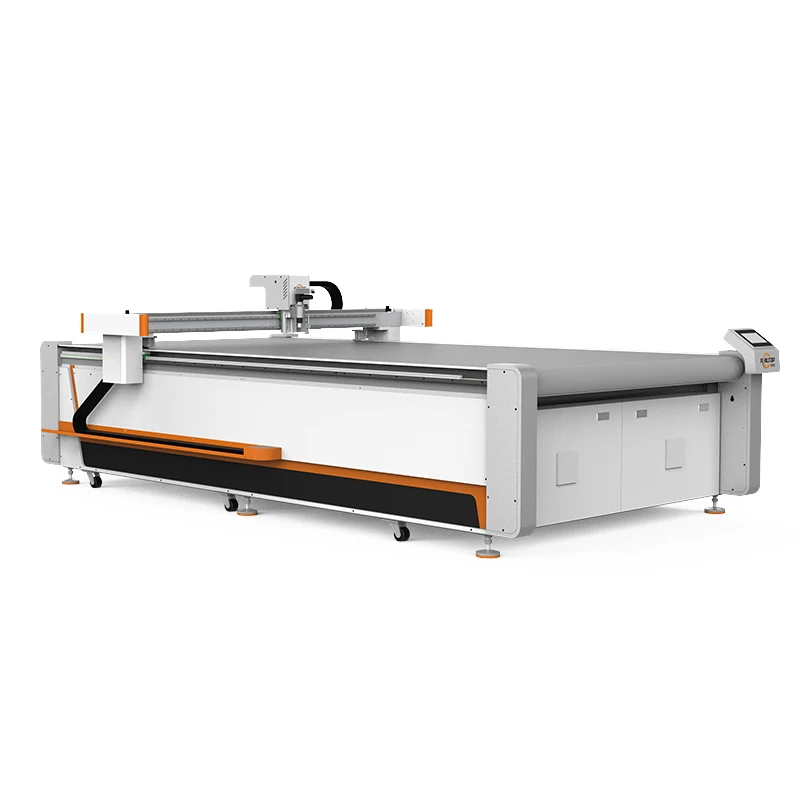
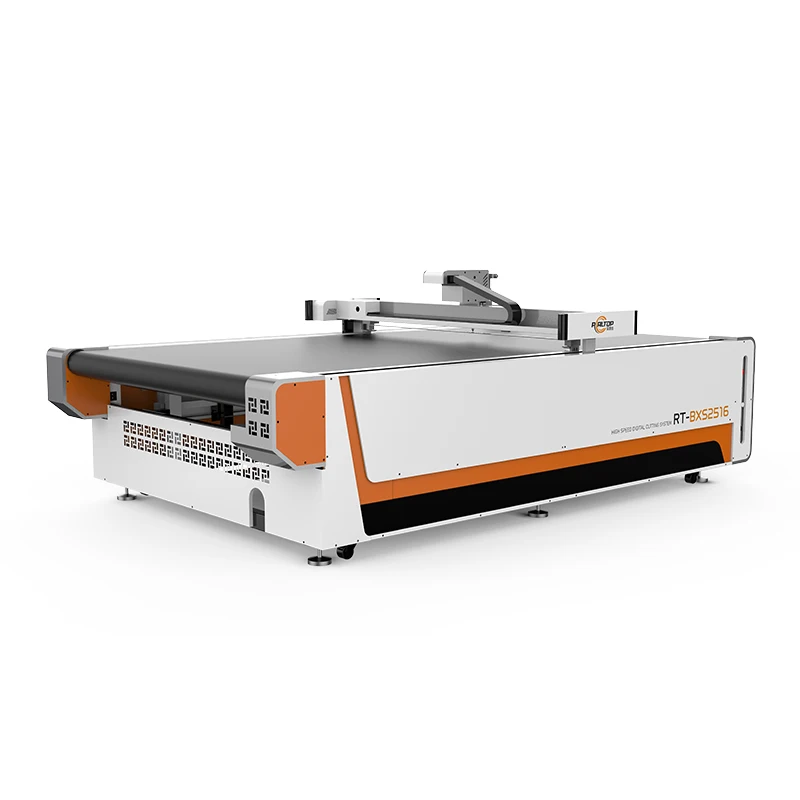
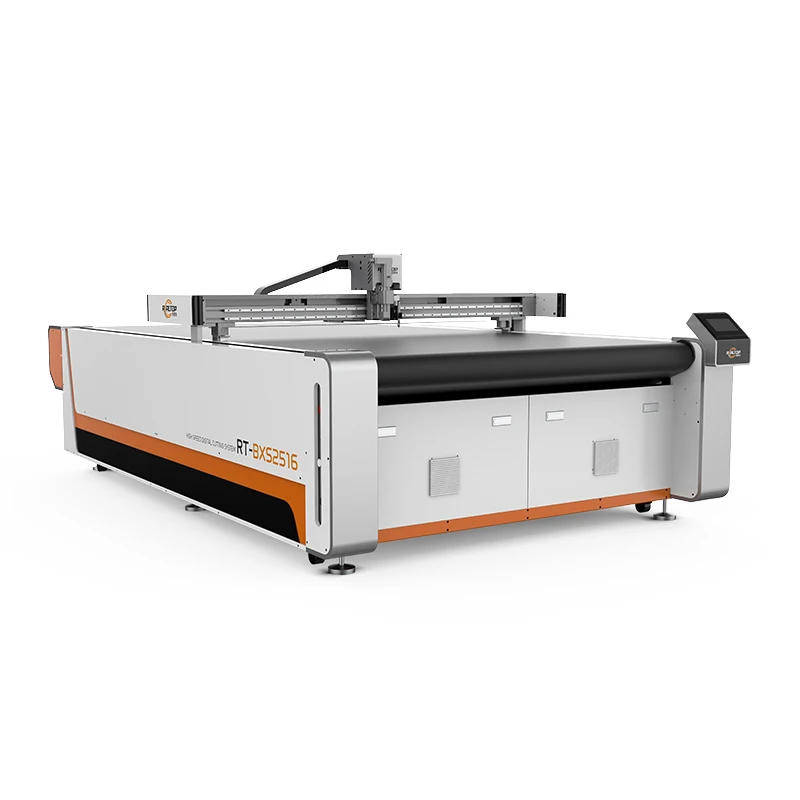
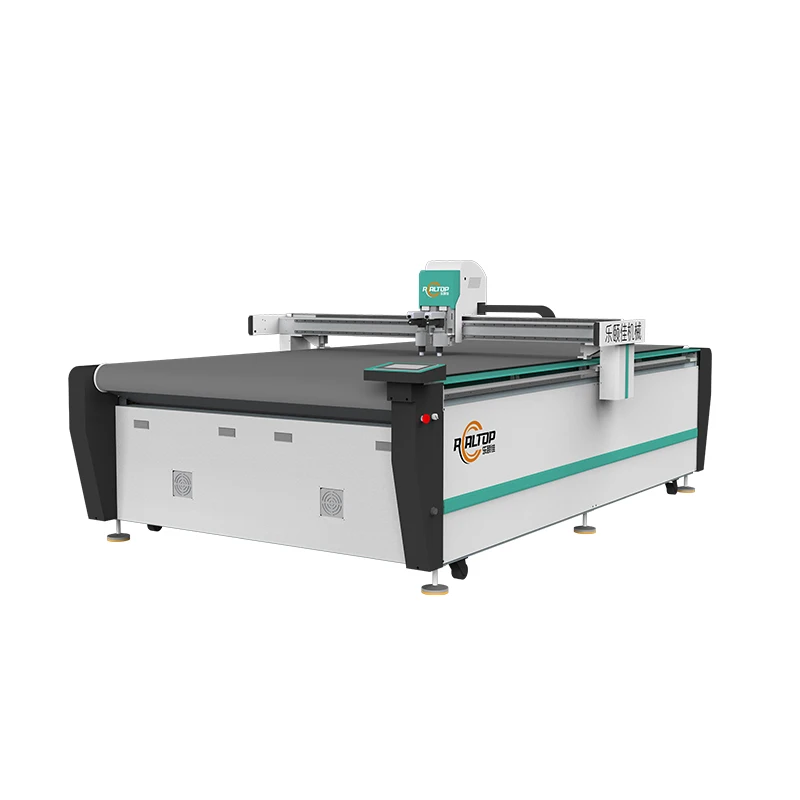
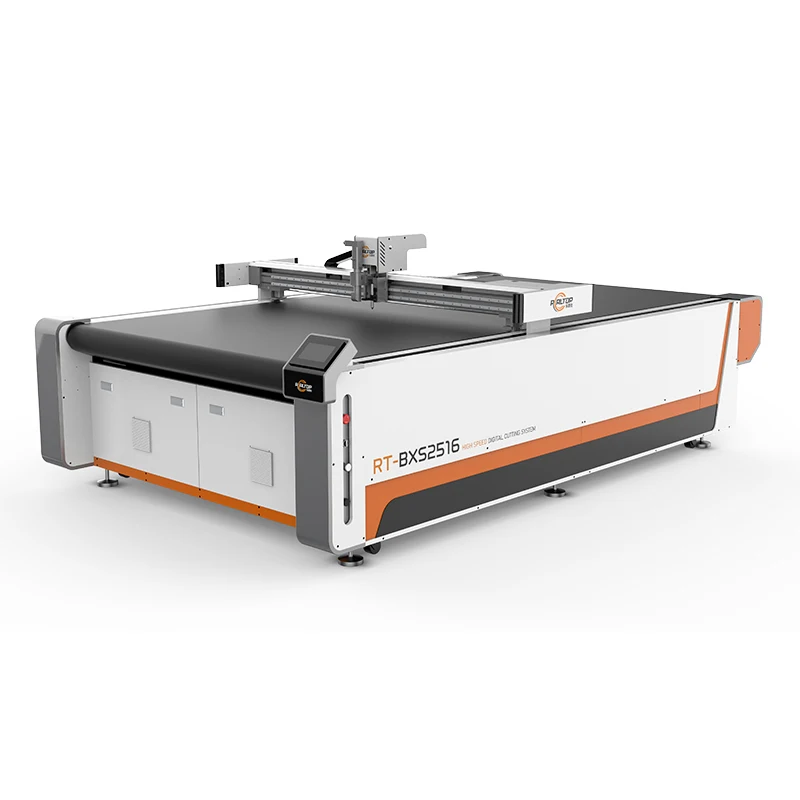
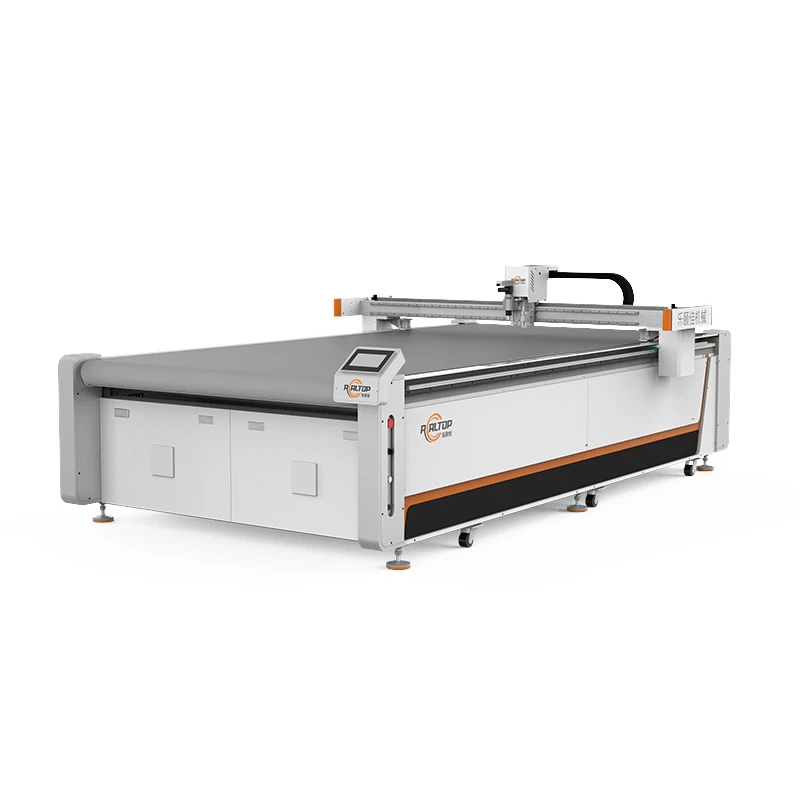
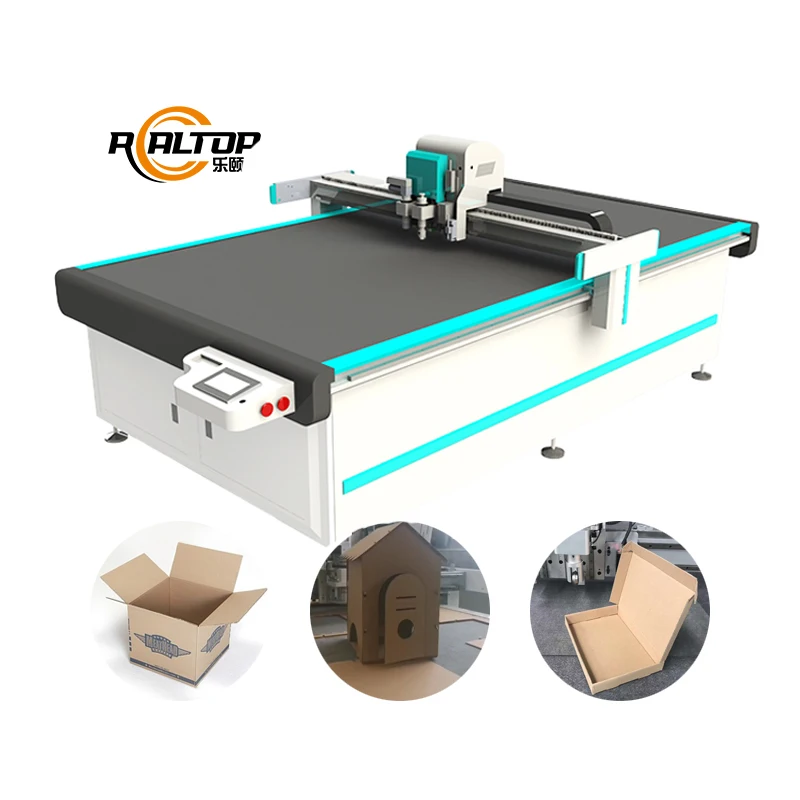
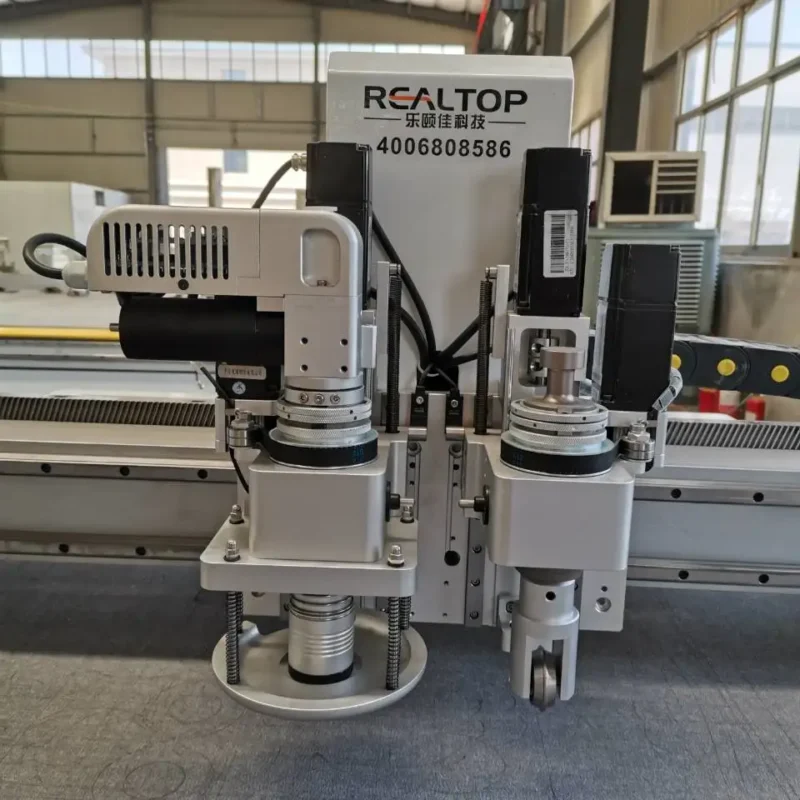
Tool head matched to material — The RT-D2516/RT-S2516 offers ten configurable tool heads, from oscillating knife to creasing wheel, so you cut fabric, leather, sponge composite or PVC with the correct blade rather than forcing a single tool through every job.
Technical Specifications
| Parameter | Value |
|---|---|
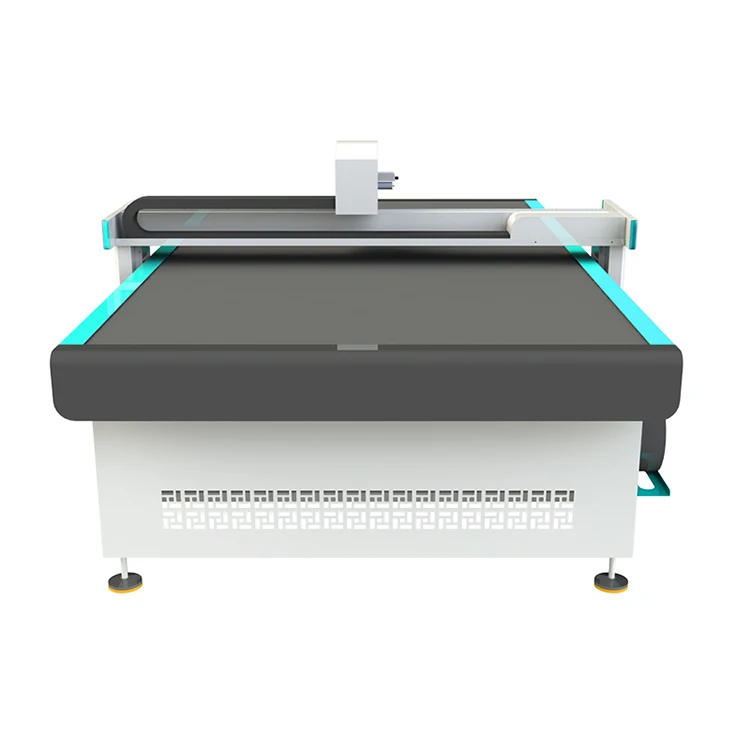
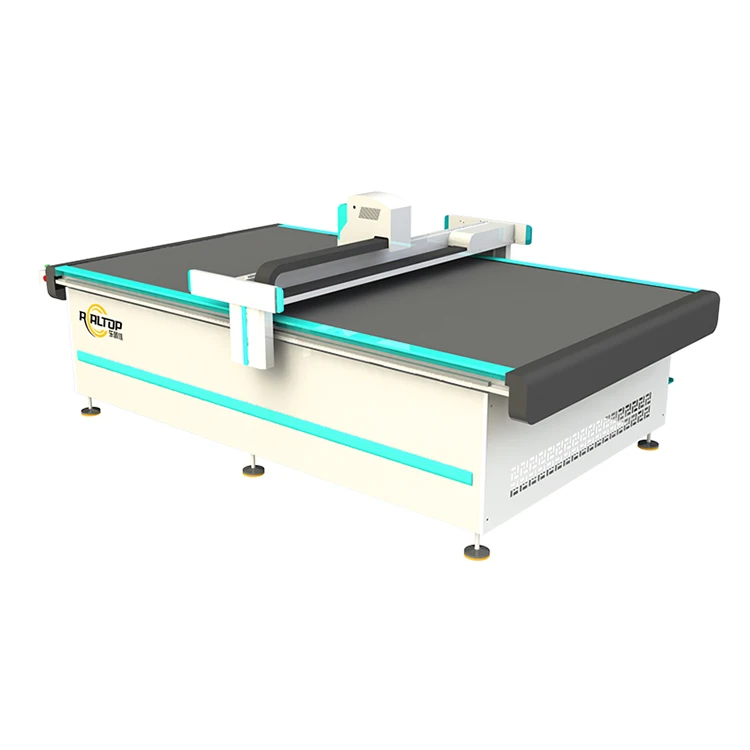
| Product Type | CNC Oscillating Knife Cutting Machine |
| Model | RT-D2516/RT-S2516 |
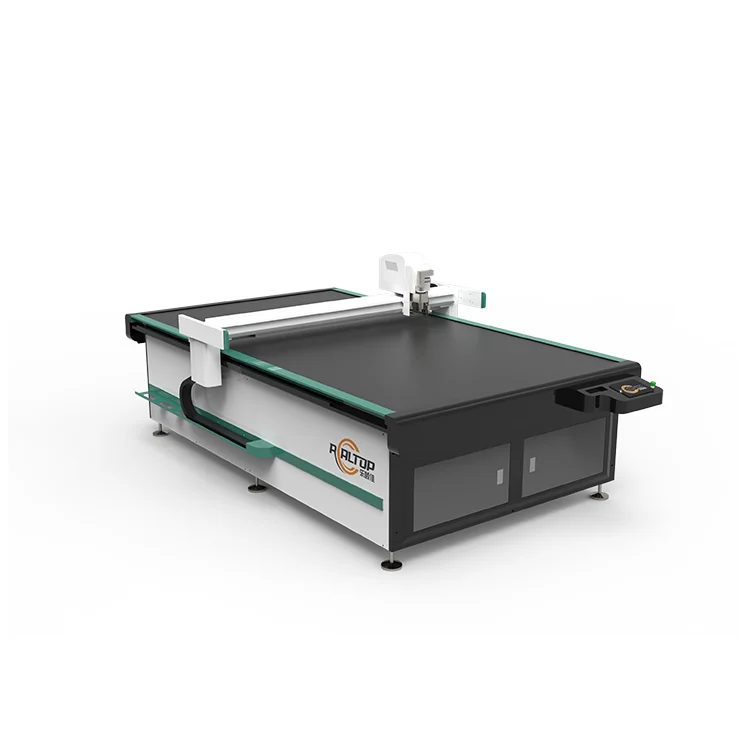
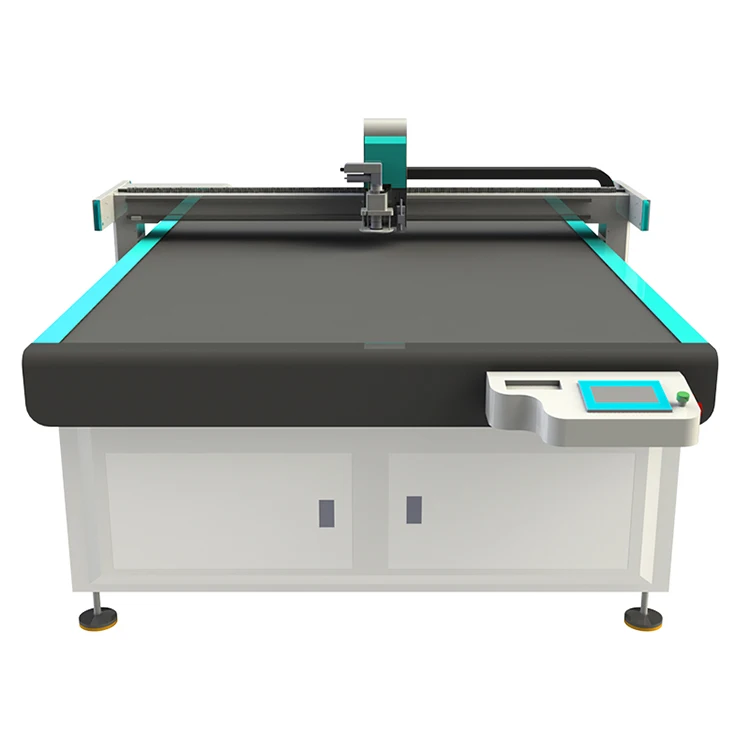
| Working Area | 1600 × 2500 mm |
| Overall Dimensions | 3450 × 2300 × 1250 mm |
| Rated Power | 9 kW |
| Voltage | 380V ±10% |
| Vacuum Pump | 7.5 kW |
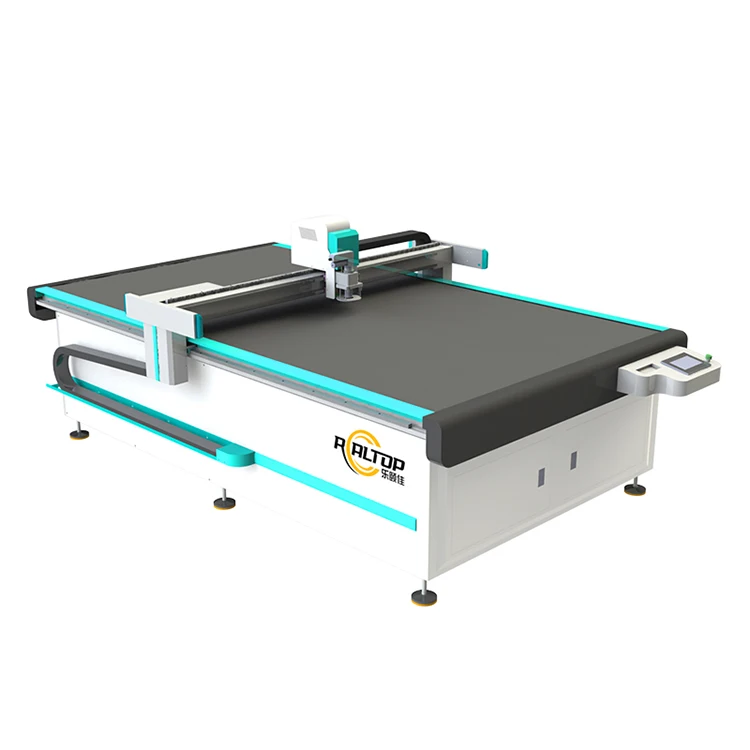
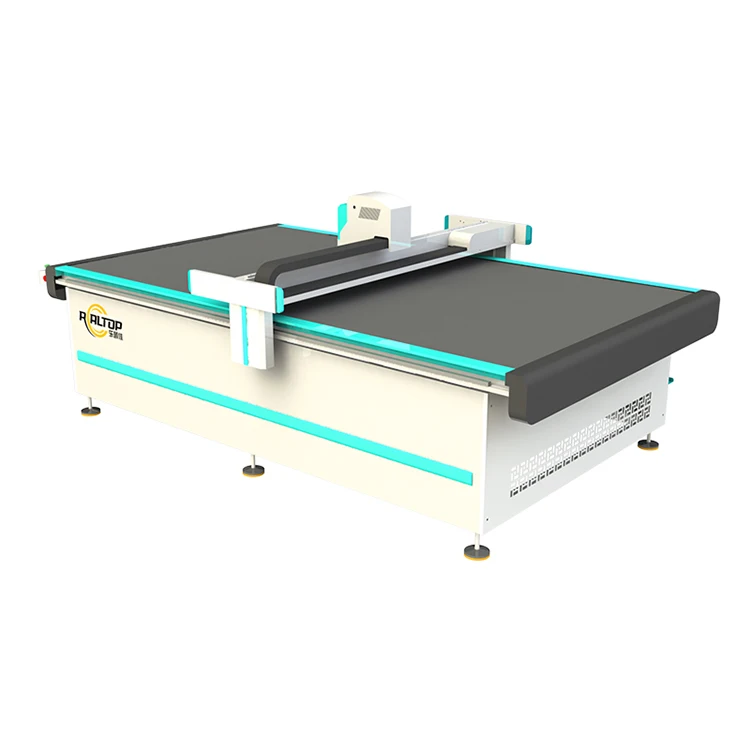
| Working Table Options | Flat table or auto-feeding conveyor |
| Translational Velocity | 800–2000 mm/s |
| Cutting Speed | 200–800 mm/s (basis not stated in source) |
| Cutting Thickness | ≤ 100 mm (varies with material) |
| Repeated Accuracy | ≤ 0.1 mm |
| Transmission System | Digital servo motor, linear guide, synchronous belt, ball screw |
| Servo Motor Options | Delta (China) or Panasonic (Japan) |
| Conveyor Belt | Germany imported |
| Linear Guide | Taiwan Hiwin rail |
| Vacuum Table | Aluminum air box platform (integrated or split box) |
| Tool Head Options | Oscillating knife, pneumatic knife, high-power vibrating knife, circular knife, V-cutting knife, drag knife, creasing wheel, dotted line knife, punching, brush |
| Visual Positioning Options | Small CCD mark point, panoramic camera recognition, projection positioning |
| Software | Auto typesetting; supports PLT, DXF, AI formats |
| Control Panel | Touch screen, multi-language (English, Russian, Italian, Chinese; custom languages available) |
| Safety Device | Infrared sensors, anti-collision, emergency stop |
| Instruction System | HP-GL compatible format |
| Assembly State | Fully assembled |
| Standards | CE |
Application Suitability
| Application | Material or Output |
|---|---|
| Automotive interior and floor mat production | Carpets, composite floor mats, sponge composite leather, PU, EVA, XPE |
| Garment, footwear and leather goods | Fabric, textile, leather, shoe material, luggage material, non-woven fabric |
| Soft home furnishings and upholstery | Cloth, sponge, foam, PU, composite panels |
| Packaging and carton sample making | Corrugated cardboard, cardboard, sticker, film, plastic box |
| Gasket and sealing production | Rubber, PTFE, ETFE, fiberglass, gasket material |
| Graphic advertising and printing | PVC sheet, soft glass, silicon, vinyl, sticker |
Why the Wrong Tool Head Wastes More Than Blade Costs
Buying a CNC cutting machine for sale based on working area alone leaves out the variable that actually determines daily throughput: whether the tool head can handle your material at production thickness. I have stood in workshops where a single oscillating knife was expected to cut through multi-layer composite carpet with a dense rubber backing, producing ragged edges and requiring three operators to sort and re-cut rejects. The cutting speed numbers on a spec sheet mean very little when the blade stalls on the second ply [NEED_CITE: industrial cutting quality and material thickness relationship].
Specify the tool head against your exact production material and ply count, not against a sample swatch.
Most buyers send a single-layer swatch for sample cutting, then run multi-layer lay-ups on the factory floor. A pneumatic knife handles dense leather differently from an oscillating knife on woven fabric, and a high-power vibrating knife reaches depths the standard head cannot. The RT-D2516/RT-S2516 platform covers this gap by making the tool head a configurable choice rather than a fixed default. A CNC cutting machine manufacturer that locks you into one head type is asking you to compromise on edge quality every shift.
Cutting Method Selection Across the Full Material Range
The value of sourcing a CNC cutting machine from a single manufacturer covering both knife and laser technologies becomes clear when your production schedule mixes natural leather, synthetic composites and printed textiles. Knife cutting preserves edge integrity on materials that would melt or discolor under a CO2 beam, while laser handles sealed-edge synthetic work where knife drag would distort the weave. This catalogue approach lets you match the process to the material rather than forcing one method across every order.
Vacuum Zoning and Table Configuration for Variable Part Sizes
A 1600 × 2500 mm working area holds standard hides and fabric rolls, but holding small gasket or label parts flat requires split-box vacuum zoning so only the active zone pulls air. Without proper zoning, small parts lift during high-speed traversal and the blade catches the edge [NEED_CITE: vacuum table zoning requirements for small part cutting]. The aluminum air box platform on this machine is available as an integrated or split configuration, and the flat table or auto-feeding conveyor option determines whether you load sheets manually or run continuous roll-fed production.
Drive Components and Their Effect on Cut Accuracy
The repeated accuracy of ≤ 0.1 mm depends on the transmission stack: Taiwan Hiwin linear guides keep the gantry square over the full 2500 mm travel, while the digital servo motor — selectable between Delta and Panasonic — governs acceleration into tight corners. On intricate leather panel cutting for automotive seat covers, servo response directly determines whether nested pieces meet tolerance or require manual trimming downstream. The synchronous belt and imported ball screw combination maintains positional consistency across long production runs without thermal drift affecting registration.
What Happens When CCD Positioning Is Promised but Not Verified
Printed contour cutting relies on the camera reading registration marks at production speed, and buyers often discover during commissioning that the CCD system cannot track marks on low-contrast or heavily textured materials. The panoramic camera recognition option on this platform addresses wide-format printed textile work, while the small CCD mark point option suits discrete label and appliqué cutting. If your workflow depends on printed contour recognition, the camera type must be matched to your print substrate and confirmed with a live test before the machine ships [NEED_CITE: CCD contour recognition accuracy on printed textiles].
Why Buying from the Manufacturer Changes the Specification Conversation
A single manufacturer designing both the knife head and the motion platform can adjust vacuum pressure, servo tuning and blade stroke together when your material falls between standard categories. In-house design and production means the CNC cutting machine manufacturer tests your actual roll-fed carpet or multi-ply leather lay-up in the factory, not at your facility after shipment. Tool head configuration is documented per your material, voltage is confirmed against your local grid, and the software licence is verified against your existing PLT, DXF or AI files before the crate is sealed.
Documentation & Verification
- Machine specification sheet listing the configured tool head, table type and servo brand for your order
- Factory test record cut on your supplied material showing edge quality and achievable speed
- Electrical schematic with voltage and plug type confirmed for your local supply standard
- Software licence and file format compatibility note covering PLT, DXF and AI import
- Packing photographs of the fully assembled machine before crate closure
- CE declaration applicable to your import market
Installation, Commissioning & Support
- Dedicated 380V ±10% circuit with capacity for the 9 kW rated load plus 7.5 kW vacuum pump
- Fully assembled delivery — no gantry or frame reassembly required on your floor
- Touch screen control configured to your chosen language before dispatch from the factory
- Servo tuning and vacuum zoning calibrated to your material thickness during factory test
- Spare blade stock and consumables list provided based on your cutting material type
- Scheduled linear guide and ball screw inspection intervals documented in the maintenance manual
Before You Request a Quote
Send your production material — not a sample swatch — with ply count, backing type and maximum thickness so the tool head and vacuum table are specified against real conditions. Confirm your workshop voltage and frequency, the file formats your current nesting software exports, and whether your volume justifies the flat table or auto-feeding conveyor configuration.
Frequently Asked Questions
Q: How do I choose between oscillating knife and pneumatic knife for my material?
A: Oscillating knives cut flexible fabrics and thin foams cleanly through high-frequency vibration, while pneumatic knives use air-driven downward force for dense leather and thick composites. The selection depends on your material density and thickness. Request sample cutting on your production material to compare edge quality before committing to one head type.
Q: Should I choose the flat table or the auto-feeding conveyor?
A: Flat tables suit sheet-fed work like leather hides and rigid gaskets where each piece is loaded individually. Auto-feeding conveyors serve roll-fed production such as fabric bolts and continuous carpet runs, advancing material automatically between cuts. Your daily volume and material format determine which table type fits your workflow.
Q: What does CCD camera positioning actually do on a cutting machine?
A: The camera reads printed registration marks on pre-printed fabric or labels and adjusts the cut path to match the print exactly, compensating for stretch or skew. The RT-D2516/RT-S2516 offers small CCD mark point, panoramic camera or projection positioning depending on your print format and production speed.
Q: Can the voltage and control language be customized before shipment?
A: Yes. The standard 380V ±10% configuration can be adapted to your local supply, and the touch screen supports English, Russian, Italian and Chinese with custom languages available. Voltage, plug type and language are confirmed during the specification stage before production begins.
Q: How do I request sample cutting on my own material?
A: Send a representative piece of your production material — including backing and any composite layers — along with your target cutting speed and file format. The factory runs a documented test and returns the cut samples with a report covering edge quality, achievable speed and recommended tool head.
Tool head matched to material — The RT-D2516/RT-S2516 offers ten configurable tool heads, from oscillating knife to creasing wheel, so you cut fabric, leather, sponge composite or PVC with the correct blade rather than forcing a single tool through every job.
Technical Specifications
| Parameter | Value |
|---|---|
| Product Type | CNC Oscillating Knife Cutting Machine |
| Model | RT-D2516/RT-S2516 |
| Working Area | 1600 × 2500 mm |
| Overall Dimensions | 3450 × 2300 × 1250 mm |
| Rated Power | 9 kW |
| Voltage | 380V ±10% |
| Vacuum Pump | 7.5 kW |
| Working Table Options | Flat table or auto-feeding conveyor |
| Translational Velocity | 800–2000 mm/s |
| Cutting Speed | 200–800 mm/s (basis not stated in source) |
| Cutting Thickness | ≤ 100 mm (varies with material) |
| Repeated Accuracy | ≤ 0.1 mm |
| Transmission System | Digital servo motor, linear guide, synchronous belt, ball screw |
| Servo Motor Options | Delta (China) or Panasonic (Japan) |
| Conveyor Belt | Germany imported |
| Linear Guide | Taiwan Hiwin rail |
| Vacuum Table | Aluminum air box platform (integrated or split box) |
| Tool Head Options | Oscillating knife, pneumatic knife, high-power vibrating knife, circular knife, V-cutting knife, drag knife, creasing wheel, dotted line knife, punching, brush |
| Visual Positioning Options | Small CCD mark point, panoramic camera recognition, projection positioning |
| Software | Auto typesetting; supports PLT, DXF, AI formats |
| Control Panel | Touch screen, multi-language (English, Russian, Italian, Chinese; custom languages available) |
| Safety Device | Infrared sensors, anti-collision, emergency stop |
| Instruction System | HP-GL compatible format |
| Assembly State | Fully assembled |
| Standards | CE |
Application Suitability
| Application | Material or Output |
|---|---|
| Automotive interior and floor mat production | Carpets, composite floor mats, sponge composite leather, PU, EVA, XPE |
| Garment, footwear and leather goods | Fabric, textile, leather, shoe material, luggage material, non-woven fabric |
| Soft home furnishings and upholstery | Cloth, sponge, foam, PU, composite panels |
| Packaging and carton sample making | Corrugated cardboard, cardboard, sticker, film, plastic box |
| Gasket and sealing production | Rubber, PTFE, ETFE, fiberglass, gasket material |
| Graphic advertising and printing | PVC sheet, soft glass, silicon, vinyl, sticker |
Why the Wrong Tool Head Wastes More Than Blade Costs
Buying a CNC cutting machine for sale based on working area alone leaves out the variable that actually determines daily throughput: whether the tool head can handle your material at production thickness. I have stood in workshops where a single oscillating knife was expected to cut through multi-layer composite carpet with a dense rubber backing, producing ragged edges and requiring three operators to sort and re-cut rejects. The cutting speed numbers on a spec sheet mean very little when the blade stalls on the second ply [NEED_CITE: industrial cutting quality and material thickness relationship].
Specify the tool head against your exact production material and ply count, not against a sample swatch.
Most buyers send a single-layer swatch for sample cutting, then run multi-layer lay-ups on the factory floor. A pneumatic knife handles dense leather differently from an oscillating knife on woven fabric, and a high-power vibrating knife reaches depths the standard head cannot. The RT-D2516/RT-S2516 platform covers this gap by making the tool head a configurable choice rather than a fixed default. A CNC cutting machine manufacturer that locks you into one head type is asking you to compromise on edge quality every shift.
Cutting Method Selection Across the Full Material Range
The value of sourcing a CNC cutting machine from a single manufacturer covering both knife and laser technologies becomes clear when your production schedule mixes natural leather, synthetic composites and printed textiles. Knife cutting preserves edge integrity on materials that would melt or discolor under a CO2 beam, while laser handles sealed-edge synthetic work where knife drag would distort the weave. This catalogue approach lets you match the process to the material rather than forcing one method across every order.
Vacuum Zoning and Table Configuration for Variable Part Sizes
A 1600 × 2500 mm working area holds standard hides and fabric rolls, but holding small gasket or label parts flat requires split-box vacuum zoning so only the active zone pulls air. Without proper zoning, small parts lift during high-speed traversal and the blade catches the edge [NEED_CITE: vacuum table zoning requirements for small part cutting]. The aluminum air box platform on this machine is available as an integrated or split configuration, and the flat table or auto-feeding conveyor option determines whether you load sheets manually or run continuous roll-fed production.
Drive Components and Their Effect on Cut Accuracy
The repeated accuracy of ≤ 0.1 mm depends on the transmission stack: Taiwan Hiwin linear guides keep the gantry square over the full 2500 mm travel, while the digital servo motor — selectable between Delta and Panasonic — governs acceleration into tight corners. On intricate leather panel cutting for automotive seat covers, servo response directly determines whether nested pieces meet tolerance or require manual trimming downstream. The synchronous belt and imported ball screw combination maintains positional consistency across long production runs without thermal drift affecting registration.
What Happens When CCD Positioning Is Promised but Not Verified
Printed contour cutting relies on the camera reading registration marks at production speed, and buyers often discover during commissioning that the CCD system cannot track marks on low-contrast or heavily textured materials. The panoramic camera recognition option on this platform addresses wide-format printed textile work, while the small CCD mark point option suits discrete label and appliqué cutting. If your workflow depends on printed contour recognition, the camera type must be matched to your print substrate and confirmed with a live test before the machine ships [NEED_CITE: CCD contour recognition accuracy on printed textiles].
Why Buying from the Manufacturer Changes the Specification Conversation
A single manufacturer designing both the knife head and the motion platform can adjust vacuum pressure, servo tuning and blade stroke together when your material falls between standard categories. In-house design and production means the CNC cutting machine manufacturer tests your actual roll-fed carpet or multi-ply leather lay-up in the factory, not at your facility after shipment. Tool head configuration is documented per your material, voltage is confirmed against your local grid, and the software licence is verified against your existing PLT, DXF or AI files before the crate is sealed.
Documentation & Verification
- Machine specification sheet listing the configured tool head, table type and servo brand for your order
- Factory test record cut on your supplied material showing edge quality and achievable speed
- Electrical schematic with voltage and plug type confirmed for your local supply standard
- Software licence and file format compatibility note covering PLT, DXF and AI import
- Packing photographs of the fully assembled machine before crate closure
- CE declaration applicable to your import market
Installation, Commissioning & Support
- Dedicated 380V ±10% circuit with capacity for the 9 kW rated load plus 7.5 kW vacuum pump
- Fully assembled delivery — no gantry or frame reassembly required on your floor
- Touch screen control configured to your chosen language before dispatch from the factory
- Servo tuning and vacuum zoning calibrated to your material thickness during factory test
- Spare blade stock and consumables list provided based on your cutting material type
- Scheduled linear guide and ball screw inspection intervals documented in the maintenance manual
Before You Request a Quote
Send your production material — not a sample swatch — with ply count, backing type and maximum thickness so the tool head and vacuum table are specified against real conditions. Confirm your workshop voltage and frequency, the file formats your current nesting software exports, and whether your volume justifies the flat table or auto-feeding conveyor configuration.
Frequently Asked Questions
Q: How do I choose between oscillating knife and pneumatic knife for my material?
A: Oscillating knives cut flexible fabrics and thin foams cleanly through high-frequency vibration, while pneumatic knives use air-driven downward force for dense leather and thick composites. The selection depends on your material density and thickness. Request sample cutting on your production material to compare edge quality before committing to one head type.
Q: Should I choose the flat table or the auto-feeding conveyor?
A: Flat tables suit sheet-fed work like leather hides and rigid gaskets where each piece is loaded individually. Auto-feeding conveyors serve roll-fed production such as fabric bolts and continuous carpet runs, advancing material automatically between cuts. Your daily volume and material format determine which table type fits your workflow.
Q: What does CCD camera positioning actually do on a cutting machine?
A: The camera reads printed registration marks on pre-printed fabric or labels and adjusts the cut path to match the print exactly, compensating for stretch or skew. The RT-D2516/RT-S2516 offers small CCD mark point, panoramic camera or projection positioning depending on your print format and production speed.
Q: Can the voltage and control language be customized before shipment?
A: Yes. The standard 380V ±10% configuration can be adapted to your local supply, and the touch screen supports English, Russian, Italian and Chinese with custom languages available. Voltage, plug type and language are confirmed during the specification stage before production begins.
Q: How do I request sample cutting on my own material?
A: Send a representative piece of your production material — including backing and any composite layers — along with your target cutting speed and file format. The factory runs a documented test and returns the cut samples with a report covering edge quality, achievable speed and recommended tool head.
商品评价
There are no reviews yet.