


Fast Delivery
Quick, reliable shipping to any location.

Free & easy returns
Return this item by mail or in store within 90 days for a full refund.
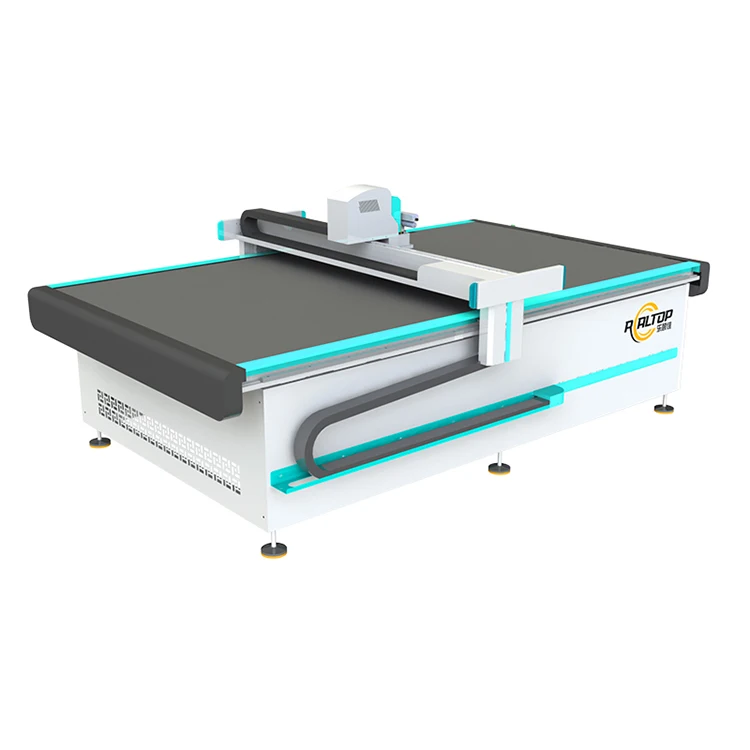
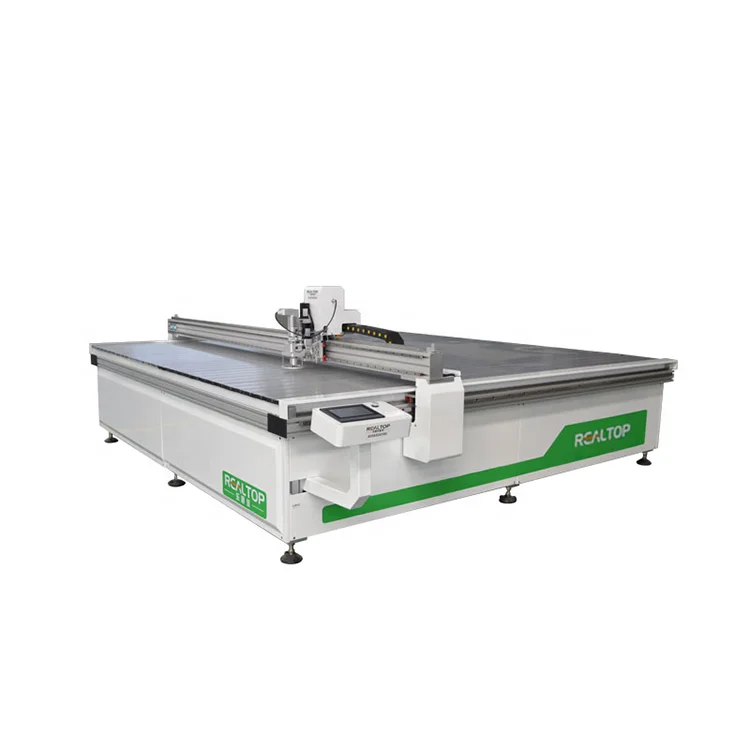
Customized Configuration — A buyer cutting ice silk mattress panels needs different vacuum zoning and oscillation frequency than one slicing single-layer garment vinyl, so we configure the oscillating knife tool head, table size and auto-feeding system per material rather than shipping a standard unit.
Technical Specifications
| Parameter | Value |
|---|---|
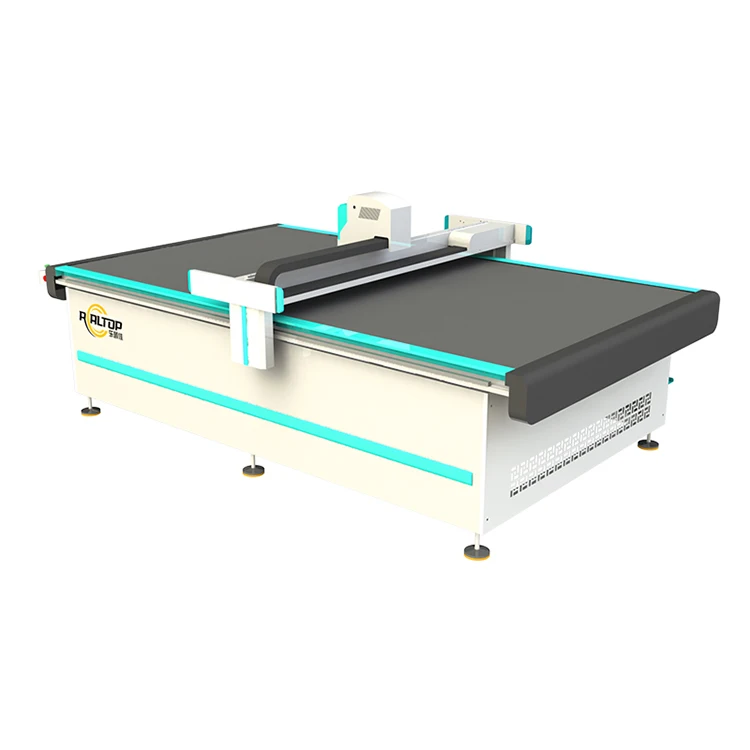
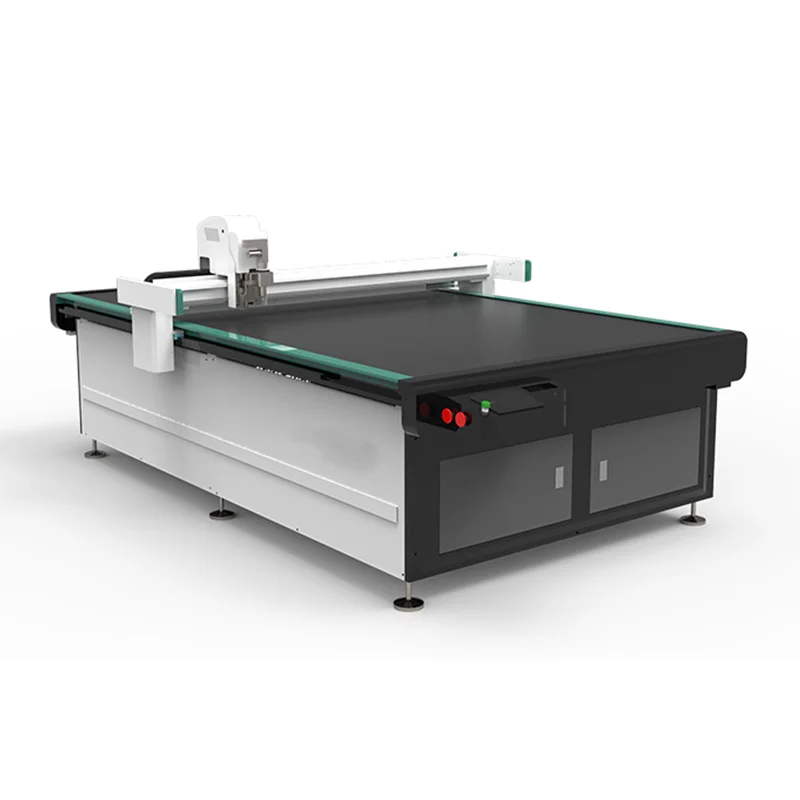
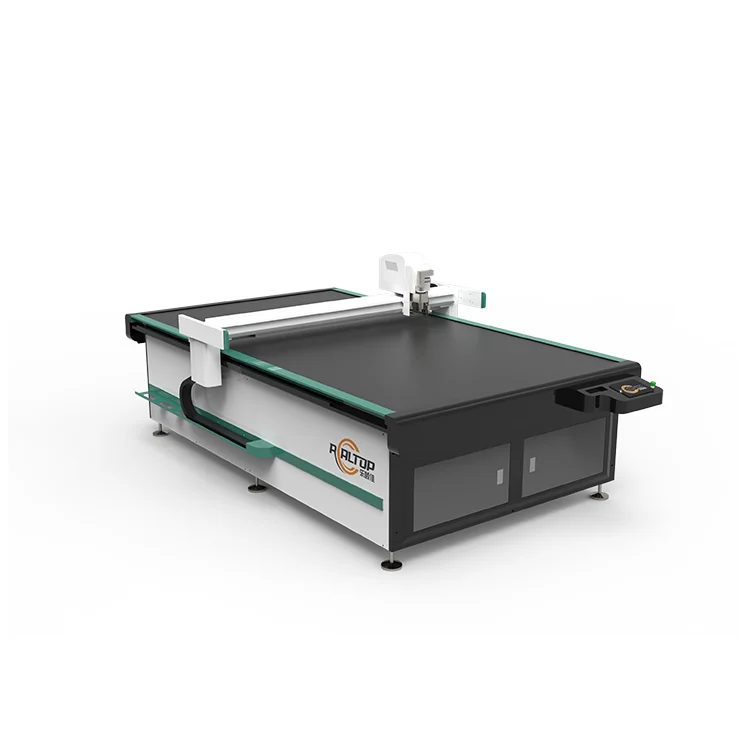
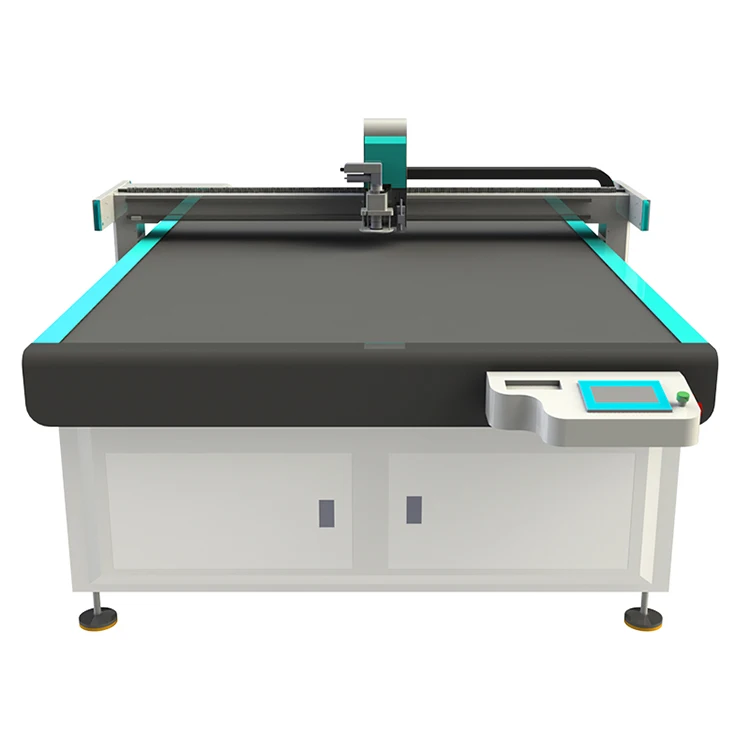
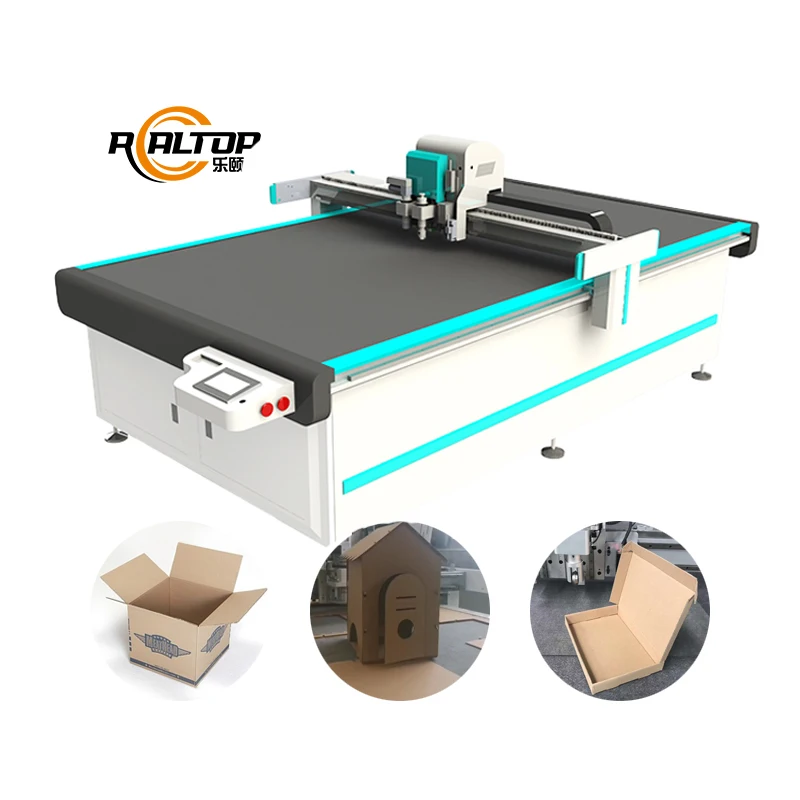
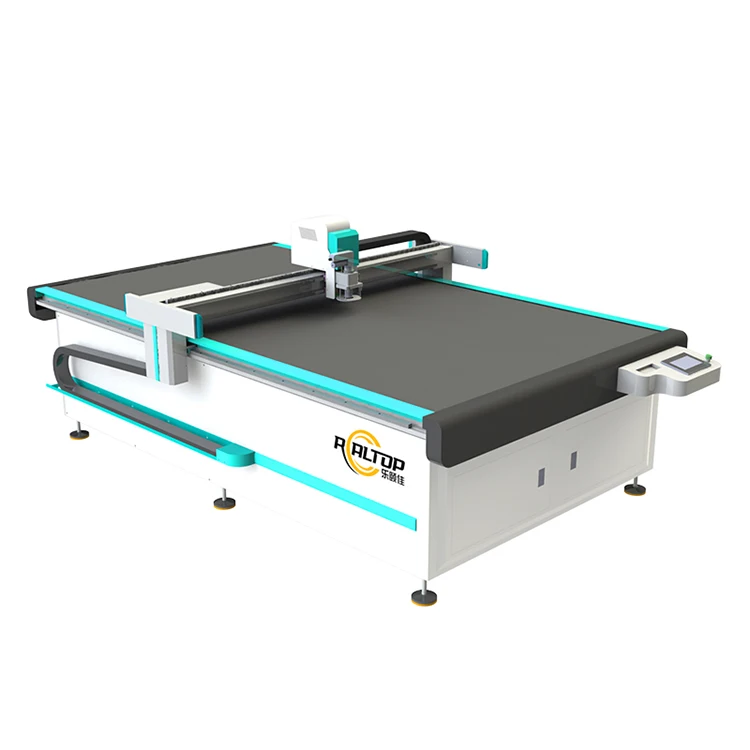
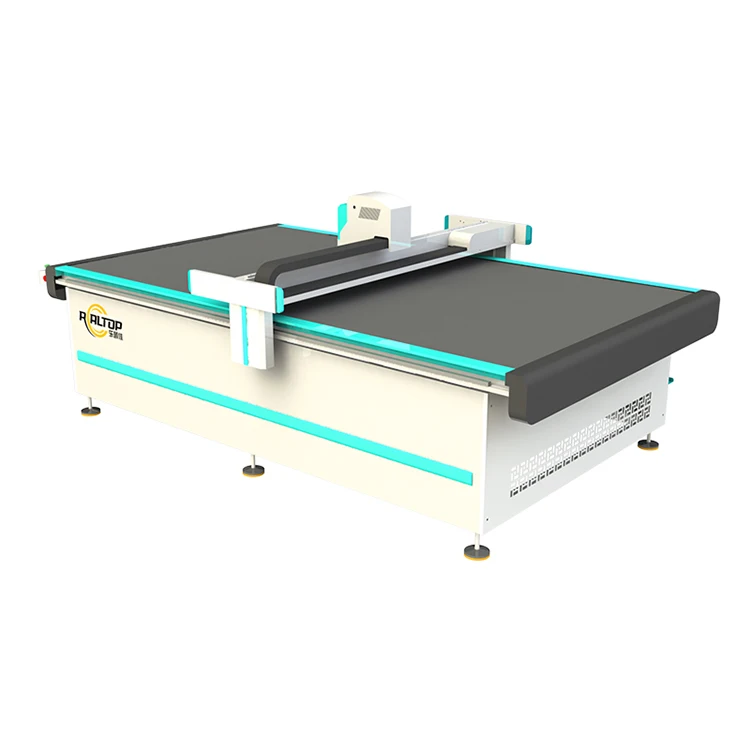
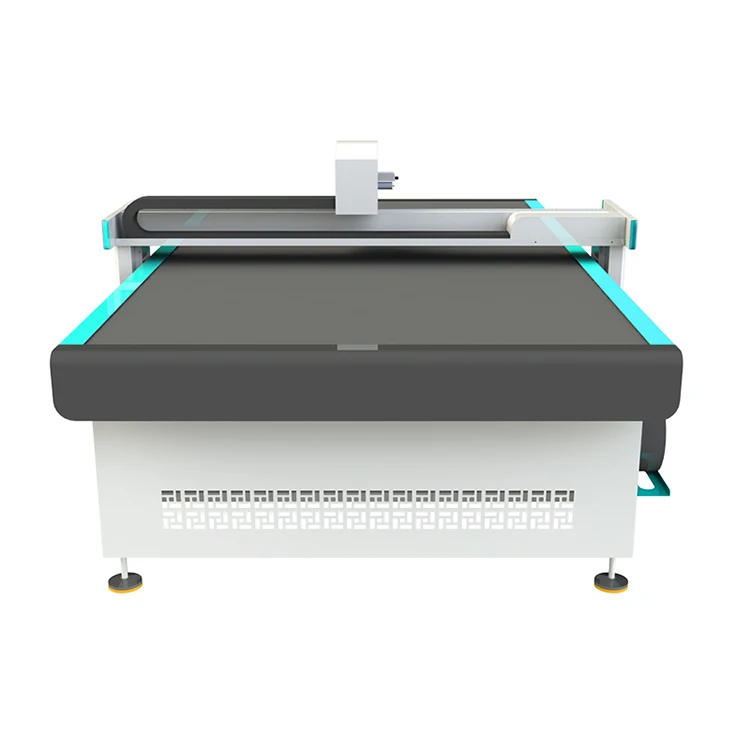
| Product Type | CNC Oscillating Knife Cutting Machine |
| Working Area | 1600×2500 mm |
| Machine Size | 3450×2300×1250 mm |
| Rated Power | 9 kW |
| Translational Velocity | 800–1200 mm/s |
| Cutting Speed | 200–800 mm/s (basis not stated in source — confirm block format, material and thickness) |
| Repeated Accuracy | ≤0.1 mm |
| Work Table | Flat vacuum table with conveyor belt |
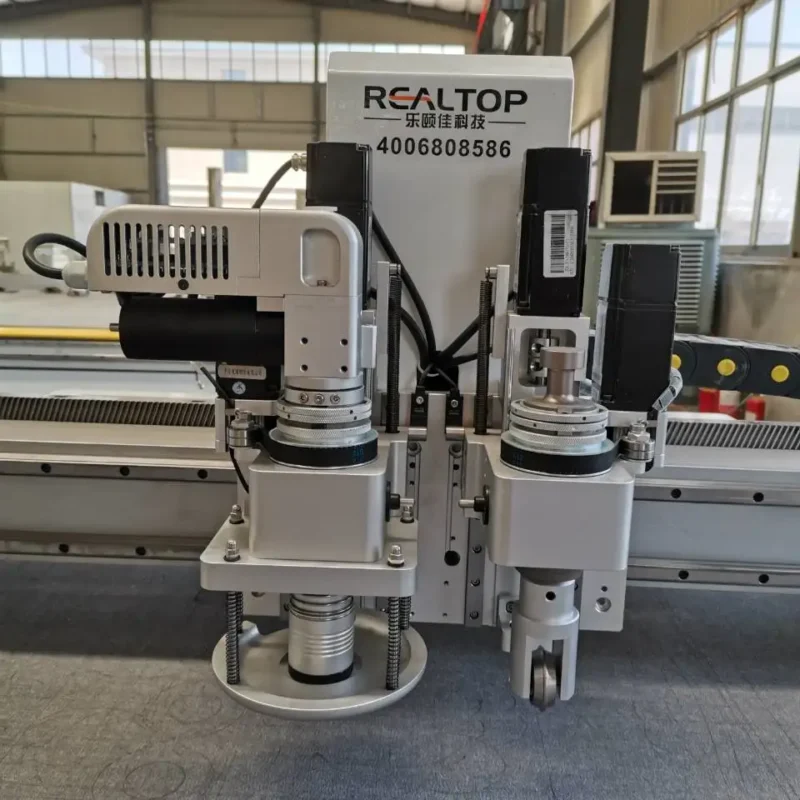
| Tool Head | Swiss imported oscillating knife with full-cut, half-cut and cursor location functions |
| Safety Device | Infrared sensors |
| Transmission System | Digital servo motor, linear guide, synchronous belt, imported ball screw |
| Servo Motor | Japanese Yaskawa |
| Linear Rail | Taiwan Hiwin |
| Vacuum Pump | 7.5 kW |
| Instruction System | HP-GL compatible format |
| Voltage | 380V ±10% |
| Warranty | 12 months whole machine, 3 months consumables (source value — verify against manufacturer catalog) |
Application Suitability
| Application | Material or Output |
|---|---|
| Bedding and mattress production | Ice silk composite fabric, quilted panels, multi-layer textile stacks |
| Fabric sofa upholstery cutting | Sponge-bonded leather, flexible composites, woven and knitted fabric |
| Leather goods manufacturing | Genuine and synthetic leather sheets for bags, shoes and accessories |
| Flexible material converting | PVC, soft glass, silicon and rubber sheets for gaskets and seals |
Why the Material Sample Must Arrive Before the Purchase Order
Specifying a CNC oscillating knife cutting machine by working area alone is the most frequent cause of production-floor disappointment.
I once spent three days on a buyer’s floor recalibrating knife pressure and feed rate after a unit that performed perfectly on standard sponge during the factory test struggled with multi-layer ice silk composites. The material density, ply count and surface friction all changed the cutting dynamics. A working area figure tells you nothing about how the blade interacts with your specific stack height or whether the vacuum hold-down can keep small cut pieces from lifting during high-speed traversal [NEED_CITE: material hold-down requirements for oscillating knife cutting].
Matching the Oscillation to Your Fabric Stack
The Swiss imported oscillating knife fitted to this CNC oscillating knife cutting machine manufacturer range offers full-cut and half-cut modes, letting a bedding producer kiss-cut quilted panels without severing the backing layer. Cursor location adds mark-based positioning so printed registration points on upholstery fabric can be picked up without manual alignment. The oscillation frequency and amplitude must be tuned to the ply count and density of the actual material stack, which is why a sample cutting run on the buyer’s own roll goods remains the only reliable validation method.
Vacuum Zoning and Conveyor Belt Interaction
A 7.5 kW vacuum pump pulls air through the flat table surface to clamp flexible material during cutting, but zoning matters as much as total suction. When a sofa upholstery shop nests small arm-cap pieces alongside large seat panels, un-zoned vacuum allows air to escape through cut gaps, reducing hold-down on the remaining sheet. The Germany imported conveyor belt works with the vacuum table to advance roll goods automatically, keeping the cutting zone loaded without an operator manually dragging heavy fabric bolts across the table surface [NEED_CITE: vacuum table zoning for nested fabric cutting].
Reading the Specs Against Real Production Needs
The ≤0.1 mm repeated accuracy figure is achieved through the combination of Japanese Yaskawa digital servo motors, Taiwan Hiwin linear rails and imported ball screws — a motion chain that resists the lateral deflection an oscillating knife imposes when it penetrates dense sponge composites. The 9 kW rated power covers the servo drives, vacuum pump draw and oscillating head simultaneously, so buyers should verify that their workshop supply can sustain this load alongside other equipment on the same circuit. The HP-GL compatible instruction system accepts common nesting file outputs, but buyers should confirm their existing CAD or nesting software exports a compatible format before the order is finalized.
What Happens When the Feed System Is Wrong for the Material
A buyer cutting single-layer vinyl for signage can manage with manual sheet loading, but a bedding factory running multi-layer ice silk stacks needs the auto-feeding conveyor to maintain consistent material position between cuts. Without it, operators reposition heavy fabric rolls by hand, introducing alignment drift that accumulates across a shift. Ragged edges on sponge composites usually trace back to an incorrect oscillation amplitude rather than blade dullness, and crushed foam layers indicate the knife pressure was set for a different material entirely [NEED_CITE: edge quality troubleshooting on composite fabric cutting].
Why Buyers Source the CNC Oscillating Knife Cutting Machine Manufacturer Here
The in-house design team covers both knife and laser cutting technologies, so a buyer processing acrylic templates alongside fabric upholstery can match the cutting method to each material rather than forcing one machine to handle both. Every tool head and table configuration is specified against the buyer’s stated material type, thickness and daily volume before production begins. Sample cutting on the buyer’s actual roll goods produces a report documenting edge quality and cycle time before the purchase order is signed. Voltage, control panel language and plug type are confirmed to match the destination workshop’s electrical infrastructure. Software file format compatibility is verified against the buyer’s nesting workflow so there are no surprises at commissioning.
Documentation & Verification
- Machine specification sheet listing confirmed working area, tool head options and voltage
- Electrical schematic and voltage confirmation matched to destination workshop supply
- Tool head and table configuration list showing vacuum zoning and conveyor setup
- Sample cutting report produced on buyer’s own fabric or composite material
- Factory test record documenting repeated accuracy and cutting speed on specified material
- Operation and maintenance manual with spare parts list and consumable intervals
Installation, Commissioning & Support
- 3450×2300 mm machine footprint requires level concrete floor with clearance for conveyor infeed
- 380V ±10% three-phase supply with dedicated circuit rated above 9 kW continuous draw
- 7.5 kW vacuum pump ducted to exhaust or filtration per workshop air quality requirements
- First-run parameter calibration on buyer’s material stack for knife pressure and oscillation
- Operator training covering HP-GL file import, nesting workflow and tool head changeover
- Consumable blade and belt replacement schedule aligned to production shift patterns
Preparing Your Inquiry
Send the material type, ply count, maximum sheet or roll width and your target daily cut volume so the tool head and table configuration can be specified accurately. Confirm your workshop voltage, frequency and preferred control panel language to avoid post-shipment electrical rework. If your nesting software is already in use, share a sample file so format compatibility can be verified before the order proceeds.
Frequently Asked Questions
Q: How do I decide between oscillating knife, drag knife and laser for my fabric and composite materials?
A: Oscillating knife suits multi-layer fabric stacks and sponge composites where clean edges without crushing are required. Drag knife works on single-layer vinyl and thin gasket material. Laser cuts and seals synthetic edges but can melt natural fibers. Share your material type and thickness so the correct method is matched before model selection.
Q: Which working area and machine family fits my bedding or sofa fabric sheet size?
A: The 1600×2500 mm working area handles standard roll widths common in bedding and upholstery production. If your material arrives in wider rolls or you need higher daily volume, larger format tables with extended conveyor feed are available. Provide your maximum sheet dimensions and daily cut count to narrow the selection.
Q: How does tool head selection affect edge quality on quilted panels and sponge composites?
A: The Swiss imported oscillating knife provides full-cut and half-cut modes, letting you kiss-cut quilted layers without severing backing fabric. Amplitude and frequency must match the stack density — too aggressive an oscillation frays woven fabric, while insufficient amplitude leaves sponge layers partially cut. Sample testing on your actual material confirms the correct setting.
Q: What software file formats and nesting workflows does the instruction system support?
A: The HP-GL compatible instruction system accepts output from most common nesting and CAD packages used in fabric and upholstery production. Before order confirmation, share a sample file from your existing workflow so compatibility is verified and any format conversion is addressed before the machine ships.
Q: What voltage, plug type and control panel language options are available for my market?
A: The standard configuration runs on 380V ±10% three-phase supply, but voltage and frequency must be confirmed against your local electrical standard. Plug type, cable specification and control panel language are set per destination market before production. State your country and workshop electrical details during inquiry to ensure correct configuration.
Customized Configuration — A buyer cutting ice silk mattress panels needs different vacuum zoning and oscillation frequency than one slicing single-layer garment vinyl, so we configure the oscillating knife tool head, table size and auto-feeding system per material rather than shipping a standard unit.
Technical Specifications
| Parameter | Value |
|---|---|
| Product Type | CNC Oscillating Knife Cutting Machine |
| Working Area | 1600×2500 mm |
| Machine Size | 3450×2300×1250 mm |
| Rated Power | 9 kW |
| Translational Velocity | 800–1200 mm/s |
| Cutting Speed | 200–800 mm/s (basis not stated in source — confirm block format, material and thickness) |
| Repeated Accuracy | ≤0.1 mm |
| Work Table | Flat vacuum table with conveyor belt |
| Tool Head | Swiss imported oscillating knife with full-cut, half-cut and cursor location functions |
| Safety Device | Infrared sensors |
| Transmission System | Digital servo motor, linear guide, synchronous belt, imported ball screw |
| Servo Motor | Japanese Yaskawa |
| Linear Rail | Taiwan Hiwin |
| Vacuum Pump | 7.5 kW |
| Instruction System | HP-GL compatible format |
| Voltage | 380V ±10% |
| Warranty | 12 months whole machine, 3 months consumables (source value — verify against manufacturer catalog) |
Application Suitability
| Application | Material or Output |
|---|---|
| Bedding and mattress production | Ice silk composite fabric, quilted panels, multi-layer textile stacks |
| Fabric sofa upholstery cutting | Sponge-bonded leather, flexible composites, woven and knitted fabric |
| Leather goods manufacturing | Genuine and synthetic leather sheets for bags, shoes and accessories |
| Flexible material converting | PVC, soft glass, silicon and rubber sheets for gaskets and seals |
Why the Material Sample Must Arrive Before the Purchase Order
Specifying a CNC oscillating knife cutting machine by working area alone is the most frequent cause of production-floor disappointment.
I once spent three days on a buyer’s floor recalibrating knife pressure and feed rate after a unit that performed perfectly on standard sponge during the factory test struggled with multi-layer ice silk composites. The material density, ply count and surface friction all changed the cutting dynamics. A working area figure tells you nothing about how the blade interacts with your specific stack height or whether the vacuum hold-down can keep small cut pieces from lifting during high-speed traversal [NEED_CITE: material hold-down requirements for oscillating knife cutting].
Matching the Oscillation to Your Fabric Stack
The Swiss imported oscillating knife fitted to this CNC oscillating knife cutting machine manufacturer range offers full-cut and half-cut modes, letting a bedding producer kiss-cut quilted panels without severing the backing layer. Cursor location adds mark-based positioning so printed registration points on upholstery fabric can be picked up without manual alignment. The oscillation frequency and amplitude must be tuned to the ply count and density of the actual material stack, which is why a sample cutting run on the buyer’s own roll goods remains the only reliable validation method.
Vacuum Zoning and Conveyor Belt Interaction
A 7.5 kW vacuum pump pulls air through the flat table surface to clamp flexible material during cutting, but zoning matters as much as total suction. When a sofa upholstery shop nests small arm-cap pieces alongside large seat panels, un-zoned vacuum allows air to escape through cut gaps, reducing hold-down on the remaining sheet. The Germany imported conveyor belt works with the vacuum table to advance roll goods automatically, keeping the cutting zone loaded without an operator manually dragging heavy fabric bolts across the table surface [NEED_CITE: vacuum table zoning for nested fabric cutting].
Reading the Specs Against Real Production Needs
The ≤0.1 mm repeated accuracy figure is achieved through the combination of Japanese Yaskawa digital servo motors, Taiwan Hiwin linear rails and imported ball screws — a motion chain that resists the lateral deflection an oscillating knife imposes when it penetrates dense sponge composites. The 9 kW rated power covers the servo drives, vacuum pump draw and oscillating head simultaneously, so buyers should verify that their workshop supply can sustain this load alongside other equipment on the same circuit. The HP-GL compatible instruction system accepts common nesting file outputs, but buyers should confirm their existing CAD or nesting software exports a compatible format before the order is finalized.
What Happens When the Feed System Is Wrong for the Material
A buyer cutting single-layer vinyl for signage can manage with manual sheet loading, but a bedding factory running multi-layer ice silk stacks needs the auto-feeding conveyor to maintain consistent material position between cuts. Without it, operators reposition heavy fabric rolls by hand, introducing alignment drift that accumulates across a shift. Ragged edges on sponge composites usually trace back to an incorrect oscillation amplitude rather than blade dullness, and crushed foam layers indicate the knife pressure was set for a different material entirely [NEED_CITE: edge quality troubleshooting on composite fabric cutting].
Why Buyers Source the CNC Oscillating Knife Cutting Machine Manufacturer Here
The in-house design team covers both knife and laser cutting technologies, so a buyer processing acrylic templates alongside fabric upholstery can match the cutting method to each material rather than forcing one machine to handle both. Every tool head and table configuration is specified against the buyer’s stated material type, thickness and daily volume before production begins. Sample cutting on the buyer’s actual roll goods produces a report documenting edge quality and cycle time before the purchase order is signed. Voltage, control panel language and plug type are confirmed to match the destination workshop’s electrical infrastructure. Software file format compatibility is verified against the buyer’s nesting workflow so there are no surprises at commissioning.
Documentation & Verification
- Machine specification sheet listing confirmed working area, tool head options and voltage
- Electrical schematic and voltage confirmation matched to destination workshop supply
- Tool head and table configuration list showing vacuum zoning and conveyor setup
- Sample cutting report produced on buyer’s own fabric or composite material
- Factory test record documenting repeated accuracy and cutting speed on specified material
- Operation and maintenance manual with spare parts list and consumable intervals
Installation, Commissioning & Support
- 3450×2300 mm machine footprint requires level concrete floor with clearance for conveyor infeed
- 380V ±10% three-phase supply with dedicated circuit rated above 9 kW continuous draw
- 7.5 kW vacuum pump ducted to exhaust or filtration per workshop air quality requirements
- First-run parameter calibration on buyer’s material stack for knife pressure and oscillation
- Operator training covering HP-GL file import, nesting workflow and tool head changeover
- Consumable blade and belt replacement schedule aligned to production shift patterns
Preparing Your Inquiry
Send the material type, ply count, maximum sheet or roll width and your target daily cut volume so the tool head and table configuration can be specified accurately. Confirm your workshop voltage, frequency and preferred control panel language to avoid post-shipment electrical rework. If your nesting software is already in use, share a sample file so format compatibility can be verified before the order proceeds.
Frequently Asked Questions
Q: How do I decide between oscillating knife, drag knife and laser for my fabric and composite materials?
A: Oscillating knife suits multi-layer fabric stacks and sponge composites where clean edges without crushing are required. Drag knife works on single-layer vinyl and thin gasket material. Laser cuts and seals synthetic edges but can melt natural fibers. Share your material type and thickness so the correct method is matched before model selection.
Q: Which working area and machine family fits my bedding or sofa fabric sheet size?
A: The 1600×2500 mm working area handles standard roll widths common in bedding and upholstery production. If your material arrives in wider rolls or you need higher daily volume, larger format tables with extended conveyor feed are available. Provide your maximum sheet dimensions and daily cut count to narrow the selection.
Q: How does tool head selection affect edge quality on quilted panels and sponge composites?
A: The Swiss imported oscillating knife provides full-cut and half-cut modes, letting you kiss-cut quilted layers without severing backing fabric. Amplitude and frequency must match the stack density — too aggressive an oscillation frays woven fabric, while insufficient amplitude leaves sponge layers partially cut. Sample testing on your actual material confirms the correct setting.
Q: What software file formats and nesting workflows does the instruction system support?
A: The HP-GL compatible instruction system accepts output from most common nesting and CAD packages used in fabric and upholstery production. Before order confirmation, share a sample file from your existing workflow so compatibility is verified and any format conversion is addressed before the machine ships.
Q: What voltage, plug type and control panel language options are available for my market?
A: The standard configuration runs on 380V ±10% three-phase supply, but voltage and frequency must be confirmed against your local electrical standard. Plug type, cable specification and control panel language are set per destination market before production. State your country and workshop electrical details during inquiry to ensure correct configuration.
商品评价
There are no reviews yet.