


Fast Delivery
Quick, reliable shipping to any location.

Free & easy returns
Return this item by mail or in store within 90 days for a full refund.
Interchangeable Tooling Options — Match the cutting head to the gasket material instead of forcing one blade across rubber, PTFE, and composites.
Technical Specifications
| Parameter | Value |
|---|---|
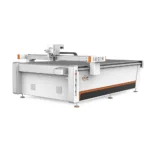
| Product Type | CNC Oscillating Knife Cutting Machine |
| Working Area | 1600×2500 mm |
| Available Tool Heads | Oscillating knife, Driven rotary knife, Creasing wheel, Kiss cutting tool, Pneumatic knife, Milling tool, V groove knife |
| Cutting Speed | 0–2000 mm/s |
| Cutting Thickness | ≤ 30 mm (basis not stated in source — confirm material type and density) |
| Positioning Accuracy | ±0.1 mm |
| Vacuum System | 9 kW pump with aluminum bellows vacuum table |
| Control System | PLC with multi-language display |
| Servo Motor Options | Panasonic, Delta, or Dorna |
| Voltage Options | 110V, 220V, 380V |
| Supported Formats | PLT, DXF, AI, PDF |
| Safety Devices | Infrared sensor, emergency stop |
| Machine Dimensions (L×W×H) | 3300×2100×1350 mm |
Application Suitability
| Application | Material or Output |
|---|---|
| Industrial gasket production | Rubber, PTFE, EVA, graphite-enhanced composites, aramid fiber sheets |
| Automotive sealing components | Acoustic felt, damping pads, sealing strips, headliner fabrics |
| Aerospace composite cutting | Carbon fiber prepreg, aramid honeycomb, ceramic fiber blankets |
| Insulation part fabrication | Fiberglass cloth, PET/PVC foam core, battery insulation sheets |
| Sporting goods prototyping | Kevlar, high-performance foam layers, technical composite fabrics |
Why Tool Head Selection Matters More Than Bed Size
When buyers evaluate a CNC oscillating knife cutting machine manufacturer, the working area often drives the decision while the tooling configuration gets overlooked. The cutting method must match the material density and thickness, not the sheet dimensions.
I learned this the hard way on the factory floor. Last year, a gasket client purchased a system based on bed size alone. Their graphite-reinforced material proved far harder than our test samples. Blades chipped within days, and an entire production batch was scrapped. Now every gasket order requires sample cutting on the buyer’s actual material before we finalize the tool head specification [NEED_CITE: material hardness variance in graphite-reinforced gaskets].
Seven Tool Heads for Seven Different Cutting Problems
A single oscillating knife cannot handle the full range of gasket and composite materials. The system supports interchangeable heads including a driven rotary knife for woven aramid, a pneumatic knife for thick rubber, a kiss cutting tool for adhesive-backed sheets, and a milling tool for rigid epoxy boards. This configurability means a facility cutting both soft EVA foam and dense PTFE can switch heads rather than run two separate machines.
Vacuum Zoning and Small Part Retention
Flat gaskets often nest tightly across the bed, but small sealing rings and thin PTFE washers require localized vacuum hold-down. The aluminum bellows table provides full-surface adsorption powered by a 9 kW pump. Without adequate vacuum zoning configured for the buyer’s smallest part geometry, high-speed cutting can lift pieces mid-pass and ruin edge quality [NEED_CITE: vacuum table zoning practices for precision gasket cutting].
Reading the Specs Beyond the Numbers
Cutting speed rated at 0–2000 mm/s is a traverse figure; actual throughput depends on material resistance, corner density, and tool path complexity. The ±0.1 mm positioning accuracy matters when cutting aerospace gaskets that must mate with machined flanges. The PLC control system handles PLT, DXF, AI, and PDF imports, but file format compatibility with the buyer’s existing nesting software should be verified before the machine ships. Voltage options span 110V to 380V, yet frequency and plug type must be confirmed against the destination facility’s electrical infrastructure [NEED_CITE: industrial voltage and frequency standards across export markets].
What Happens When the Wrong Head Meets the Wrong Material
Specifying a standard oscillating knife for hard graphite-enhanced gaskets produces ragged edges and rapid blade wear. Using a drag knife on thick foam crushes the material instead of slicing it. A kiss cutting tool set too deep scores the backing paper and jams automated pick-and-place downstream. These are not theoretical failures; they are the exact problems that surface during the first week of production when configuration was guessed rather than tested.
Why Procurement Starts With a Sample
The Realtop design team builds both knife and laser cutting platforms in-house, so the cutting method is selected based on the material rather than the available inventory. Every gasket configuration is validated through sample cutting on the buyer’s own stock before the order is finalized. Tool head selection, vacuum table layout, servo motor specification, and software language are confirmed line by line. The factory test record ships with the machine so the buyer has a baseline for edge quality and dimensional accuracy on their specific material [NEED_CITE: CE machinery directive requirements for industrial cutting equipment].
Documentation & Verification
- Machine specification sheet listing selected tool heads and vacuum zone layout
- Electrical schematic confirming voltage, frequency, and plug type for the destination
- Sample cutting report with edge quality photos on the buyer’s own gasket material
- Factory test record documenting dimensional accuracy before crating
- Software licence and file format compatibility note for the buyer’s nesting workflow
- Spare parts list matched to the configured tool heads and pump specification
Installation, Commissioning & Support
- Floor space of approximately 3300×2100 mm plus clearance for material loading on the 1600×2500 mm bed
- Dedicated electrical circuit matching the confirmed voltage and the 9 kW vacuum pump draw
- Machine ships fully assembled; positioning and leveling are completed on-site
- First-run calibration sets servo parameters and vacuum pressure for the buyer’s material thickness
- Operator training covers tool head changeover, blade replacement, and nesting software workflow
- Spare blade and consumable kit matched to the configured oscillating and rotary knife heads
Preparing Your Inquiry
When requesting a quotation, provide the gasket material type, density, and maximum sheet thickness you intend to cut. Include your daily production volume and the smallest part dimension in your typical nesting layout. Specify your facility voltage, frequency, and preferred control language so the CNC oscillating knife cutting machine manufacturer can confirm electrical and software compatibility before building the system.
Frequently Asked Questions
Q: How do I decide between an oscillating knife and a driven rotary knife for my gasket material?
A: Oscillating knives suit most rubber, EVA, and foam gaskets. Driven rotary knives handle woven and fibrous materials like aramid more cleanly. The decision depends on material density and fiber structure, which is why we recommend sample cutting on your actual stock before configuration is locked in.
Q: The spec sheet says up to 30 mm cutting thickness — what material is that based on?
A: The stated limit does not specify a reference material or density. Soft foam cuts differently than hard PTFE at the same thickness. We verify actual cutting depth capacity by running sample cuts on your specific gasket material and documenting the results before you commit.
Q: Will small gasket parts lift off the table during high-speed cutting?
A: Small parts require adequate vacuum hold-down in the specific table zones where they are nested. The aluminum bellows table paired with the 9 kW pump provides strong adsorption, but zone configuration must match your smallest part geometry. Confirm your part layout with us during the specification stage.
Q: Can I send my material for a test cut before placing an order?
A: Yes. We run sample cutting on the buyer’s own gasket material to verify tool head selection, edge quality, and achievable cutting depth. The sample cutting report ships with the quotation so you can evaluate results before committing to the full CNC oscillating knife cutting machine configuration.
Q: What electrical and software details should I confirm before shipment?
A: Voltage, frequency, plug type, and control display language must match your facility. Software compatibility with your existing PLT, DXF, AI, or PDF nesting files is confirmed before production. We document all these settings in the electrical schematic and software licence note that accompany the machine.










商品评价
There are no reviews yet.