


Fast Delivery
Quick, reliable shipping to any location.

Free & easy returns
Return this item by mail or in store within 90 days for a full refund.
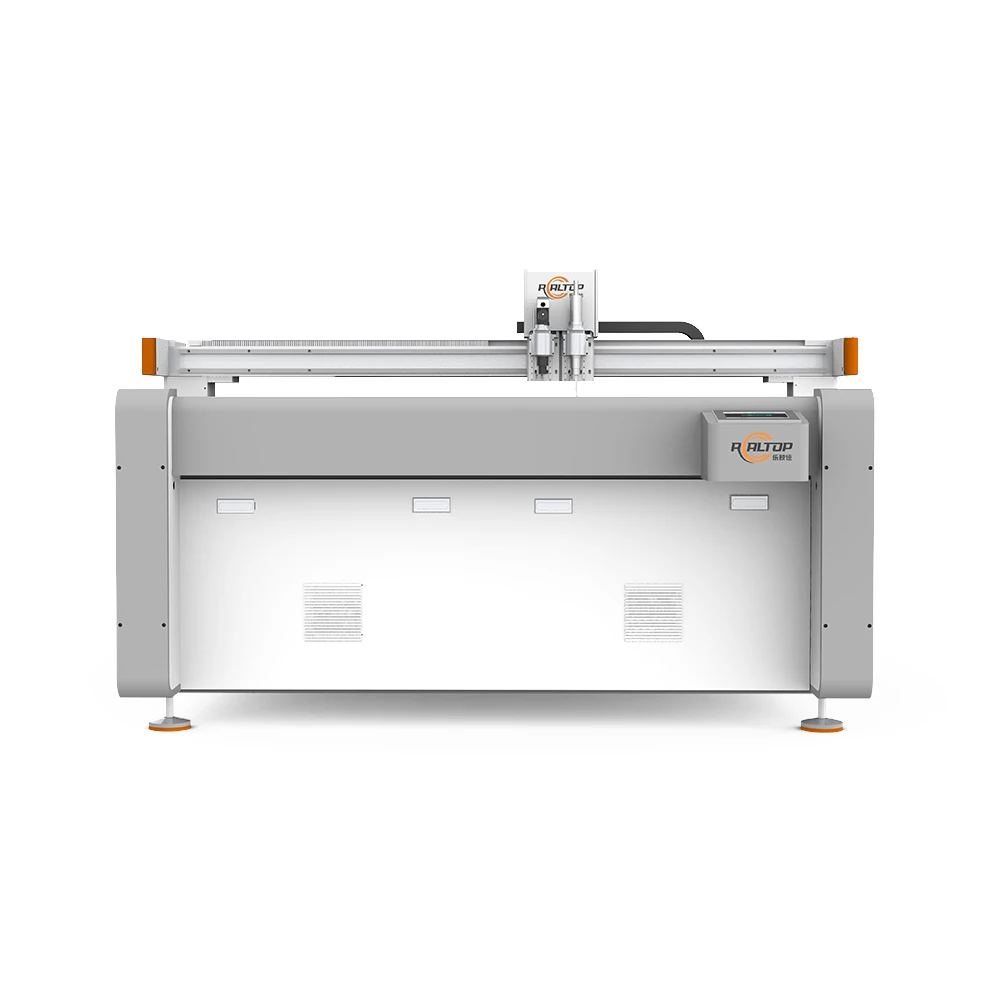
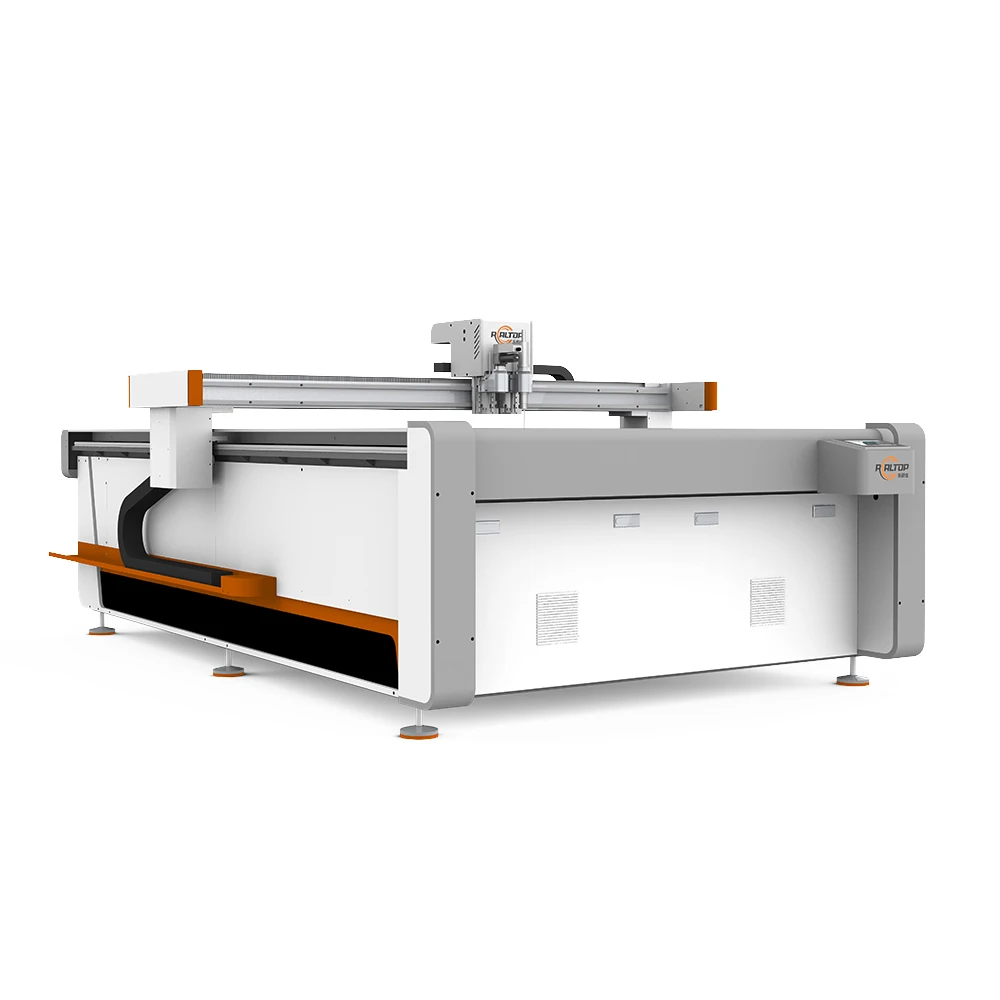
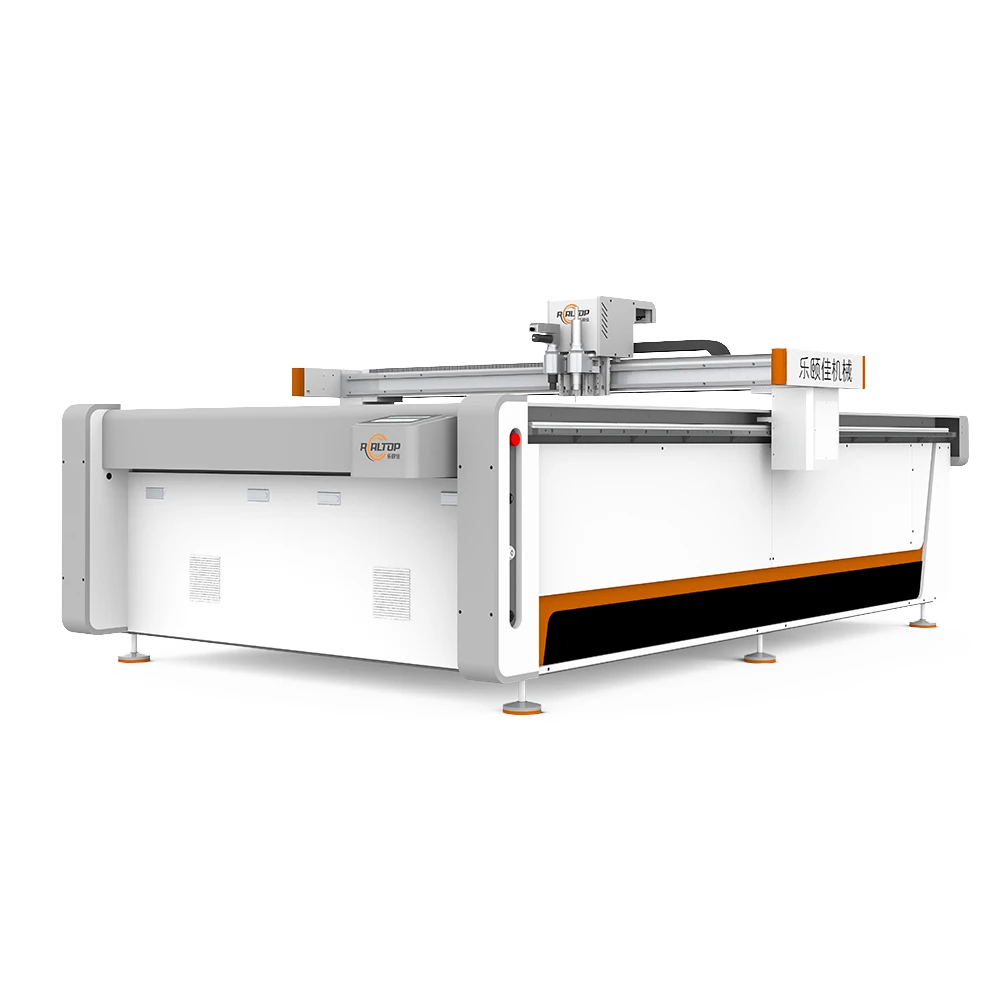
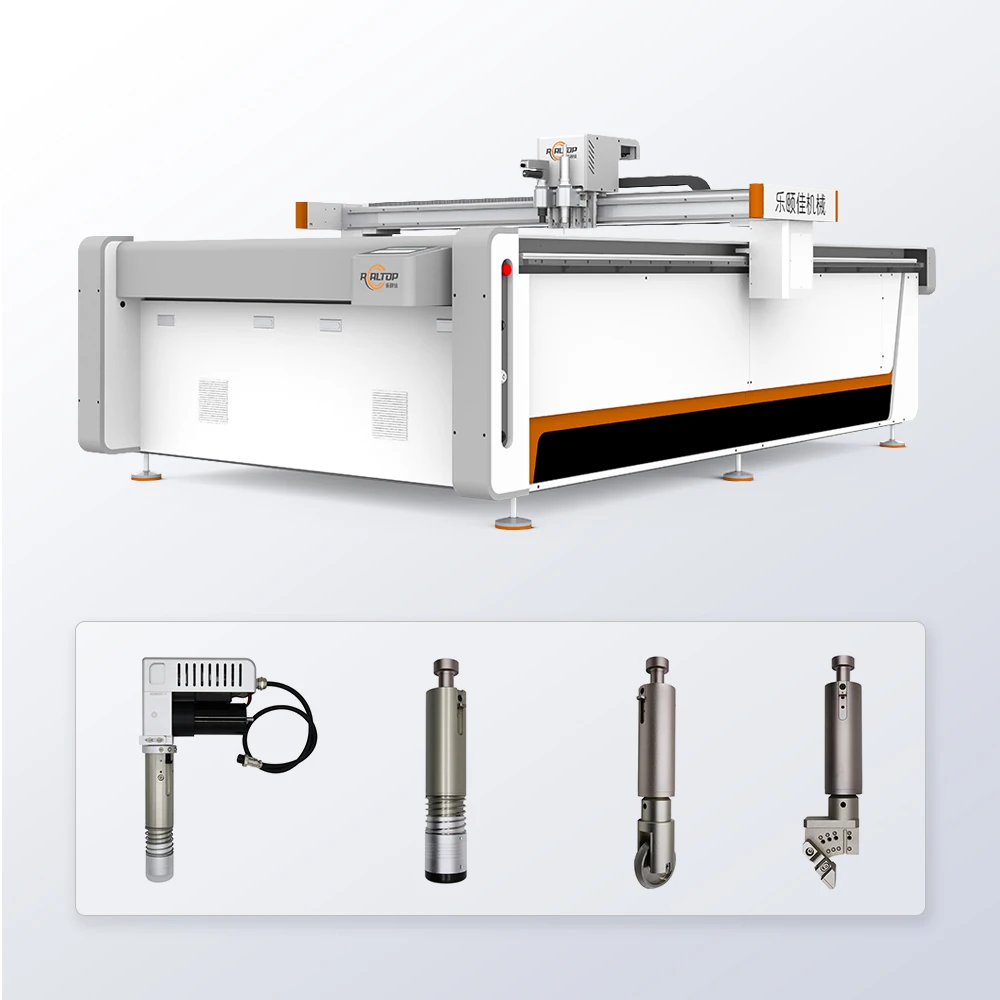
Seven Tool Heads on One Platform — the 1625 flatbed lets packaging sample makers and short-run producers switch between oscillating knife, creasing wheel, and V-groove without moving the sheet to a second machine.
Technical Specifications
| Parameter | Value |
|---|---|
| Product Type | CNC Oscillating Knife Cutting Machine |
| Model | 1625 |
| Working Area | 1600×2500 mm |
| Tool Head Options | Oscillating knife, Driven rotary knife, Creasing wheel, Kiss cutting tool, Pneumatic knife, Milling tool, V-groove knife |
| Cutting Speed | 0–1500 mm/s |
| Cutting Thickness | ≤ 40 mm (basis not stated in source — confirm material type and density) |
| Cutting Accuracy | ±0.1 mm |
| Vacuum Pump | 9 kW |
| Vacuum Table | Aluminum bellows vacuum table |
| Machine Frame | Heavy-duty frame with precision-ground surface |
| Control System | PLC control panel with optional display languages |
| Software & File Formats | PLT, DXF, AI, PDF; dedicated packaging box structure design software included |
| Servo Motor Options | Panasonic, Delta, Dorna |
| Voltage Options | 110V / 220V / 380V (frequency to be confirmed per market) |
| Safety Devices | Infrared sensor device, emergency stop |
| Overall Dimensions | 3300×2100×1350 mm |
| Language Options | English, Russian, Italian, Chinese; special languages customizable |
| Assembly State | Fully assembled, factory tested before shipment |
| Certification | CE |
Application Suitability
| Application | Material or Output |
|---|---|
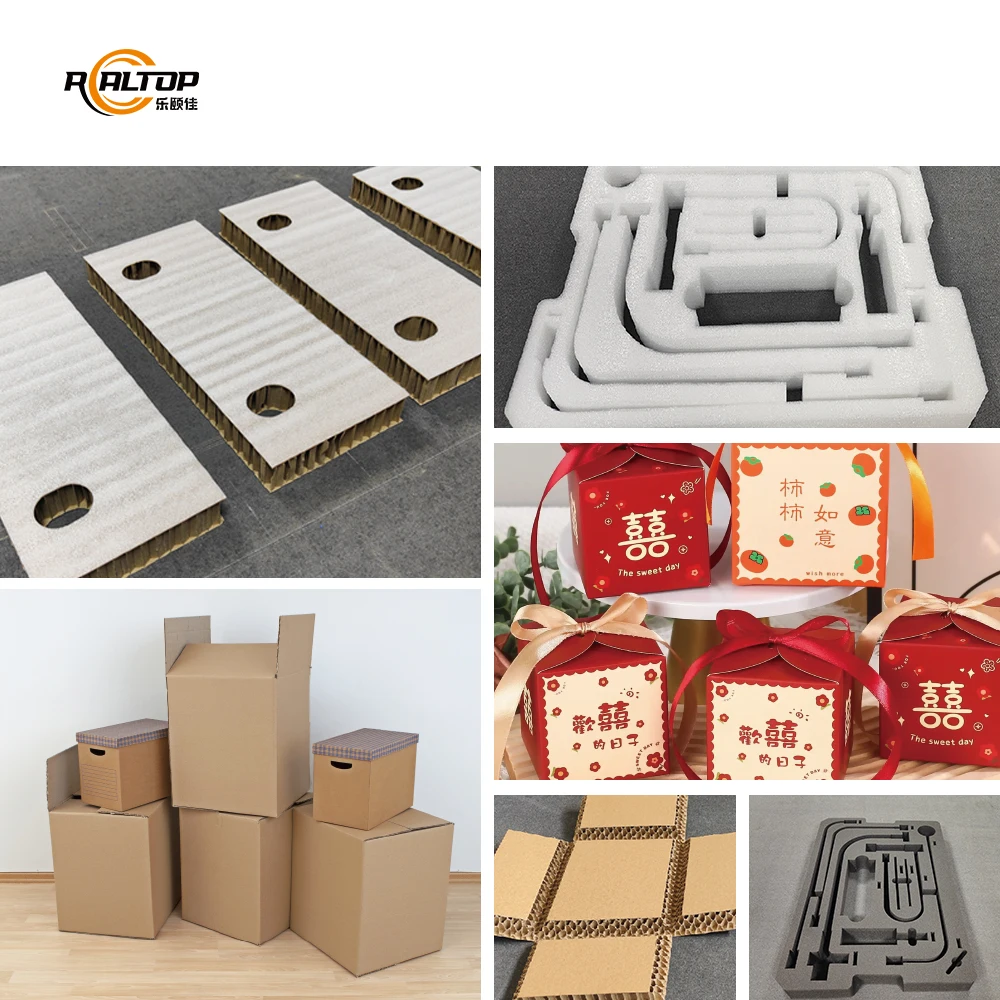
| Corrugated packaging sample making | E-flute, B-flute, BC-flute boards |
| Folding carton and rigid box prototyping | Greyboard, cardstock, art paper, specialty paper |
| Foam insert and protective packaging | EVA foam, EPE foam, PU foam |
| Gasket and seal cutting | Rubber mats, non-woven fabric, felt |
| Thin plastic packaging components | PVC, PET sheets |
| Leather and synthetic leather goods | Leather, synthetic leather for packaging inserts |
| Composite and adhesive-backed packaging | Composite materials, adhesive-backed laminates |
| Small-batch customized packaging production | Mixed materials across short-run schedules |
When "Working Area" Is the Only Spec You Get
A machine quoted purely on table size tells you nothing about what it actually cuts. The 1625 CNC oscillating knife cutting machine manufacturer must confirm tool head, vacuum zoning, and material-specific depth before a purchase order is signed.
I once watched a packaging buyer receive a flatbed with a single-zone vacuum table. Small-format carton samples lifted off the surface mid-cut, the oscillating knife dragged the sheet across the table, and an afternoon’s worth of corrugated board went straight to the scrap bin. The working area was generous; the vacuum configuration was wrong for the job [NEED_CITE: vacuum table zoning requirements for small-format flatbed cutting].
Buyers evaluating the full range of CNC cutting equipment need to compare knife and laser options side by side. A 1600×2500 mm table is only useful when the cutting method, tool head selection, and vacuum hold-down are matched to the actual material stack on the production floor.
Matching the Full Equipment Range to Your Production Reality
The lyjcut.com catalogue positions knife cutting and laser cutting on the same decision tree so buyers can compare both methods before committing capital. Oscillating and drag knife heads handle thick corrugated board, foam inserts, and layered textiles where edge compression matters. CO2 and fiber laser options serve acrylic signage, wood inlay, and sheet metal where sealed edges or high-speed contour work dominate.
A distributor evaluating REALTOP as a CNC oscillating knife cutting machine manufacturer can survey the complete flatbed family, narrow by working area and tool head configuration, then request sample cuts on their own material before selecting a model.
How Configuration Choices Compound Across the Range
Each machine family shares a common control architecture — PLC-based panels with multi-language displays and voltage options spanning 110V to 380V. This means a buyer who starts with a compact knife table for packaging samples can later add a larger-format laser unit without retraining operators on a different interface. The software layer accepts PLT, DXF, AI, and PDF files across both technologies [NEED_CITE: CNC flatbed cutting software file format interoperability standards].
For production managers comparing flatbed families, the deciding factor is often the tool head library. Seven heads on the 1625 cover creasing, kiss cutting, V-grooving, and milling on one platform — eliminating the need for a separate creasing machine or routing table in a packaging workshop.
Translating the Spec Sheet into Production Outcomes
The 9 kW vacuum pump paired with an aluminum bellows table is sized to hold corrugated board flat without crushing the flute structure. On E-flute and B-flute stock, consistent vacuum prevents the oscillating knife from lifting the material during direction changes, which is where most edge raggedness originates.
Cutting accuracy of ±0.1 mm matters most on packaging box structure design software outputs where fold lines and cut lines share tight tolerances — a 0.5 mm drift on a creasing wheel pass can cause a carton blank to assemble out of square.
Servo motor selection across Panasonic, Delta, and Dorna lets buyers align motion component sourcing with their existing maintenance supply chain. A factory already stocking Panasonic drives for other CNC equipment will simplify spare parts management by specifying the same brand here.
The dedicated packaging box structure design software included with the machine means carton and box prototyping can begin immediately without purchasing third-party CAD licenses or converting files through intermediate formats.
What a Misconfigured Flatbed Costs on the Floor
A vacuum table with insufficient zoning for small carton blanks causes edge lift during oscillating knife passes. The result is not a clean rejection — it is a slow accumulation of miscut samples, re-runs on expensive specialty board, and operator time spent taping material edges to the table surface [NEED_CITE: flatbed vacuum hold-down failure modes in packaging sample production].
Choosing a creasing wheel that does not match the board caliper produces fold lines that crack the surface liner or, worse, cut through it entirely. The packaging sample looks acceptable flat but splits along the crease during assembly — a defect that often surfaces only after the sample has been sent to the client.
Voltage mismatches discovered after shipment mean transformer retrofits, delayed installation, and potential servo drive damage if the frequency does not align with the motor rating. These are avoidable costs that surface repeatedly in cross-border equipment purchases.
Why Buyers Source the Full Range Here
REALTOP designs and builds both knife and laser cutting systems in-house, so a buyer evaluating packaging, signage, or composite work can match the cutting method to the material rather than force one technology to cover every job.
Tool head and table configurations are specified per material type and production volume, not offered as a fixed package. A packaging sample maker cutting predominantly B-flute corrugated will receive a different tool head list than a foam fabricator running 30 mm EVA inserts.
Sample cutting on the buyer’s own material is completed before the purchase order is finalized, providing a physical benchmark for edge quality, cutting speed, and vacuum hold-down performance on the actual production stock.
Voltage, plug type, control language, and software file format compatibility are confirmed in writing before production begins — not discovered during commissioning on the buyer’s floor.
Documentation & Verification
- Machine specification sheet confirming working area, all seven tool head options, and voltage selection
- Sample cutting report on your specific corrugated flute type and board density
- Electrical schematic with confirmed voltage, frequency, and plug type for your facility
- Tool head and table configuration list matched to your material stack and production volume
- Factory test record documenting cutting accuracy and vacuum performance before dispatch
- Operation manual with PLC control language set to your requested display language
Installation, Commissioning & Support
- Machine arrives fully assembled at 3300×2100×1350 mm; confirm floor space and doorway clearance before delivery
- 9 kW vacuum pump requires a dedicated circuit matching your confirmed 110V, 220V, or 380V supply
- First-run commissioning includes vacuum zoning check and tool head calibration on your material
- Operator training covers PLC panel navigation, tool head changeover, and packaging software workflow
- Spare parts list provided with servo motor brand and consumable blade specifications identified
- Routine maintenance schedule covers aluminum bellows table cleaning and vacuum pump filter intervals
Requesting a Configuration Proposal
Buyers comparing across the full catalogue should provide material type, maximum sheet thickness, daily sample or production volume, and the file formats currently used in their design workflow. Specify your facility voltage, frequency, preferred control language, and whether existing CAD software will feed the machine directly or files will arrive pre-nested. If you are evaluating knife versus laser for a specific application, send a material sample for test cutting on both platforms before narrowing the configuration.
Frequently Asked Questions
Q: How do I choose between oscillating knife and laser cutting for my packaging material?
A: Knife cutting handles thick corrugated board, foam, and composite materials where edge compression or melting is a concern. Laser cutting suits thin plastics, engraved wood inserts, and high-speed contour work on synthetics. Send your material for sample cutting on both platforms to compare edge quality, speed, and suitability before selecting a method.
Q: What working area sizes and tool head configurations are available across the range?
A: The catalogue spans compact to large-format tables with single and multi-head options. The 1625 offers a 1600×2500 mm working area with seven interchangeable tool heads. Configuration is specified per your material type and production volume rather than sold as a fixed package.
Q: How is cutting thickness verified before I commit to a machine?
A: Cutting thickness depends on material type, density, and ply count — not a single universal number. We run sample cuts on your actual material and provide a report documenting achievable thickness, edge quality, and cutting speed. This physical benchmark replaces theoretical spec-sheet claims.
Q: What voltage and language options can be customized before shipment?
A: Voltage is configurable across 110V, 220V, and 380V with frequency confirmed per your market. The PLC control panel supports English, Russian, Italian, and Chinese as standard, with additional languages available on request. Plug type and electrical documentation are finalized before production begins.
Q: How do I request a sample cut on my own material?
A: Ship a representative sample of your production material with details on thickness, density, and the cutting profile you need. We run test cuts on the relevant machine configuration and return the samples along with a written report covering edge quality, hold-down performance, and achievable speed.
Seven Tool Heads on One Platform — the 1625 flatbed lets packaging sample makers and short-run producers switch between oscillating knife, creasing wheel, and V-groove without moving the sheet to a second machine.
Technical Specifications
| Parameter | Value |
|---|---|
| Product Type | CNC Oscillating Knife Cutting Machine |
| Model | 1625 |
| Working Area | 1600×2500 mm |
| Tool Head Options | Oscillating knife, Driven rotary knife, Creasing wheel, Kiss cutting tool, Pneumatic knife, Milling tool, V-groove knife |
| Cutting Speed | 0–1500 mm/s |
| Cutting Thickness | ≤ 40 mm (basis not stated in source — confirm material type and density) |
| Cutting Accuracy | ±0.1 mm |
| Vacuum Pump | 9 kW |
| Vacuum Table | Aluminum bellows vacuum table |
| Machine Frame | Heavy-duty frame with precision-ground surface |
| Control System | PLC control panel with optional display languages |
| Software & File Formats | PLT, DXF, AI, PDF; dedicated packaging box structure design software included |
| Servo Motor Options | Panasonic, Delta, Dorna |
| Voltage Options | 110V / 220V / 380V (frequency to be confirmed per market) |
| Safety Devices | Infrared sensor device, emergency stop |
| Overall Dimensions | 3300×2100×1350 mm |
| Language Options | English, Russian, Italian, Chinese; special languages customizable |
| Assembly State | Fully assembled, factory tested before shipment |
| Certification | CE |
Application Suitability
| Application | Material or Output |
|---|---|
| Corrugated packaging sample making | E-flute, B-flute, BC-flute boards |
| Folding carton and rigid box prototyping | Greyboard, cardstock, art paper, specialty paper |
| Foam insert and protective packaging | EVA foam, EPE foam, PU foam |
| Gasket and seal cutting | Rubber mats, non-woven fabric, felt |
| Thin plastic packaging components | PVC, PET sheets |
| Leather and synthetic leather goods | Leather, synthetic leather for packaging inserts |
| Composite and adhesive-backed packaging | Composite materials, adhesive-backed laminates |
| Small-batch customized packaging production | Mixed materials across short-run schedules |
When "Working Area" Is the Only Spec You Get
A machine quoted purely on table size tells you nothing about what it actually cuts. The 1625 CNC oscillating knife cutting machine manufacturer must confirm tool head, vacuum zoning, and material-specific depth before a purchase order is signed.
I once watched a packaging buyer receive a flatbed with a single-zone vacuum table. Small-format carton samples lifted off the surface mid-cut, the oscillating knife dragged the sheet across the table, and an afternoon’s worth of corrugated board went straight to the scrap bin. The working area was generous; the vacuum configuration was wrong for the job [NEED_CITE: vacuum table zoning requirements for small-format flatbed cutting].
Buyers evaluating the full range of CNC cutting equipment need to compare knife and laser options side by side. A 1600×2500 mm table is only useful when the cutting method, tool head selection, and vacuum hold-down are matched to the actual material stack on the production floor.
Matching the Full Equipment Range to Your Production Reality
The lyjcut.com catalogue positions knife cutting and laser cutting on the same decision tree so buyers can compare both methods before committing capital. Oscillating and drag knife heads handle thick corrugated board, foam inserts, and layered textiles where edge compression matters. CO2 and fiber laser options serve acrylic signage, wood inlay, and sheet metal where sealed edges or high-speed contour work dominate.
A distributor evaluating REALTOP as a CNC oscillating knife cutting machine manufacturer can survey the complete flatbed family, narrow by working area and tool head configuration, then request sample cuts on their own material before selecting a model.
How Configuration Choices Compound Across the Range
Each machine family shares a common control architecture — PLC-based panels with multi-language displays and voltage options spanning 110V to 380V. This means a buyer who starts with a compact knife table for packaging samples can later add a larger-format laser unit without retraining operators on a different interface. The software layer accepts PLT, DXF, AI, and PDF files across both technologies [NEED_CITE: CNC flatbed cutting software file format interoperability standards].
For production managers comparing flatbed families, the deciding factor is often the tool head library. Seven heads on the 1625 cover creasing, kiss cutting, V-grooving, and milling on one platform — eliminating the need for a separate creasing machine or routing table in a packaging workshop.
Translating the Spec Sheet into Production Outcomes
The 9 kW vacuum pump paired with an aluminum bellows table is sized to hold corrugated board flat without crushing the flute structure. On E-flute and B-flute stock, consistent vacuum prevents the oscillating knife from lifting the material during direction changes, which is where most edge raggedness originates.
Cutting accuracy of ±0.1 mm matters most on packaging box structure design software outputs where fold lines and cut lines share tight tolerances — a 0.5 mm drift on a creasing wheel pass can cause a carton blank to assemble out of square.
Servo motor selection across Panasonic, Delta, and Dorna lets buyers align motion component sourcing with their existing maintenance supply chain. A factory already stocking Panasonic drives for other CNC equipment will simplify spare parts management by specifying the same brand here.
The dedicated packaging box structure design software included with the machine means carton and box prototyping can begin immediately without purchasing third-party CAD licenses or converting files through intermediate formats.
What a Misconfigured Flatbed Costs on the Floor
A vacuum table with insufficient zoning for small carton blanks causes edge lift during oscillating knife passes. The result is not a clean rejection — it is a slow accumulation of miscut samples, re-runs on expensive specialty board, and operator time spent taping material edges to the table surface [NEED_CITE: flatbed vacuum hold-down failure modes in packaging sample production].
Choosing a creasing wheel that does not match the board caliper produces fold lines that crack the surface liner or, worse, cut through it entirely. The packaging sample looks acceptable flat but splits along the crease during assembly — a defect that often surfaces only after the sample has been sent to the client.
Voltage mismatches discovered after shipment mean transformer retrofits, delayed installation, and potential servo drive damage if the frequency does not align with the motor rating. These are avoidable costs that surface repeatedly in cross-border equipment purchases.
Why Buyers Source the Full Range Here
REALTOP designs and builds both knife and laser cutting systems in-house, so a buyer evaluating packaging, signage, or composite work can match the cutting method to the material rather than force one technology to cover every job.
Tool head and table configurations are specified per material type and production volume, not offered as a fixed package. A packaging sample maker cutting predominantly B-flute corrugated will receive a different tool head list than a foam fabricator running 30 mm EVA inserts.
Sample cutting on the buyer’s own material is completed before the purchase order is finalized, providing a physical benchmark for edge quality, cutting speed, and vacuum hold-down performance on the actual production stock.
Voltage, plug type, control language, and software file format compatibility are confirmed in writing before production begins — not discovered during commissioning on the buyer’s floor.
Documentation & Verification
- Machine specification sheet confirming working area, all seven tool head options, and voltage selection
- Sample cutting report on your specific corrugated flute type and board density
- Electrical schematic with confirmed voltage, frequency, and plug type for your facility
- Tool head and table configuration list matched to your material stack and production volume
- Factory test record documenting cutting accuracy and vacuum performance before dispatch
- Operation manual with PLC control language set to your requested display language
Installation, Commissioning & Support
- Machine arrives fully assembled at 3300×2100×1350 mm; confirm floor space and doorway clearance before delivery
- 9 kW vacuum pump requires a dedicated circuit matching your confirmed 110V, 220V, or 380V supply
- First-run commissioning includes vacuum zoning check and tool head calibration on your material
- Operator training covers PLC panel navigation, tool head changeover, and packaging software workflow
- Spare parts list provided with servo motor brand and consumable blade specifications identified
- Routine maintenance schedule covers aluminum bellows table cleaning and vacuum pump filter intervals
Requesting a Configuration Proposal
Buyers comparing across the full catalogue should provide material type, maximum sheet thickness, daily sample or production volume, and the file formats currently used in their design workflow. Specify your facility voltage, frequency, preferred control language, and whether existing CAD software will feed the machine directly or files will arrive pre-nested. If you are evaluating knife versus laser for a specific application, send a material sample for test cutting on both platforms before narrowing the configuration.
Frequently Asked Questions
Q: How do I choose between oscillating knife and laser cutting for my packaging material?
A: Knife cutting handles thick corrugated board, foam, and composite materials where edge compression or melting is a concern. Laser cutting suits thin plastics, engraved wood inserts, and high-speed contour work on synthetics. Send your material for sample cutting on both platforms to compare edge quality, speed, and suitability before selecting a method.
Q: What working area sizes and tool head configurations are available across the range?
A: The catalogue spans compact to large-format tables with single and multi-head options. The 1625 offers a 1600×2500 mm working area with seven interchangeable tool heads. Configuration is specified per your material type and production volume rather than sold as a fixed package.
Q: How is cutting thickness verified before I commit to a machine?
A: Cutting thickness depends on material type, density, and ply count — not a single universal number. We run sample cuts on your actual material and provide a report documenting achievable thickness, edge quality, and cutting speed. This physical benchmark replaces theoretical spec-sheet claims.
Q: What voltage and language options can be customized before shipment?
A: Voltage is configurable across 110V, 220V, and 380V with frequency confirmed per your market. The PLC control panel supports English, Russian, Italian, and Chinese as standard, with additional languages available on request. Plug type and electrical documentation are finalized before production begins.
Q: How do I request a sample cut on my own material?
A: Ship a representative sample of your production material with details on thickness, density, and the cutting profile you need. We run test cuts on the relevant machine configuration and return the samples along with a written report covering edge quality, hold-down performance, and achievable speed.










商品评价
There are no reviews yet.