

Fast Delivery
Quick, reliable shipping to any location.

Free & easy returns
Return this item by mail or in store within 90 days for a full refund.
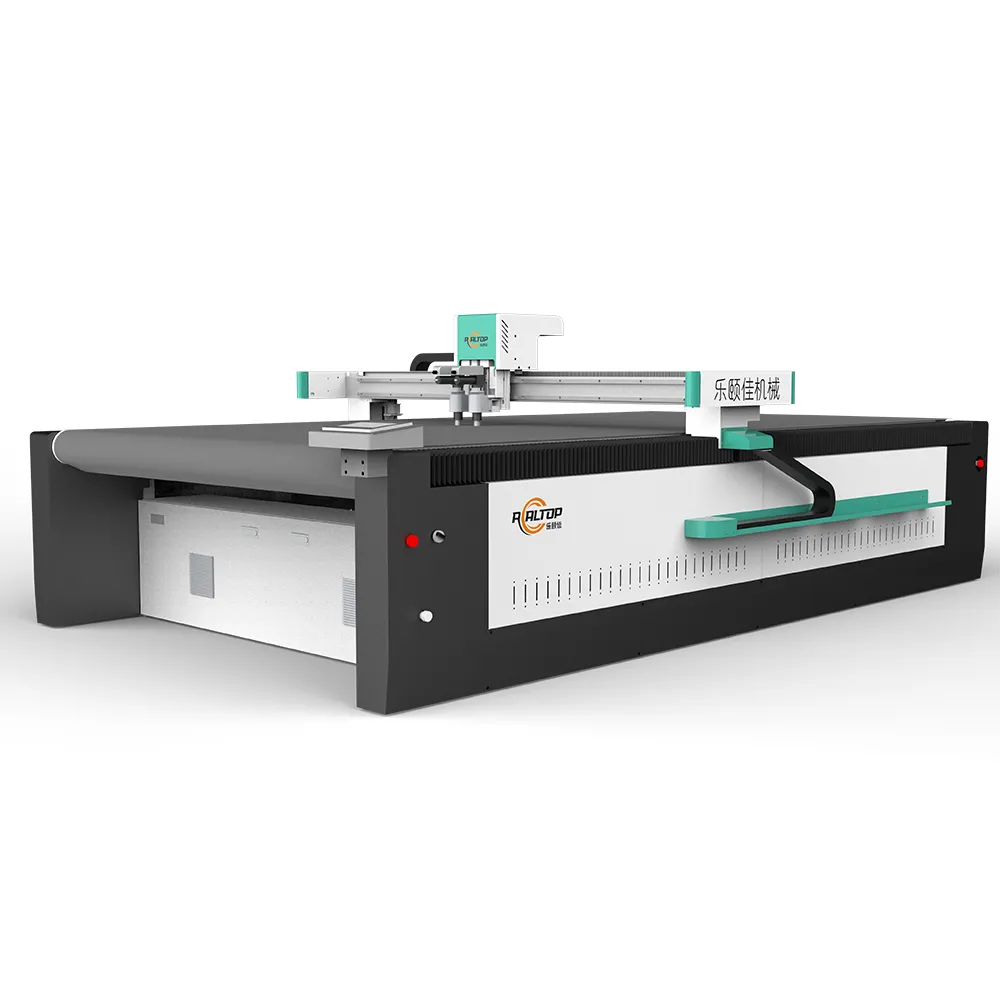
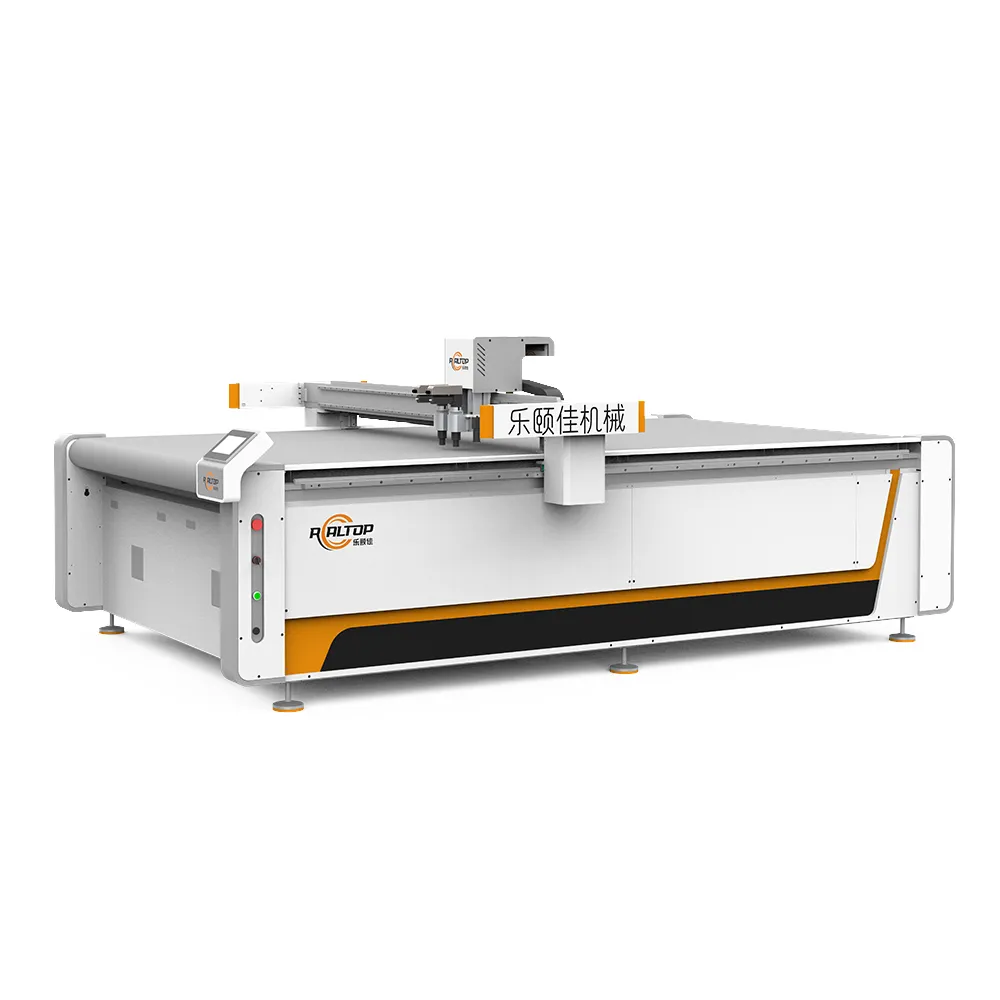
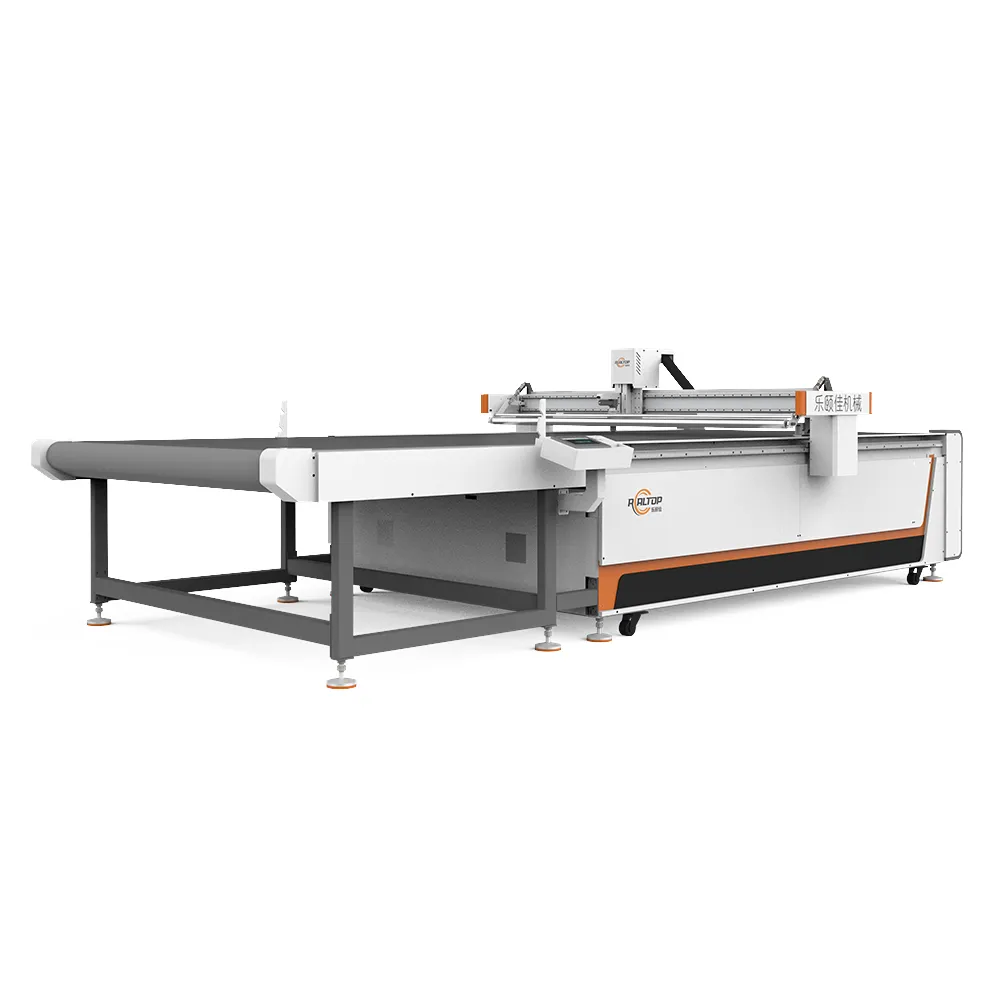
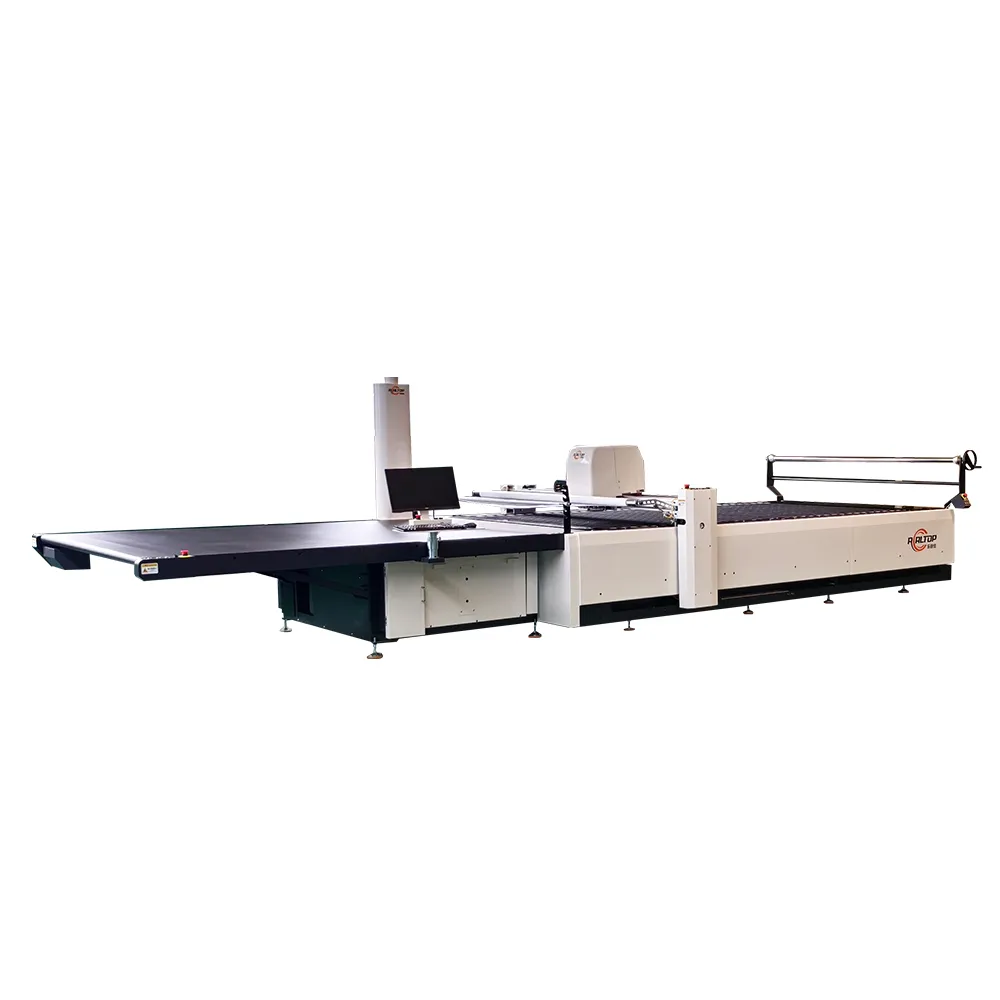
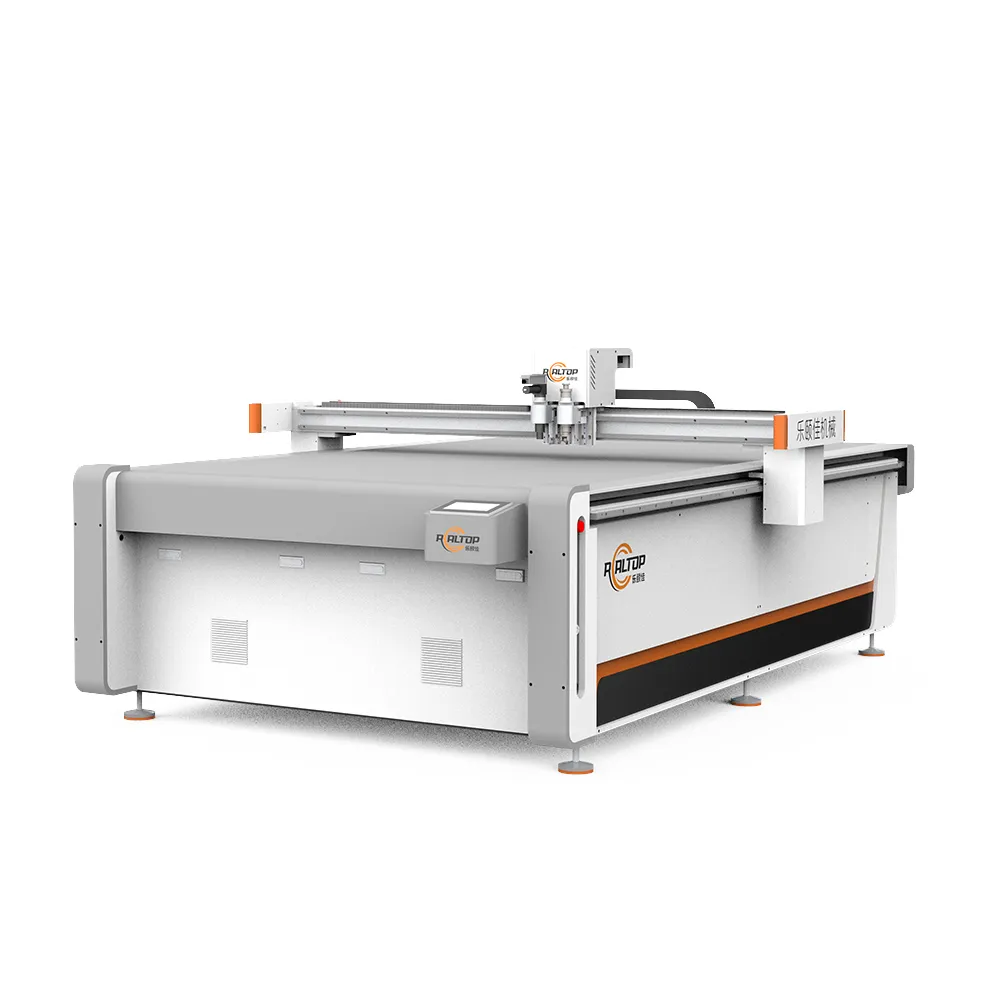
Precision Tool Configuration — every oscillating knife cutting table is matched to the buyer’s gasket material density and sheet thickness before the spindle is selected, ensuring clean edges on reinforced fiber composites instead of standard rubber assumptions.
Technical Specifications
| Parameter | Value |
|---|---|
| Product Type | CNC Oscillating Knife Cutting Machine |
| Effective Cutting Area | 2500×1600mm / 2500×2200mm / 3000×2200mm |
| Maximum Traverse Speed | 2000 mm/s |
| Reset Accuracy | ±0.1 mm |
| Maximum Cutting Thickness | ≤40 mm (basis not stated in source — confirm block format / material / thickness) |
| Table Type | Automatic feeding |
| Optional Tool Heads | Round knife, oscillating knife, marking pen |
| Compatible Data Formats | dxf, plt, ai, pdf |
| Safety Device | Infrared blocking stop and anti-collision protection |
| Voltage Options | 380V / 220V (rated or peak not specified; frequency to confirm) |
| Control System | REALTOP customized high-speed control system |
| Bed Construction | Quenched to eliminate internal stress |
| Wire Type | Oxygen-free copper shielded wire |
| Belt Type | Industrial belt with glass fiber tension cord, high temperature and corrosion resistant |
| Positioning Method | Panoramic visual positioning (automatic edge cutting and template cutting) |
| Noise Design | Exclusive silent design |
Application Suitability
| Application | Material or Output |
|---|---|
| Automotive and industrial gasket cutting | Rubber, cork, PTFE, non-asbestos fiber, composite gasket sheet |
| Advertising printing and contour cutting | Foam PVC, acrylic, vinyl, self-adhesive board |
| Packaging and carton sample making | Corrugated board, grey board, card stock |
| Signage and display board processing | KT board, Chevron board, honeycomb board |
| Soft material fabrication | Fabric, leather, foam, composite textile |
Why a Cutting Area Number Alone Fails the Gasket Line
A working area spec tells you nothing about the tool head, vacuum zoning, or blade life on reinforced composite sheet. I have seen buyers specify a 2500×1600 table for automotive gasket production, only to find the standard oscillating knife could not hold an edge on graphite-impregnated fiber compound. The material density was simply outside the original configuration envelope [NEED_CITE: gasket material hardness ranges by compound type]. A CNC oscillating knife cutting machine for sale listing often highlights format size but leaves out the tool head match and vacuum table zoning that decide whether small gasket profiles stay flat during the cut or lift and tear at the final pass.
Matching Knife Type to Gasket Compound
Selecting between round knife, oscillating knife, and marking pen depends on the specific gasket material and edge requirement. The oscillating knife handles dense non-asbestos fiber and PTFE where a clean shear edge is mandatory for sealing performance. Round knife suits continuous straight cuts on softer rubber and cork where speed matters more than corner definition. This gasket cutting machine manufacturer configures tool heads per the buyer’s actual compound sample, not a generic material chart.
Panoramic Visual Positioning on Printed Contours
The panoramic visual positioning system handles automatic edge cutting and template matching for printed gasket layouts. When a supplier prints multiple gasket profiles on a single composite sheet, the camera tracks the registered marks and aligns the knife path to the printed contour. Production speed affects tracking accuracy — a point that must be tested on the buyer’s actual print quality and registration mark size before the configuration is finalized [NEED_CITE: CCD contour recognition performance at varying line speeds].
What the Bed and Drive Specs Mean for Daily Output
The quenched bed construction eliminates internal stress in the frame, which directly affects long-term dimensional stability. On a 3000×2200 format table running tight-tolerance automotive gaskets, frame distortion over months of continuous operation would push the reset accuracy beyond the ±0.1 mm spec. The industrial belt with glass fiber tension cord resists stretch under thermal cycling in warm workshops. Oxygen-free copper shielded wire reduces signal interference in environments with multiple welding stations nearby, a common condition in gasket fabrication shops.
The Cost of Skipping Material Sample Testing
Specifying a tool head from a catalog without cutting the buyer’s actual material leads to ragged edges on fiber-reinforced compounds and premature blade wear. I once sent three different blade sets to a gasket producer because the standard oscillating knife crumbled within hours on their high-fiber mix. The downtime and replacement blade cost exceeded what a sample test would have revealed in a single afternoon [NEED_CITE: abrasive wear rates on composite gasket materials by fiber content].
Why Source This Range Here
The manufacturer covers both oscillating knife and laser cutting under one design team, so a buyer producing both rubber gaskets and acrylic signage can match the cutting method to each material rather than forcing one technology across the floor. Tool head and vacuum table zoning are specified per the buyer’s sheet size and part geometry. Panoramic visual positioning is validated on the buyer’s printed registration marks before order. Voltage, frequency, and control language are confirmed to destination market requirements. Sample cutting on the buyer’s own gasket compound is completed before production commitment.
Documentation & Verification
- Machine specification sheet listing tool head and vacuum zone layout per your gasket compound
- Electrical schematic confirming 380V or 220V wiring and frequency for your destination market
- Sample cutting report on your reinforced fiber or PTFE sheet showing edge quality and blade wear data
- Software license with dxf, plt, ai, pdf file format compatibility verified against your nesting workflow
- Factory test record documenting reset accuracy and maximum speed on your material thickness
- Spare parts list identifying blade types, belt replacements, and shielded wire specifications
Installation, Commissioning & Support
- 2500×1600mm to 3000×2200mm table footprint requires level concrete floor with clearance for automatic feeding conveyor
- 380V three-phase or 220V single-phase dedicated circuit with breaker sized to the REALTOP control system rating
- Bed arrives quenched and assembled; vacuum table zones and conveyor require on-site alignment and belt tension check
- First-run commissioning includes oscillating knife calibration, panoramic camera registration, and infrared safety stop verification
- Operator training covers nesting software import, tool head changeover, and blade replacement intervals
- Glass fiber tension belt and oxygen-free copper wire are stocked as standard replacement parts
What to Include in Your Inquiry
Send the specific gasket material type, compound density, and sheet thickness you run daily. Provide your standard sheet dimensions and the smallest part profile in your production mix. Confirm the voltage and frequency at your facility, along with the preferred control interface language.
Frequently Asked Questions
Q: How do I choose the right working area and tool head combination for gasket cutting?
A: Working area must accommodate your largest sheet with margin for the automatic feeding conveyor. Tool head selection depends on your compound — oscillating knife for dense fiber and PTFE, round knife for soft rubber and cork. The configuration is validated by cutting your actual material sample before the order is finalized, so blade life and edge quality are confirmed under real conditions.
Q: What does panoramic visual positioning track, and does it keep up at production speed?
A: The system tracks printed registration marks on your gasket layout sheet to align the knife path to the contour. Tracking performance depends on mark contrast, size, and print quality. We test recognition at full traverse speed on your actual printed sheet so you see the alignment accuracy before committing to the configuration.
Q: Which voltage and frequency details must be confirmed before shipment?
A: You need to provide the rated voltage, phase configuration, and frequency at your facility — for example 380V three-phase 50Hz or 220V single-phase 60Hz. Plug type and control panel language are confirmed at the same stage. The electrical schematic is updated to match these values and included in your documentation package.
Q: What file formats and nesting workflows are compatible with the REALTOP control system?
A: The system accepts dxf, plt, ai, and pdf files. Before order, we verify that your existing nesting software exports a compatible file and that layer structure, line weight, and cut order translate correctly. If your workflow uses a format outside this list, compatibility is tested during the sample cutting phase.
Q: How do I decide between knife cutting and laser for different gasket materials?
A: Oscillating knife is preferred for thick fiber, cork, and rubber where a sheared edge seals properly. Laser suits thin synthetic gasket sheet where edge fusion prevents fraying. Some facilities run both methods — knife for structural gaskets and laser for thin PTFE or silicone profiles. Material sample testing on both technologies shows which fits each product line.
Precision Tool Configuration — every oscillating knife cutting table is matched to the buyer’s gasket material density and sheet thickness before the spindle is selected, ensuring clean edges on reinforced fiber composites instead of standard rubber assumptions.
Technical Specifications
| Parameter | Value |
|---|---|
| Product Type | CNC Oscillating Knife Cutting Machine |
| Effective Cutting Area | 2500×1600mm / 2500×2200mm / 3000×2200mm |
| Maximum Traverse Speed | 2000 mm/s |
| Reset Accuracy | ±0.1 mm |
| Maximum Cutting Thickness | ≤40 mm (basis not stated in source — confirm block format / material / thickness) |
| Table Type | Automatic feeding |
| Optional Tool Heads | Round knife, oscillating knife, marking pen |
| Compatible Data Formats | dxf, plt, ai, pdf |
| Safety Device | Infrared blocking stop and anti-collision protection |
| Voltage Options | 380V / 220V (rated or peak not specified; frequency to confirm) |
| Control System | REALTOP customized high-speed control system |
| Bed Construction | Quenched to eliminate internal stress |
| Wire Type | Oxygen-free copper shielded wire |
| Belt Type | Industrial belt with glass fiber tension cord, high temperature and corrosion resistant |
| Positioning Method | Panoramic visual positioning (automatic edge cutting and template cutting) |
| Noise Design | Exclusive silent design |
Application Suitability
| Application | Material or Output |
|---|---|
| Automotive and industrial gasket cutting | Rubber, cork, PTFE, non-asbestos fiber, composite gasket sheet |
| Advertising printing and contour cutting | Foam PVC, acrylic, vinyl, self-adhesive board |
| Packaging and carton sample making | Corrugated board, grey board, card stock |
| Signage and display board processing | KT board, Chevron board, honeycomb board |
| Soft material fabrication | Fabric, leather, foam, composite textile |
Why a Cutting Area Number Alone Fails the Gasket Line
A working area spec tells you nothing about the tool head, vacuum zoning, or blade life on reinforced composite sheet. I have seen buyers specify a 2500×1600 table for automotive gasket production, only to find the standard oscillating knife could not hold an edge on graphite-impregnated fiber compound. The material density was simply outside the original configuration envelope [NEED_CITE: gasket material hardness ranges by compound type]. A CNC oscillating knife cutting machine for sale listing often highlights format size but leaves out the tool head match and vacuum table zoning that decide whether small gasket profiles stay flat during the cut or lift and tear at the final pass.
Matching Knife Type to Gasket Compound
Selecting between round knife, oscillating knife, and marking pen depends on the specific gasket material and edge requirement. The oscillating knife handles dense non-asbestos fiber and PTFE where a clean shear edge is mandatory for sealing performance. Round knife suits continuous straight cuts on softer rubber and cork where speed matters more than corner definition. This gasket cutting machine manufacturer configures tool heads per the buyer’s actual compound sample, not a generic material chart.
Panoramic Visual Positioning on Printed Contours
The panoramic visual positioning system handles automatic edge cutting and template matching for printed gasket layouts. When a supplier prints multiple gasket profiles on a single composite sheet, the camera tracks the registered marks and aligns the knife path to the printed contour. Production speed affects tracking accuracy — a point that must be tested on the buyer’s actual print quality and registration mark size before the configuration is finalized [NEED_CITE: CCD contour recognition performance at varying line speeds].
What the Bed and Drive Specs Mean for Daily Output
The quenched bed construction eliminates internal stress in the frame, which directly affects long-term dimensional stability. On a 3000×2200 format table running tight-tolerance automotive gaskets, frame distortion over months of continuous operation would push the reset accuracy beyond the ±0.1 mm spec. The industrial belt with glass fiber tension cord resists stretch under thermal cycling in warm workshops. Oxygen-free copper shielded wire reduces signal interference in environments with multiple welding stations nearby, a common condition in gasket fabrication shops.
The Cost of Skipping Material Sample Testing
Specifying a tool head from a catalog without cutting the buyer’s actual material leads to ragged edges on fiber-reinforced compounds and premature blade wear. I once sent three different blade sets to a gasket producer because the standard oscillating knife crumbled within hours on their high-fiber mix. The downtime and replacement blade cost exceeded what a sample test would have revealed in a single afternoon [NEED_CITE: abrasive wear rates on composite gasket materials by fiber content].
Why Source This Range Here
The manufacturer covers both oscillating knife and laser cutting under one design team, so a buyer producing both rubber gaskets and acrylic signage can match the cutting method to each material rather than forcing one technology across the floor. Tool head and vacuum table zoning are specified per the buyer’s sheet size and part geometry. Panoramic visual positioning is validated on the buyer’s printed registration marks before order. Voltage, frequency, and control language are confirmed to destination market requirements. Sample cutting on the buyer’s own gasket compound is completed before production commitment.
Documentation & Verification
- Machine specification sheet listing tool head and vacuum zone layout per your gasket compound
- Electrical schematic confirming 380V or 220V wiring and frequency for your destination market
- Sample cutting report on your reinforced fiber or PTFE sheet showing edge quality and blade wear data
- Software license with dxf, plt, ai, pdf file format compatibility verified against your nesting workflow
- Factory test record documenting reset accuracy and maximum speed on your material thickness
- Spare parts list identifying blade types, belt replacements, and shielded wire specifications
Installation, Commissioning & Support
- 2500×1600mm to 3000×2200mm table footprint requires level concrete floor with clearance for automatic feeding conveyor
- 380V three-phase or 220V single-phase dedicated circuit with breaker sized to the REALTOP control system rating
- Bed arrives quenched and assembled; vacuum table zones and conveyor require on-site alignment and belt tension check
- First-run commissioning includes oscillating knife calibration, panoramic camera registration, and infrared safety stop verification
- Operator training covers nesting software import, tool head changeover, and blade replacement intervals
- Glass fiber tension belt and oxygen-free copper wire are stocked as standard replacement parts
What to Include in Your Inquiry
Send the specific gasket material type, compound density, and sheet thickness you run daily. Provide your standard sheet dimensions and the smallest part profile in your production mix. Confirm the voltage and frequency at your facility, along with the preferred control interface language.
Frequently Asked Questions
Q: How do I choose the right working area and tool head combination for gasket cutting?
A: Working area must accommodate your largest sheet with margin for the automatic feeding conveyor. Tool head selection depends on your compound — oscillating knife for dense fiber and PTFE, round knife for soft rubber and cork. The configuration is validated by cutting your actual material sample before the order is finalized, so blade life and edge quality are confirmed under real conditions.
Q: What does panoramic visual positioning track, and does it keep up at production speed?
A: The system tracks printed registration marks on your gasket layout sheet to align the knife path to the contour. Tracking performance depends on mark contrast, size, and print quality. We test recognition at full traverse speed on your actual printed sheet so you see the alignment accuracy before committing to the configuration.
Q: Which voltage and frequency details must be confirmed before shipment?
A: You need to provide the rated voltage, phase configuration, and frequency at your facility — for example 380V three-phase 50Hz or 220V single-phase 60Hz. Plug type and control panel language are confirmed at the same stage. The electrical schematic is updated to match these values and included in your documentation package.
Q: What file formats and nesting workflows are compatible with the REALTOP control system?
A: The system accepts dxf, plt, ai, and pdf files. Before order, we verify that your existing nesting software exports a compatible file and that layer structure, line weight, and cut order translate correctly. If your workflow uses a format outside this list, compatibility is tested during the sample cutting phase.
Q: How do I decide between knife cutting and laser for different gasket materials?
A: Oscillating knife is preferred for thick fiber, cork, and rubber where a sheared edge seals properly. Laser suits thin synthetic gasket sheet where edge fusion prevents fraying. Some facilities run both methods — knife for structural gaskets and laser for thin PTFE or silicone profiles. Material sample testing on both technologies shows which fits each product line.










商品评价
There are no reviews yet.