


Fast Delivery
Quick, reliable shipping to any location.

Free & easy returns
Return this item by mail or in store within 90 days for a full refund.
Customizable Tool Head and Table Configurations — matching the cutting method to your material thickness and production volume before the machine is built, rather than adapting a fixed configuration after delivery.
Technical Specifications
| Parameter | Value |
|---|---|
| Model | RT-D2516/RT-S2516 |
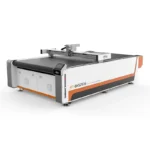
| Product Type | CNC Oscillating Knife Cutting Machine |
| Working Area | 1600×2500mm |
| Overall Dimensions | 3450×2300×1250mm |
| Rated Power | 9kW |
| Voltage | 380V±10% |
| Translational Velocity | 800–2000mm/s |
| Cutting Speed | 200–800mm/s (varies with material type and thickness) |
| Cutting Thickness | ≤100mm (basis not stated in source — confirm block format, material and thickness) |
| Repeated Accuracy | ≤0.1mm |
| Transmission System | Digital servo motor, linear guide, synchronous belt, ball screw |
| Servo Motor Brand Options | Delta or Panasonic |
| Instruction System | HP-GL compatible format |
| Tool Head Options | Oscillating knife, pneumatic knife, high-power vibrating knife, circular knife, V-cutting knife, drag knife, creasing wheel, dotted line knife, punching, brush |
| Visual Positioning Options | Small CCD camera mark-point positioning, panoramic camera recognition positioning, projection positioning |
| Working Table | Flat working table or auto feeding table |
| Vacuum Table Construction | Magnesium-aluminum alloy with fluorocarbon PVDF powder spraying, anodic oxidation, hard oxidation |
| Vacuum Pump | 7.5kW integrated aviation aluminum shell pump with built-in silencer sponge |
| Conveyor Belt | Germany imported |
| Linear Rail | Taiwan Hiwin |
| Safety Device | Infrared induction blocking, anti-collision, emergency stop |
| Control Panel | Touch screen, multiple language supported |
| Software Compatibility | Auto typesetting, supports PLT, DXF, AI file formats |
| Language Options | English, Russian, Italian, Chinese, special languages customizable |
| Assembly State | Fully assembled |
Application Suitability
| Application | Material or Output |
|---|---|
| Garment and footwear production | Single or multi-layer clothing cloth, shoe material, luggage material, non-woven fabric |
| Automotive interior fabrication | Composite materials, foam board, sponge, PU, EVA, carpet and floor mats |
| Packaging and carton sample making | Cardboard, corrugated cardboard, plastic box |
| Sealing and gasket manufacturing | Rubber, PTFE, ETFE, gasket material |
| Advertising and graphic printing | Sticker, film, PVC, PP, PE |
| Soft home furnishings | Fabric, textile, leather, carpet |
| Sports and outdoor products | XPE, EVA, foam board, composite materials |
Why Specifying Material Thickness Changes the Entire Machine Configuration
A CNC oscillating knife cutting machine full catalogue is only useful if it prevents you from ordering a machine that cannot actually cut your material at production speed.
I have watched buyers compare machines purely on working area dimensions, sign off on a 1600×2500mm table, then discover weeks later that the oscillating knife cannot penetrate their 30mm bonded foam or that the drag knife tears the coating off their composite textile. The RT-D2516/RT-S2516 lists a cutting thickness of up to 100mm, but that figure shifts depending on whether you are slicing single-layer silk or block-format XPE foam. [NEED_CITE: relationship between oscillating knife frequency, blade geometry and achievable cutting depth across material densities] Without a sample cutting report on your actual material, the thickness line on the spec sheet is a starting point, not a guarantee. The tool head, blade type, vacuum zoning and feed rate all need to be locked to your specific sheet before production begins.
Mapping the Complete Knife Cutting Range to Your Material
Buyers surveying options before narrowing to a method need to see where each machine family sits by material type and daily volume. The RT-D2516/RT-S2516 occupies the mid-to-large format flatbed segment, bridging single-layer garment cutting and multi-layer automotive interior fabrication. The oscillating knife handles woven fabric and leather with clean edges, while the high-power vibrating knife takes over for thicker foam and sponge where a standard blade would deflect.
Tool Head and Camera Configuration Across the Range
Choosing between a small CCD camera for mark-point positioning and a panoramic camera for full-sheet recognition depends entirely on whether your workflow relies on printed registration marks or projected nesting layouts. The CNC oscillating knife cutting machine full catalogue covers both paths, and the tool head selection — from creasing wheel for carton sample making to pneumatic knife for heavy fiberglass — determines whether the machine processes your material or damages it. [NEED_CITE: CCD camera tracking accuracy on printed contour marks at varying translational speeds] The RT-S2516 auto-feeding variant adds conveyor integration for roll-fed fabric operations, shifting the machine from a batch cutter to a continuous production cell.
Reading the Specs That Actually Govern Cutting Performance
The 7.5kW vacuum pump with integrated aviation aluminum shell and silencer sponge is not a luxury spec — it determines whether small nested parts stay flat during high-speed cutting or lift into the blade path. Magnesium-aluminum alloy table construction with PVDF powder spraying provides the flatness tolerance that keeps the repeated accuracy at ≤0.1mm across the full 1600×2500mm working area. Taiwan Hiwin linear rails paired with Delta or Panasonic servo motors maintain positional accuracy through years of continuous directional changes. The 9kW total rated power accounts for the vacuum pump, servo drives, and oscillating knife motor running simultaneously, which matters when sizing your workshop electrical supply. Software compatibility with PLT, DXF and AI formats ensures the machine integrates with your existing nesting workflow rather than forcing a new pre-press pipeline.
What Happens When the Wrong Configuration Ships
A vacuum table with insufficient zoning lets small gasket parts lift off the surface mid-cut, producing scrap instead of finished pieces. A drag knife specified for fabric that encounters 15mm EVA foam produces crushed edges and stalled production. CCD contour recognition that cannot track printed marks at full translational velocity forces operators to slow the machine to a fraction of rated speed. [NEED_CITE: impact of vacuum table zone count on small-part retention during high-speed oscillating knife cutting] These are not theoretical failures — they appear regularly when the machine configuration is locked without testing on the buyer’s own material sample.
Why Buyers Specify and Source from This Production Line
In-house design covering both knife and laser cutting technologies means the RT-D2516/RT-S2516 was engineered for materials that require knife processing, not adapted from a laser platform. Every tool head option — oscillating, pneumatic, vibrating, circular, V-cutting, drag, creasing, punching — is selectable based on your material test results rather than offered as a fixed bundle. CCD camera positioning, panoramic recognition, and projection positioning are all available on the same frame, letting you match the visual system to your registration workflow. Voltage, plug type, and control panel language are confirmed before the machine enters assembly, eliminating the shipment-surprise problem. Sample cutting on your own material is performed and documented before you commit to a purchase order.
Documentation & Verification
- Machine specification sheet listing confirmed tool head, table type and vacuum zoning for your material
- Electrical schematic and voltage confirmation document matching your workshop supply before dispatch
- Sample cutting report on your own fabric, foam or composite sheet showing edge quality and depth
- Software licence and file format compatibility note covering PLT, DXF, AI and HP-GL workflows
- Factory test record documenting repeated accuracy and translational velocity on your configuration
- CE declaration and packing photographs provided before container loading
Installation, Commissioning & Support
- Requires a dedicated 380V±10% circuit with capacity for the 9kW total rated load including the 7.5kW vacuum pump
- Fully assembled delivery means the 3450×2300×1250mm frame rolls into position without on-site structural assembly
- First-run commissioning includes vacuum zoning calibration and tool head parameter tuning on your material
- Operator training covers touch screen control, file import workflow and tool head changeover procedures
- Spare parts list specifies blades, knife holders and conveyor belt segments based on your configured tool heads
- Daily maintenance checklist covers vacuum filter inspection, linear rail lubrication and blade wear tracking
Preparing Your Inquiry for Accurate Configuration
Send the material type, thickness range, maximum sheet dimensions and estimated daily volume so the tool head and table configuration can be specified against real production requirements rather than assumptions. Confirm your local voltage and frequency, preferred control panel language, and whether your existing CAD workflow outputs PLT, DXF or AI files. If your material has a coating, lamination or unusual fibre structure, arrange to send a sample sheet for test cutting before the order is finalized.
Frequently Asked Questions
Q: How do I determine which knife cutting machine model fits my sheet size and daily volume?
A: Start with your largest sheet dimension and whether your workflow uses single-layer or multi-layer layups. The RT-D2516/RT-S2516 covers sheets up to 1600×2500mm. For roll-fed fabric operations with high daily volume, the auto-feeding RT-S2516 variant with conveyor table reduces manual loading time. Share your material list and target output so the configuration matches your actual workflow.
Q: Which tool head should I select for my specific material and thickness?
A: Oscillating knife suits woven fabric, leather and thin composites. Pneumatic knife handles thicker, denser materials. High-power vibrating knife is designed for foam, sponge and XPE. Drag knife and creasing wheel serve cardboard and packaging sample work. The correct selection depends on a sample cutting test on your material, not on the spec sheet alone.
Q: Does the CCD camera system track printed marks reliably at full production speed?
A: The small CCD camera handles mark-point positioning for standard printed contours. The panoramic camera option provides full-sheet recognition for higher-speed workflows with multiple registration marks. Tracking reliability depends on mark contrast, print quality and translational velocity settings. Request a sample cutting test using your actual printed material to verify performance before ordering.
Q: What voltage, plug type and control language options are available before shipment?
A: The standard configuration is 380V±10%, but voltage and plug type must be confirmed against your workshop supply before assembly. The touch screen control panel supports English, Russian, Italian, Chinese, and special languages are customizable. These details are locked in the specification confirmation stage, not decided at shipping.
Q: Can I send my own material for sample cutting to verify performance before ordering?
A: Yes. Send a representative sample of your material — including any coatings or laminations — and the configured tool head is tested against it. A sample cutting report documenting edge quality, cutting depth and achievable speed is returned with your material. This step prevents configuration mismatches that cannot be fixed after the machine is built.










商品评价
There are no reviews yet.