

![Automatic Die-less Cardboard Vibrating Knife Cutter Full Range 计算: - 记录ID 1626 → 数字之和 1+6+2+6=15 - 句式结构:15 mod 6 = 3 → [应用或物料] [品类词] – [站点修饰词] - 目标站 lyjcut.com → 全品类目录类角色 → 池:Manufacturer / Factory Supply / Full Range - 站点修饰词:15 mod 3 = 0 → Manufacturer - 填充结构3:Cardboard Die-less Vibrating Knife Cutter – Manufacturer 字符数:50 ✓ Automatic Die-less Cardboard Vibrating Knife Cutter Manufacturer - Image 1](https://lyjcut.com/wp-content/uploads/2026/03/Hd53ad5f36f2d46c78c43ffd7ecb913207.webp "Hd53ad5f36f2d46c78c43ffd7ecb913207.webp")
![Automatic Die-less Cardboard Vibrating Knife Cutter Full Range 计算: - 记录ID 1626 → 数字之和 1+6+2+6=15 - 句式结构:15 mod 6 = 3 → [应用或物料] [品类词] – [站点修饰词] - 目标站 lyjcut.com → 全品类目录类角色 → 池:Manufacturer / Factory Supply / Full Range - 站点修饰词:15 mod 3 = 0 → Manufacturer - 填充结构3:Cardboard Die-less Vibrating Knife Cutter – Manufacturer 字符数:50 ✓ Automatic Die-less Cardboard Vibrating Knife Cutter Manufacturer - Image 2](https://lyjcut.com/wp-content/uploads/2026/03/Ha51c4b8099544757bda4551a671e1729g.webp "Ha51c4b8099544757bda4551a671e1729g.webp")
![Automatic Die-less Cardboard Vibrating Knife Cutter Full Range 计算: - 记录ID 1626 → 数字之和 1+6+2+6=15 - 句式结构:15 mod 6 = 3 → [应用或物料] [品类词] – [站点修饰词] - 目标站 lyjcut.com → 全品类目录类角色 → 池:Manufacturer / Factory Supply / Full Range - 站点修饰词:15 mod 3 = 0 → Manufacturer - 填充结构3:Cardboard Die-less Vibrating Knife Cutter – Manufacturer 字符数:50 ✓ Automatic Die-less Cardboard Vibrating Knife Cutter Manufacturer - Image 3](https://lyjcut.com/wp-content/uploads/2026/03/H1f2dd09626b2430c8d76cde1c6c9c9c3S.webp "H1f2dd09626b2430c8d76cde1c6c9c9c3S.webp")
![Automatic Die-less Cardboard Vibrating Knife Cutter Full Range 计算: - 记录ID 1626 → 数字之和 1+6+2+6=15 - 句式结构:15 mod 6 = 3 → [应用或物料] [品类词] – [站点修饰词] - 目标站 lyjcut.com → 全品类目录类角色 → 池:Manufacturer / Factory Supply / Full Range - 站点修饰词:15 mod 3 = 0 → Manufacturer - 填充结构3:Cardboard Die-less Vibrating Knife Cutter – Manufacturer 字符数:50 ✓ Automatic Die-less Cardboard Vibrating Knife Cutter Manufacturer - Image 4](https://lyjcut.com/wp-content/uploads/2026/03/H956c149f62be43dfa795e1a45642f7c3s.webp "H956c149f62be43dfa795e1a45642f7c3s.webp")
![Automatic Die-less Cardboard Vibrating Knife Cutter Full Range 计算: - 记录ID 1626 → 数字之和 1+6+2+6=15 - 句式结构:15 mod 6 = 3 → [应用或物料] [品类词] – [站点修饰词] - 目标站 lyjcut.com → 全品类目录类角色 → 池:Manufacturer / Factory Supply / Full Range - 站点修饰词:15 mod 3 = 0 → Manufacturer - 填充结构3:Cardboard Die-less Vibrating Knife Cutter – Manufacturer 字符数:50 ✓ Automatic Die-less Cardboard Vibrating Knife Cutter Manufacturer - Image 5](https://lyjcut.com/wp-content/uploads/2026/03/H0a1782e92fa04fdfa9f62954290dc9a3I.webp "H0a1782e92fa04fdfa9f62954290dc9a3I.webp")
![Automatic Die-less Cardboard Vibrating Knife Cutter Full Range 计算: - 记录ID 1626 → 数字之和 1+6+2+6=15 - 句式结构:15 mod 6 = 3 → [应用或物料] [品类词] – [站点修饰词] - 目标站 lyjcut.com → 全品类目录类角色 → 池:Manufacturer / Factory Supply / Full Range - 站点修饰词:15 mod 3 = 0 → Manufacturer - 填充结构3:Cardboard Die-less Vibrating Knife Cutter – Manufacturer 字符数:50 ✓ Automatic Die-less Cardboard Vibrating Knife Cutter Manufacturer - Image 6](https://lyjcut.com/wp-content/uploads/2026/03/H528c7d9ee5df43c0bd2de2df1ef18c92a.webp "H528c7d9ee5df43c0bd2de2df1ef18c92a.webp")

Fast Delivery
Quick, reliable shipping to any location.

Free & easy returns
Return this item by mail or in store within 90 days for a full refund.
Tool-Head Matching by Material — We test your cardboard, corrugated board, or composite sample on the RT-D2516/RT-S2516 before configuration is locked, so the oscillating knife, creasing wheel, or V-cutting tool is chosen for your actual production run rather than a generic default.
Technical Specifications
| Parameter | Value |
|---|---|
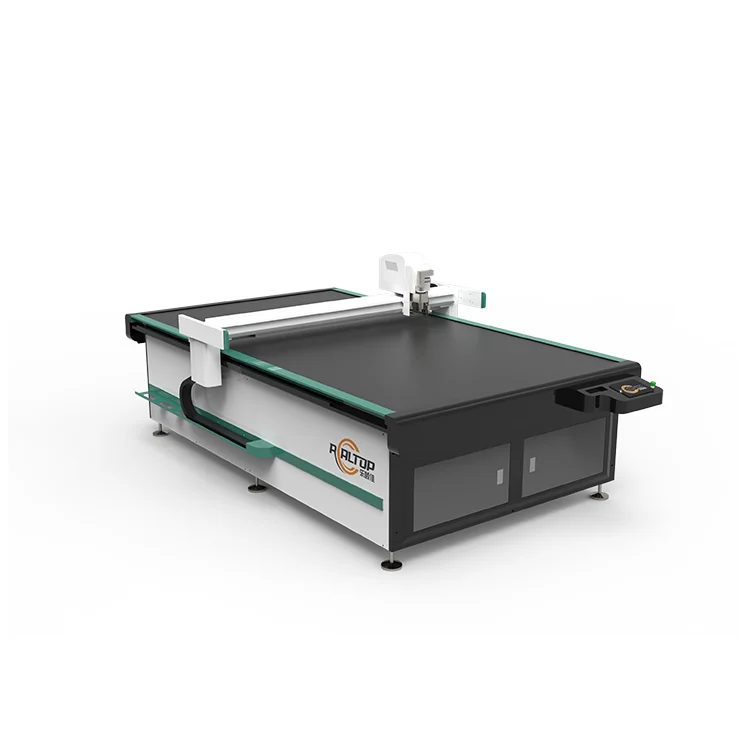
| Model | RT-D2516 / RT-S2516 |
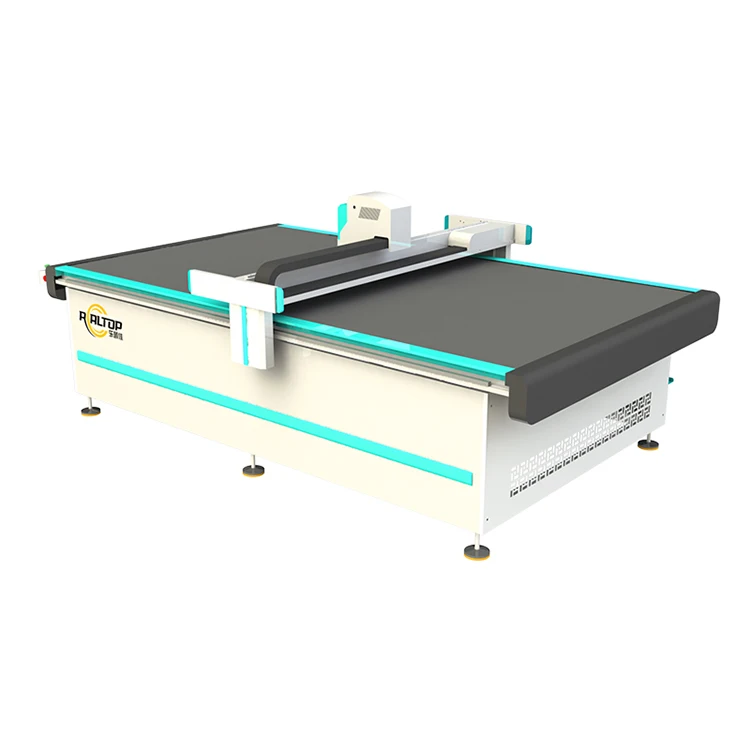
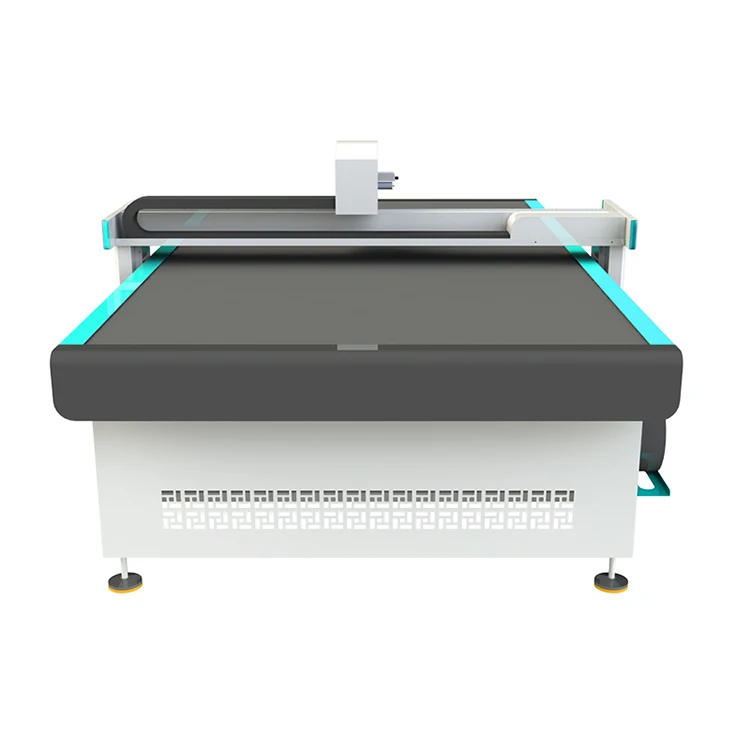
| Product Type | CNC Oscillating Knife Cutting Machine |
| Working Area | 1600 × 2500 mm |
| Overall Dimensions | 3450 × 2300 × 1250 mm |
| Rated Power | 9 kW |
| Voltage | 380V ±10% |
| Tool Head Options | Swiss imported oscillating knife, creasing wheel, V-cutting knife, pneumatic knife, high-power vibrating knife, circular knife, drag knife, dotted line knife, punching, brush |
| Visual Positioning | Small CCD camera mark point positioning, panoramic camera recognition, projection positioning |
| Transmission System | Imported digital servo motor (Delta or Panasonic optional, IP67), Taiwan Hiwin linear guide, synchronous belt, ball screw |
| Translational Velocity | 800–2000 mm/s |
| Cutting Speed | 200–800 mm/s (basis to be confirmed by material and thickness) |
| Cutting Thickness | Up to 100 mm (varies by material) |
| Repeatability | ≤0.1 mm |
| Table Type | Magnesium-aluminum alloy vacuum adsorption table (PVDF powder spraying, anodic oxidation, hard oxidation); flat table or auto-feeding conveyor |
| Vacuum Pump | 7.5 kW, integrated aviation aluminum shell, built-in silencer sponge |
| Control Panel | Touch screen, multiple language support |
| Instruction System | HP-GL compatible format |
| Software | Auto typesetting (nesting), supports PLT, DXF, AI |
| Safety Devices | Infrared induction blocking, anti-collision sensors, emergency stop button with resume-in-situ |
| Frame | Thick-walled seamless steel structure, high-temperature tempering, CNC machining center finishing |
Application Suitability
| Application | Material or Output |
|---|---|
| Carton and packaging sample making | Cardboard, honeycomb cardboard, corrugated board (oscillating knife + creasing wheel + V-cutting knife for slotting) |
| Soft furnishing and automotive interior cutting | Leather, fabric, garment cloth, shoe material, luggage material, non-woven fabric |
| Gasket and seal production | PVC sheet, silicon, rubber, soft glass, plastic box, sticker, film |
| Foam and composite shaping | Foam board, sponge, PU, EVA, XPE, sponge composite leather |
| Technical textile and industrial sheet cutting | Fiberglass, carbon fiber, PTFE, ETFE, composite materials, gasket material |
Why a "2500 mm Working Area" Is Not a Complete Specification
A cutting table is only as capable as the tool head mounted on it and the vacuum zone holding the workpiece down.
Many buyers source a CNC oscillating knife cutting machine manufacturer based on bed size and travel speed, then discover the vacuum zoning cannot hold small packaging blanks, or the standard drag knife tears through three-layer corrugated. I have walked into workshops where the daily output sat far below the nameplate rating because the wrong creasing wheel was paired with coated stock, leaving ragged score lines that jammed the folding and gluing line downstream [NEED_CITE: packaging sample making workflow bottlenecks]. Specifying the tool head and table configuration against your actual sheet format and daily mix prevents this gap.
Matching the Tool Head to Board Grade and Flute Profile
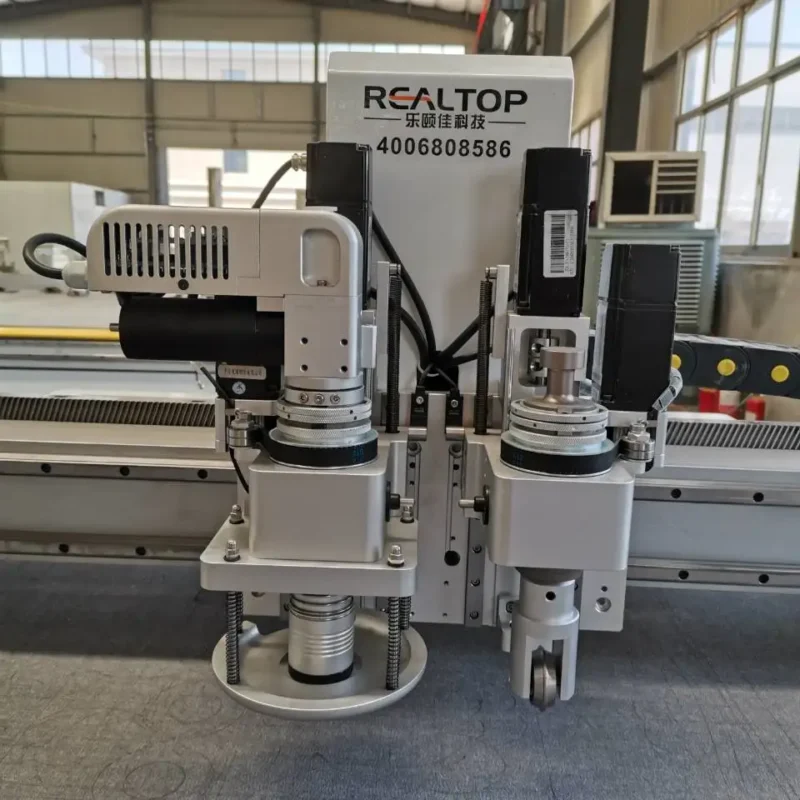
The RT-D2516/RT-S2516 supports a broad tool head range, and selecting the correct one dictates edge quality on corrugated and honeycomb structures. A Swiss imported oscillating knife handles thick flute profiles with a clean vertical shear, while a high-power vibrating knife suits dense composite boards where standard amplitude leaves crushed cores. For carton sample making, the creasing wheel must be matched to the board caliper; a wheel set too shallow produces cracking on the fold, and one set too deep cuts through the liner. The V-cutting knife handles slotting for lock-bottom cartons and display stands, replacing the need for dedicated die boards on short runs.
Vacuum Zoning and Small-Part Stability on Packaging Blanks
A 1600 × 2500 mm bed cuts large carton formats efficiently, but packaging nests often contain small flaps, lock tabs, and internal dividers that lift if the vacuum is not zoned correctly. The magnesium-aluminum alloy table on this CNC digital cutting table for sale uses PVDF coating and hard oxidation to maintain flatness across the working area, while the 7.5 kW pump with an integrated aviation aluminum shell provides consistent suction. When cutting nested packaging samples, activating only the zones under the active cutting path prevents air bleed from adjacent empty zones, keeping lightweight card stock and thin honeycomb flat during high-speed travel [NEED_CITE: vacuum adsorption principles for CNC flatbed tables].
How Drive and Control Specs Translate to Production Rhythm
The imported digital servo motors (Delta or Panasonic, IP67-rated) paired with Taiwan Hiwin linear guides deliver repeatability within 0.1 mm, which is critical when scoring fold lines that must align with digital print registers. Translational velocity reaches 2000 mm/s for rapid positioning between cut paths, while the actual cutting speed sits between 200 and 800 mm/s depending on material density and thickness. The touch screen control panel supports multiple languages including English, Russian, Italian, and Chinese, with custom language options available. The HP-GL compatible instruction system and nesting software accept PLT, DXF, and AI files directly, removing the need to rebuild artwork in a proprietary format before each run.
The Hidden Cost of Skipping the Sample Cut Step
Choosing a CNC oscillating knife cutting machine manufacturer without running your own material through the configuration leads to problems that only surface during full production. A creasing wheel that works on white card may crush the flutes on micro-corrugated board, causing downstream folding defects that waste printed stock. A vacuum pump sized for large-format sheets may fail to hold small die-cut labels, forcing the operator to slow the travel speed and reduce daily throughput. These mismatches compound across a shift [NEED_CITE: material testing protocols for digital cutting equipment].
Why Sourcing This CNC Digital Cutting Table for Sale Starts with Your Material
The configuration approach here begins with your sheet size, material grade, and daily volume rather than a standard bed size. Tool head selection is matched to the board flute or composite density you actually run, not a default oscillating knife. The CCD camera and panoramic vision positioning options are confirmed against your print mark size and production speed before the order is placed. Voltage at 380V ±10% and the plug type are verified against your facility supply. The nesting software is tested with your existing PLT, DXF, or AI files to confirm compatibility with your prepress workflow. Sample cutting on your own material is completed before commitment, producing a report that documents edge quality, creasing depth, and cutting speed for your specific board grade.
Documentation & Verification
- Machine specification sheet listing the confirmed tool head and vacuum table configuration
- Electrical schematic with voltage and frequency matched to your facility supply
- Sample cutting report on your corrugated or composite board before dispatch
- CE declaration of conformity where applicable to your import market
- Software licence and file format compatibility note for PLT, DXF, AI, and HP-GL
- Factory test record documenting repeatability and cutting speed on your material
Installation, Commissioning & Support
- The 3450 × 2300 × 1250 mm overall footprint requires a level concrete floor with clearance for the auto-feeding conveyor if configured
- A dedicated circuit for the 9 kW rated power and 7.5 kW vacuum pump must be confirmed against the 380V ±10% supply
- The machine ships fully assembled; positioning requires a forklift rated for the frame weight and overhead clearance for the beam
- First-run commissioning includes vacuum zone mapping and servo calibration for your material thickness range
- Operator training covers tool head changeover, creasing wheel depth adjustment, and nesting software workflow
- Spare parts list includes oscillating knife blades, creasing wheels, and vacuum table seals specific to your configuration
Preparing Your Inquiry
To specify the RT-D2516/RT-S2516 for your production line, share the material types you cut, the board grade or composite density, and the maximum sheet size. Include your target daily volume and whether you require the flat table or auto-feeding conveyor for continuous runs. Confirm your local voltage and frequency, the preferred control language, and whether your existing design files are in PLT, DXF, or AI format so software compatibility is verified before the quotation.
Frequently Asked Questions
Q: How do I choose between the oscillating knife, drag knife, and creasing wheel for my packaging board?
A: The oscillating knife suits thick corrugated and honeycomb board where a clean vertical cut is required. The drag knife works for thin card stock, vinyl, and sticker materials. The creasing wheel scores fold lines without cutting through the liner. We test your specific board grade and flute profile to confirm which tool head combination produces the required edge and fold quality for your carton design.
Q: What print mark quality and production speed can the CCD camera track?
A: The small CCD camera handles standard mark point positioning for printed contour work, while the panoramic camera option covers larger format recognition. The tracking capability depends on mark contrast, size, and the cutting speed set for your material. We verify the vision system against your printed sample before the order to confirm it tracks reliably at your production speed.
Q: Should I choose the flat table or the auto-feeding conveyor for my daily volume?
A: The flat table suits batch production where sheets are loaded manually and nests vary by job. The auto-feeding conveyor with the Germany-imported belt supports continuous roll or sheet-fed cutting for higher daily volumes. The choice depends on your material format, shift pattern, and whether your nesting software supports continuous feed sequences.
Q: How are voltage, plug, and control language confirmed before shipment?
A: We verify your facility supply at 380V ±10% and the local frequency during the quotation stage. The plug type and main breaker rating are specified to match your electrical panel. The touch screen control language is set to English, Russian, Italian, Chinese, or a custom language before the machine leaves the factory, so your operators can navigate the interface from the first day.
Q: Where does knife cutting sit compared to laser cutting for packaging and composite materials?
A: Knife cutting produces a clean mechanical edge on corrugated board, foam, and composites without the heat-affected zone that a laser leaves on organic materials. Laser cutting suits thin films, textiles, and acrylic where edge sealing is beneficial. The choice depends on your material composition and whether thermal marking on the cut edge is acceptable for your finished product.
Tool-Head Matching by Material — We test your cardboard, corrugated board, or composite sample on the RT-D2516/RT-S2516 before configuration is locked, so the oscillating knife, creasing wheel, or V-cutting tool is chosen for your actual production run rather than a generic default.
Technical Specifications
| Parameter | Value |
|---|---|
| Model | RT-D2516 / RT-S2516 |
| Product Type | CNC Oscillating Knife Cutting Machine |
| Working Area | 1600 × 2500 mm |
| Overall Dimensions | 3450 × 2300 × 1250 mm |
| Rated Power | 9 kW |
| Voltage | 380V ±10% |
| Tool Head Options | Swiss imported oscillating knife, creasing wheel, V-cutting knife, pneumatic knife, high-power vibrating knife, circular knife, drag knife, dotted line knife, punching, brush |
| Visual Positioning | Small CCD camera mark point positioning, panoramic camera recognition, projection positioning |
| Transmission System | Imported digital servo motor (Delta or Panasonic optional, IP67), Taiwan Hiwin linear guide, synchronous belt, ball screw |
| Translational Velocity | 800–2000 mm/s |
| Cutting Speed | 200–800 mm/s (basis to be confirmed by material and thickness) |
| Cutting Thickness | Up to 100 mm (varies by material) |
| Repeatability | ≤0.1 mm |
| Table Type | Magnesium-aluminum alloy vacuum adsorption table (PVDF powder spraying, anodic oxidation, hard oxidation); flat table or auto-feeding conveyor |
| Vacuum Pump | 7.5 kW, integrated aviation aluminum shell, built-in silencer sponge |
| Control Panel | Touch screen, multiple language support |
| Instruction System | HP-GL compatible format |
| Software | Auto typesetting (nesting), supports PLT, DXF, AI |
| Safety Devices | Infrared induction blocking, anti-collision sensors, emergency stop button with resume-in-situ |
| Frame | Thick-walled seamless steel structure, high-temperature tempering, CNC machining center finishing |
Application Suitability
| Application | Material or Output |
|---|---|
| Carton and packaging sample making | Cardboard, honeycomb cardboard, corrugated board (oscillating knife + creasing wheel + V-cutting knife for slotting) |
| Soft furnishing and automotive interior cutting | Leather, fabric, garment cloth, shoe material, luggage material, non-woven fabric |
| Gasket and seal production | PVC sheet, silicon, rubber, soft glass, plastic box, sticker, film |
| Foam and composite shaping | Foam board, sponge, PU, EVA, XPE, sponge composite leather |
| Technical textile and industrial sheet cutting | Fiberglass, carbon fiber, PTFE, ETFE, composite materials, gasket material |
Why a "2500 mm Working Area" Is Not a Complete Specification
A cutting table is only as capable as the tool head mounted on it and the vacuum zone holding the workpiece down.
Many buyers source a CNC oscillating knife cutting machine manufacturer based on bed size and travel speed, then discover the vacuum zoning cannot hold small packaging blanks, or the standard drag knife tears through three-layer corrugated. I have walked into workshops where the daily output sat far below the nameplate rating because the wrong creasing wheel was paired with coated stock, leaving ragged score lines that jammed the folding and gluing line downstream [NEED_CITE: packaging sample making workflow bottlenecks]. Specifying the tool head and table configuration against your actual sheet format and daily mix prevents this gap.
Matching the Tool Head to Board Grade and Flute Profile
The RT-D2516/RT-S2516 supports a broad tool head range, and selecting the correct one dictates edge quality on corrugated and honeycomb structures. A Swiss imported oscillating knife handles thick flute profiles with a clean vertical shear, while a high-power vibrating knife suits dense composite boards where standard amplitude leaves crushed cores. For carton sample making, the creasing wheel must be matched to the board caliper; a wheel set too shallow produces cracking on the fold, and one set too deep cuts through the liner. The V-cutting knife handles slotting for lock-bottom cartons and display stands, replacing the need for dedicated die boards on short runs.
Vacuum Zoning and Small-Part Stability on Packaging Blanks
A 1600 × 2500 mm bed cuts large carton formats efficiently, but packaging nests often contain small flaps, lock tabs, and internal dividers that lift if the vacuum is not zoned correctly. The magnesium-aluminum alloy table on this CNC digital cutting table for sale uses PVDF coating and hard oxidation to maintain flatness across the working area, while the 7.5 kW pump with an integrated aviation aluminum shell provides consistent suction. When cutting nested packaging samples, activating only the zones under the active cutting path prevents air bleed from adjacent empty zones, keeping lightweight card stock and thin honeycomb flat during high-speed travel [NEED_CITE: vacuum adsorption principles for CNC flatbed tables].
How Drive and Control Specs Translate to Production Rhythm
The imported digital servo motors (Delta or Panasonic, IP67-rated) paired with Taiwan Hiwin linear guides deliver repeatability within 0.1 mm, which is critical when scoring fold lines that must align with digital print registers. Translational velocity reaches 2000 mm/s for rapid positioning between cut paths, while the actual cutting speed sits between 200 and 800 mm/s depending on material density and thickness. The touch screen control panel supports multiple languages including English, Russian, Italian, and Chinese, with custom language options available. The HP-GL compatible instruction system and nesting software accept PLT, DXF, and AI files directly, removing the need to rebuild artwork in a proprietary format before each run.
The Hidden Cost of Skipping the Sample Cut Step
Choosing a CNC oscillating knife cutting machine manufacturer without running your own material through the configuration leads to problems that only surface during full production. A creasing wheel that works on white card may crush the flutes on micro-corrugated board, causing downstream folding defects that waste printed stock. A vacuum pump sized for large-format sheets may fail to hold small die-cut labels, forcing the operator to slow the travel speed and reduce daily throughput. These mismatches compound across a shift [NEED_CITE: material testing protocols for digital cutting equipment].
Why Sourcing This CNC Digital Cutting Table for Sale Starts with Your Material
The configuration approach here begins with your sheet size, material grade, and daily volume rather than a standard bed size. Tool head selection is matched to the board flute or composite density you actually run, not a default oscillating knife. The CCD camera and panoramic vision positioning options are confirmed against your print mark size and production speed before the order is placed. Voltage at 380V ±10% and the plug type are verified against your facility supply. The nesting software is tested with your existing PLT, DXF, or AI files to confirm compatibility with your prepress workflow. Sample cutting on your own material is completed before commitment, producing a report that documents edge quality, creasing depth, and cutting speed for your specific board grade.
Documentation & Verification
- Machine specification sheet listing the confirmed tool head and vacuum table configuration
- Electrical schematic with voltage and frequency matched to your facility supply
- Sample cutting report on your corrugated or composite board before dispatch
- CE declaration of conformity where applicable to your import market
- Software licence and file format compatibility note for PLT, DXF, AI, and HP-GL
- Factory test record documenting repeatability and cutting speed on your material
Installation, Commissioning & Support
- The 3450 × 2300 × 1250 mm overall footprint requires a level concrete floor with clearance for the auto-feeding conveyor if configured
- A dedicated circuit for the 9 kW rated power and 7.5 kW vacuum pump must be confirmed against the 380V ±10% supply
- The machine ships fully assembled; positioning requires a forklift rated for the frame weight and overhead clearance for the beam
- First-run commissioning includes vacuum zone mapping and servo calibration for your material thickness range
- Operator training covers tool head changeover, creasing wheel depth adjustment, and nesting software workflow
- Spare parts list includes oscillating knife blades, creasing wheels, and vacuum table seals specific to your configuration
Preparing Your Inquiry
To specify the RT-D2516/RT-S2516 for your production line, share the material types you cut, the board grade or composite density, and the maximum sheet size. Include your target daily volume and whether you require the flat table or auto-feeding conveyor for continuous runs. Confirm your local voltage and frequency, the preferred control language, and whether your existing design files are in PLT, DXF, or AI format so software compatibility is verified before the quotation.
Frequently Asked Questions
Q: How do I choose between the oscillating knife, drag knife, and creasing wheel for my packaging board?
A: The oscillating knife suits thick corrugated and honeycomb board where a clean vertical cut is required. The drag knife works for thin card stock, vinyl, and sticker materials. The creasing wheel scores fold lines without cutting through the liner. We test your specific board grade and flute profile to confirm which tool head combination produces the required edge and fold quality for your carton design.
Q: What print mark quality and production speed can the CCD camera track?
A: The small CCD camera handles standard mark point positioning for printed contour work, while the panoramic camera option covers larger format recognition. The tracking capability depends on mark contrast, size, and the cutting speed set for your material. We verify the vision system against your printed sample before the order to confirm it tracks reliably at your production speed.
Q: Should I choose the flat table or the auto-feeding conveyor for my daily volume?
A: The flat table suits batch production where sheets are loaded manually and nests vary by job. The auto-feeding conveyor with the Germany-imported belt supports continuous roll or sheet-fed cutting for higher daily volumes. The choice depends on your material format, shift pattern, and whether your nesting software supports continuous feed sequences.
Q: How are voltage, plug, and control language confirmed before shipment?
A: We verify your facility supply at 380V ±10% and the local frequency during the quotation stage. The plug type and main breaker rating are specified to match your electrical panel. The touch screen control language is set to English, Russian, Italian, Chinese, or a custom language before the machine leaves the factory, so your operators can navigate the interface from the first day.
Q: Where does knife cutting sit compared to laser cutting for packaging and composite materials?
A: Knife cutting produces a clean mechanical edge on corrugated board, foam, and composites without the heat-affected zone that a laser leaves on organic materials. Laser cutting suits thin films, textiles, and acrylic where edge sealing is beneficial. The choice depends on your material composition and whether thermal marking on the cut edge is acceptable for your finished product.
商品评价
There are no reviews yet.