



Fast Delivery
Quick, reliable shipping to any location.

Free & easy returns
Return this item by mail or in store within 90 days for a full refund.
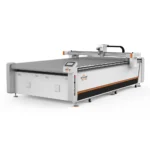
Multi-Method Cutting Match — This 1625 CNC oscillating knife cutting machine is positioned in the full catalogue by material and production volume, letting buyers choose knife or laser rather than forcing a single process onto every job.
Technical Specifications
| Parameter | Value |
|---|---|
| Model | 1625 |
| Product Type | CNC Oscillating Knife Cutting Machine |
| Working Area | 1600×2500 mm |
| Tool Head Options | Oscillating knife, Driven rotary knife, Creasing wheel, Kiss cutting tool, Pneumatic knife, Milling tool, V-groove knife |
| Cutting Speed | 0–2000 mm/s |
| Cutting Thickness | ≤ 30mm (basis not stated in source) |
| Cutting Accuracy | ±0.1 mm |
| Vacuum Pump | 9 kW |
| Control System | PLC control panel |
| Voltage Options | 110V, 220V, 380V |
| Servo Motor Options | Panasonic, Delta, Dorna (source value — verify against manufacturer catalog) |
| Software File Formats | PLT, DXF, AI, PDF |
| Software Language Options | English, Russian, Italian, Chinese (special languages customizable) |
| Safety Device | Infrared sensor and emergency stop |
| Machine Size | 3300×2100×1350 mm |
| Standards | CE |
Application Suitability
| Application | Material or Output |
|---|---|
| Automotive interiors | Leather-EVA composites for floor mats, seat covers, dashboard mats |
| Leather goods production | Genuine leather and PU for bags, wallets, accessories |
| Footwear manufacturing | Multi-layer fabric, foam and synthetic leather uppers |
| Garment and textile cutting | Layered fabrics and technical textiles with high nesting yield |
| Composite material processing | Foam, EVA, rubber and PVC sheets for industrial components |
What "30mm Cutting Thickness" Actually Means on a Leather Table
Thickness ratings only hold when the vacuum hold-down, tool head and material density are correctly matched.
I have watched buyers specify a CNC oscillating knife cutting machine for sale on working area alone, then discover the bed cannot grip small nested leather pieces at production speed. When vacuum zoning is inadequate, the material shifts, the blade drags, and edge quality collapses mid-run. The cut depth number on a brochure tells you nothing about how the table handles a mix of large hide outlines and small strap components in the same nest. [NEED_CITE: vacuum hold-down requirements for flexible material cutting]
How the 1625 Sits in the Full Equipment Range
The 1625 model occupies the mid-large format position in the Realtop knife and laser catalogue. For buyers processing full hides or large leather-EVA automotive panels, the 1600×2500 mm bed accommodates standard material sheets without excessive repositioning. The oscillating knife tool head handles most genuine and synthetic leather work, while the driven rotary knife option addresses heavier composite stacks. This CNC cutting machine manufacturer positions the platform so buyers can match cutting method to material rather than forcing every job through one technology.
Tool Head Selection Across the Material Spectrum
The carriage supports seven interchangeable tool heads, from kiss cutting for thin vinyl overlays to V-groove milling for rigid packaging boards. A leather goods producer cutting 2mm PU needs a different oscillation frequency than an automotive supplier processing 10mm leather-EVA floor mat stock. The pneumatic knife option handles dense rubber gasket material that would stall a standard oscillating blade. Selecting the right head is not a catalogue checkbox — it directly determines whether the edge comes off the table clean or requires secondary trimming. [NEED_CITE: oscillating knife frequency and material density matching]
Reading the Specifications Beyond the Brochure Numbers
The 9 kW vacuum pump paired with an aluminum bellows vacuum table addresses the core problem of flexible material cutting: material lift during high-speed passes. The ±0.1 mm accuracy depends on servo selection — Panasonic, Delta and Dorna drives each have different torque curves that affect repeatability on long cutting paths. The PLC control panel with multi-language support matters when the operator in your factory does not read the same manual you received. Software compatibility with PLT, DXF, AI and PDF files determines whether your existing nesting workflow transfers over or requires a complete redo. The 0–2000 mm/s cutting speed range is only achievable on thin, single-layer materials; dense multi-layer leather stacks will require significantly slower passes.
The Hidden Cost of Skipping Material Testing
When a buyer orders without sending sample material for test cutting, they are gambling that the quoted configuration will handle their specific hide thickness, adhesive backing and surface finish. Ragged edges on PU leather often trace back to a tool head specified for a different material family. Crushed foam cores beneath leather topsheets indicate insufficient vacuum zoning rather than a blade problem. These issues surface weeks after installation, when retooling costs more than a sample report would have. [NEED_CITE: material sample testing protocols for CNC cutting equipment]
Why Source This Platform from the Full Catalogue
The design and production cover both knife and laser cutting technologies under one roof, so a buyer comparing methods gets data from the same factory floor rather than two separate vendors. Tool head and table configurations are specified per material type and daily production volume, not sold as a standard package. CCD camera positioning for printed contour work is available when your leather pieces carry registration marks. Software compatibility is confirmed against your existing file formats before the order is locked. Sample cutting on your own material with recorded video provides configuration validation before commitment. Voltage, plug standard and control language are confirmed per destination market, eliminating the surprise of a 380V machine arriving at a 220V facility.
Documentation & Verification
- Machine specification sheet confirming tool head and vacuum table configuration matched to your material
- Electrical schematic with voltage and plug standard locked to your facility requirements
- Sample cutting report on your leather or composite material with edge quality photographs
- Software licence and file format compatibility note verified against your nesting workflow
- Factory test record documenting cutting accuracy and vacuum performance before dispatch
- Spare parts list with tool head consumables identified for your production volume
Installation, Commissioning & Support
- Foundation must support the 3300×2100×1350 mm footprint with level tolerance for the vacuum table
- Dedicated power circuit matching confirmed voltage (110V / 220V / 380V) with correct phase configuration
- Machine arrives partially assembled; table frame and gantry require on-site alignment
- Initial commissioning includes vacuum zoning calibration for your specific material sheet sizes
- Operator training covers tool head changeover procedures and PLC parameter adjustment
- Consumable blade and knife holder inventory sized to your daily cutting volume
What to Include in Your Inquiry
Send your material type, typical sheet dimensions, thickness range and daily cutting volume so the tool head and vacuum configuration can be matched before quotation. Specify your facility voltage and frequency, preferred control language and existing design software file formats to confirm compatibility. If your production includes printed materials requiring contour recognition, note that requirement upfront. Material samples sent for test cutting will produce a configuration report with edge quality documentation before you commit to an order.
Frequently Asked Questions
Q: How does the 1625 compare to laser cutting for leather work?
A: Oscillating knife cutting produces no heat-affected zone, so genuine leather edges remain unburnt and flexible — critical for bag and footwear applications where edge appearance matters. Laser cutting seals synthetic edges but chars natural leather. The 1625 sits in the catalogue as the knife-cutting option for leather, while CO2 laser platforms handle acrylic, wood and synthetic textiles where edge sealing is desired.
Q: Which tool head handles multi-layer genuine leather?
A: The oscillating knife with appropriate blade geometry handles stacked genuine leather up to the stated thickness capacity. For very dense or adhesive-backed leather composites, the pneumatic knife provides additional downforce. The driven rotary knife addresses continuous-cut scenarios on long production runs. Tool head selection is confirmed through sample cutting on your specific material stack.
Q: Is the vacuum table adequate for small leather components?
A: The 9 kW vacuum pump serves an aluminum bellows table with zoning capability. Small nested parts that tend to lift during cutting require proper zone activation and potentially a sacrificial overlay. Vacuum configuration is specified based on your nesting pattern and smallest component size, validated during the sample cutting process before order confirmation.
Q: What voltage and language will the machine be configured for?
A: Voltage is configurable across 110V, 220V and 380V options, confirmed against your facility electrical supply before production. The PLC control panel supports English, Russian, Italian and Chinese with additional languages available on request. Electrical schematics and plug standards are locked to your destination market requirements during the order specification phase.
Q: Can I test my material before committing to a purchase?
A: Yes, material samples can be sent for test cutting on the configured machine. The sample report documents cutting speed, edge quality, vacuum hold-down performance and tool head suitability with recorded video. This validation step ensures the configuration matches your production requirements before the build begins.










商品评价
There are no reviews yet.