

Fast Delivery
Quick, reliable shipping to any location.

Free & easy returns
Return this item by mail or in store within 90 days for a full refund.
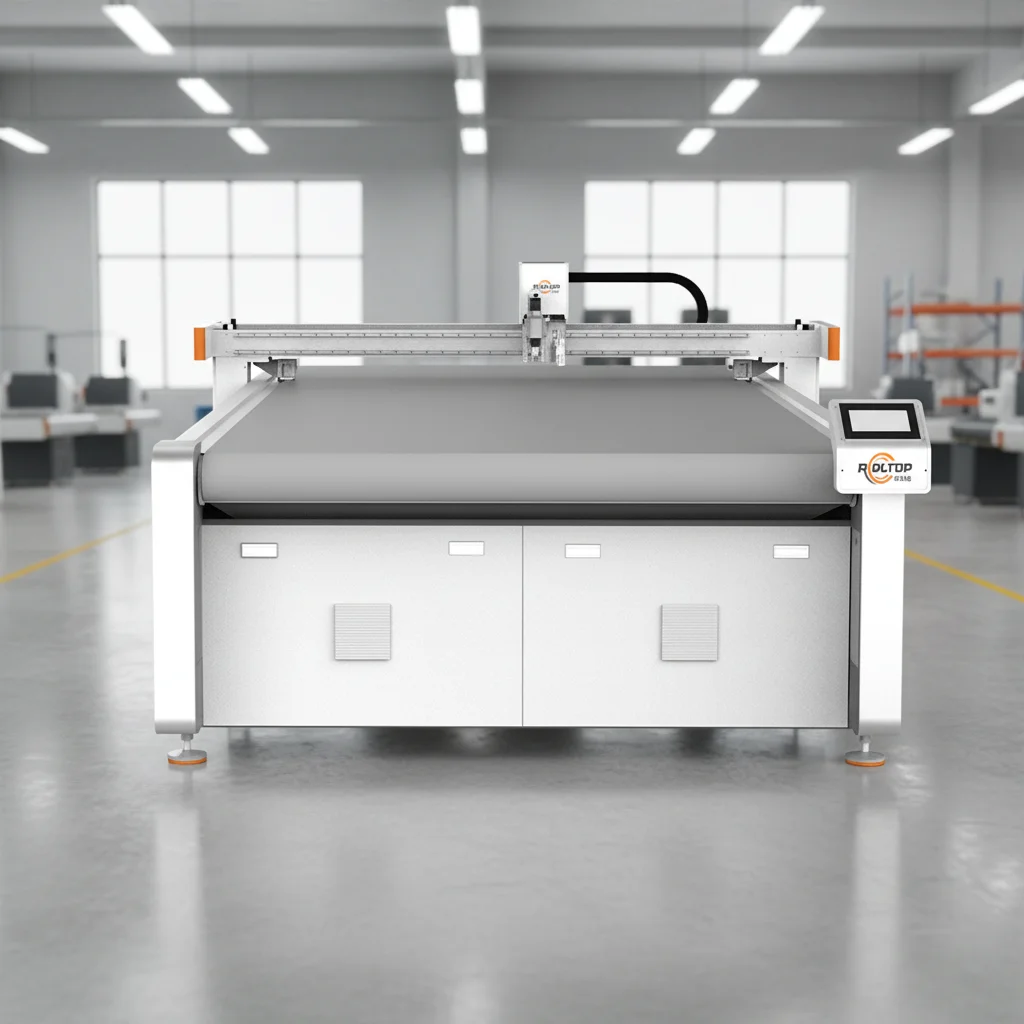
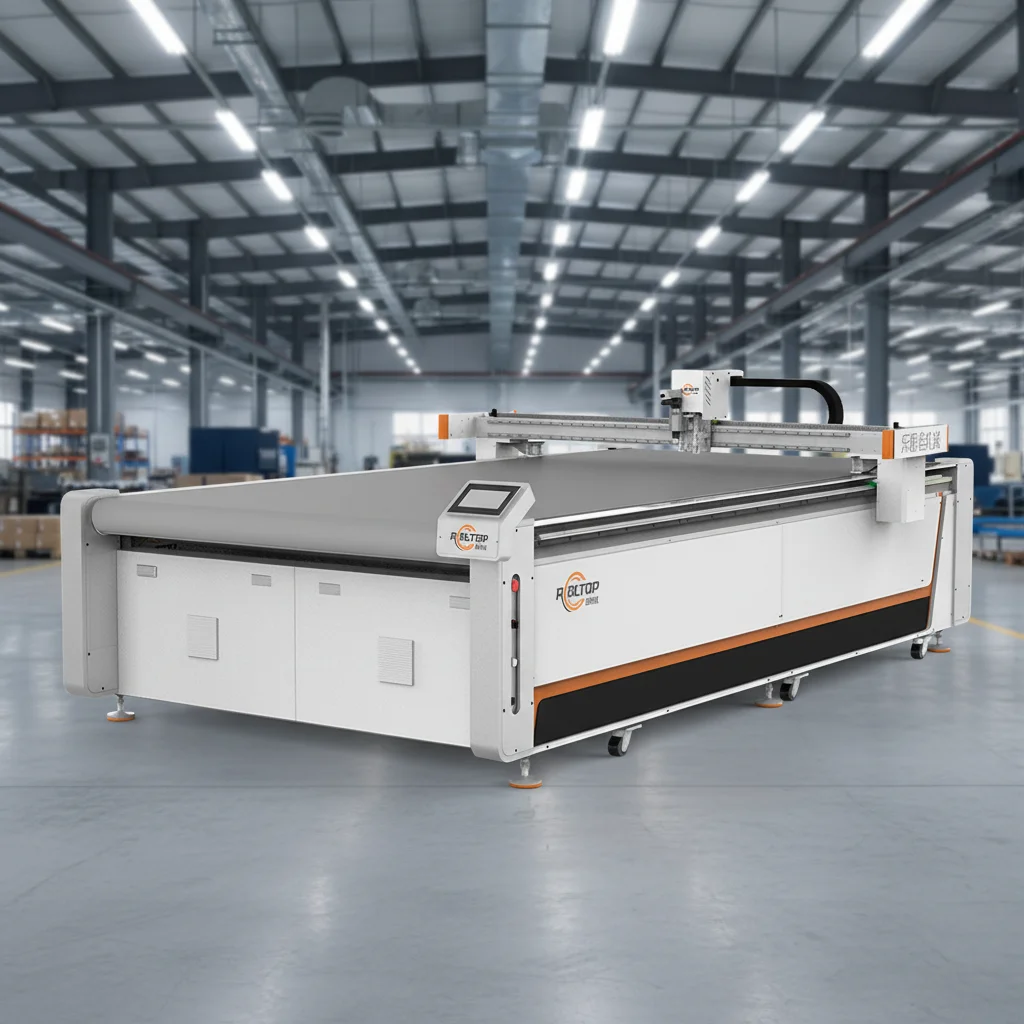
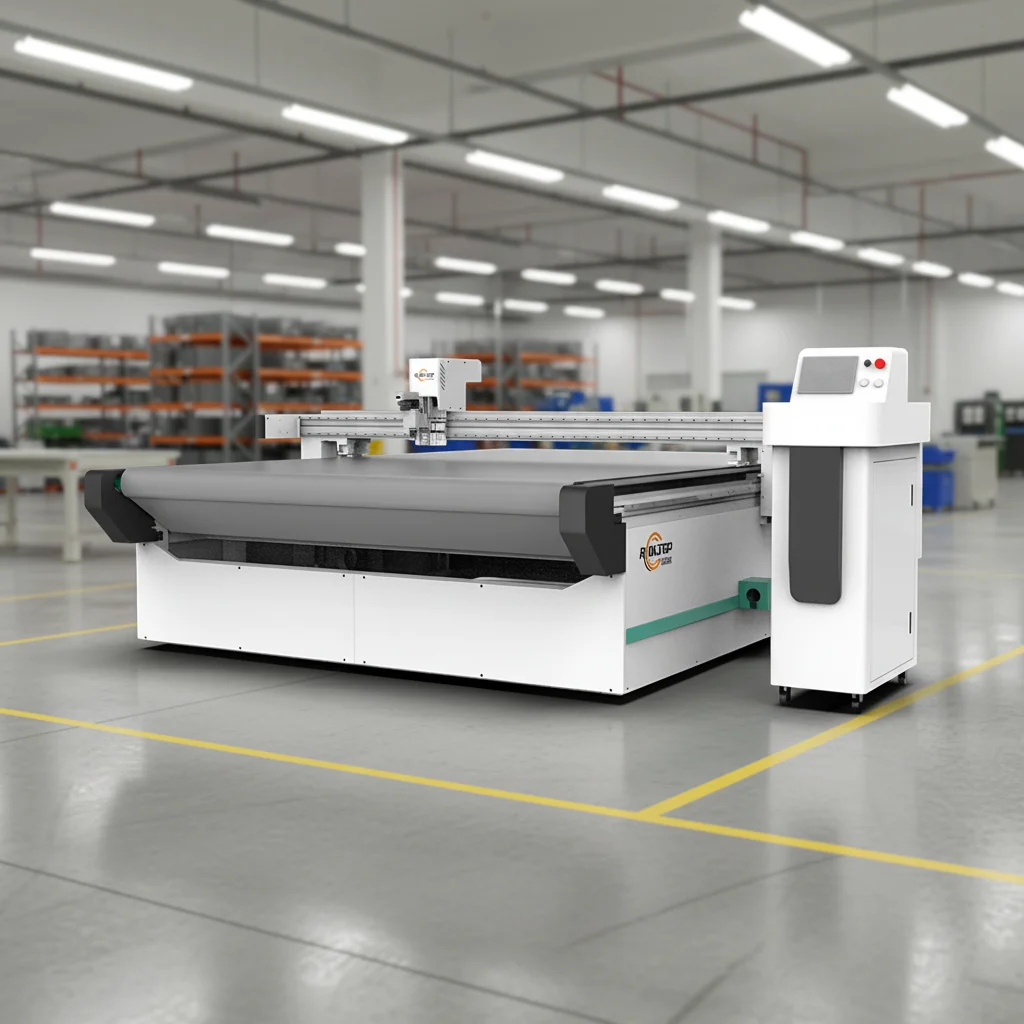
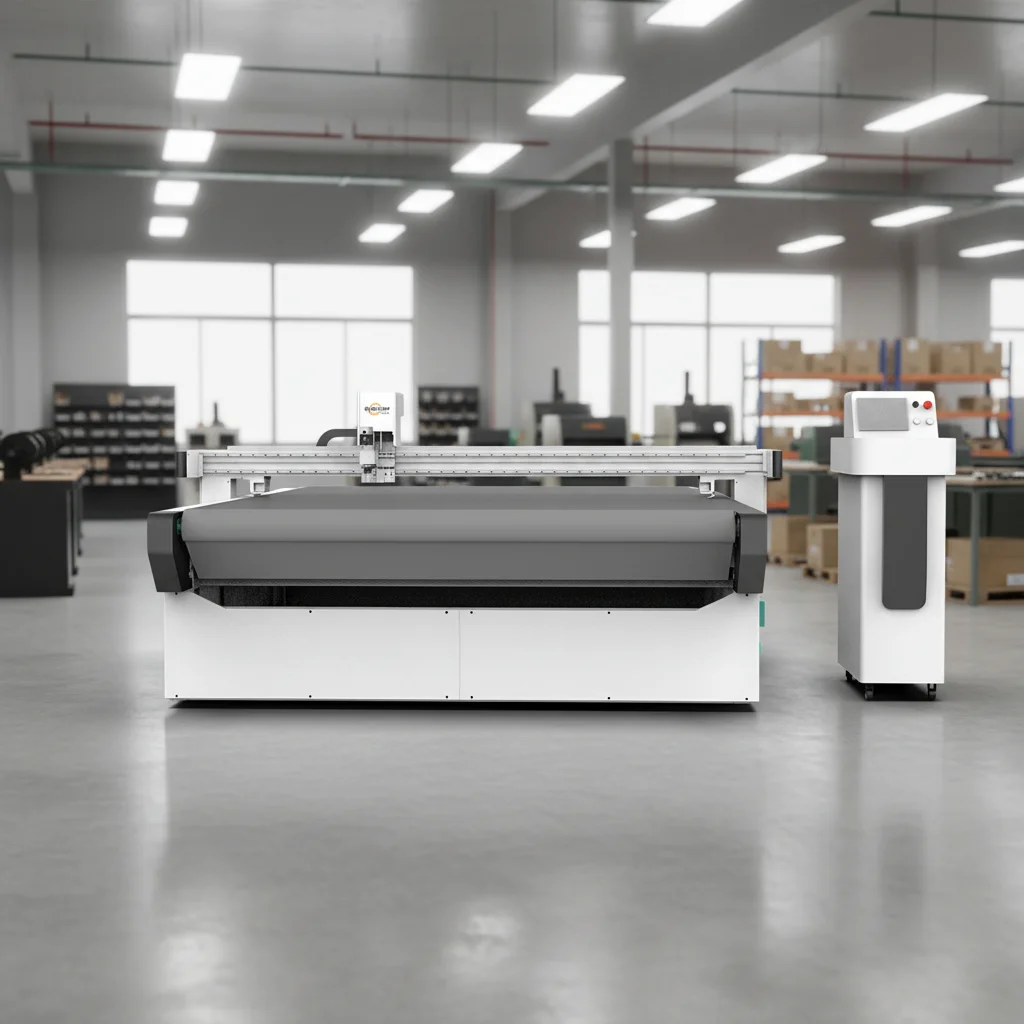
Full Tooling Range — oscillating knife, pneumatic knife, drag knife and creasing wheel all mount to a single head carriage, letting a buyer specify the cutting method around the material rather than adapt the material to a fixed tool.
Technical Specifications
| Parameter | Value |
|---|---|
| Model | RT-D2516/RT-S2516 |
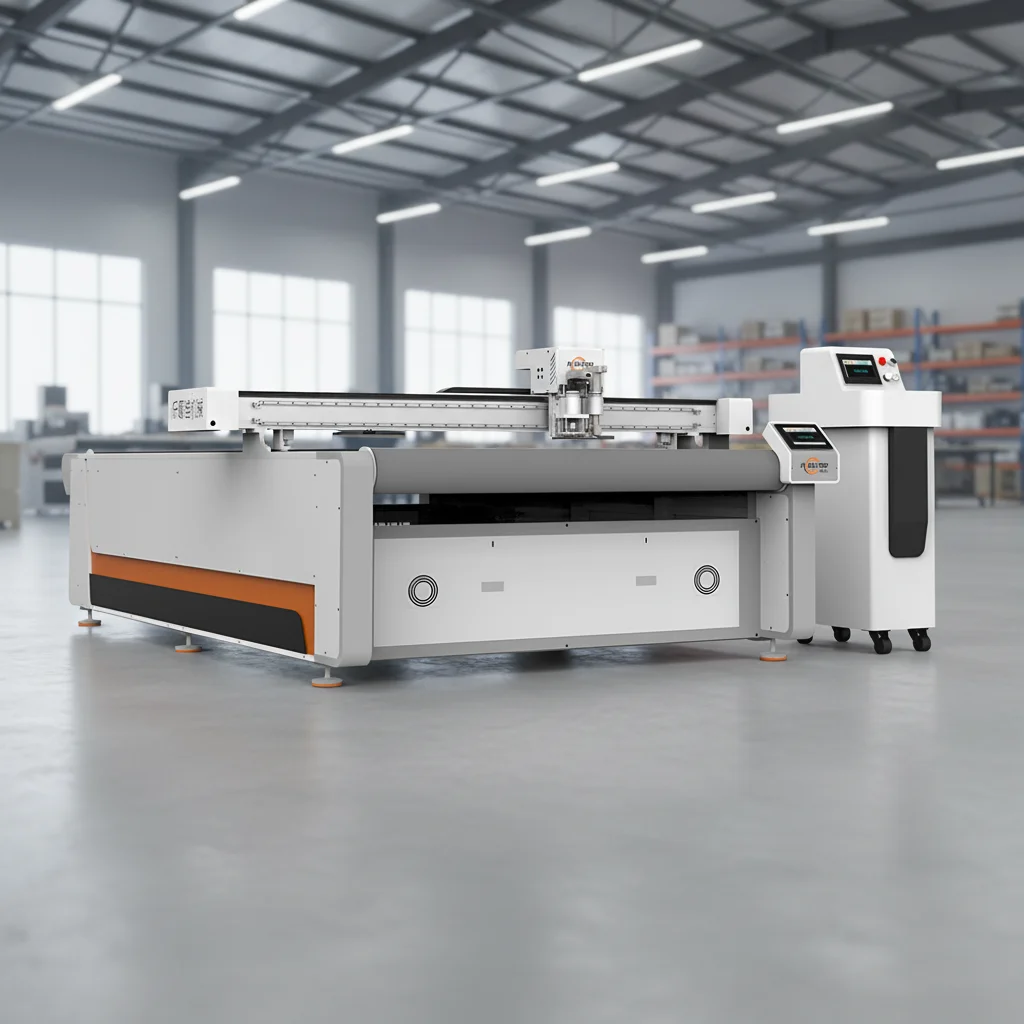
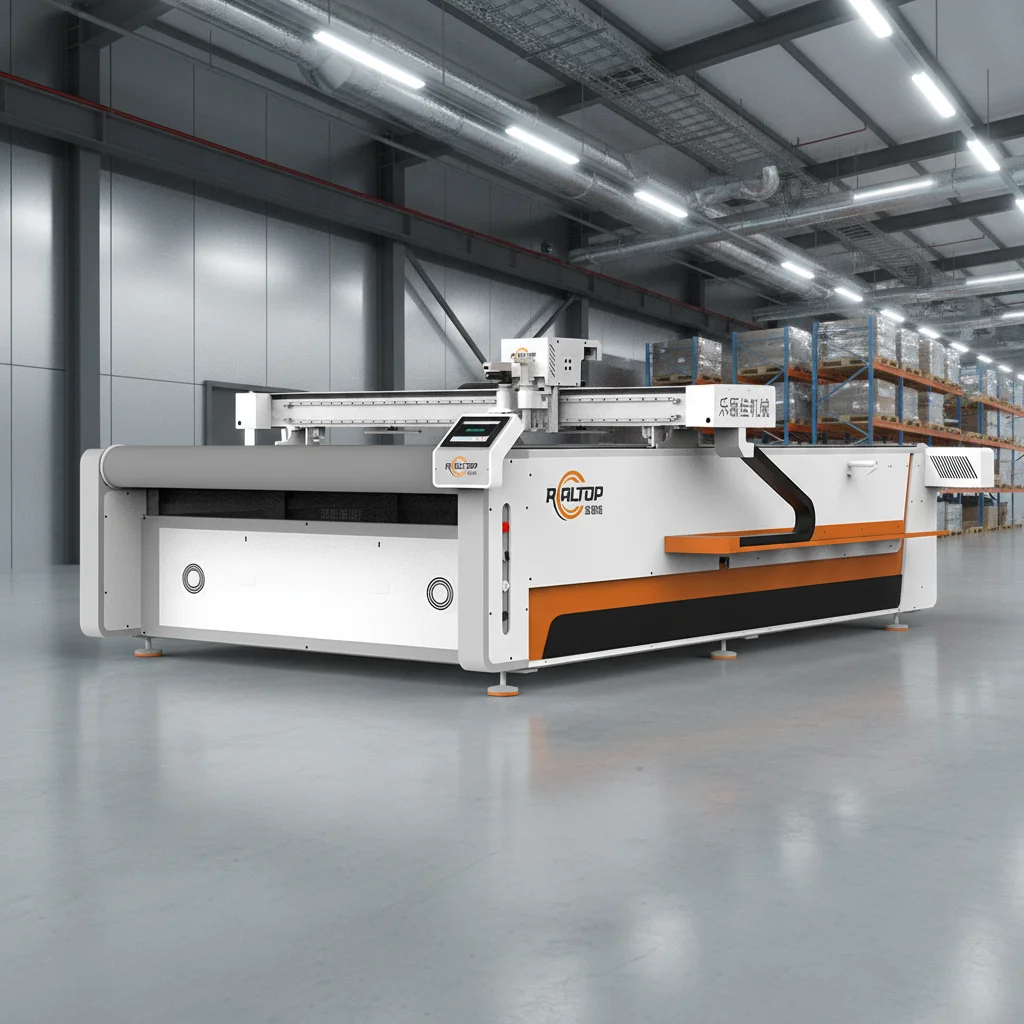
| Product Type | CNC Oscillating Knife Cutting Machine |
| Working Area | 1600 × 2500 mm |
| Machine Size | 3450 × 2300 × 1250 mm |
| Rated Power | 9 kW |
| Voltage | 380 V ±10 % |
| Vacuum Pump | 7.5 kW |
| Table Type | Flat working table or auto-feeding conveyor |
| Cutting Thickness | Up to 100 mm (basis not stated in source — confirm material type and density) |
| Translational Velocity | 800 – 2000 mm/s |
| Cutting Speed | 200 – 800 mm/s (varies with material) |
| Repeated Accuracy | ≤ 0.1 mm |
| Transmission System | Digital servo motor, linear guide, synchronous belt, ball screw (imported) |
| Servo Motor Options | Delta or Panasonic (IP67, vibration suppression) |
| Linear Rail | Taiwan Hiwin |
| Conveyor Belt | Germany imported |
| Vacuum Table | Magnesium-aluminum alloy, PVDF powder spray, anodic and hard oxidation |
| Visual Positioning | Small CCD mark-point, panoramic camera, projection positioning |
| Tool Head Options | Oscillating knife, pneumatic knife, high-power vibrating knife, circular knife, V-cutting knife, drag knife, creasing wheel, dotted line knife, punching, brush |
| Instruction System | HP-GL compatible |
| Software | Auto typesetting; supports PLT, DXF, AI |
| Control Panel | Touch screen, multiple languages |
| Language Options | English, Russian, Italian, Chinese; special languages customizable |
| Safety Device | Infrared sensor stop, anti-collision beam, emergency stop |
| Warranty | 1 year |
| Standards | CE (verify certificate availability) |
Application Suitability
| Application | Material or Output |
|---|---|
| Garment and footwear production | Woven fabric, knit textile, leather, PU, EVA, shoe lining |
| Soft home furnishings and upholstery | Carpet, non-woven fabric, sponge, foam board, rubber |
| Automotive interior and sealing | Composite layers, XPE, PVC, gasket rubber, fiberglass |
| Luggage and bag manufacturing | Heavy-duty textile, PU leather, stiffener board |
| Packaging and sample making | Corrugated cardboard, sticker film, soft glass |
| Sports and outdoor goods | PTFE, ETFE, PP, PE, carbon fiber prepreg |
Why "Cutting Thickness 100 mm" Can Mislead a Buyer
The number on the spec sheet only matters when matched to your exact material density and layer count.
I once stood beside a CNC oscillating knife cutting machine for sale in a Lagos footwear factory where the operator was running multi-layer bonded sponge at full depth. The spec plate said the unit could handle up to 100 mm, but the edge on the bottom ply was crushed flat because the amplitude and vacuum zoning had never been tuned for that specific layup. Thickness capacity without a material qualifier is a starting point, not a guarantee. Buyers who commit before seeing a sample cut on their own roll stock often discover edge quality issues only after the machine is bolted to the floor [NEED_CITE: material density and compressibility effects on oscillating blade penetration].
Matching the Cutting Method to the Roll Stock
A fabric producer cutting single-ply silk and a gasket shop cutting 30 mm EPDM rubber face fundamentally different resistance profiles. The oscillating knife, pneumatic knife, drag knife, and circular knife options on this platform let the CNC cutting machine manufacturer configure the head to the job. High-frequency oscillation slices through compressible foam without crushing, while a drag knife suits thin vinyl and sticker film where a full stroke is unnecessary. Selecting the wrong tool for the ply is the single most common reason for ragged edges and rejected pieces at start-up.
Keeping Small Parts Locked Under the Blade
When the nesting software places dozens of small pattern pieces across a 1600 × 2500 mm bed, any dead zone in the vacuum field lets a corner lift and catch the knife. The magnesium-aluminum alloy table on the RT-D2516/RT-S2516 is treated with PVDF powder spray and hard oxidation to maintain flatness across the full area, and the 7.5 kW pump delivers suction through zoned channels. Uniform hold-down matters most when cutting slippery synthetics or lightweight lining fabric where a single lifted edge can drag the entire nest out of register [NEED_CITE: vacuum zoning standards for flatbed digital cutting tables].
What the Drive Train Numbers Actually Mean on the Floor
Repeated accuracy of ≤ 0.1 mm is achievable because the carriage rides on Taiwan Hiwin linear rails driven by an imported ball screw and digital servo motors — either Delta or Panasonic, both rated IP67 with vibration suppression. Translational speed reaches 2000 mm/s on repositioning moves, while actual cutting speed drops to 200 – 800 mm/s depending on material hardness and ply count. The HP-GL compatible instruction system accepts PLT, DXF, and AI files, which means a buyer’s existing nesting workflow can feed the machine without a software overhaul. For printed contour work, the optional CCD mark-point camera or panoramic camera recognition locks onto registration marks at production speed, a critical feature when die-cutting printed textile panels for soft furnishings.
The Cost of Skipping the Sample Cut
A buyer who approves a tool head list over email and never sends a roll of their actual material is gambling on edge quality. The wrong oscillation frequency on bonded foam produces a stepped edge; insufficient vacuum on thin film causes the knife to drag a wrinkle through the entire sheet. These problems do not show up in a promotional video. They show up on day one of production, when the operator is already trained and the return crate is already built [NEED_CITE: sample cutting validation before machine acceptance].
Why Source This CNC Cutting Machine Manufacturer
Realtop designs and builds both knife and laser cutting platforms in-house, which means a buyer comparing technologies gets an unbiased recommendation rather than a forced fit. Every RT-D2516/RT-S2516 leaves the Jinan facility with a tool head and table configuration matched to the buyer’s submitted material sample, not a generic default. Voltage, plug type, and control language are confirmed in writing before the crate closes, eliminating the field rewiring and re-labeling that stalls commissioning. The CCD positioning system is bench-tested against the buyer’s own printed artwork so contour tracking is verified before shipment, not debugged on the factory floor.
Documentation & Verification
- Machine specification sheet listing every tool head and table zone configured for your material
- Electrical schematic confirming voltage, breaker rating, and plug type before crating
- Sample cutting report on your fabric, foam, or gasket stock showing edge photos and cycle data
- Software licence and file-format compatibility note covering PLT, DXF, and AI imports
- Factory test record with signed acceptance of repeated accuracy and safety interlocks
- CE declaration documentation where applicable to your import market
Installation, Commissioning & Support
- Floor space of at least 3450 × 2300 mm clear, plus operator access on three sides
- Dedicated 380 V ±10 % circuit with separate breaker for the 9 kW main drive and 7.5 kW vacuum pump
- Machine ships in one crate; table and gantry bolt to the base frame on arrival
- First-power commissioning includes vacuum zoning balance and servo tuning for your material
- Operator training covers tool head changeover, CCD calibration, and nesting software setup
- Spare parts list identifies blades, vacuum seals, and conveyor belt sections by part number
What to Include in Your Inquiry
Send a description of the material type, ply count, and maximum sheet or roll width you run today. Note the daily volume you need to sustain and whether your shop uses 50 Hz or 60 Hz power. If you already nest parts in a specific CAD package, mention the file format so software compatibility is confirmed before the quotation is issued.
Frequently Asked Questions
Q: How do I decide between oscillating knife and laser for my material?
A: Knife cutting suits compressible and layered materials like foam, thick fabric, and gasket rubber where a laser would melt or seal the edge. Laser is preferred for thin synthetics that benefit from a heat-sealed edge. The manufacturer offers both technologies, so the recommendation is based on your specific material and edge-quality requirement rather than limited to a single method.
Q: How is the 1600 × 2500 mm working area matched to my sheet size?
A: The flat table accommodates most standard fabric rolls and leather hides in a single lay. If your material arrives in wider rolls or you need continuous feeding, the auto-feeding conveyor variant advances stock automatically, reducing manual repositioning between nests.
Q: Which tool head handles multi-layer bonded foam without crushing the bottom ply?
A: The high-power vibrating knife combined with adjustable oscillation frequency is typically specified for bonded foam and sponge. A sample cut on your actual layup confirms the correct amplitude and blade geometry before the machine is finalized for shipment.
Q: Does the software work with my existing nesting files?
A: The auto-typesetting software imports PLT, DXF, and AI formats and uses an HP-GL compatible instruction system. Before order confirmation, a file-format compatibility note is issued so you can verify that your current nesting workflow transfers without manual re-drawing.
Q: Are voltage and control language locked in before the machine ships?
A: Voltage, plug type, and touch-screen language are documented in the specification confirmation step. The control panel supports English, Russian, Italian, and Chinese as standard, with additional languages configurable to your production team’s requirement.










商品评价
There are no reviews yet.