

Fast Delivery
Quick, reliable shipping to any location.

Free & easy returns
Return this item by mail or in store within 90 days for a full refund.
Tooling configured per board grade — Every oscillating knife, creasing wheel and V-groove setup is matched to the buyer’s flute profile and daily volume, confirmed by sample cutting on the actual corrugated stock before order.
Technical Specifications
| Parameter | Value |
|---|---|
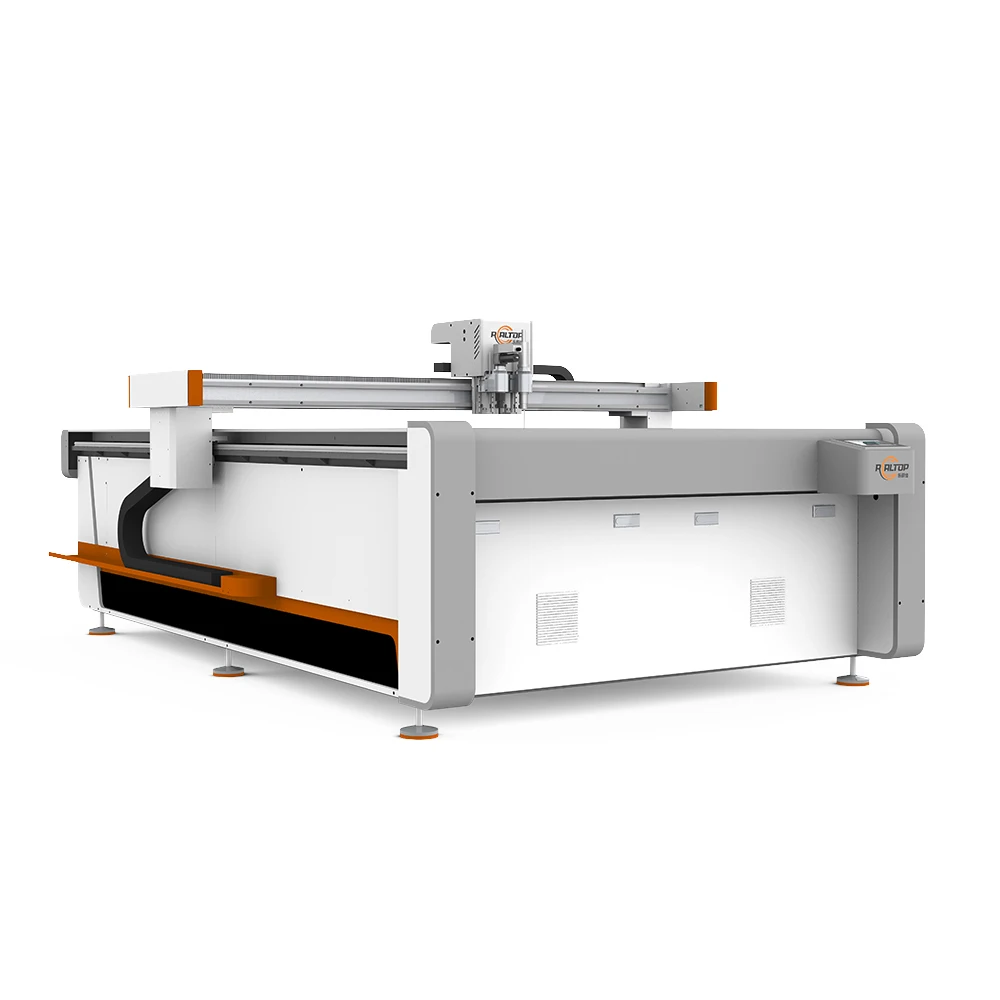
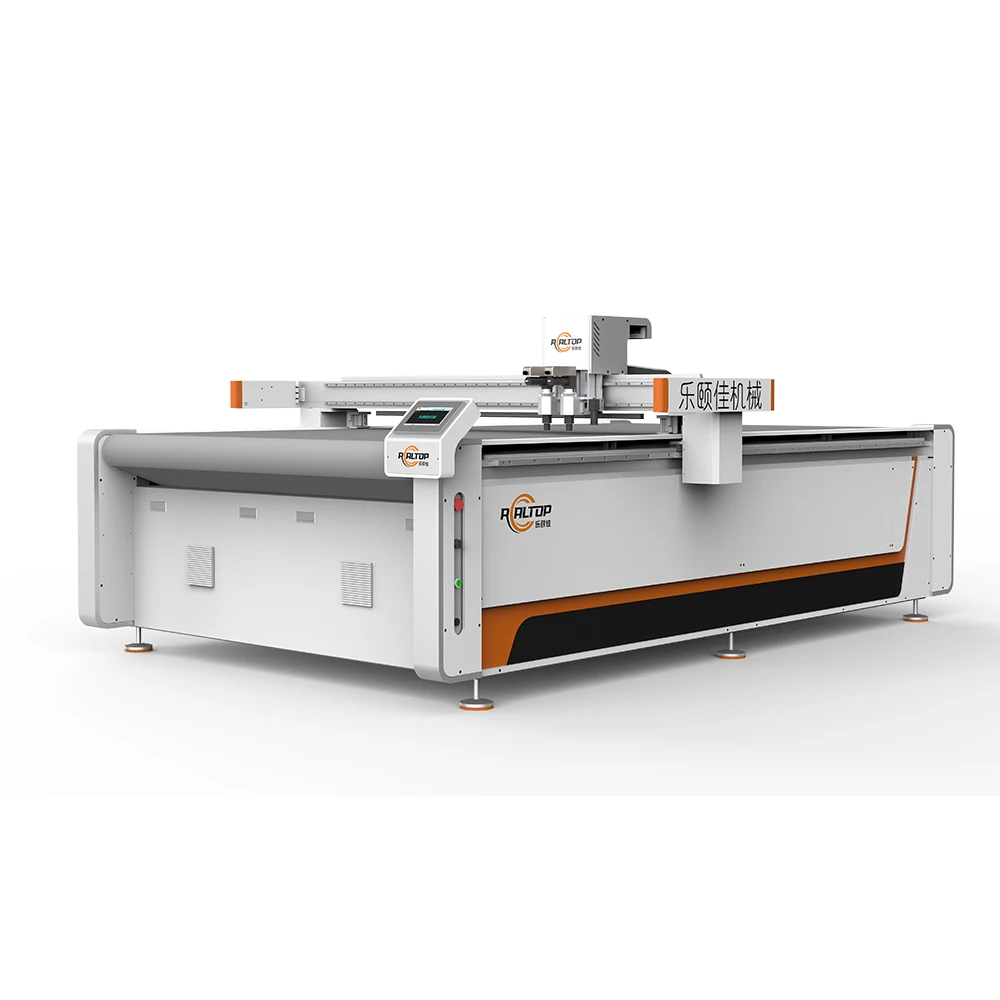
| Product Type | CNC Oscillating Knife Cutting Machine for Packaging |
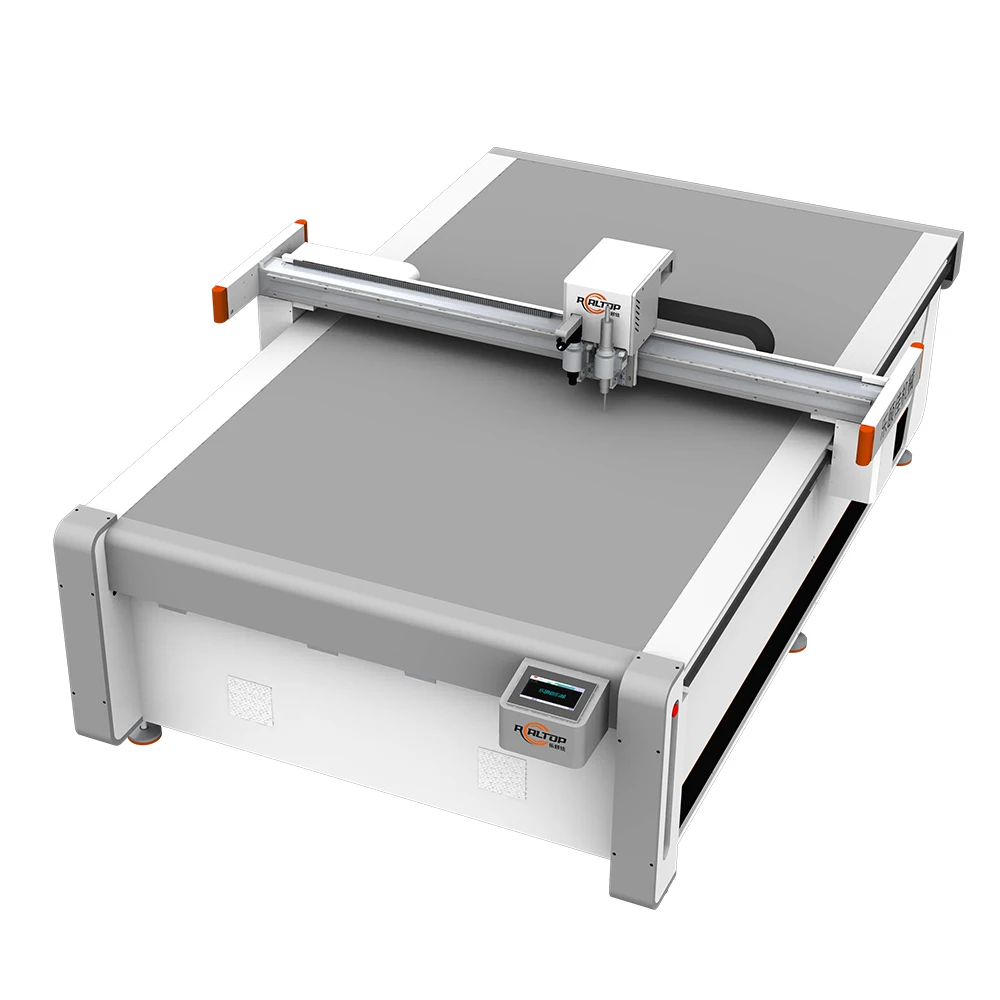
| Working Area | 1600×2500 mm |
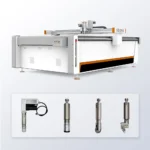
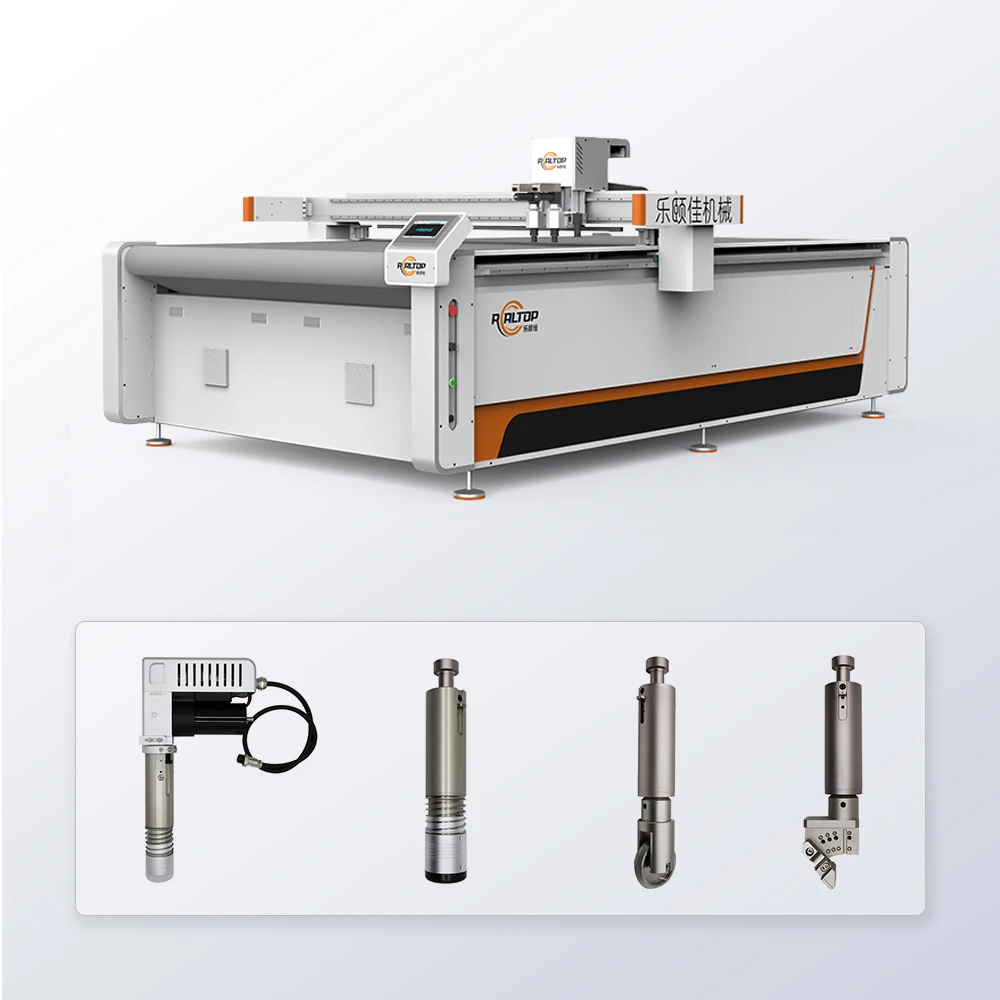
| Tool Head Options | Oscillating knife, Driven rotary knife, Creasing wheel, Kiss cutting tool, Pneumatic knife, Milling tool, V groove knife |
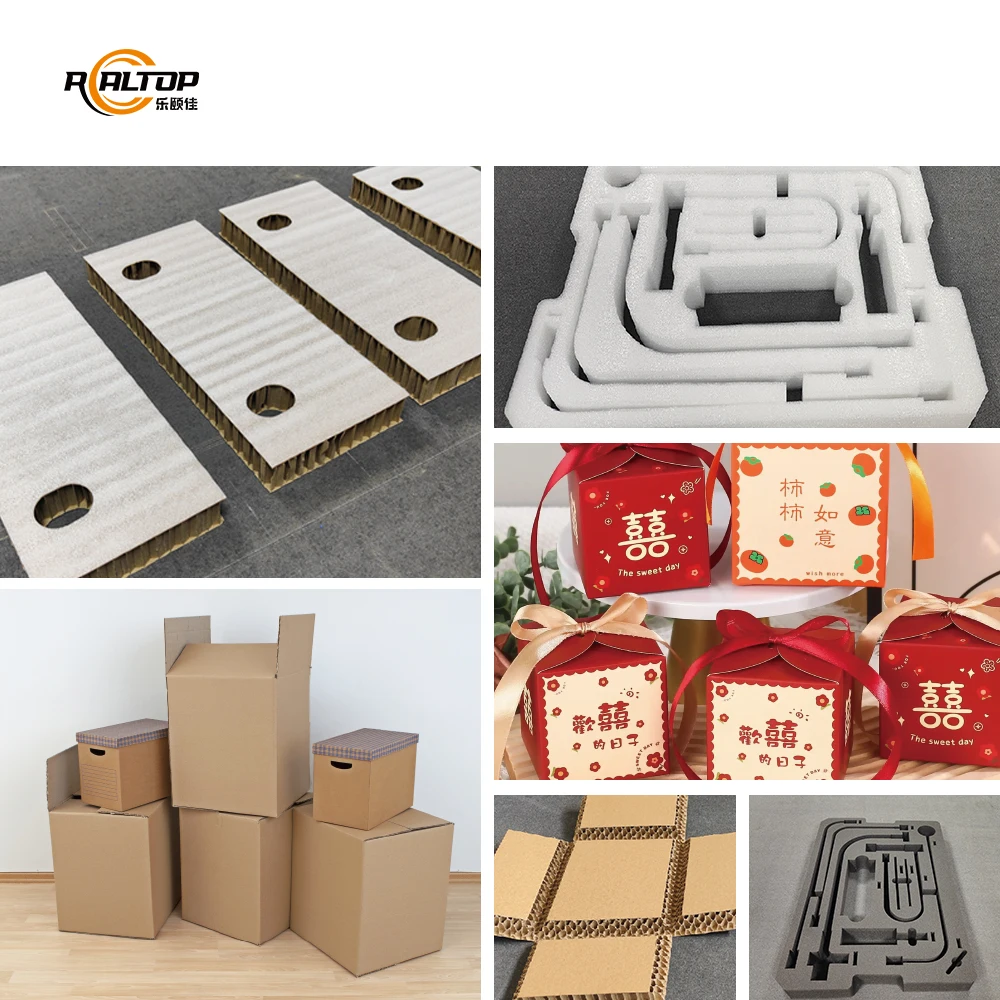
| Applicable Materials | Fabric, Cardboard, Carton, Mats, PVC, EVA, Leather, Acrylic, Foam, PTFE, Rubber |
| Cutting Speed | 0-1500 mm/s |
| Cutting Thickness | ≤ 40 mm |
| Cutting Accuracy | ±0.1 mm |
| Vacuum Pump | 9 kW |
| Vacuum Table | Aluminum bellows vacuum table |
| Control System | PLC control panel |
| Servo Motors | Panasonic, Delta, Dorna (options available) |
| Voltage | 110V, 220V, 380V |
| Supported File Formats | PLT, DXF, AI, PDF |
| Safety Device | Infrared sensor device and emergency stop device |
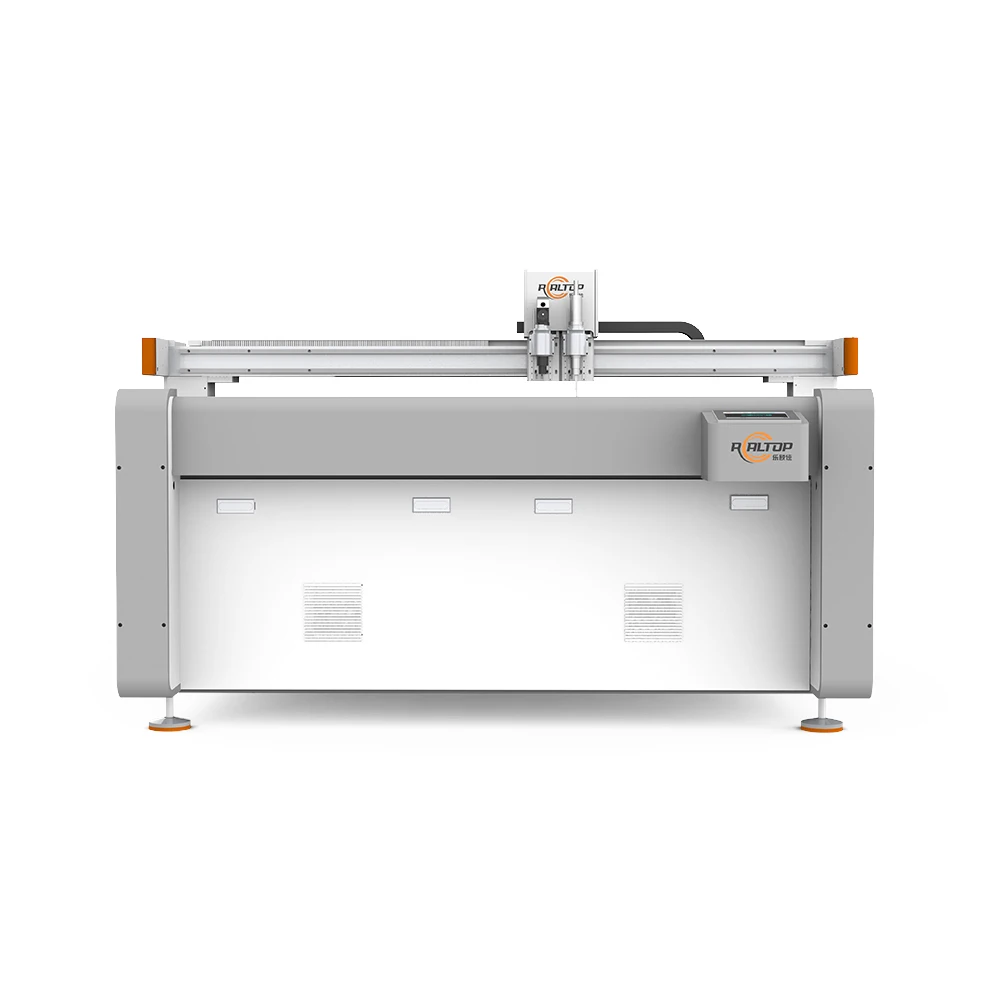
| Machine Dimensions (L×W×H) | 3300×2100×1350 mm |
| Software Language Options | English, Russian, Italian, Chinese (custom languages available) |
| Certification | CE |
Application Suitability
| Application | Material or Output |
|---|---|
| Corrugated carton sample making and short-run production | E-flute, B-flute, BC-flute corrugated board |
| Premium packaging prototype contour cutting | Greyboard, cardstock, art paper, specialty paper |
| Protective packaging and industrial cushioning inserts | EVA, EPE, PU foam |
| Gasket and industrial mat cutting | Rubber mats, PTFE, composite sheets |
| Textile and synthetic leather processing | Velvet, fleece, non-woven fabric, synthetic leather |
| Thin plastic sheet contour cutting | PVC, PET sheets |
Why the Tool Head Matters More Than the Working Area
A cutting machine specified only on table size often arrives at a packaging facility and struggles with the actual board weight or flute type on the production floor. The CNC oscillating knife cutting machine manufacturer must confirm which tool head handles the buyer’s specific corrugated grade before the machine is built, not after it arrives.
I have seen packaging operations stall because a machine was ordered with a single oscillating knife, only to discover that BC-flute board at higher moisture content required a pneumatic knife and a different vacuum zoning strategy. The operator spent days adjusting parameters while the production line waited. [NEED_CITE: material moisture content and cutting tool compatibility in corrugated processing]
Seven Tool Heads Cover Every Packaging Substrate
The catalogue includes oscillating knife, driven rotary knife, creasing wheel, kiss cutting tool, pneumatic knife, milling tool and V-groove knife options. A packaging producer working across E-flute samples and thick greyboard rigid boxes can switch tool heads on a single machine rather than maintaining separate equipment lines. The CNC oscillating knife cutting machine manufacturer configures these heads based on the buyer’s material list and flute profile, ensuring that creasing, perforating and cutting happen in one setup without manual tool changes mid-job.
Vacuum Table Flatness and Adsorption Zoning
Corrugated board and lightweight specialty papers behave differently under vacuum. The aluminum bellows vacuum table on this system provides high flatness across the 1600×2500 mm working area, which is critical when cutting thin art paper that lifts at the edges or heavy BC-flute that requires distributed suction. Without proper zoning, small packaging components shift during cutting and produce scrap rather than finished samples. [NEED_CITE: vacuum table zoning requirements for flatbed digital cutters]
Reading the Specifications for Packaging Work
The 0-1500 mm/s cutting speed range matters most when paired with board thickness and flute type. A driven rotary knife running at higher speed on single-face E-flute will produce clean edges, while the same speed on damp BC-flute will crush the flutes and leave ragged cuts. The PLC control panel stores material-specific speed and pressure profiles, so operators recall tested settings rather than re-calibrating for each job. File format support for PLT, DXF, AI and PDF means packaging designers can send artwork directly from standard design software without intermediate conversion steps that introduce dimensional errors. The ±0.1 mm cutting accuracy ensures that scored fold lines align with cut contours across the full sheet, which is essential when sample boxes must fold into precise dimensions for client approval.
The Cost of Skipping the Sample Cut
Ordering a flatbed cutter based on catalogue specifications alone leads to problems that surface only after installation. A vacuum pump rated at 9 kW may hold full sheets of B-flute but struggle with nested small parts on thin cardstock if the table zoning does not match the nesting pattern. Software that cannot import the buyer’s existing AI or PDF files forces a re-draw of every packaging dieline, adding hours to sample turnaround. [NEED_CITE: software file format compatibility in CNC packaging cutters]
Why Source From This Range
The design team covers both knife and laser cutting technologies, so a packaging buyer can match the method to the material instead of forcing one approach across all substrates. Each tool head and table configuration is specified per board grade and production volume, not offered as a default package. CCD camera positioning is available for printed contour work on pre-printed packaging prototypes. Software compatibility and file format support are confirmed before order placement. Voltage, plug type and control language are matched to the buyer’s facility and operator preference. Sample cutting runs on the buyer’s own corrugated stock before commitment, producing a cutting report that documents edge quality, crease depth and cycle parameters.
Documentation & Verification
- Machine specification sheet confirming tool head and vacuum table configuration per board grade
- Electrical schematic with voltage and frequency matched to the buyer’s facility supply
- Sample cutting report on the buyer’s corrugated board grade and flute profile
- Software licence and file format compatibility note covering existing design workflows
- Factory test record documenting cutting accuracy and tool head performance before dispatch
- Operation and maintenance manual with tool head changeover and vacuum table cleaning procedures
Installation, Commissioning & Support
- Floor space planning around the 3300×2100×1350 mm machine dimensions with clearance for material loading
- Dedicated electrical circuit matching the selected 110V, 220V or 380V supply and 9 kW vacuum pump draw
- Assembly and leveling of the aluminum bellows vacuum table on-site to maintain cutting flatness
- First-run parameter setup for the buyer’s board grade, flute profile and selected tool heads
- Operator training on PLC control panel navigation, tool head changeover and file import workflow
- Spare parts list covering oscillating knife blades, creasing wheels and vacuum table seals
What to Share With Your Inquiry
To match the right configuration from this range, provide the corrugated board grades and flute profiles you process most frequently, along with typical sheet dimensions and daily sample or short-run volume. Specify your facility voltage and frequency, and list the design software and file formats your packaging team currently uses. If you need sample cutting on your own stock before deciding, send a few sheets of your standard board so we can document tool head selection, cutting speed and edge quality in a written report.
Frequently Asked Questions
Q: How do I choose between oscillating knife, driven rotary knife and pneumatic knife for different corrugated flutes?
A: Oscillating knives handle standard single-wall flutes and general cardboard cutting well. Driven rotary knives suit continuous contour cuts on thinner boards and specialty papers. Pneumatic knives provide downward force for thick BC-flute and dense greyboard. The CNC oscillating knife cutting machine manufacturer selects the tool head based on your specific board grade and sample cutting results before order confirmation.
Q: What working area sizes and tool head combinations are available across the full range?
A: The range covers compact to large-format working areas with single and multi-head configurations. Tool heads including oscillating knife, creasing wheel, kiss cutting, milling and V-groove can be combined on one machine. Each combination is specified per the buyer’s material list and production volume rather than offered as a fixed package.
Q: How are voltage, plug type and control language confirmed before shipment?
A: Voltage options include 110V, 220V and 380V, matched to the buyer’s facility supply and local frequency standard. Plug type is specified per the destination market. The PLC control panel supports English, Russian, Italian, Chinese and custom languages, confirmed during the order process so the operator interface is ready at commissioning.
Q: Which packaging materials suit knife cutting versus laser cutting?
A: Knife cutting handles corrugated board, greyboard, foam inserts and adhesive-backed materials without edge discoloration or fume extraction requirements. Laser cutting suits acrylic, wood and textile packaging components where sealed edges are needed. The equipment range covers both methods so the buyer selects based on material and output rather than forcing one technology.
Q: Can the software integrate with my existing packaging design files?
A: The system accepts PLT, DXF, AI and PDF formats, covering the most common packaging design outputs. File format compatibility and nesting workflow integration are confirmed before order placement. If your design team uses a specific software platform, a compatibility note is included in the documentation to ensure direct import without conversion errors.
Tooling configured per board grade — Every oscillating knife, creasing wheel and V-groove setup is matched to the buyer’s flute profile and daily volume, confirmed by sample cutting on the actual corrugated stock before order.
Technical Specifications
| Parameter | Value |
|---|---|
| Product Type | CNC Oscillating Knife Cutting Machine for Packaging |
| Working Area | 1600×2500 mm |
| Tool Head Options | Oscillating knife, Driven rotary knife, Creasing wheel, Kiss cutting tool, Pneumatic knife, Milling tool, V groove knife |
| Applicable Materials | Fabric, Cardboard, Carton, Mats, PVC, EVA, Leather, Acrylic, Foam, PTFE, Rubber |
| Cutting Speed | 0-1500 mm/s |
| Cutting Thickness | ≤ 40 mm |
| Cutting Accuracy | ±0.1 mm |
| Vacuum Pump | 9 kW |
| Vacuum Table | Aluminum bellows vacuum table |
| Control System | PLC control panel |
| Servo Motors | Panasonic, Delta, Dorna (options available) |
| Voltage | 110V, 220V, 380V |
| Supported File Formats | PLT, DXF, AI, PDF |
| Safety Device | Infrared sensor device and emergency stop device |
| Machine Dimensions (L×W×H) | 3300×2100×1350 mm |
| Software Language Options | English, Russian, Italian, Chinese (custom languages available) |
| Certification | CE |
Application Suitability
| Application | Material or Output |
|---|---|
| Corrugated carton sample making and short-run production | E-flute, B-flute, BC-flute corrugated board |
| Premium packaging prototype contour cutting | Greyboard, cardstock, art paper, specialty paper |
| Protective packaging and industrial cushioning inserts | EVA, EPE, PU foam |
| Gasket and industrial mat cutting | Rubber mats, PTFE, composite sheets |
| Textile and synthetic leather processing | Velvet, fleece, non-woven fabric, synthetic leather |
| Thin plastic sheet contour cutting | PVC, PET sheets |
Why the Tool Head Matters More Than the Working Area
A cutting machine specified only on table size often arrives at a packaging facility and struggles with the actual board weight or flute type on the production floor. The CNC oscillating knife cutting machine manufacturer must confirm which tool head handles the buyer’s specific corrugated grade before the machine is built, not after it arrives.
I have seen packaging operations stall because a machine was ordered with a single oscillating knife, only to discover that BC-flute board at higher moisture content required a pneumatic knife and a different vacuum zoning strategy. The operator spent days adjusting parameters while the production line waited. [NEED_CITE: material moisture content and cutting tool compatibility in corrugated processing]
Seven Tool Heads Cover Every Packaging Substrate
The catalogue includes oscillating knife, driven rotary knife, creasing wheel, kiss cutting tool, pneumatic knife, milling tool and V-groove knife options. A packaging producer working across E-flute samples and thick greyboard rigid boxes can switch tool heads on a single machine rather than maintaining separate equipment lines. The CNC oscillating knife cutting machine manufacturer configures these heads based on the buyer’s material list and flute profile, ensuring that creasing, perforating and cutting happen in one setup without manual tool changes mid-job.
Vacuum Table Flatness and Adsorption Zoning
Corrugated board and lightweight specialty papers behave differently under vacuum. The aluminum bellows vacuum table on this system provides high flatness across the 1600×2500 mm working area, which is critical when cutting thin art paper that lifts at the edges or heavy BC-flute that requires distributed suction. Without proper zoning, small packaging components shift during cutting and produce scrap rather than finished samples. [NEED_CITE: vacuum table zoning requirements for flatbed digital cutters]
Reading the Specifications for Packaging Work
The 0-1500 mm/s cutting speed range matters most when paired with board thickness and flute type. A driven rotary knife running at higher speed on single-face E-flute will produce clean edges, while the same speed on damp BC-flute will crush the flutes and leave ragged cuts. The PLC control panel stores material-specific speed and pressure profiles, so operators recall tested settings rather than re-calibrating for each job. File format support for PLT, DXF, AI and PDF means packaging designers can send artwork directly from standard design software without intermediate conversion steps that introduce dimensional errors. The ±0.1 mm cutting accuracy ensures that scored fold lines align with cut contours across the full sheet, which is essential when sample boxes must fold into precise dimensions for client approval.
The Cost of Skipping the Sample Cut
Ordering a flatbed cutter based on catalogue specifications alone leads to problems that surface only after installation. A vacuum pump rated at 9 kW may hold full sheets of B-flute but struggle with nested small parts on thin cardstock if the table zoning does not match the nesting pattern. Software that cannot import the buyer’s existing AI or PDF files forces a re-draw of every packaging dieline, adding hours to sample turnaround. [NEED_CITE: software file format compatibility in CNC packaging cutters]
Why Source From This Range
The design team covers both knife and laser cutting technologies, so a packaging buyer can match the method to the material instead of forcing one approach across all substrates. Each tool head and table configuration is specified per board grade and production volume, not offered as a default package. CCD camera positioning is available for printed contour work on pre-printed packaging prototypes. Software compatibility and file format support are confirmed before order placement. Voltage, plug type and control language are matched to the buyer’s facility and operator preference. Sample cutting runs on the buyer’s own corrugated stock before commitment, producing a cutting report that documents edge quality, crease depth and cycle parameters.
Documentation & Verification
- Machine specification sheet confirming tool head and vacuum table configuration per board grade
- Electrical schematic with voltage and frequency matched to the buyer’s facility supply
- Sample cutting report on the buyer’s corrugated board grade and flute profile
- Software licence and file format compatibility note covering existing design workflows
- Factory test record documenting cutting accuracy and tool head performance before dispatch
- Operation and maintenance manual with tool head changeover and vacuum table cleaning procedures
Installation, Commissioning & Support
- Floor space planning around the 3300×2100×1350 mm machine dimensions with clearance for material loading
- Dedicated electrical circuit matching the selected 110V, 220V or 380V supply and 9 kW vacuum pump draw
- Assembly and leveling of the aluminum bellows vacuum table on-site to maintain cutting flatness
- First-run parameter setup for the buyer’s board grade, flute profile and selected tool heads
- Operator training on PLC control panel navigation, tool head changeover and file import workflow
- Spare parts list covering oscillating knife blades, creasing wheels and vacuum table seals
What to Share With Your Inquiry
To match the right configuration from this range, provide the corrugated board grades and flute profiles you process most frequently, along with typical sheet dimensions and daily sample or short-run volume. Specify your facility voltage and frequency, and list the design software and file formats your packaging team currently uses. If you need sample cutting on your own stock before deciding, send a few sheets of your standard board so we can document tool head selection, cutting speed and edge quality in a written report.
Frequently Asked Questions
Q: How do I choose between oscillating knife, driven rotary knife and pneumatic knife for different corrugated flutes?
A: Oscillating knives handle standard single-wall flutes and general cardboard cutting well. Driven rotary knives suit continuous contour cuts on thinner boards and specialty papers. Pneumatic knives provide downward force for thick BC-flute and dense greyboard. The CNC oscillating knife cutting machine manufacturer selects the tool head based on your specific board grade and sample cutting results before order confirmation.
Q: What working area sizes and tool head combinations are available across the full range?
A: The range covers compact to large-format working areas with single and multi-head configurations. Tool heads including oscillating knife, creasing wheel, kiss cutting, milling and V-groove can be combined on one machine. Each combination is specified per the buyer’s material list and production volume rather than offered as a fixed package.
Q: How are voltage, plug type and control language confirmed before shipment?
A: Voltage options include 110V, 220V and 380V, matched to the buyer’s facility supply and local frequency standard. Plug type is specified per the destination market. The PLC control panel supports English, Russian, Italian, Chinese and custom languages, confirmed during the order process so the operator interface is ready at commissioning.
Q: Which packaging materials suit knife cutting versus laser cutting?
A: Knife cutting handles corrugated board, greyboard, foam inserts and adhesive-backed materials without edge discoloration or fume extraction requirements. Laser cutting suits acrylic, wood and textile packaging components where sealed edges are needed. The equipment range covers both methods so the buyer selects based on material and output rather than forcing one technology.
Q: Can the software integrate with my existing packaging design files?
A: The system accepts PLT, DXF, AI and PDF formats, covering the most common packaging design outputs. File format compatibility and nesting workflow integration are confirmed before order placement. If your design team uses a specific software platform, a compatibility note is included in the documentation to ensure direct import without conversion errors.










商品评价
There are no reviews yet.