

Fast Delivery
Quick, reliable shipping to any location.

Free & easy returns
Return this item by mail or in store within 90 days for a full refund.
Cutting method matched to material — in-house design covers both oscillating knife and laser technologies, so the machine configuration follows the fabric, composite or foam rather than forcing one cutting principle across every production run.
Technical Specifications
| Parameter | Value |
|---|---|
| Model | RT-D2516 / RT-S2516 |
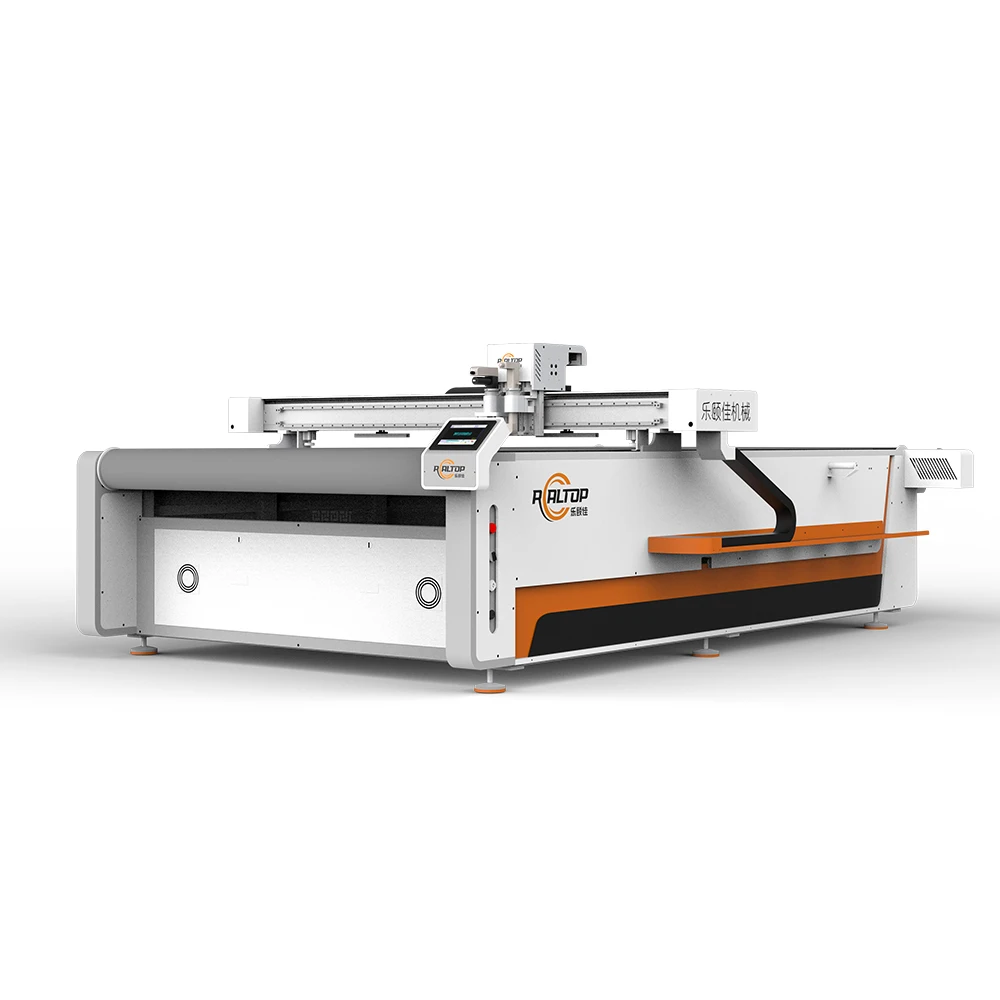
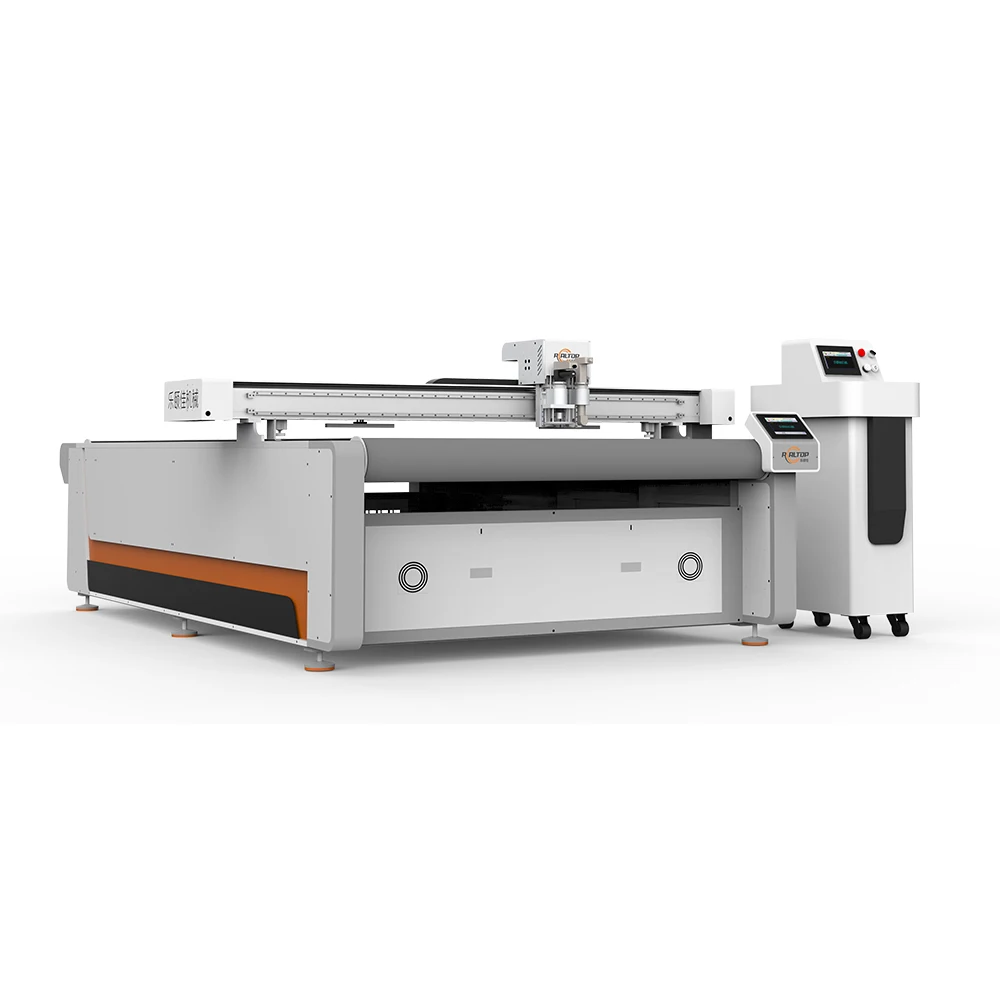
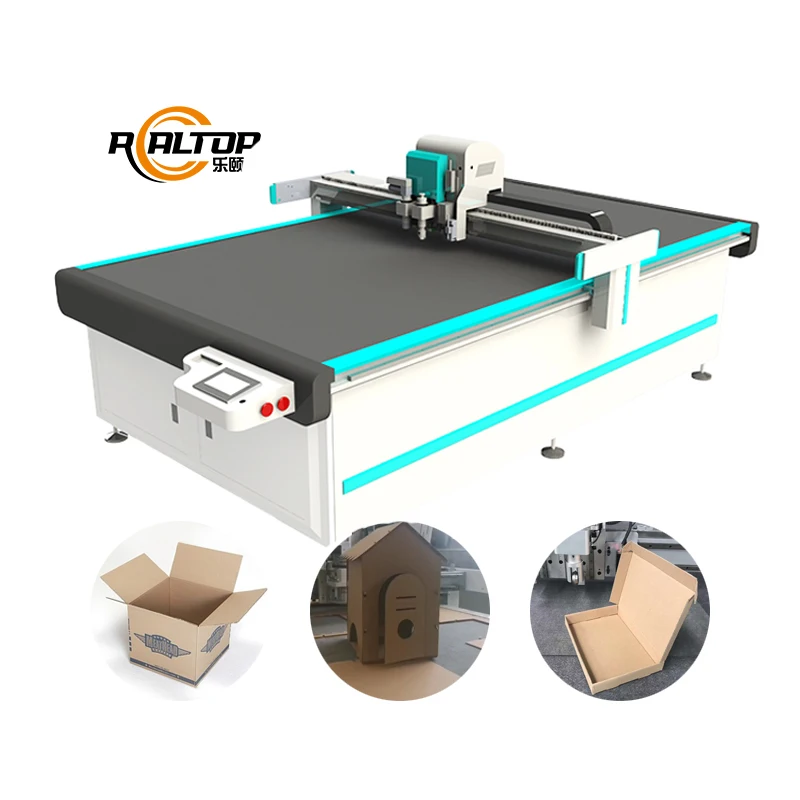
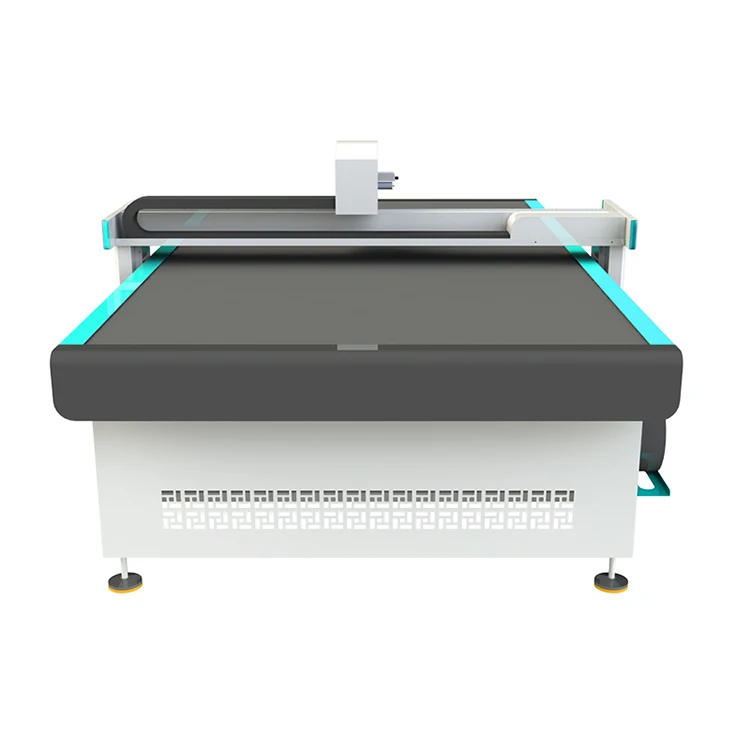
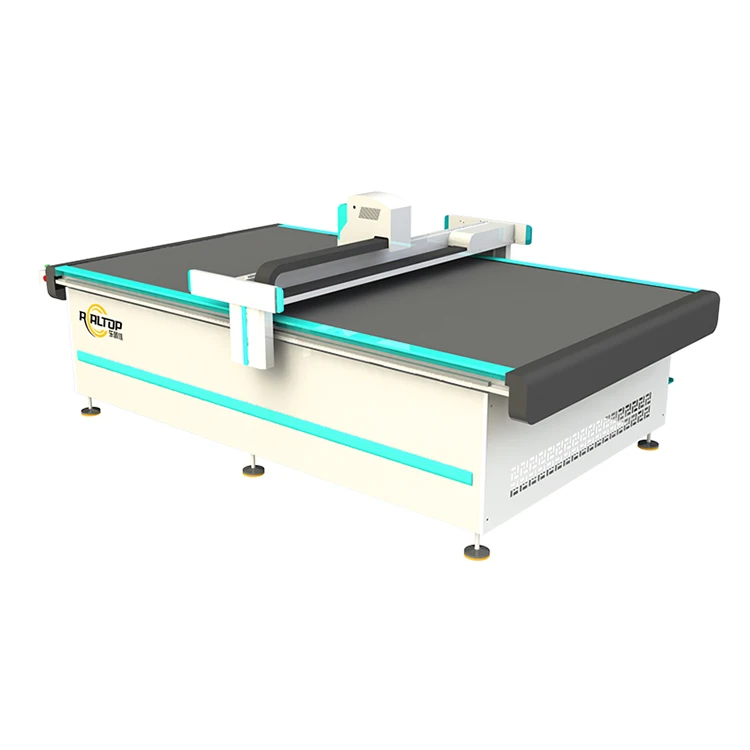
| Product Type | CNC Oscillating Knife Cutting Machine |
| Working Area | 1600 × 2500 mm |
| Machine Size | 3450 × 2300 × 1250 mm |
| Rated Power | 9 kW |
| Vacuum Pump | 7.5 kW |
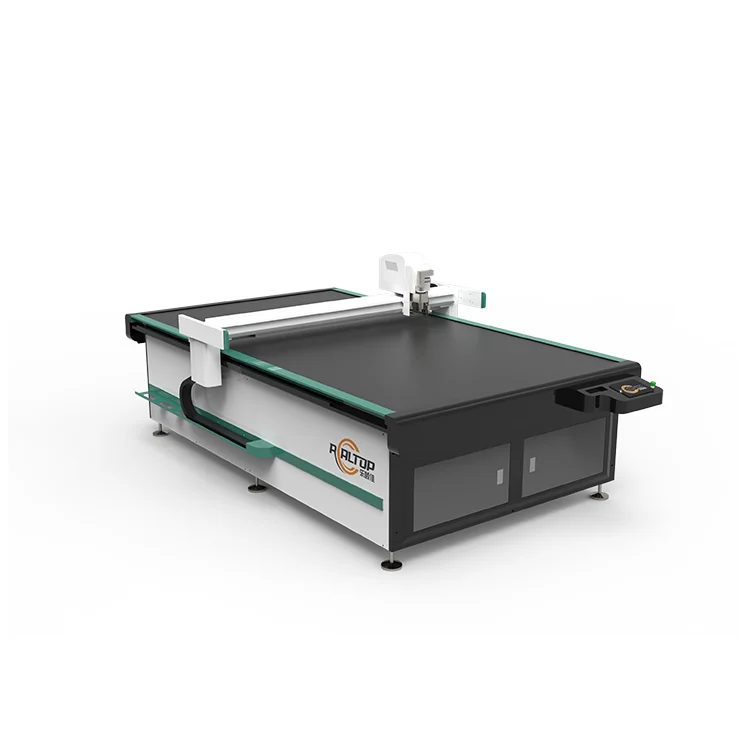
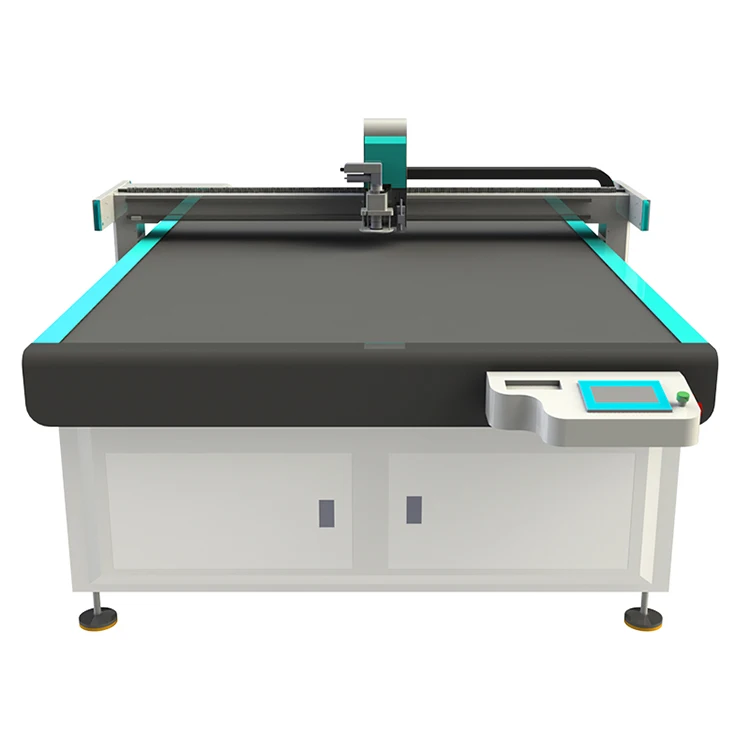
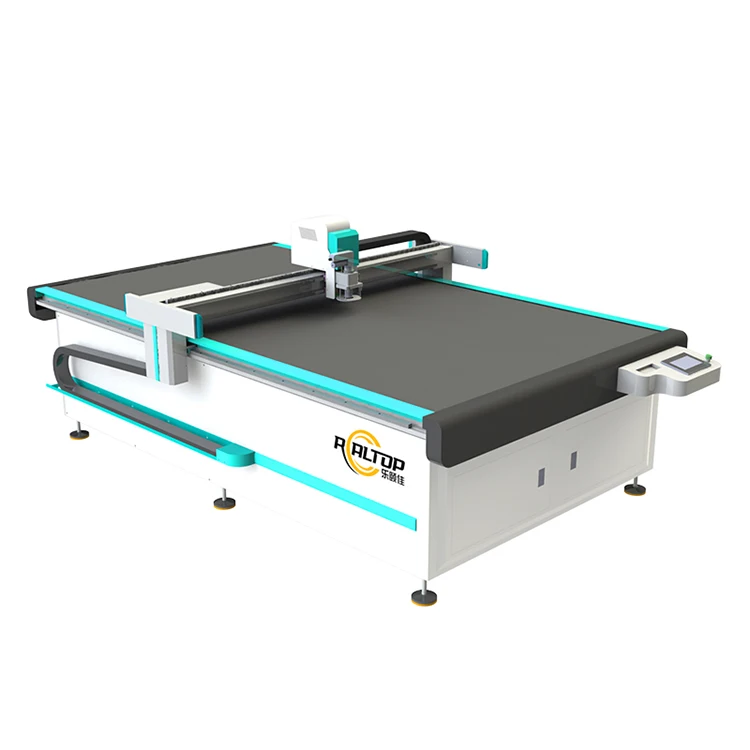
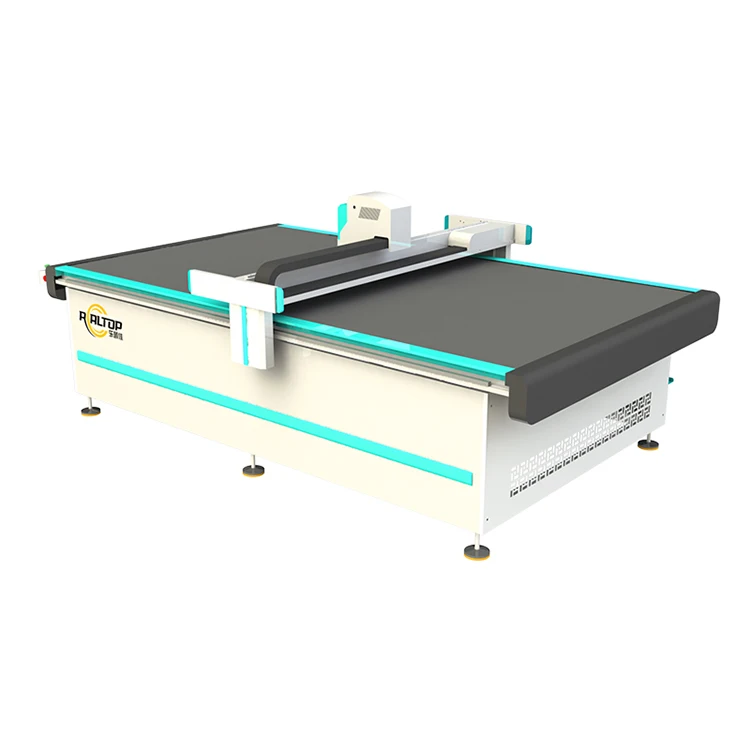
| Table Type | Flatbed working table or auto-feeding conveyor (configurable) |
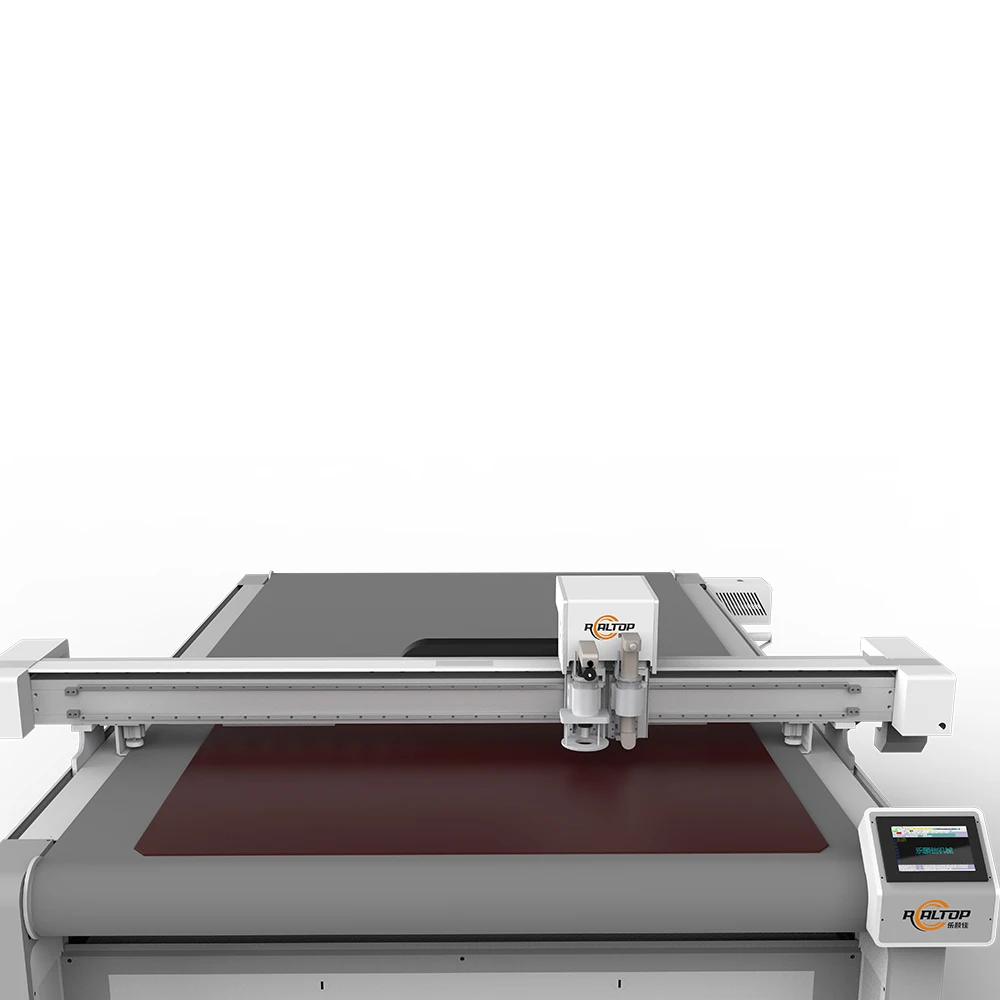
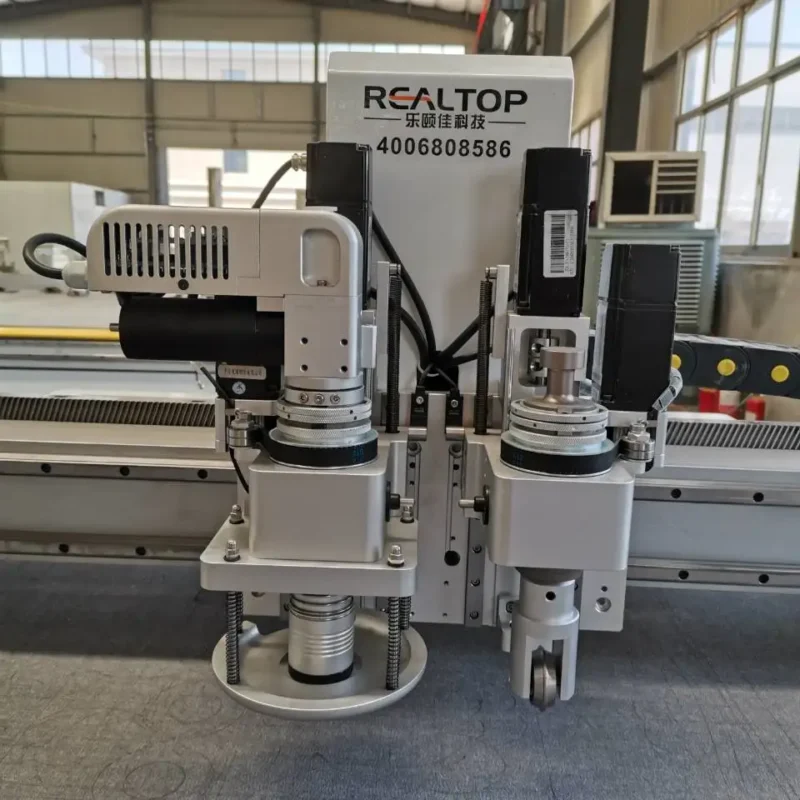
| Multifunctional Head | Swiss-imported knife assembly — vibration full cut, vibration half cut, cursor location |
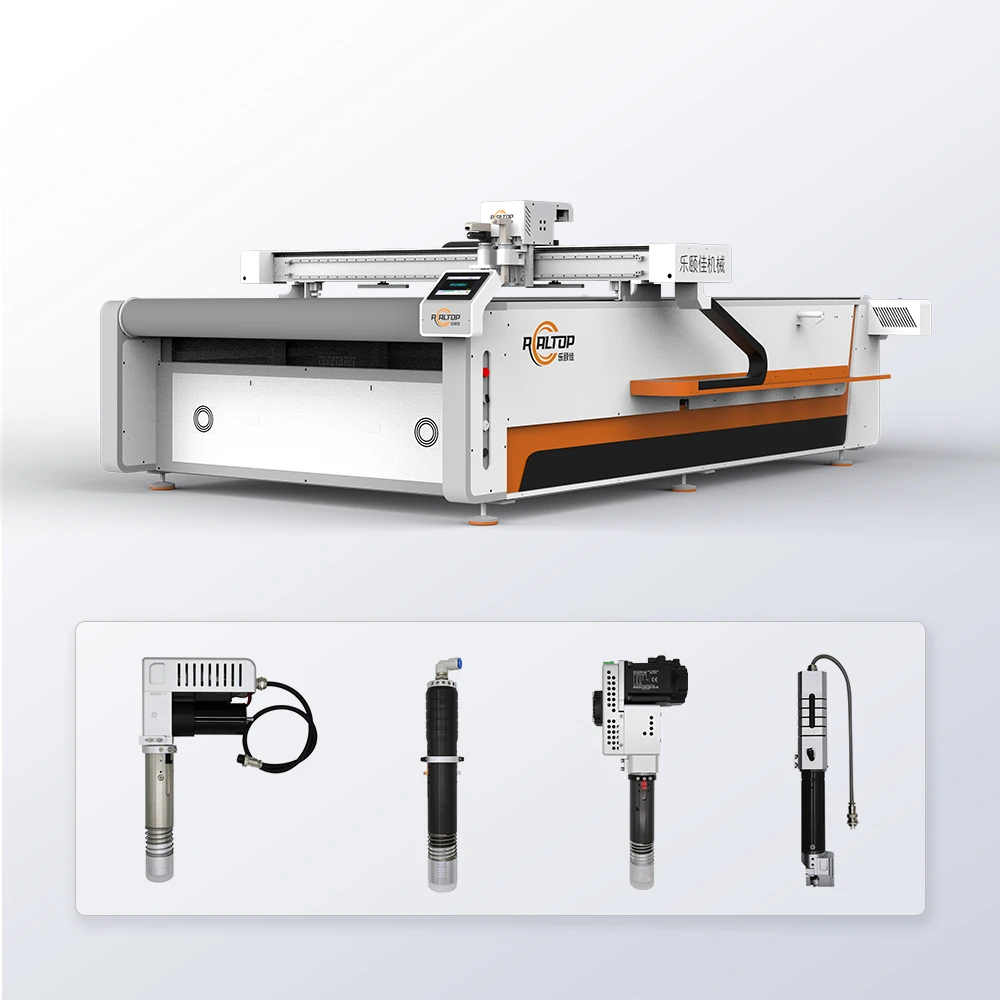
| Tool Head Options | Oscillating knife, pneumatic knife, high-power vibrating knife, circular knife, V-cutting knife, drag knife, creasing wheel, dotted-line knife, punching, brush |
| Visual Positioning | Small CCD mark-point positioning, panoramic camera recognition, projection positioning (selectable) |
| Translational Velocity | 800 – 2000 mm/s |
| Cutting Speed | 200 – 800 mm/s depending on material density and layer count |
| Cutting Thickness | Up to 100 mm depending on material compressibility (basis to be confirmed) |
| Repeated Accuracy | ≤ 0.1 mm |
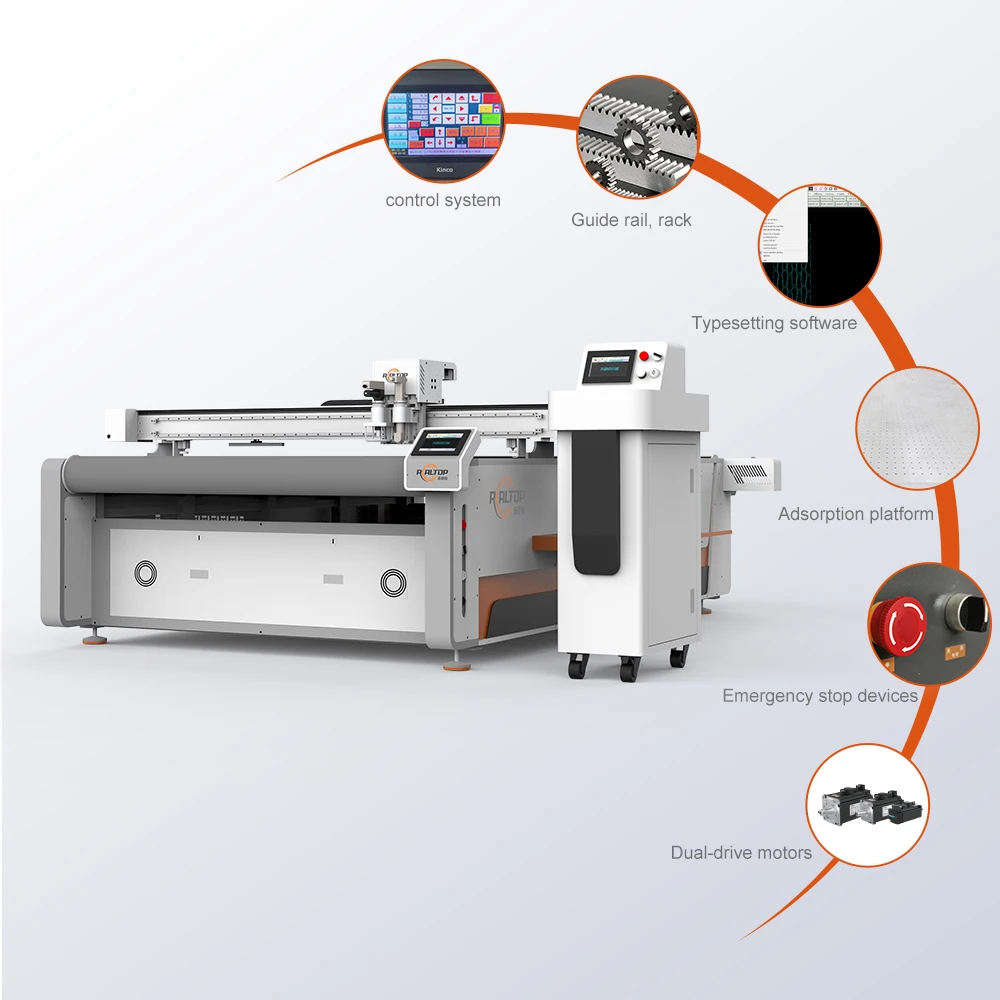
| Transmission System | Digital servo motor, linear guide, synchronous belt, ball screw |
| Servo Motor | Delta (Panasonic optional) |
| Linear Rail | Taiwan Hiwin |
| Conveyor Belt | Germany-imported belt (on auto-feeding models) |
| Instruction Format | HP-GL compatible; accepts PLT, DXF, AI |
| Voltage | 380 V ± 10 % |
| Control Panel | Touch screen, multi-language support |
| Language Options | English, Russian, Italian, Chinese (additional languages on request) |
| Safety Devices | Infrared sensors, anti-collision, emergency stop |
| Certification | CE |
Application Suitability
| Application Scenario | Typical Material or Output |
|---|---|
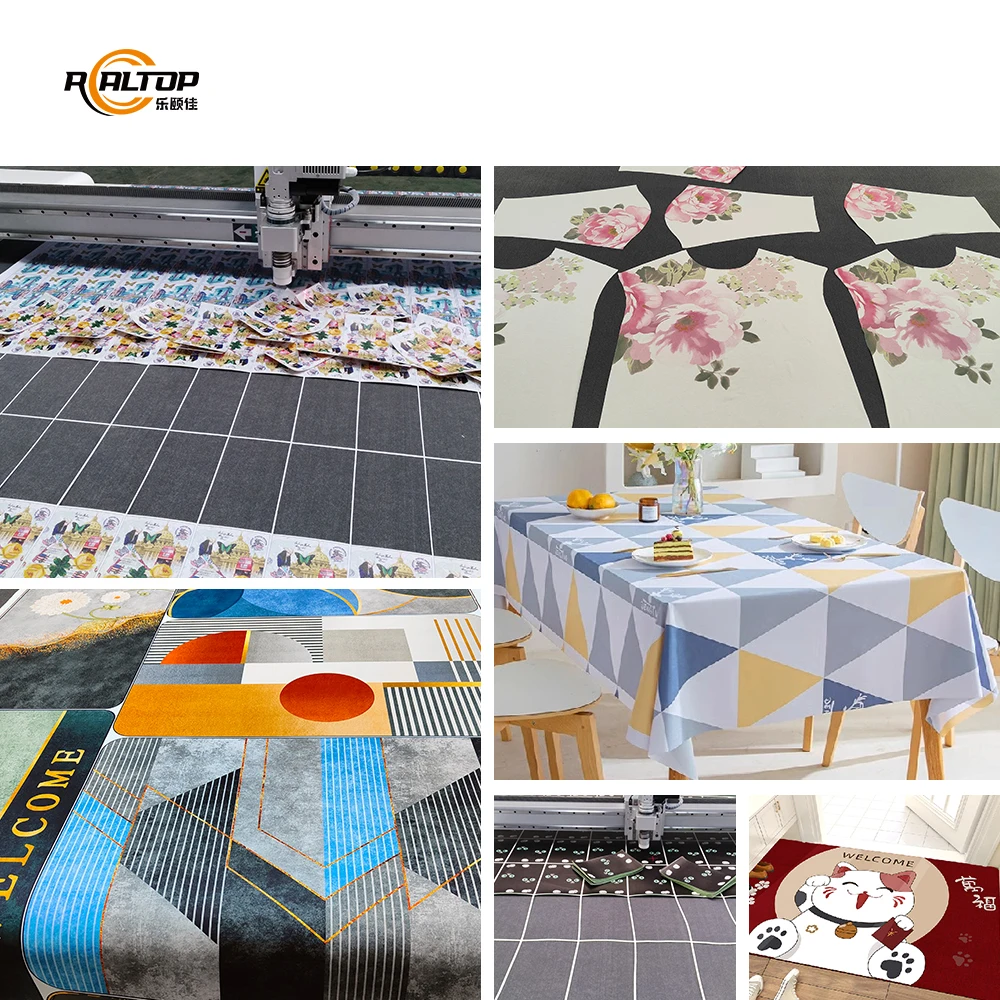
| Garment and footwear panel cutting | Woven fabric, non-woven, PU leather, shoe upper material |
| Automotive interior trim production | Carpet, headliner fabric, composite sound-deadening layers |
| Soft home furnishing components | Upholstery cloth, curtain textile, multi-layer quilted fabric |
| Luggage and bag panel nesting | PVC-coated textile, ballistic nylon, synthetic leather |
| Gasket and seal blanking | PTFE, ETFE, rubber sheet, compressed fibre |
| Packaging and graphic sample making | Corrugated cardboard, sticker film, foam board |
| Sports and outdoor product panels | Neoprene, sponge, EVA foam, XPE laminate |
Why "Working Area 2500 mm" Does Not Tell You Whether the Machine Will Cut Your Fabric
The working envelope only defines the sheet boundary; cutting quality on woven and coated textiles is decided by tool head selection, vacuum zoning and blade frequency.
A buyer surveying the full catalogue may shortlist two machines with identical bed sizes, then discover on production day that one chews through six layers of ballistic nylon while the other leaves frayed edges on single-ply cotton voile. The difference sits in oscillation frequency, vacuum hold-down pressure and the specific blade geometry loaded into the multifunctional head [NEED_CITE: tool head selection criteria for textile cutting]. Choosing the right CNC oscillating knife cutting machine from the full catalogue means starting with the material stack-up, not the machine footprint.
Mapping the Catalogue: Knife Families Across Fabric and Composite Work
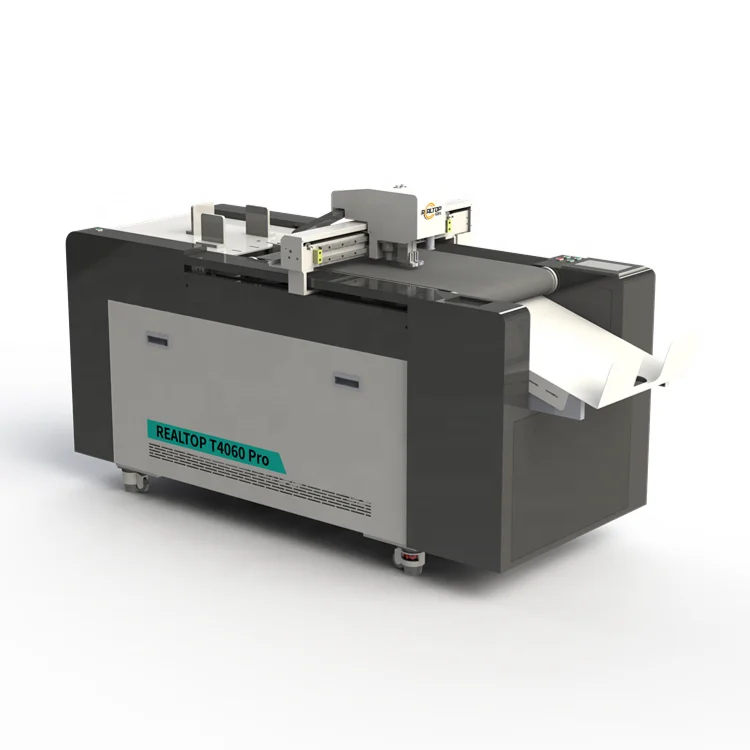
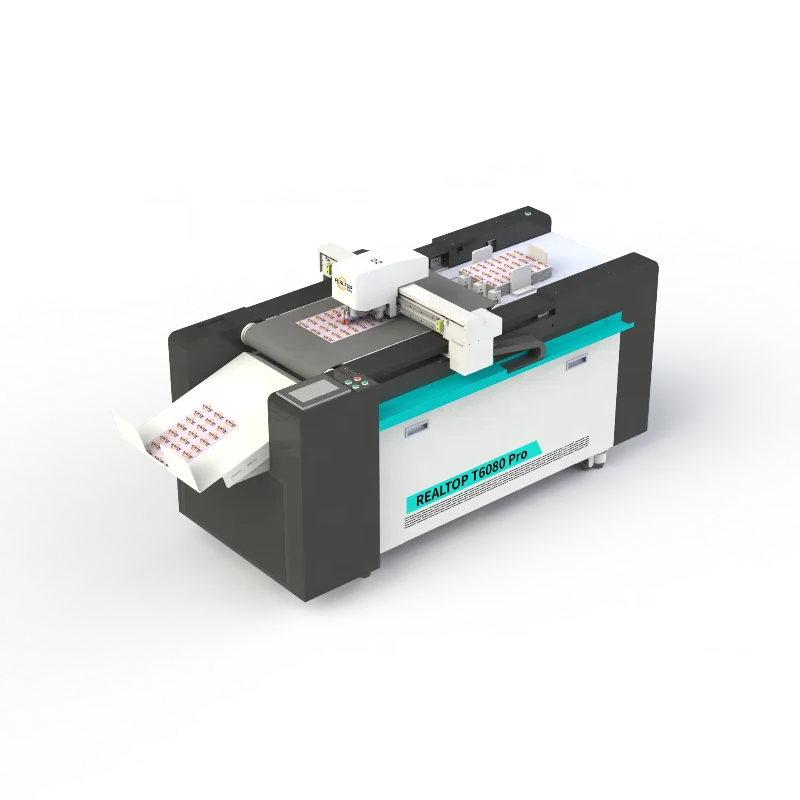
The RT-D2516 and RT-S2516 share the same 1600 × 2500 mm footprint but diverge on table configuration — flatbed for short-run nesting of rigid or semi-rigid sheets, auto-feeding for continuous roll-to-roll cloth cutting. Within the broader catalogue, smaller-format units handle sampling and prototype work, while extended-bed variants serve high-volume garment factories running multi-layer lays. A buyer comparing machine families can move from the single-head flatbed to a dual-head conveyor system without changing the control platform or software workflow. This consistency matters when a production manager needs to cross-train operators across two or three lines.
Laser Versus Knife: Where the Catalogue Boundary Sits
Sealed-edge synthetics and fine engraving on acrylic belong on the CO2 and fiber laser side of the catalogue; anything that melts, chars or releases fumes unsuitable for open-table extraction is steered away from the knife range. Conversely, multi-layer coated composites, thick foam and woven textiles that would scorch under a laser beam are assigned to the oscillating knife family. The full CNC oscillating knife cutting machine full catalogue positions each model against its laser counterpart so a buyer can match the process to the material rather than guess [NEED_CITE: comparative guide on knife versus laser for textile and composite cutting].
Reading the Specification Sheet Like a Production Engineer
The 9 kW rated power covers the servo drives, vacuum pump and control electronics together; a workshop must provision a dedicated 380 V three-phase circuit with stable frequency to prevent servo fault codes during continuous cutting. The ≤ 0.1 mm repeated accuracy figure assumes linear rails and ball screws remain free of textile lint — routine cleaning of the Hiwin rail blocks is therefore part of the maintenance cycle, not an optional extra. Cutting speed of 200 – 800 mm/s is material-dependent: a single layer of non-woven fabric allows the upper end, while eight layers of coated PU composite pull the speed down to maintain edge squareness. The HP-GL instruction format, accepting PLT, DXF and AI files, means most garment CAD systems can output nesting files without middleware conversion.
The Hidden Cost of Picking the Wrong Tool Head
Specifying a standard oscillating knife for ten-layer EVA foam often produces crushed cell structure at the cut face, because the blade compression exceeds the foam’s elastic recovery. Switching to a high-power vibrating knife with a longer stroke and narrower blade angle restores clean separation, but the change must be made before the machine is built — retrofitting a heavier motor into an existing head carriage requires structural modifications that delay commissioning. Similarly, a flatbed table without adequate vacuum zoning will lose hold-down on small pattern pieces, causing them to lift into the blade path and generate reject panels [NEED_CITE: vacuum zoning requirements for small-part textile cutting].
Why Procurement Starts Here
In-house design and production across both knife and laser technologies means a single manufacturer can advise whether your material is better suited to mechanical or thermal cutting, removing the bias that arises when a supplier only sells one type. Every tool head and table configuration is specified per material sample, so the machine is built around the buyer’s actual lay-up rather than a generic package. CCD camera positioning — small mark-point or panoramic recognition — is confirmed against the buyer’s printed registration marks before the order is locked. Software compatibility is validated with the buyer’s existing PLT, DXF or AI workflow, and a sample cutting report on the buyer’s own material accompanies every quotation. Voltage, control language and safety specifications are customised to the destination market before the machine enters assembly.
Documentation & Verification
- Machine specification sheet listing every tool head and table option by model family
- Electrical schematic with confirmed voltage, breaker rating and plug type for your site
- Sample cutting report run on your supplied fabric or composite before order commitment
- CE declaration and machinery directive compliance file for European import clearance
- Software licence and file format compatibility note covering PLT, DXF, AI and HP-GL
- Packing photographs showing crating, desiccant placement and container loading sequence
Installation, Commissioning & Support
- 3450 × 2300 mm machine footprint requires clear access for overhead crane or forklift positioning
- Dedicated 380 V ± 10 % circuit with isolated earth for the 9 kW rated load
- Table levelling and linear rail re-check after transit, before servo energisation
- First-day cutting trials on your production material to validate knife frequency and vacuum zoning
- Touch-screen language set to operator preference; additional languages loaded via USB
- Spare blade and belt kit provided; consumable reorder intervals documented in the manual
What to Include in Your Enquiry
Provide the exact material composition, ply count and maximum sheet or roll width you intend to cut daily. State the local voltage and frequency at your facility so the electrical package is built correctly from the start. If your nesting workflow uses a specific CAD system, attach a sample output file so software compatibility is verified before the machine enters production.
Frequently Asked Questions
Q: How do I decide between oscillating knife and laser for my material?
A: Woven textiles, multi-layer coated composites, foam and gasket materials generally suit oscillating knife cutting because they do not melt or scorch. Thin synthetics requiring a sealed edge, acrylic and engraved wood are routed to the laser side of the catalogue. The decision is made after sample cutting on your actual material, not on a general material chart.
Q: Which tool head options are available across the catalogue?
A: The head carriage accepts oscillating knife, pneumatic knife, high-power vibrating knife, circular knife, V-cutting knife, drag knife, creasing wheel, dotted-line knife, punching and brush tools. Selection depends on material density and the edge profile required — for example, a drag knife scores corrugated board while an oscillating knife shears woven fabric.
Q: Can I switch between flatbed and auto-feeding after purchase?
A: The RT-D2516 and RT-S2516 are engineered around different table frames, so a field conversion is not a simple bolt-on. If production requirements are expected to grow from single-sheet to roll-fed work, specify the auto-feeding conveyor variant at the order stage to avoid a later machine swap.
Q: How is CCD camera positioning configured for printed contour cutting?
A: Two vision options exist: a small CCD for single mark-point registration and a panoramic camera for full-sheet recognition. The correct choice depends on print accuracy and production speed. Camera calibration is performed during commissioning using your actual printed sheets, not generic test targets.
Q: What voltage and language customisations are possible before shipment?
A: Standard voltage is 380 V ± 10 %, but the electrical package can be configured for other industrial supplies on request. The touch-screen interface supports English, Russian, Italian and Chinese by default, with additional languages loaded during factory testing so operators see their native menu from first power-on.
Cutting method matched to material — in-house design covers both oscillating knife and laser technologies, so the machine configuration follows the fabric, composite or foam rather than forcing one cutting principle across every production run.
Technical Specifications
| Parameter | Value |
|---|---|
| Model | RT-D2516 / RT-S2516 |
| Product Type | CNC Oscillating Knife Cutting Machine |
| Working Area | 1600 × 2500 mm |
| Machine Size | 3450 × 2300 × 1250 mm |
| Rated Power | 9 kW |
| Vacuum Pump | 7.5 kW |
| Table Type | Flatbed working table or auto-feeding conveyor (configurable) |
| Multifunctional Head | Swiss-imported knife assembly — vibration full cut, vibration half cut, cursor location |
| Tool Head Options | Oscillating knife, pneumatic knife, high-power vibrating knife, circular knife, V-cutting knife, drag knife, creasing wheel, dotted-line knife, punching, brush |
| Visual Positioning | Small CCD mark-point positioning, panoramic camera recognition, projection positioning (selectable) |
| Translational Velocity | 800 – 2000 mm/s |
| Cutting Speed | 200 – 800 mm/s depending on material density and layer count |
| Cutting Thickness | Up to 100 mm depending on material compressibility (basis to be confirmed) |
| Repeated Accuracy | ≤ 0.1 mm |
| Transmission System | Digital servo motor, linear guide, synchronous belt, ball screw |
| Servo Motor | Delta (Panasonic optional) |
| Linear Rail | Taiwan Hiwin |
| Conveyor Belt | Germany-imported belt (on auto-feeding models) |
| Instruction Format | HP-GL compatible; accepts PLT, DXF, AI |
| Voltage | 380 V ± 10 % |
| Control Panel | Touch screen, multi-language support |
| Language Options | English, Russian, Italian, Chinese (additional languages on request) |
| Safety Devices | Infrared sensors, anti-collision, emergency stop |
| Certification | CE |
Application Suitability
| Application Scenario | Typical Material or Output |
|---|---|
| Garment and footwear panel cutting | Woven fabric, non-woven, PU leather, shoe upper material |
| Automotive interior trim production | Carpet, headliner fabric, composite sound-deadening layers |
| Soft home furnishing components | Upholstery cloth, curtain textile, multi-layer quilted fabric |
| Luggage and bag panel nesting | PVC-coated textile, ballistic nylon, synthetic leather |
| Gasket and seal blanking | PTFE, ETFE, rubber sheet, compressed fibre |
| Packaging and graphic sample making | Corrugated cardboard, sticker film, foam board |
| Sports and outdoor product panels | Neoprene, sponge, EVA foam, XPE laminate |
Why "Working Area 2500 mm" Does Not Tell You Whether the Machine Will Cut Your Fabric
The working envelope only defines the sheet boundary; cutting quality on woven and coated textiles is decided by tool head selection, vacuum zoning and blade frequency.
A buyer surveying the full catalogue may shortlist two machines with identical bed sizes, then discover on production day that one chews through six layers of ballistic nylon while the other leaves frayed edges on single-ply cotton voile. The difference sits in oscillation frequency, vacuum hold-down pressure and the specific blade geometry loaded into the multifunctional head [NEED_CITE: tool head selection criteria for textile cutting]. Choosing the right CNC oscillating knife cutting machine from the full catalogue means starting with the material stack-up, not the machine footprint.
Mapping the Catalogue: Knife Families Across Fabric and Composite Work
The RT-D2516 and RT-S2516 share the same 1600 × 2500 mm footprint but diverge on table configuration — flatbed for short-run nesting of rigid or semi-rigid sheets, auto-feeding for continuous roll-to-roll cloth cutting. Within the broader catalogue, smaller-format units handle sampling and prototype work, while extended-bed variants serve high-volume garment factories running multi-layer lays. A buyer comparing machine families can move from the single-head flatbed to a dual-head conveyor system without changing the control platform or software workflow. This consistency matters when a production manager needs to cross-train operators across two or three lines.
Laser Versus Knife: Where the Catalogue Boundary Sits
Sealed-edge synthetics and fine engraving on acrylic belong on the CO2 and fiber laser side of the catalogue; anything that melts, chars or releases fumes unsuitable for open-table extraction is steered away from the knife range. Conversely, multi-layer coated composites, thick foam and woven textiles that would scorch under a laser beam are assigned to the oscillating knife family. The full CNC oscillating knife cutting machine full catalogue positions each model against its laser counterpart so a buyer can match the process to the material rather than guess [NEED_CITE: comparative guide on knife versus laser for textile and composite cutting].
Reading the Specification Sheet Like a Production Engineer
The 9 kW rated power covers the servo drives, vacuum pump and control electronics together; a workshop must provision a dedicated 380 V three-phase circuit with stable frequency to prevent servo fault codes during continuous cutting. The ≤ 0.1 mm repeated accuracy figure assumes linear rails and ball screws remain free of textile lint — routine cleaning of the Hiwin rail blocks is therefore part of the maintenance cycle, not an optional extra. Cutting speed of 200 – 800 mm/s is material-dependent: a single layer of non-woven fabric allows the upper end, while eight layers of coated PU composite pull the speed down to maintain edge squareness. The HP-GL instruction format, accepting PLT, DXF and AI files, means most garment CAD systems can output nesting files without middleware conversion.
The Hidden Cost of Picking the Wrong Tool Head
Specifying a standard oscillating knife for ten-layer EVA foam often produces crushed cell structure at the cut face, because the blade compression exceeds the foam’s elastic recovery. Switching to a high-power vibrating knife with a longer stroke and narrower blade angle restores clean separation, but the change must be made before the machine is built — retrofitting a heavier motor into an existing head carriage requires structural modifications that delay commissioning. Similarly, a flatbed table without adequate vacuum zoning will lose hold-down on small pattern pieces, causing them to lift into the blade path and generate reject panels [NEED_CITE: vacuum zoning requirements for small-part textile cutting].
Why Procurement Starts Here
In-house design and production across both knife and laser technologies means a single manufacturer can advise whether your material is better suited to mechanical or thermal cutting, removing the bias that arises when a supplier only sells one type. Every tool head and table configuration is specified per material sample, so the machine is built around the buyer’s actual lay-up rather than a generic package. CCD camera positioning — small mark-point or panoramic recognition — is confirmed against the buyer’s printed registration marks before the order is locked. Software compatibility is validated with the buyer’s existing PLT, DXF or AI workflow, and a sample cutting report on the buyer’s own material accompanies every quotation. Voltage, control language and safety specifications are customised to the destination market before the machine enters assembly.
Documentation & Verification
- Machine specification sheet listing every tool head and table option by model family
- Electrical schematic with confirmed voltage, breaker rating and plug type for your site
- Sample cutting report run on your supplied fabric or composite before order commitment
- CE declaration and machinery directive compliance file for European import clearance
- Software licence and file format compatibility note covering PLT, DXF, AI and HP-GL
- Packing photographs showing crating, desiccant placement and container loading sequence
Installation, Commissioning & Support
- 3450 × 2300 mm machine footprint requires clear access for overhead crane or forklift positioning
- Dedicated 380 V ± 10 % circuit with isolated earth for the 9 kW rated load
- Table levelling and linear rail re-check after transit, before servo energisation
- First-day cutting trials on your production material to validate knife frequency and vacuum zoning
- Touch-screen language set to operator preference; additional languages loaded via USB
- Spare blade and belt kit provided; consumable reorder intervals documented in the manual
What to Include in Your Enquiry
Provide the exact material composition, ply count and maximum sheet or roll width you intend to cut daily. State the local voltage and frequency at your facility so the electrical package is built correctly from the start. If your nesting workflow uses a specific CAD system, attach a sample output file so software compatibility is verified before the machine enters production.
Frequently Asked Questions
Q: How do I decide between oscillating knife and laser for my material?
A: Woven textiles, multi-layer coated composites, foam and gasket materials generally suit oscillating knife cutting because they do not melt or scorch. Thin synthetics requiring a sealed edge, acrylic and engraved wood are routed to the laser side of the catalogue. The decision is made after sample cutting on your actual material, not on a general material chart.
Q: Which tool head options are available across the catalogue?
A: The head carriage accepts oscillating knife, pneumatic knife, high-power vibrating knife, circular knife, V-cutting knife, drag knife, creasing wheel, dotted-line knife, punching and brush tools. Selection depends on material density and the edge profile required — for example, a drag knife scores corrugated board while an oscillating knife shears woven fabric.
Q: Can I switch between flatbed and auto-feeding after purchase?
A: The RT-D2516 and RT-S2516 are engineered around different table frames, so a field conversion is not a simple bolt-on. If production requirements are expected to grow from single-sheet to roll-fed work, specify the auto-feeding conveyor variant at the order stage to avoid a later machine swap.
Q: How is CCD camera positioning configured for printed contour cutting?
A: Two vision options exist: a small CCD for single mark-point registration and a panoramic camera for full-sheet recognition. The correct choice depends on print accuracy and production speed. Camera calibration is performed during commissioning using your actual printed sheets, not generic test targets.
Q: What voltage and language customisations are possible before shipment?
A: Standard voltage is 380 V ± 10 %, but the electrical package can be configured for other industrial supplies on request. The touch-screen interface supports English, Russian, Italian and Chinese by default, with additional languages loaded during factory testing so operators see their native menu from first power-on.
商品评价
There are no reviews yet.