



Fast Delivery
Quick, reliable shipping to any location.

Free & easy returns
Return this item by mail or in store within 90 days for a full refund.
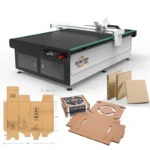
Tool head and table configuration specified per material and production volume — every RT–R2513, RT-D2516 and RT-S2516 ships with a documented tool list and vacuum zoning plan matched to your actual sheet stock, not just a generic working area promise.
Technical Specifications
| Parameter | Value |
|---|---|
| Model | RT–R2513 / RT-D2516 / RT-S2516 |
| Product Type | CNC Flatbed Digital Cutting Plotter |
| Working Area | 2500×1300mm (RT–R2513) / 1600×2500mm (RT-D2516 / RT-S2516) |
| Machine Size | 3550×1910×1400mm (RT–R2513) / 3450×2300×1250mm (RT-D2516 / RT-S2516) |
| Cutting Tools | Oscillating knife, Creasing tool, Kiss-Cut Knife Tool, Round punch |
| Cutting Thickness | ≤18mm (varies by material density and tool selection) |
| Repeated Accuracy | <0.05mm |
| Fixing Method | Vacuum system with zoned adsorption |
| Vacuum Table | Aluminum alloy honeycomb structure |
| Vacuum Pump | 7.5kW |
| Servo | Dongling servo (Delta servo motor available in alternative configuration) |
| Guide Rail | Taiwan Hiwin rail |
| Machine Frame | Welded thick square seamless steel structure, high temperature treated |
| Rated Power | 9KW |
| Voltage | 380V |
| Profile Format | DXF, OLT, PDF, AI |
| Transmission Method | Ethernet port |
| Safety Device | Infrared sensors |
| Blade Supply | 10 pieces of oscillating blades included |
| Conveyor Belt | Germany imported (where applicable) |
| Software | Professional carton nesting software, language customization supported |
| Warranty | 1 year (excluding felt and knife blades) |
| Delivery Time | <30 working days |
Application Suitability
| Application | Material or Output |
|---|---|
| Packaging carton sample making | Corrugated board, greyboard, folding carton stock up to 18mm |
| Cardboard box short-run production | Single, double and multi-wall corrugated sheets |
| Sticker and label contour cutting | Vinyl, PP paper, adhesive-backed label stock |
| Leather cutting for garments and goods | Natural and synthetic leather hides |
| Paper and PP display processing | Foam board, honeycomb paper, corrugated PP |
Why Working Area Alone Fails as a Specification
A machine specified on working area alone, then found unable to handle the material thickness — this is the most common mismatch I see when a CNC flatbed digital cutting plotter manufacturer quotes only bed size. The cutting method, tool head selection and vacuum zoning must be confirmed against the actual material before the order is placed.
I once watched a sample room cut clean E-flute profiles all morning, only for the same machine to tear through five-layer BE corrugated in production because the vacuum zones could not hold the heavier board flat. The oscillating knife dragged, the board lifted at the trailing edge, and every sample was scrapped. The fix was not a bigger motor — it was reconfiguring the vacuum zoning and switching to a different oscillating blade geometry [NEED_CITE: vacuum holding force requirements for multi-wall corrugated]. That is the difference between a machine that looks right on paper and one that runs your actual stock.
Matching the Knife to the Board
The tool head list on these models covers oscillating knife, creasing tool, kiss-cut knife and round punch. Each serves a distinct purpose in carton and label workflows. The oscillating knife handles through-cuts on corrugated and foam board, the creasing tool scores fold lines without breaking the liner, the kiss-cut knife cuts the top layer of adhesive label stock without penetrating the backing, and the round punch creates registration holes or ventilation cutouts. Specifying the right combination before shipment avoids the situation where an operator tries to crease with a drag knife and crushes the flute structure instead.
What the Honeycomb Table Actually Does for Small Parts
The aluminum alloy honeycomb vacuum table with zoned adsorption is not just a flat surface. The zoning allows the operator to activate only the sections of the table covered by material, which concentrates suction where it matters. When cutting small sticker contours or narrow gasket profiles, a full-table vacuum spread dilutes the holding force and parts can shift mid-cut. Zoned adsorption keeps the workpiece locked even when the cut geometry leaves very little material between the blade path and the sheet edge [NEED_CITE: vacuum table zoning principles for digital cutting].
Reading the Spec Sheet Beyond the Numbers
The <0.05mm repeated accuracy figure depends on the Taiwan Hiwin linear guide rails and servo-driven rack transmission working together — rack-and-pinion drives maintain positional accuracy over long travel distances where belt drives can stretch. The 7.5kW vacuum pump rating tells you the system has enough reserve to hold porous corrugated board, which leaks air through the flutes, without losing suction on the active zone. The 380V supply at 9KW total rated power means a dedicated circuit is required; running this from a shared workshop bus can cause voltage dips that affect servo positioning and produce visible stepping marks on cut edges.
The Hidden Cost of Skipping the Material Test
When a buyer commits without a sample cutting report on their own material, the first production run becomes the test. Ragged edges on foam mean the wrong blade angle was chosen. Crushed flutes on corrugated mean the oscillation frequency was too aggressive. Kiss-cuts that penetrate the backing paper mean the depth stop was not calibrated to that specific liner thickness. Every one of these failures wastes material, delays delivery and erodes the buyer’s confidence in the equipment [NEED_CITE: material-specific blade selection in digital cutting]. The cost of a pre-shipment sample test is negligible compared to a container load of machines configured for the wrong application.
Why Source This Range Here
The in-house design team covers both knife cutting and the motion systems that drive it, so tool head recommendations come from the same engineers who built the frame. Machine frames are welded from thick square seamless steel and high-temperature treated to relieve stress, which prevents the bed from twisting over time and throwing off the <0.05mm repeatability. Voltage, control language and software interface are confirmed per destination market before production starts, not adjusted after the machine arrives. The carton nesting software supports DXF, OLT, PDF and AI file imports, which integrates with most packaging design workflows without requiring a separate CAM license. Every machine ships with a factory test record run on material the buyer specifies.
Documentation & Verification
- Machine specification sheet listing tool head and vacuum zone configuration per model
- Sample cutting report on buyer’s own corrugated or label stock before dispatch
- Electrical schematic confirming 380V wiring and servo motor specifications
- Software licence and file format compatibility note for DXF, OLT, PDF, AI workflows
- Operation and maintenance manual with blade change and vacuum pump service intervals
- Packing photographs showing tool head kit, spare blades and honeycomb table protection
Installation, Commissioning & Support
- Dedicated 380V circuit required for 9KW total rated power including 7.5kW vacuum pump
- Machine footprint up to 3550×1910mm requires clear floor space with rear access for maintenance
- Vacuum table leveling checked on-site to maintain <0.05mm repeated accuracy across full bed
- Servo parameters and oscillating knife depth calibrated to buyer’s material during commissioning
- Operator training covers tool head changes, vacuum zone selection and nesting software workflow
- Ten oscillating blades included; replacement blade sourcing and felt strip renewal covered in manual
Before You Request a Quote
Send the material type, maximum sheet thickness and the largest sheet dimension you run daily. Confirm your local voltage and frequency, the language your operators need on the control interface, and whether your design team works in DXF, AI or PDF. If you are cutting printed contours, specify the mark size and print registration tolerance so the right positioning system can be included.
Frequently Asked Questions
Q: How do I choose between the 2500×1300mm and 1600×2500mm working areas?
A: The choice depends on your standard sheet size and whether you nest multiple cartons per cycle. The 1600×2500mm bed handles full-size corrugated sheets commonly used in packaging production, while the 2500×1300mm suits sample rooms and shorter-run label work where floor space is limited.
Q: Which tool head do I need for cardboard creasing versus kiss-cut sticker work?
A: Cardboard creasing requires the dedicated creasing tool to score fold lines without cutting through the liner. Kiss-cut sticker work uses the kiss-cut knife with a calibrated depth stop that cuts the face stock but leaves the backing intact. Both can be mounted on the same machine and selected per job.
Q: Can the voltage and control language be adapted for my market?
A: Voltage is confirmed before production to match your local supply, including frequency. The control interface language and software menu are set to your operator requirement. This is documented in the electrical schematic and software compatibility note provided before shipment.
Q: What file formats does the nesting software accept?
A: The professional carton nesting software accepts DXF, OLT, PDF and AI files. If your existing design workflow uses a different format, confirm compatibility during the inquiry stage so an export path or conversion step can be validated before the machine ships.
Q: Where does each model sit across the full catalogue range?
A: These models cover mid-to-large format flatbed cutting for packaging, carton and label applications. The full catalogue extends into both larger-format knife cutting tables for high-volume fabric and composite work, and laser cutting systems for acrylic, wood and sheet metal, each matched to the material they process best.










商品评价
There are no reviews yet.