


Fast Delivery
Quick, reliable shipping to any location.

Free & easy returns
Return this item by mail or in store within 90 days for a full refund.
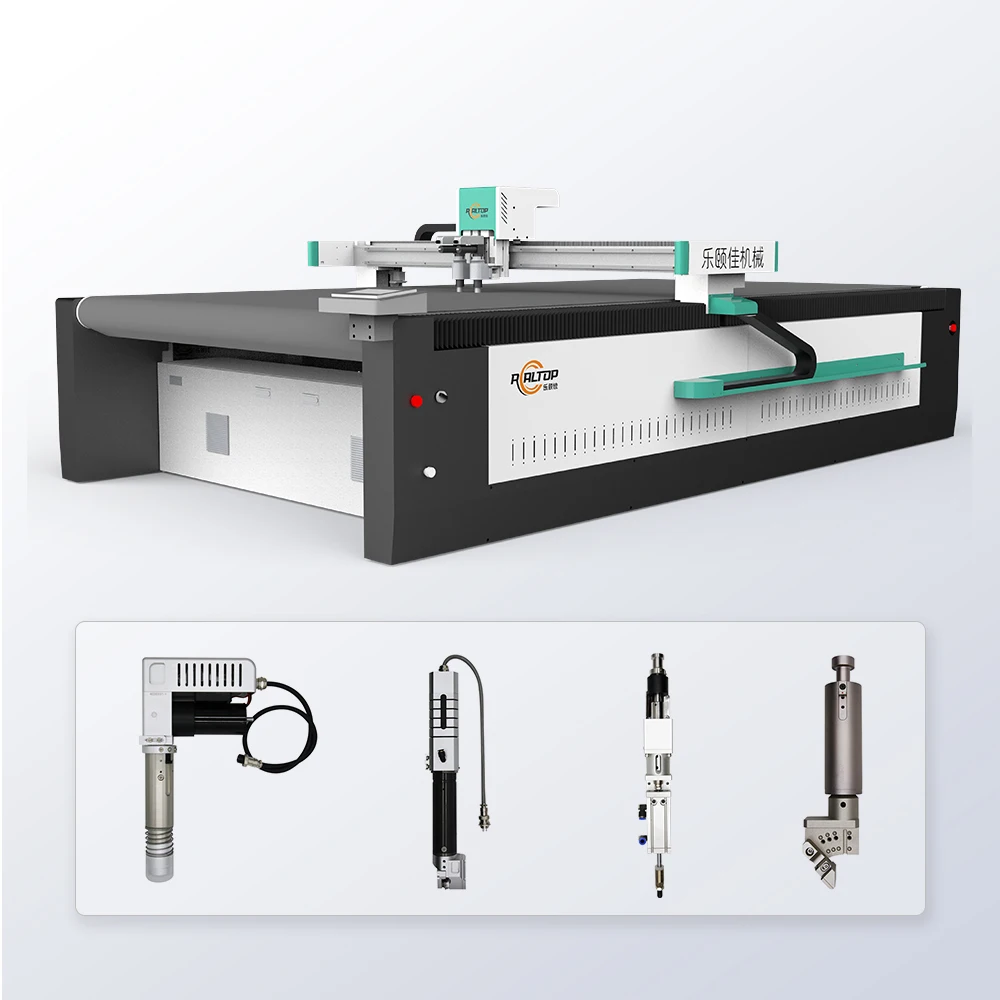
Tool head flexibility by material — In-house engineering covers oscillating knife, driven rotary, pneumatic, milling and V-groove options, letting buyers match the exact cutting tool to composite density and resin behaviour rather than forcing one method across all stock.
Technical Specifications
| Parameter | Value |
|---|---|
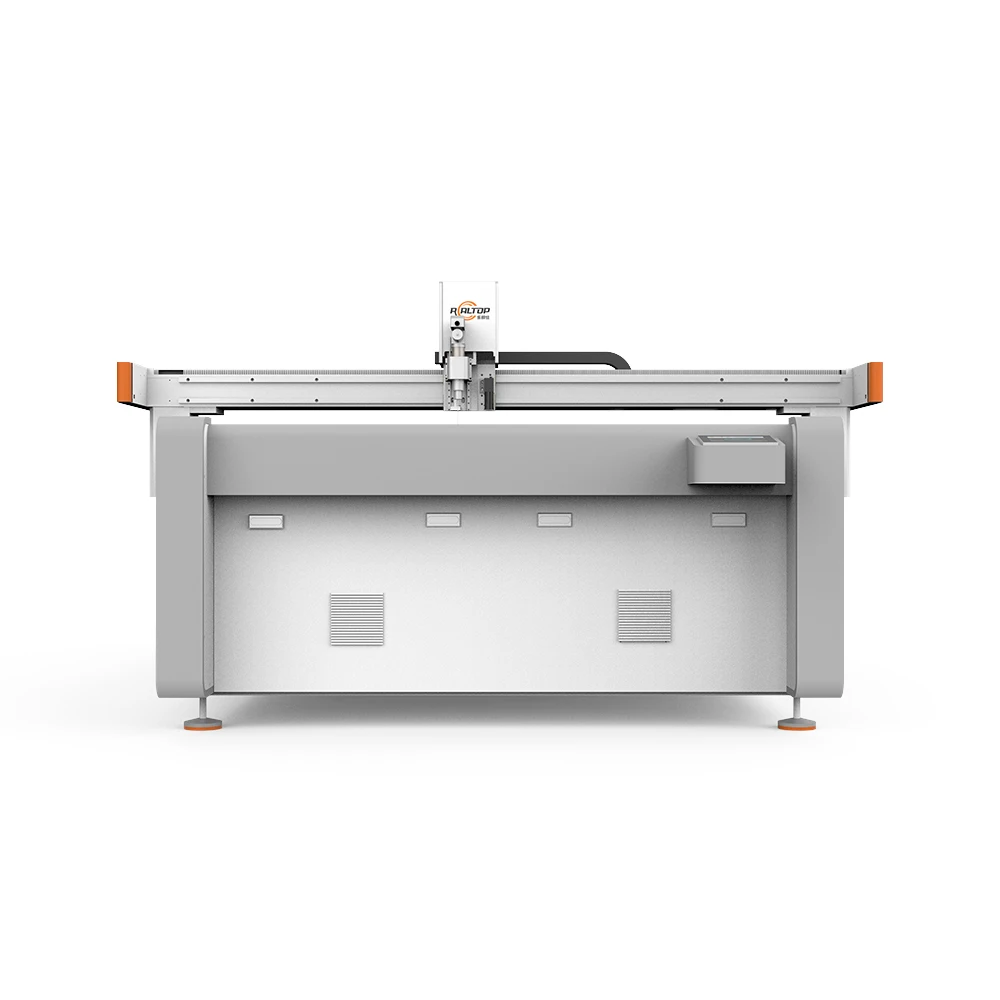
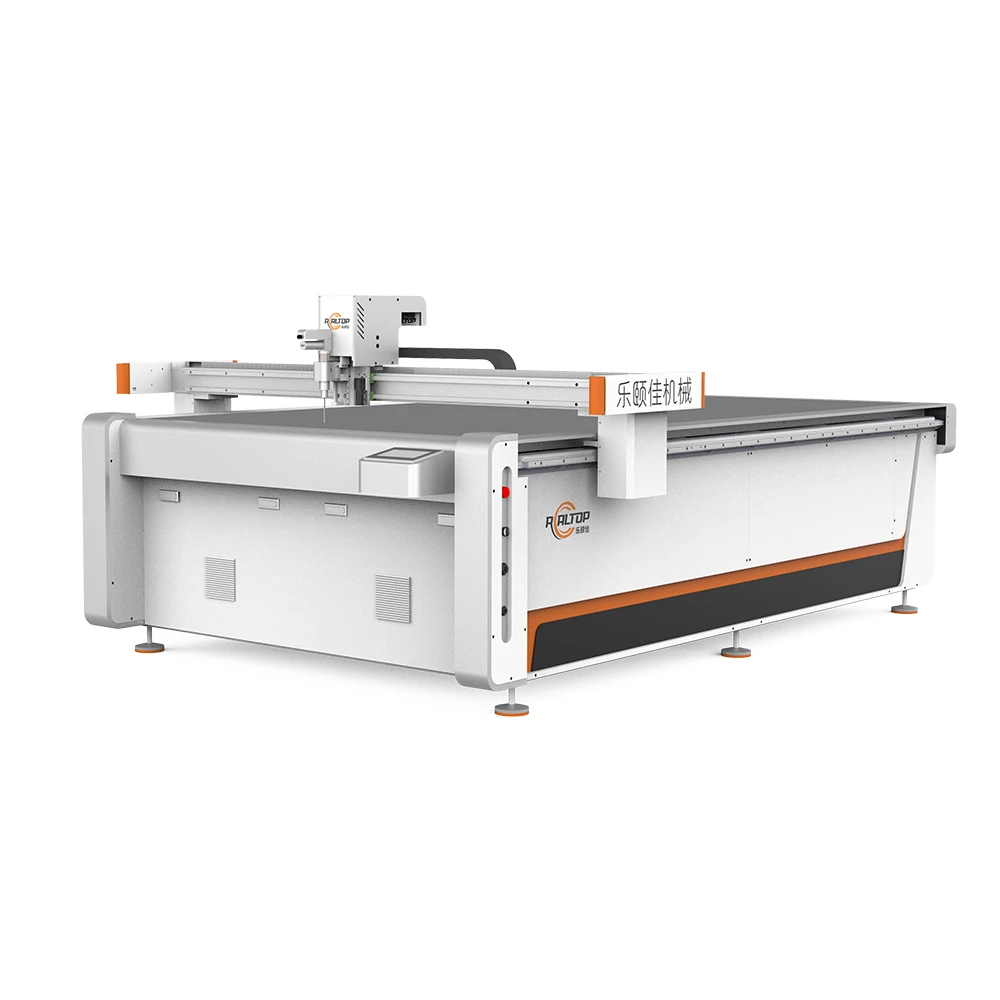
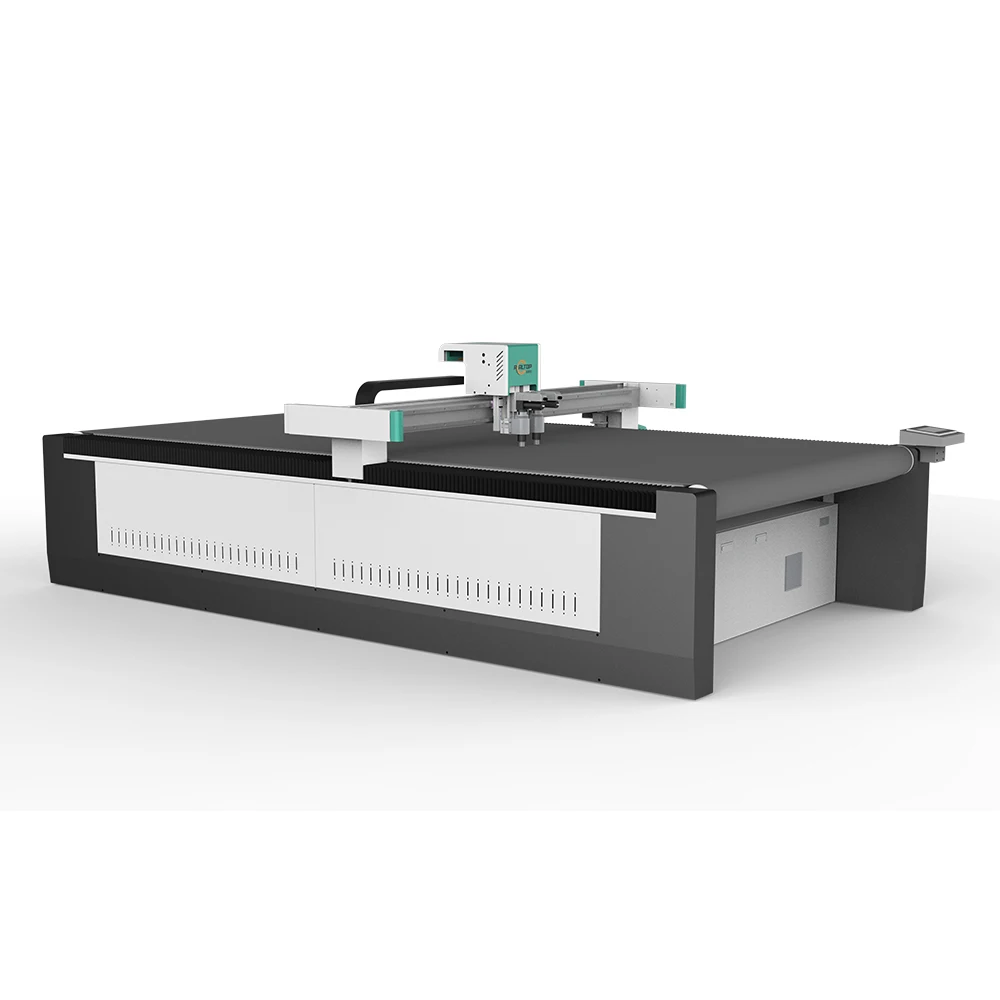
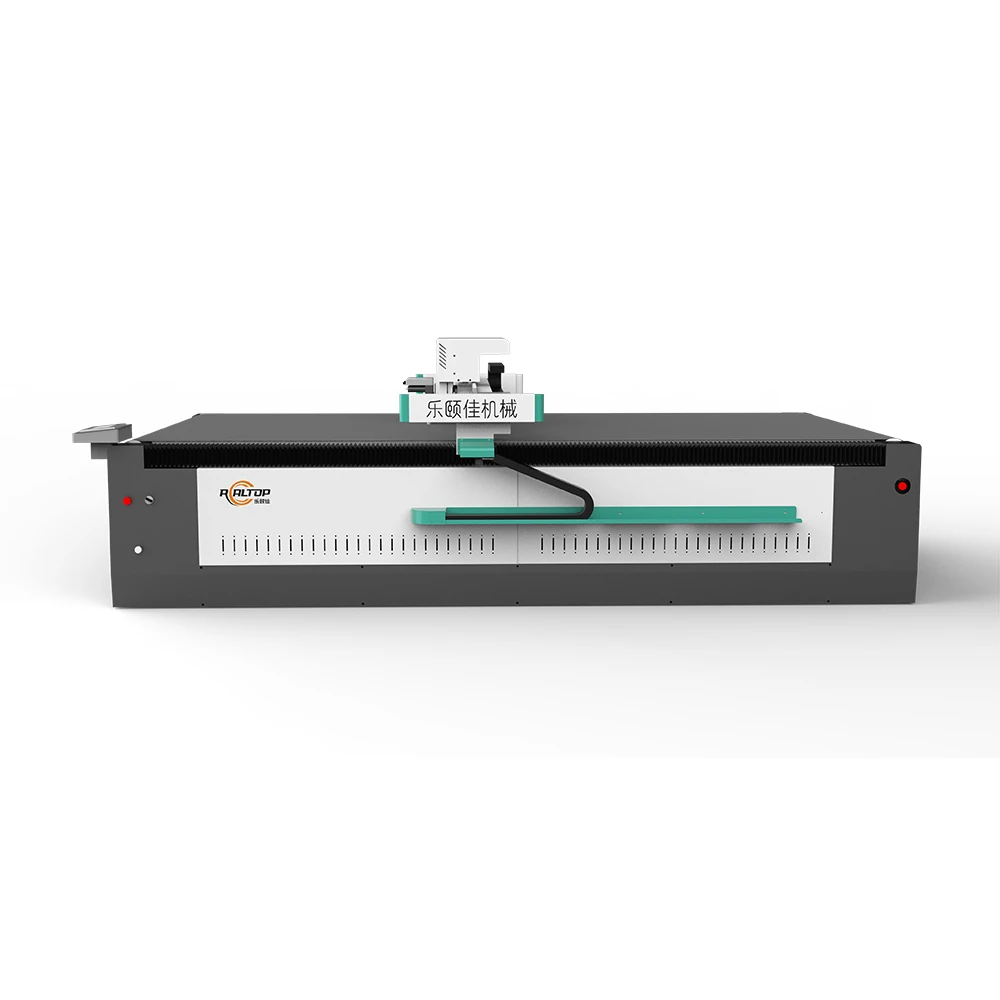
| Product Type | CNC Oscillating Knife Cutting Machine for Composites |
| Working Area | 1600 × 2500 mm |
| Tool Head Options | Oscillating knife, Driven rotary knife, Creasing wheel, Kiss cutting tool, Pneumatic knife, Milling tool, V-groove knife |
| Cutting Speed | 0–2000 mm/s |
| Cutting Thickness | ≤ 30 mm (basis to be confirmed by material type and density) |
| Positioning Accuracy | ±0.1 mm |
| Vacuum Pump | 9 kW |
| Vacuum Table | Aluminum bellows vacuum table |
| Control System | PLC control panel (source value — verify against manufacturer catalog) |
| Servo Motor Options | Panasonic, Delta, Dorna |
| Voltage Options | 110V, 220V, 380V (frequency not specified in source) |
| Supported File Formats | PLT, DXF, AI, PDF |
| Safety Devices | Infrared sensor device and emergency stop |
| Machine Dimensions | 3300 × 2100 × 1350 mm |
| Interface Languages | English, Russian, Italian, Chinese; other languages customizable |
| Certification | CE Approved |
Application Suitability
| Application | Material or Output |
|---|---|
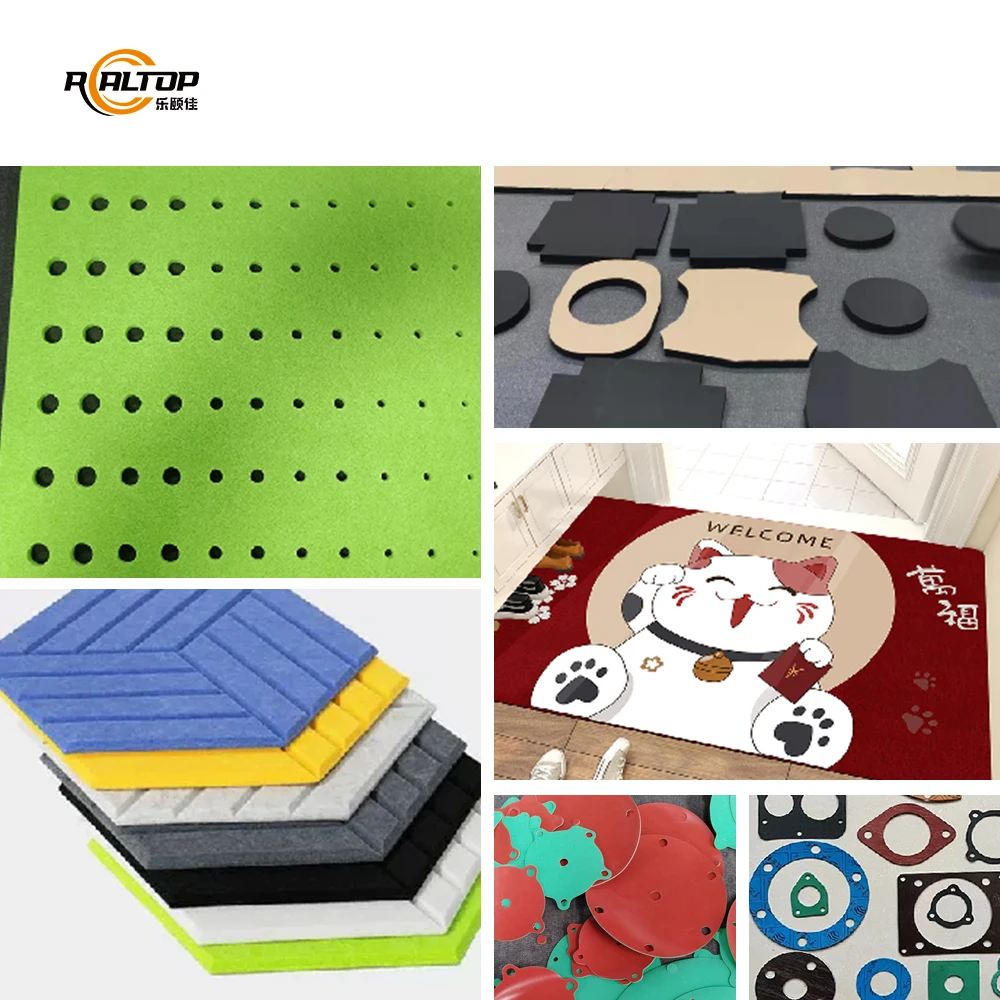
| Aerospace component fabrication | Carbon fiber prepreg, aramid honeycomb, thermal and acoustic insulation foam |
| Automotive and rail interior panels | Carbon fiber covers, FRP sheets, acoustic felt, damping pads, carpet composites |
| Wind power and new energy blade work | Fiberglass cloth, vacuum infusion mesh, foam core materials, battery insulation sheets |
| Sporting goods and leisure equipment | Carbon fiber sheets, Kevlar, high-performance foam, composite fabrics |
What Happens When Working Area Is the Only Spec You Check
A 1600 × 2500 mm table means nothing if the tool head cannot penetrate your specific composite layup at production depth.
I have watched buyers choose a composites digital cutting table purely on footprint, then discover on commissioning day that the standard oscillating knife stalls on high-density polyurethane acoustic foam. The motor labours, the edge tears, and the entire first week becomes a troubleshooting exercise instead of a production ramp. [NEED_CITE: oscillating knife behaviour varies with composite density and resin content]
The CNC oscillating knife cutting machine for composites must be specified by material type, resin state, and required edge quality before the working area even enters the conversation. A machine sized for large-format carbon fiber prepreg sheets but fitted with a generic drag knife will crush aramid honeycomb cells instead of shearing them cleanly.
Knife Versus Laser: Why the Cutting Method Must Follow the Material
Buyers surveying a full catalogue encounter both oscillating knife and laser options, and the choice is not interchangeable. Carbon fiber prepreg and aramid honeycomb demand cold cutting because heat degrades the resin matrix and delaminates fibre layers, leaving a charred edge that fails structural inspection. A CNC oscillating knife cutting machine for composites handles these materials without thermal input, preserving fibre alignment and resin integrity across the entire cut path.
Laser systems, on the other hand, excel at edge-sealing synthetic fabrics and engraving non-metal surfaces where a sealed edge prevents fraying downstream. [NEED_CITE: cold cutting requirements for resin-based composite materials] The decision rests on what your production actually processes day after day, not on which technology sounds more advanced in a brochure.
Vacuum Hold-Down and the Small-Part Problem in Composite Cutting
Composite sheets vary wildly in weight and flexibility, from heavy carbon fiber prepreg rolls to thin fiberglass veil used in infusion processes. A full-surface aluminum bellows vacuum table secures large-format sheets uniformly, but small offcuts and nested parts present a different challenge. If vacuum zoning is insufficient, the airflow escapes around the part edges and lift occurs mid-cut, producing dimensional errors that compound through a nesting layout.
Proper zoning directs suction only to the active cutting zone, pinning small composite gaske*cent geometry. [NEED_CITE: vacuum zoning principles for flatbed digital cutting tables] This matters especially in wind power blade fabrication where vacuum infusion mesh pieces can be as small as a hand but must hold position alongside metre-long sections.
How Servo Selection and Speed Range Shape Real Output
The 0–2000 mm/s cutting speed range is an envelope, not a guarantee. Actual throughput depends on which servo package is specified, how the acceleration curve is tuned for your material, and whether the vacuum table can hold the sheet during rapid directional changes. Panasonic servos are known for tight positioning repeatability in fine contour work, while Delta and Dorna options serve cost-sensitive installations where absolute precision is less critical than reliable daily output.
The 9 kW vacuum pump provides sustained hold-down across the full 1600 × 2500 mm bed, but operators must understand that running at maximum speed on stiff fiberglass cloth may require reducing velocity to maintain the ±0.1 mm positioning accuracy. Tool head selection compounds this — a pneumatic knife through thick damping pads imposes different inertial loads than a milling tool tracing V-grooves in foam core material. [NEED_CITE: servo tuning impact on CNC cutting accuracy]
The Cost of Specifying the Wrong Tool Head for Your Composite
Choosing a driven rotary knife when your material is a brittle carbon fiber sheet produces splintered edges that require secondary finishing, adding labour and scrap. A standard oscillating knife set at the wrong frequency tears acoustic felt rather than shearing it, leaving ragged margins that fail fitment checks on automotive interior panels. [NEED_CITE: tool head selection errors and their production impact] These problems surface only after the machine is installed and running, when return shipping is not an option and production deadlines are already slipping. The real cost is not the wrong tool — it is the weeks of downtime while the correct configuration is identified, sourced, and shipped.
Why Procurement Works Differently Here
In-house design covers both oscillating knife and laser platforms, so the cutting method follows your material rather than the other way around. Tool head and vacuum table configuration are specified per composite type and daily volume, not selected from a fixed catalogue page. Sample cutting runs on your actual material — whether that is aramid honeycomb or vacuum infusion mesh — take place before any order commitment, providing a physical edge-quality report rather than a theoretical promise. File format compatibility across PLT, DXF, AI, and PDF is confirmed against your nesting software before shipment. Voltage, plug type, and control language are locked to your destination market’s standards before the machine leaves the factory.
Documentation & Verification
- Factory test record on your specific composite material and thickness before dispatch
- Tool head and table configuration list matched to your material density and daily volume
- Electrical schematic with voltage and frequency confirmation for your destination market
- Software licence and file format compatibility note for your nesting workflow
- Spare parts list identifying wear items for your chosen tool head configuration
- Sample cutting report on your actual composite stock documenting edge quality
Installation, Commissioning & Support
- 3300 × 2100 × 1350 mm machine footprint requires level concrete floor with clearance for material feed on all sides
- 9 kW vacuum pump and servo system require dedicated circuit matching confirmed 110V, 220V, or 380V supply
- Machine arrives partially assembled; bed frame and gantry require on-site alignment before first power-on
- PLC control panel language set to operator preference during commissioning; file import from PLT, DXF, AI, PDF verified live
- Oscillating knife frequency and downforce calibrated on your composite material during initial production run
- Infrared sensor and emergency stop tested across full 1600 × 2500 mm working area before operator handover
What to Share Before Requesting a Quotation
Tell us the exact composite material you run, including resin type, fibre orientation, and typical sheet thickness. Share your daily cutting volume and the nesting software you currently use so we can confirm file format integration. Confirm your workshop voltage and frequency, plus the control language your operators need — these details shape the configuration we propose and the sample we cut before you commit.
Frequently Asked Questions
Q: Oscillating knife or laser — which suits my composite material?
A: Resin-based composites like carbon fiber prepreg and aramid honeycomb require cold cutting to avoid thermal delamination, making oscillating knife the correct choice. Laser systems suit synthetic fabrics where edge sealing is needed. The decision depends on your material’s resin content and whether heat damage would compromise structural or cosmetic requirements.
Q: How do I confirm the machine handles my material thickness?
A: Working area alone does not determine cutting capacity. We run a sample cut on your actual composite material, documenting edge quality, depth, and tool wear before any order is placed. This physical test replaces theoretical thickness claims with real evidence from your production stock.
Q: Which tool head works for my specific composite?
A: Oscillating knife handles most fiber-reinforced sheets and foams. Pneumatic knife suits thicker damping pads. Driven rotary knife cuts flexible composite fabrics. Milling and V-groove tools address foam core shaping. The recommendation follows a sample cut on your material, not a generic chart.
Q: How does vacuum table zoning affect small composite part cutting?
A: Small nested parts lose hold-down when vacuum escapes around cut edges. Zoned suction directs airflow only to the active cutting area, keeping lightweight infusion mesh pieces and small gasket components flat during high-speed traverses across the aluminum bellows table surface.
Q: What file formats are supported for my existing nesting workflow?
A: The system accepts PLT, DXF, AI, and PDF files. We confirm compatibility with your specific nesting software and verify file import during the sample cutting stage, ensuring your production workflow transfers without manual conversion or geometry loss.
Tool head flexibility by material — In-house engineering covers oscillating knife, driven rotary, pneumatic, milling and V-groove options, letting buyers match the exact cutting tool to composite density and resin behaviour rather than forcing one method across all stock.
Technical Specifications
| Parameter | Value |
|---|---|
| Product Type | CNC Oscillating Knife Cutting Machine for Composites |
| Working Area | 1600 × 2500 mm |
| Tool Head Options | Oscillating knife, Driven rotary knife, Creasing wheel, Kiss cutting tool, Pneumatic knife, Milling tool, V-groove knife |
| Cutting Speed | 0–2000 mm/s |
| Cutting Thickness | ≤ 30 mm (basis to be confirmed by material type and density) |
| Positioning Accuracy | ±0.1 mm |
| Vacuum Pump | 9 kW |
| Vacuum Table | Aluminum bellows vacuum table |
| Control System | PLC control panel (source value — verify against manufacturer catalog) |
| Servo Motor Options | Panasonic, Delta, Dorna |
| Voltage Options | 110V, 220V, 380V (frequency not specified in source) |
| Supported File Formats | PLT, DXF, AI, PDF |
| Safety Devices | Infrared sensor device and emergency stop |
| Machine Dimensions | 3300 × 2100 × 1350 mm |
| Interface Languages | English, Russian, Italian, Chinese; other languages customizable |
| Certification | CE Approved |
Application Suitability
| Application | Material or Output |
|---|---|
| Aerospace component fabrication | Carbon fiber prepreg, aramid honeycomb, thermal and acoustic insulation foam |
| Automotive and rail interior panels | Carbon fiber covers, FRP sheets, acoustic felt, damping pads, carpet composites |
| Wind power and new energy blade work | Fiberglass cloth, vacuum infusion mesh, foam core materials, battery insulation sheets |
| Sporting goods and leisure equipment | Carbon fiber sheets, Kevlar, high-performance foam, composite fabrics |
What Happens When Working Area Is the Only Spec You Check
A 1600 × 2500 mm table means nothing if the tool head cannot penetrate your specific composite layup at production depth.
I have watched buyers choose a composites digital cutting table purely on footprint, then discover on commissioning day that the standard oscillating knife stalls on high-density polyurethane acoustic foam. The motor labours, the edge tears, and the entire first week becomes a troubleshooting exercise instead of a production ramp. [NEED_CITE: oscillating knife behaviour varies with composite density and resin content]
The CNC oscillating knife cutting machine for composites must be specified by material type, resin state, and required edge quality before the working area even enters the conversation. A machine sized for large-format carbon fiber prepreg sheets but fitted with a generic drag knife will crush aramid honeycomb cells instead of shearing them cleanly.
Knife Versus Laser: Why the Cutting Method Must Follow the Material
Buyers surveying a full catalogue encounter both oscillating knife and laser options, and the choice is not interchangeable. Carbon fiber prepreg and aramid honeycomb demand cold cutting because heat degrades the resin matrix and delaminates fibre layers, leaving a charred edge that fails structural inspection. A CNC oscillating knife cutting machine for composites handles these materials without thermal input, preserving fibre alignment and resin integrity across the entire cut path.
Laser systems, on the other hand, excel at edge-sealing synthetic fabrics and engraving non-metal surfaces where a sealed edge prevents fraying downstream. [NEED_CITE: cold cutting requirements for resin-based composite materials] The decision rests on what your production actually processes day after day, not on which technology sounds more advanced in a brochure.
Vacuum Hold-Down and the Small-Part Problem in Composite Cutting
Composite sheets vary wildly in weight and flexibility, from heavy carbon fiber prepreg rolls to thin fiberglass veil used in infusion processes. A full-surface aluminum bellows vacuum table secures large-format sheets uniformly, but small offcuts and nested parts present a different challenge. If vacuum zoning is insufficient, the airflow escapes around the part edges and lift occurs mid-cut, producing dimensional errors that compound through a nesting layout.
Proper zoning directs suction only to the active cutting zone, pinning small composite gaske*cent geometry. [NEED_CITE: vacuum zoning principles for flatbed digital cutting tables] This matters especially in wind power blade fabrication where vacuum infusion mesh pieces can be as small as a hand but must hold position alongside metre-long sections.
How Servo Selection and Speed Range Shape Real Output
The 0–2000 mm/s cutting speed range is an envelope, not a guarantee. Actual throughput depends on which servo package is specified, how the acceleration curve is tuned for your material, and whether the vacuum table can hold the sheet during rapid directional changes. Panasonic servos are known for tight positioning repeatability in fine contour work, while Delta and Dorna options serve cost-sensitive installations where absolute precision is less critical than reliable daily output.
The 9 kW vacuum pump provides sustained hold-down across the full 1600 × 2500 mm bed, but operators must understand that running at maximum speed on stiff fiberglass cloth may require reducing velocity to maintain the ±0.1 mm positioning accuracy. Tool head selection compounds this — a pneumatic knife through thick damping pads imposes different inertial loads than a milling tool tracing V-grooves in foam core material. [NEED_CITE: servo tuning impact on CNC cutting accuracy]
The Cost of Specifying the Wrong Tool Head for Your Composite
Choosing a driven rotary knife when your material is a brittle carbon fiber sheet produces splintered edges that require secondary finishing, adding labour and scrap. A standard oscillating knife set at the wrong frequency tears acoustic felt rather than shearing it, leaving ragged margins that fail fitment checks on automotive interior panels. [NEED_CITE: tool head selection errors and their production impact] These problems surface only after the machine is installed and running, when return shipping is not an option and production deadlines are already slipping. The real cost is not the wrong tool — it is the weeks of downtime while the correct configuration is identified, sourced, and shipped.
Why Procurement Works Differently Here
In-house design covers both oscillating knife and laser platforms, so the cutting method follows your material rather than the other way around. Tool head and vacuum table configuration are specified per composite type and daily volume, not selected from a fixed catalogue page. Sample cutting runs on your actual material — whether that is aramid honeycomb or vacuum infusion mesh — take place before any order commitment, providing a physical edge-quality report rather than a theoretical promise. File format compatibility across PLT, DXF, AI, and PDF is confirmed against your nesting software before shipment. Voltage, plug type, and control language are locked to your destination market’s standards before the machine leaves the factory.
Documentation & Verification
- Factory test record on your specific composite material and thickness before dispatch
- Tool head and table configuration list matched to your material density and daily volume
- Electrical schematic with voltage and frequency confirmation for your destination market
- Software licence and file format compatibility note for your nesting workflow
- Spare parts list identifying wear items for your chosen tool head configuration
- Sample cutting report on your actual composite stock documenting edge quality
Installation, Commissioning & Support
- 3300 × 2100 × 1350 mm machine footprint requires level concrete floor with clearance for material feed on all sides
- 9 kW vacuum pump and servo system require dedicated circuit matching confirmed 110V, 220V, or 380V supply
- Machine arrives partially assembled; bed frame and gantry require on-site alignment before first power-on
- PLC control panel language set to operator preference during commissioning; file import from PLT, DXF, AI, PDF verified live
- Oscillating knife frequency and downforce calibrated on your composite material during initial production run
- Infrared sensor and emergency stop tested across full 1600 × 2500 mm working area before operator handover
What to Share Before Requesting a Quotation
Tell us the exact composite material you run, including resin type, fibre orientation, and typical sheet thickness. Share your daily cutting volume and the nesting software you currently use so we can confirm file format integration. Confirm your workshop voltage and frequency, plus the control language your operators need — these details shape the configuration we propose and the sample we cut before you commit.
Frequently Asked Questions
Q: Oscillating knife or laser — which suits my composite material?
A: Resin-based composites like carbon fiber prepreg and aramid honeycomb require cold cutting to avoid thermal delamination, making oscillating knife the correct choice. Laser systems suit synthetic fabrics where edge sealing is needed. The decision depends on your material’s resin content and whether heat damage would compromise structural or cosmetic requirements.
Q: How do I confirm the machine handles my material thickness?
A: Working area alone does not determine cutting capacity. We run a sample cut on your actual composite material, documenting edge quality, depth, and tool wear before any order is placed. This physical test replaces theoretical thickness claims with real evidence from your production stock.
Q: Which tool head works for my specific composite?
A: Oscillating knife handles most fiber-reinforced sheets and foams. Pneumatic knife suits thicker damping pads. Driven rotary knife cuts flexible composite fabrics. Milling and V-groove tools address foam core shaping. The recommendation follows a sample cut on your material, not a generic chart.
Q: How does vacuum table zoning affect small composite part cutting?
A: Small nested parts lose hold-down when vacuum escapes around cut edges. Zoned suction directs airflow only to the active cutting area, keeping lightweight infusion mesh pieces and small gasket components flat during high-speed traverses across the aluminum bellows table surface.
Q: What file formats are supported for my existing nesting workflow?
A: The system accepts PLT, DXF, AI, and PDF files. We confirm compatibility with your specific nesting software and verify file import during the sample cutting stage, ensuring your production workflow transfers without manual conversion or geometry loss.










商品评价
There are no reviews yet.