



Fast Delivery
Quick, reliable shipping to any location.

Free & easy returns
Return this item by mail or in store within 90 days for a full refund.
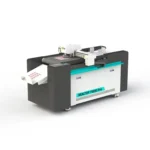
Tool-to-Material Matching — The RTT6080 series pairs each tool head option with the actual material profile it is designed for, rather than quoting a single cutting speed figure detached from the substrate being processed.
Technical Specifications
| Parameter | Value |
|---|---|
| Model | RTT6080 / RTT6080 Pro |
| Product Type | CNC Oscillating Knife Cutting Machine |
| Max Working Area | 600 mm × 800 mm |
| Tool Head Options | Cutting tool, kiss cutting tool, creasing tool, CCD camera, high speed oscillating knife (Pro version) |
| Max Cutting Speed | 1500 mm/s (basis not stated in source — confirm material / thickness) |
| Cutting Thickness | ≤2 mm (RTT6080); ≤5 mm (RTT6080 Pro) (basis not stated in source — confirm material type) |
| Positioning Accuracy | 0.05 mm |
| Supported File Formats | DXF, PLT, PDF, AI |
| Data Transfer | Ethernet port |
| Rated Power | 3.2 kW (rated or peak not specified in source) |
| Voltage & Frequency | 220V / 380V, 50 Hz |
| CCD Camera | Yes |
| Key Features | CCD contour recognition, multi-tool head configuration, vacuum table compatibility |
Application Suitability
| Application | Material or Output |
|---|---|
| Packaging and carton sample making | A4 to small-format corrugated board, cardstock and folding carton prototypes |
| Advertising and signage short-run production | Thin PVC board, vinyl film, self-adhesive label stock, printed contour pieces |
| Paper and stationery converting | Kiss cutting and creasing on thin paper, coated board and craft substrates |
| Gasket and seal prototyping | Non-asbestos fiber sheet, thin rubber and PTFE up to rated thickness |
Why the Tool Head Question Should Come Before the Working Area
The right CNC Oscillating Knife Cutting Machine manufacturer will always ask what you cut before they ask how big your table needs to be. Specifying a machine on working area alone is the most common reason buyers end up with a platform that cannot produce a clean edge on their actual material.
A 600×800 mm footprint is attractive for shops with limited floor space, but if the chosen tool head does not match the substrate — say a drag knife forced through 3 mm fiber-reinforced rubber — the result is crushed edges, accelerated blade wear and unplanned downtime. In my years running fulfillment checks before dispatch, the machines that cause the most trouble on site are not the ones with the wrong table size; they are the ones where the tool head was an afterthought. The RTT6080 platform is structured so that cutting, kiss cutting, creasing and high-speed oscillating knife heads are selectable per material, and the Pro variant extends the thickness envelope further. [NEED_CITE: common causes of edge quality failure in small-format knife cutting]
Matching the Head to the Substrate
Every CNC Oscillating Knife Cutting Machine in the RTT6080 range can be configured with a cutting tool, kiss cutting tool or creasing tool at the point of order. The standard model handles substrates up to 2 mm, while the Pro version with its high-speed oscillating knife head extends that envelope to 5 mm for materials such as dense gasket board and thicker carton stock. This means a packaging sample maker producing both thin card prototypes and heavier corrugated mock-ups can consolidate both jobs on one platform by selecting the appropriate head.
Contour Work Without a Separate Registration Step
The integrated CCD camera is not a bolt-on option; it sits within the RTT6080 platform from the start. For signage producers cutting printed vinyl or label converters working with pre-printed sheets, the camera tracks registration marks and adjusts the cutting path accordingly. This removes a manual alignment step that would otherwise require a separate fixture or operator judgment on every sheet, and it keeps contour accuracy within the platform’s stated 0.05 mm positioning tolerance across the full 600×800 mm working area.
Reading the Specs That Actually Matter at the Bench
Positioning accuracy of 0.05 mm on a compact-format cutting table is relevant when the smallest finished piece might be a gasket with internal cutouts only a few millimetres across, or a packaging prototype where crease lines must land exactly on fold scores. Ethernet data transfer means DXF, PLT, PDF and AI files move from the design station to the machine without relying on USB drives, which reduces file corruption risk in busy shop environments. The 3.2 kW rated power figure should be confirmed with the supplier as either continuous or peak rating, because a motor that reaches that figure only at peak will lose torque on denser materials and produce ragged edges rather than clean cuts. Voltage is configurable at 220V or 380V at 50 Hz, which must be locked in against the target market’s supply before the machine leaves the factory. [NEED_CITE: voltage and frequency standards by export market]
What Happens When Configuration Is Skipped
A machine arrives on a shop floor with the wrong vacuum table zoning for the smallest parts in the nesting layout, and those parts lift mid-cut, ruining both the piece and the surrounding material. I have seen this happen when the buyer focused on table size and price but never sent a sample of the actual stock for a trial cut. The RTT6080’s compact format makes this risk more acute, because smaller parts are the default use case. Without confirming the tool head, vacuum zoning and blade type against the buyer’s own material, even a machine with strong positioning accuracy cannot produce usable output. [NEED_CITE: vacuum table zoning requirements for small-part knife cutting]
Why Sourcing This Platform From the Factory Floor Matters
The RTT6080 series is designed and produced in-house, which means a buyer can request a specific tool head configuration tied to their material rather than accepting a stock build. Sample cutting on the buyer’s own substrate is completed before the order is confirmed, so edge quality, cutting depth and cycle behaviour are documented, not assumed. Software compatibility is verified against the buyer’s existing DXF, PLT, PDF or AI workflow before the machine ships, reducing integration friction on arrival. Control language and voltage are confirmed as line items on the specification sheet, not left to a packing-note afterthought. The factory test record documents how the machine performed on the buyer’s material, not on a generic test sheet.
Documentation & Verification
- Machine specification sheet listing each tool head and its rated material scope
- Electrical schematic with confirmed voltage and plug type for the destination market
- Sample cutting report produced on the buyer’s own material and thickness
- Software licence documentation and file format compatibility confirmation note
- Factory test record covering positioning accuracy and edge quality on specified substrate
- Operation and maintenance manual with spare parts list in the control language selected
Installation, Commissioning & Support
- Dedicated circuit matching the confirmed 220V or 380V supply and 3.2 kW rated draw
- Level floor surface sufficient for the RTT6080 footprint with vacuum pump clearance
- Ethernet connection to the shop network for DXF and AI file transfer at commissioning
- First-run calibration on the buyer’s actual material to verify 0.05 mm positioning accuracy
- Tool head changeover training for cutting, kiss cutting and creasing operations
- Spare blade and oscillating knife consumable schedule based on the specified material type
What to Prepare Before Requesting a Quote
Send the material type, maximum and minimum thickness, and the smallest part dimension in your typical nesting layout. Specify the voltage and frequency at the installation site, along with the preferred control language. If you work with printed sheets, include a sample file with registration marks so the CCD camera capability can be tested on your own artwork before any commitment is made.
Frequently Asked Questions
Q: How is the 1500 mm/s cutting speed figure established, and what material is it based on?
A: The source does not state which material, thickness or tool head the maximum cutting speed figure is measured against. Before ordering, request a sample cutting report on your specific substrate and confirm the achievable speed at your required edge quality. Running at the quoted maximum on a denser or thicker material than the test basis can produce ragged edges.
Q: How do I choose between RTT6080 and RTT6080 Pro for my material?
A: The RTT6080 handles substrates up to 2 mm with its standard tool head range, while the RTT6080 Pro extends to 5 mm and adds the high-speed oscillating knife head. If you cut thin paper, vinyl or carton samples exclusively, the standard model is sufficient. For denser gasket board, thicker corrugated or composite materials, the Pro variant provides the additional cutting force needed.
Q: Will the CCD camera reliably track printed marks at production speed?
A: The CCD camera is integrated into the RTT6080 platform for contour recognition, but tracking reliability depends on mark contrast, print quality and the speed at which you intend to run. Request a sample cut using your own printed sheet to verify that the camera locks onto your registration marks without drift at your target throughput.
Q: What voltage and control language options are confirmed before shipment?
A: The RTT6080 series supports 220V or 380V at 50 Hz. The exact voltage, plug type and control panel language are confirmed as line items on the specification sheet before production begins. This prevents a situation where the machine arrives at your facility and cannot be powered or operated without rewiring or reconfiguration.
Q: Can I send my own design files for a sample cut before placing the order?
A: Yes. The platform accepts DXF, PLT, PDF and AI files via Ethernet transfer. Send your own artwork along with a physical sample of your material so the factory can produce a test cut, document edge quality and cutting depth, and confirm that your nesting workflow translates correctly before any order is finalised.










商品评价
There are no reviews yet.