



Fast Delivery
Quick, reliable shipping to any location.

Free & easy returns
Return this item by mail or in store within 90 days for a full refund.
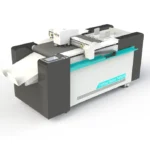
Tool Head Mapping — RTT6080 and RTT6080 Pro cutting heads are matched to the buyer’s actual paper stock and sticker film, not picked from a generic catalogue.
Technical Specifications
| Parameter | Value |
|---|---|
| Model | RTT6080 / RTT6080 Pro |
| Product Type | CNC Flatbed Digital Cutting Plotter |
| Max Working Area | 600mm × 800mm |
| Tool Head Configuration | Cutting tool, kiss cutting tool, creasing tool, CCD camera; high speed oscillating knife (Pro model) |
| Max Cutting Speed | 1500mm/s (basis to be confirmed by material type and thickness) |
| Cutting Thickness | ≤2mm (RTT6080); ≤5mm (RTT6080 Pro) — material basis to be confirmed |
| Positioning Accuracy | 0.05mm |
| File Format Compatibility | DXF, PLT, PDF, AI |
| Transfer Method | Ethernet port |
| Rated Power | 3.2KW (rated or peak not specified) |
| Warranty | One year for whole machine |
| Standards | CE (certificate availability to be confirmed) |
Application Suitability
| Application | Material or Output |
|---|---|
| Packaging sample making | Corrugated cardboard, box board, folding carton stock up to working thickness limit |
| Paper sticker production | Self-adhesive vinyl, paper-backed label stock, kiss-cut and through-cut formats |
| Carton prototyping | Grey board, art board, short-run insert and divider blanks |
| Thin non-metal sheet cutting | Gasket paper, thin composite sheets, signage card stock |
Why Working Area Alone Cannot Predict Cutting Performance
A 600×800mm table tells you nothing about what the knife will actually do to your grey board at full speed.
I have watched buyers commit to a compact format cutter based on sheet size alone, then discover on day one that the standard blade tears through their 1.5mm sticker laminate instead of kiss-cutting it cleanly. The RTT6080 and RTT6080 Pro sit in the CNC digital cutting plotter for sale range at a footprint that fits most sample rooms, but the real selection gate is what sits on the tool carriage and how it meets your specific stock. A machine specified on working area alone, then found unable to handle the material thickness, is a downtime event waiting to happen [NEED_CITE: material thickness and tool head selection for digital cutting].
Knife Versus Laser: Where Each RTT Variant Fits
The standard RTT6080 carries a cutting blade, a kiss cutting blade, a creasing wheel and a CCD camera. This configuration suits packaging sample rooms that cycle through art board, corrugated flute and adhesive-backed label stock within a single shift. The Pro variant adds a high speed oscillating knife, which extends the range into denser board and thicker gasket material where a static drag blade would crush the edge rather than shear it.
Camera Tracking at Production Pace
The CCD camera on both models is rated for 0.05mm positioning accuracy, which matters when contour-cutting pre-printed sticker sheets where registration drift shows immediately as a visible white border. The camera must track printed marks at the speed the machine actually runs, not at a slow calibration pass. Confirming the CCD holds registration on your specific print stock before shipment prevents the most common contour-cutting complaint I encounter on site visits [NEED_CITE: CCD contour recognition accuracy on printed substrates].
Reading the Thickness and Speed Numbers Correctly
The ≤2mm rating on the RTT6080 and ≤5mm on the RTT6080 Pro carry no stated material basis, which means they must be validated against your actual stock before order confirmation. The 1500mm/s maximum cutting speed is similarly material-dependent; a kiss-cut pass on thin vinyl will reach that figure, while a creasing pass on 2mm grey board will not. The 3.2KW rated power covers servo drives, vacuum pump and tool head actuation together, and the target market voltage and frequency must be locked in before the electrical cabinet is wired. Ethernet transfer via DXF, PLT, PDF and AI covers most packaging and signage design workflows without a secondary conversion step.
What Happens When the Tool Head Is Wrong for the Stock
A drag knife on 3mm foam board produces a crushed, ragged edge that no amount of parameter tuning will clean up, because the blade geometry is simply not designed to shear that cell structure. A kiss cutting tool set too deep scores the backing paper and jams the stripping station downstream. I have seen a full day of sample production lost because the creasing wheel diameter did not match the board caliper, leaving a fracture line instead of a fold [NEED_CITE: tool head selection and edge quality on corrugated and foam substrates]. These are not machine faults — they are specification errors caught only by cutting the buyer’s actual material first.
Why This Range Holds Up Beyond the Sample Room
In-house design covers both knife and laser cutting paths across the product range, so a buyer evaluating the RTT6080 against a CO2 laser for thin sticker work gets a method comparison rather than a single-technology pitch. Tool head and vacuum table zoning are specified per material and production volume, not left as a default build. Software compatibility with the buyer’s existing DXF or PLT workflow is confirmed before the order enters production, not discovered at commissioning. Voltage, plug type and control panel language are locked in against the destination market standard. Sample cutting on the buyer’s own paper or sticker stock runs before commitment, so the edge quality and crease definition are documented facts rather than brochure claims.
Documentation & Verification
- Machine specification sheet listing confirmed tool head and table zoning per material
- Electrical schematic with voltage and frequency matched to destination grid standard
- Sample cutting report on buyer-supplied paper, cardboard or sticker stock
- Software licence and file format compatibility note aligned with buyer workflow
- Operation and maintenance manual in the confirmed control interface language
- Spare parts list covering blades, creasing wheels and wear components
Installation, Commissioning & Support
- Confirm floor loading and clearance around the 600×800mm table before delivery
- Provide a dedicated circuit matching the confirmed voltage and 3.2KW rated draw
- Verify Ethernet port connectivity to the design workstation on first power-up
- Run calibration passes on buyer stock to set knife depth and creasing pressure
- Train operators on CCD camera registration setup for printed contour jobs
- Stock replacement oscillating knife blades and creasing wheels on site from day one
What to Send With Your Enquiry
Share the exact paper grade, cardboard caliper or sticker film you run, along with the daily sheet volume your sample room or short-run line handles. Confirm the local voltage and frequency standard, the plug type required and the preferred control panel language. If you already use a nesting or design software workflow, send a sample DXF or PLT file so format compatibility is verified before quotation.
Frequently Asked Questions
Q: How do I choose between the RTT6080 and the RTT6080 Pro for my material?
A: The RTT6080 handles stock up to 2mm with drag knife, kiss cutting and creasing tools, suited to paper, thin card and sticker film. The RTT6080 Pro extends thickness capacity to 5mm and adds a high speed oscillating knife for denser board and gasket material. The choice depends on your thickest stock and whether oscillating shear is needed for clean edges.
Q: Can the CCD camera hold registration on my pre-printed sticker sheets?
A: The camera is rated at 0.05mm positioning accuracy, but tracking performance depends on print contrast, mark size and the cutting speed actually used on your stock. A sample cutting run on your printed sheets confirms the CCD holds contour registration at production pace before the machine ships.
Q: How are voltage, plug and control language handled before shipment?
A: These are confirmed during the specification stage, not assumed. The electrical schematic, plug type and control panel language are documented against your destination market standard and locked in before the cabinet is wired, preventing rewiring or reprogramming costs at arrival.
Q: What file formats does the system accept from my existing design software?
A: The control system imports DXF, PLT, PDF and AI files directly via Ethernet. If your workflow uses a specific nesting software or a less common vector format, a sample file exchange during the enquiry stage confirms compatibility before the order is placed.










商品评价
There are no reviews yet.