

Fast Delivery
Quick, reliable shipping to any location.

Free & easy returns
Return this item by mail or in store within 90 days for a full refund.
In-house cutting technology coverage — Realtop builds both knife and laser platforms under one roof, allowing packaging buyers to match the cutting method to the exact board grade and contour requirement rather than forcing a single process across every job.
Technical Specifications
| Parameter | Value |
|---|---|
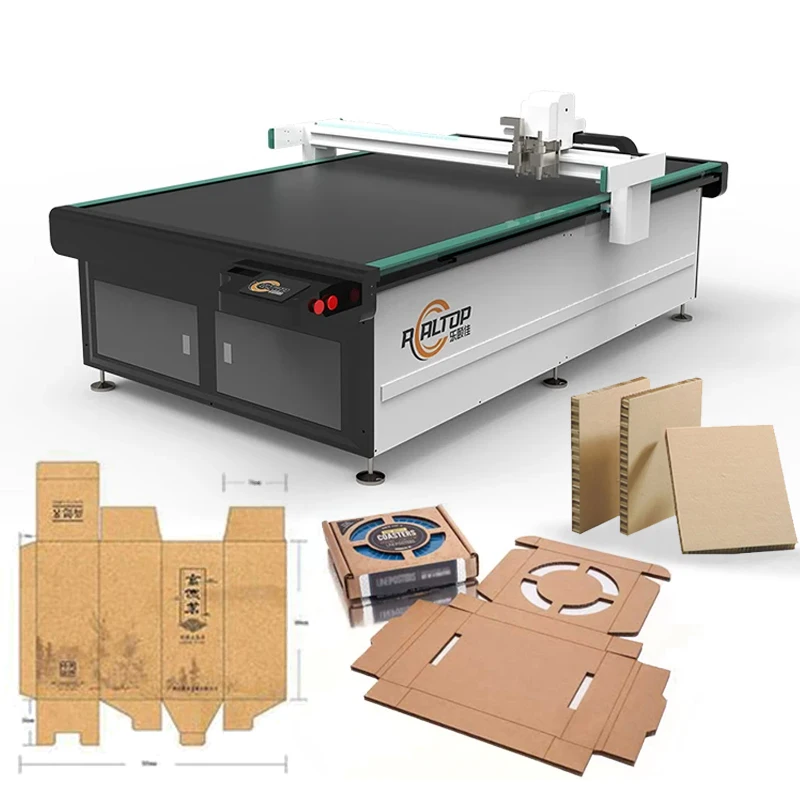
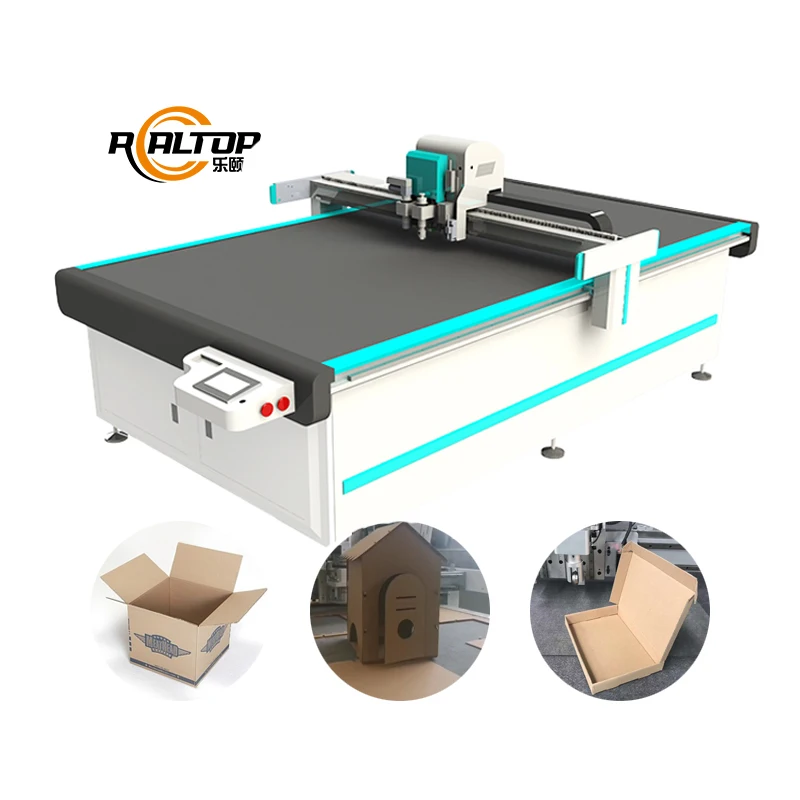
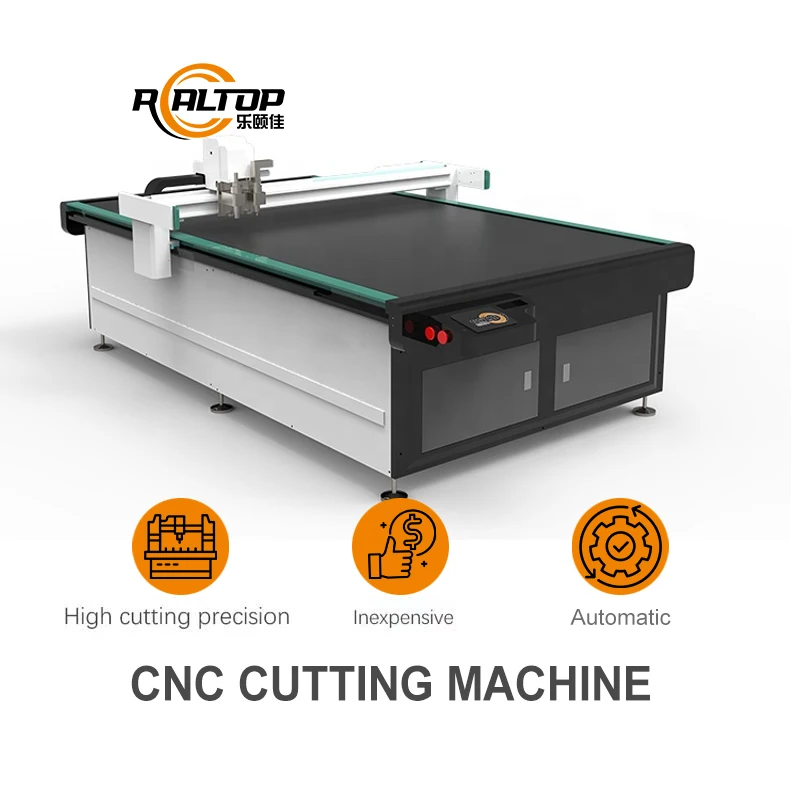
| Product Type | CNC Oscillating Knife Digital Cutting Machine |
| Model | RT–R2513 |
| Working Area | 2500×1300 mm |
| Machine Size | 3550×1910×1400 mm |
| Cutting Thickness | ≤18mm (basis not stated in source — confirm material type and density) |
| Repeated Accuracy | <0.05 mm |
| Rated Power | 9 kW |
| Voltage | 380V |
| Servo Motor | Taiwan Delta servo motor and driver |
| Transmission | Rack and pinion with imported straight-line square guide rail |
| Fixing Method | Vacuum system (7.5 kW vacuum pump) |
| Vacuum Table | Aluminum alloy honeycomb structure with zoned adsorption |
| Conveyor Belt | Germany imported wear-resistant anti-pull felt |
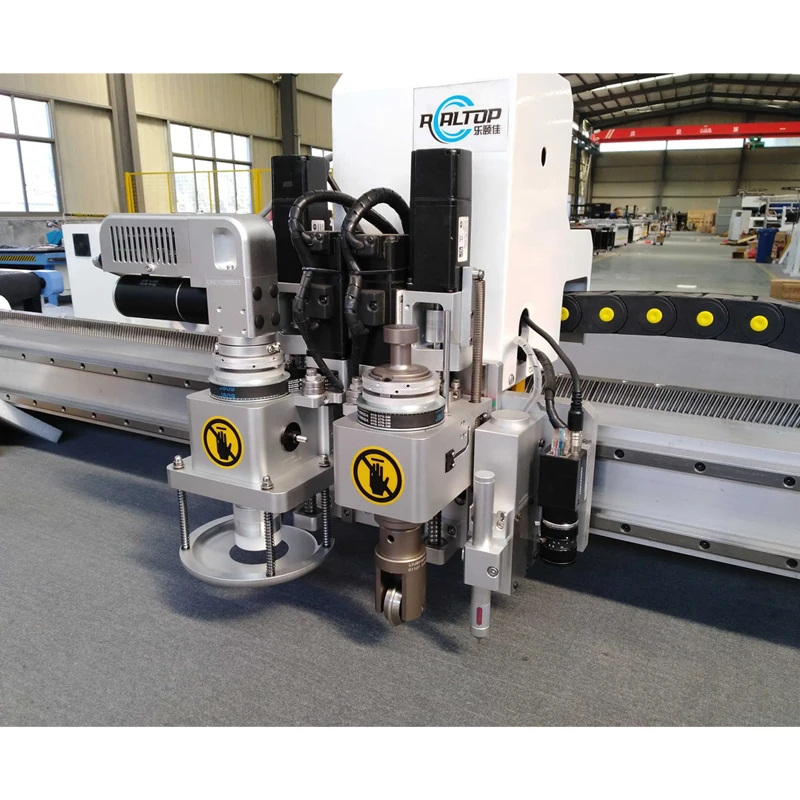
| Cutting Tools | Oscillating knife, Creasing tool, Kiss-Cut Knife Tool, Round punch |
| Profile Format | DXF, OLT, PDF, AI |
Application Suitability
| Application | Material or Output |
|---|---|
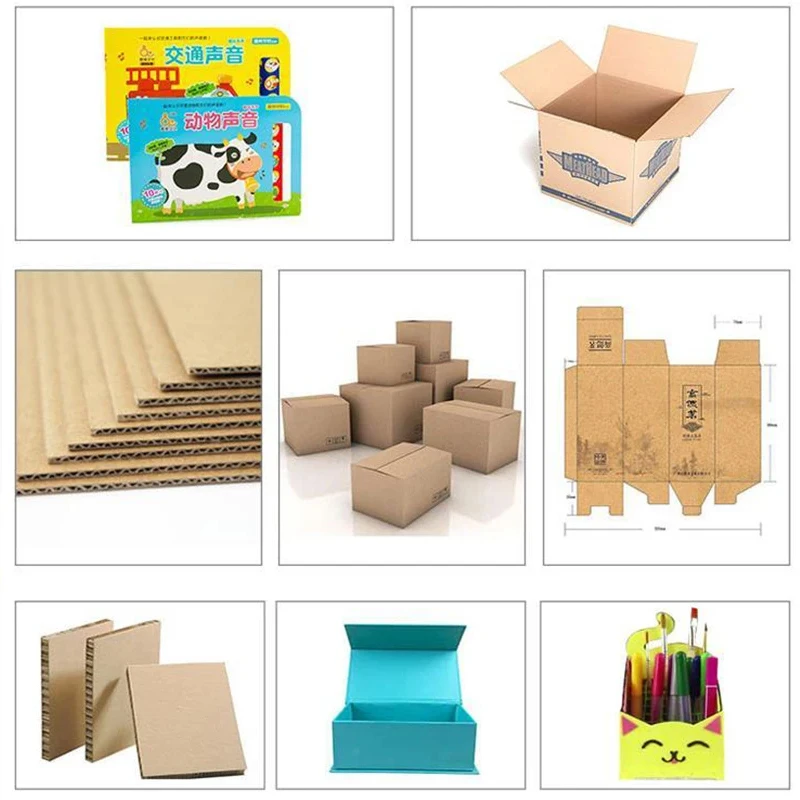
| Carton and box sample making | Corrugated board, cardstock, folding carton stock |
| Sticker and label contouring | Vinyl, PP paper, adhesive-backed label stock |
| Packaging insert production | Foam, honeycomb paper, corrugated inserts |
| Cardboard display and signage | Thick corrugated, grey board, honeycomb board |
What "Working Area Alone" Leaves Out When Selecting a CNC Digital Flatbed Cutting Machine Manufacturer
A cutting table sized only by sheet dimensions will fail the moment it meets the actual material density and part geometry.
Many packaging buyers specify a flatbed strictly by the maximum board size they run, assuming the vacuum table and tool head will handle whatever job lands on it. When small die-cut shapes or intricate crease patterns hit the table at production speed, inadequate vacuum zoning allows the material to lift, producing ragged edges and jammed tool heads [NEED_CITE: vacuum hold-down requirements for small format die-cutting]. The result is a CNC digital flatbed cutting machine manufacturer delivering a unit that technically fits the shop floor but cannot hold tolerances on the actual production mix.
Matching the Tool Head to the Packaging Substrate
Selecting the correct cutting method is the first decision in the catalogue evaluation process. Oscillating knife cutting handles through-cuts on corrugated board and dense gasket materials where a drag knife would crush the flute structure. For folding carton crease lines, a dedicated creasing wheel compresses the fibers without breaking the surface, ensuring clean folds on the packaging assembly line. When a single job requires both through-cut outlines and internal fold lines, a multi-tool carriage completes the entire sheet in one pass.
Navigating Knife Versus Laser for Short-Run Packaging
A buyer surveying the complete cutting equipment range must weigh knife cutting against laser processing for their specific output. Laser cutting seals the edges of synthetic label materials and PP paper, preventing fraying on adhesive products. However, laser processing on thick corrugated board produces charred edges that may not meet food-contact packaging standards. The availability of both platforms from a single CNC digital flatbed cutting machine manufacturer allows a packaging facility to route synthetic label jobs to the laser and corrugated box jobs to the oscillating knife, rather than compromising on a single technology [NEED_CITE: edge quality standards for food contact packaging materials].
How Transmission and Vacuum Zoning Dictate Edge Quality
The repeated accuracy of <0.05 mm relies on the rack and pinion transmission paired with imported straight-line square guide rails, which prevents the micro-vibrations that cause stepped edges on intricate carton locking tabs. Equally critical is the 7.5 kW vacuum pump feeding the aluminum alloy honeycomb table. Zoned adsorption allows the operator to activate only the vacuum sections directly under the cutting path, maintaining maximum hold-down force on small, narrow packaging inserts that would otherwise shift when the oscillating knife changes direction.
The Hidden Cost of Skipping the Sample Cut
Buyers who approve a machine configuration based solely on a printed specification sheet often discover material-specific failures during installation. A cutting depth rated at ≤18mm may perform perfectly on standard B-flute corrugated but leave uncut fibers on high-density grey board used for luxury packaging [NEED_CITE: material density variations in luxury packaging substrates]. Without a sample cutting report generated on the buyer’s exact stock, the facility absorbs the cost of blade wear, re-cutting, and production delays while attempting to dial in the correct oscillation frequency and downward pressure.
Why Sourcing the Full Range Matters
Evaluating a CNC digital flatbed cutting machine manufacturer with an in-house design team ensures the equipment is configured for the buyer’s specific workflow rather than adapted from a generic woodworking or metalworking platform. The factory produces both the knife cutting tables and the laser systems, meaning the control software and file format compatibility (DXF, OLT, PDF, AI) remain consistent across the product family. This allows a packaging producer to integrate professional carton nesting software into their existing design workflow without translating files between incompatible ecosystems.
Documentation & Verification
- Machine specification sheet detailing the RT–R2513 working area and tool head configuration
- Electrical schematic confirming 380V wiring and Taiwan Delta servo driver setup
- Sample cutting report executed on the buyer’s specific corrugated or label stock
- Software licence and file format compatibility note for DXF, OLT, PDF and AI imports
- Factory test record verifying <0.05 mm repeated accuracy before crate packing
Installation, Commissioning & Support
- Floor space allocation must accommodate the 3550×1910×1400 mm machine footprint plus operator clearance
- Dedicated power circuit required to support the 9 kW rated power and 7.5 kW vacuum pump
- Machine ships fully assembled, requiring only vacuum hose and Ethernet port connection on-site
- Initial commissioning includes calibrating the zoned adsorption for the buyer’s smallest packaging part
- Operator training covers tool head changes between the oscillating knife, creasing tool and round punch
- Spare parts list includes ten oscillating blades and replacement felt for the conveyor system
Defining the Production Scope Before Quotation
To narrow down the correct configuration from the full catalogue, provide the exact material type, maximum thickness, and the smallest part dimension you intend to cut. Specify your local voltage and frequency requirements alongside the preferred control language to ensure the electrical cabinet and interface are configured before dispatch. If your workflow relies on specific nesting software or AI-generated contour files, submit sample files so the software compatibility can be verified against the professional carton nesting system.
Frequently Asked Questions
Q: How do I choose between oscillating knife and laser cutting for my packaging materials?
A: Oscillating knife cutting is ideal for thick corrugated board, cardstock, and foam where clean, uncharred edges are required for structural integrity or food-contact compliance. Laser cutting is better suited for synthetic label materials, PP paper, and textiles where edge sealing prevents fraying. Evaluating both methods against your specific material mix ensures the correct technology is applied to each product line.
Q: Will the vacuum table hold small packaging inserts flat during high-speed cutting?
A: The aluminum alloy honeycomb table features zoned adsorption, allowing the operator to concentrate the 7.5 kW vacuum pump’s suction only on the active cutting area. This prevents small, lightweight carton inserts and narrow label strips from lifting or shifting when the oscillating knife changes direction, maintaining the <0.05 mm repeated accuracy across the entire sheet.
Q: What file formats does the included carton nesting software accept?
A: The professional carton nesting software accepts DXF, OLT, PDF, and AI profile formats directly. This allows packaging designers to import structural designs from standard industry CAD systems without manual redrawing. The software handles automatic nesting and crease-line recognition to optimize material yield on standard corrugated and cardstock sheets.
Q: How is the cutting thickness verified before the machine is shipped?
A: Cutting thickness ratings, such as ≤18mm, vary significantly based on material density and flute structure. We require a sample of your actual production stock to conduct a test cut, verifying that the oscillating knife frequency and downward pressure produce a clean through-cut without crushing the substrate or leaving uncut fibers at the base.
Q: Can the machine be configured for our local voltage and control language?
A: Yes, the electrical cabinet and control interface are customized prior to assembly. Buyers must confirm their local voltage, frequency, and plug type, alongside the preferred control language, to ensure the Taiwan Delta servo drivers and software interface operate correctly upon arrival without requiring third-party electrical modification.










商品评价
There are no reviews yet.