

Fast Delivery
Quick, reliable shipping to any location.

Free & easy returns
Return this item by mail or in store within 90 days for a full refund.
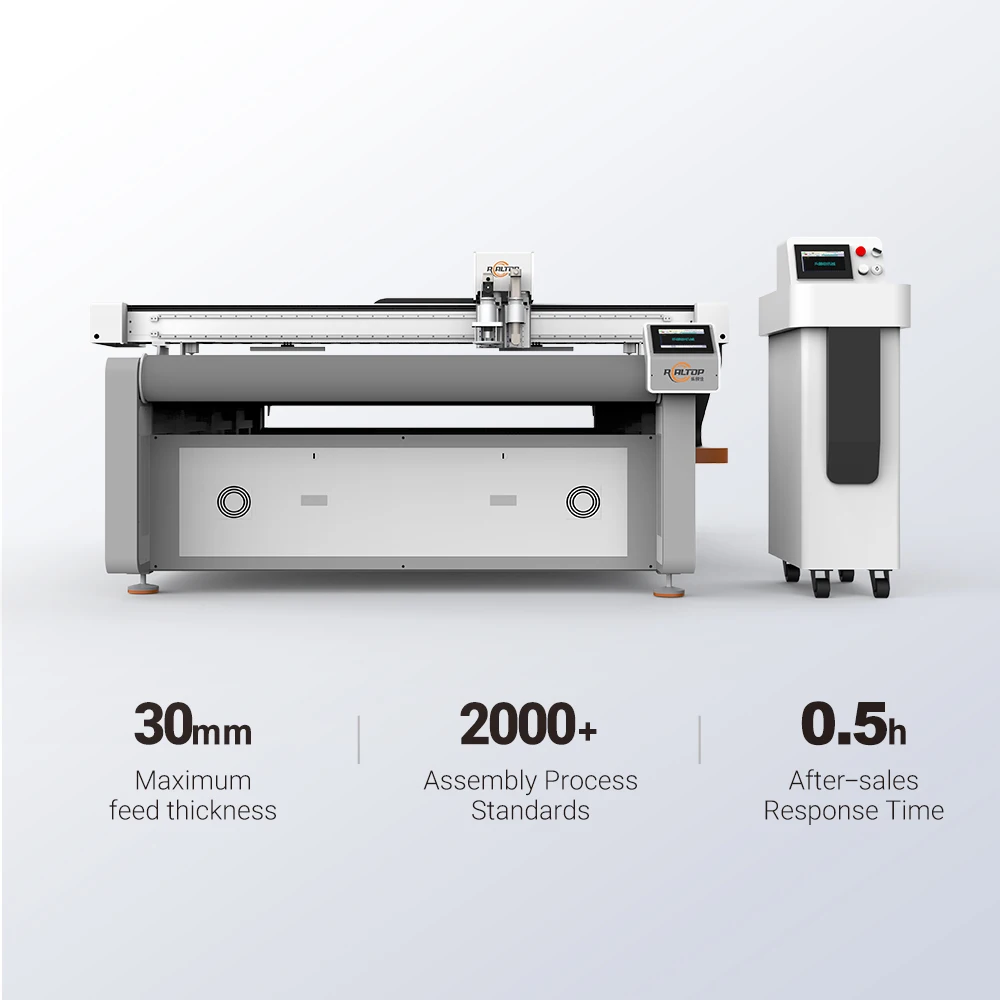
Material-First Configuration — The 1625 is specified by fabric ply count, material density, and daily yardage rather than working area alone, ensuring the selected tool head actually cuts the buyer’s textile stock.
Technical Specifications
| Parameter | Value |
|---|---|
| Model | 1625 |
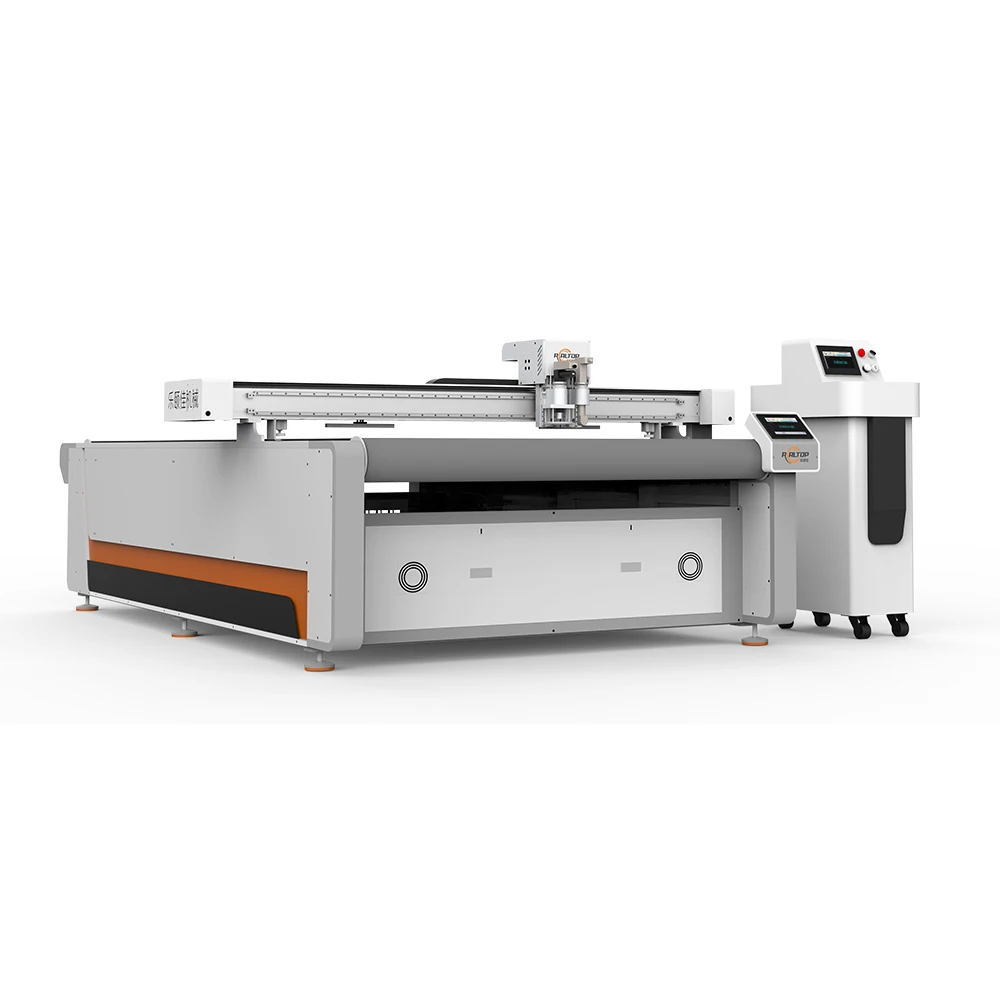
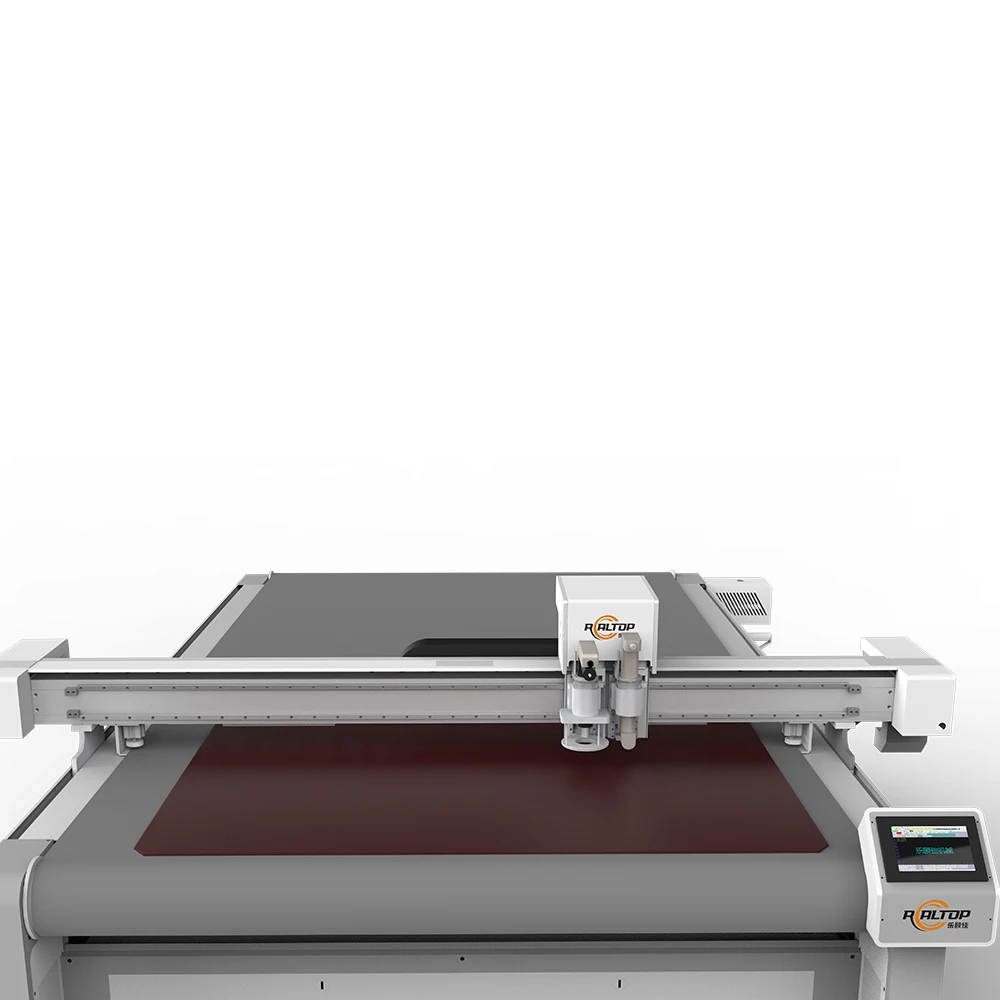
| Product Type | CNC Oscillating Knife Cutting Machine |
| Working Area | 1600 × 2500 mm |
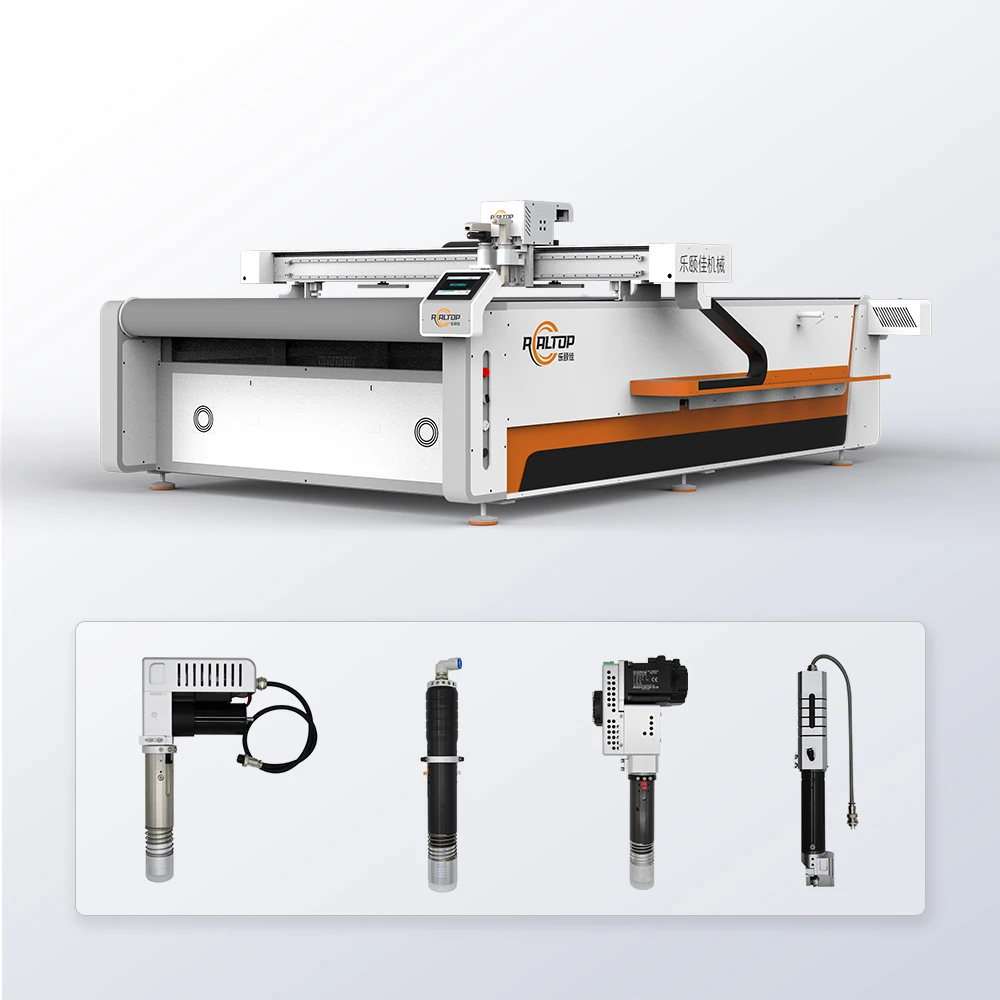
| Tool Head Options | Oscillating knife, Driven rotary knife, Creasing wheel, Kiss cutting tool, Pneumatic knife, Milling tool, V groove knife |
| Vision System | CCD camera (optional) |
| Cutting Speed | 0–1500 mm/s |
| Cutting Thickness | ≤ 40 mm |
| Cutting Accuracy | ±0.1 mm |
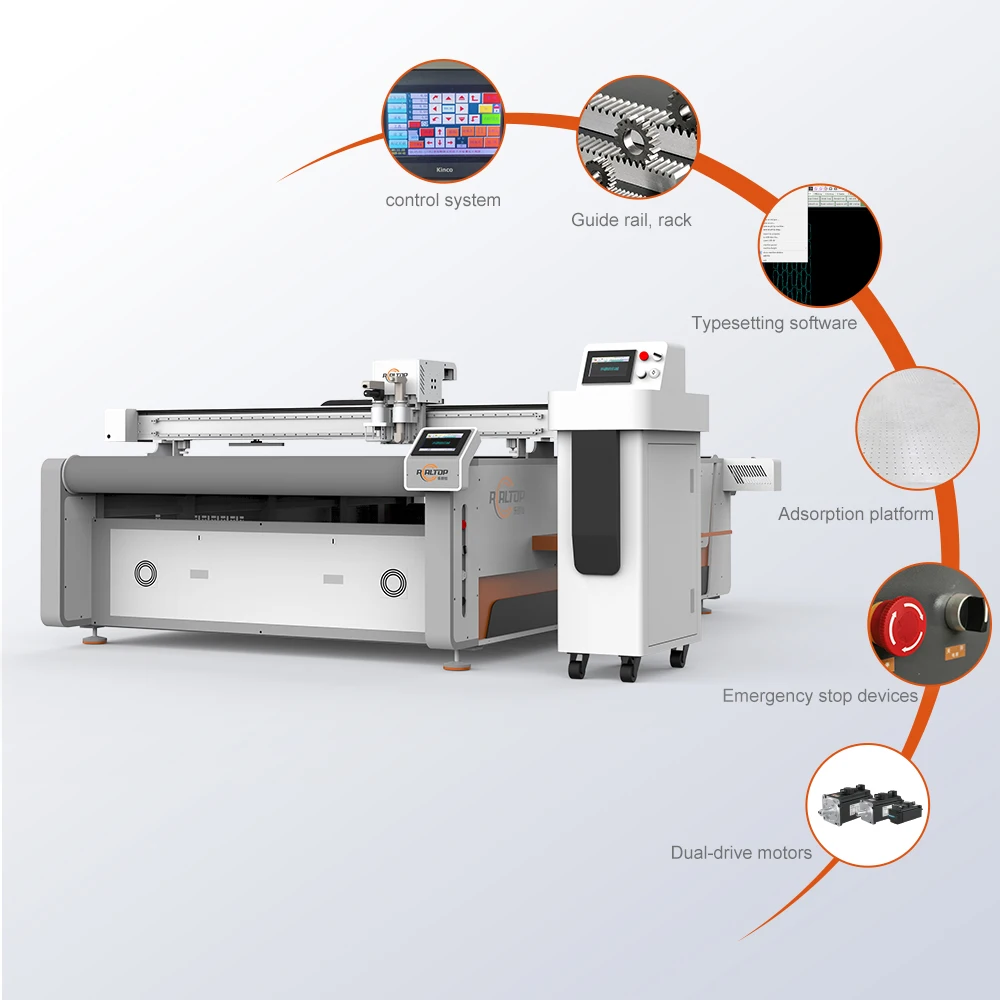
| Vacuum Table | Aluminum bellows vacuum table |
| Vacuum Pump | 9 kW |
| Control System | PLC control panel |
| Servo Motor Options | Panasonic, Delta, Dorna (source value — verify against manufacturer catalog) |
| Voltage Options | 110V, 220V, 380V |
| Language Options | English, Russian, Italian, Chinese (special languages customizable) |
| Supported File Formats | PLT, DXF, AI, PDF |
| Safety Devices | Infrared sensor device, emergency stop device |
| Overall Dimensions (L×W×H) | 3300 × 2100 × 1350 mm |
| Certification | CE |
Application Suitability
| Application | Material or Output |
|---|---|
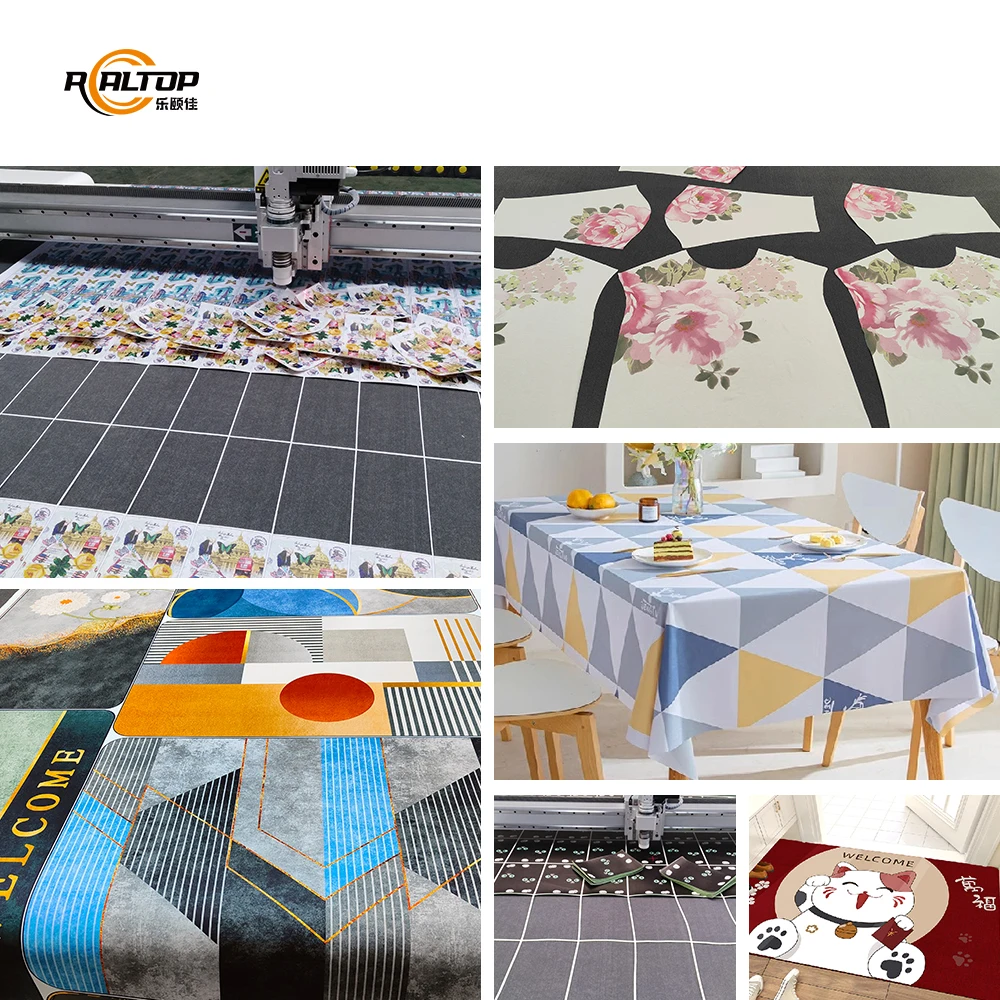
| Garment and textile cutting | Multi-ply woven fabric, knitted fabric, non-woven textile, denim, canvas |
| Footwear and leather goods | Genuine leather, synthetic leather, PU, PVC, microfiber |
| Automotive interior fabrication | Velvet, fleece, non-woven fabric, headliner material, carpet |
| Packaging and carton sample making | Corrugated cardboard (E/B/BC-flute), greyboard, cardstock, art paper |
| Composite and foam processing | EVA, EPE, PU foam, Coroplast, rubber mats |
| Advertising and signage | PVC sheets, PET, thin plastic sheets, vinyl |
Why Fabric Thickness Matters More Than Table Size
Buyers often select a cloth CNC cutting machine based on the 1600×2500mm bed dimensions, only to discover on the factory floor that the oscillating knife cannot penetrate their multi-layer composite leather or tightly woven technical textile. The working area determines how much material fits on the table; the tool head configuration determines whether the blade actually finishes the cut. Match the cutting tool to your heaviest and thickest material first, then confirm the bed size covers your largest pattern piece.
I have watched automotive mat producers run trial samples on single-layer neoprene that cut cleanly, then switch to their actual three-layer bonded stock and find the standard oscillating knife stalling mid-cut. The solution was not a bigger machine but a high-frequency oscillating head paired with a more rigid spindle. [NEED_CITE: cutting force requirements for multi-layer bonded automotive textiles] That reconfiguration decision should happen before the purchase order, not after commissioning.
Tool Head Selection Across the Fabric Spectrum
The 1625 supports interchangeable tool heads, and choosing correctly is the single most consequential decision in the order. An oscillating knife handles most woven and knitted fabrics cleanly at up to 1500 mm/s, while a driven rotary knife is better suited for leather and synthetic hides where dragging a blade would distort the material edge. For kiss-cutting adhesive-backed textiles or scoring fold lines on carton samples, dedicated tools prevent blade wear on the primary cutting head.
A garment manufacturer running multi-ply cotton and polyester benefits from the oscillating knife’s vertical stroke, which separates layers without pulling threads. A footwear producer cutting 2mm PU synthetic leather, however, will see cleaner edges and less fraying from the rotary knife. The CNC oscillating knife cutting machine manufacturer configures these heads on the same gantry, so switching between jobs requires a tool change rather than a different machine.
Vacuum Hold-Down and Edge Integrity at Speed
At cutting speeds approaching the upper range, even a slight fabric lift produces dimensional drift across nested pattern pieces. The aluminum bellows vacuum table on the 1625 provides a flat sealing surface that maintains suction across the full 1600×2500mm area. For small parts such as shoe uppers or collar stays, zoning the vacuum into sectors prevents air leakage through cut sections from releasing adjacent pieces before the cut cycle finishes.
Without adequate hold-down, lightweight non-wovens and slippery linings shift during high-speed contour cuts, and the resulting edge deviation compounds across a multi-ply stack. [NEED_CITE: vacuum table zoning effects on small-part retention in textile cutting] This is why the 9 kW vacuum pump rating must be evaluated against the porosity of your specific material, not treated as a generic specification.
Reading the Specification Sheet for Real Cutting Capacity
The ±0.1 mm cutting accuracy figure applies when the material is properly held and the correct blade geometry is in use. A standard oscillating blade cuts woven fabric to that tolerance; a thicker V-groove knife cutting foam or EVA will have a wider practical tolerance depending on material compression under the blade. The 40 mm maximum cutting thickness is an absolute mechanical limit — production cutting of a 35 mm foam stack requires reduced speed and a heavier blade, not the same parameters used for a 5 mm textile layer.
The PLC control panel manages acceleration curves and corner deceleration, which directly affect edge quality on tight-radius contours common in garment patterns. Servo motor selection — available in Panasonic, Delta, or Dorna configurations — influences positioning repeatability, particularly during rapid direction changes on intricate shapes. File format compatibility with PLT, DXF, AI, and PDF means the machine accepts patterns from most textile nesting software without conversion loss.
The Hidden Cost of Skipping the Material Trial
When a buyer specifies a cloth CNC cutting machine by bed size and speed rating without verifying performance on their actual stock, the failures surface during production ramp-up. A standard oscillating head may leave ragged edges on bonded foam composites, requiring secondary trimming. An undersized vacuum zone may release small garment components mid-cut, forcing the operator to stop and reposition. [NEED_CITE: production losses from unverified material-machine matching in textile cutting]
Voltage and control language mismatches add another layer of rework. A 380V machine shipped to a workshop wired for 220V single-phase will not run at all without a transformer, and a control panel locked in an unsupported language turns basic parameter adjustments into guesswork. These are specification failures, not machine defects, and they are entirely avoidable with a pre-shipment sample cut on the buyer’s own material.
What This Manufacturer Brings to the Table
The design and production team covers both knife and laser cutting technologies under one roof, so a fabric producer can compare oscillating knife versus CO2 laser on the same material and choose based on edge quality rather than being pushed toward whichever machine is in stock. Tool head and table configuration are specified per material type and daily volume, not applied from a standard build sheet.
CCD camera positioning is available for printed contour recognition on patterned textiles, verified at production speed before the machine ships. Voltage, plug type, and control language are confirmed in writing before production begins. The factory runs sample cuts on the buyer’s own fabric, leather, or composite stock and provides a cutting report showing edge quality, dimensional accuracy, and achievable cycle parameters for that specific material.
Documentation & Verification
- Machine specification sheet matching the confirmed tool head and vacuum table configuration
- Electrical schematic with voltage and frequency locked to your workshop supply
- Sample cutting report on your fabric or leather stock with measured tolerances
- CE declaration of conformity for import documentation
- Software licence and file format compatibility note for PLT, DXF, AI, PDF workflows
- Spare parts list with blade types matched to your confirmed material range
Installation, Commissioning & Support
- Floor space of approximately 3300 × 2100 mm required with clearance for material loading on the 1600 × 2500 mm bed
- Dedicated power circuit matching the confirmed voltage (110V, 220V, or 380V) and the 9 kW vacuum pump draw
- Machine ships partially assembled; gantry and vacuum table are aligned and leveled on-site during commissioning
- First-run parameter tuning includes acceleration curves and vacuum zone mapping for your specific textile weight
- Operator training covers tool head changes, PLC control navigation in the confirmed language, and blade replacement intervals
- Wear parts stock includes oscillating knife blades, rotary knife discs, and vacuum table seals sized to the bellows specification
Before You Send the Inquiry
Provide the fabric or textile type, weight per square meter, and the number of plies you cut in a single lay. Share your largest pattern piece dimensions and typical daily yardage so the working area and vacuum zoning can be matched to your nesting layout. Confirm your workshop voltage and frequency, preferred control language, and whether you need sample cutting on your own material before committing to the build.
Frequently Asked Questions
Q: How do I decide between oscillating knife and laser cutting for my textile?
A: Oscillating knife produces clean mechanical cuts on woven and knitted fabrics without heat-affected edges, making it the default for garment and upholstery textiles. Laser cutting seals synthetic edges and prevents fraying on materials like polyester and nylon. Request sample cuts of both methods on your actual fabric to compare edge quality and dimensional accuracy before deciding.
Q: How is cutting capacity verified for my material thickness?
A: Send a sample of your heaviest and thickest production material to the factory. A cutting test is run using the recommended tool head, and the resulting report documents edge quality, achievable speed, and dimensional accuracy. This prevents ordering a configuration that works on trial stock but fails on your actual multi-ply or composite lay.
Q: What voltage and control language options are available?
A: The machine is available in 110V, 220V, and 380V configurations, with frequency matched to your market. The PLC control panel supports English, Russian, Italian, and Chinese as standard, with additional languages configurable. Voltage, plug type, and language are confirmed in writing before production begins to prevent on-site mismatches.
Q: Can the CCD camera track printed marks on my patterned fabric at full speed?
A: The optional CCD camera provides contour recognition for printed textiles, reading registration marks to align cuts with pre-printed patterns. Performance at production speed varies with mark contrast, fabric stretch, and print quality. A live recognition test on your printed material is recommended to confirm reliable tracking before specifying this option.
Q: What file formats does the nesting software accept?
A: The control system accepts PLT, DXF, AI, and PDF files directly. If your existing workflow uses a different format, confirm compatibility before ordering so that file conversion does not introduce dimensional errors in your pattern pieces. A software compatibility note is included with the machine documentation.
Material-First Configuration — The 1625 is specified by fabric ply count, material density, and daily yardage rather than working area alone, ensuring the selected tool head actually cuts the buyer’s textile stock.
Technical Specifications
| Parameter | Value |
|---|---|
| Model | 1625 |
| Product Type | CNC Oscillating Knife Cutting Machine |
| Working Area | 1600 × 2500 mm |
| Tool Head Options | Oscillating knife, Driven rotary knife, Creasing wheel, Kiss cutting tool, Pneumatic knife, Milling tool, V groove knife |
| Vision System | CCD camera (optional) |
| Cutting Speed | 0–1500 mm/s |
| Cutting Thickness | ≤ 40 mm |
| Cutting Accuracy | ±0.1 mm |
| Vacuum Table | Aluminum bellows vacuum table |
| Vacuum Pump | 9 kW |
| Control System | PLC control panel |
| Servo Motor Options | Panasonic, Delta, Dorna (source value — verify against manufacturer catalog) |
| Voltage Options | 110V, 220V, 380V |
| Language Options | English, Russian, Italian, Chinese (special languages customizable) |
| Supported File Formats | PLT, DXF, AI, PDF |
| Safety Devices | Infrared sensor device, emergency stop device |
| Overall Dimensions (L×W×H) | 3300 × 2100 × 1350 mm |
| Certification | CE |
Application Suitability
| Application | Material or Output |
|---|---|
| Garment and textile cutting | Multi-ply woven fabric, knitted fabric, non-woven textile, denim, canvas |
| Footwear and leather goods | Genuine leather, synthetic leather, PU, PVC, microfiber |
| Automotive interior fabrication | Velvet, fleece, non-woven fabric, headliner material, carpet |
| Packaging and carton sample making | Corrugated cardboard (E/B/BC-flute), greyboard, cardstock, art paper |
| Composite and foam processing | EVA, EPE, PU foam, Coroplast, rubber mats |
| Advertising and signage | PVC sheets, PET, thin plastic sheets, vinyl |
Why Fabric Thickness Matters More Than Table Size
Buyers often select a cloth CNC cutting machine based on the 1600×2500mm bed dimensions, only to discover on the factory floor that the oscillating knife cannot penetrate their multi-layer composite leather or tightly woven technical textile. The working area determines how much material fits on the table; the tool head configuration determines whether the blade actually finishes the cut. Match the cutting tool to your heaviest and thickest material first, then confirm the bed size covers your largest pattern piece.
I have watched automotive mat producers run trial samples on single-layer neoprene that cut cleanly, then switch to their actual three-layer bonded stock and find the standard oscillating knife stalling mid-cut. The solution was not a bigger machine but a high-frequency oscillating head paired with a more rigid spindle. [NEED_CITE: cutting force requirements for multi-layer bonded automotive textiles] That reconfiguration decision should happen before the purchase order, not after commissioning.
Tool Head Selection Across the Fabric Spectrum
The 1625 supports interchangeable tool heads, and choosing correctly is the single most consequential decision in the order. An oscillating knife handles most woven and knitted fabrics cleanly at up to 1500 mm/s, while a driven rotary knife is better suited for leather and synthetic hides where dragging a blade would distort the material edge. For kiss-cutting adhesive-backed textiles or scoring fold lines on carton samples, dedicated tools prevent blade wear on the primary cutting head.
A garment manufacturer running multi-ply cotton and polyester benefits from the oscillating knife’s vertical stroke, which separates layers without pulling threads. A footwear producer cutting 2mm PU synthetic leather, however, will see cleaner edges and less fraying from the rotary knife. The CNC oscillating knife cutting machine manufacturer configures these heads on the same gantry, so switching between jobs requires a tool change rather than a different machine.
Vacuum Hold-Down and Edge Integrity at Speed
At cutting speeds approaching the upper range, even a slight fabric lift produces dimensional drift across nested pattern pieces. The aluminum bellows vacuum table on the 1625 provides a flat sealing surface that maintains suction across the full 1600×2500mm area. For small parts such as shoe uppers or collar stays, zoning the vacuum into sectors prevents air leakage through cut sections from releasing adjacent pieces before the cut cycle finishes.
Without adequate hold-down, lightweight non-wovens and slippery linings shift during high-speed contour cuts, and the resulting edge deviation compounds across a multi-ply stack. [NEED_CITE: vacuum table zoning effects on small-part retention in textile cutting] This is why the 9 kW vacuum pump rating must be evaluated against the porosity of your specific material, not treated as a generic specification.
Reading the Specification Sheet for Real Cutting Capacity
The ±0.1 mm cutting accuracy figure applies when the material is properly held and the correct blade geometry is in use. A standard oscillating blade cuts woven fabric to that tolerance; a thicker V-groove knife cutting foam or EVA will have a wider practical tolerance depending on material compression under the blade. The 40 mm maximum cutting thickness is an absolute mechanical limit — production cutting of a 35 mm foam stack requires reduced speed and a heavier blade, not the same parameters used for a 5 mm textile layer.
The PLC control panel manages acceleration curves and corner deceleration, which directly affect edge quality on tight-radius contours common in garment patterns. Servo motor selection — available in Panasonic, Delta, or Dorna configurations — influences positioning repeatability, particularly during rapid direction changes on intricate shapes. File format compatibility with PLT, DXF, AI, and PDF means the machine accepts patterns from most textile nesting software without conversion loss.
The Hidden Cost of Skipping the Material Trial
When a buyer specifies a cloth CNC cutting machine by bed size and speed rating without verifying performance on their actual stock, the failures surface during production ramp-up. A standard oscillating head may leave ragged edges on bonded foam composites, requiring secondary trimming. An undersized vacuum zone may release small garment components mid-cut, forcing the operator to stop and reposition. [NEED_CITE: production losses from unverified material-machine matching in textile cutting]
Voltage and control language mismatches add another layer of rework. A 380V machine shipped to a workshop wired for 220V single-phase will not run at all without a transformer, and a control panel locked in an unsupported language turns basic parameter adjustments into guesswork. These are specification failures, not machine defects, and they are entirely avoidable with a pre-shipment sample cut on the buyer’s own material.
What This Manufacturer Brings to the Table
The design and production team covers both knife and laser cutting technologies under one roof, so a fabric producer can compare oscillating knife versus CO2 laser on the same material and choose based on edge quality rather than being pushed toward whichever machine is in stock. Tool head and table configuration are specified per material type and daily volume, not applied from a standard build sheet.
CCD camera positioning is available for printed contour recognition on patterned textiles, verified at production speed before the machine ships. Voltage, plug type, and control language are confirmed in writing before production begins. The factory runs sample cuts on the buyer’s own fabric, leather, or composite stock and provides a cutting report showing edge quality, dimensional accuracy, and achievable cycle parameters for that specific material.
Documentation & Verification
- Machine specification sheet matching the confirmed tool head and vacuum table configuration
- Electrical schematic with voltage and frequency locked to your workshop supply
- Sample cutting report on your fabric or leather stock with measured tolerances
- CE declaration of conformity for import documentation
- Software licence and file format compatibility note for PLT, DXF, AI, PDF workflows
- Spare parts list with blade types matched to your confirmed material range
Installation, Commissioning & Support
- Floor space of approximately 3300 × 2100 mm required with clearance for material loading on the 1600 × 2500 mm bed
- Dedicated power circuit matching the confirmed voltage (110V, 220V, or 380V) and the 9 kW vacuum pump draw
- Machine ships partially assembled; gantry and vacuum table are aligned and leveled on-site during commissioning
- First-run parameter tuning includes acceleration curves and vacuum zone mapping for your specific textile weight
- Operator training covers tool head changes, PLC control navigation in the confirmed language, and blade replacement intervals
- Wear parts stock includes oscillating knife blades, rotary knife discs, and vacuum table seals sized to the bellows specification
Before You Send the Inquiry
Provide the fabric or textile type, weight per square meter, and the number of plies you cut in a single lay. Share your largest pattern piece dimensions and typical daily yardage so the working area and vacuum zoning can be matched to your nesting layout. Confirm your workshop voltage and frequency, preferred control language, and whether you need sample cutting on your own material before committing to the build.
Frequently Asked Questions
Q: How do I decide between oscillating knife and laser cutting for my textile?
A: Oscillating knife produces clean mechanical cuts on woven and knitted fabrics without heat-affected edges, making it the default for garment and upholstery textiles. Laser cutting seals synthetic edges and prevents fraying on materials like polyester and nylon. Request sample cuts of both methods on your actual fabric to compare edge quality and dimensional accuracy before deciding.
Q: How is cutting capacity verified for my material thickness?
A: Send a sample of your heaviest and thickest production material to the factory. A cutting test is run using the recommended tool head, and the resulting report documents edge quality, achievable speed, and dimensional accuracy. This prevents ordering a configuration that works on trial stock but fails on your actual multi-ply or composite lay.
Q: What voltage and control language options are available?
A: The machine is available in 110V, 220V, and 380V configurations, with frequency matched to your market. The PLC control panel supports English, Russian, Italian, and Chinese as standard, with additional languages configurable. Voltage, plug type, and language are confirmed in writing before production begins to prevent on-site mismatches.
Q: Can the CCD camera track printed marks on my patterned fabric at full speed?
A: The optional CCD camera provides contour recognition for printed textiles, reading registration marks to align cuts with pre-printed patterns. Performance at production speed varies with mark contrast, fabric stretch, and print quality. A live recognition test on your printed material is recommended to confirm reliable tracking before specifying this option.
Q: What file formats does the nesting software accept?
A: The control system accepts PLT, DXF, AI, and PDF files directly. If your existing workflow uses a different format, confirm compatibility before ordering so that file conversion does not introduce dimensional errors in your pattern pieces. A software compatibility note is included with the machine documentation.










商品评价
There are no reviews yet.