

Fast Delivery
Quick, reliable shipping to any location.

Free & easy returns
Return this item by mail or in store within 90 days for a full refund.
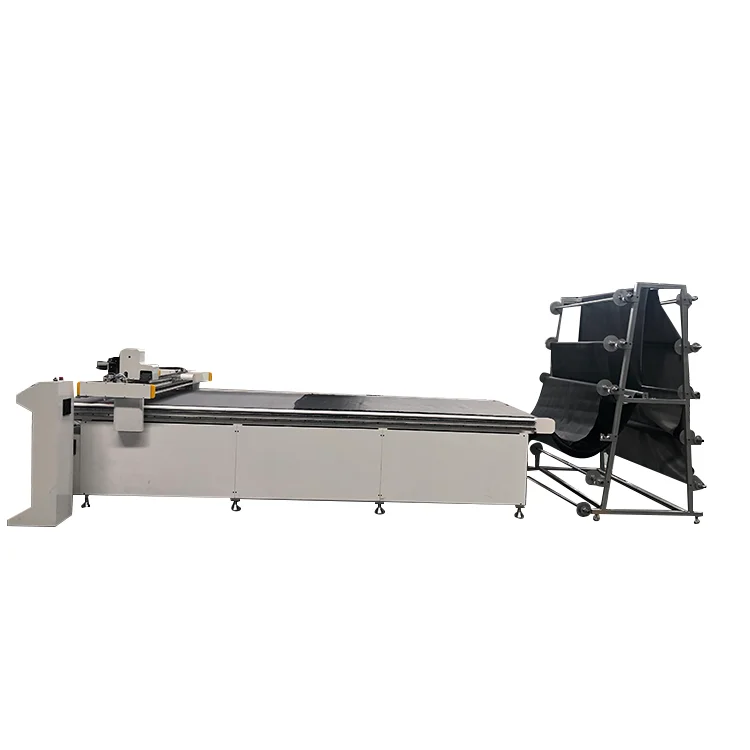
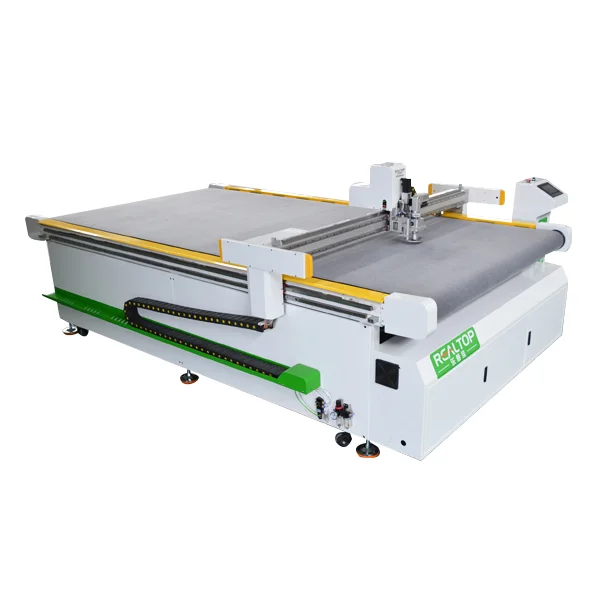
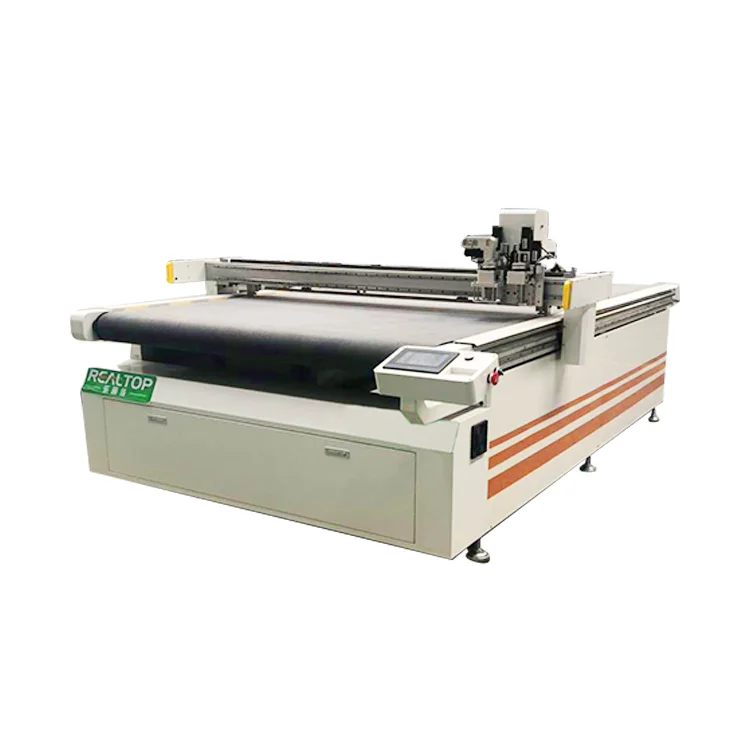
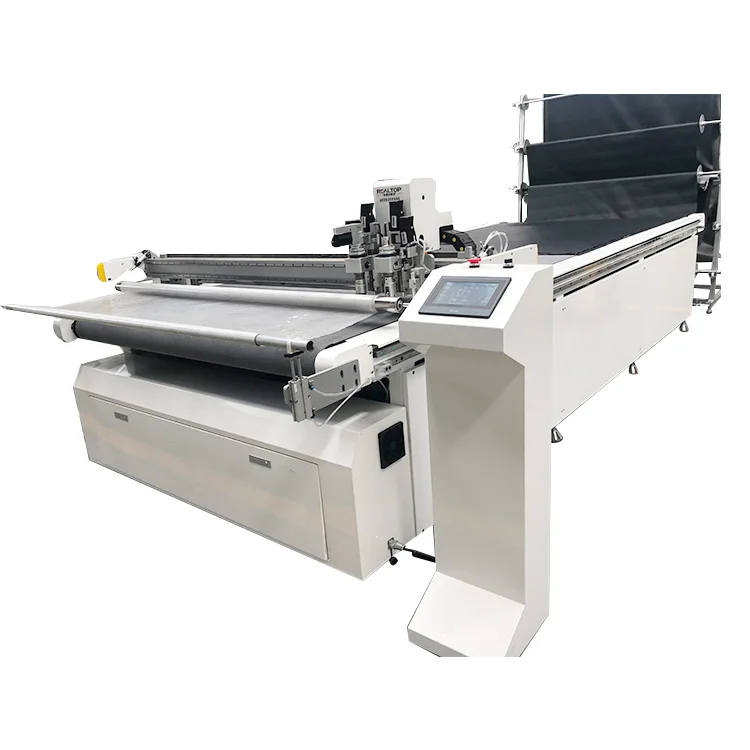
Knife and laser under one roof — the RT-D2516/RT-S2516 is positioned within a full equipment catalogue, so garment and composite producers can select the cutting method matched to their actual material rather than forcing a single technology.
Technical Specifications
| Parameter | Value |
|---|---|
| Model | RT-D2516/RT-S2516 |
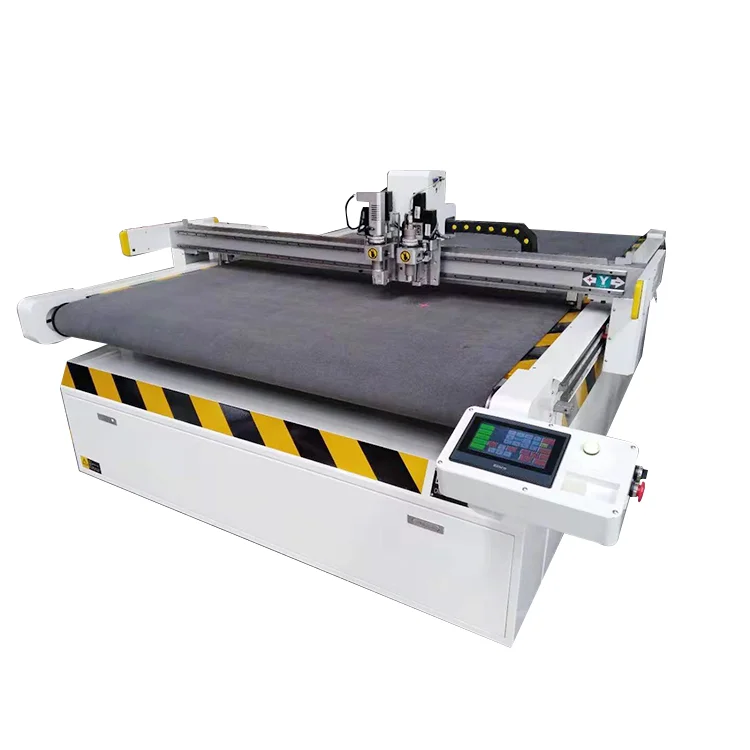
| Product Type | Multi-Layer CNC Oscillating Knife Cutting Machine |
| Working Area | 1600×2500 mm |
| Overall Dimensions (L×W×H) | 3450×2300×1250 mm |
| Rated Power | 9 kW |
| Voltage | 380V ±10% (frequency to be confirmed) |
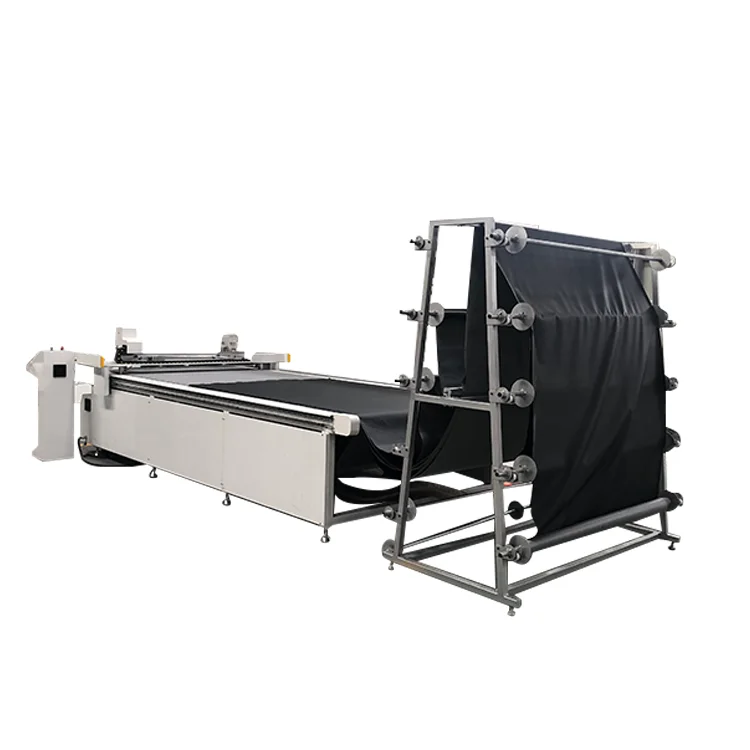
| Table Type | Flat working table with vacuum and auto-feeding conveyor |
| Vacuum Pump | 7.5 kW |
| Tool Head | Swiss imported oscillating knife — full cut, half cut, cursor location |
| Translational Speed | 800–1200 mm/s |
| Cutting Speed | 200–800 mm/s (varies by material) |
| Repeatability | ≤0.1 mm |
| Transmission System | Digital servo motor, linear guide, synchronous belt, ball screw (imported) |
| Servo Motor | Japanese Yaskawa |
| Linear Rail | Taiwan Hiwin |
| Conveyor Belt | Germany imported |
| Safety Device | Infrared sensors |
| Control Format | HP-GL compatible |
| CCD Camera | Availability to be confirmed |
| Vacuum Zoning | Zone count to be confirmed |
| Software & File Formats | HP-GL compatible; DXF/PLT/AI compatibility to be confirmed |
| Certification | CE availability to be confirmed |
Application Suitability
| Application | Material or Output |
|---|---|
| Garment and footwear cutting | Multi-layer fabric, leather, sponge composite leather |
| Automotive interior production | Flexible trim materials, gasket sheets |
| Advertising and signage | PVC, soft glass, silicon, rubber sheets |
| Composite fabrication | Multi-layer flexible and semi-rigid foam, laminated textiles |
What Working Area Alone Does Not Tell You About a Multi-Layer CNC Cutting Machine for Sale
A 1600×2500 mm bed means nothing if the tool head cannot handle the material stack you actually run.
I once watched a fabric shop take delivery of a flatbed cutter they chose purely on table size. The machine worked fine on single-layer cotton, but the moment they loaded sponge-backed automotive seat fabric, the drag knife crushed the foam core and left ragged edges across every panel. The buyer had never mentioned the lamination, and the seller had never asked. Weeks of production were lost before the correct oscillating tool head and vacuum zoning were sorted out. [NEED_CITE: material thickness and tool head mismatch in digital cutting]
When evaluating any Multi-Layer CNC Cutting Machine for sale, the conversation must start with material composition, layer count, and daily volume — not just bed dimensions.
Why the Full Catalogue Matters When Choosing Cloth CNC Cutting Equipment
Buyers often land on a single cutting method without realizing that their material mix may demand more than one. The RT-D2516/RT-S2516 is part of a complete equipment range that includes both oscillating knife and laser systems, giving garment and leather producers the option to match the process to the fabric rather than adapting the fabric to the process. A cloth CNC cutting machine manufacturer offering both technologies helps buyers avoid the trap of forcing synthetic textiles through a blade when a laser would seal the edges cleanly.
Material Composition Determines the Cutting Method — Not the Other Way Around
Multi-layer sponge composite leather behaves entirely differently from woven polyester under a blade. The Swiss imported oscillating knife on this model supports full cutting, half cutting, and cursor location, which covers most garment and automotive interior materials. Yet for certain synthetic textiles, a CO2 laser produces sealed edges that prevent fraying without any mechanical pressure on the stack. Confirming the right method requires running sample cuts on the buyer’s actual material at the target layer count before any purchase commitment. [NEED_CITE: oscillating knife versus laser on layered synthetic textiles]
Reading the Specifications That Actually Affect Your Output
The 7.5 kW vacuum pump paired with the auto-feeding conveyor is designed to hold multi-layer fabric stacks flat during continuous cutting passes. Without adequate vacuum zoning, small pattern pieces can lift off the table mid-cut, ruining an entire layer set. The Japanese Yaskawa servo motors and Taiwan Hiwin linear rails maintain ≤0.1 mm repeatability across the full 1600×2500 mm working area, which matters when nesting software tries to pack pieces within millimeters of each other. The cutting speed range of 200–800 mm/s is material-dependent — running at the upper end on thick sponge composite will produce different edge quality than on single-layer woven cotton. The Germany imported conveyor belt feeds material into the cutting zone at 800–1200 mm/s translational speed, keeping pace with high-volume garment workflows where roll after roll must move through without manual repositioning.
The Hidden Cost of Unconfirmed Configurations
A buyer who skips voltage and frequency confirmation before shipment can find the machine sitting idle for weeks while a transformer is sourced locally. Similarly, if the control language on the HMI does not match the operator’s working language, setup errors and incorrect parameter entries become routine. [NEED_CITE: voltage and control language mismatches in imported industrial machinery] Tool head selection made without sample testing on the actual laminate structure leads to crushed foam cores or delaminated edges, and the cost shows up in scrap material and missed delivery schedules rather than in the machine invoice.
Why Source This Multi-Layer CNC Cutting Machine Here
In-house design covers both knife and laser technology, so the cutting method is selected based on the buyer’s material rather than limited to whatever one machine type can handle. The tool head and table configuration for the RT-D2516/RT-S2516 is specified per material stack and production volume, not offered as a fixed package. CCD camera positioning is available for printed contour work, and software compatibility is confirmed before the order goes into production. Voltage, control language, and plug type are customized to the destination market. Sample cutting runs on the buyer’s own fabric at the intended layer count are conducted before commitment, so edge quality and cutting speed are verified in advance.
Documentation & Verification
- Machine specification sheet listing working area, tool head options, and cutting speed by material
- Electrical schematic with voltage and frequency confirmation for your target market
- Sample cutting report on your fabric at your specified layer count
- Factory test record showing repeatability and conveyor feed accuracy before dispatch
- Software license and file format compatibility note for your existing nesting workflow
- Packing photographs documenting condition prior to container loading
Installation, Commissioning & Support
- Floor space must accommodate 3450×2300 mm overall dimensions plus operator access clearance
- 9 kW rated power plus 7.5 kW vacuum pump requires dedicated circuit at confirmed voltage and frequency
- Machine arrives with auto-feeding conveyor and vacuum table requiring on-site leveling and belt tensioning
- First-run calibration covers Yaskawa servo parameters and Hiwin rail alignment across the 1600×2500 mm bed
- Operator training addresses oscillating knife tool changes, HP-GL file loading, and infrared safety sensor testing
- Spare parts list includes oscillating blades, conveyor belt segments, and vacuum seals
Before You Request a Quote
To recommend the correct configuration, we need to know your material type, layer thickness, maximum sheet or roll width, and daily cutting volume. Confirm your local voltage and frequency standard, preferred control language, and whether your workflow uses printed registration marks requiring CCD positioning. If you can send a sample of the actual fabric or composite you plan to cut, we will run test cuts and provide a report before any order decision.
Frequently Asked Questions
Q: How does the RT-D2516/RT-S2516 compare with other models in the full catalogue by material and volume?
A: This model covers mid-to-high volume multi-layer fabric and composite cutting on a 1600×2500 mm bed. For thinner single-layer work or smaller shops, more compact models are available. For non-metal and metal sheet processing, the catalogue includes CO2 and fiber laser options. The selection depends on your material type, layer count, and daily throughput requirement.
Q: Knife versus laser — which cutting method fits my garment or composite material?
A: Oscillating knife handles multi-layer natural fabrics, leather, and foam composites without melting or sealing edges. Laser suits synthetic textiles where edge sealing prevents fraying. The correct choice depends on your material composition and the edge finish your product requires. Sample cuts on your actual material resolve this question before purchase.
Q: Is CCD camera contour recognition available, and how does it integrate with auto-feeding?
A: CCD camera availability should be confirmed at inquiry stage. When specified, the camera reads printed registration marks on fabric and adjusts the cutting path accordingly. The auto-feeding conveyor advances material from roll stock, and the camera re-registers on each new feed cycle to maintain contour accuracy across continuous production runs.
Q: What voltage, frequency, and control language options can I specify?
A: The standard electrical system is 380V ±10%, but frequency and plug type must be confirmed for your destination market. Control language on the HMI is configurable. All electrical specifications are documented in the schematic and confirmed before production begins to avoid on-site compatibility issues.
Q: How do I verify cutting speed and layer capacity on my own material before ordering?
A: Send a sample of your fabric or composite at the intended layer count. A test cutting session runs on the RT-D2516/RT-S2516 using the proposed tool head and vacuum configuration. You receive a sample cutting report documenting edge quality, cutting speed achieved, and hold-down performance, so the decision is based on actual results rather than catalog claims.










商品评价
There are no reviews yet.