


Fast Delivery
Quick, reliable shipping to any location.

Free & easy returns
Return this item by mail or in store within 90 days for a full refund.
Cutting Method Matched to Material — Tool head and vacuum table configured for your specific fabric type and thickness, verified by sample cutting before order.
Technical Specifications
| Parameter | Value |
|---|---|
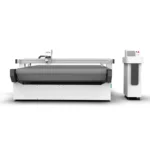
| Product Type | CNC Oscillating Knife Cutting Machine |
| Working Area | 1600*2500 mm |
| Available Tool Heads | Oscillating knife, Driven rotary knife, Creasing wheel, Kiss cutting tool, Pneumatic knife, Milling tool, V groove knife |
| Cutting Speed (Textile) | 1200–2000 mm/s based on textile fabric cutting |
| Cutting Accuracy | ±0.1 mm |
| Vacuum Pump Power | 9 kW |
| Voltage Options | 110V, 220V, 380V |
| Control System | PLC control panel with intuitive interface |
| Display Languages | English, Russian, Italian, Chinese (special languages customizable) |
| File Formats Supported | PLT, DXF, AI, PDF |
| Safety Devices | Infrared sensor device, Emergency stop device |
| Machine Dimensions | 330021001350 mm |
| Standards | CE declaration where applicable |
Application Suitability
| Application | Material or Output |
|---|---|
| Curtain fabric shutters production | Coated blackout cloth, woven polyester, layered shading textiles |
| Home textile manufacturing | Sofa fabrics, rugs, multi-layer curtain materials |
| Apparel manufacturing | Suits, knitwear, lace, complex garment fabrics |
| Automotive interiors | Seat fabrics, carpets, PVC mats |
| Composite material processing | Carbon fiber prepreg, aramid, specialty layered materials |
Why Cutting Depth Claims Fail When the Material Changes
A machine specified on working area alone, then found unable to handle the material thickness — this common pain point is addressed through cutting method and configuration recommendations based on material type, thickness, sheet size and daily volume.
The actual cutting capacity depends on material density and tool head selection, not just the rated thickness number on a spec sheet.
I remember configuring a vibrating knife cutter for a customer making standard curtains. The test cuts ran clean on sample polyester, but when they loaded their actual coated blackout fabric — noticeably stiffer and denser — the blade struggled and produced ragged edges. Every parameter had to be reworked from scratch. This happens because material behavior varies dramatically even within the "fabric" category, and a CNC oscillating knife cutting machine manufacturer worth working with will insist on testing your exact material before quoting a configuration. [NEED_CITE: material density variation in technical textiles]
How Tool Head Interchangeability Addresses Real Production Variability
Different fabric types demand fundamentally different cutting actions. An oscillating knife handles standard woven textiles cleanly, while coated or laminated curtain fabrics often require a pneumatic knife with higher downward force to shear through the hardened surface layer without delaminating the substrate. The driven rotary knife serves a different purpose entirely, better suited to continuous long cuts on single-ply materials. Having multiple tool head options available on one machine means a curtain fabric shutter producer can switch between standard lining materials and heavy blackout panels without needing separate equipment. The main CNC oscillating knife cutting machine manufacturer provides these as interchangeable options rather than locking buyers into a single blade type.
Vacuum Table Zoning and Small Part Hold-Down
Curtain fabric shutters often involve narrow slats and small offcut pieces that seem straightforward until vacuum hold-down is considered. A full-surface vacuum with undifferentiated zones struggles to maintain adequate suction across a large bed when only a small portion is covered by material. The aluminum bellows vacuum table on this system distributes suction across segmented zones, allowing the operator to activate only the sections where material is present. This matters considerably for shutter production where narrow strips can lift during oscillating cuts, producing dimensional inaccuracies or catching the blade mid-pass. Strong vacuum adsorption across the active cutting zone keeps layered fabrics flat and dimensionally stable throughout the cutting cycle. [NEED_CITE: vacuum hold-down requirements for flexible material processing]
Reading the Specs That Actually Matter for Fabric Cutting
The ±0.1 mm cutting accuracy specification directly affects shutter assembly — when dozens of fabric slats must stack uniformly in a track system, accumulated tolerances across many pieces determine whether the finished shutter operates smoothly or binds. The 9 kW vacuum pump rating should be evaluated against the table area it serves; adequate suction for a 1600×2500 mm working area requires sufficient power to maintain hold-down through air-permeable woven fabrics. PLC control with multilingual interface reduces operator error when production staff must adjust cutting parameters between different curtain fabric types. File format compatibility with PLT, DXF, AI, and PDF means existing design files from common CAD and graphic software import without intermediate conversion steps that can distort contour geometry.
The Hidden Cost of Wrong Configuration Choices
When a buyer selects a cutting configuration based solely on price or working area without matching the tool head to their actual material, the consequences show up on the production floor. Ragged edges on coated blackout fabrics mean the pieces must be re-cut, doubling material consumption and pushing delivery schedules. Insufficient vacuum hold-down causes small shutter components to shift during cutting, creating scrap and requiring operator intervention mid-cycle. Software that cannot import the buyer’s existing nesting files forces manual re-drawing of patterns, adding hours to preparation time for each production batch. These are not equipment failures — they are specification failures that could have been caught before the machine was built. [NEED_CITE: cost of rework in flexible material cutting operations]
Why Source This Equipment Here
In-house design and production covering both knife and laser cutting technologies means the buyer selects the method that genuinely fits their material rather than being forced into one approach. Tool head and table configuration are specified per material type and production volume, so a curtain shutter manufacturer gets the pneumatic knife and zoned vacuum table their coated fabrics require. CCD camera positioning capability supports printed contour work for customers cutting patterned fabrics that must align to printed registration marks. Software compatibility with existing file formats is confirmed before the order is placed, preventing workflow disruption after delivery. Voltage, language, and specification customization ensures the machine arrives configured for the buyer’s local electrical standards and operator language.
Documentation & Verification
- Machine specification sheet listing all configured tool heads and table zones
- Electrical schematic with confirmed voltage and frequency for your facility
- Sample cutting report on your specific curtain fabric before commitment
- Factory test record demonstrating cutting accuracy on your material thickness
- Software licence and file format compatibility note for PLT, DXF, AI, PDF
- Spare parts list identifying wear items specific to your configured tool heads
Installation, Commissioning & Support
- Foundation leveling for the 3300×2100×1350 mm frame with specified floor load capacity
- Dedicated electrical circuit matching your confirmed voltage option of 110V, 220V, or 380V
- Assembly of the 1600×2500 mm working area bed with vacuum zone calibration
- First-run parameter setting for your specific fabric types using provided sample cutting data
- Operator training on PLC control panel including tool head changeover procedures
- Wear parts inventory covering oscillating knife blades and vacuum table seals
Preparing Your Inquiry for Accurate Quotation
To receive a configuration that actually handles your production materials, include the specific fabric types you process — standard woven, coated blackout, layered composites — along with typical thickness ranges and sheet dimensions. State your local voltage and frequency standards, preferred control language, and whether your existing design files use DXF, PLT, AI, or PDF formats. If you produce curtain shutters with specific slat widths or multi-layer cutting requirements, provide those details so the vacuum table zoning and tool head selection can be matched before quotation.
Frequently Asked Questions
Q: How can I verify the machine handles my specific curtain fabric before purchasing?
A: Send a sample of your actual production material — including coated blackout fabrics if applicable. A sample cutting test is performed on your material, and a sample cutting report documenting edge quality, cutting speed, and dimensional accuracy is provided before you commit to an order. This prevents the situation where machine parameters must be entirely reworked after delivery.
Q: What electrical and language options are available for my facility?
A: Voltage options include 110V, 220V, and 380V, confirmed with you before production begins. The PLC control panel supports English, Russian, Italian, and Chinese as standard, with special languages customizable. Electrical schematics and plug type are matched to your local standards and confirmed in writing before shipment.
Q: How is the tool head selected for my specific fabric types?
A: Tool head selection is based on your material type, thickness, and production volume rather than a default configuration. Available options include oscillating knife, driven rotary knife, pneumatic knife, and others. Your fabric samples are tested with different tool heads, and the configuration that produces the cleanest edge at sustainable cutting speed is recommended.
Q: Will this machine work with my existing design and nesting files?
A: File format compatibility with PLT, DXF, AI, and PDF is confirmed before your order is placed. Your existing workflow files are tested for proper import and geometry accuracy. Software licence details and a file format compatibility note are included with machine documentation so your production team can verify integration before the machine arrives.










商品评价
There are no reviews yet.