





Fast Delivery
Quick, reliable shipping to any location.

Free & easy returns
Return this item by mail or in store within 90 days for a full refund.
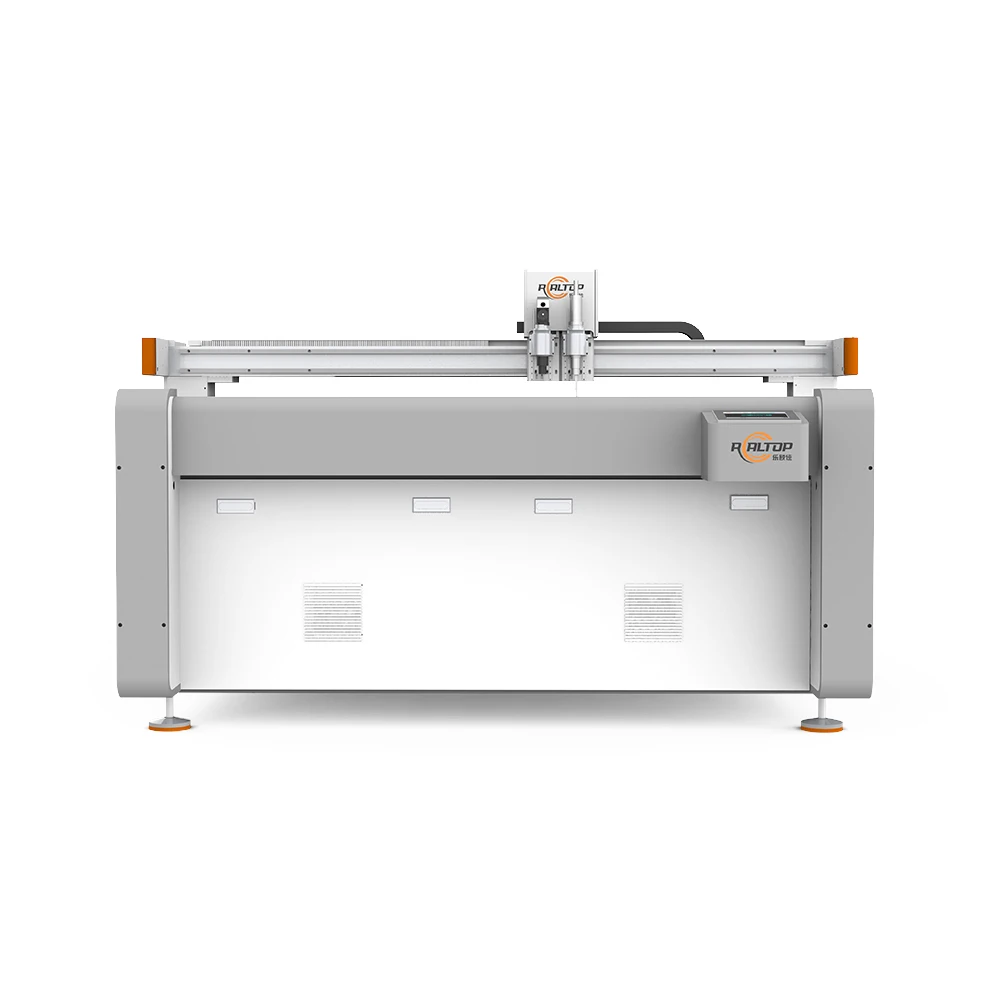
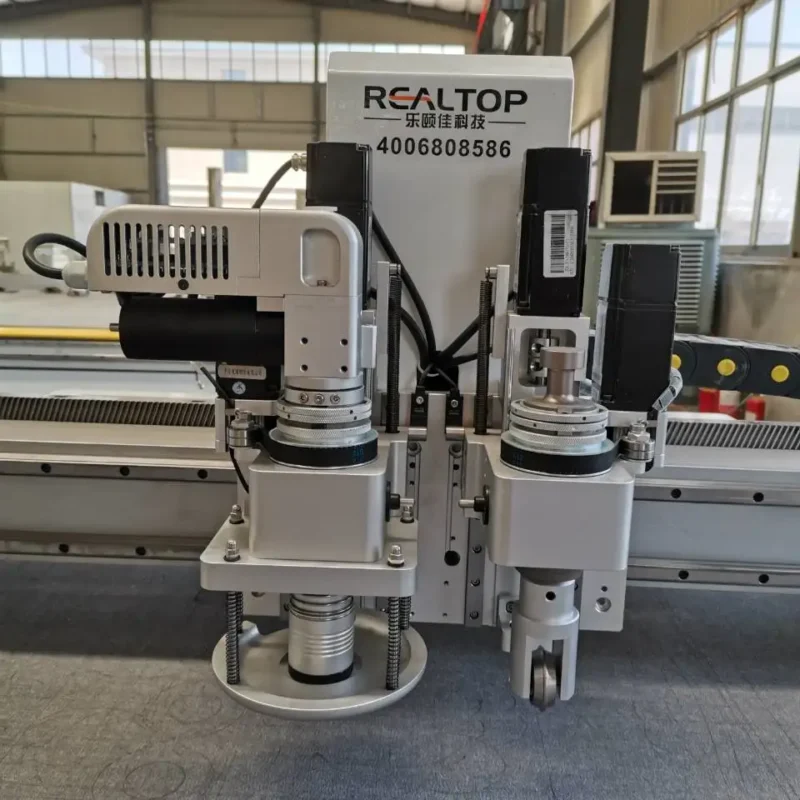
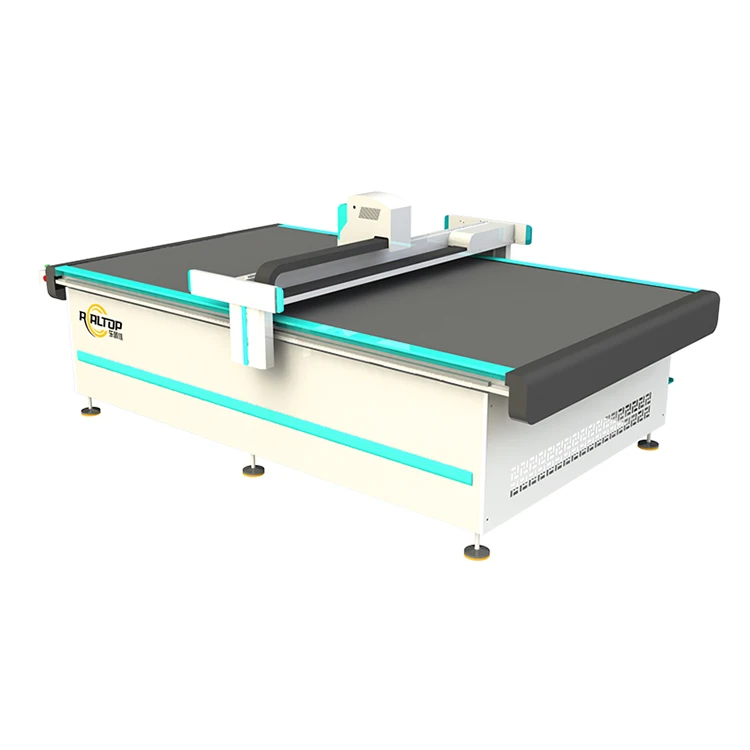
Tool Head and Table Configuration — specified per packaging material thickness and daily volume, with in-house design covering both knife and digital cutting technologies to match the method to the substrate rather than forcing one setup.
Technical Specifications
| Parameter | Value |
|---|---|
| Model | 1625 |
| Product Type | CNC Oscillating Knife Cutting Machine |
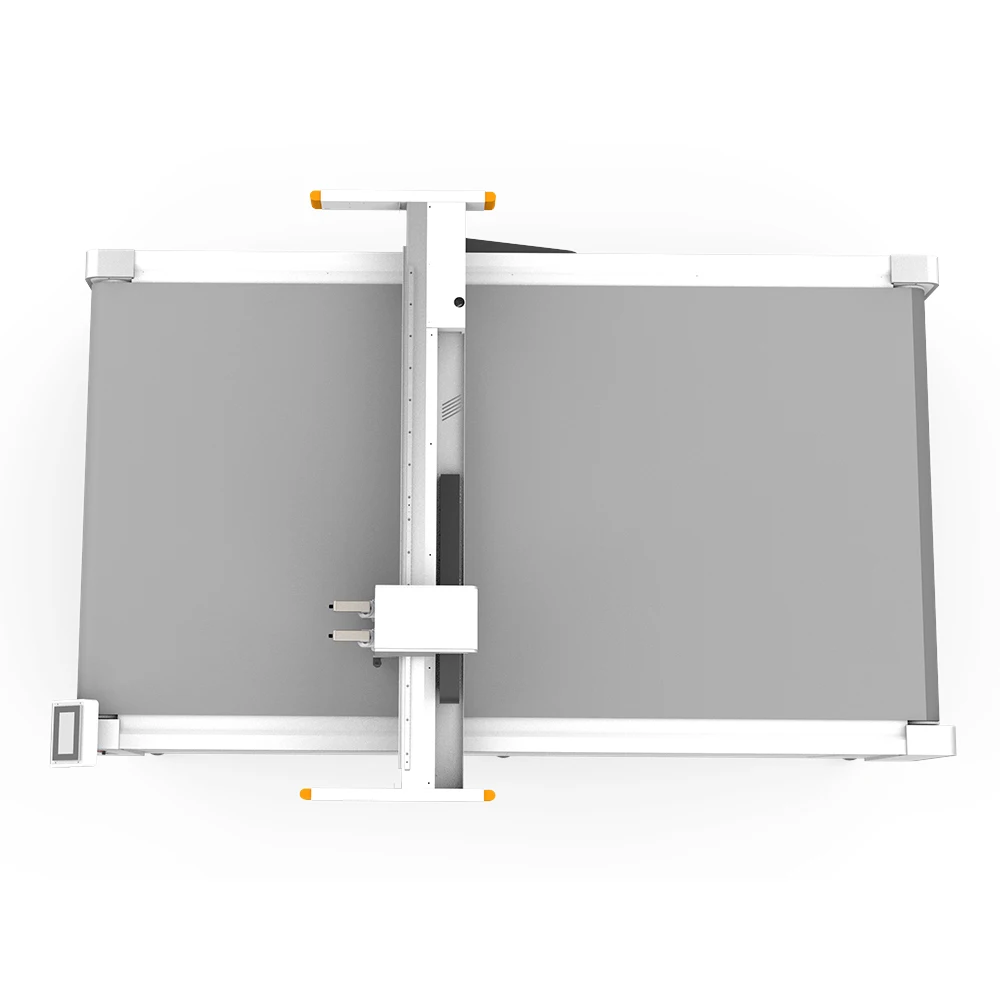
| Working Area | 1600×2500 mm |
| Cutting Speed | 0-1500 mm/s |
| Cutting Thickness | ≤ 40 mm (basis not stated in source — confirm material / density) |
| Cutting Accuracy | ±0.1 mm |
| Tool Head Options | Oscillating knife, Driven rotary knife, Creasing wheel, Kiss cutting tool, Pneumatic knife, Milling tool, V-groove knife |
| Vacuum Table | Aluminum bellows vacuum table |
| Vacuum Pump | 9 kW |
| Servo Drive Options | Panasonic, Delta, Dorna (source value — verify against manufacturer catalog) |
| Voltage Options | 110V, 220V, 380V (frequency not stated in source) |
| Profile Formats | PLT, DXF, AI, PDF |
| Control System | PLC control panel with optional display languages |
| Language Options | English, Russian, Italian, Chinese, custom languages available |
| Safety Device | Infrared sensor device and emergency stop device |
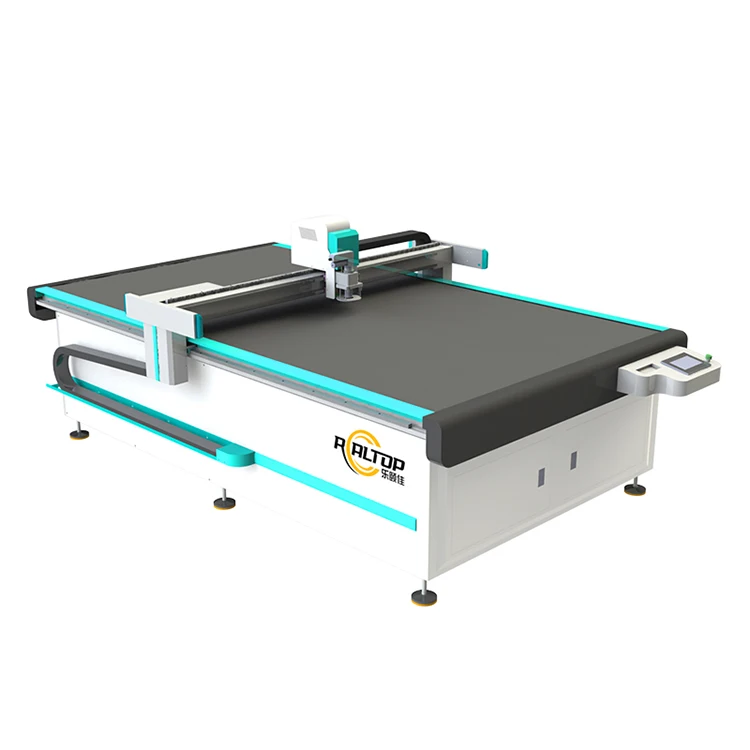
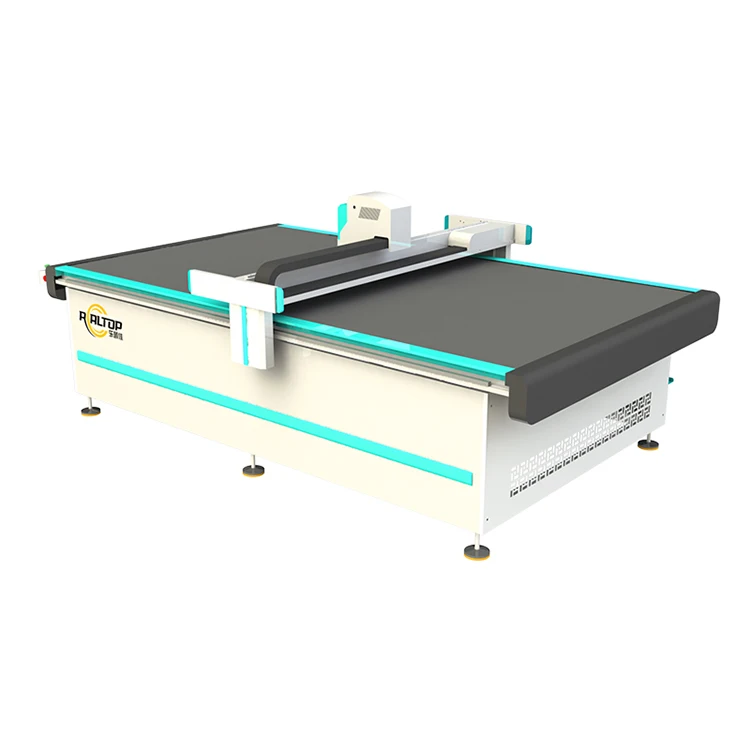
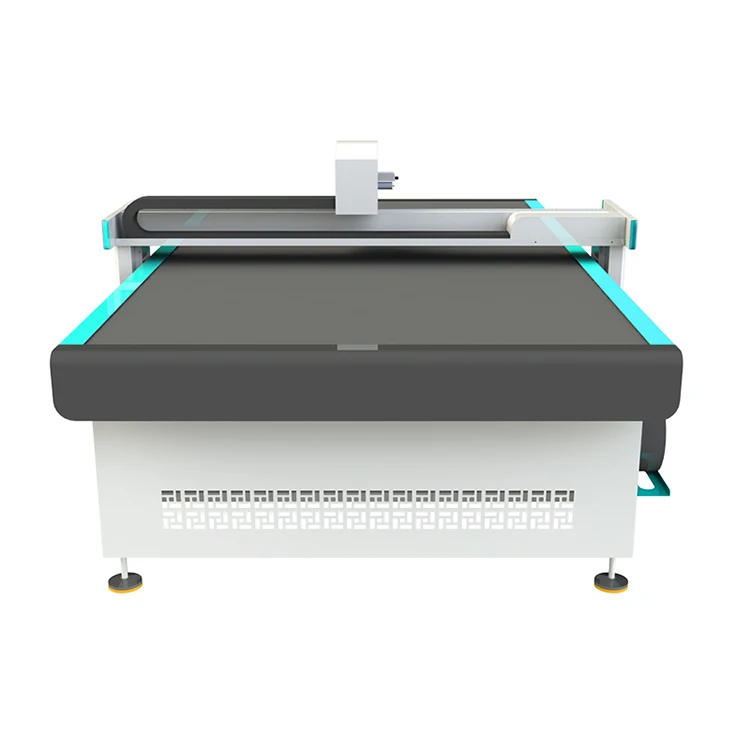
| Machine Size | 3300×2100×1350 mm |
Application Suitability
| Application | Material or Output |
|---|---|
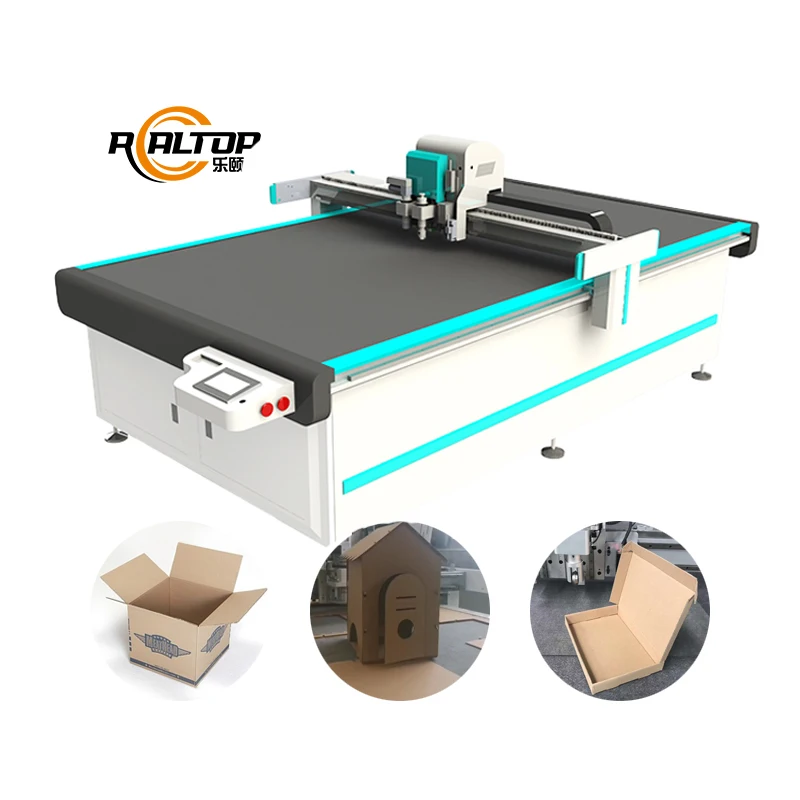
| Packaging sample making and carton prototyping | Corrugated cardboard (E-flute, B-flute, BC-flute), greyboard, cardstock |
| Short-run box production without die-cut molds | Art paper, specialty paper, adhesive-backed board |
| Foam and composite packaging fabrication | EVA foam, EPE foam, PU foam up to 40 mm |
| Protective insert and cushion cutting | Rubber mats, velvet/fleece fabric, non-woven fabric |
| Thin plastic and leather packaging components | PVC, PET sheets, leather, synthetic leather |
Why "1500 mm/s Cutting Speed" Can Mislead Packaging Buyers
Speed on a nameplate is not speed on your corrugated board at production quality.
I have watched packaging sample rooms chase maximum feed rate figures, only to find that on BC-flute corrugated the oscillating knife must slow down to keep the cut clean through the bottom liner. The 0-1500 mm/s range on this CNC oscillating knife cutting machine manufacturer specification is the mechanical travel limit, not a guaranteed throughput across every flute profile and board density. Thicker, denser substrates demand reduced speed to maintain the ±0.1 mm accuracy and avoid delamination at the flute tips. Buyers who match machine selection to their heaviest recurring material — not their lightest — avoid the surprise of mid-run quality drops [NEED_CITE: cutting speed versus material density on oscillating knife tables].
Matching the Tool Head to the Flute, Not Just the Machine
This 1625 platform carries seven interchangeable tool options: oscillating knife, driven rotary knife, creasing wheel, kiss cutting tool, pneumatic knife, milling tool, and V-groove knife. For E-flute and B-flute corrugated, an oscillating knife handles through-cuts cleanly, while the creasing wheel scores fold lines without crushing the flute structure. Greyboard and heavy cardstock often respond better to a driven rotary knife that slices rather than punches. The ability to swap heads on one table means a packaging sample room can cut, crease, and kiss-cut in a single setup without moving the sheet between stations.
Vacuum Hold-Down Where Small Carton Parts Need It Most
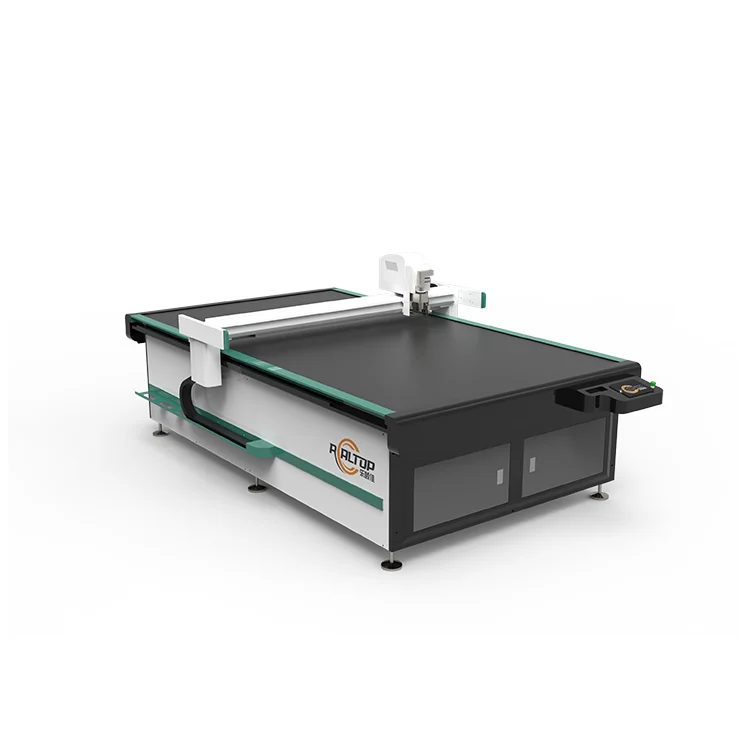
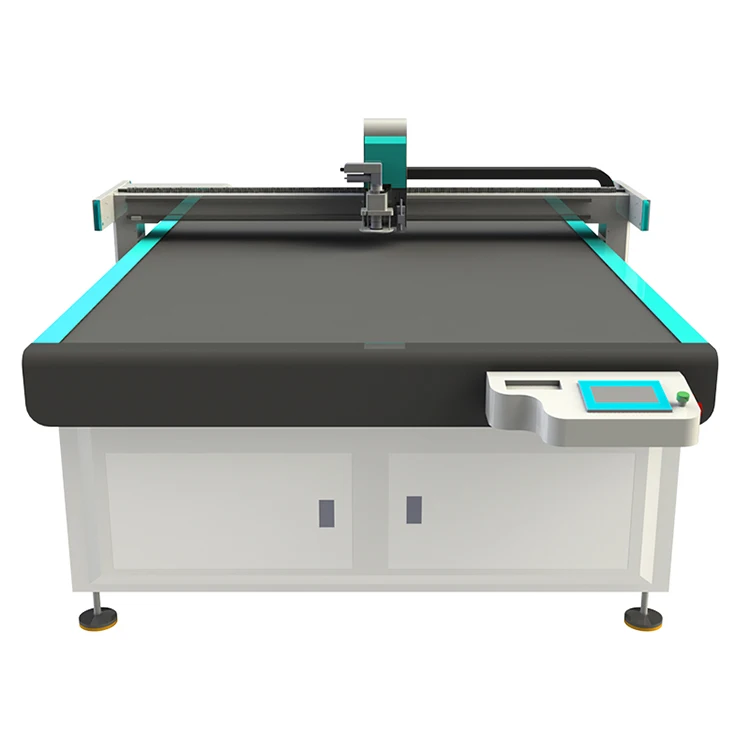
The aluminum bellows vacuum table paired with a 9 kW pump provides full-surface adsorption across the 1600×2500 mm working area. For packaging prototype work, this matters most when cutting small carton flaps, lock tabs, or ventilation cutouts where part geometry leaves minimal surface contact with the table. Insufficient vacuum zoning causes these small sections to lift during the final cut pass, producing ragged edges or pulling the sheet off-register [NEED_CITE: vacuum table zoning for small-part hold-down on digital cutting tables]. The bellows construction maintains high flatness under repeated vacuum cycles, which directly supports the ±0.1 mm accuracy claim across long production runs.
What the Specification Sheet Actually Means for Your Packaging Floor
The 1600×2500 mm working area accommodates most standard packaging sheet formats, allowing a full carton blank to be laid flat without repositioning mid-cut. The PLC control system with multi-language support — English, Russian, Italian, Chinese, plus custom options — reduces operator error when training teams across different facilities. File format compatibility with PLT, DXF, AI, and PDF means most packaging design software exports will import directly, though confirming this with your specific nesting workflow before order prevents costly file-conversion delays. The infrared sensor and emergency stop address the safety requirements common to packaging workshops where operators frequently load and unload sheets near the cutting head.
The Hidden Cost of Skipping a Sample Cut
One packaging converter I worked with ordered a flatbed cutter based on working area and speed specs alone. Their daily work involved BC-flute corrugated with adhesive-backed foam inserts. The machine arrived, but the specified tool head crushed the foam rather than shearing it, and the vacuum zoning left small insert shapes lifting off the table during the last pass. A sample cutting report on the buyer’s own corrugated or foam material before commitment would have surfaced both issues in the factory, not on the production floor [NEED_CITE: sample cutting validation before equipment purchase commitment].
Why Buyers Source This Platform Here
In-house design and production span both knife and digital cutting technologies, so a packaging buyer can match the cutting method to the board weight and flute type rather than forcing a single blade through every substrate. Tool head and table configurations are specified per material thickness and daily volume, not quoted as a fixed package. CCD camera positioning is available for printed contour work when packaging requires cut-to-print alignment. Software compatibility — covering file formats and nesting workflows — is confirmed before order rather than discovered during commissioning. Voltage, plug type, and control language are locked in pre-shipment, with 110V, 220V, and 380V options and language panels set to the operator’s primary language.
Documentation & Verification
- Machine specification sheet matching the confirmed tool head and vacuum table configuration
- Electrical schematic with voltage and frequency locked to the target market standard
- Sample cutting report on buyer’s own corrugated or foam substrate before dispatch
- Software licence and file format compatibility note for PLT, DXF, AI, PDF workflows
- Factory test record verifying ±0.1 mm accuracy on the confirmed sheet format
- Packing photographs documenting machine condition prior to container loading
Installation, Commissioning & Support
- Floor space planning around the 3300×2100×1350 mm machine footprint with operator clearance
- Dedicated circuit matching the confirmed 110V, 220V, or 380V supply with correct frequency
- Vacuum pump commissioning and aluminum bellows table flatness verification on-site
- PLC control panel language setup and safety sensor calibration before first production run
- Operator training on tool head changeover across oscillating, rotary, and creasing options
- Spare parts list covering blades, creasing wheels, and vacuum seals with reorder codes
Before You Send an Inquiry
Packaging buyers get the most accurate configuration recommendation by providing the specific flute profile or board grade, maximum sheet thickness, and typical daily cut volume. Include your target voltage and frequency, preferred control language, and whether your existing design files use PLT, DXF, AI, or PDF format. If your workflow depends on a particular nesting or box-structure design software, name it so file compatibility can be verified before quotation.
Frequently Asked Questions
Q: Which tool head should I run for corrugated cardboard versus greyboard?
A: Corrugated E-flute and B-flute typically cut cleanly with an oscillating knife, while BC-flute may benefit from a pneumatic knife for deeper penetration. Greyboard and dense cardstock respond better to a driven rotary knife that slices rather than punches. Creasing wheels score fold lines on both materials without crushing the internal structure. Confirm with a sample cut on your actual board grade.
Q: Will the vacuum table hold small carton sample parts without lifting?
A: The aluminum bellows vacuum table with the 9 kW pump delivers full-surface adsorption across the 1600×2500 mm area. Small flaps and lock tabs depend on vacuum zoning density — ask for the zone layout and request a test cut on your smallest recurring part geometry to verify hold-down before committing to the order.
Q: Are voltage, plug, and control language confirmed before shipment?
A: Yes. The platform supports 110V, 220V, and 380V options with frequency confirmed for your market. Control language is set from available options — English, Russian, Italian, Chinese, or custom — and locked in during the specification confirmation stage before production begins, so the machine arrives ready for your operators.
Q: Can the software import my existing DXF, AI, or PDF box templates?
A: The system accepts PLT, DXF, AI, and PDF profile formats. Before order, share a sample file from your packaging design or nesting software so the factory verifies import accuracy, layer recognition, and cut-path interpretation. This step prevents workflow delays during commissioning on your floor.
Q: What is the real cutting thickness limit for BC-flute versus EVA foam?
A: The specification lists ≤ 40 mm as the cutting thickness capacity, but the practical limit depends on material density and the tool head selected. BC-flute corrugated, EVA foam, and PU foam all behave differently under the oscillating knife. Request a sample cutting report on your specific material to confirm achievable depth and edge quality before finalizing the configuration.
Tool Head and Table Configuration — specified per packaging material thickness and daily volume, with in-house design covering both knife and digital cutting technologies to match the method to the substrate rather than forcing one setup.
Technical Specifications
| Parameter | Value |
|---|---|
| Model | 1625 |
| Product Type | CNC Oscillating Knife Cutting Machine |
| Working Area | 1600×2500 mm |
| Cutting Speed | 0-1500 mm/s |
| Cutting Thickness | ≤ 40 mm (basis not stated in source — confirm material / density) |
| Cutting Accuracy | ±0.1 mm |
| Tool Head Options | Oscillating knife, Driven rotary knife, Creasing wheel, Kiss cutting tool, Pneumatic knife, Milling tool, V-groove knife |
| Vacuum Table | Aluminum bellows vacuum table |
| Vacuum Pump | 9 kW |
| Servo Drive Options | Panasonic, Delta, Dorna (source value — verify against manufacturer catalog) |
| Voltage Options | 110V, 220V, 380V (frequency not stated in source) |
| Profile Formats | PLT, DXF, AI, PDF |
| Control System | PLC control panel with optional display languages |
| Language Options | English, Russian, Italian, Chinese, custom languages available |
| Safety Device | Infrared sensor device and emergency stop device |
| Machine Size | 3300×2100×1350 mm |
Application Suitability
| Application | Material or Output |
|---|---|
| Packaging sample making and carton prototyping | Corrugated cardboard (E-flute, B-flute, BC-flute), greyboard, cardstock |
| Short-run box production without die-cut molds | Art paper, specialty paper, adhesive-backed board |
| Foam and composite packaging fabrication | EVA foam, EPE foam, PU foam up to 40 mm |
| Protective insert and cushion cutting | Rubber mats, velvet/fleece fabric, non-woven fabric |
| Thin plastic and leather packaging components | PVC, PET sheets, leather, synthetic leather |
Why "1500 mm/s Cutting Speed" Can Mislead Packaging Buyers
Speed on a nameplate is not speed on your corrugated board at production quality.
I have watched packaging sample rooms chase maximum feed rate figures, only to find that on BC-flute corrugated the oscillating knife must slow down to keep the cut clean through the bottom liner. The 0-1500 mm/s range on this CNC oscillating knife cutting machine manufacturer specification is the mechanical travel limit, not a guaranteed throughput across every flute profile and board density. Thicker, denser substrates demand reduced speed to maintain the ±0.1 mm accuracy and avoid delamination at the flute tips. Buyers who match machine selection to their heaviest recurring material — not their lightest — avoid the surprise of mid-run quality drops [NEED_CITE: cutting speed versus material density on oscillating knife tables].
Matching the Tool Head to the Flute, Not Just the Machine
This 1625 platform carries seven interchangeable tool options: oscillating knife, driven rotary knife, creasing wheel, kiss cutting tool, pneumatic knife, milling tool, and V-groove knife. For E-flute and B-flute corrugated, an oscillating knife handles through-cuts cleanly, while the creasing wheel scores fold lines without crushing the flute structure. Greyboard and heavy cardstock often respond better to a driven rotary knife that slices rather than punches. The ability to swap heads on one table means a packaging sample room can cut, crease, and kiss-cut in a single setup without moving the sheet between stations.
Vacuum Hold-Down Where Small Carton Parts Need It Most
The aluminum bellows vacuum table paired with a 9 kW pump provides full-surface adsorption across the 1600×2500 mm working area. For packaging prototype work, this matters most when cutting small carton flaps, lock tabs, or ventilation cutouts where part geometry leaves minimal surface contact with the table. Insufficient vacuum zoning causes these small sections to lift during the final cut pass, producing ragged edges or pulling the sheet off-register [NEED_CITE: vacuum table zoning for small-part hold-down on digital cutting tables]. The bellows construction maintains high flatness under repeated vacuum cycles, which directly supports the ±0.1 mm accuracy claim across long production runs.
What the Specification Sheet Actually Means for Your Packaging Floor
The 1600×2500 mm working area accommodates most standard packaging sheet formats, allowing a full carton blank to be laid flat without repositioning mid-cut. The PLC control system with multi-language support — English, Russian, Italian, Chinese, plus custom options — reduces operator error when training teams across different facilities. File format compatibility with PLT, DXF, AI, and PDF means most packaging design software exports will import directly, though confirming this with your specific nesting workflow before order prevents costly file-conversion delays. The infrared sensor and emergency stop address the safety requirements common to packaging workshops where operators frequently load and unload sheets near the cutting head.
The Hidden Cost of Skipping a Sample Cut
One packaging converter I worked with ordered a flatbed cutter based on working area and speed specs alone. Their daily work involved BC-flute corrugated with adhesive-backed foam inserts. The machine arrived, but the specified tool head crushed the foam rather than shearing it, and the vacuum zoning left small insert shapes lifting off the table during the last pass. A sample cutting report on the buyer’s own corrugated or foam material before commitment would have surfaced both issues in the factory, not on the production floor [NEED_CITE: sample cutting validation before equipment purchase commitment].
Why Buyers Source This Platform Here
In-house design and production span both knife and digital cutting technologies, so a packaging buyer can match the cutting method to the board weight and flute type rather than forcing a single blade through every substrate. Tool head and table configurations are specified per material thickness and daily volume, not quoted as a fixed package. CCD camera positioning is available for printed contour work when packaging requires cut-to-print alignment. Software compatibility — covering file formats and nesting workflows — is confirmed before order rather than discovered during commissioning. Voltage, plug type, and control language are locked in pre-shipment, with 110V, 220V, and 380V options and language panels set to the operator’s primary language.
Documentation & Verification
- Machine specification sheet matching the confirmed tool head and vacuum table configuration
- Electrical schematic with voltage and frequency locked to the target market standard
- Sample cutting report on buyer’s own corrugated or foam substrate before dispatch
- Software licence and file format compatibility note for PLT, DXF, AI, PDF workflows
- Factory test record verifying ±0.1 mm accuracy on the confirmed sheet format
- Packing photographs documenting machine condition prior to container loading
Installation, Commissioning & Support
- Floor space planning around the 3300×2100×1350 mm machine footprint with operator clearance
- Dedicated circuit matching the confirmed 110V, 220V, or 380V supply with correct frequency
- Vacuum pump commissioning and aluminum bellows table flatness verification on-site
- PLC control panel language setup and safety sensor calibration before first production run
- Operator training on tool head changeover across oscillating, rotary, and creasing options
- Spare parts list covering blades, creasing wheels, and vacuum seals with reorder codes
Before You Send an Inquiry
Packaging buyers get the most accurate configuration recommendation by providing the specific flute profile or board grade, maximum sheet thickness, and typical daily cut volume. Include your target voltage and frequency, preferred control language, and whether your existing design files use PLT, DXF, AI, or PDF format. If your workflow depends on a particular nesting or box-structure design software, name it so file compatibility can be verified before quotation.
Frequently Asked Questions
Q: Which tool head should I run for corrugated cardboard versus greyboard?
A: Corrugated E-flute and B-flute typically cut cleanly with an oscillating knife, while BC-flute may benefit from a pneumatic knife for deeper penetration. Greyboard and dense cardstock respond better to a driven rotary knife that slices rather than punches. Creasing wheels score fold lines on both materials without crushing the internal structure. Confirm with a sample cut on your actual board grade.
Q: Will the vacuum table hold small carton sample parts without lifting?
A: The aluminum bellows vacuum table with the 9 kW pump delivers full-surface adsorption across the 1600×2500 mm area. Small flaps and lock tabs depend on vacuum zoning density — ask for the zone layout and request a test cut on your smallest recurring part geometry to verify hold-down before committing to the order.
Q: Are voltage, plug, and control language confirmed before shipment?
A: Yes. The platform supports 110V, 220V, and 380V options with frequency confirmed for your market. Control language is set from available options — English, Russian, Italian, Chinese, or custom — and locked in during the specification confirmation stage before production begins, so the machine arrives ready for your operators.
Q: Can the software import my existing DXF, AI, or PDF box templates?
A: The system accepts PLT, DXF, AI, and PDF profile formats. Before order, share a sample file from your packaging design or nesting software so the factory verifies import accuracy, layer recognition, and cut-path interpretation. This step prevents workflow delays during commissioning on your floor.
Q: What is the real cutting thickness limit for BC-flute versus EVA foam?
A: The specification lists ≤ 40 mm as the cutting thickness capacity, but the practical limit depends on material density and the tool head selected. BC-flute corrugated, EVA foam, and PU foam all behave differently under the oscillating knife. Request a sample cutting report on your specific material to confirm achievable depth and edge quality before finalizing the configuration.
商品评价
There are no reviews yet.