

Fast Delivery
Quick, reliable shipping to any location.

Free & easy returns
Return this item by mail or in store within 90 days for a full refund.
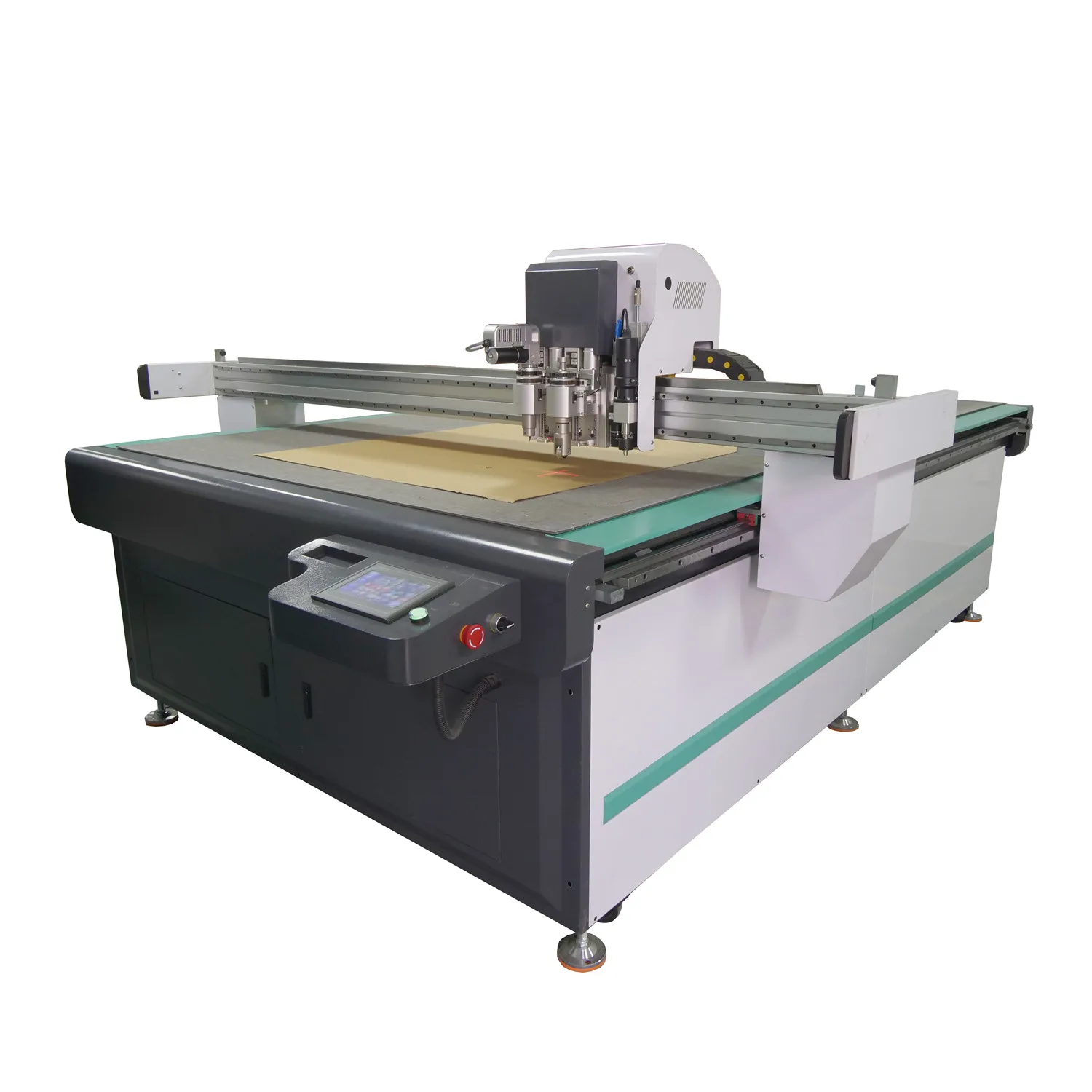
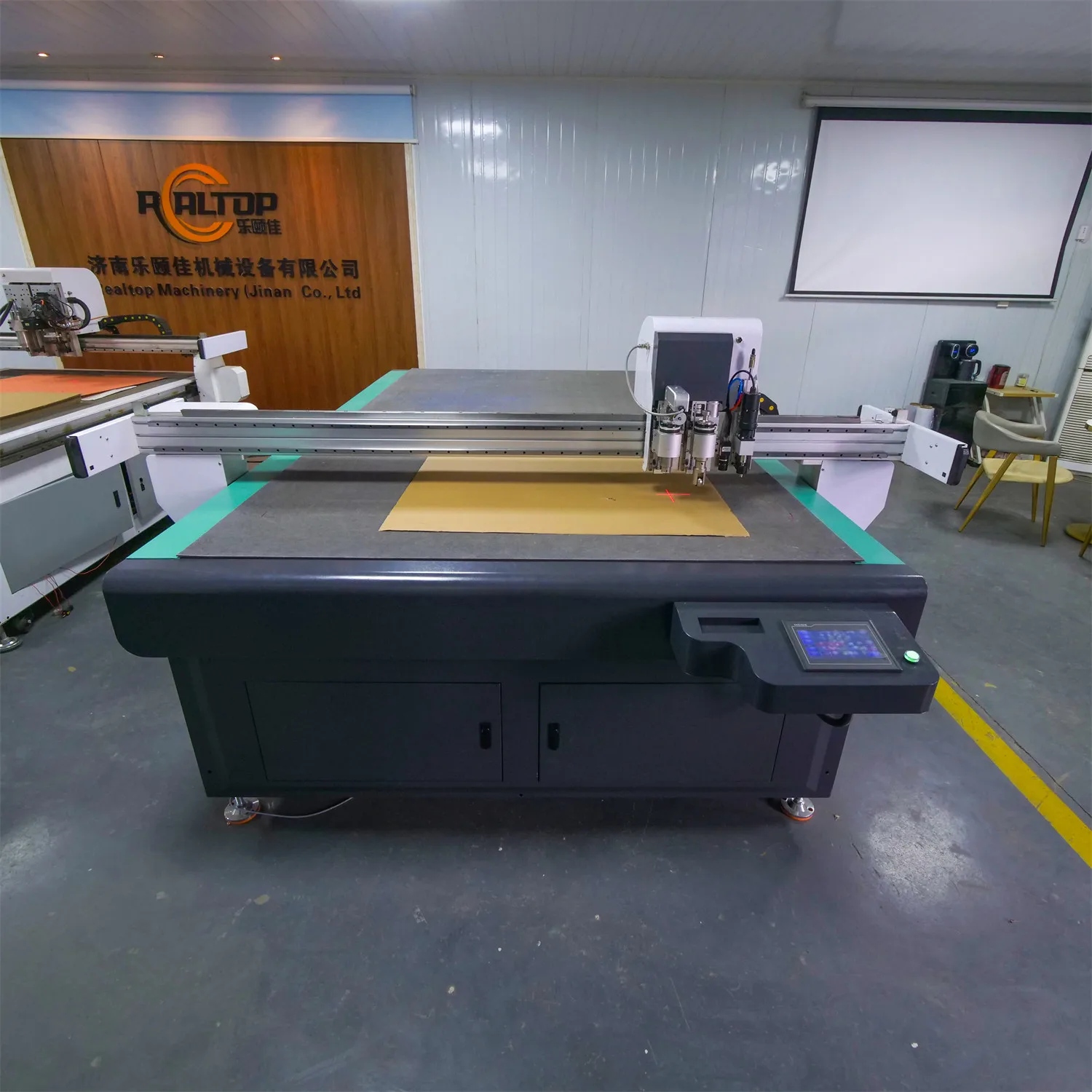
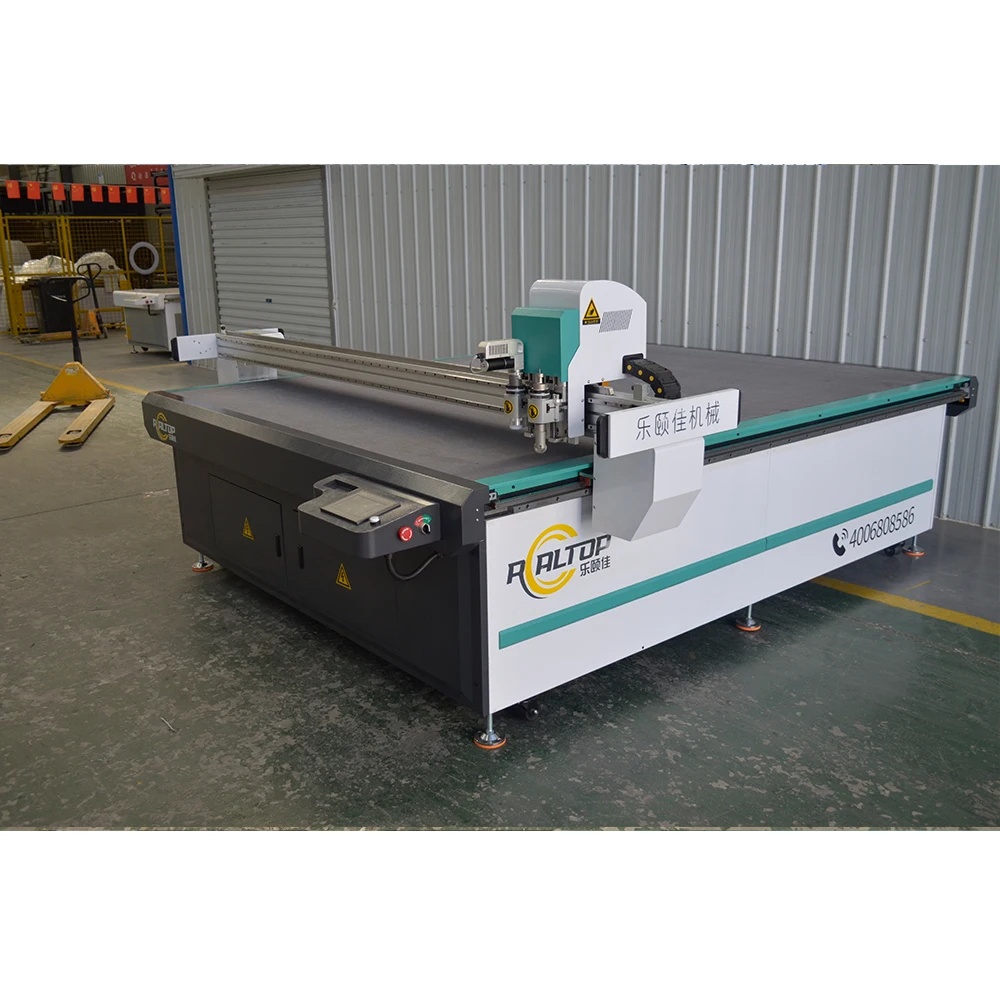
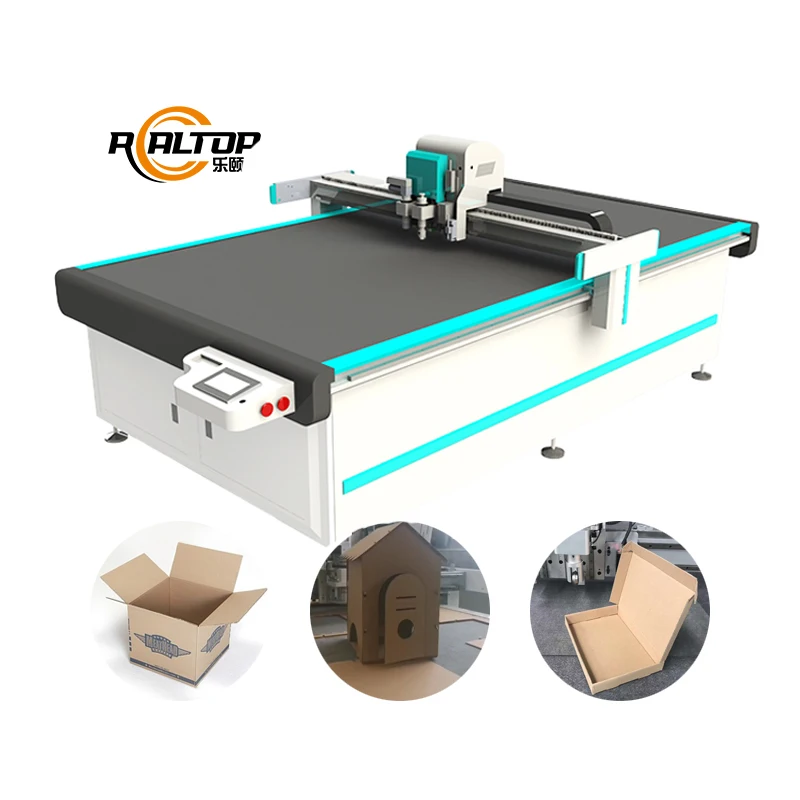
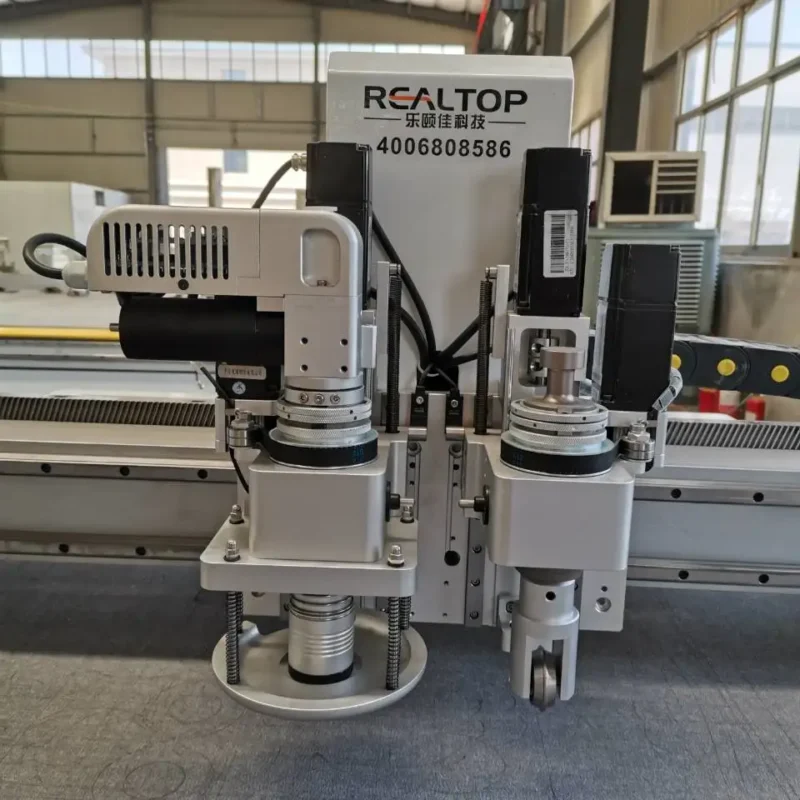
Tool Head Matched to Material — the oscillating knife, drag knife and creasing wheel options are specified per stock type before order, preventing ragged edges on corrugated board or crushed foam on sample prototypes.
Technical Specifications
| Parameter | Value |
|---|---|
| Model | RT-D2516 / RT-S2516 |
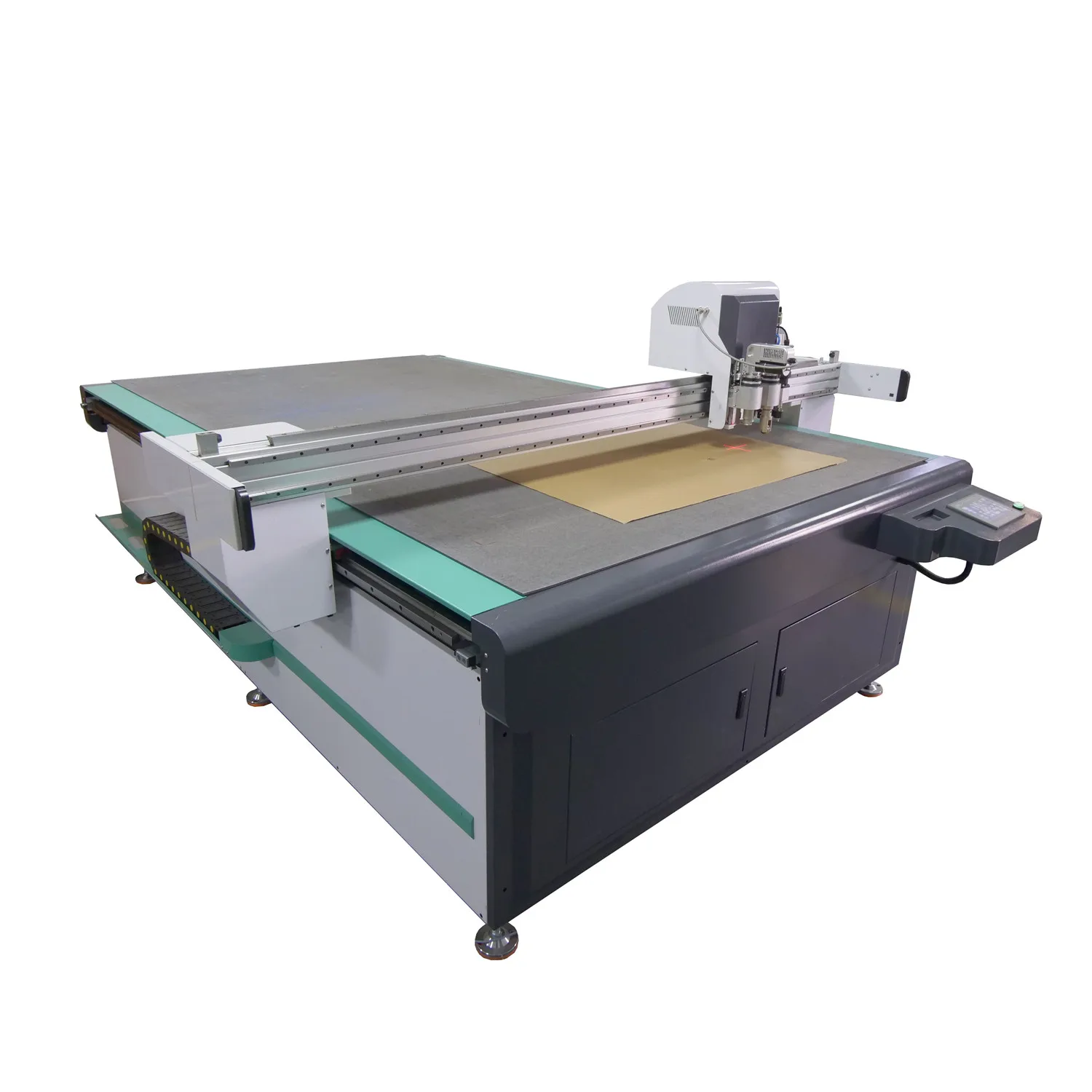
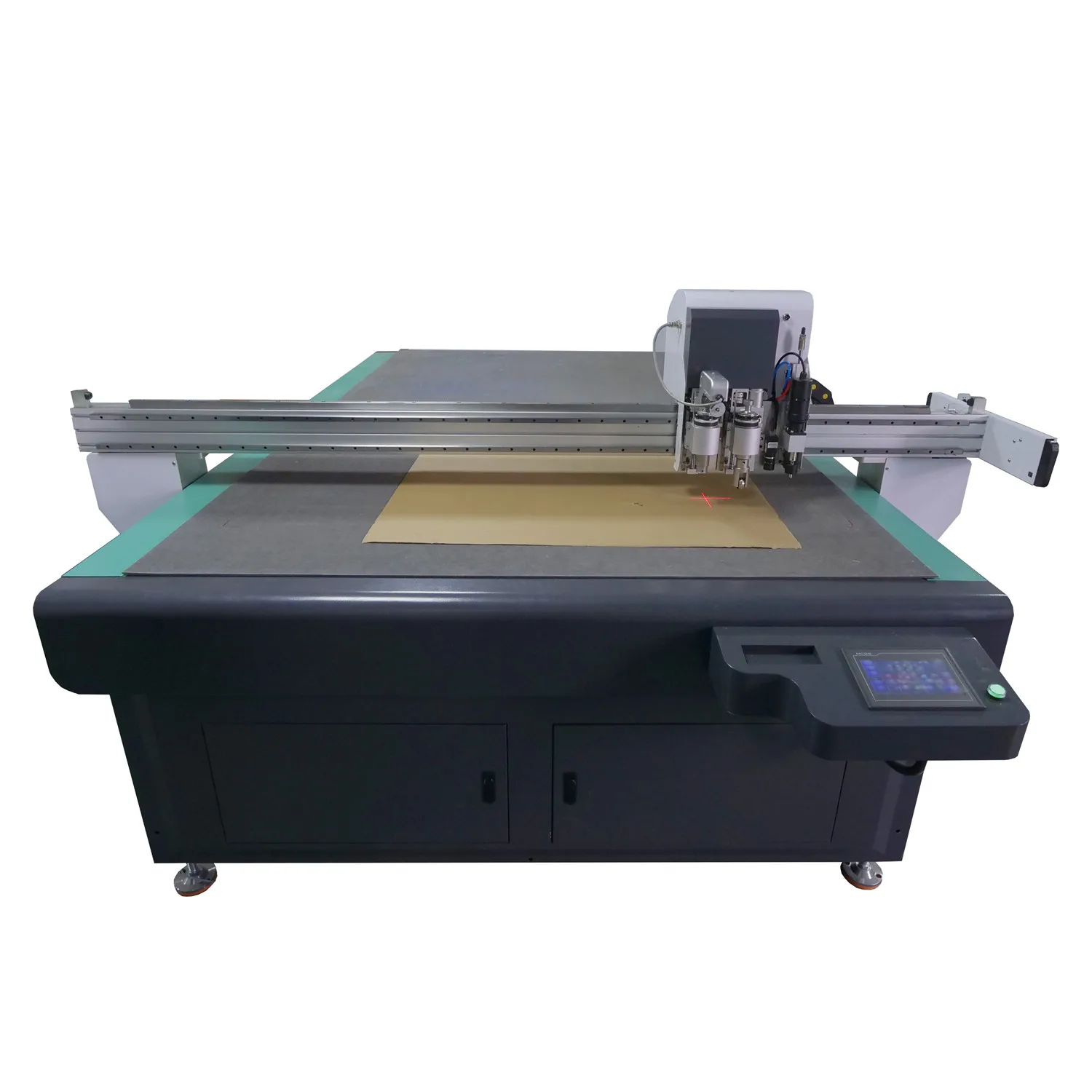
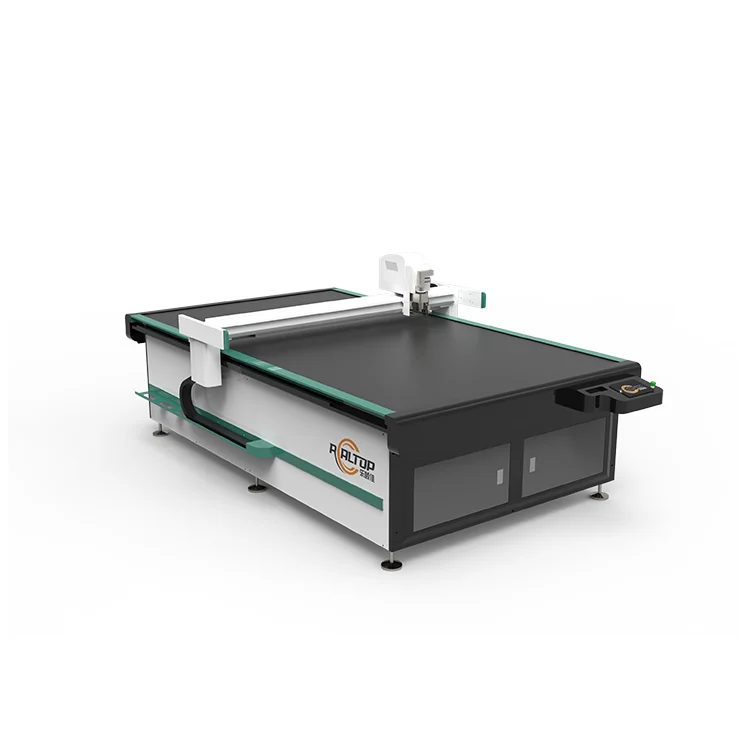
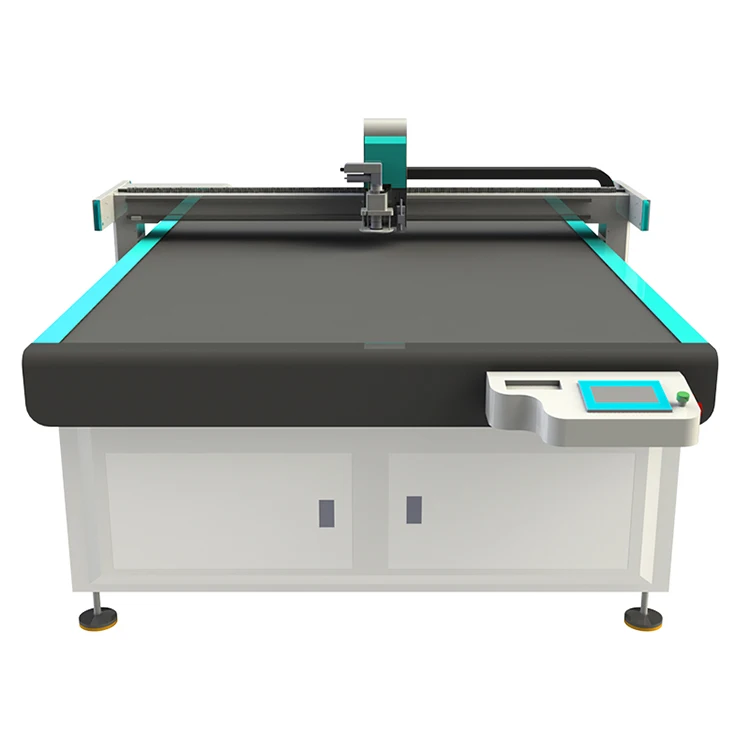
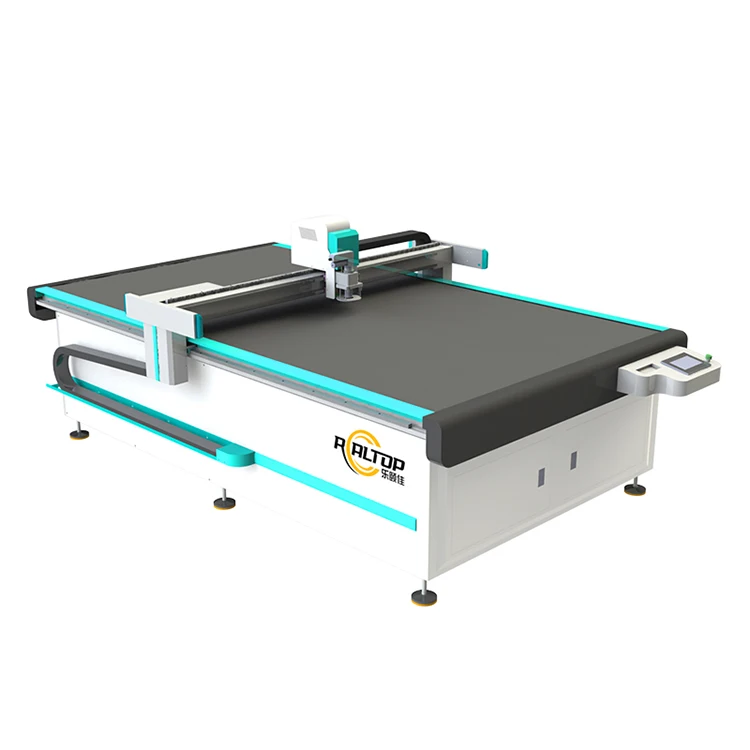
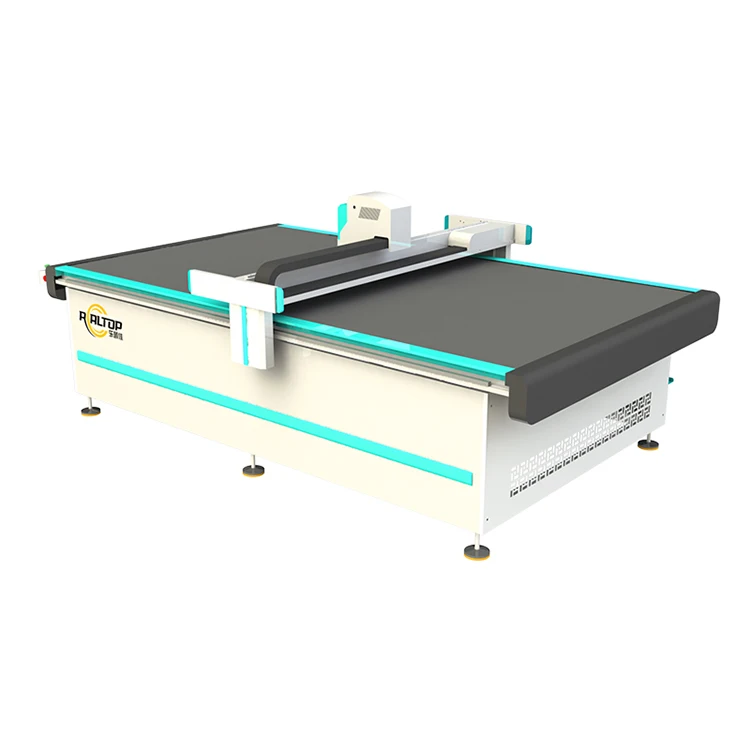
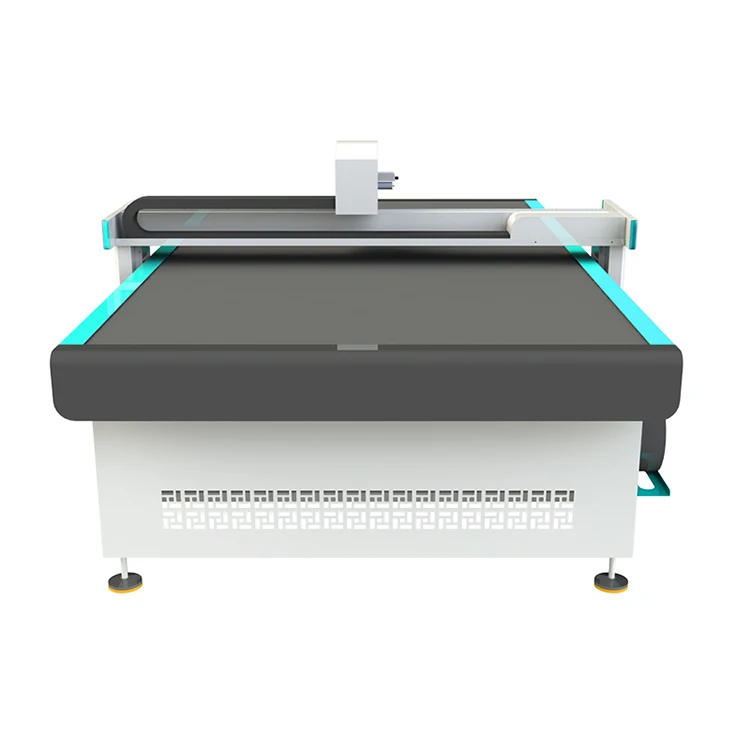
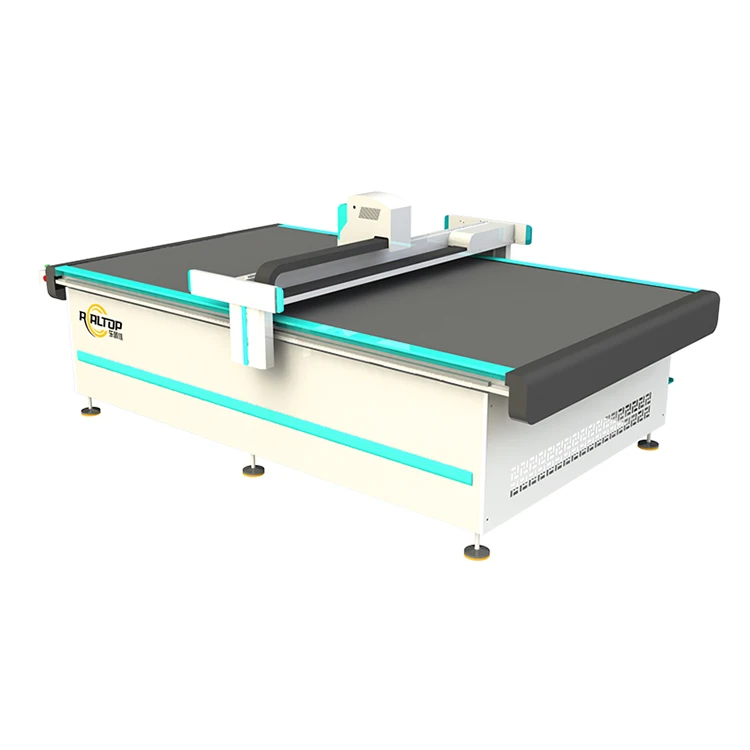
| Product Type | CNC Oscillating Knife Flatbed Cutting Machine |
| Working Area | 1600 × 2500 mm |
| Machine Dimensions | 3450 × 2300 × 1250 mm |
| Rated Power | 9 kW |
| Vacuum Pump Power | 7.5 kW |
| Table Construction | Aluminum alloy honeycomb vacuum adsorption platform |
| Tool Head | Swiss imported knife with full cut, half cut and cursor location |
| Servo Motor | Delta servo motor and drivers |
| Guide Rail | Taiwan Hiwin linear rail |
| Repeated Accuracy | ≤0.1 mm |
| Translational Velocity | 800–2000 mm/s |
| Cutting Speed | 200–800 mm/s (varies with material type and density) |
| Cutting Thickness | Up to 100 mm (basis not stated in source — depends on material density and blade configuration) |
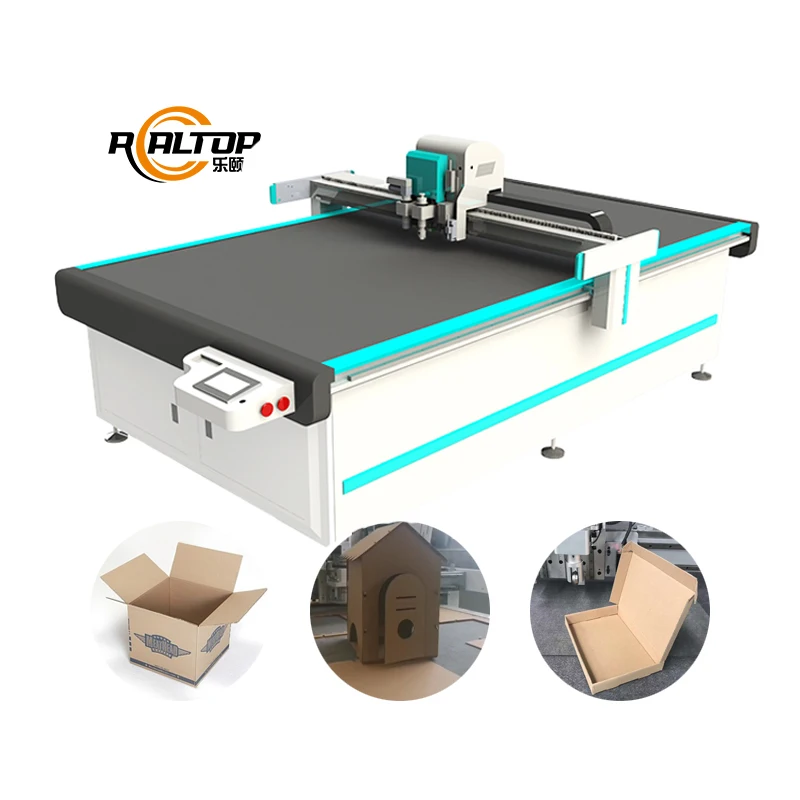
| Compatible Materials | Cardboard, packaging carton, leather, PVC, soft glass, silicon, rubber, sticker, sponge composite leather, clothing flexible material |
| Instruction Format | HP-GL compatible |
| Voltage | 380V ± 10% |
| Software | Professional carton nesting software with multi-format file import |
| Language Options | English, Russian, Italian, Chinese (custom languages available) |
| Safety Devices | Infrared sensors, emergency stop |
| Certification | CE declaration where applicable |
Application Suitability
| Application | Material or Output |
|---|---|
| Carton and packaging sample making | Corrugated cardboard, grey board, honeycomb paper for electrical carton, express box and gift box prototypes |
| Advertising and signage production | PVC foam board, sticker vinyl, KT board for billboards, business cards and display tags |
| Leather goods and footwear prototyping | Natural leather, PU synthetic, sponge composite leather for upper and sole pattern cutting |
| Gasket and flexible material cutting | Rubber sheet, silicon, soft glass for industrial seal and automotive interior trim |
| Flexible composite processing | Multi-layer fabric and foam laminates for upholstery and protective padding |
Why Specifying the Cutting Head Matters More Than Working Area Alone
A packaging CNC cutting machine specified only on table size often arrives with a single oscillating knife that cannot crease carton folds or drag-cut thin vinyl without lifting the stock. Matching the tool head to the material before order prevents delivery delays caused by ragged edges and mis-scored fold lines. I once watched a sample room operator spend an entire afternoon re-cutting gift box prototypes because the machine had no creasing wheel — every fold cracked the coated surface. That operator’s daily throughput dropped to roughly half of what the supplier had quoted. These mismatches show up the moment the first production sheet hits the table [NEED_CITE: importance of tool head selection for carton sample making].
Knife Selection Across Packaging Stock Types
The Swiss imported oscillating knife on this flatbed handles corrugated board and thick foam by vibrating through the stock at controlled depth. For thinner vinyl and sticker films, a drag knife option follows the contour without dragging the material edge. Buyers running both carton samples and adhesive signage on the same table need both heads configured from the start, since retrofitting later means re-calibrating the Z-axis zero and re-running the nesting software profiles. A CNC oscillating knife cutting machine for sale configured with only one head limits the range of jobs a sample room can accept.
Vacuum Hold-Down and Small Part Behavior
The 7.5 kW vacuum pump feeds an aluminum honeycomb table that zones the suction across the working area. When cutting small carton inserts or narrow sticker strips, a full-sheet vacuum layout loses grip near the edges, letting lightweight stock lift into the knife path. Zoned vacuum control directs suction only under the cutting region so the stock stays flat even as surrounding material is cleared. This matters for packaging sample makers who nest dozens of small dieline shapes on a single board and need every piece held until the final cut completes [NEED_CITE: vacuum zoning requirements for small part nesting].
Reading the Specs That Affect Daily Output
The Delta servo motors paired with Taiwan Hiwin linear rails deliver repeated positioning within 0.1 mm, which means die-line crease lines land on the same spot across hundreds of sample runs — critical when a gift box prototype must assemble with friction-fit accuracy. Cutting speed ranges from 200 to 800 mm/s depending on whether the head is scoring thin grey board or oscillating through 20 mm EVA foam. The HP-GL compatible instruction format lets the machine import files directly from common packaging CAD systems without re-drawing contours. Professional carton nesting software arranges dieline shapes to minimize board waste, and custom language support means the operator in any export market reads the interface in their own language rather than guessing at translated menus.
What Happens When Configuration Is Left to Chance
A buyer who skips the sample cutting step may discover that the standard oscillating blade leaves a compressed edge on high-density PVC foam, producing a visible step on the finished signage panel. Small carton pieces with intricate cut-outs can lift off the table mid-cut if the vacuum zone is not matched to the part footprint. Software that does not recognize the buyer’s native CAD file format forces the design team to redraw every dieline manually, adding hours to each sample batch [NEED_CITE: file format compatibility in packaging CAD workflows]. These issues surface only after the machine is installed and under production pressure.
Why Buyers Source This Range Here
In-house design covers both the knife cutting platform and the vacuum table layout, so the configuration is adjusted to the buyer’s stock sizes rather than offered as a fixed catalogue item. Every order is tested on the buyer’s own material — cardboard, leather or foam — and a sample cutting report accompanies the shipment. The tool head combination is specified per job profile, meaning a packaging sample maker gets a creasing wheel and oscillating knife while a signage producer receives a drag knife and CCD camera option. Voltage, plug type and control language are confirmed before production starts, so the machine arrives ready for the local workshop without rewiring or re-flashing the controller. CE documentation is supplied where the destination market requires it.
Documentation & Verification
- Machine specification sheet listing every tool head and vacuum zone in the configuration
- Sample cutting report produced on buyer’s own carton stock before dispatch
- Electrical schematic with confirmed voltage and plug type for destination market
- Software licence key and file format compatibility note matching buyer’s CAD workflow
- Factory test record showing repeated accuracy and cutting speed on specified material
- CE declaration included where applicable for import compliance
Installation, Commissioning & Support
- 3450 × 2300 mm footprint requires level concrete floor with clearance for board loading on both long sides
- 380V ± 10% three-phase supply with dedicated 9 kW circuit and earth bonding at the control cabinet
- Machine ships as a single assembled frame; vacuum pump connects on site to the honeycomb table manifold
- First-run calibration includes Z-axis zero setting for each tool head against the buyer’s actual stock thickness
- Operator training covers nesting software import, vacuum zone selection and blade depth adjustment for each material
- Spare blade and creasing wheel kit supplied with recommended replacement intervals based on material abrasiveness
Before You Request a Quote
Send the exact material type, thickness and maximum sheet dimensions you plan to run, along with the daily volume of sample cuts or production pieces. Specify the local voltage, frequency and plug type, and note the preferred control language. If your design team works in a specific CAD format, share a sample file so we can confirm software compatibility and nesting accuracy before the order goes to production.
Frequently Asked Questions
Q: How do I choose between oscillating knife, drag knife and creasing wheel for my packaging stock?
A: Oscillating knives cut thick corrugated board and foam by vibrating through the material. Drag knives trace thin vinyl and sticker film without lifting the edge. A creasing wheel scores fold lines on carton without cutting through. Tell us the material types and thicknesses you run, and the tool head combination is specified before order so every job in your sample room is covered.
Q: My dieline shapes are small — will the vacuum table hold them flat during cutting?
A: The aluminum honeycomb table is divided into vacuum zones. When small carton inserts or narrow sticker strips are nested, only the active zone under the cutting path is engaged, keeping suction concentrated under each part. Share the smallest piece dimension from your typical nesting layout so the zone configuration is matched before build.
Q: What file formats does the carton nesting software accept?
A: The software supports HP-GL compatible output and imports common packaging CAD formats including DXF and PLT. Before order, send a sample file from your existing design system and we will run it through the nesting engine, then supply a compatibility note confirming the import workflow and any conversion steps needed.
Q: Can the voltage and control language be set for our local market before shipment?
A: Voltage is confirmed at order stage — the standard 380V ± 10% supply can be adjusted where local grids differ. Control language options include English, Russian, Italian and Chinese, with custom languages available. The plug type, circuit rating and operator manual language are all locked in before the machine enters assembly so no on-site rewiring is required.
Tool Head Matched to Material — the oscillating knife, drag knife and creasing wheel options are specified per stock type before order, preventing ragged edges on corrugated board or crushed foam on sample prototypes.
Technical Specifications
| Parameter | Value |
|---|---|
| Model | RT-D2516 / RT-S2516 |
| Product Type | CNC Oscillating Knife Flatbed Cutting Machine |
| Working Area | 1600 × 2500 mm |
| Machine Dimensions | 3450 × 2300 × 1250 mm |
| Rated Power | 9 kW |
| Vacuum Pump Power | 7.5 kW |
| Table Construction | Aluminum alloy honeycomb vacuum adsorption platform |
| Tool Head | Swiss imported knife with full cut, half cut and cursor location |
| Servo Motor | Delta servo motor and drivers |
| Guide Rail | Taiwan Hiwin linear rail |
| Repeated Accuracy | ≤0.1 mm |
| Translational Velocity | 800–2000 mm/s |
| Cutting Speed | 200–800 mm/s (varies with material type and density) |
| Cutting Thickness | Up to 100 mm (basis not stated in source — depends on material density and blade configuration) |
| Compatible Materials | Cardboard, packaging carton, leather, PVC, soft glass, silicon, rubber, sticker, sponge composite leather, clothing flexible material |
| Instruction Format | HP-GL compatible |
| Voltage | 380V ± 10% |
| Software | Professional carton nesting software with multi-format file import |
| Language Options | English, Russian, Italian, Chinese (custom languages available) |
| Safety Devices | Infrared sensors, emergency stop |
| Certification | CE declaration where applicable |
Application Suitability
| Application | Material or Output |
|---|---|
| Carton and packaging sample making | Corrugated cardboard, grey board, honeycomb paper for electrical carton, express box and gift box prototypes |
| Advertising and signage production | PVC foam board, sticker vinyl, KT board for billboards, business cards and display tags |
| Leather goods and footwear prototyping | Natural leather, PU synthetic, sponge composite leather for upper and sole pattern cutting |
| Gasket and flexible material cutting | Rubber sheet, silicon, soft glass for industrial seal and automotive interior trim |
| Flexible composite processing | Multi-layer fabric and foam laminates for upholstery and protective padding |
Why Specifying the Cutting Head Matters More Than Working Area Alone
A packaging CNC cutting machine specified only on table size often arrives with a single oscillating knife that cannot crease carton folds or drag-cut thin vinyl without lifting the stock. Matching the tool head to the material before order prevents delivery delays caused by ragged edges and mis-scored fold lines. I once watched a sample room operator spend an entire afternoon re-cutting gift box prototypes because the machine had no creasing wheel — every fold cracked the coated surface. That operator’s daily throughput dropped to roughly half of what the supplier had quoted. These mismatches show up the moment the first production sheet hits the table [NEED_CITE: importance of tool head selection for carton sample making].
Knife Selection Across Packaging Stock Types
The Swiss imported oscillating knife on this flatbed handles corrugated board and thick foam by vibrating through the stock at controlled depth. For thinner vinyl and sticker films, a drag knife option follows the contour without dragging the material edge. Buyers running both carton samples and adhesive signage on the same table need both heads configured from the start, since retrofitting later means re-calibrating the Z-axis zero and re-running the nesting software profiles. A CNC oscillating knife cutting machine for sale configured with only one head limits the range of jobs a sample room can accept.
Vacuum Hold-Down and Small Part Behavior
The 7.5 kW vacuum pump feeds an aluminum honeycomb table that zones the suction across the working area. When cutting small carton inserts or narrow sticker strips, a full-sheet vacuum layout loses grip near the edges, letting lightweight stock lift into the knife path. Zoned vacuum control directs suction only under the cutting region so the stock stays flat even as surrounding material is cleared. This matters for packaging sample makers who nest dozens of small dieline shapes on a single board and need every piece held until the final cut completes [NEED_CITE: vacuum zoning requirements for small part nesting].
Reading the Specs That Affect Daily Output
The Delta servo motors paired with Taiwan Hiwin linear rails deliver repeated positioning within 0.1 mm, which means die-line crease lines land on the same spot across hundreds of sample runs — critical when a gift box prototype must assemble with friction-fit accuracy. Cutting speed ranges from 200 to 800 mm/s depending on whether the head is scoring thin grey board or oscillating through 20 mm EVA foam. The HP-GL compatible instruction format lets the machine import files directly from common packaging CAD systems without re-drawing contours. Professional carton nesting software arranges dieline shapes to minimize board waste, and custom language support means the operator in any export market reads the interface in their own language rather than guessing at translated menus.
What Happens When Configuration Is Left to Chance
A buyer who skips the sample cutting step may discover that the standard oscillating blade leaves a compressed edge on high-density PVC foam, producing a visible step on the finished signage panel. Small carton pieces with intricate cut-outs can lift off the table mid-cut if the vacuum zone is not matched to the part footprint. Software that does not recognize the buyer’s native CAD file format forces the design team to redraw every dieline manually, adding hours to each sample batch [NEED_CITE: file format compatibility in packaging CAD workflows]. These issues surface only after the machine is installed and under production pressure.
Why Buyers Source This Range Here
In-house design covers both the knife cutting platform and the vacuum table layout, so the configuration is adjusted to the buyer’s stock sizes rather than offered as a fixed catalogue item. Every order is tested on the buyer’s own material — cardboard, leather or foam — and a sample cutting report accompanies the shipment. The tool head combination is specified per job profile, meaning a packaging sample maker gets a creasing wheel and oscillating knife while a signage producer receives a drag knife and CCD camera option. Voltage, plug type and control language are confirmed before production starts, so the machine arrives ready for the local workshop without rewiring or re-flashing the controller. CE documentation is supplied where the destination market requires it.
Documentation & Verification
- Machine specification sheet listing every tool head and vacuum zone in the configuration
- Sample cutting report produced on buyer’s own carton stock before dispatch
- Electrical schematic with confirmed voltage and plug type for destination market
- Software licence key and file format compatibility note matching buyer’s CAD workflow
- Factory test record showing repeated accuracy and cutting speed on specified material
- CE declaration included where applicable for import compliance
Installation, Commissioning & Support
- 3450 × 2300 mm footprint requires level concrete floor with clearance for board loading on both long sides
- 380V ± 10% three-phase supply with dedicated 9 kW circuit and earth bonding at the control cabinet
- Machine ships as a single assembled frame; vacuum pump connects on site to the honeycomb table manifold
- First-run calibration includes Z-axis zero setting for each tool head against the buyer’s actual stock thickness
- Operator training covers nesting software import, vacuum zone selection and blade depth adjustment for each material
- Spare blade and creasing wheel kit supplied with recommended replacement intervals based on material abrasiveness
Before You Request a Quote
Send the exact material type, thickness and maximum sheet dimensions you plan to run, along with the daily volume of sample cuts or production pieces. Specify the local voltage, frequency and plug type, and note the preferred control language. If your design team works in a specific CAD format, share a sample file so we can confirm software compatibility and nesting accuracy before the order goes to production.
Frequently Asked Questions
Q: How do I choose between oscillating knife, drag knife and creasing wheel for my packaging stock?
A: Oscillating knives cut thick corrugated board and foam by vibrating through the material. Drag knives trace thin vinyl and sticker film without lifting the edge. A creasing wheel scores fold lines on carton without cutting through. Tell us the material types and thicknesses you run, and the tool head combination is specified before order so every job in your sample room is covered.
Q: My dieline shapes are small — will the vacuum table hold them flat during cutting?
A: The aluminum honeycomb table is divided into vacuum zones. When small carton inserts or narrow sticker strips are nested, only the active zone under the cutting path is engaged, keeping suction concentrated under each part. Share the smallest piece dimension from your typical nesting layout so the zone configuration is matched before build.
Q: What file formats does the carton nesting software accept?
A: The software supports HP-GL compatible output and imports common packaging CAD formats including DXF and PLT. Before order, send a sample file from your existing design system and we will run it through the nesting engine, then supply a compatibility note confirming the import workflow and any conversion steps needed.
Q: Can the voltage and control language be set for our local market before shipment?
A: Voltage is confirmed at order stage — the standard 380V ± 10% supply can be adjusted where local grids differ. Control language options include English, Russian, Italian and Chinese, with custom languages available. The plug type, circuit rating and operator manual language are all locked in before the machine enters assembly so no on-site rewiring is required.
商品评价
There are no reviews yet.