



Fast Delivery
Quick, reliable shipping to any location.

Free & easy returns
Return this item by mail or in store within 90 days for a full refund.
Integrated Cutting Methods — a single manufacturer covering both knife and flatbed digital technologies so the carton sample maker can specify the process to the board grade instead of forcing one head across every substrate.
Technical Specifications
| Parameter | Value |
|---|---|
| Model | RT-D2516/RT-S2516 |
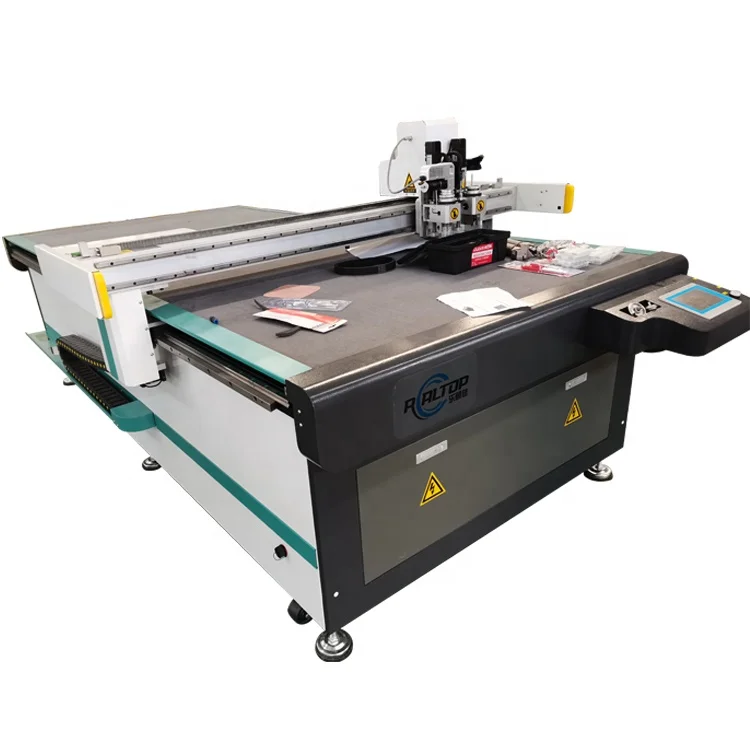
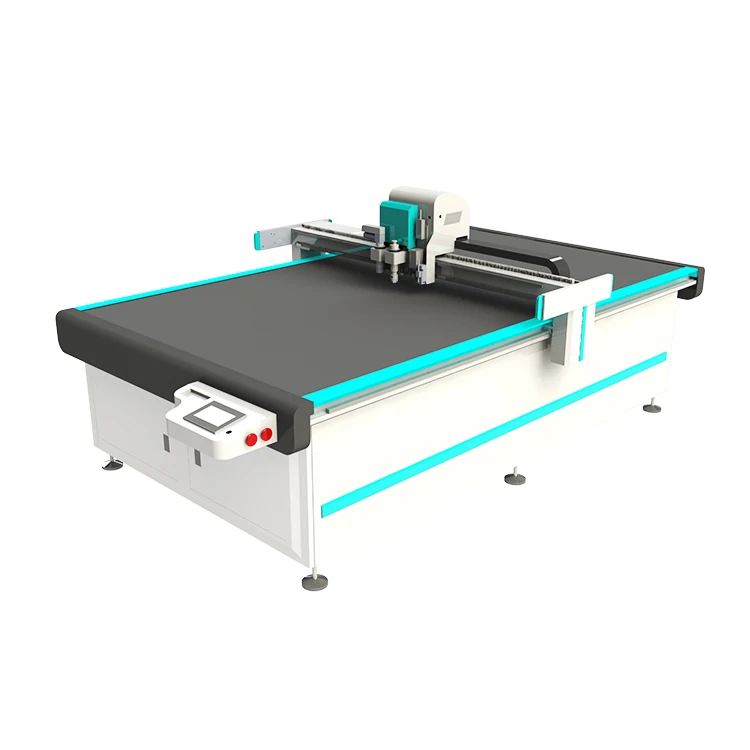
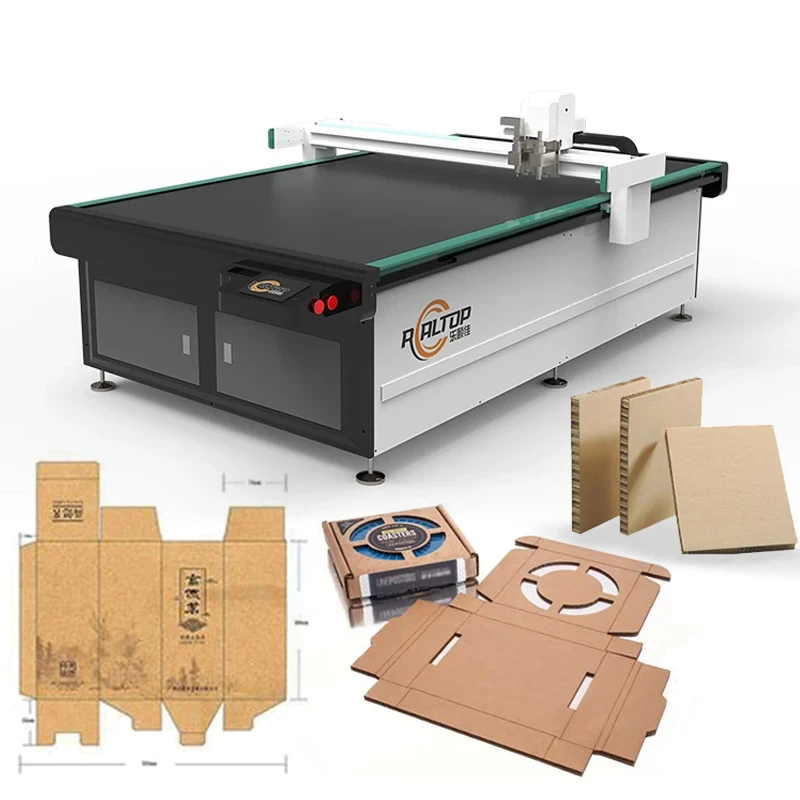
| Product Type | CNC Digital Flatbed Cutting Machine (Oscillating Knife) |
| Working Area | 1600 × 2500 mm |
| Machine Dimensions | 3450 × 2300 × 1250 mm |
| Rated Power | 9 kW |
| Voltage | 380V ±10% |
| Vacuum Pump | 7.5 kW |
| Vacuum Table | Aluminum alloy honeycomb structure |
| Tool Head | Multifunctional with Swiss imported knife (vibration full cut, half cut, cursor location) |
| Translational Velocity | 800 – 2000 mm/s |
| Cutting Speed | 200 – 800 mm/s (varies by material) |
| Cutting Thickness | Up to 100 mm (material dependent) |
| Repeated Accuracy | ≤0.1 mm |
| Transmission | Digital servo motor, linear guide, synchronous belt, ball screw |
| Servo Motor | Taiwan Delta |
| Linear Guide | Taiwan Hiwin |
| Conveyor Belt | Germany imported |
| Safety | Infrared sensors, emergency stop |
| Instruction System | HP-GL compatible format |
| Software | Professional carton nesting, multi-format import |
| Languages | English, Russian, Italian, Chinese; special languages customizable |
| Auto Feeding | Equipped |
| Assembly State | Fully assembled |
| Certification | CE (where applicable) |
Application Suitability
| Application | Material or Output |
|---|---|
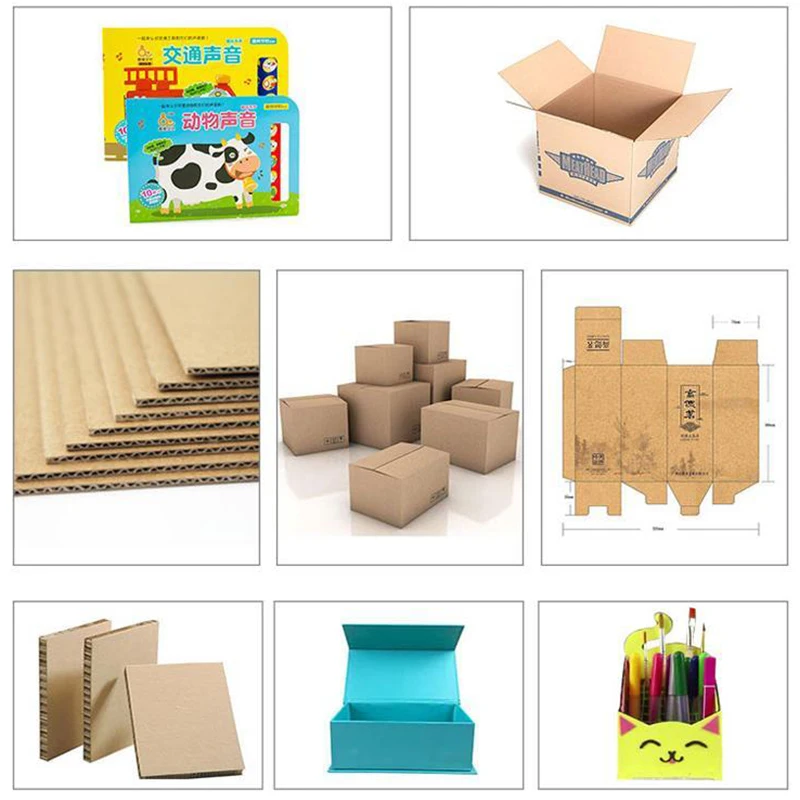
| Packaging carton and box sample making | Corrugated cardboard, single and double wall, high-density grades |
| Sticker and label contour cutting | Vinyl, self-adhesive film, coated paper |
| Signage and billboard production | Foam board, PVC sheet, honeycomb composite |
| Business card and tag cutting | Cardstock, laminated board, synthetic paper |
| Gasket and industrial flat cutting | Rubber, silicone, soft glass, composite leather |
Why Working Area Alone Will Mislead Your Purchase Decision
The real constraint in packaging prototyping is not table size but the combination of board density, knife stroke and vacuum zoning under actual running conditions.
A buyer once sent me a board spec with 1600×2500mm as the only requirement, then discovered the machine could not hold down small nested cartons once the outer contour was released. The vacuum table zoning and pump capacity matter as much as the working envelope when you are cutting short-run sample boxes from dense double-wall corrugated. The CNC digital cutting machine manufacturer you choose must validate the hold-down against your thickest board before the order is confirmed [NEED_CITE: hold-down requirements for dense corrugated board grades].
Matching the Knife Head to the Board Grade
Oscillating knife cutting performs differently across single-wall, double-wall and high-density corrugated structures. The RT-D2516/RT-S2516 ships with a Swiss imported knife on a multifunctional head that handles vibration full cutting, half cutting and cursor location in one setup, so a sample room does not need to swap tooling between crease-line scoring and full contour release. When the board gets denser, the oscillation frequency and downward pressure must be tuned together, and this is where sample cutting on the buyer’s own stock removes the guesswork.
Where Flatbed Digital Cutting Sits in the Sample Room
Packaging sample makers typically run short batches of diverse box styles rather than long production runs. A CNC digital cutting machine manufacturer serving this workflow needs to support rapid file changes, nesting across odd-shaped carton layouts and quick switching between creasing and cutting tools. The HP-GL compatible instruction system and professional carton nesting software on the RT-D2516/RT-S2516 address that variety, letting the operator import vector files from common packaging design packages without intermediate conversion steps [NEED_CITE: HP-GL compatibility in packaging CAD workflows].
Reading the Specs That Matter for Carton Work
The Taiwan Delta servo motors and Hiwin linear guides deliver ≤0.1 mm repeatability, which keeps crease lines aligned with cut contours across repeated sample iterations. The 7.5 kW vacuum pump behind the aluminum honeycomb table determines whether small flap sections lift during the final release pass — a frequent cause of ragged edges on short flaps. Translational velocity up to 2000 mm/s reduces non-cutting travel time between nested parts, while the actual cutting speed of 200–800 mm/s must be set according to the board density and flute profile. Cutting thickness capacity reaches 100 mm depending on material, but corrugated board at that depth requires verifying knife stroke and oscillation amplitude before the machine is committed to production.
What Happens When the Vacuum Zoning Is Wrong for Your Nesting Layout
Carton sample layouts often mix large outer blanks with small internal tabs and glue flaps. If the vacuum zoning cannot isolate small sections, those tabs lift once surrounding material is released, producing a crushed or torn edge that ruins the sample. On dense double-wall grades the problem appears sooner because the knife drag is higher and the board stiffness fights the hold-down. Confirming vacuum zone coverage against your typical nesting pattern is a necessary step before signing off on configuration [NEED_CITE: vacuum zoning impact on small part hold-down during oscillating knife cutting].
Why a Full-Range Catalogue Reduces Your Specification Risk
Realtop designs both oscillating knife and laser cutting equipment in-house, so the buyer comparing methods for different packaging substrates gets a recommendation based on material behaviour rather than a single product line. The tool head and table configuration are specified per material and production volume, not quoted as a default package. Sample cutting on the buyer’s own board stock is performed before commitment, producing a report that documents edge quality, crease depth and cutting speed. Voltage, plug type and control language are confirmed before shipment, removing the on-site surprises that delay commissioning. Software compatibility with the buyer’s existing nesting workflow is verified at the quotation stage so files transfer without conversion errors.
Documentation & Verification
- Machine specification sheet listing working area, tool head and vacuum table configuration per material
- Sample cutting report run on buyer’s own corrugated board grade before order confirmation
- Electrical schematic with voltage and frequency confirmed for target market
- Software licence and file format compatibility note for buyer’s existing CAD package
- Tool head and table configuration list detailing oscillating knife, creasing and cursor setup
- Packing photographs showing assembly state and protective crating before dispatch
Installation, Commissioning & Support
- Dedicated 380V ±10% circuit required for the 9 kW rated machine plus 7.5 kW vacuum pump
- Machine arrives fully assembled at 3450 × 2300 × 1250 mm; confirm workshop door and floor load capacity
- Vacuum table leveling on site to maintain aluminum honeycomb flatness across the 1600 × 2500 mm area
- First-run parameter tuning for oscillation frequency and knife pressure on buyer’s board stock
- Operation training covering HP-GL file import, nesting software and tool head changeover
- Spare knife blades, conveyor belt segments and vacuum seals included in initial parts kit
How to Structure Your Inquiry
Send the board grades, flute profiles and sheet dimensions you run most often, along with your typical daily sample volume. Confirm the voltage and frequency standard at your facility and the control language your operators need. If you use a specific packaging CAD package, share a sample file so software compatibility can be verified before quotation.
Frequently Asked Questions
Q: Oscillating knife or laser — which suits corrugated carton sample work?
A: Oscillating knife is standard for corrugated cardboard because it produces a clean mechanical cut without burning the flute edges or leaving discolouration on white-top liners. Laser suits thinner coated board and sticker contour work where sealed edges are acceptable. The choice depends on the substrate mix in your sample room.
Q: What tool heads should I specify for packaging sample making?
A: A typical carton sample setup uses the oscillating knife for full and half cutting plus a creasing wheel for fold lines. The RT-D2516/RT-S2516 multifunctional head combines vibration full cut, half cut and cursor location. Additional heads like drag knife or pen can be added for gasket or marking tasks.
Q: How does the CCD camera option affect printed carton sample work?
A: CCD contour recognition reads printed registration marks to align cuts with pre-printed graphics. For plain corrugated samples it is not required, but if your sample room also produces short-run printed cartons, specifying the camera at the order stage ensures the control system is configured for mark tracking from day one.
Q: What must I confirm about voltage and language before ordering?
A: Provide your facility voltage, frequency and plug standard so the electrical cabinet is built to match. Confirm the control language your operators will use — standard options include English, Russian, Italian and Chinese, and special languages are customizable. These details must be locked before production starts.
Q: Can I test my own board stock before committing?
A: Yes. Sample cutting is performed on the buyer’s own material before order confirmation. The resulting report documents edge quality, cutting speed and crease depth on your specific board grade, so you evaluate actual performance rather than generic specifications.










商品评价
There are no reviews yet.