





Fast Delivery
Quick, reliable shipping to any location.

Free & easy returns
Return this item by mail or in store within 90 days for a full refund.
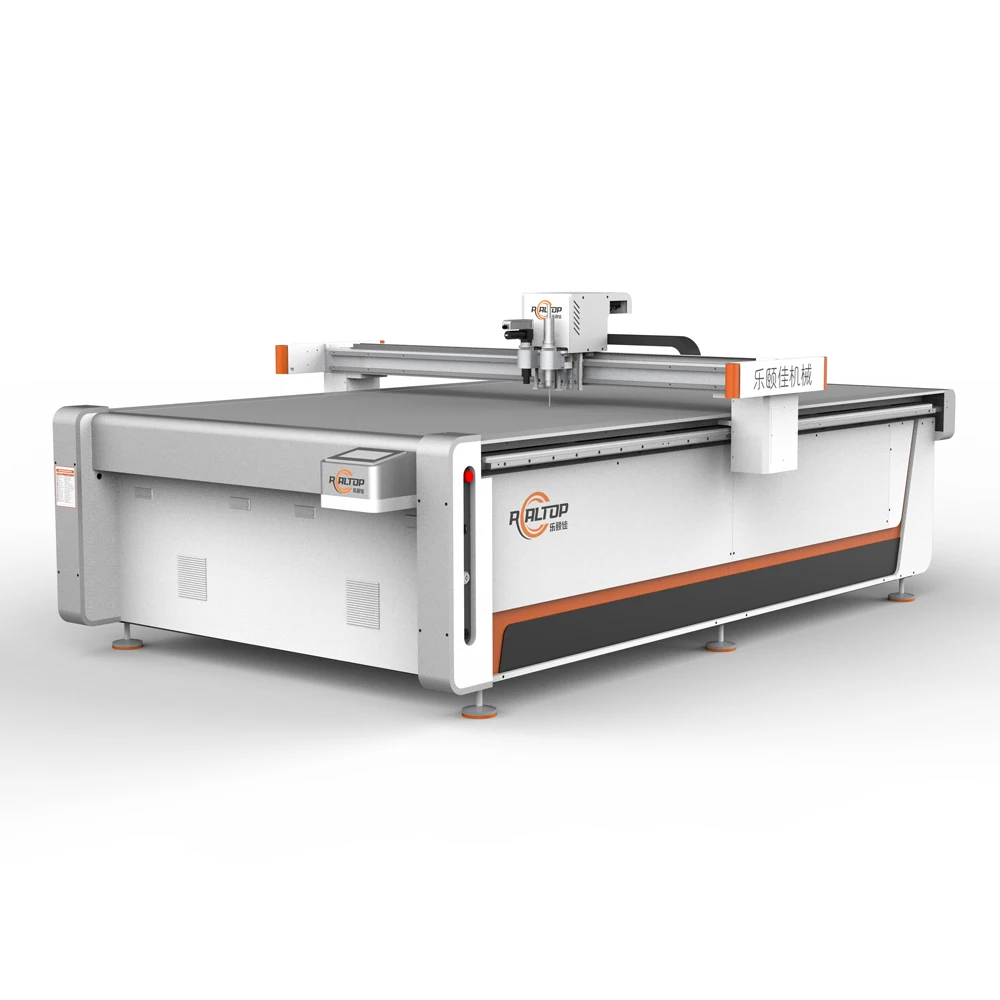
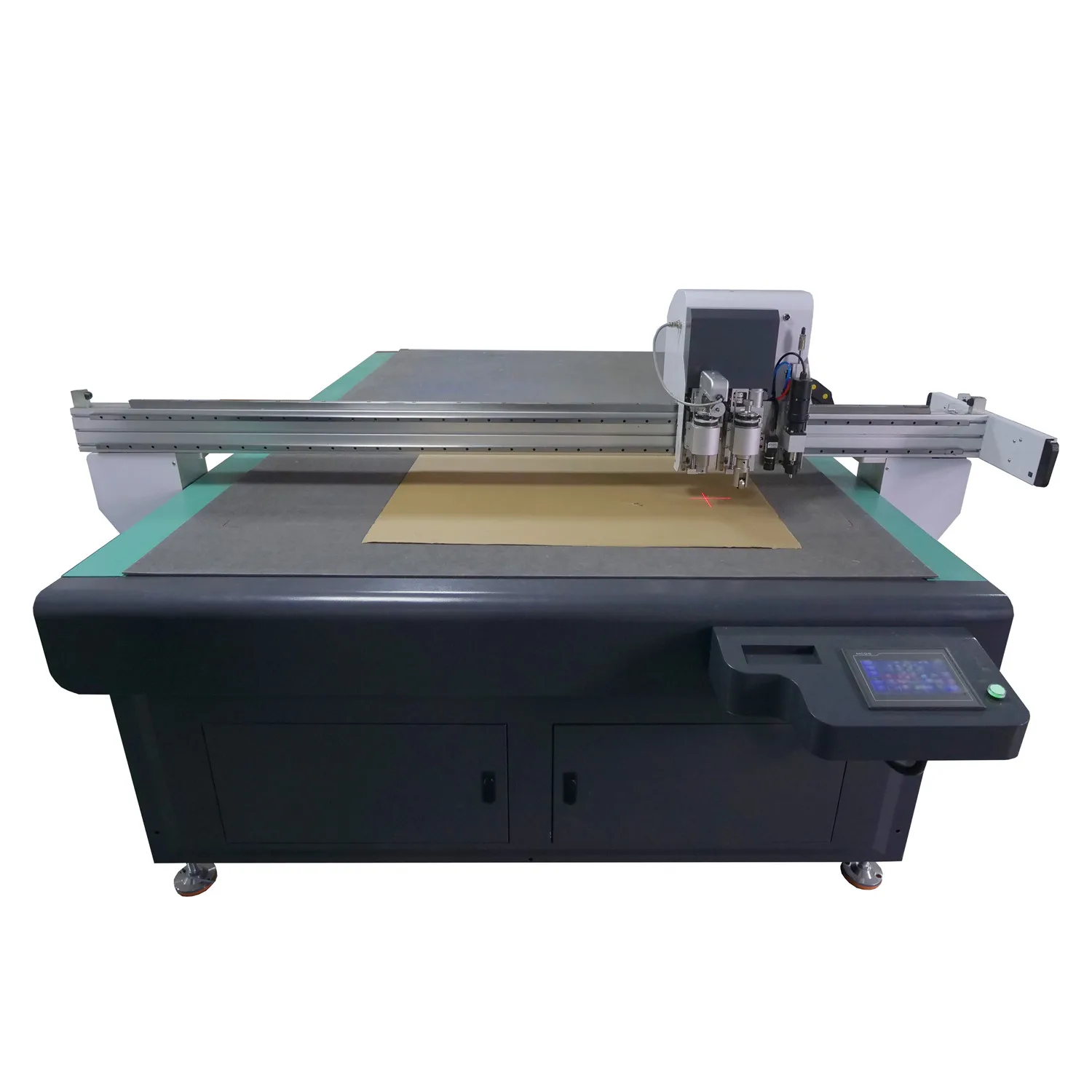
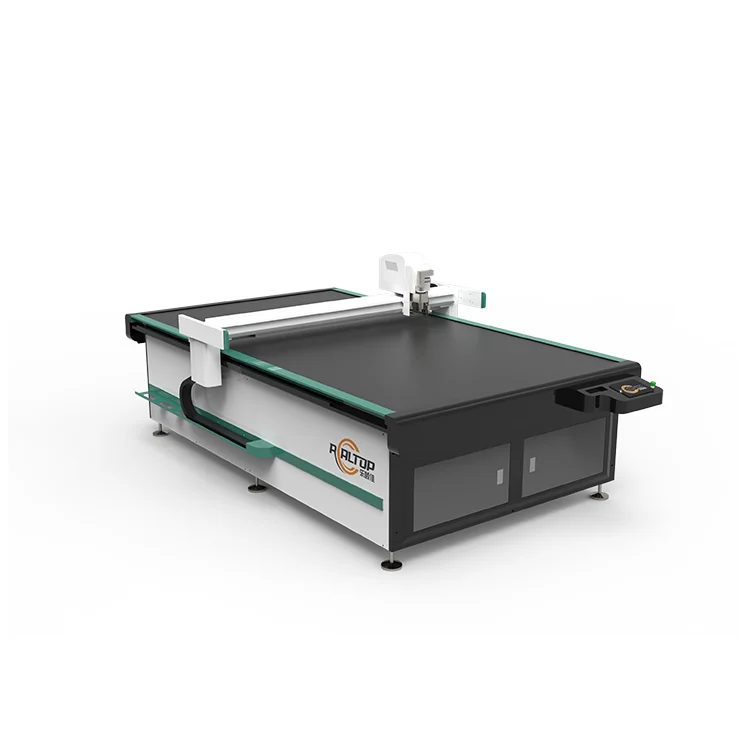
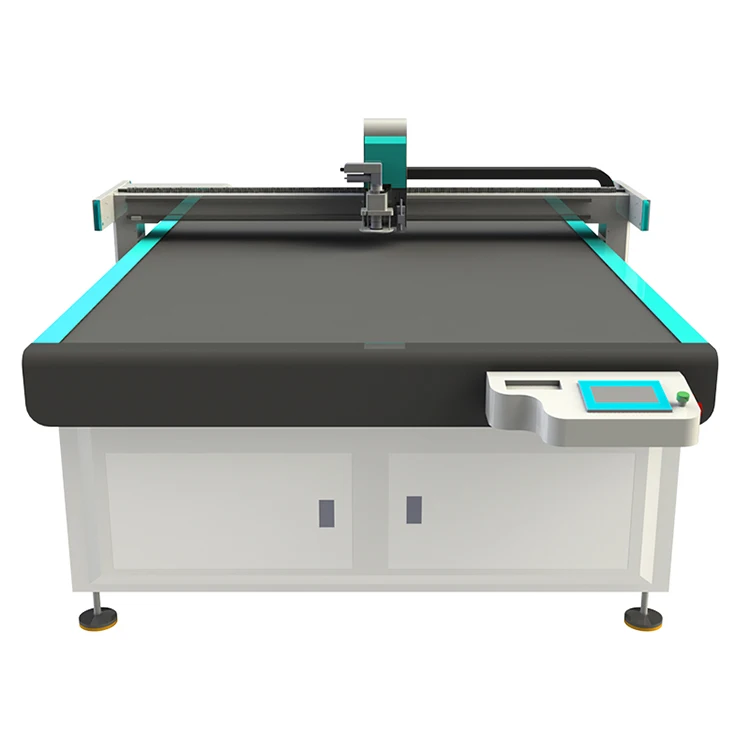
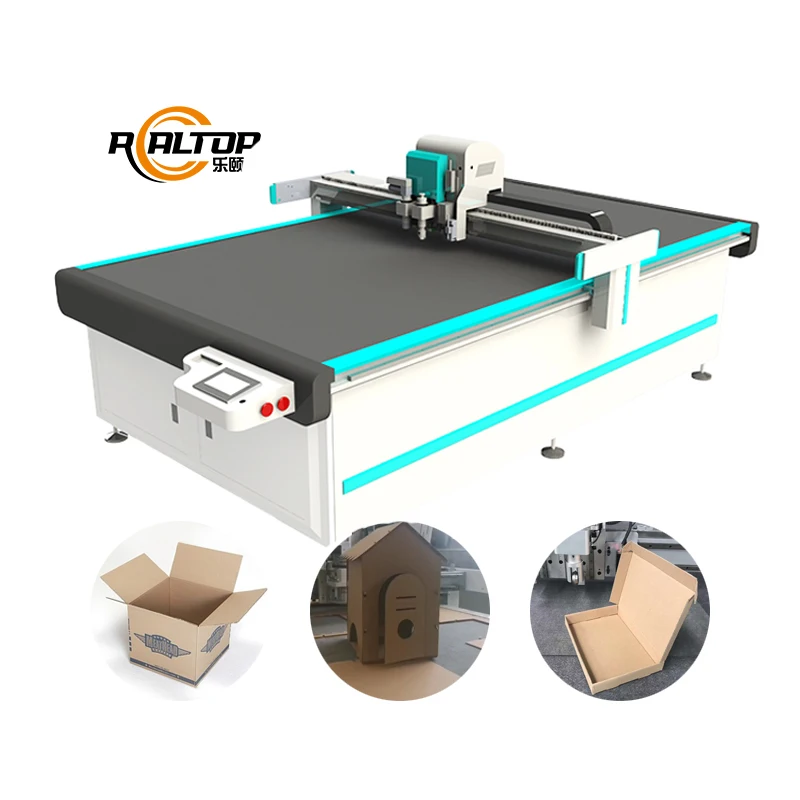
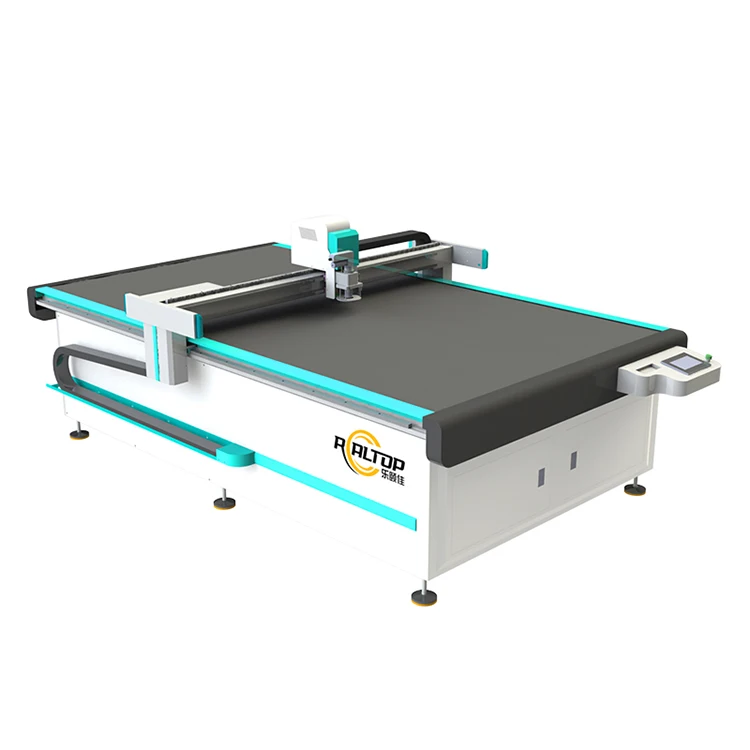
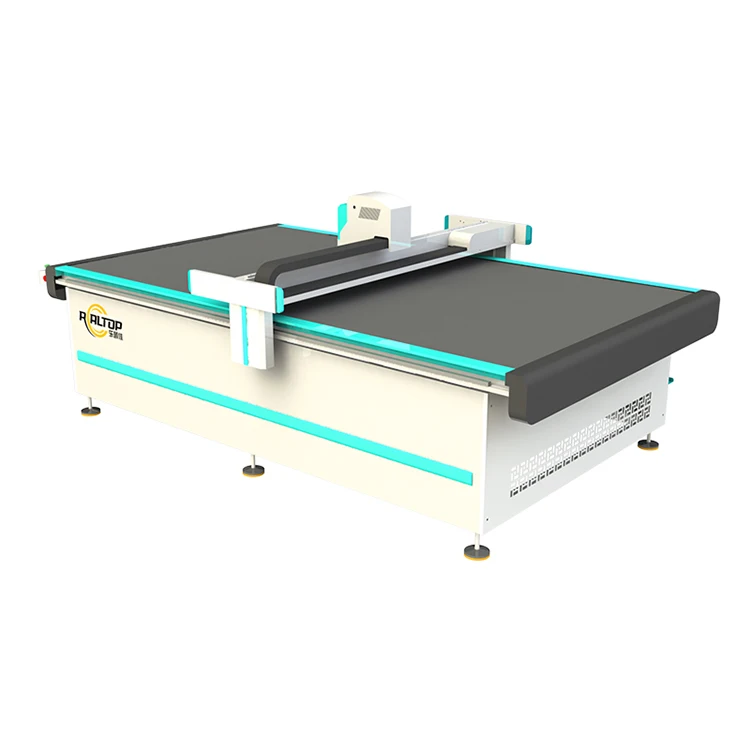
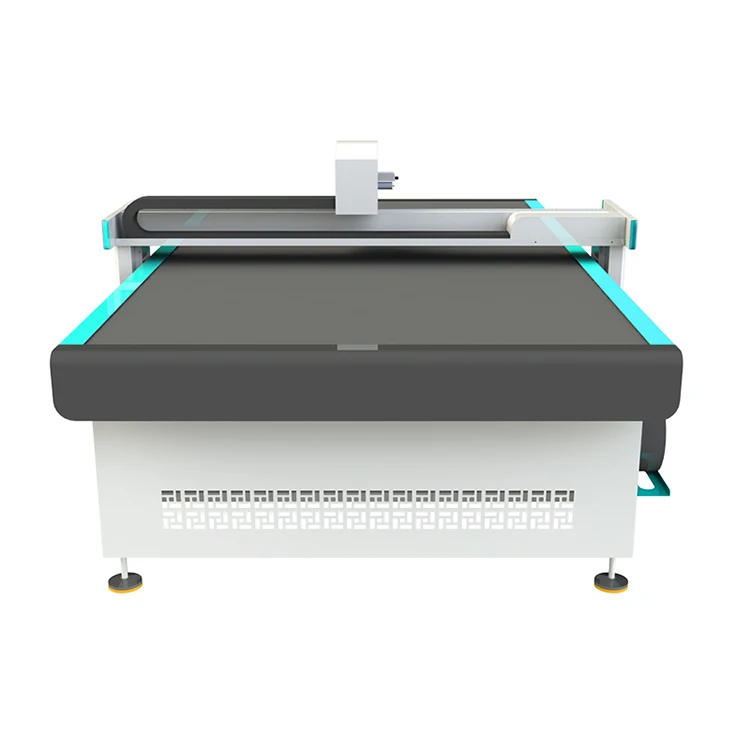
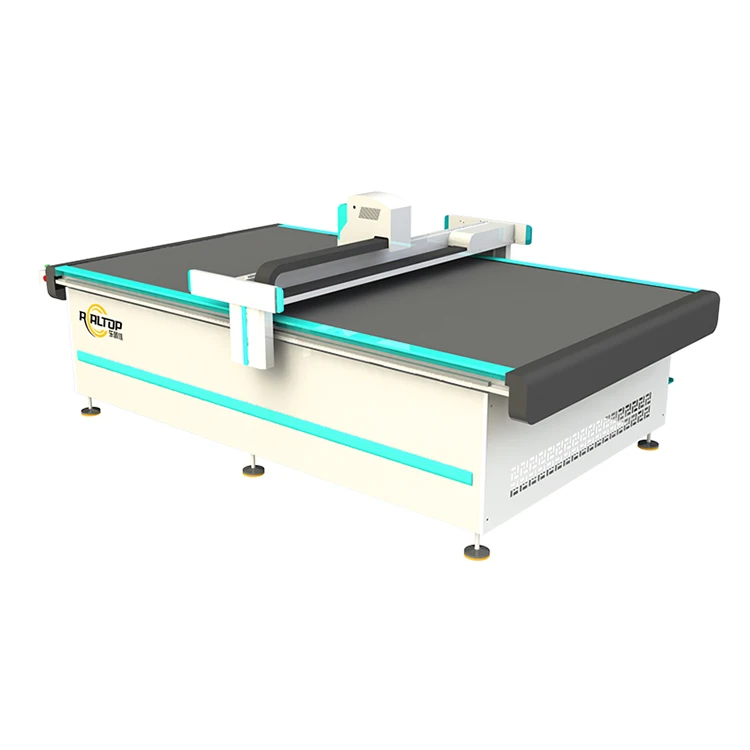
Corrugated Board Carton Cutting Creasing Digital Cutter – Full Range
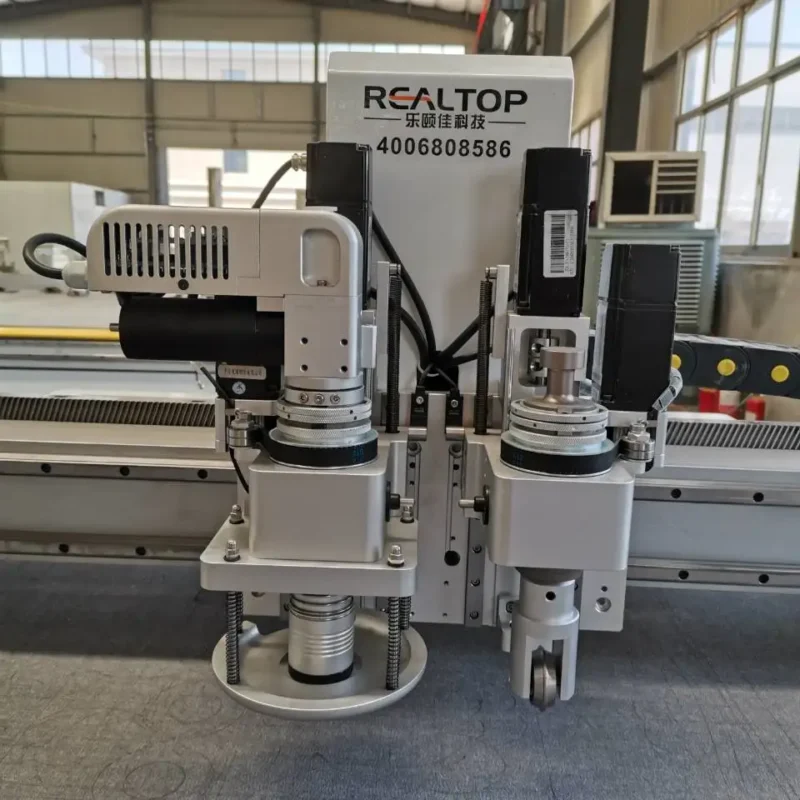
In-house cutting technology matching — Knife and creasing functions combined in one multifunctional head, configured around the flute profile and board grade rather than a generic cutting area.
Technical Specifications
| Parameter | Value |
|---|---|
| Model | RT-D2516/RT-S2516 |
| Product Type | CNC Digital Corrugated Board Cutter with Creasing Function |
| Working Area | 1600 × 2500 mm |
| Machine Footprint | 3450 × 2300 × 1250 mm |
| Rated Power | 9 kW |
| Voltage | 380V ±10% (50/60 Hz confirmation required for target market) |
| Table Type | Flat aluminum alloy honeycomb vacuum adsorption platform |
| Vacuum Pump | 7.5 kW |
| Multifunctional Head | Swiss imported knife with vibration full cutting, half cutting, and cursor location |
| Safety Devices | Infrared sensors with emergency stop |
| Translational Velocity | 800–2000 mm/s |
| Cutting Thickness | 200–800 mm/s (basis not stated in source — confirm board flute type and density before quoting) |
| Applicable Materials | Corrugated board, carton stock, leather, PVC, sponge composite, soft glass, silicon, rubber |
| Repeated Accuracy | ≤ 0.1 mm |
| Transmission System | Digital servo motor, linear guide, synchronous belt, ball screw |
| Instruction System | HP-GL compatible format |
| Servo Motor | Delta servo motor and driver (Taiwan) |
| Linear Guide | Taiwan Hiwin rail |
| Feeding System | Germany imported conveyor belt, auto feeding |
| Software | Professional carton nesting software, customized language support, multiple format file imports |
| Assembly State | Complete machine (fully assembled) |
| Language Options | Customizable (English, Russian, Italian, Chinese available) |
Application Suitability
| Application | Material or Output |
|---|---|
| Corrugated carton sample making | Single, double, and triple-wall corrugated board for short-run prototypes |
| Express paper box packaging | E-flute and B-flute corrugated stock for shipping cartons |
| Large electrical appliance cartons | Heavy-duty double and triple-wall board with deep crease lines |
| Snack food and gift box packaging | Thin-wall corrugated and coated board for retail presentation boxes |
| Sticker and label contour cutting | Vinyl and adhesive-backed materials on the same flatbed platform |
| Billboard and business card production | Foam board, cardboard, and stiff paper stock |
Why Board Thickness Promises Often Fall Short at Full Speed
A Digital Corrugated Board Cutter manufacturer must confirm the actual flute profile before quoting a cutting depth. Cutting capacity is meaningless without the board grade and flute type written on the same line.
I have walked into packaging workshops where a machine was purchased on working area alone. The flatbed handled the sheet size, but the vibration knife stalled on double-wall corrugated when running at production speed. The vacuum hold-down was adequate for large panels, yet small die-cut shapes lifted at the edges because the table zoning was too broad for the nested layout. These mismatches are not visible in a brochure [NEED_CITE: corrugated flute classification and compression resistance standards].
Matching the Tool Head to the Flute Profile
The Swiss imported vibration knife on the RT-D2516/RT-S2516 handles full-cut and half-cut operations within a single cycle, which matters when a carton design requires both through-cuts and kiss-cuts for fold lines. A Digital Corrugated Board Cutter manufacturer typically offers creasing as a separate tool station; here the multifunctional head combines these operations so the machine does not need to pause for tool changes mid-sheet.
Creasing Depth and Board Compression
Creasing corrugated board without crushing the flute structure requires controlled pressure and wheel geometry matched to the board thickness. The aluminum honeycomb table provides a rigid, flat surface so the creasing wheel produces a consistent fold line across the entire 1600 × 2500 mm working area. Inconsistent creasing leads to carton assembly problems downstream, especially on automated packing lines where fold accuracy affects case sealing [NEED_CITE: carton creasing and folding resistance testing methods].
Servo Drive and Linear Guide Precision
The Delta servo motor paired with Taiwan Hiwin linear guides delivers ≤ 0.1 mm repeated positioning accuracy across the full bed. For packaging sample making, this tolerance ensures that crease lines align with cut edges after multiple passes on complex carton geometries. The synchronous belt and ball screw transmission maintains this accuracy whether the machine is cutting a single large carton or nesting dozens of small boxes across the conveyor-fed sheet.
Software Workflow and File Compatibility
The professional carton nesting software accepts HP-GL compatible formats and imports files from common packaging design tools. Customized language support means the operator interface can match the workshop environment, reducing setup errors when switching between jobs. The nesting module optimizes material yield across the conveyor-fed sheet, which directly affects the cost per sample when running short-batch die-free production.
What Happens When Vacuum Zoning Is Overlooked
A flatbed vacuum table with a single large zone struggles to hold small carton blanks flat during cutting. The 7.5 kW vacuum pump provides strong suction, but if the zoning is not matched to the smallest part in the nest, edges lift and the oscillating knife catches the material. I have seen this produce ragged edges on micro-flute board and force the operator to reduce feed speed well below the machine’s rated translational velocity [NEED_CITE: vacuum hold-down requirements for small-part CNC cutting].
Why Configuration Confirmation Matters Before Shipment
Working with a Digital Corrugated Board Cutter manufacturer that tests on the buyer’s own material eliminates most configuration risk. The sample cutting report documents edge quality, crease depth, and cutting speed on the exact board grade the workshop will run. Voltage, plug type, and control language are confirmed against the destination market so the machine arrives ready for commissioning rather than sitting idle while adapters and transformers are sourced locally.
Documentation & Verification
- Machine specification sheet covering knife and creasing tool head configuration for your board grade
- Electrical schematic with voltage and frequency confirmation matched to your facility supply
- Sample cutting report on your corrugated board stock showing edge and crease quality
- Software licence and file format compatibility note for your existing design workflow
- Factory test record with dimensional check across the full 1600 × 2500 mm working area
Installation, Commissioning & Support
- 9 kW rated power requires a dedicated circuit with correct breaker rating for the 380V ±10% supply
- Fully assembled delivery means the 3450 × 2300 mm footprint needs clear floor access and level foundation
- 7.5 kW vacuum pump commissioning includes verifying suction across each table zone with your board stock
- Conveyor belt auto-feeding calibration matched to your sheet length and daily production volume
- Control language set to operator preference with full training on nesting software and tool change procedures
- Spare parts list covering Swiss knife blades, creasing wheels, and vacuum seals for routine maintenance
What to Prepare Before Requesting a Quote
Send the actual corrugated board grades you run most often, including flute type and grammage. Confirm your workshop voltage and frequency, the control language your operators need, and whether your design files originate from specific packaging CAD software. If you produce sticker or label work alongside cartons, note the printed contour requirements so CCD camera positioning can be evaluated for your workflow.
Frequently Asked Questions
Q: How do I verify the cutting thickness for my corrugated flute type?
A: The published cutting thickness value in the specification sheet lacks a stated material basis. Request a sample cutting test on your exact board grade — including flute profile and grammage — so the report documents real cutting speed, edge quality, and crease depth under production conditions.
Q: Can the voltage and control language be customized for my market?
A: The RT-D2516/RT-S2516 ships at 380V ±10% and frequency must be confirmed as 50 or 60 Hz for your destination market. Control language options include English, Russian, Italian, and Chinese, with other languages configurable before shipment based on operator requirements.
Q: Is CCD camera contour recognition available for printed carton work?
A: CCD camera positioning is a configuration option that can be added for printed contour cutting on carton, sticker, and label jobs. Specify this requirement during the inquiry stage so the camera and software integration are confirmed in the machine specification sheet.
Q: Will the nesting software work with my existing packaging design files?
A: The carton nesting software imports HP-GL compatible formats and supports multiple file types. Provide a sample design file during the inquiry stage so compatibility and nesting efficiency can be verified against your actual workflow before order confirmation.
Q: What documentation ships with the machine for customs and commissioning?
A: The delivery package includes the machine specification sheet, electrical schematic, CE declaration where applicable, factory test record, operation manual, software licence, and spare parts list — all prepared to support import clearance and on-site commissioning.
Corrugated Board Carton Cutting Creasing Digital Cutter – Full Range
In-house cutting technology matching — Knife and creasing functions combined in one multifunctional head, configured around the flute profile and board grade rather than a generic cutting area.
Technical Specifications
| Parameter | Value |
|---|---|
| Model | RT-D2516/RT-S2516 |
| Product Type | CNC Digital Corrugated Board Cutter with Creasing Function |
| Working Area | 1600 × 2500 mm |
| Machine Footprint | 3450 × 2300 × 1250 mm |
| Rated Power | 9 kW |
| Voltage | 380V ±10% (50/60 Hz confirmation required for target market) |
| Table Type | Flat aluminum alloy honeycomb vacuum adsorption platform |
| Vacuum Pump | 7.5 kW |
| Multifunctional Head | Swiss imported knife with vibration full cutting, half cutting, and cursor location |
| Safety Devices | Infrared sensors with emergency stop |
| Translational Velocity | 800–2000 mm/s |
| Cutting Thickness | 200–800 mm/s (basis not stated in source — confirm board flute type and density before quoting) |
| Applicable Materials | Corrugated board, carton stock, leather, PVC, sponge composite, soft glass, silicon, rubber |
| Repeated Accuracy | ≤ 0.1 mm |
| Transmission System | Digital servo motor, linear guide, synchronous belt, ball screw |
| Instruction System | HP-GL compatible format |
| Servo Motor | Delta servo motor and driver (Taiwan) |
| Linear Guide | Taiwan Hiwin rail |
| Feeding System | Germany imported conveyor belt, auto feeding |
| Software | Professional carton nesting software, customized language support, multiple format file imports |
| Assembly State | Complete machine (fully assembled) |
| Language Options | Customizable (English, Russian, Italian, Chinese available) |
Application Suitability
| Application | Material or Output |
|---|---|
| Corrugated carton sample making | Single, double, and triple-wall corrugated board for short-run prototypes |
| Express paper box packaging | E-flute and B-flute corrugated stock for shipping cartons |
| Large electrical appliance cartons | Heavy-duty double and triple-wall board with deep crease lines |
| Snack food and gift box packaging | Thin-wall corrugated and coated board for retail presentation boxes |
| Sticker and label contour cutting | Vinyl and adhesive-backed materials on the same flatbed platform |
| Billboard and business card production | Foam board, cardboard, and stiff paper stock |
Why Board Thickness Promises Often Fall Short at Full Speed
A Digital Corrugated Board Cutter manufacturer must confirm the actual flute profile before quoting a cutting depth. Cutting capacity is meaningless without the board grade and flute type written on the same line.
I have walked into packaging workshops where a machine was purchased on working area alone. The flatbed handled the sheet size, but the vibration knife stalled on double-wall corrugated when running at production speed. The vacuum hold-down was adequate for large panels, yet small die-cut shapes lifted at the edges because the table zoning was too broad for the nested layout. These mismatches are not visible in a brochure [NEED_CITE: corrugated flute classification and compression resistance standards].
Matching the Tool Head to the Flute Profile
The Swiss imported vibration knife on the RT-D2516/RT-S2516 handles full-cut and half-cut operations within a single cycle, which matters when a carton design requires both through-cuts and kiss-cuts for fold lines. A Digital Corrugated Board Cutter manufacturer typically offers creasing as a separate tool station; here the multifunctional head combines these operations so the machine does not need to pause for tool changes mid-sheet.
Creasing Depth and Board Compression
Creasing corrugated board without crushing the flute structure requires controlled pressure and wheel geometry matched to the board thickness. The aluminum honeycomb table provides a rigid, flat surface so the creasing wheel produces a consistent fold line across the entire 1600 × 2500 mm working area. Inconsistent creasing leads to carton assembly problems downstream, especially on automated packing lines where fold accuracy affects case sealing [NEED_CITE: carton creasing and folding resistance testing methods].
Servo Drive and Linear Guide Precision
The Delta servo motor paired with Taiwan Hiwin linear guides delivers ≤ 0.1 mm repeated positioning accuracy across the full bed. For packaging sample making, this tolerance ensures that crease lines align with cut edges after multiple passes on complex carton geometries. The synchronous belt and ball screw transmission maintains this accuracy whether the machine is cutting a single large carton or nesting dozens of small boxes across the conveyor-fed sheet.
Software Workflow and File Compatibility
The professional carton nesting software accepts HP-GL compatible formats and imports files from common packaging design tools. Customized language support means the operator interface can match the workshop environment, reducing setup errors when switching between jobs. The nesting module optimizes material yield across the conveyor-fed sheet, which directly affects the cost per sample when running short-batch die-free production.
What Happens When Vacuum Zoning Is Overlooked
A flatbed vacuum table with a single large zone struggles to hold small carton blanks flat during cutting. The 7.5 kW vacuum pump provides strong suction, but if the zoning is not matched to the smallest part in the nest, edges lift and the oscillating knife catches the material. I have seen this produce ragged edges on micro-flute board and force the operator to reduce feed speed well below the machine’s rated translational velocity [NEED_CITE: vacuum hold-down requirements for small-part CNC cutting].
Why Configuration Confirmation Matters Before Shipment
Working with a Digital Corrugated Board Cutter manufacturer that tests on the buyer’s own material eliminates most configuration risk. The sample cutting report documents edge quality, crease depth, and cutting speed on the exact board grade the workshop will run. Voltage, plug type, and control language are confirmed against the destination market so the machine arrives ready for commissioning rather than sitting idle while adapters and transformers are sourced locally.
Documentation & Verification
- Machine specification sheet covering knife and creasing tool head configuration for your board grade
- Electrical schematic with voltage and frequency confirmation matched to your facility supply
- Sample cutting report on your corrugated board stock showing edge and crease quality
- Software licence and file format compatibility note for your existing design workflow
- Factory test record with dimensional check across the full 1600 × 2500 mm working area
Installation, Commissioning & Support
- 9 kW rated power requires a dedicated circuit with correct breaker rating for the 380V ±10% supply
- Fully assembled delivery means the 3450 × 2300 mm footprint needs clear floor access and level foundation
- 7.5 kW vacuum pump commissioning includes verifying suction across each table zone with your board stock
- Conveyor belt auto-feeding calibration matched to your sheet length and daily production volume
- Control language set to operator preference with full training on nesting software and tool change procedures
- Spare parts list covering Swiss knife blades, creasing wheels, and vacuum seals for routine maintenance
What to Prepare Before Requesting a Quote
Send the actual corrugated board grades you run most often, including flute type and grammage. Confirm your workshop voltage and frequency, the control language your operators need, and whether your design files originate from specific packaging CAD software. If you produce sticker or label work alongside cartons, note the printed contour requirements so CCD camera positioning can be evaluated for your workflow.
Frequently Asked Questions
Q: How do I verify the cutting thickness for my corrugated flute type?
A: The published cutting thickness value in the specification sheet lacks a stated material basis. Request a sample cutting test on your exact board grade — including flute profile and grammage — so the report documents real cutting speed, edge quality, and crease depth under production conditions.
Q: Can the voltage and control language be customized for my market?
A: The RT-D2516/RT-S2516 ships at 380V ±10% and frequency must be confirmed as 50 or 60 Hz for your destination market. Control language options include English, Russian, Italian, and Chinese, with other languages configurable before shipment based on operator requirements.
Q: Is CCD camera contour recognition available for printed carton work?
A: CCD camera positioning is a configuration option that can be added for printed contour cutting on carton, sticker, and label jobs. Specify this requirement during the inquiry stage so the camera and software integration are confirmed in the machine specification sheet.
Q: Will the nesting software work with my existing packaging design files?
A: The carton nesting software imports HP-GL compatible formats and supports multiple file types. Provide a sample design file during the inquiry stage so compatibility and nesting efficiency can be verified against your actual workflow before order confirmation.
Q: What documentation ships with the machine for customs and commissioning?
A: The delivery package includes the machine specification sheet, electrical schematic, CE declaration where applicable, factory test record, operation manual, software licence, and spare parts list — all prepared to support import clearance and on-site commissioning.
商品评价
There are no reviews yet.