


Fast Delivery
Quick, reliable shipping to any location.

Free & easy returns
Return this item by mail or in store within 90 days for a full refund.
Configurable Cutting Technologies — Our in-house engineering covers both knife and laser platforms, allowing buyers of this CNC oscillating knife cutting machine to match the method to the textile rather than forcing a single technology across every fabric weight.
Technical Specifications
| Parameter | Value |
|---|---|
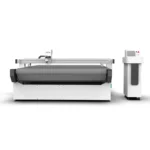
| Product Type | CNC Oscillating Knife Cutting Machine |
| Working Area | 1600 × 2500 mm |
| Tool Head Options | Oscillating knife, Driven rotary knife, Creasing wheel, Kiss cutting tool, Pneumatic knife, Milling tool, V groove knife |
| Cutting Speed | 0 – 2000 mm/s |
| Cutting Thickness | Up to 30 mm (basis not stated in source — confirm specific material type and density) |
| Cutting Accuracy | ±0.1 mm |
| Vacuum Pump | 9 kW |
| Vacuum Table | Aluminum bellows vacuum table with high flatness and sealing |
| Control System | PLC control panel |
| Servo Motor Options | Panasonic, Delta, Dorna (multiple brands available) |
| File Formats Supported | PLT, DXF, AI, PDF |
| Voltage Options | 110V, 220V, 380V |
| Language Options | English, Russian, Italian, Chinese (custom languages available) |
| Safety Device | Infrared sensor device and emergency stop device |
| Frame Construction | Heavy-duty frame with precision-ground surface |
| Machine Size | 3300 × 2100 × 1350 mm |
| Standards | CE |
Application Suitability
| Application | Material or Output |
|---|---|
| Apparel manufacturing | Suits, knitwear, lace, complex fabrics with pattern-matching layouts |
| Automotive interiors | Seat fabrics, carpets, PVC floor mats |
| Home textiles | Sofa fabrics, curtains, rugs requiring multi-layer cutting and strong vacuum hold-down |
| Composite material processing | Carbon fiber prepreg, aramid, specialty materials needing cold cutting |
Why Voltage Confirmation Must Happen Before the Invoice
A machine that cannot power up on arrival costs three weeks of idle production and a rewiring bill nobody budgeted for.
Years ago, a vibration knife cutter shipped to a Middle East workshop sat on the floor for twenty-one days because the local supply ran at a frequency the motor could not accept. The buyer had confirmed the working area and tool head, but the electrical schematic was treated as an afterthought. Every CNC oscillating knife cutting machine manufacturer should lock voltage, phase, and frequency before production begins [NEED_CITE: voltage and frequency standards by export market]. This is why the inquiry process here starts with the buyer’s facility supply data, not the cutting speed chart.
Matching the Knife Head to the Home Textile Stack
Home textile cutting rarely involves a single ply. Sofa upholstery runs in multi-layer stacks of heavy woven fabric, curtain panels layer sheer and blackout linings together, and area rugs present dense pile backed with latex or felt. The oscillating knife head handles the bulk of these tasks, driving a vertical blade at high frequency to shear through stacked plies without dragging or distorting the weave. When the job involves thinner single-ply materials or kiss-cutting adhesive-backed films for decorative applications, the pneumatic knife or kiss cutting tool takes over. This interchangeable tool head approach means one flatbed serves the full range rather than requiring a dedicated machine for each fabric family.
Vacuum Zoning and the Small-Part Problem
Cutting a full sofa panel holds itself down by sheer weight and surface area. Cutting narrow piping strips, small gusset pieces, or intricate lace motifs is a different physics problem — the vacuum must grip a part smaller than a standard sheet of paper while a high-frequency knife traverses its edge. The aluminum bellows vacuum table on this platform provides full-surface adsorption with high flatness, maintaining grip across the entire cutting zone. When paired with configurable zoning, the system can concentrate suction on the active cutting area rather than pulling air through the whole table. This keeps lightweight lace and slippery synthetic layers from lifting mid-cut [NEED_CITE: vacuum table zoning principles for small part retention].
Reading the Specification Sheet Beyond the Headline Numbers
The 1600 × 2500 mm working area accommodates standard textile roll widths and allows nested layouts for multi-layer sofa fabric or curtain panel production. Cutting accuracy of ±0.1 mm matters most when downstream sewing operations rely on precise seam allowances — a deviation of even half a millimeter across a twenty-piece sofa cover set compounds into visible misalignment at assembly. The 9 kW vacuum pump rating indicates the suction capacity available to hold multi-layer stacks flat; buyers processing lighter single-ply materials may find this exceeds their requirement, while those cutting dense rug backing will use every kilowatt. The PLC control panel paired with support for PLT, DXF, AI, and PDF file formats means the machine integrates into existing design workflows without forcing a software migration. Servo motor selection across Panasonic, Delta, and Dorna brands allows buyers to align with their existing maintenance expertise or regional spare parts availability.
The Hidden Cost of an Under-Specified Vacuum Table
Buyers who specify a machine based solely on working area and cutting speed often discover the vacuum system after installation. A table with insufficient zoning will lose grip on small pattern pieces, causing fabric to shift during the final passes and producing rejected parts that must be re-cut from new stock. Over time, this waste accumulates into material costs that dwarf the price difference between a basic and a properly zoned vacuum system [NEED_CITE: material waste rates in multi-layer textile cutting operations]. The aluminum bellows design here prioritizes sealing integrity, which directly determines how long the table maintains flatness under continuous vacuum cycles in a production environment.
Why Buyers Source This Equipment Here
The in-house design team covers both oscillating knife and laser cutting technologies under one roof, so a buyer cutting home textiles can evaluate both methods against their specific fabric stack before committing to a configuration. Tool head and table combinations are specified per material type and production volume rather than sold as a fixed package. CCD camera positioning is available for printed contour work where pattern-matching across plies is required. Software compatibility is confirmed against the buyer’s existing DXF, PLT, AI, or PDF workflow before the order is finalized. Voltage, plug type, and control language are locked in during the specification stage, and sample cutting on the buyer’s own material provides verifiable evidence of edge quality and cutting depth before production begins.
Documentation & Verification
- Electrical schematic confirming voltage, phase, and frequency for your facility before dispatch
- Tool head and vacuum table configuration list detailing included tools and zoning setup
- Sample cutting report on your specific home textile material with edge quality photographs
- Software licence and file format compatibility note for your existing DXF or PLT workflow
- Factory test record showing cutting accuracy and vacuum performance before crating
Installation, Commissioning & Support
- Machine footprint of 3300 × 2100 mm requires clear floor space with level concrete substrate
- 9 kW vacuum pump and PLC panel require dedicated circuit matching confirmed voltage at 110V, 220V, or 380V
- Heavy-duty frame arrives assembled; aluminum bellows table and gantry require on-site alignment
- First-run calibration includes vacuum zoning setup for your typical part sizes and fabric weights
- Operator training covers tool head changeover, PLC navigation in your selected language, and nesting software
- Spare parts list includes oscillating knife blades, vacuum seals, and servo motor consumables
Preparing a Technical Inquiry
Send the material type, typical ply count, and maximum stack thickness you plan to cut so the tool head and vacuum configuration can be matched to your production. Specify your facility voltage and frequency, along with the control language your operators require. If your design team already works in a specific file format or nesting software, include a sample file so compatibility can be verified before the quotation stage.
Frequently Asked Questions
Q: How do I decide between oscillating knife and laser cutting for my textile products?
A: Oscillating knife cutting produces no heat-affected zone, making it suitable for multi-layer natural fabrics and synthetic blends where thermal sealing would be a defect. Laser cutting seals edges on synthetics and handles intricate contours without blade pressure. The choice depends on your material composition and whether edge sealing is a benefit or a problem for your downstream sewing operations.
Q: Which tool head should I specify for cutting sofa upholstery stacks?
A: The oscillating knife head handles multi-layer woven and knitted upholstery fabrics at thicknesses up to the verified capacity of your specific material. For thinner decorative trims or adhesive-backed films applied to furniture panels, the kiss cutting tool or pneumatic knife provides cleaner results. Configuration is confirmed after sample cutting on your actual stock.
Q: Can the working area be configured with multiple heads for higher throughput?
A: The platform supports single and multi-head configurations depending on production volume requirements. Multi-head setups share the same vacuum table and gantry system, allowing parallel cutting of identical or nested patterns. The final configuration depends on your daily volume, part mix, and the space available on your production floor.
Q: How is the vacuum table zoned to hold small textile pieces during cutting?
A: The aluminum bellows vacuum table divides the cutting surface into zones that can be activated independently. When cutting small piping strips or lace motifs, only the active zone pulls vacuum, concentrating suction on the part being cut rather than losing pressure across the full table area.
Q: Is it possible to customize the voltage and control language before the machine ships?
A: Voltage is configurable across 110V, 220V, and 380V options, and the control panel language is selectable from English, Russian, Italian, and Chinese with custom languages available on request. Both parameters are confirmed during the specification stage and documented in the electrical schematic before production begins.










商品评价
There are no reviews yet.