


Fast Delivery
Quick, reliable shipping to any location.

Free & easy returns
Return this item by mail or in store within 90 days for a full refund.
Tool Head Versatility — RT-D2516/RT-S2516 supports oscillating knife, V cutting knife, creasing wheel and drag knife configurations, matching the cutting method to cardboard density rather than forcing a single tooling approach.
Technical Specifications
| Parameter | Value |
|---|---|
| Model | RT-D2516/RT-S2516 |
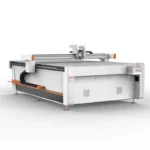
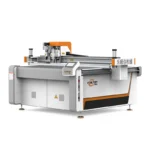
| Product Type | CNC Oscillating Knife Cutting Machine |
| Working Area | 1600 × 2500 mm |
| Machine Size (Overall) | 3450 × 2300 × 1250 mm |
| Rated Power | 9 kW |
| Voltage | 380V ± 10% (frequency to be confirmed: 50Hz/60Hz) |
| Control System | Touch screen control panel, multi-language supported |
| Table Type | Flat working table / auto feeding table (optional) |
| Multifunctional Head | Swiss imported knife; optional: oscillating, pneumatic, high-power vibrating, circular, V cutting, drag, creasing wheel, dotted line, punching, brush |
| Visual Positioning | Small CCD mark point / panoramic camera recognition / projection positioning |
| Safety Device | Infrared sensors, anti-collision, emergency stop |
| Translational Velocity | 800–2000 mm/s |
| Cutting Speed | 200–800 mm/s (material dependent) |
| Cutting Thickness | Up to 100 mm (varies with material — basis to be confirmed) |
| Repeated Accuracy | ≤ 0.1 mm |
| Transmission System | Digital servo motor, linear guide, synchronous belt, ball screw |
| Instruction System | HP-GL compatible format |
| Software & File Formats | Auto typesetting; PLT, DXF, AI supported |
| Vacuum Pump | 7.5 kW |
| Vacuum Table | Aluminum air box, magnesium-aluminum alloy, PVDF powder spraying, anodic and hard oxidation |
| Servo Motor Options | Delta or Panasonic (IP67 waterproof) |
| Conveyor Belt | Germany imported |
| Linear Guide | Taiwan Hiwin rail |
| Language Options | English, Russian, Italian, Chinese (special languages customizable) |
| Output Capacity | 3–5 times faster than laser cutting (basis not stated in source) |
| Standards | CE declaration (verify specific certification for this model) |
Application Suitability
| Application | Material or Output |
|---|---|
| Carton sample making | Cardboard, honeycomb cardboard, corrugated cardboard |
| Plastic box prototyping | PVC sheet, PP, PE, PET |
| Packaging short-run production | Gasket material, foam board, EVA |
| Leather and footwear cutting | Leather, PU, shoe material |
| Garment and textile processing | Fabric, clothing cloth, non-woven fabric |
| Automotive interior trimming | Carpet, sponge, composite materials |
| Industrial gasket fabrication | Rubber, silicon, PTFE, ETFE |
| Signage and graphic output | Sticker, film, soft glass |
Why the Knife Head Decision Matters More Than the Work Area
Buyers often specify a machine on working area alone and later discover the standard oscillating knife cannot handle their actual board density. A 1600 × 2500 mm table means nothing if the V cutting knife stalls on high-density fiberboard at production speed. [NEED_CITE: common causes of cutting edge failure on dense packaging board]
Confirm the material type, thickness and daily volume before locking the tool head configuration.
In our workshop we have seen standard gray board cut cleanly with a vibration full-cutting knife, while the same machine configuration failed entirely on high-density board because the tool head lacked the downforce and frequency needed for that stock. The ragged edges and crushed flutes forced an entire batch of premium boxes to be scrapped. That failure was not a machine defect — it was a specification error that should have been caught during the inquiry stage.
Matching the Cutting Method to Your Packaging Stock
When evaluating a CNC oscillating knife cutting machine for packaging work, the first decision is whether knife cutting or laser cutting suits your material. Knife cutting produces no burn marks on corrugated and honeycomb board, leaves no sealed edge on synthetics that might interfere with folding, and handles materials up to 100 mm thick depending on density. Laser cutting, by contrast, seals synthetic edges but generates fumes and struggles with thick honeycomb cores. The RT-D2516/RT-S2516 sits in the knife-cutting family and covers the full range of board, foam and composite materials used in carton sample making and short-run packaging production.
Vacuum Table Zoning and Small-Part Stability
A common issue on flatbed cutting tables is that small packaging components — dividers, inserts, corner braces — lift off the table during cutting because the vacuum zone is too large relative to the part footprint. The RT-D2516/RT-S2516 uses an aluminum air box platform with integrated and split box adsorption options. The split box configuration allows the operator to concentrate vacuum on the active cutting zone, holding small corrugated parts flat without requiring a full-table draw. The magnesium-aluminum alloy surface, treated with PVDF powder spraying and hard oxidation, resists scoring from repeated knife passes and maintains flatness across the 1600 × 2500 mm area. [NEED_CITE: vacuum zone sizing principles for CNC flatbed cutting tables]
Reading the Specification Sheet Against Your Actual Workflow
The 200–800 mm/s cutting speed range spans from intricate carton sample contours to straight-line creasing on corrugated board, but the achievable speed depends directly on material density and the tool head in use. The repeated accuracy of ≤ 0.1 mm matters most when cutting interlocking tab-and-slot packaging designs where cumulative error causes assembly failure. The HP-GL compatible instruction system and support for PLT, DXF and AI file formats mean the machine can accept output from standard packaging CAD software without intermediate conversion. The 7.5 kW vacuum pump must be matched to the table zoning selected — a full-table draw on a large-format sheet demands more airflow than a zoned setup on small carton blanks. Servo motor selection between Delta and Panasonic, both IP67 rated, is typically driven by the buyer’s local service network rather than performance difference.
The Cost of Skipping the Material Trial
When a packaging buyer accepts a quotation without running sample cuts on their own stock, the first production day often reveals problems that should have surfaced weeks earlier. A drag knife that handles standard flute cleanly may tear the face paper on double-wall corrugated board. A creasing wheel set for gray board pressure may crack coated stock. A CCD camera configured for high-contrast marks may fail to track low-contrast registration points at full translational speed. These failures are not visible in a catalog or a showroom demonstration on standard sample material. [NEED_CITE: packaging board variability and its effect on cutting tool performance]
Why Source the RT-D2516/RT-S2516 From This Production Line
The design team specifies tool head and table configuration per material and production volume rather than shipping a default build. Both knife cutting technologies — oscillating and drag — are developed in-house, so the cutting method is matched to the buyer’s stock rather than forced into a single approach. CCD camera positioning options are confirmed against the buyer’s actual print registration marks before order. Software compatibility with the buyer’s existing file format and nesting workflow is verified during the sample cutting stage. Voltage, control language and plug type are locked in writing before production begins. The factory runs a sample cutting report on the buyer’s own material, not on generic demonstration board.
Documentation & Verification
- Machine specification sheet listing the confirmed tool head and vacuum table configuration
- Electrical schematic with voltage and frequency matched to your facility
- Sample cutting report produced on your own packaging board stock
- Factory test record documenting cutting accuracy and edge quality before dispatch
- Software license and file format compatibility note for PLT, DXF, AI workflows
- Spare parts list covering Swiss knife blades, vacuum seals and belt segments
Installation, Commissioning & Support
- Floor space must accommodate the 3450 × 2300 mm footprint plus operator clearance on three sides
- Dedicated 380V ± 10% circuit required to supply the 9 kW rated load plus 7.5 kW vacuum pump
- Machine ships in standard transport configuration; reassembly of gantry and table leveling on site
- First-run commissioning includes vacuum zone calibration and servo gain adjustment for your material
- Operator training covers tool head changeover, file import and CCD mark teaching
- Wear items — knife blades, creasing wheels, vacuum seals — stocked from the spare parts list
Preparing Your Inquiry
To move from catalog review to a confirmed configuration, provide the specific packaging board types you cut, including flute profile, thickness range and whether the stock is coated or laminated. Share your daily or weekly volume targets and the typical nesting sheet size so we can recommend the flat table or auto feeding table option. Confirm the voltage and frequency available at your facility and the preferred control language for the touch screen panel.
Frequently Asked Questions
Q: How do I decide between knife cutting and laser cutting for my packaging material?
A: Knife cutting leaves no burn marks on corrugated, honeycomb and coated board and handles thick foam or gasket stock that laser cannot penetrate cleanly. Laser seals synthetic edges but generates extraction requirements. For cardboard packaging, the CNC oscillating knife cutting machine is the standard choice because it preserves the face paper finish and avoids heat distortion on flute edges.
Q: What is the realistic cutting thickness on corrugated board with this machine?
A: The specification lists up to 100 mm, but actual depth depends on board density and flute profile. Single-wall corrugated cuts faster and cleaner than double-wall or triple-wall honeycomb. We run sample cuts on your exact stock to confirm the achievable thickness and edge quality before you commit to a configuration.
Q: Which tool heads do I need for carton sample making?
A: A typical carton sample setup combines an oscillating knife for contour cutting, a V cutting knife for folding grooves on thick board, and a creasing wheel for fold lines on thinner stock. A drag knife may be added for scoring. The exact combination depends on your board range and box construction style.
Q: Can the CCD camera track printed marks at full production speed?
A: The panoramic camera recognition and small CCD mark point systems are rated for contour positioning, but tracking reliability depends on mark contrast, print registration accuracy and the speed setting chosen for your material. We test the camera against your actual printed sheets to confirm performance before shipment.
Q: Does the vacuum table hold small packaging inserts flat during cutting?
A: The split box adsorption option concentrates vacuum on the active cutting zone rather than drawing across the full 1600 × 2500 mm surface. This prevents small corrugated or honeycomb parts from lifting during the final cuts. The zoning layout is configured based on your typical part sizes and nesting pattern.










商品评价
There are no reviews yet.