

Fast Delivery
Quick, reliable shipping to any location.

Free & easy returns
Return this item by mail or in store within 90 days for a full refund.
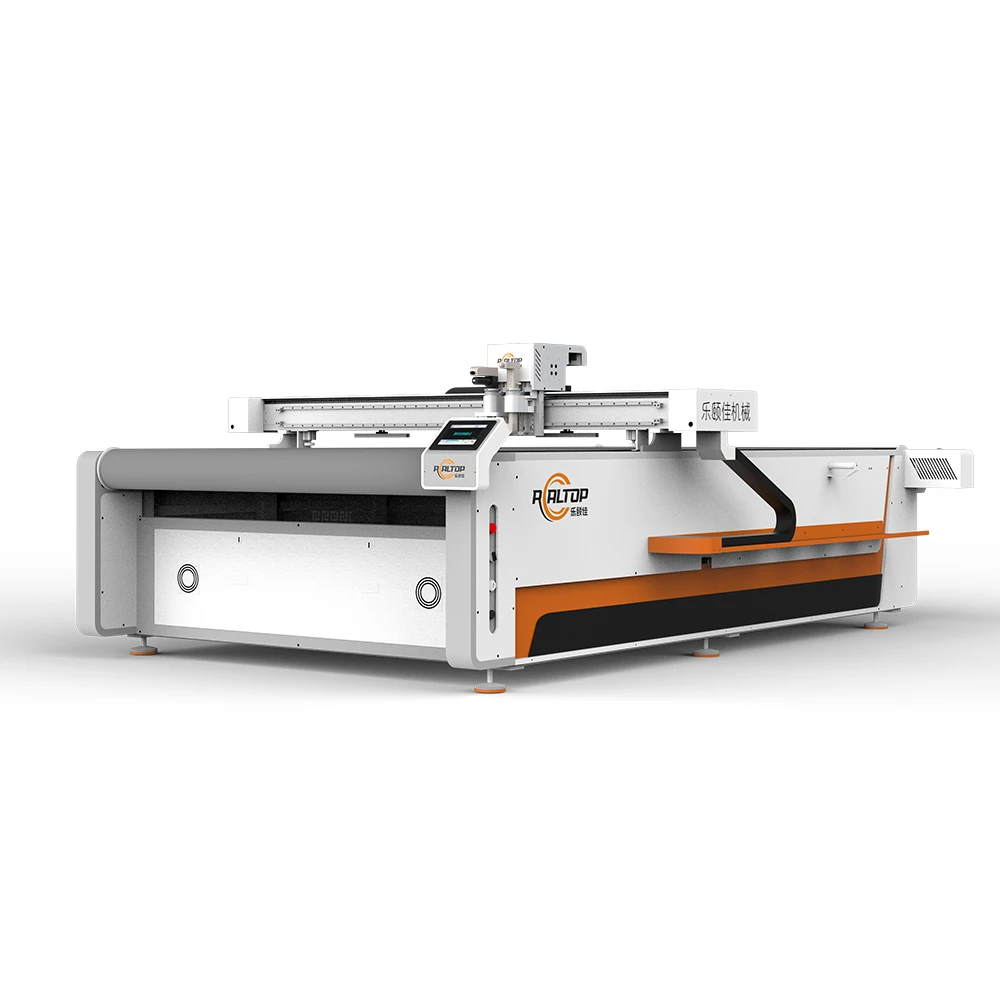
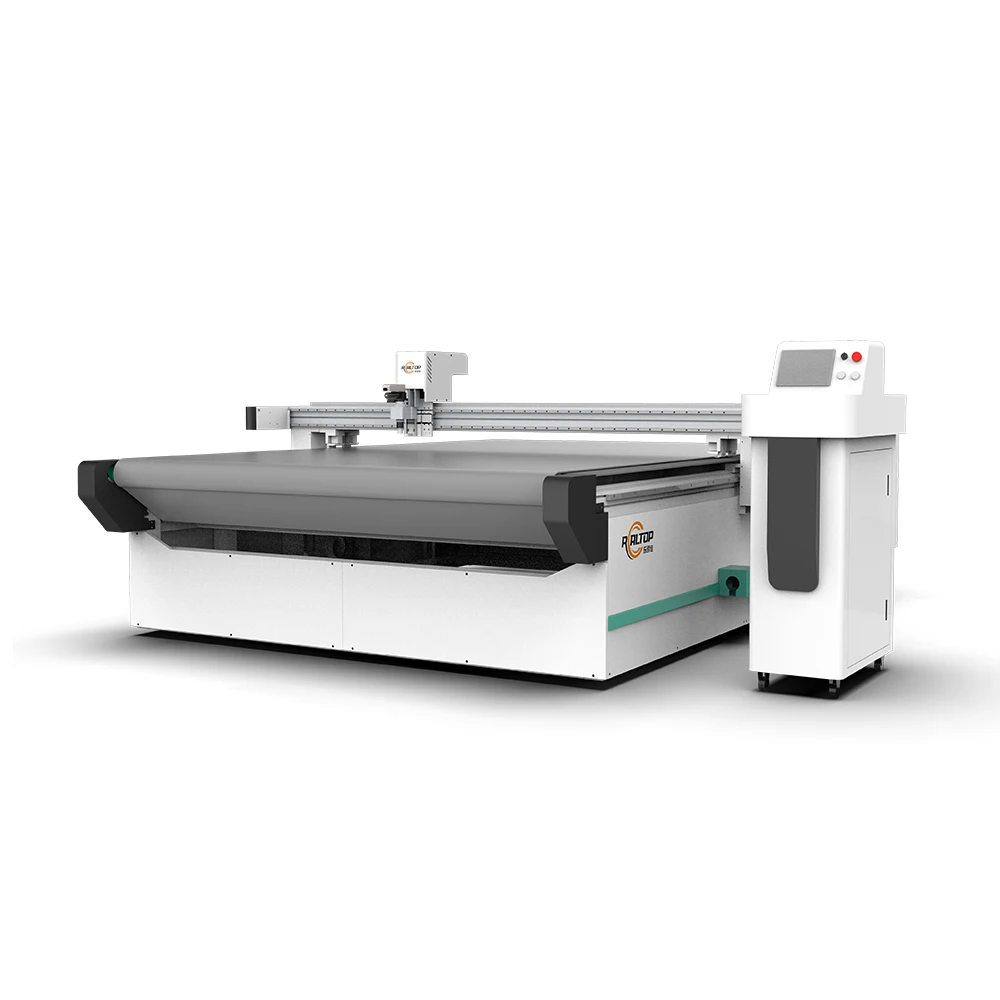
Specified per Material — every RT-D2516/RT-S2516 tool head and table zone is configured after sample cutting on the buyer’s actual fabric, leather or composite stock, so the machine arrives ready for the specific production job rather than a generic setup.
Technical Specifications
| Parameter | Value |
|---|---|
| Product Type | CNC Oscillating Knife Cutting Machine |
| Model | RT-D2516/RT-S2516 |
| Working Area | 1600×2500 mm |
| Machine Size | 3450×2300×1250 mm |
| Rated Power | 9 kW |
| Voltage | 380V±10% |
| Translational Velocity | 800–2000 mm/s |
| Cutting Speed | 200–800 mm/s (varies according to material type and thickness) |
| Cutting Thickness | ≤100 mm (varies with material density; basis to be confirmed per sample) |
| Repeated Accuracy | ≤0.1 mm |
| Transmission System | Digital servo motor, linear guide, synchronous belt, ball screw |
| Servo Motor Options | Delta or Panasonic |
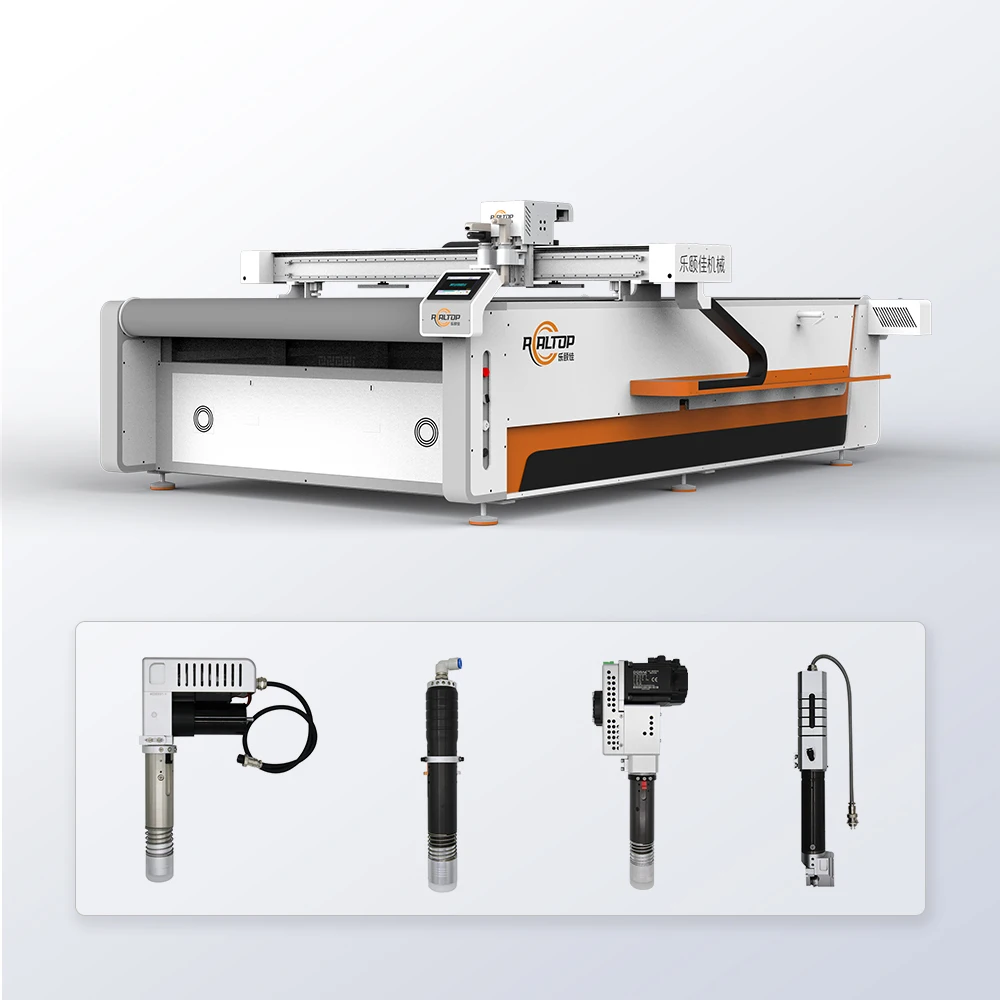
| Tool Head Options | Oscillating knife, pneumatic knife, high-power vibrating knife, circular knife, V-cutting knife, drag knife, creasing wheel, dotted line knife, punching tool, brush |
| Visual Positioning Options | Small CCD camera mark point, panoramic camera recognition, projection positioning |
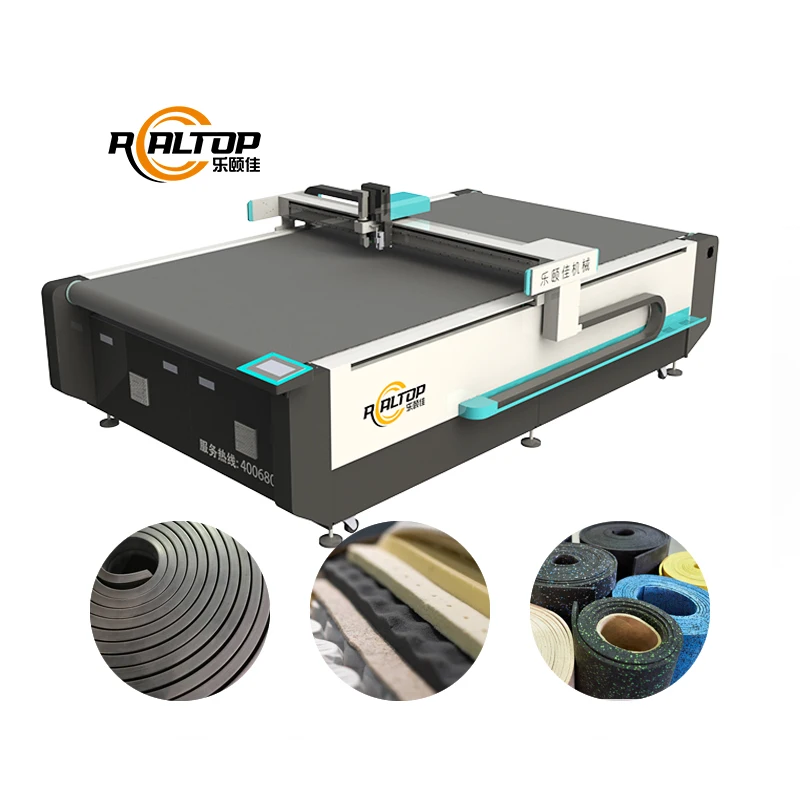
| Vacuum Table | Magnesium-aluminum alloy with PVDF coating; integrated or split box adsorption |
| Vacuum Pump | 7.5 kW, aviation aluminum shell, built-in silencer sponge |
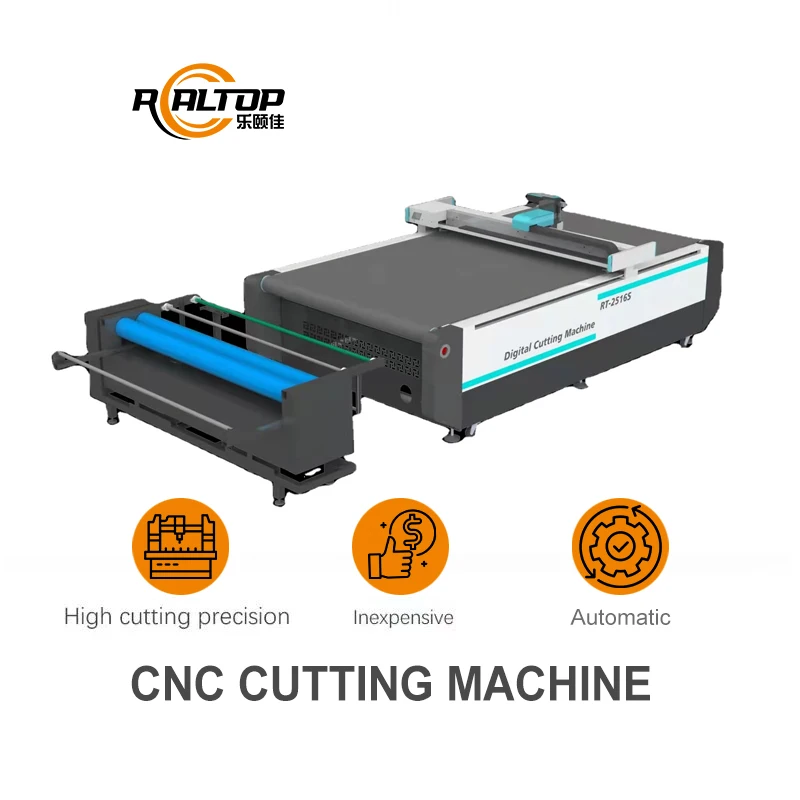
| Fixed Model | Flat working table or auto feeding table |
| Software Compatibility | PLT, DXF, AI; HP-GL compatible instruction system |
| Control Panel | Touch screen, multi-language |
| Safety Devices | Infrared induction blocking, anti-collision sensors, emergency stop with in-situ resume |
Application Suitability
| Application | Material or Output |
|---|---|
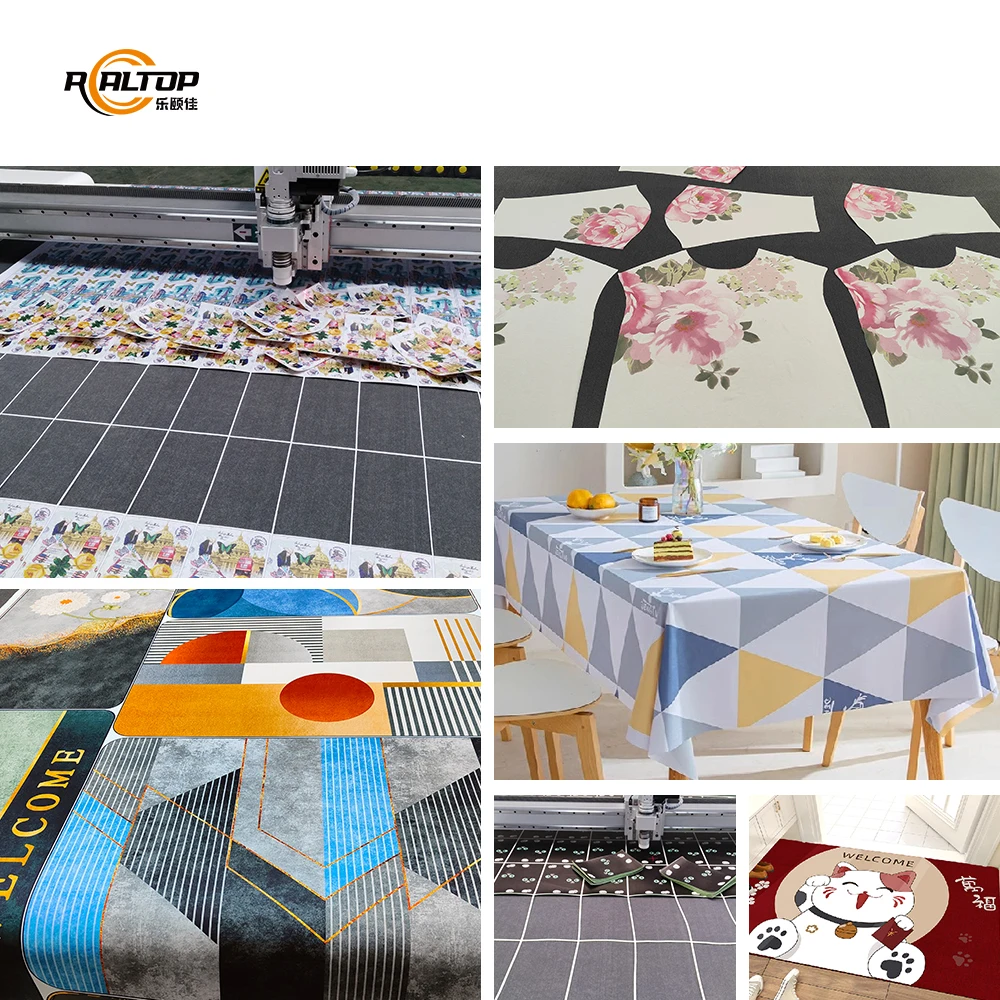
| Garment and footwear production | Fabric, textile, shoe material, lining, artificial leather, PU, PVC |
| Automotive interior and gasket fabrication | Sponge composite leather, foam board, rubber, sealing pads |
| Packaging sample making | Cardboard, corrugated cardboard, sticker, film |
| Soft furnishing and carpet cutting | Non-woven fabric, carpet, floor mat materials |
| Composite and outdoor goods | Carbon fiber, fiberglass, composite panels |
Why Working Area Alone Will Not Tell You If This Machine Fits Your Material
A 1600×2500 mm bed handles the sheet size, but the material thickness, density, and layered construction determine whether the tool head and vacuum zoning can actually hold and cut the part cleanly.
Buyers often start by matching machine size to their largest sheet, then discover mid-run that a dense multi-layer foam crushes under the drag knife, or that small leather pieces lift off the table because the vacuum zones are too coarse for the nest layout. The CNC oscillating knife cutting machine manufacturer must confirm the exact material stack and part geometry before locking the configuration [NEED_CITE: importance of material-specific tool head selection for flexible materials]. With the RT-D2516/RT-S2516, that verification happens through sample cutting on the buyer’s own stock, not a generic demo piece.
Matching the Cutting Method to Flexible and Semi-Rigid Materials
The knife-cutting family occupies a distinct position in the catalogue for fabric, leather, foam and composite materials where laser heat would seal edges on synthetics or burn through layered textiles. The RT-D2516/RT-S2516 covers this ground with a full tool head menu — oscillating knife for woven and non-woven fabric, pneumatic knife for thicker foam and sponge, drag knife for vinyl and sticker, creasing wheel for cardboard sample work — allowing a single CNC flatbed cutting table for sale to handle cutting, creasing and marking in one pass.
Where Knife Cutting Sits in the Production Volume Range
For roll-fed garment or automotive interior runs, the auto-feeding table variant keeps material flowing through the cutting zone without manual sheet loading between nests. For shorter packaging sample runs or low-volume gasket production, the flat table variant holds a single sheet under vacuum while the operator manages file changes. The split box adsorption platform on the RT-D2516/RT-S2516 also allows the table to be separated for container transport and reassembled on site, which matters when shipping to facilities without oversized access doors [NEED_CITE: split-box vacuum table logistics for large-format CNC machines].
Reading the Specification Sheet Against Your Actual Production Conditions
The 7.5 kW vacuum pump with aviation aluminum shell and built-in silencer sponge addresses two practical workshop concerns: enough suction to hold lightweight film and sticker materials flat during high-speed traverse, and noise reduction in environments where operators stand next to the machine all shift. The repeated accuracy of ≤0.1 mm, driven by the digital servo and linear guide transmission, holds tight registration on printed contour jobs where the CCD camera tracks marks across the full 1600×2500 mm bed. Translational velocity reaches 800–2000 mm/s between cuts, while actual cutting speed of 200–800 mm/s depends entirely on the material density and layer count — a figure that must be confirmed on the buyer’s sample before the order is finalized.
What Happens When the Configuration Is Chosen Without a Sample Test
Specifying a CNC oscillating knife cutting machine manufacturer based on bed size and price, without running the buyer’s actual material, leads to predictable failures: the wrong knife frequency tears woven fabric instead of shearing it, the vacuum zones are too large to hold small gasket parts, and the CCD camera cannot read printed marks at the required production speed [NEED_CITE: common misconfiguration issues in digital flatbed cutting]. These are not warranty claims — they are configuration errors that require re-ordering tool heads, re-zoning the table, or in some cases replacing the machine entirely.
What You Are Actually Buying Beyond the Machine Frame
In-house design and production across both knife and laser technologies means the RT-D2516/RT-S2516 is specified against the material first, not the other way around. Tool head and table zoning are confirmed per sample, not pulled from a standard list. CCD camera positioning is tested on the buyer’s printed stock at production speed before shipment. Voltage, plug type, and control language — available in English, Russian, Italian, Chinese, or customizable — are locked in before production starts. The software licence is delivered with a file format compatibility note confirming PLT, DXF, and AI imports from the buyer’s existing nesting workflow.
Documentation & Verification
- Machine specification sheet listing every selected tool head and table zone for your material
- Electrical schematic with voltage and frequency confirmed for your local grid standard
- Sample cutting report produced on your own fabric, leather, or composite stock before dispatch
- Tool head and table configuration list detailing oscillating knife frequency, vacuum zoning map, and camera type
- Software licence with file format compatibility note for PLT, DXF, AI, and HP-GL workflows
- Packing photographs showing split box table separation and protective crating for sea freight
Installation, Commissioning & Support
- 3450×2300×1250 mm footprint requires level concrete floor with clearance for auto-feeding conveyor if equipped
- 9 kW rated power plus 7.5 kW vacuum pump demands a dedicated 380V±10% circuit with correct breaker rating
- Split box vacuum table reassembled and leveled on site, with PVDF-coated surface inspected for transport damage
- First-run parameter tuning on buyer’s material, adjusting knife frequency and vacuum suction per zone
- Touch screen control training in selected language, covering file import, nest layout, and emergency stop resume
- Spare oscillating knives, drag knife blades, and vacuum seals included with maintenance schedule documentation
Before You Request a Quotation
Provide the material type, maximum thickness, and whether you run single sheets or rolls, along with your daily cutting volume and target part geometry. Confirm the voltage and frequency at your facility, the control language your operators need, and whether your existing nesting software outputs PLT, DXF, or AI files. If your material is layered, composite, or has a printed surface requiring contour recognition, send a sample roll or sheet so the tool head and camera system can be verified before the build starts.
Frequently Asked Questions
Q: When should I choose this knife cutting machine over a laser cutter for my material?
A: Knife cutting avoids heat-affected edges, which matters for layered fabrics, foam, and composite materials where laser would melt, burn, or leave residue. Laser suits acrylic, wood, and thin textile engraving where edge sealing is acceptable or desired. The choice depends on material response to heat, not just thickness, and should be confirmed with a sample test on your stock.
Q: Should I choose the flat table or auto-feeding conveyor for my production?
A: Flat table suits sheet-fed work such as packaging samples, gasket cutting, and short-run leather parts. Auto-feeding conveyor fits roll-fed fabric, textile, and non-woven production where continuous nesting and cutting increases daily throughput without manual sheet loading. The decision depends on your material format and shift volume.
Q: Which tool heads do I need for my specific material?
A: Oscillating knife handles woven and non-woven fabric and thin foam. Pneumatic knife suits thicker sponge and composite leather. Drag knife cuts vinyl and sticker. Creasing wheel scores cardboard. The combination is determined by running your material sample and selecting heads that produce a clean edge at your required speed.
Q: Can the machine read printed marks for contour cutting on my material?
A: Yes, with CCD mark point or panoramic camera positioning configured for your print contrast and mark size. The camera system must be tested on your actual printed stock at production speed to confirm reliable tracking, which is done during the sample cutting phase before the machine is built.
Specified per Material — every RT-D2516/RT-S2516 tool head and table zone is configured after sample cutting on the buyer’s actual fabric, leather or composite stock, so the machine arrives ready for the specific production job rather than a generic setup.
Technical Specifications
| Parameter | Value |
|---|---|
| Product Type | CNC Oscillating Knife Cutting Machine |
| Model | RT-D2516/RT-S2516 |
| Working Area | 1600×2500 mm |
| Machine Size | 3450×2300×1250 mm |
| Rated Power | 9 kW |
| Voltage | 380V±10% |
| Translational Velocity | 800–2000 mm/s |
| Cutting Speed | 200–800 mm/s (varies according to material type and thickness) |
| Cutting Thickness | ≤100 mm (varies with material density; basis to be confirmed per sample) |
| Repeated Accuracy | ≤0.1 mm |
| Transmission System | Digital servo motor, linear guide, synchronous belt, ball screw |
| Servo Motor Options | Delta or Panasonic |
| Tool Head Options | Oscillating knife, pneumatic knife, high-power vibrating knife, circular knife, V-cutting knife, drag knife, creasing wheel, dotted line knife, punching tool, brush |
| Visual Positioning Options | Small CCD camera mark point, panoramic camera recognition, projection positioning |
| Vacuum Table | Magnesium-aluminum alloy with PVDF coating; integrated or split box adsorption |
| Vacuum Pump | 7.5 kW, aviation aluminum shell, built-in silencer sponge |
| Fixed Model | Flat working table or auto feeding table |
| Software Compatibility | PLT, DXF, AI; HP-GL compatible instruction system |
| Control Panel | Touch screen, multi-language |
| Safety Devices | Infrared induction blocking, anti-collision sensors, emergency stop with in-situ resume |
Application Suitability
| Application | Material or Output |
|---|---|
| Garment and footwear production | Fabric, textile, shoe material, lining, artificial leather, PU, PVC |
| Automotive interior and gasket fabrication | Sponge composite leather, foam board, rubber, sealing pads |
| Packaging sample making | Cardboard, corrugated cardboard, sticker, film |
| Soft furnishing and carpet cutting | Non-woven fabric, carpet, floor mat materials |
| Composite and outdoor goods | Carbon fiber, fiberglass, composite panels |
Why Working Area Alone Will Not Tell You If This Machine Fits Your Material
A 1600×2500 mm bed handles the sheet size, but the material thickness, density, and layered construction determine whether the tool head and vacuum zoning can actually hold and cut the part cleanly.
Buyers often start by matching machine size to their largest sheet, then discover mid-run that a dense multi-layer foam crushes under the drag knife, or that small leather pieces lift off the table because the vacuum zones are too coarse for the nest layout. The CNC oscillating knife cutting machine manufacturer must confirm the exact material stack and part geometry before locking the configuration [NEED_CITE: importance of material-specific tool head selection for flexible materials]. With the RT-D2516/RT-S2516, that verification happens through sample cutting on the buyer’s own stock, not a generic demo piece.
Matching the Cutting Method to Flexible and Semi-Rigid Materials
The knife-cutting family occupies a distinct position in the catalogue for fabric, leather, foam and composite materials where laser heat would seal edges on synthetics or burn through layered textiles. The RT-D2516/RT-S2516 covers this ground with a full tool head menu — oscillating knife for woven and non-woven fabric, pneumatic knife for thicker foam and sponge, drag knife for vinyl and sticker, creasing wheel for cardboard sample work — allowing a single CNC flatbed cutting table for sale to handle cutting, creasing and marking in one pass.
Where Knife Cutting Sits in the Production Volume Range
For roll-fed garment or automotive interior runs, the auto-feeding table variant keeps material flowing through the cutting zone without manual sheet loading between nests. For shorter packaging sample runs or low-volume gasket production, the flat table variant holds a single sheet under vacuum while the operator manages file changes. The split box adsorption platform on the RT-D2516/RT-S2516 also allows the table to be separated for container transport and reassembled on site, which matters when shipping to facilities without oversized access doors [NEED_CITE: split-box vacuum table logistics for large-format CNC machines].
Reading the Specification Sheet Against Your Actual Production Conditions
The 7.5 kW vacuum pump with aviation aluminum shell and built-in silencer sponge addresses two practical workshop concerns: enough suction to hold lightweight film and sticker materials flat during high-speed traverse, and noise reduction in environments where operators stand next to the machine all shift. The repeated accuracy of ≤0.1 mm, driven by the digital servo and linear guide transmission, holds tight registration on printed contour jobs where the CCD camera tracks marks across the full 1600×2500 mm bed. Translational velocity reaches 800–2000 mm/s between cuts, while actual cutting speed of 200–800 mm/s depends entirely on the material density and layer count — a figure that must be confirmed on the buyer’s sample before the order is finalized.
What Happens When the Configuration Is Chosen Without a Sample Test
Specifying a CNC oscillating knife cutting machine manufacturer based on bed size and price, without running the buyer’s actual material, leads to predictable failures: the wrong knife frequency tears woven fabric instead of shearing it, the vacuum zones are too large to hold small gasket parts, and the CCD camera cannot read printed marks at the required production speed [NEED_CITE: common misconfiguration issues in digital flatbed cutting]. These are not warranty claims — they are configuration errors that require re-ordering tool heads, re-zoning the table, or in some cases replacing the machine entirely.
What You Are Actually Buying Beyond the Machine Frame
In-house design and production across both knife and laser technologies means the RT-D2516/RT-S2516 is specified against the material first, not the other way around. Tool head and table zoning are confirmed per sample, not pulled from a standard list. CCD camera positioning is tested on the buyer’s printed stock at production speed before shipment. Voltage, plug type, and control language — available in English, Russian, Italian, Chinese, or customizable — are locked in before production starts. The software licence is delivered with a file format compatibility note confirming PLT, DXF, and AI imports from the buyer’s existing nesting workflow.
Documentation & Verification
- Machine specification sheet listing every selected tool head and table zone for your material
- Electrical schematic with voltage and frequency confirmed for your local grid standard
- Sample cutting report produced on your own fabric, leather, or composite stock before dispatch
- Tool head and table configuration list detailing oscillating knife frequency, vacuum zoning map, and camera type
- Software licence with file format compatibility note for PLT, DXF, AI, and HP-GL workflows
- Packing photographs showing split box table separation and protective crating for sea freight
Installation, Commissioning & Support
- 3450×2300×1250 mm footprint requires level concrete floor with clearance for auto-feeding conveyor if equipped
- 9 kW rated power plus 7.5 kW vacuum pump demands a dedicated 380V±10% circuit with correct breaker rating
- Split box vacuum table reassembled and leveled on site, with PVDF-coated surface inspected for transport damage
- First-run parameter tuning on buyer’s material, adjusting knife frequency and vacuum suction per zone
- Touch screen control training in selected language, covering file import, nest layout, and emergency stop resume
- Spare oscillating knives, drag knife blades, and vacuum seals included with maintenance schedule documentation
Before You Request a Quotation
Provide the material type, maximum thickness, and whether you run single sheets or rolls, along with your daily cutting volume and target part geometry. Confirm the voltage and frequency at your facility, the control language your operators need, and whether your existing nesting software outputs PLT, DXF, or AI files. If your material is layered, composite, or has a printed surface requiring contour recognition, send a sample roll or sheet so the tool head and camera system can be verified before the build starts.
Frequently Asked Questions
Q: When should I choose this knife cutting machine over a laser cutter for my material?
A: Knife cutting avoids heat-affected edges, which matters for layered fabrics, foam, and composite materials where laser would melt, burn, or leave residue. Laser suits acrylic, wood, and thin textile engraving where edge sealing is acceptable or desired. The choice depends on material response to heat, not just thickness, and should be confirmed with a sample test on your stock.
Q: Should I choose the flat table or auto-feeding conveyor for my production?
A: Flat table suits sheet-fed work such as packaging samples, gasket cutting, and short-run leather parts. Auto-feeding conveyor fits roll-fed fabric, textile, and non-woven production where continuous nesting and cutting increases daily throughput without manual sheet loading. The decision depends on your material format and shift volume.
Q: Which tool heads do I need for my specific material?
A: Oscillating knife handles woven and non-woven fabric and thin foam. Pneumatic knife suits thicker sponge and composite leather. Drag knife cuts vinyl and sticker. Creasing wheel scores cardboard. The combination is determined by running your material sample and selecting heads that produce a clean edge at your required speed.
Q: Can the machine read printed marks for contour cutting on my material?
A: Yes, with CCD mark point or panoramic camera positioning configured for your print contrast and mark size. The camera system must be tested on your actual printed stock at production speed to confirm reliable tracking, which is done during the sample cutting phase before the machine is built.










商品评价
There are no reviews yet.