




Fast Delivery
Quick, reliable shipping to any location.

Free & easy returns
Return this item by mail or in store within 90 days for a full refund.
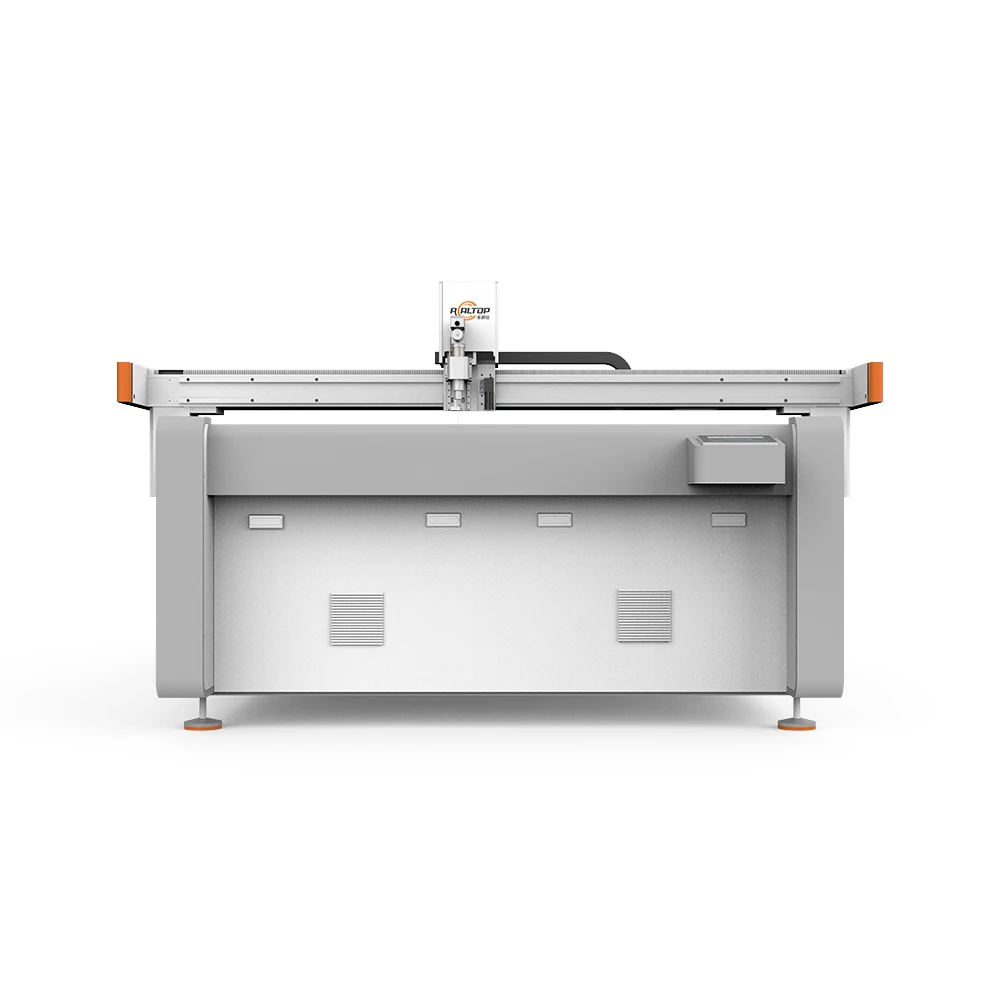
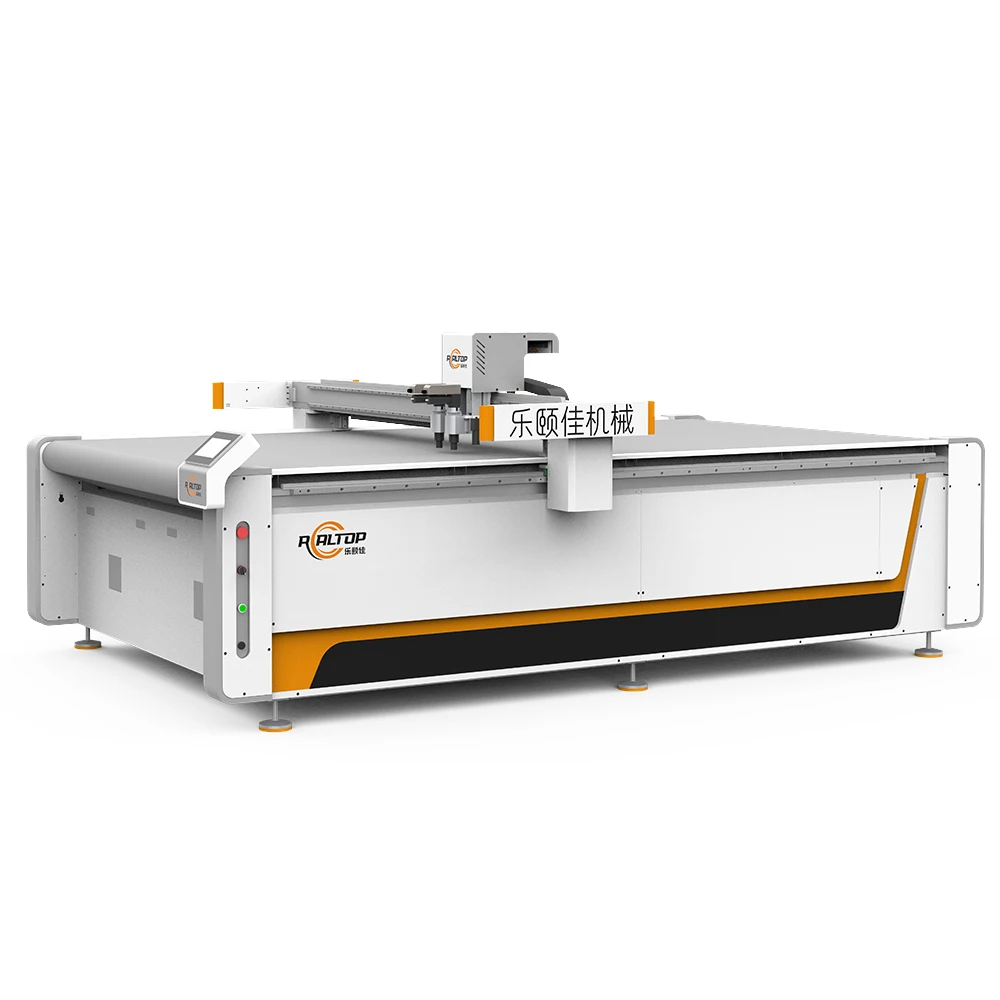
Material-Matched Cutting Configuration — Every CNC oscillating knife cutting machine ships with a tool head and vacuum table combination specified against the buyer’s actual material sample, not a generic catalog recommendation.
Technical Specifications
| Parameter | Value |
|---|---|
| Product Type | CNC Oscillating Knife Cutting Machine |
| Working Area | 1600×2500 mm |
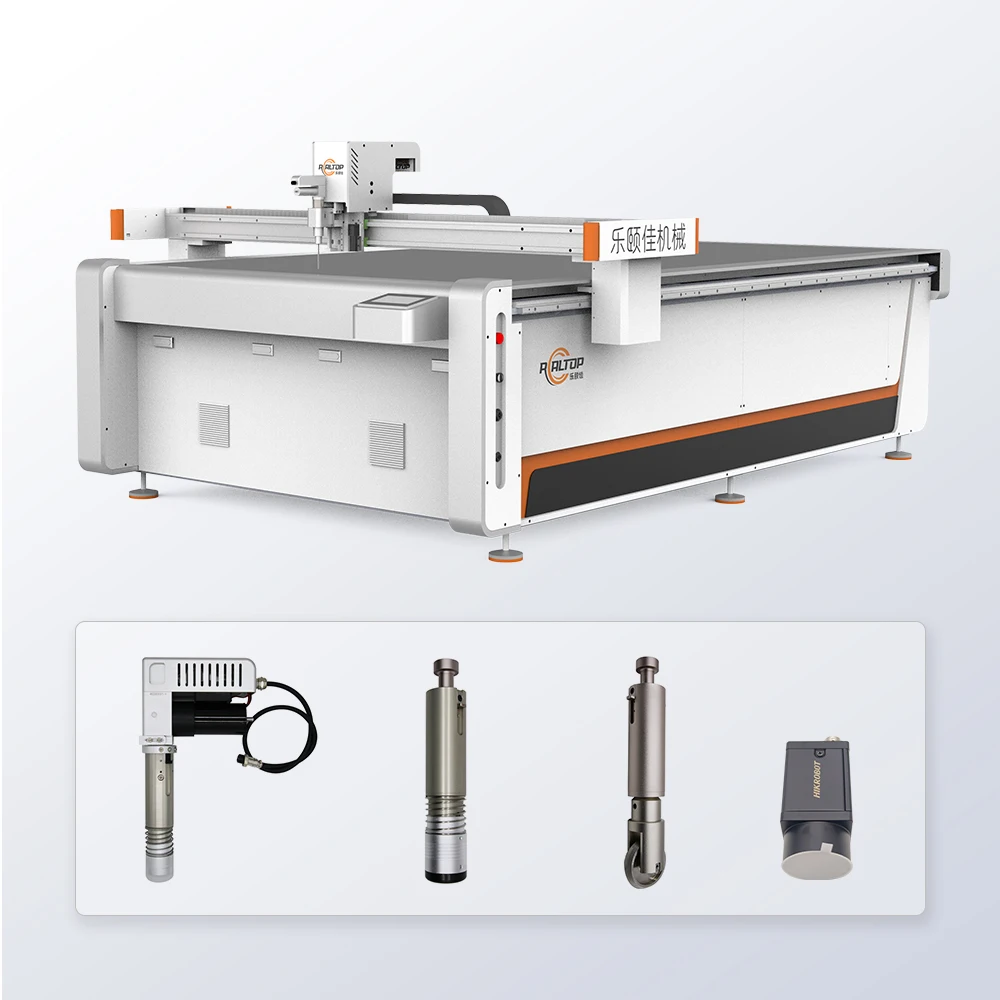
| Tool Head Options | Oscillating knife, Driven rotary knife, Creasing wheel, Kiss cutting tool, Pneumatic knife, Milling tool, V groove knife, CCD camera |
| Cutting Speed | 0–1500 mm/s |
| Cutting Thickness | ≤ 40 mm (basis not stated in source — confirm material type and density) |
| Cutting Accuracy | ±0.1 mm |
| Vacuum Pump | 9 kW |
| Vacuum Table | Aluminum bellows vacuum table |
| Voltage Options | 110V, 220V, 380V (frequency to be confirmed by destination market) |
| Control System | PLC control panel with dedicated packaging box structure design software |
| Servo Motors | Panasonic, Delta, Dorna options available |
| File Formats | PLT, DXF, AI, PDF |
| Safety Devices | Infrared sensor device, Emergency stop device |
| Machine Dimensions (L×W×H) | 3300×2100×1350 mm |
| Software Language Options | English, Russian, Italian, Chinese; custom languages available |
| Machine Frame | Heavy-duty frame with precision-ground surface |
| Certifications | CE |
Application Suitability
| Application | Material or Output |
|---|---|
| Packaging sample making and carton prototyping | Corrugated cardboard (E-flute, B-flute, BC-flute), greyboard, cardstock |
| Specialty paper and art paper cutting | Art paper, specialty paper, adhesive-backed paper sheets |
| Foam packaging insert production | EVA foam, EPE foam, PU foam, Coroplast |
| Gasket and protective pad cutting | Rubber mats, non-woven fabric, velvet/fleece fabric |
| Thin plastic and composite cutting | PVC sheets, PET sheets, leather, synthetic leather, composite materials |
Why the Material Thickness Question Must Come Before the Quote
A cutting machine specified on working area alone will underperform the moment it meets your actual board density.
I once shipped an oscillating knife unit to a packaging workshop in South Asia. The factory test here ran perfectly on standard greyboard. When the buyer ran five-layer high-density corrugated on their floor, the blade could not penetrate the full stack. We eventually resolved it with a higher-torque spindle and a dedicated blade profile, but that delay cost the buyer two weeks of sample production. [NEED_CITE: material density variation in corrugated board grades]
This is why a complete catalogue approach matters. A CNC Oscillating Knife Cutting Machine manufacturer that only asks for sheet size is missing the variables that determine whether the tool head, motor, and vacuum hold-down can actually do the job. Every order should begin with a physical sample of the material you intend to cut.
Knife Versus Laser: Choosing the Right Process by Material
The decision between oscillating knife and laser cutting depends on what the packaging material does during and after the cut. Knife systems handle corrugated flute structures, foam inserts, and adhesive-backed laminates without burning or discoloring the edge. Laser works well for sealing synthetic textile edges or engraving acrylic packaging displays. This catalogue covers both routes so the buyer selects based on the material behaviour, not because only one technology was offered.
The Full Tool Head Range for Packaging Workflows
Packaging sample making is rarely a single-cut operation. A typical carton prototype requires an oscillating knife for the outer contour, a creasing wheel for fold lines, and a kiss cutting tool for peel-off sections or perforations. The 1625 platform supports eight tool head options on one table, which means a packaging studio can move from a greyboard box mock-up to an EVA foam insert in one session without repositioning the sheet or changing machines. [NEED_CITE: multi-tool CNC cutting workflow in packaging prototyping]
How Core Parameters Translate to Daily Cutting Work
The 1600×2500 mm working area accommodates most standard corrugated sheets used in packaging sample making, but the useful cutting zone depends on how the vacuum table is zoned. The aluminum bellows vacuum table paired with a 9 kW pump provides consistent hold-down across the full surface, which is essential when cutting small carton components that tend to lift under knife drag. The ±0.1 mm cutting accuracy ensures that crease lines land precisely where the box structure design software placed them — a tolerance mismatch here shows up as misaligned fold lines on the finished prototype. The PLC control panel integrates the packaging design software directly, so file import from PLT, DXF, AI, and PDF sources happens without a separate nesting or conversion step. The servo motor selection across Panasonic, Delta, and Dorna gives the buyer a way to match motion performance to their production tempo and local service availability.
The Hidden Cost of Wrong Configuration Choices
When the vacuum table zoning does not match the part size, small packaging components lift off the table mid-cut, producing ragged edges that ruin the sample. A creasing wheel specified at the wrong pressure for your flute type crushes rather than scores the board, weakening the fold line. If the software cannot import your existing AI or PDF design files, every artwork revision becomes a manual redraw. These problems do not show up in a factory demonstration running standard test material. [NEED_CITE: common configuration mismatches in CNC packaging cutting]
Why Source This Range Here
In-house design and production covers both knife and laser cutting technologies, so the buyer is not forced into one method when the material calls for the other. Tool head and table configurations are specified per material and production volume rather than sold as a fixed package. CCD camera positioning is available for printed contour work on branded packaging prototypes. Software compatibility is confirmed against the buyer’s existing file formats before the order is placed. Voltage, control language, and machine specifications are adapted to the destination market, and sample cutting on the buyer’s own material is standard practice before commitment.
Documentation & Verification
- Machine specification sheet listing all confirmed tool head and table options
- Electrical schematic and voltage confirmation matched to destination power standards
- Sample cutting report produced on buyer-supplied packaging material before dispatch
- Software licence and file format compatibility note for PLT, DXF, AI, PDF workflows
- Operation and maintenance manual with language matched to the operator team
- Factory test record documenting cutting accuracy on specified board type
Installation, Commissioning & Support
- Floor space allocation based on the 3300×2100×1350 mm machine footprint plus operator clearance
- Dedicated electrical circuit sized for the 9 kW vacuum pump plus spindle and servo loads
- Assembly and levelling of the heavy-duty frame on a precision-ground workshop floor
- First-run calibration of cutting accuracy and vacuum hold-down on buyer’s corrugated material
- Operator training on the PLC control panel and packaging box structure design software
- Spare parts list covering blades, creasing wheels, and vacuum table seals for the first production cycle
What We Need to Start Your Configuration
Tell us the exact board or foam type you cut most often, including flute profile and caliper thickness, along with the largest sheet size you process daily. Specify your workshop voltage and frequency, and the language your operators need on the control panel. If you already use packaging design software, send us a sample file so we can verify format compatibility before quoting.
Frequently Asked Questions
Q: How do I decide between oscillating knife and laser cutting for my packaging materials?
A: Knife cutting suits corrugated board, greyboard, foam inserts, and adhesive laminates where a clean mechanical edge is required without heat marks. Laser cutting is selected for sealing synthetic edges or engraving display materials. The right choice depends on your specific material composition and the edge finish your packaging specification demands.
Q: What working area size fits my packaging sample operation?
A: The 1600×2500 mm table handles most standard corrugated and greyboard sheets used in carton prototyping. The practical cutting area depends on the vacuum zoning configuration and whether you run full sheets or pre-cut blanks. Send your typical sheet dimensions and daily volume so we can match the table to your workflow.
Q: When is CCD camera contour recognition useful in packaging cutting?
A: CCD positioning is needed when cutting around pre-printed graphics on packaging prototypes or short-run production. The camera locates printed registration marks and adjusts the cut path in real time. This feature is essential for branded box samples where the cut contour must align precisely with the printed artwork.
Q: How should I confirm voltage and control language before placing the order?
A: Provide your workshop supply voltage, phase configuration, and frequency at the inquiry stage. The machine supports 110V, 220V, and 380V options, but frequency must match local standards. Software language is configurable across English, Russian, Italian, Chinese, or a custom language, and should be confirmed before production begins.
Q: What does the workflow look like from design file to finished sample?
A: The operator imports a PLT, DXF, AI, or PDF file into the packaging box structure design software on the PLC panel. The software assigns tool paths for cutting, creasing, and kiss cutting. The sheet is placed on the vacuum table, registered if CCD positioning is used, and the machine executes all operations in sequence. The finished sample is removed ready for folding and evaluation.
Material-Matched Cutting Configuration — Every CNC oscillating knife cutting machine ships with a tool head and vacuum table combination specified against the buyer’s actual material sample, not a generic catalog recommendation.
Technical Specifications
| Parameter | Value |
|---|---|
| Product Type | CNC Oscillating Knife Cutting Machine |
| Working Area | 1600×2500 mm |
| Tool Head Options | Oscillating knife, Driven rotary knife, Creasing wheel, Kiss cutting tool, Pneumatic knife, Milling tool, V groove knife, CCD camera |
| Cutting Speed | 0–1500 mm/s |
| Cutting Thickness | ≤ 40 mm (basis not stated in source — confirm material type and density) |
| Cutting Accuracy | ±0.1 mm |
| Vacuum Pump | 9 kW |
| Vacuum Table | Aluminum bellows vacuum table |
| Voltage Options | 110V, 220V, 380V (frequency to be confirmed by destination market) |
| Control System | PLC control panel with dedicated packaging box structure design software |
| Servo Motors | Panasonic, Delta, Dorna options available |
| File Formats | PLT, DXF, AI, PDF |
| Safety Devices | Infrared sensor device, Emergency stop device |
| Machine Dimensions (L×W×H) | 3300×2100×1350 mm |
| Software Language Options | English, Russian, Italian, Chinese; custom languages available |
| Machine Frame | Heavy-duty frame with precision-ground surface |
| Certifications | CE |
Application Suitability
| Application | Material or Output |
|---|---|
| Packaging sample making and carton prototyping | Corrugated cardboard (E-flute, B-flute, BC-flute), greyboard, cardstock |
| Specialty paper and art paper cutting | Art paper, specialty paper, adhesive-backed paper sheets |
| Foam packaging insert production | EVA foam, EPE foam, PU foam, Coroplast |
| Gasket and protective pad cutting | Rubber mats, non-woven fabric, velvet/fleece fabric |
| Thin plastic and composite cutting | PVC sheets, PET sheets, leather, synthetic leather, composite materials |
Why the Material Thickness Question Must Come Before the Quote
A cutting machine specified on working area alone will underperform the moment it meets your actual board density.
I once shipped an oscillating knife unit to a packaging workshop in South Asia. The factory test here ran perfectly on standard greyboard. When the buyer ran five-layer high-density corrugated on their floor, the blade could not penetrate the full stack. We eventually resolved it with a higher-torque spindle and a dedicated blade profile, but that delay cost the buyer two weeks of sample production. [NEED_CITE: material density variation in corrugated board grades]
This is why a complete catalogue approach matters. A CNC Oscillating Knife Cutting Machine manufacturer that only asks for sheet size is missing the variables that determine whether the tool head, motor, and vacuum hold-down can actually do the job. Every order should begin with a physical sample of the material you intend to cut.
Knife Versus Laser: Choosing the Right Process by Material
The decision between oscillating knife and laser cutting depends on what the packaging material does during and after the cut. Knife systems handle corrugated flute structures, foam inserts, and adhesive-backed laminates without burning or discoloring the edge. Laser works well for sealing synthetic textile edges or engraving acrylic packaging displays. This catalogue covers both routes so the buyer selects based on the material behaviour, not because only one technology was offered.
The Full Tool Head Range for Packaging Workflows
Packaging sample making is rarely a single-cut operation. A typical carton prototype requires an oscillating knife for the outer contour, a creasing wheel for fold lines, and a kiss cutting tool for peel-off sections or perforations. The 1625 platform supports eight tool head options on one table, which means a packaging studio can move from a greyboard box mock-up to an EVA foam insert in one session without repositioning the sheet or changing machines. [NEED_CITE: multi-tool CNC cutting workflow in packaging prototyping]
How Core Parameters Translate to Daily Cutting Work
The 1600×2500 mm working area accommodates most standard corrugated sheets used in packaging sample making, but the useful cutting zone depends on how the vacuum table is zoned. The aluminum bellows vacuum table paired with a 9 kW pump provides consistent hold-down across the full surface, which is essential when cutting small carton components that tend to lift under knife drag. The ±0.1 mm cutting accuracy ensures that crease lines land precisely where the box structure design software placed them — a tolerance mismatch here shows up as misaligned fold lines on the finished prototype. The PLC control panel integrates the packaging design software directly, so file import from PLT, DXF, AI, and PDF sources happens without a separate nesting or conversion step. The servo motor selection across Panasonic, Delta, and Dorna gives the buyer a way to match motion performance to their production tempo and local service availability.
The Hidden Cost of Wrong Configuration Choices
When the vacuum table zoning does not match the part size, small packaging components lift off the table mid-cut, producing ragged edges that ruin the sample. A creasing wheel specified at the wrong pressure for your flute type crushes rather than scores the board, weakening the fold line. If the software cannot import your existing AI or PDF design files, every artwork revision becomes a manual redraw. These problems do not show up in a factory demonstration running standard test material. [NEED_CITE: common configuration mismatches in CNC packaging cutting]
Why Source This Range Here
In-house design and production covers both knife and laser cutting technologies, so the buyer is not forced into one method when the material calls for the other. Tool head and table configurations are specified per material and production volume rather than sold as a fixed package. CCD camera positioning is available for printed contour work on branded packaging prototypes. Software compatibility is confirmed against the buyer’s existing file formats before the order is placed. Voltage, control language, and machine specifications are adapted to the destination market, and sample cutting on the buyer’s own material is standard practice before commitment.
Documentation & Verification
- Machine specification sheet listing all confirmed tool head and table options
- Electrical schematic and voltage confirmation matched to destination power standards
- Sample cutting report produced on buyer-supplied packaging material before dispatch
- Software licence and file format compatibility note for PLT, DXF, AI, PDF workflows
- Operation and maintenance manual with language matched to the operator team
- Factory test record documenting cutting accuracy on specified board type
Installation, Commissioning & Support
- Floor space allocation based on the 3300×2100×1350 mm machine footprint plus operator clearance
- Dedicated electrical circuit sized for the 9 kW vacuum pump plus spindle and servo loads
- Assembly and levelling of the heavy-duty frame on a precision-ground workshop floor
- First-run calibration of cutting accuracy and vacuum hold-down on buyer’s corrugated material
- Operator training on the PLC control panel and packaging box structure design software
- Spare parts list covering blades, creasing wheels, and vacuum table seals for the first production cycle
What We Need to Start Your Configuration
Tell us the exact board or foam type you cut most often, including flute profile and caliper thickness, along with the largest sheet size you process daily. Specify your workshop voltage and frequency, and the language your operators need on the control panel. If you already use packaging design software, send us a sample file so we can verify format compatibility before quoting.
Frequently Asked Questions
Q: How do I decide between oscillating knife and laser cutting for my packaging materials?
A: Knife cutting suits corrugated board, greyboard, foam inserts, and adhesive laminates where a clean mechanical edge is required without heat marks. Laser cutting is selected for sealing synthetic edges or engraving display materials. The right choice depends on your specific material composition and the edge finish your packaging specification demands.
Q: What working area size fits my packaging sample operation?
A: The 1600×2500 mm table handles most standard corrugated and greyboard sheets used in carton prototyping. The practical cutting area depends on the vacuum zoning configuration and whether you run full sheets or pre-cut blanks. Send your typical sheet dimensions and daily volume so we can match the table to your workflow.
Q: When is CCD camera contour recognition useful in packaging cutting?
A: CCD positioning is needed when cutting around pre-printed graphics on packaging prototypes or short-run production. The camera locates printed registration marks and adjusts the cut path in real time. This feature is essential for branded box samples where the cut contour must align precisely with the printed artwork.
Q: How should I confirm voltage and control language before placing the order?
A: Provide your workshop supply voltage, phase configuration, and frequency at the inquiry stage. The machine supports 110V, 220V, and 380V options, but frequency must match local standards. Software language is configurable across English, Russian, Italian, Chinese, or a custom language, and should be confirmed before production begins.
Q: What does the workflow look like from design file to finished sample?
A: The operator imports a PLT, DXF, AI, or PDF file into the packaging box structure design software on the PLC panel. The software assigns tool paths for cutting, creasing, and kiss cutting. The sheet is placed on the vacuum table, registered if CCD positioning is used, and the machine executes all operations in sequence. The finished sample is removed ready for folding and evaluation.










商品评价
There are no reviews yet.