


Fast Delivery
Quick, reliable shipping to any location.

Free & easy returns
Return this item by mail or in store within 90 days for a full refund.
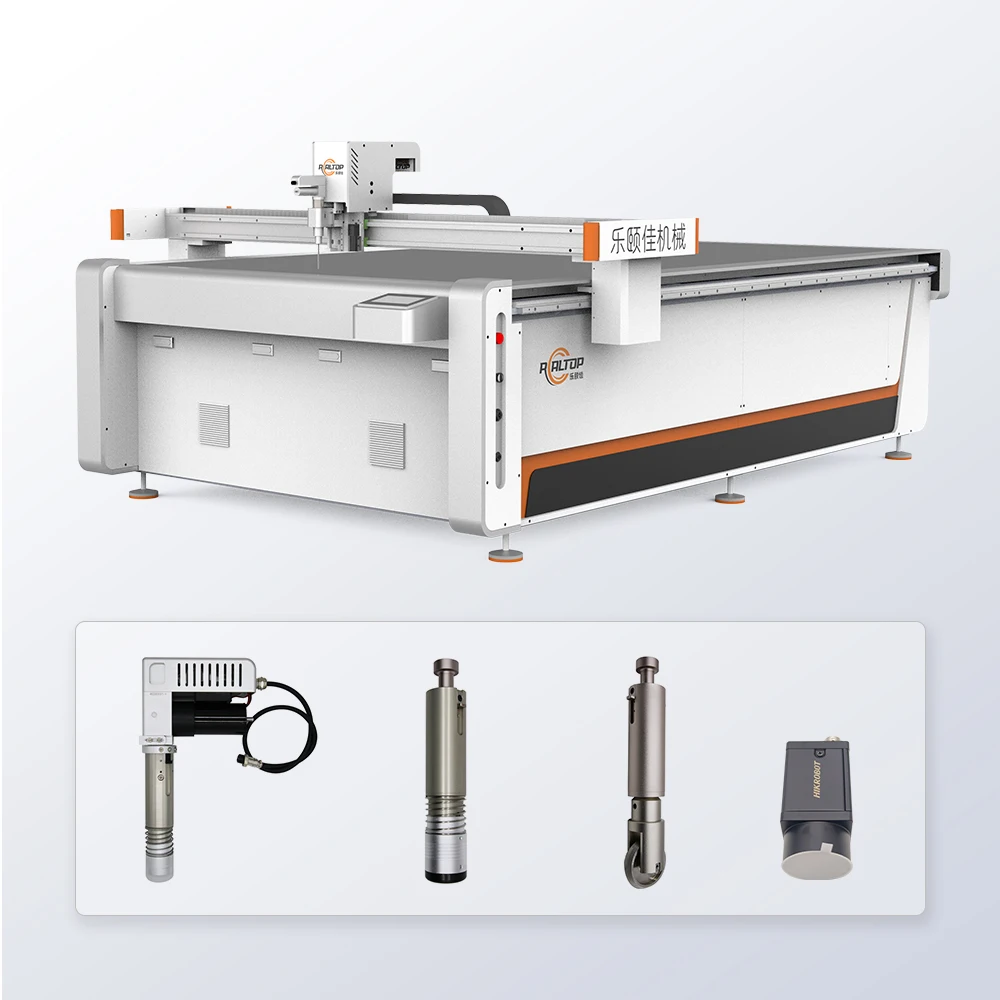
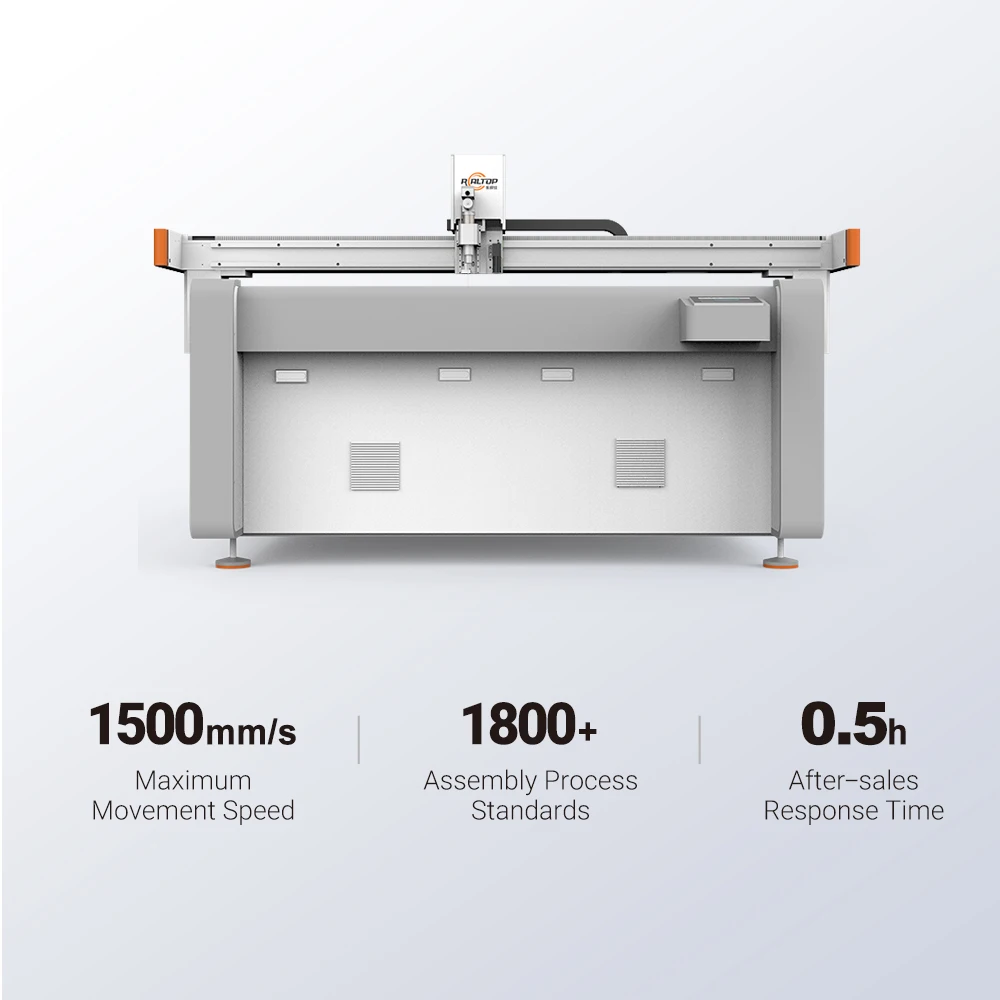
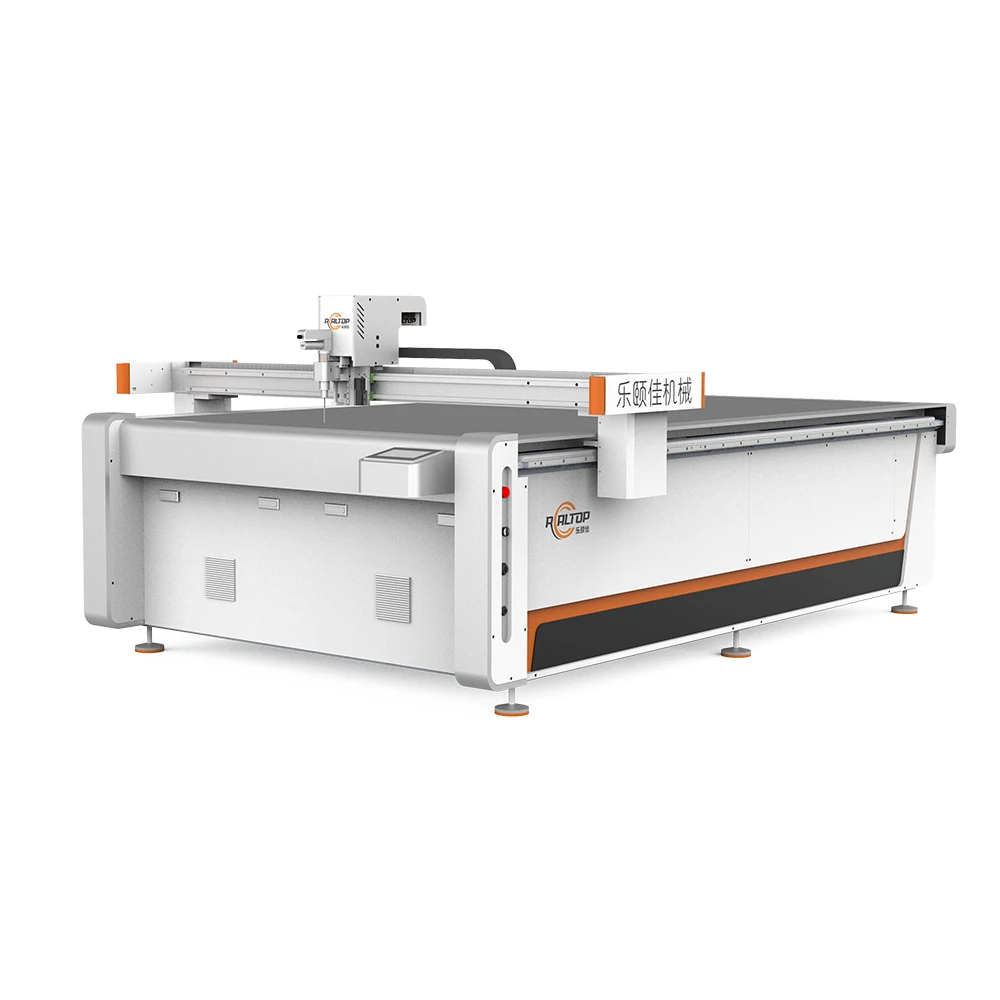
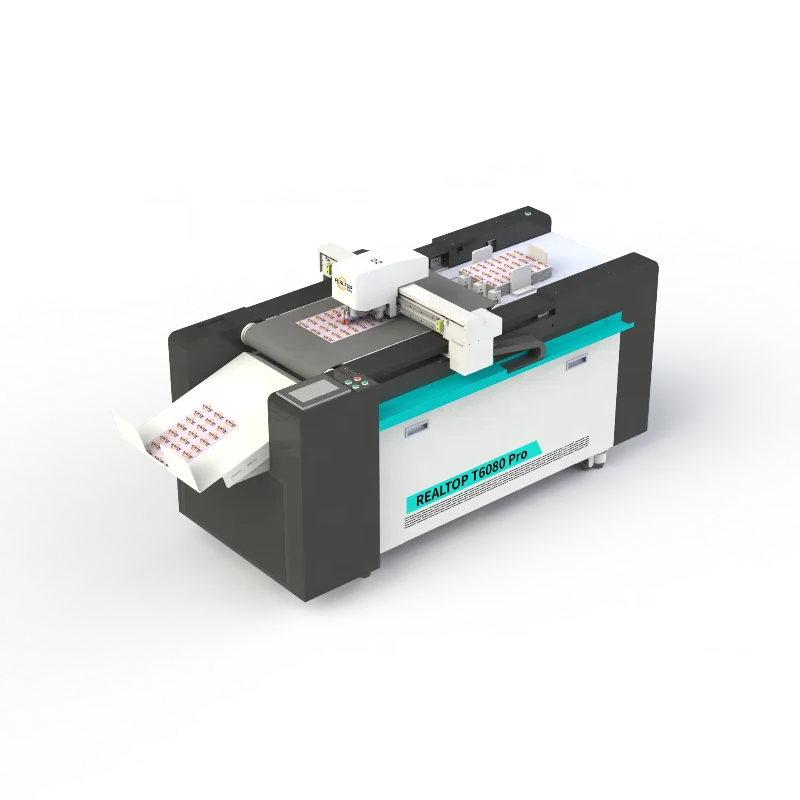
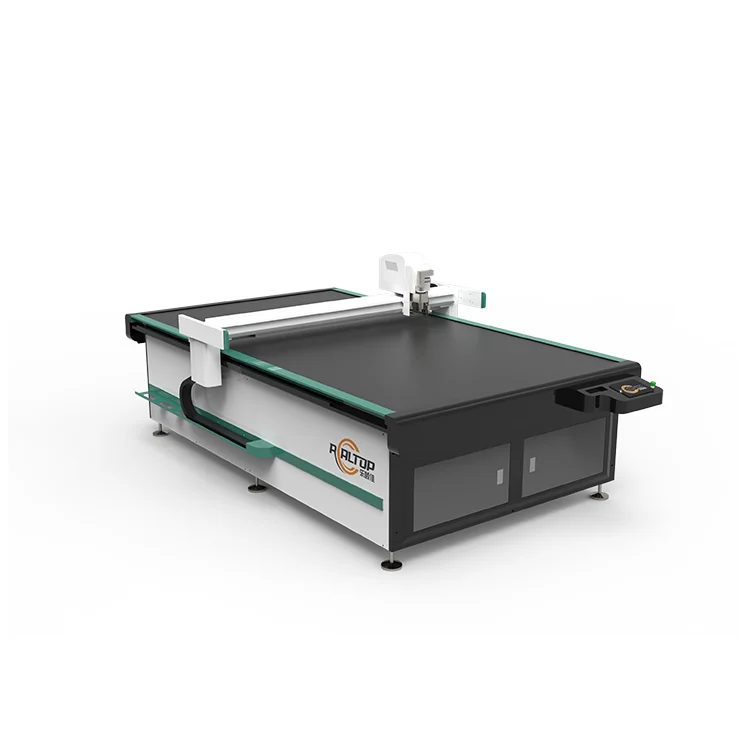
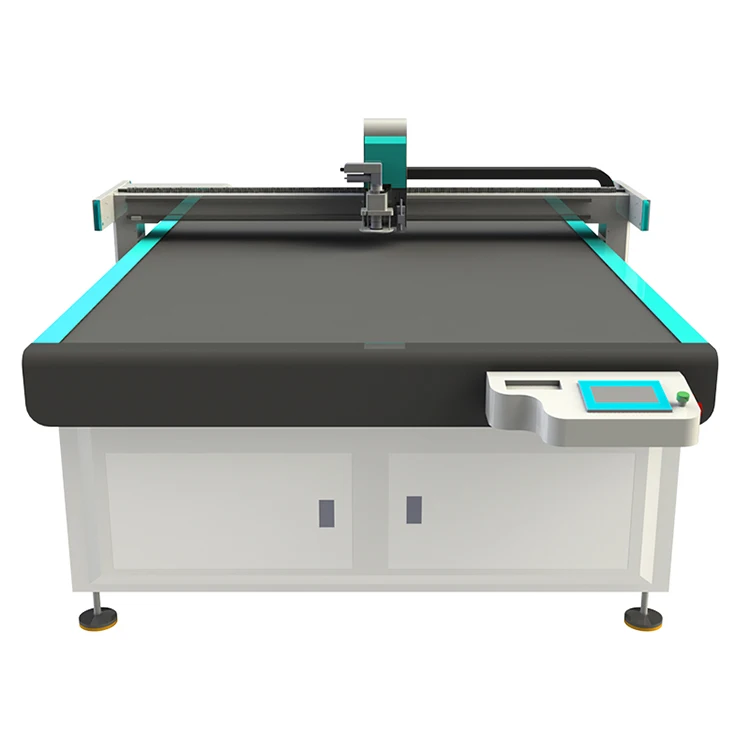
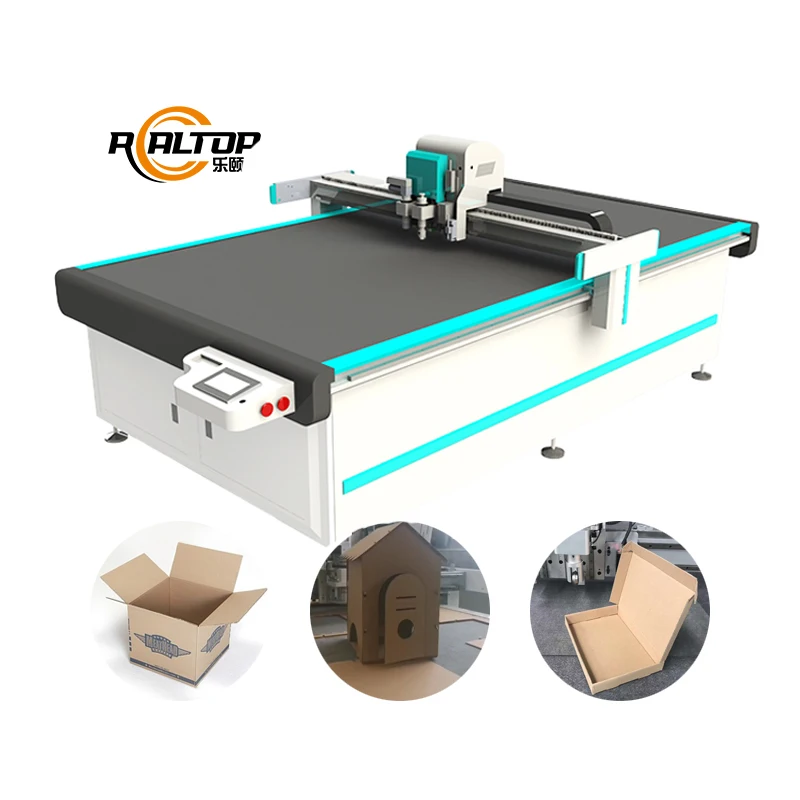
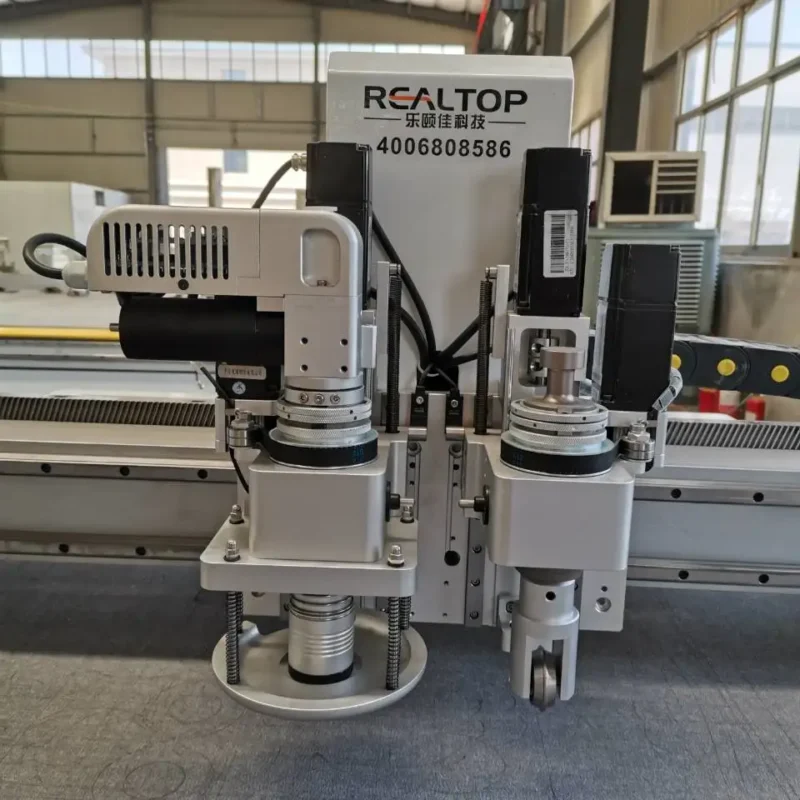
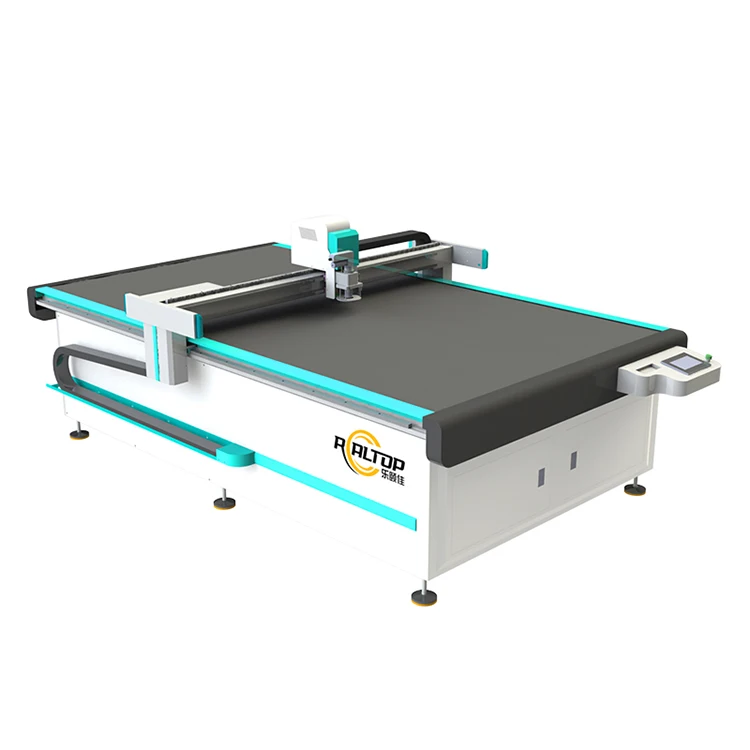
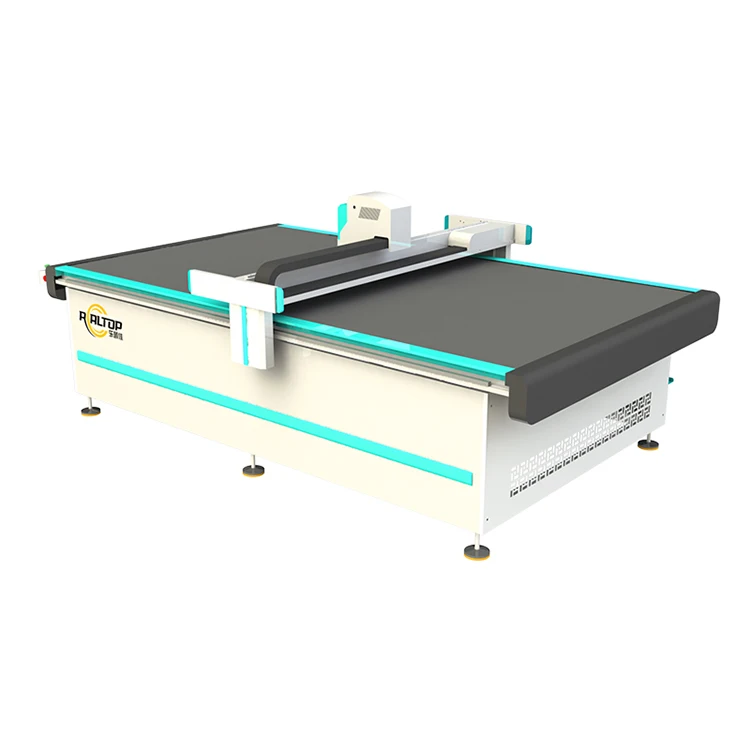
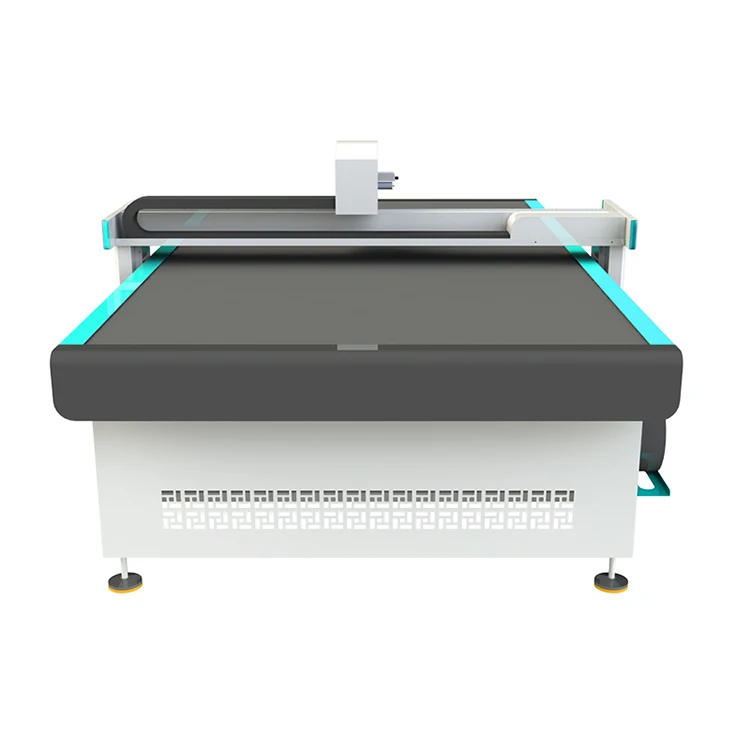
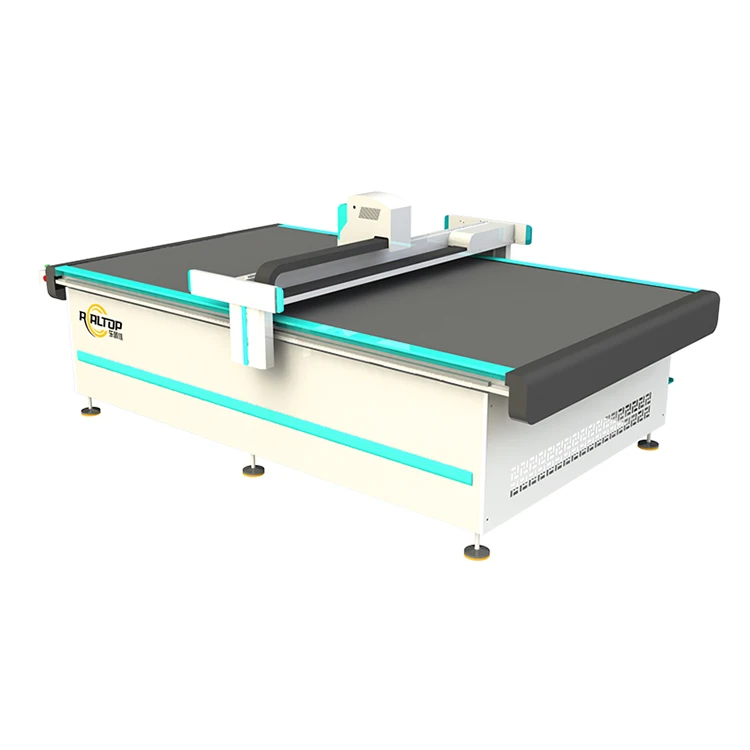
In-house dual-technology design — we configure oscillating knife, creasing wheel, and milling heads on the same 1600×2500 mm flatbed so cardboard box sample makers match the tool to each flute profile rather than force one blade through every substrate.
Technical Specifications
| Parameter | Value |
|---|---|
| Product Type | CNC Oscillating Knife Cutting Machine |
| Working Area | 1600×2500 mm |
| Cutting Speed | 0-1500 mm/s |
| Cutting Thickness | ≤ 40 mm (basis not stated in source — confirm material type and density) |
| Cutting Accuracy | ±0.1 mm |
| Tool Head Options | Oscillating knife, Driven rotary knife, Creasing wheel, Kiss cutting tool, Pneumatic knife, Milling tool, V-groove knife |
| Vacuum Pump Power | 9 kW |
| Voltage Options | 110V, 220V, 380V (configurable per destination market) |
| Control System | PLC control panel |
| Supported File Formats | PLT, DXF, AI, PDF |
| Safety Devices | Infrared sensor and emergency stop |
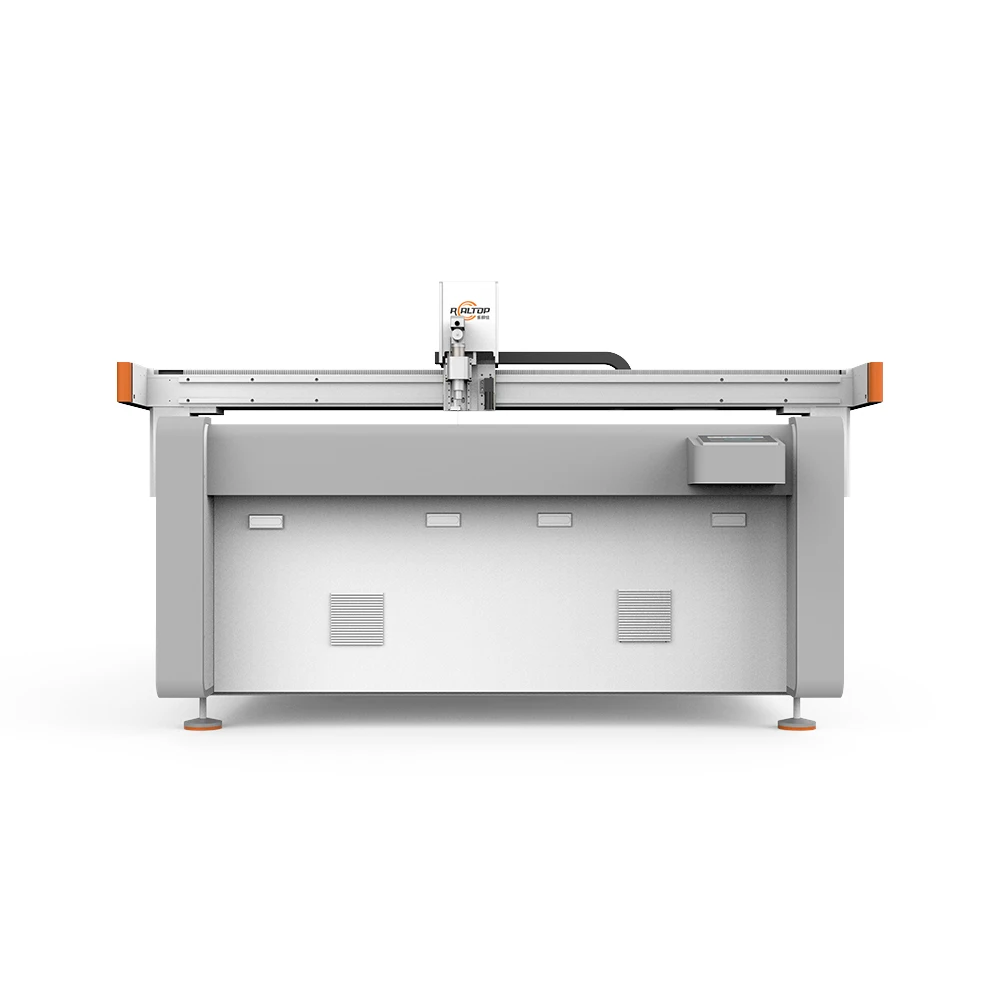
| Machine Dimensions | 3300×2100×1350 mm |
| Software Language | English, Russian, Italian, Chinese (customization available) |
| Certification | CE |
Application Suitability
| Application | Material or Output |
|---|---|
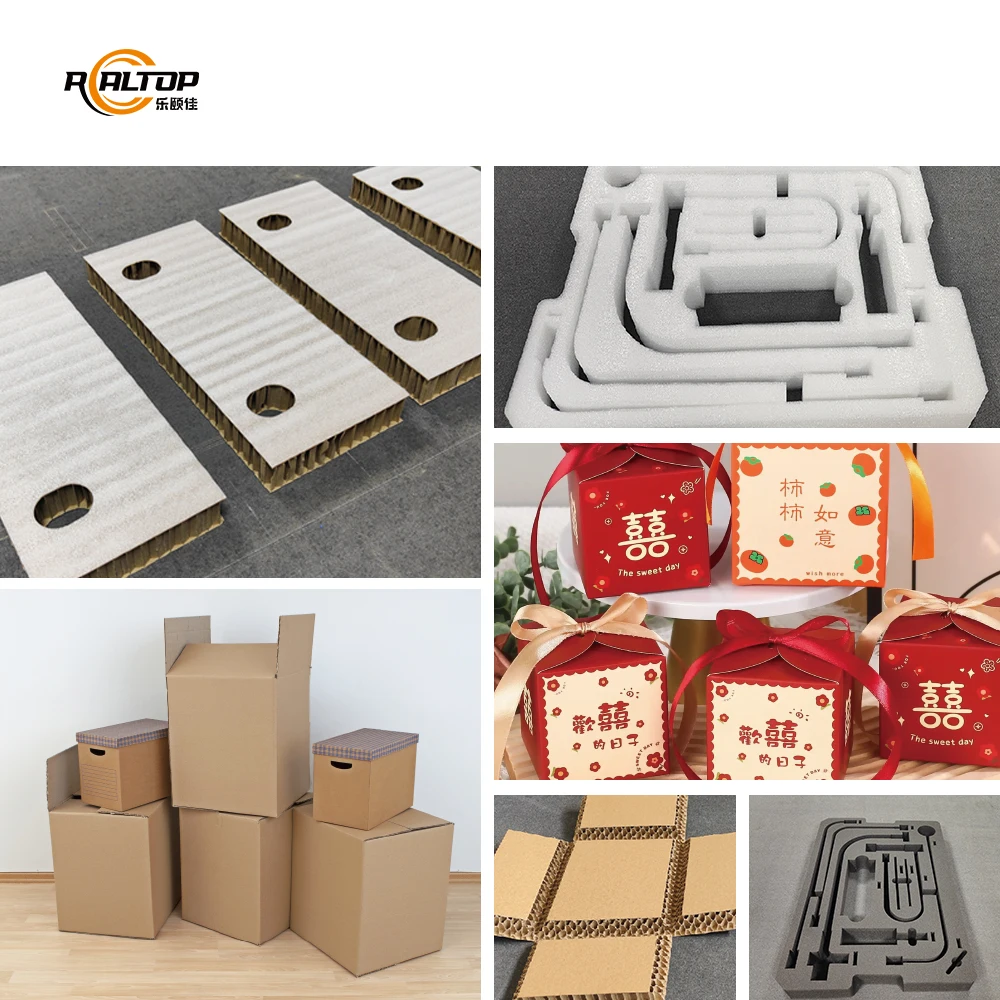
| Carton sample making and short-run packaging | Corrugated cardboard (E-flute, B-flute, BC-flute), greyboard, cardstock |
| Display and point-of-sale structure cutting | Art paper, specialty paper, thin plastic sheets (PVC, PET) |
| Protective insert and cushion fabrication | EVA foam, EPE foam, PU foam |
| Gasket and seal prototyping | Rubber mats, composite materials, adhesive-backed sheets |
| Interior trim and soft-goods sampling | Leather, synthetic leather, velvet/fleece fabric, non-woven fabric |
Why a Working Area Figure Alone Misses the Real Story
The table size tells you where the sheet sits; the tool head and vacuum zoning decide whether the cut actually holds tolerance at the edge.
I once watched a packaging shop in Shandong run E-flute corrugated on a flatbed that was rated for the right area but fitted with a single fixed-frequency oscillating knife. The blade dragged through BC-flute sections later that afternoon, crushing the flute rather than shearing it. The operator spent the rest of the shift swapping blades and adjusting depth by hand. That mismatch between material density and tool configuration is something a brochure dimension never reveals [NEED_CITE: oscillating knife frequency selection relative to flute profile and board density]. A CNC oscillating knife cutting machine manufacturer worth speaking to will ask for your thickest board and your smallest crease line before quoting the table size.
Tool Head Selection Decides Edge Quality on Fluted Board
Corrugated cardboard is not one material; E-flute at roughly 1.5 mm behaves completely differently from double-wall BC-flute approaching 7 mm. The oscillating knife handles standard single-face and single-wall profiles cleanly, while the driven rotary knife suits continuous contour cuts on thinner cardstock where drag would otherwise pull the sheet. When a box design calls for fold lines, the creasing wheel compresses the flute without severing the liner, and the V-groove knife removes a channel for rigid box construction. This CNC oscillating knife cutting machine manufacturer equips the flatbed with quick-change tool mounts so a packaging sample room can switch between cutting, creasing, and grooving within the same job file.
Vacuum Zoning and Sheet Hold-Down Across Small Packaging Parts
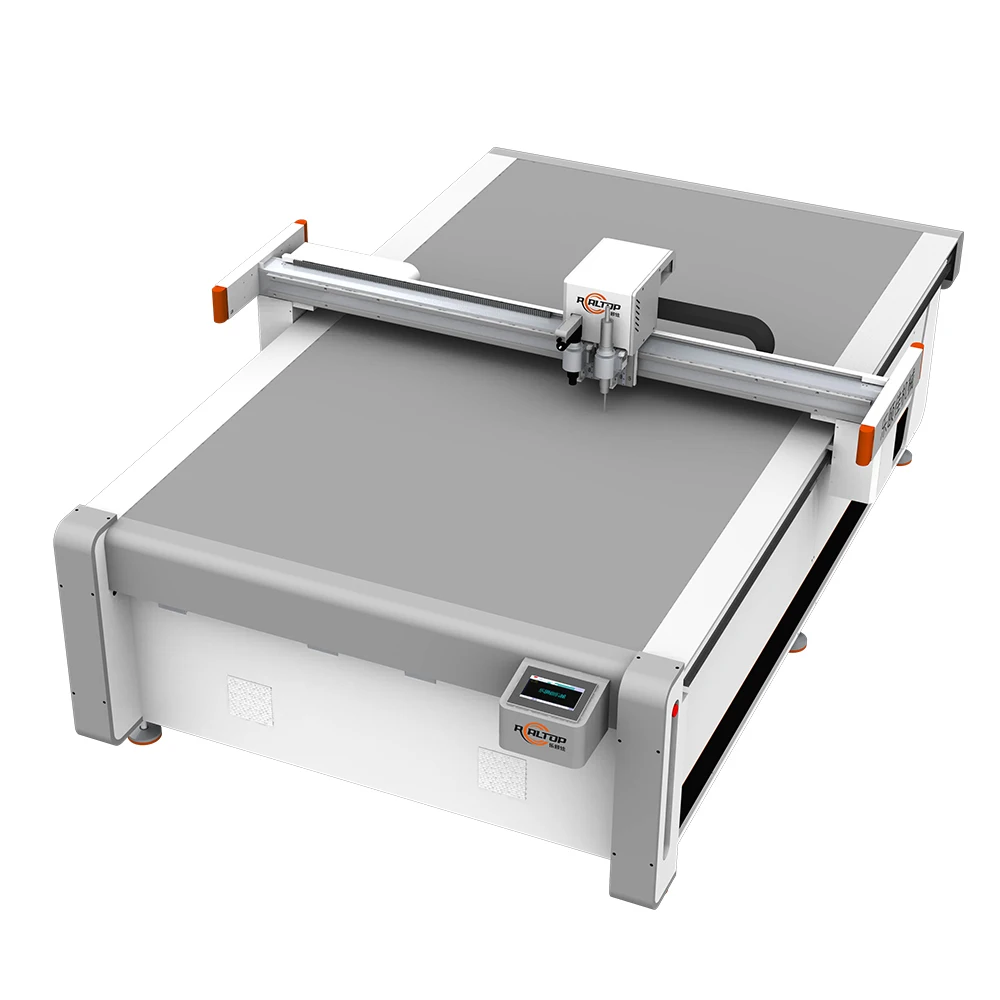
A 1600×2500 mm table holds a full sheet of BC-flute comfortably, but once the nesting software lays out dozens of small carton blanks, the outer zones lose vacuum if the pump feeds a single undivided plenum. The aluminum bellows vacuum table on this unit is sectioned so that only the zones under active cutting draw full suction, keeping narrow carton side panels and glue tabs from lifting as the knife exits the cut. The 9 kW pump provides sufficient static pressure to hold thin art paper as well as heavier flute profiles, provided the operator selects the correct zone map in the PLC panel [NEED_CITE: vacuum table zoning principles for flatbed digital cutting of nested small parts].
Reading the Specs That Matter for Packaging Workflows
The ±0.1 mm cutting accuracy figure matters most on registered print work where a crease line must land inside a printed border; drift beyond that tolerance shows as a visible misalignment on the finished folded box. Cutting speed up to 1500 mm/s applies to straight-line travel on open paths, and actual throughput drops on intricate carton lock-bottom designs with frequent direction changes. File format support for PLT, DXF, AI, and PDF means the machine accepts output from mainstream packaging CAD systems without an intermediate conversion step. The PLC control panel with multi-language software interface lets operators in different export markets adjust depth, oscillation frequency, and zone vacuum without relying on a translator at the machine side.
What Happens When Configuration Is Skipped
When a buyer orders on table size alone, the typical consequence shows up on the first day of production: ragged edges on foam inserts, crushed flutes on corrugated trays, or small carton tabs lifting off the table and jamming the knife. I have seen packaging sample rooms lose entire days re-cutting jobs because the vacuum zone map was never matched to their nesting pattern. Wrong tool head selection also shortens blade life noticeably, pushing consumable costs higher than necessary and forcing unplanned downtime for blade changes [NEED_CITE: tool wear acceleration from incorrect knife selection on composite packaging substrates].
Why Source This Flatbed From the Build Team Directly
The design team and production floor operate under one roof in Jinan, so a configuration change requested during the sample test can be incorporated before the machine ships rather than reworked in the field. The factory tests every flatbed with the buyer’s actual material — corrugated offcuts, foam sheets, or greyboard — and records cutting parameters in a signed sample report. Electrical schematics and voltage confirmation sheets are reviewed with the buyer before assembly begins, eliminating on-site transformer surprises. Software licensing and file format compatibility are documented in the handover package so the buyer’s CAD workflow is confirmed before the crate is nailed shut. CE documentation accompanies machines destined for regulated markets.
Documentation & Verification
- Machine specification sheet listing confirmed tool heads and vacuum zone layout
- Electrical schematic with voltage and frequency matched to destination market
- Sample cutting report produced on buyer-supplied corrugated or foam material
- Tool head and table configuration list per purchase order
- Software licence and file format compatibility note for PLT, DXF, AI, PDF
- Factory test record signed before dispatch
Installation, Commissioning & Support
- 3300×2100 mm footprint requires level concrete floor with clearance for sheet loading on both long sides
- Dedicated circuit matching confirmed voltage option (110V, 220V, or 380V) with appropriate breaker rating for 9 kW vacuum pump
- Machine ships with table and gantry separated; reassembly includes gantry alignment and belt tension check
- First-run commissioning covers PLC parameter entry for material thickness, knife oscillation frequency, and vacuum zone mapping
- Operator training addresses tool head changeover, blade replacement, and creasing wheel pressure adjustment
- Spare blade and creasing wheel kit included; consumable reorder intervals depend on actual material density and daily run hours
What to Share With Your Inquiry
Send a sample of your most common board grade along with its flute profile and thickness, plus the thickest foam or gasket material you plan to cut. Include your typical sheet size and the nesting layout you currently use, so vacuum zoning can be configured before build. Confirm the local voltage and frequency at your facility, the preferred control language, and whether you need CCD camera positioning for printed contour work.
Frequently Asked Questions
Q: How do I choose between oscillating knife, driven rotary knife, and creasing wheel for my packaging materials?
A: Oscillating knife suits single-wall corrugated and foam where a shearing action gives a clean edge. Driven rotary knife works better on thin cardstock and art paper where drag would distort the sheet. The creasing wheel compresses flutes for fold lines without cutting through. Your sample cutting test on the actual board grade confirms which tool head produces the required edge and crease quality.
Q: What cutting thickness is realistic on corrugated cardboard versus foam on this flatbed?
A: The specification lists up to 40 mm, but the achievable depth depends on material density and the tool head fitted. BC-flute corrugated cuts cleanly within a narrower range than low-density EPE foam of the same thickness. A sample cutting report on your specific board grade confirms the practical limit before order.
Q: Will small carton blanks stay flat during high-speed cutting on the 1600×2500 mm table?
A: The vacuum table uses sectional zoning so suction concentrates under the active cutting area. When the nesting layout is loaded into the PLC, the operator activates only the zones beneath the parts being cut, preventing small glue tabs and narrow side panels from lifting off the bellows surface.
Q: Are voltage, plug type, and control language confirmed before the machine ships?
A: Yes. The electrical schematic and voltage confirmation sheet are reviewed with the buyer during the specification stage. The PLC control panel supports English, Russian, Italian, and Chinese, with additional languages configurable. Plug type and cable specification match the destination market standard.
Q: Will my existing packaging CAD files open directly on this machine?
A: The control software reads PLT, DXF, AI, and PDF natively. A file format compatibility note is included in the documentation package before shipment, confirming which format your CAD system should export. If your workflow uses nesting software, the nesting output file is verified during the sample cutting stage.
In-house dual-technology design — we configure oscillating knife, creasing wheel, and milling heads on the same 1600×2500 mm flatbed so cardboard box sample makers match the tool to each flute profile rather than force one blade through every substrate.
Technical Specifications
| Parameter | Value |
|---|---|
| Product Type | CNC Oscillating Knife Cutting Machine |
| Working Area | 1600×2500 mm |
| Cutting Speed | 0-1500 mm/s |
| Cutting Thickness | ≤ 40 mm (basis not stated in source — confirm material type and density) |
| Cutting Accuracy | ±0.1 mm |
| Tool Head Options | Oscillating knife, Driven rotary knife, Creasing wheel, Kiss cutting tool, Pneumatic knife, Milling tool, V-groove knife |
| Vacuum Pump Power | 9 kW |
| Voltage Options | 110V, 220V, 380V (configurable per destination market) |
| Control System | PLC control panel |
| Supported File Formats | PLT, DXF, AI, PDF |
| Safety Devices | Infrared sensor and emergency stop |
| Machine Dimensions | 3300×2100×1350 mm |
| Software Language | English, Russian, Italian, Chinese (customization available) |
| Certification | CE |
Application Suitability
| Application | Material or Output |
|---|---|
| Carton sample making and short-run packaging | Corrugated cardboard (E-flute, B-flute, BC-flute), greyboard, cardstock |
| Display and point-of-sale structure cutting | Art paper, specialty paper, thin plastic sheets (PVC, PET) |
| Protective insert and cushion fabrication | EVA foam, EPE foam, PU foam |
| Gasket and seal prototyping | Rubber mats, composite materials, adhesive-backed sheets |
| Interior trim and soft-goods sampling | Leather, synthetic leather, velvet/fleece fabric, non-woven fabric |
Why a Working Area Figure Alone Misses the Real Story
The table size tells you where the sheet sits; the tool head and vacuum zoning decide whether the cut actually holds tolerance at the edge.
I once watched a packaging shop in Shandong run E-flute corrugated on a flatbed that was rated for the right area but fitted with a single fixed-frequency oscillating knife. The blade dragged through BC-flute sections later that afternoon, crushing the flute rather than shearing it. The operator spent the rest of the shift swapping blades and adjusting depth by hand. That mismatch between material density and tool configuration is something a brochure dimension never reveals [NEED_CITE: oscillating knife frequency selection relative to flute profile and board density]. A CNC oscillating knife cutting machine manufacturer worth speaking to will ask for your thickest board and your smallest crease line before quoting the table size.
Tool Head Selection Decides Edge Quality on Fluted Board
Corrugated cardboard is not one material; E-flute at roughly 1.5 mm behaves completely differently from double-wall BC-flute approaching 7 mm. The oscillating knife handles standard single-face and single-wall profiles cleanly, while the driven rotary knife suits continuous contour cuts on thinner cardstock where drag would otherwise pull the sheet. When a box design calls for fold lines, the creasing wheel compresses the flute without severing the liner, and the V-groove knife removes a channel for rigid box construction. This CNC oscillating knife cutting machine manufacturer equips the flatbed with quick-change tool mounts so a packaging sample room can switch between cutting, creasing, and grooving within the same job file.
Vacuum Zoning and Sheet Hold-Down Across Small Packaging Parts
A 1600×2500 mm table holds a full sheet of BC-flute comfortably, but once the nesting software lays out dozens of small carton blanks, the outer zones lose vacuum if the pump feeds a single undivided plenum. The aluminum bellows vacuum table on this unit is sectioned so that only the zones under active cutting draw full suction, keeping narrow carton side panels and glue tabs from lifting as the knife exits the cut. The 9 kW pump provides sufficient static pressure to hold thin art paper as well as heavier flute profiles, provided the operator selects the correct zone map in the PLC panel [NEED_CITE: vacuum table zoning principles for flatbed digital cutting of nested small parts].
Reading the Specs That Matter for Packaging Workflows
The ±0.1 mm cutting accuracy figure matters most on registered print work where a crease line must land inside a printed border; drift beyond that tolerance shows as a visible misalignment on the finished folded box. Cutting speed up to 1500 mm/s applies to straight-line travel on open paths, and actual throughput drops on intricate carton lock-bottom designs with frequent direction changes. File format support for PLT, DXF, AI, and PDF means the machine accepts output from mainstream packaging CAD systems without an intermediate conversion step. The PLC control panel with multi-language software interface lets operators in different export markets adjust depth, oscillation frequency, and zone vacuum without relying on a translator at the machine side.
What Happens When Configuration Is Skipped
When a buyer orders on table size alone, the typical consequence shows up on the first day of production: ragged edges on foam inserts, crushed flutes on corrugated trays, or small carton tabs lifting off the table and jamming the knife. I have seen packaging sample rooms lose entire days re-cutting jobs because the vacuum zone map was never matched to their nesting pattern. Wrong tool head selection also shortens blade life noticeably, pushing consumable costs higher than necessary and forcing unplanned downtime for blade changes [NEED_CITE: tool wear acceleration from incorrect knife selection on composite packaging substrates].
Why Source This Flatbed From the Build Team Directly
The design team and production floor operate under one roof in Jinan, so a configuration change requested during the sample test can be incorporated before the machine ships rather than reworked in the field. The factory tests every flatbed with the buyer’s actual material — corrugated offcuts, foam sheets, or greyboard — and records cutting parameters in a signed sample report. Electrical schematics and voltage confirmation sheets are reviewed with the buyer before assembly begins, eliminating on-site transformer surprises. Software licensing and file format compatibility are documented in the handover package so the buyer’s CAD workflow is confirmed before the crate is nailed shut. CE documentation accompanies machines destined for regulated markets.
Documentation & Verification
- Machine specification sheet listing confirmed tool heads and vacuum zone layout
- Electrical schematic with voltage and frequency matched to destination market
- Sample cutting report produced on buyer-supplied corrugated or foam material
- Tool head and table configuration list per purchase order
- Software licence and file format compatibility note for PLT, DXF, AI, PDF
- Factory test record signed before dispatch
Installation, Commissioning & Support
- 3300×2100 mm footprint requires level concrete floor with clearance for sheet loading on both long sides
- Dedicated circuit matching confirmed voltage option (110V, 220V, or 380V) with appropriate breaker rating for 9 kW vacuum pump
- Machine ships with table and gantry separated; reassembly includes gantry alignment and belt tension check
- First-run commissioning covers PLC parameter entry for material thickness, knife oscillation frequency, and vacuum zone mapping
- Operator training addresses tool head changeover, blade replacement, and creasing wheel pressure adjustment
- Spare blade and creasing wheel kit included; consumable reorder intervals depend on actual material density and daily run hours
What to Share With Your Inquiry
Send a sample of your most common board grade along with its flute profile and thickness, plus the thickest foam or gasket material you plan to cut. Include your typical sheet size and the nesting layout you currently use, so vacuum zoning can be configured before build. Confirm the local voltage and frequency at your facility, the preferred control language, and whether you need CCD camera positioning for printed contour work.
Frequently Asked Questions
Q: How do I choose between oscillating knife, driven rotary knife, and creasing wheel for my packaging materials?
A: Oscillating knife suits single-wall corrugated and foam where a shearing action gives a clean edge. Driven rotary knife works better on thin cardstock and art paper where drag would distort the sheet. The creasing wheel compresses flutes for fold lines without cutting through. Your sample cutting test on the actual board grade confirms which tool head produces the required edge and crease quality.
Q: What cutting thickness is realistic on corrugated cardboard versus foam on this flatbed?
A: The specification lists up to 40 mm, but the achievable depth depends on material density and the tool head fitted. BC-flute corrugated cuts cleanly within a narrower range than low-density EPE foam of the same thickness. A sample cutting report on your specific board grade confirms the practical limit before order.
Q: Will small carton blanks stay flat during high-speed cutting on the 1600×2500 mm table?
A: The vacuum table uses sectional zoning so suction concentrates under the active cutting area. When the nesting layout is loaded into the PLC, the operator activates only the zones beneath the parts being cut, preventing small glue tabs and narrow side panels from lifting off the bellows surface.
Q: Are voltage, plug type, and control language confirmed before the machine ships?
A: Yes. The electrical schematic and voltage confirmation sheet are reviewed with the buyer during the specification stage. The PLC control panel supports English, Russian, Italian, and Chinese, with additional languages configurable. Plug type and cable specification match the destination market standard.
Q: Will my existing packaging CAD files open directly on this machine?
A: The control software reads PLT, DXF, AI, and PDF natively. A file format compatibility note is included in the documentation package before shipment, confirming which format your CAD system should export. If your workflow uses nesting software, the nesting output file is verified during the sample cutting stage.
商品评价
There are no reviews yet.