



Fast Delivery
Quick, reliable shipping to any location.

Free & easy returns
Return this item by mail or in store within 90 days for a full refund.
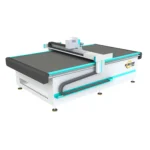
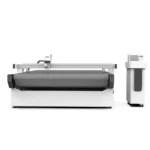
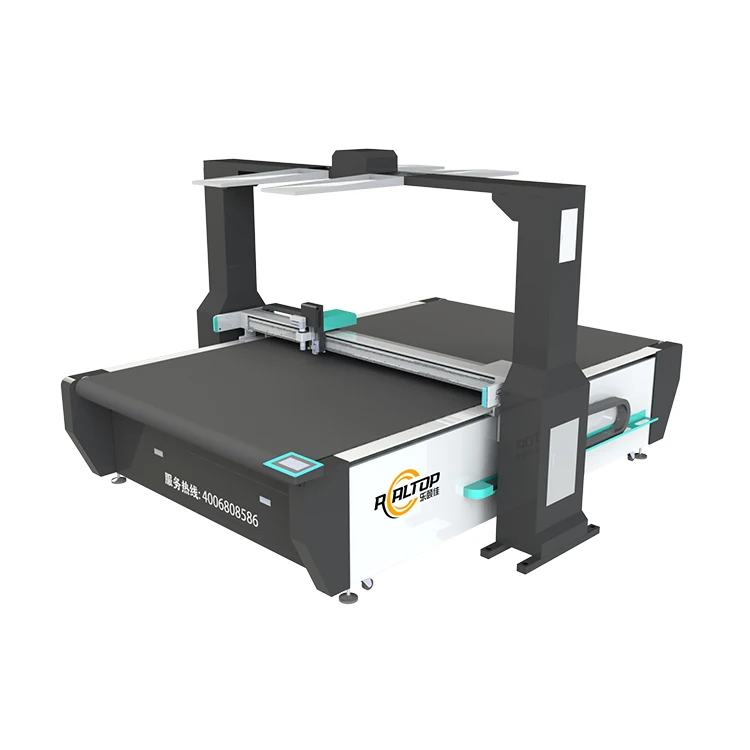
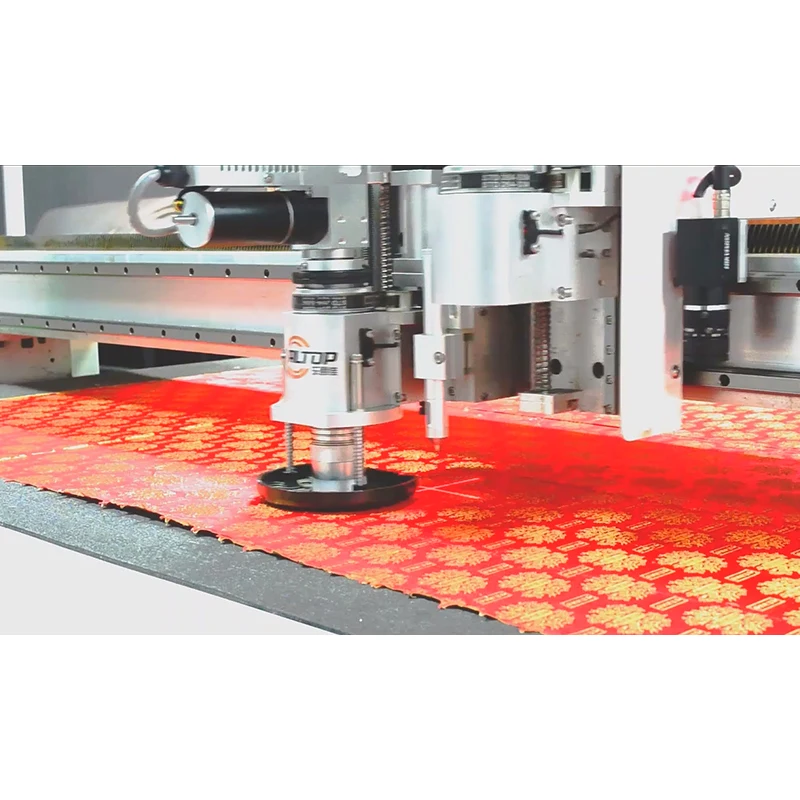
In-house cutting solutions — covering both oscillating knife and laser methods under one roof, allowing label producers to match the cutting technology exactly to their stock rather than forcing every job through a single tool path.
Technical Specifications
| Parameter | Value |
|---|---|
| Product Type | CNC Digital Cutting Machine for Labels and Stickers |
| Model | RT-D2516 / RT-S2516 |
| Working Area | 1600×2500 mm |
| Machine Size | 3450×2300×1250 mm |
| Rated Power | 9 kW |
| Vacuum Pump | 7.5 kW |
| Table Surface | Magnesium-aluminum alloy flat working table with vacuum adsorption |
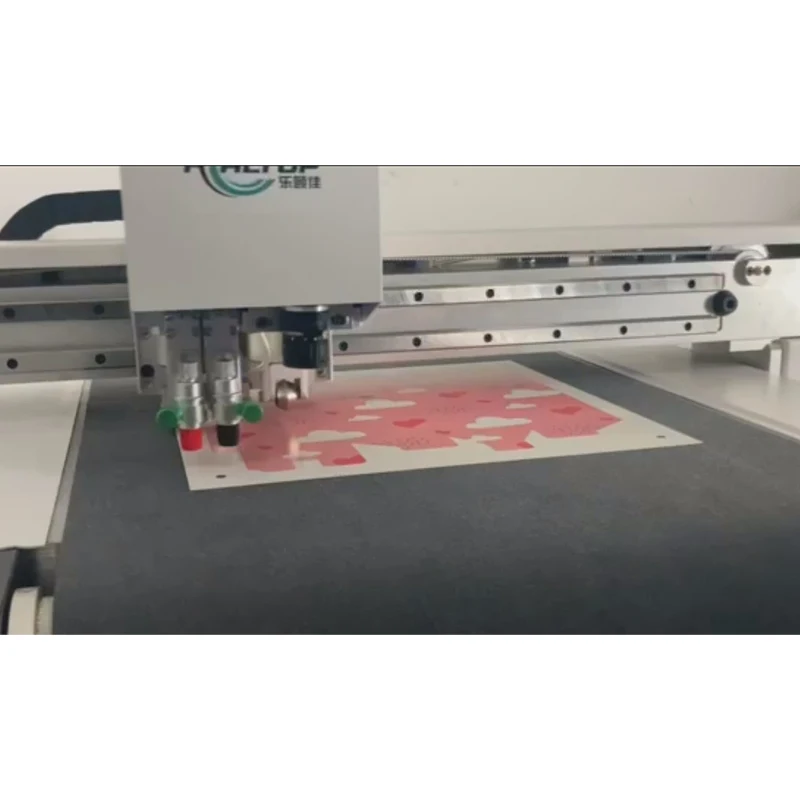
| Multifunctional Head | Swiss imported knife with vibration full cutting, half cutting, and cursor location |
| Tool Head Options | Oscillating knife, pneumatic knife, high-power vibrating knife, circular knife, V cutting knife, drag knife, creasing wheel, dotted line knife, punching, brush |
| Visual Positioning | Small CCD camera mark point, panoramic camera recognition, projection positioning |
| Translational Velocity | 800–1200 mm/s |
| Cutting Thickness | 20 mm–80 mm/s (according to different cutting materials — basis not stated in source, confirm material type and density) |
| Repeated Accuracy | ≤0.1 mm |
| Transmission System | Digital servo motor, linear guide, synchronous belt, ball screw (imported) |
| Servo Motor | Delta (optional Panasonic) |
| Guide Rail | Taiwan Hiwin |
| Conveyor Belt | Germany imported |
| Instruction System | HP-GL compatible format |
| Voltage | 380V ±10% |
| Safety Devices | Infrared sensors, anti-collision beam stops, emergency stop button |
| Language Options | English, Russian, Italian, Chinese (special languages customizable) |
| Assembly State | Fully assembled |
Application Suitability
| Application | Material or Output |
|---|---|
| Adhesive label and sticker contour cutting | Self-adhesive vinyl, coated paper with lamination, PET, PP film |
| Kiss-cut and full-cut on sticker sheets | Paper-backed labels, foam stickers, magnetic sheets |
| Packaging sample and carton prototyping | Corrugated cardboard, foam board, gray board, plastic box stock |
| Signage and graphic production | Reflective film, heat transfer vinyl, banner material, adhesive lettering |
| Textile and soft furnishing cutting | Non-woven fabric, carpet, PU, EVA, XPE, sponge |
| Gasket and sealing pad fabrication | Rubber, PTFE, ETFE, fiberglass, composite gasket material |
Why Specifying Working Area Alone Wrecks Your Sticker Line
The cutting method must match the stock before the table size ever matters.
I have watched buyers pick a CNC digital cutting machine manufacturer based purely on bed dimensions, then discover during commissioning that the knife head cannot hold an edge on thick laminated copper stock or that kiss-cut depth drifts across the sheet because the vacuum zoning was never matched to small label geometry. The machine runs, but ragged edges and lifted corners turn every second sheet into scrap. [NEED_CITE: common kiss-cut failure modes on laminated label stock]
These mismatches are not machine faults. They are specification gaps — the material type, adhesive layer, backing paper weight, and required cut depth were never translated into tool head selection and vacuum table zoning before production started.
Knife Versus Laser — Matching Method to Label Stock
Not every sticker material cuts cleanly with a blade. Thin vinyl and paper-backed labels respond well to oscillating knife cutting, where the vibration frequency slices through the face stock without dragging the adhesive layer. But when the job involves reflective film, metallic foil, or multi-layer laminate with a tough PET carrier, a CO2 laser path can seal the edge and prevent delamination that a blade would cause. A CNC digital cutting machine manufacturer offering both technologies under one design team lets the buyer test each method on actual stock before committing to a configuration.
Visual Positioning for Printed Contour Accuracy
Registration mark tracking is where many label shops hit a wall after installation. The small CCD camera handles single-mark positioning for sheet-fed jobs, while the panoramic camera recognition system scans the entire printed sheet to locate multiple marks and compensate for print distortion or sheet stretch. For shops running pre-printed label sheets from offset or digital presses, this distinction determines whether contour cuts land within tolerance or drift visibly off the printed border at production speed. [NEED_CITE: CCD registration accuracy on pre-printed label sheets]
What the Vacuum Table Actually Does for Small Labels
The 1600×2500 mm magnesium-aluminum alloy surface is not just a flat plate — it is a vacuum adsorption zone fed by a 7.5 kW pump. For small sticker parts under 50 mm across, uniform suction across the table prevents lift during high-speed oscillating knife passes. If the vacuum zoning is not configured for the label size being cut, tiny parts shift mid-cut and the kiss-cut line wanders off the die line. The table specification must be confirmed against the smallest label in the production mix, not just the largest sheet.
Choosing the Wrong Tool Head for Your Sticker Material
A drag knife scores and tears through thin vinyl cleanly, but push that same blade into 2 mm foam sticker stock and the edge compresses and frays. An oscillating knife handles the foam, but set the vibration frequency too high on thin PET film and the material melts at the cut line. The tool head list — oscillating, pneumatic, vibrating, drag, circular, V cutting — exists because no single blade geometry covers the label and sticker material range. Buyers who skip the sample cutting step and select a head from a brochure often spend weeks swapping blades and adjusting depth before the edge quality meets their customer’s standard. [NEED_CITE: oscillating knife frequency settings across label material types]
Why a Full Catalogue Matters Before You Commit
Sourcing from a CNC digital cutting machine manufacturer that builds both knife and laser systems in-house means the buyer is not locked into one cutting method by the supplier’s product gap. The design team evaluates the label material, daily volume, and sheet format first, then recommends the machine family and tool head configuration. If the stock changes six months later — say, a shift from paper labels to thick EVA foam stickers — the same supplier can reconfigure the head or recommend a different machine from the range rather than leaving the buyer stranded with the wrong technology. Sample cutting on the buyer’s own material happens before the order, not after delivery when the cost of getting it wrong has already been paid.
The in-house production covering frame, motion components, and tool head integration means specification changes are managed within one factory, not negotiated across separate knife and laser vendors who each claim the other’s technology is inferior. [NEED_CITE: advantages of single-source CNC knife and laser equipment procurement]
Documentation & Verification
- Machine specification sheet confirming working area, tool head list, and voltage match
- Sample cutting report on buyer’s own sticker or label stock before order placement
- Electrical schematic and voltage confirmation document for facility planning
- Software licence and file format compatibility note for existing design workflow
- Factory test record with cutting accuracy data on specified material
- Spare parts list with consumable blade and belt replacement intervals
Installation, Commissioning & Support
- Machine arrives fully assembled at 3450×2300×1250 mm, requiring floor space with clearance for material feed
- 9 kW rated power plus 7.5 kW vacuum pump need dedicated 380V three-phase circuit with proper grounding
- Delta servo motors calibrated at factory, with optional Panasonic servo available for specific control requirements
- Taiwan Hiwin guide rails and Germany imported conveyor belt inspected and tensioned during on-site commissioning
- Operator training covers tool head changeover across the full knife and wheel options for different label stocks
- English, Russian, Italian, or Chinese control language loaded before shipment, with special languages customizable on request
What to Share Before Requesting a Quote
Send the material type and total thickness including face stock, adhesive, and backing paper. Confirm the smallest and largest label dimensions in the production mix and whether sheets are pre-printed with registration marks. State the local voltage and frequency, preferred control language, and whether the existing design software outputs HP-GL or another format. If possible, mail a sample roll or sheet for test cutting before the configuration is finalized.
Frequently Asked Questions
Q: How do I decide between knife cutting and laser cutting for my sticker materials?
A: It depends on the material composition and edge requirement. Oscillating knife cutting works well for paper, vinyl, and foam labels where a clean mechanical slice is needed. Laser cutting seals edges on synthetic films and prevents fraying on multi-layer laminates. We test both methods on your actual stock before recommending a configuration.
Q: What working area and tool head configuration fits my label production?
A: The 1600×2500 mm bed accommodates both sheet-fed and roll-fed label formats. Tool head selection — oscillating knife, drag knife, creasing wheel, or punching — depends on your material thickness and whether you need kiss-cut, full-cut, or perforation. We confirm the head against your specific stock during sample testing.
Q: Can the CCD camera track printed marks at full production speed?
A: The small CCD camera handles single-mark positioning, while the panoramic recognition system tracks multiple marks across the sheet to compensate for print distortion. Actual tracking performance depends on mark contrast, size, and print registration quality. We verify contour accuracy on your pre-printed sheets before shipment.
Q: What voltage and control language options are available?
A: The standard configuration is 380V ±10% with control language available in English, Russian, Italian, or Chinese. Special languages and alternative voltage requirements can be customized before production. An electrical schematic and voltage confirmation document is provided to match your facility’s power supply.
Q: Can I get a sample cut on my own sticker material before ordering?
A: Yes. Send us your label stock — including face material, adhesive layer, and backing — and we run test cuts with different tool heads and cutting parameters. The sample cutting report documents edge quality, depth accuracy, and recommended configuration so you can evaluate results before committing to a purchase.










商品评价
There are no reviews yet.