

Fast Delivery
Quick, reliable shipping to any location.

Free & easy returns
Return this item by mail or in store within 90 days for a full refund.
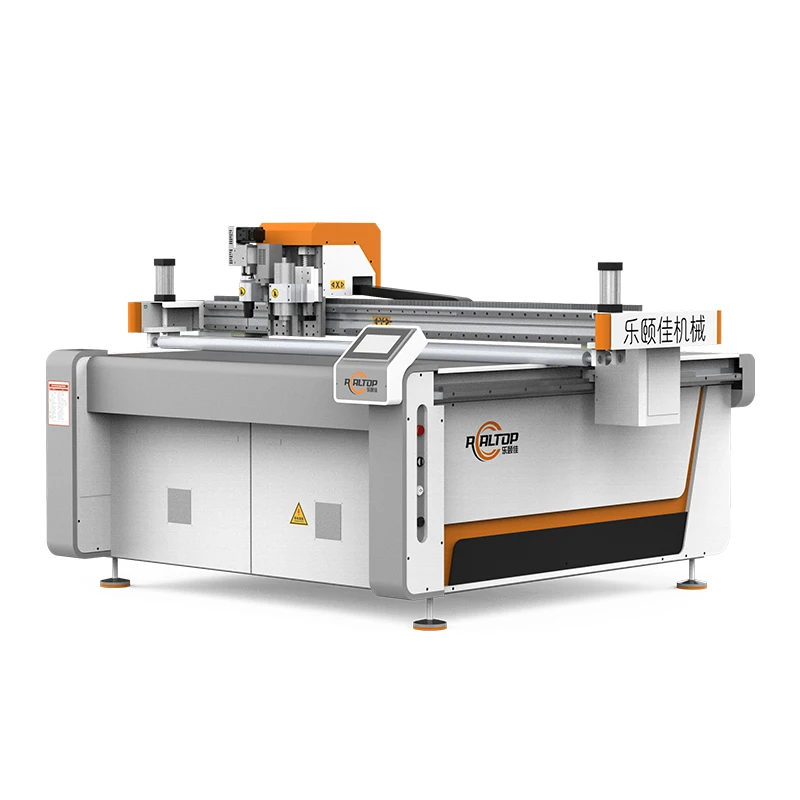
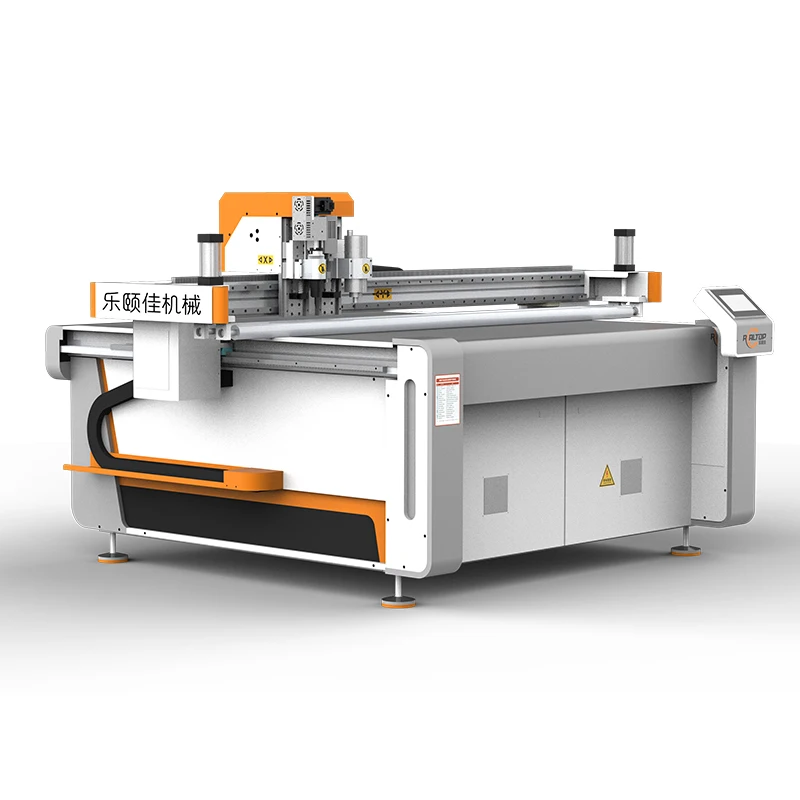
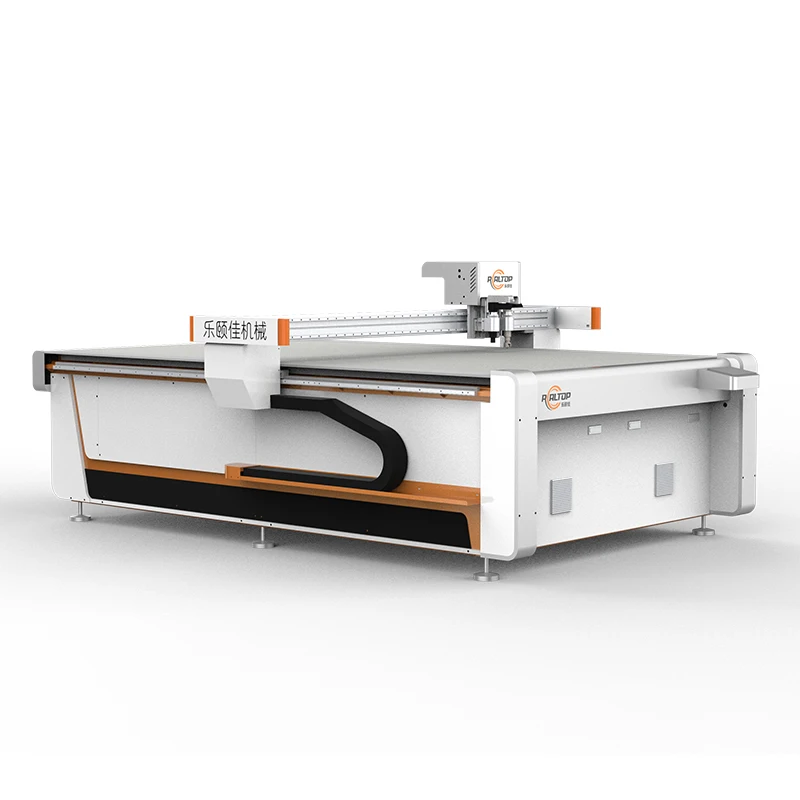
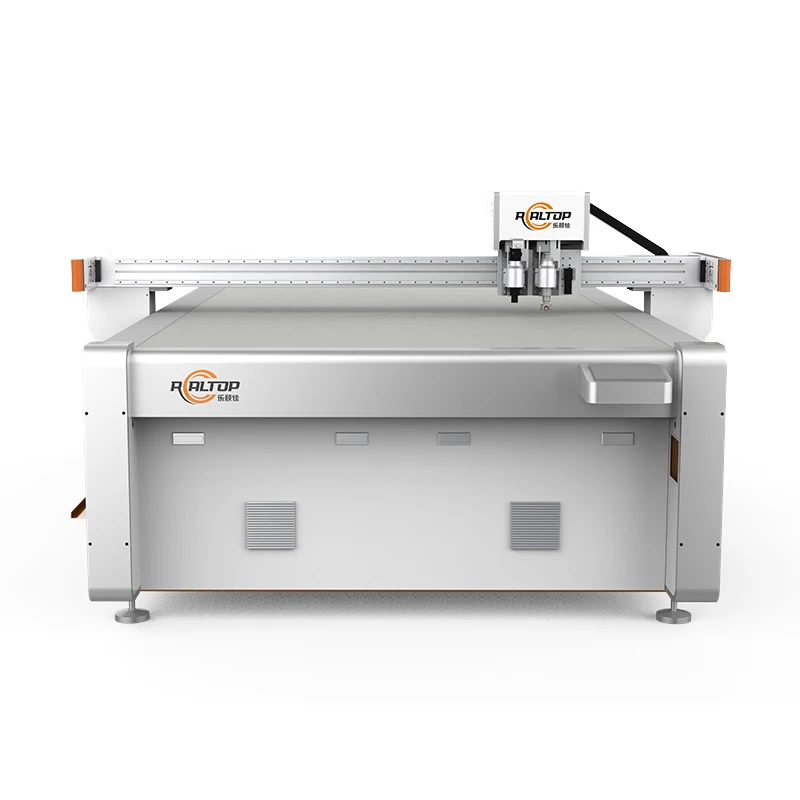
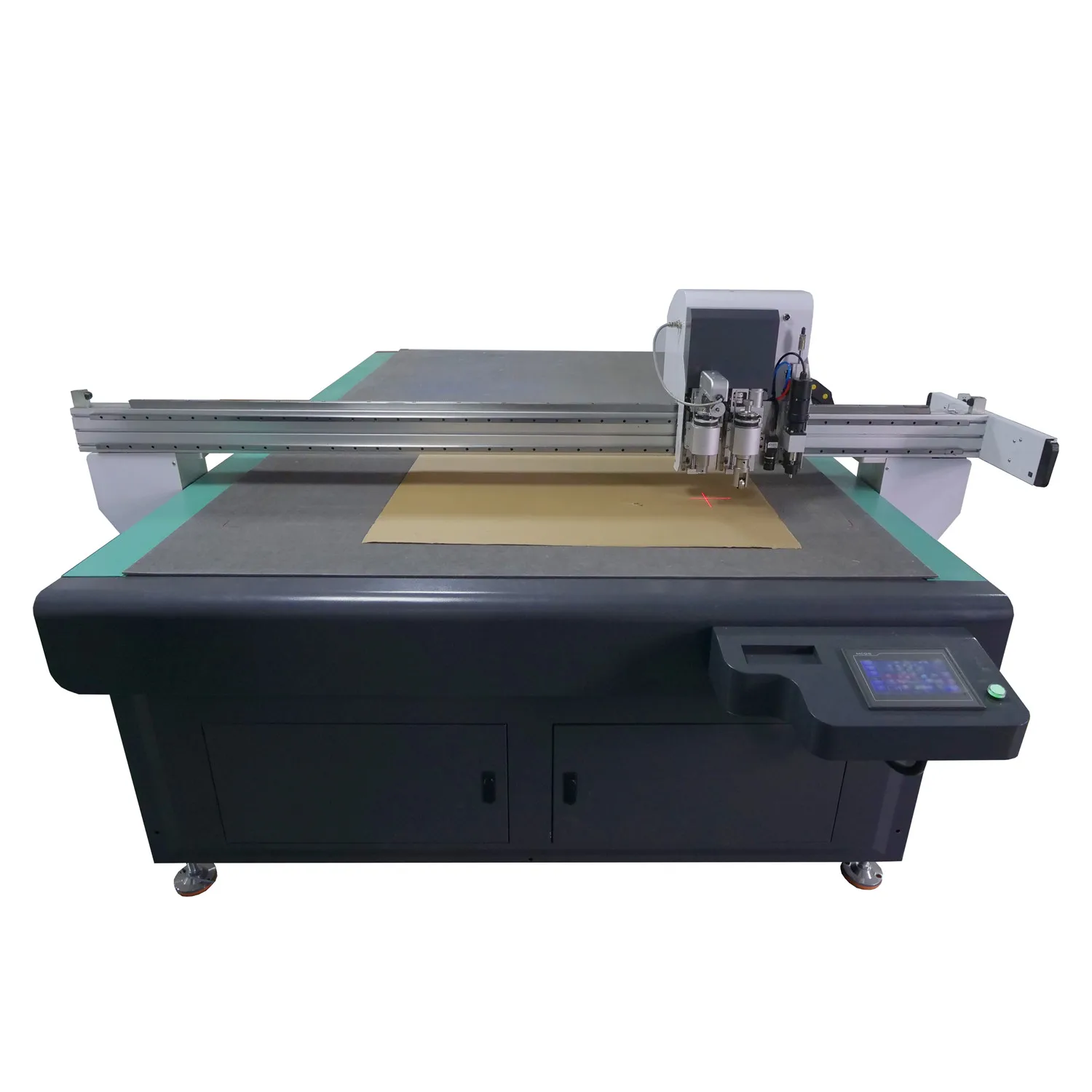
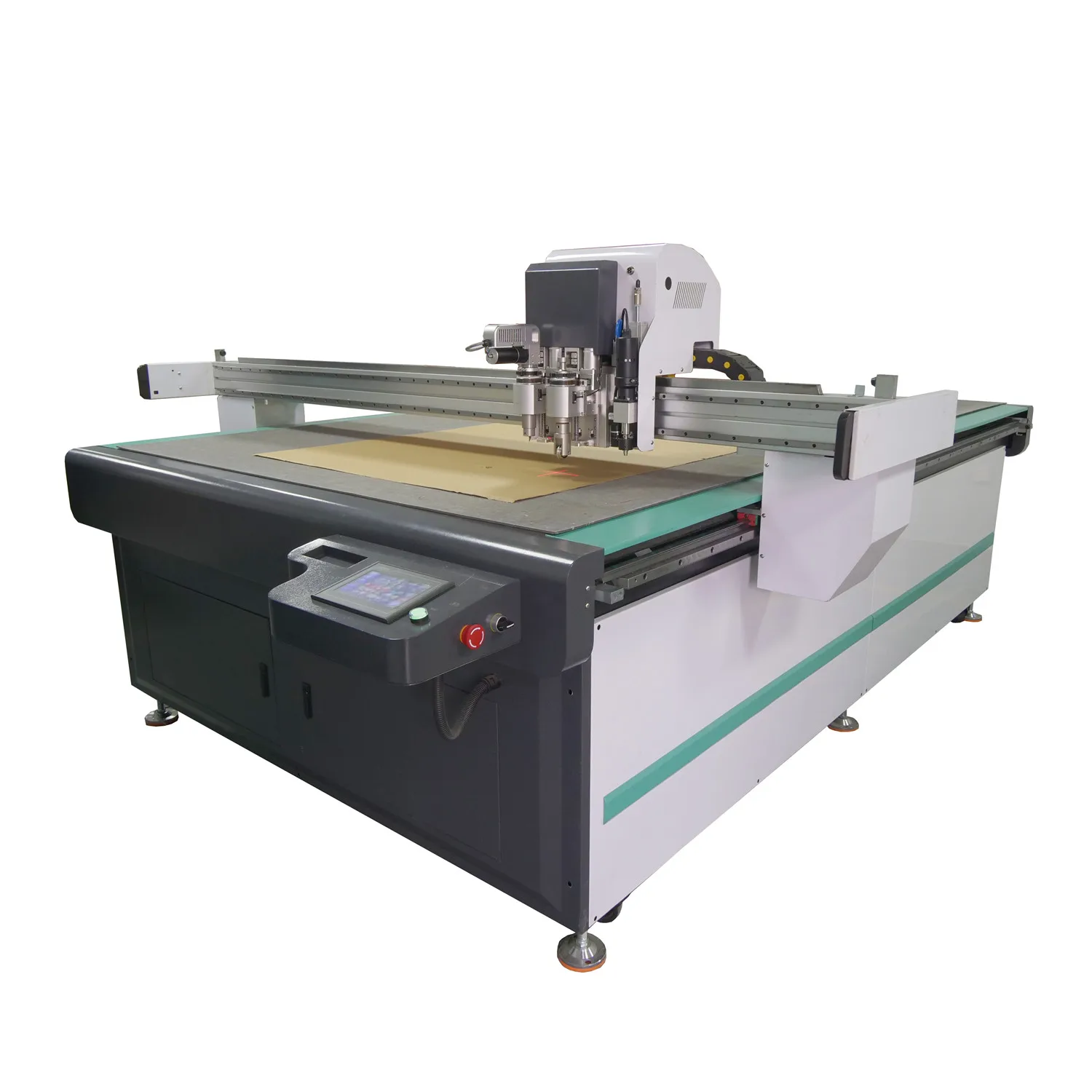
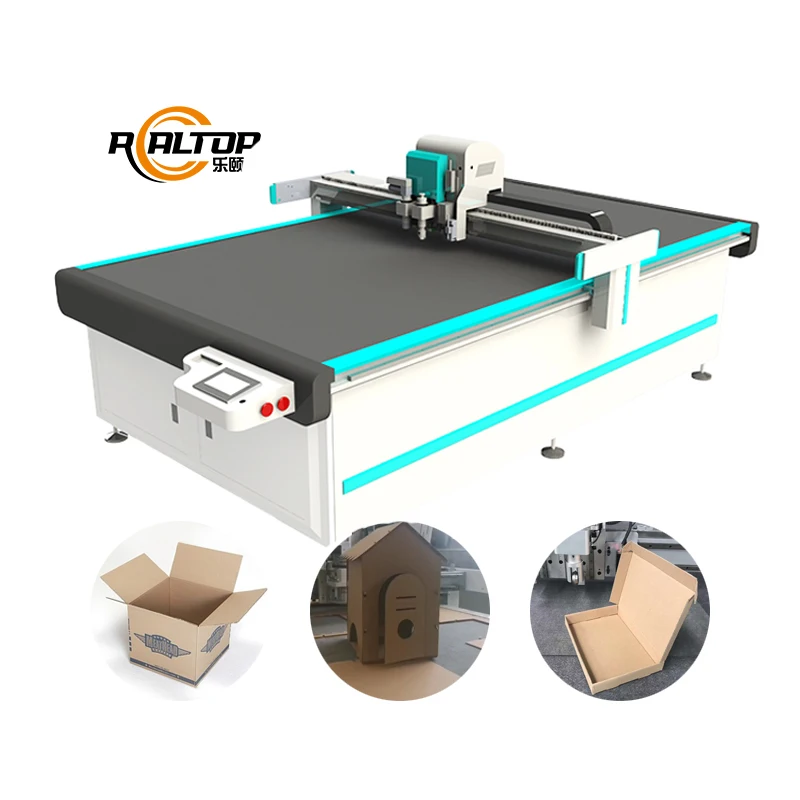
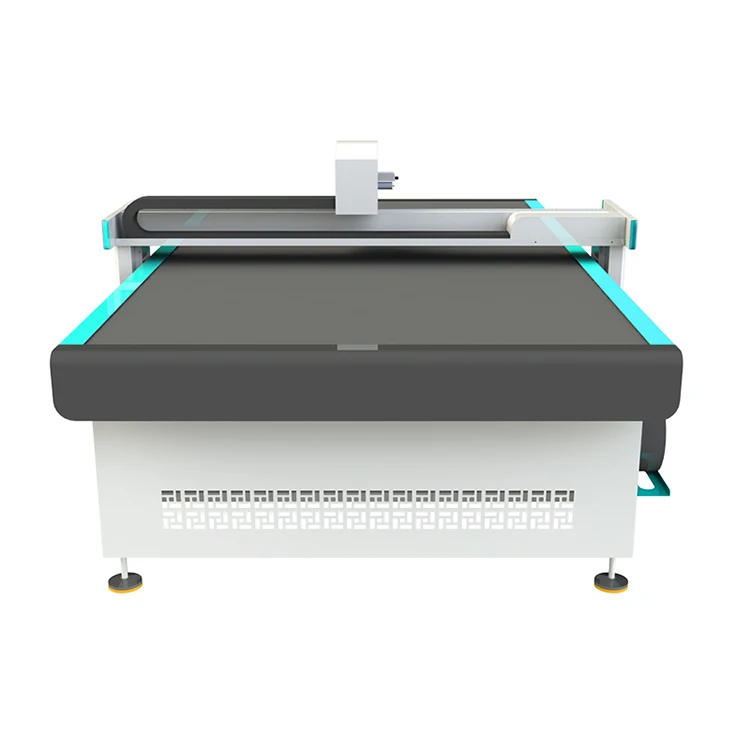
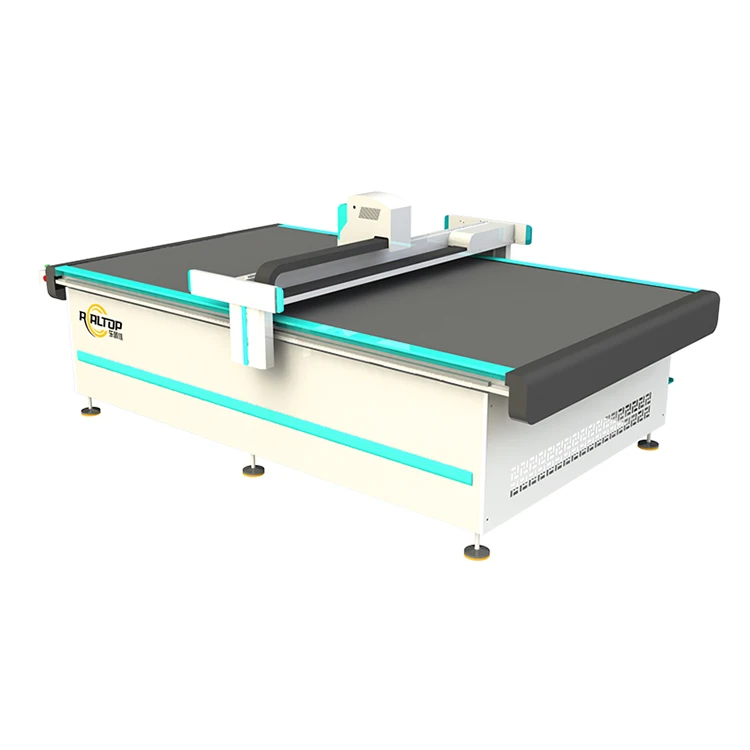
Tool-First Selection Strategy — the RT-D2516/RT-S2516 oscillating knife platform is built around matching the cutting head to the material, not forcing one method across incompatible substrates.
Technical Specifications
| Parameter | Value |
|---|---|
| Product Type | CNC Oscillating Knife Cutting Machine |
| Model | RT-D2516/RT-S2516 |
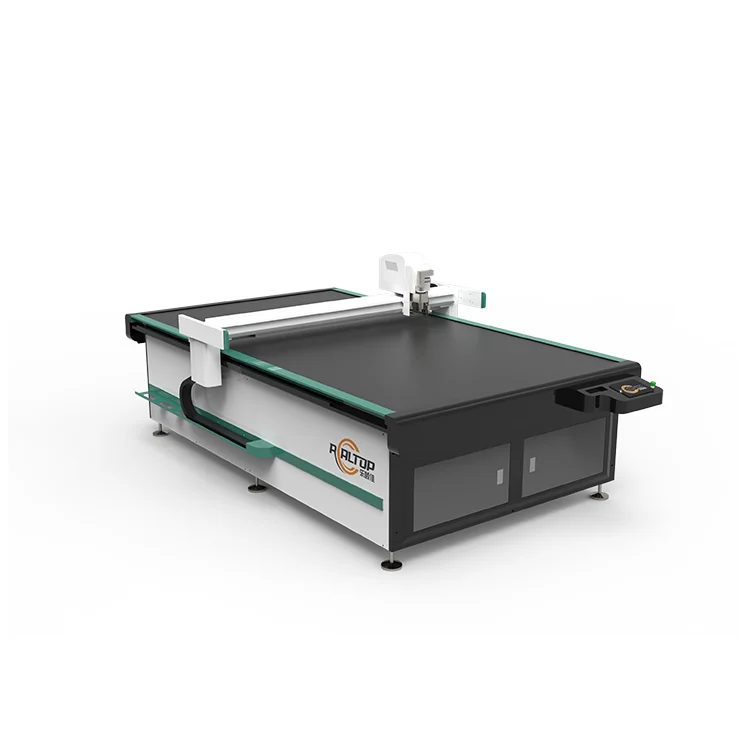
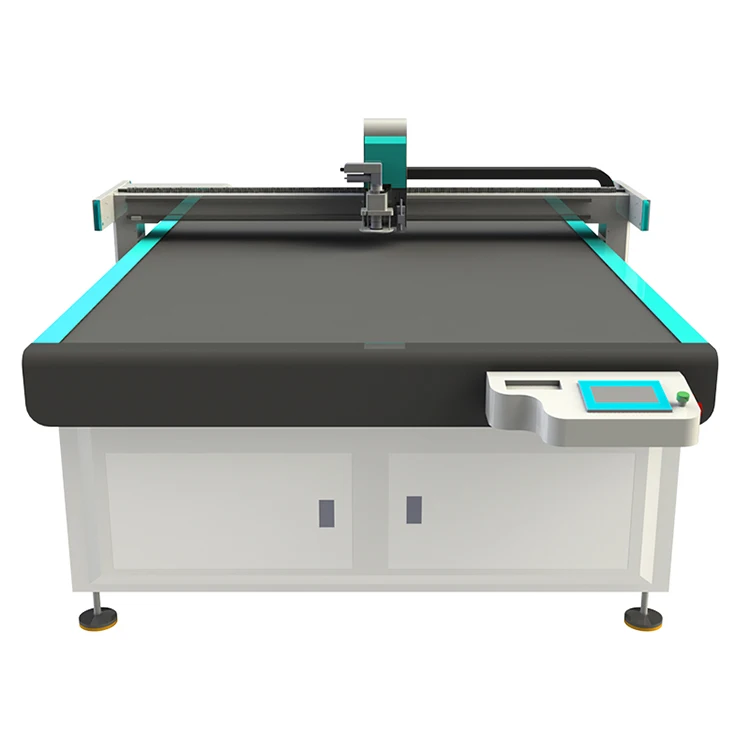
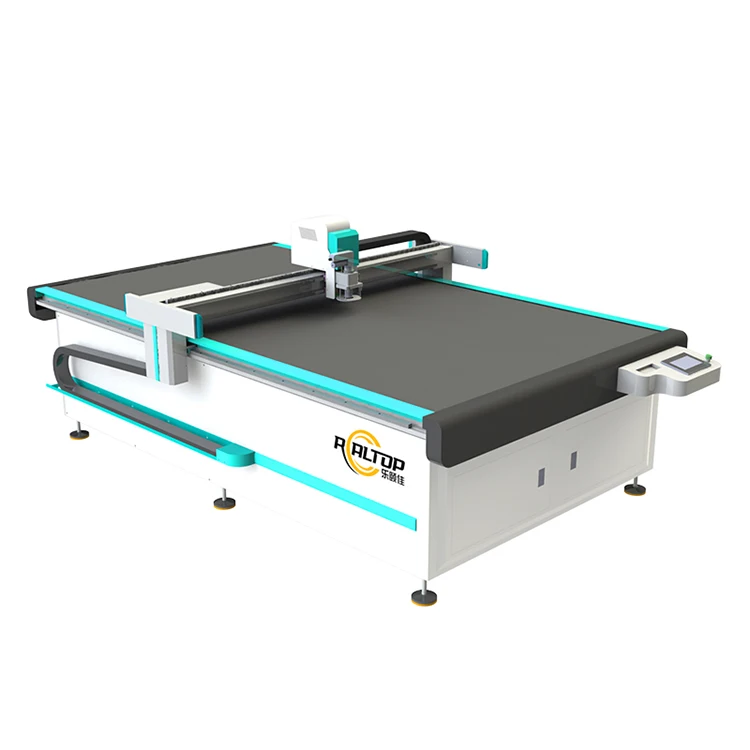
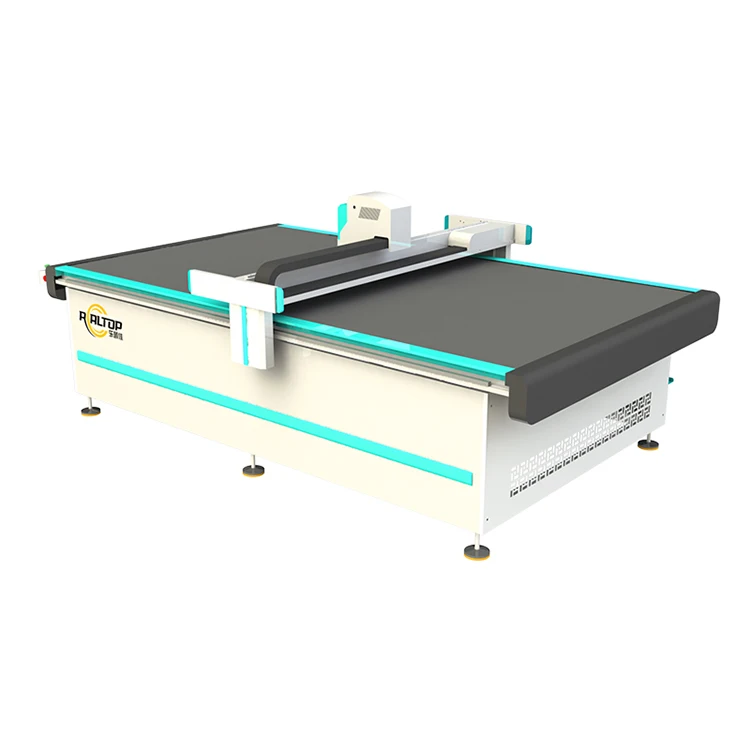
| Working Area | 1600 × 2500 mm |
| Overall Dimensions | 3450 × 2300 × 1250 mm |
| Rated Power | 9 kW |
| Voltage | 380V ±10% |
| Translational Velocity | 800–2000 mm/s |
| Cutting Speed | 200–800 mm/s (basis not stated in source — confirm material / thickness) |
| Cutting Thickness | ≤100 mm (varies with material) |
| Repeated Accuracy | ≤0.1 mm |
| Transmission System | Digital servo motor, linear guide, synchronous belt, ball screw |
| Servo Motor Options | Delta (China) or Panasonic (Japan) |
| Vacuum Pump | 7.5 kW |
| Vacuum Table | Magnesium-aluminum alloy, fluorocarbon PVDF powder spraying, anodic and hard oxidation |
| Working Table Options | Flat table or auto-feeding table (Germany imported conveyor belt) |
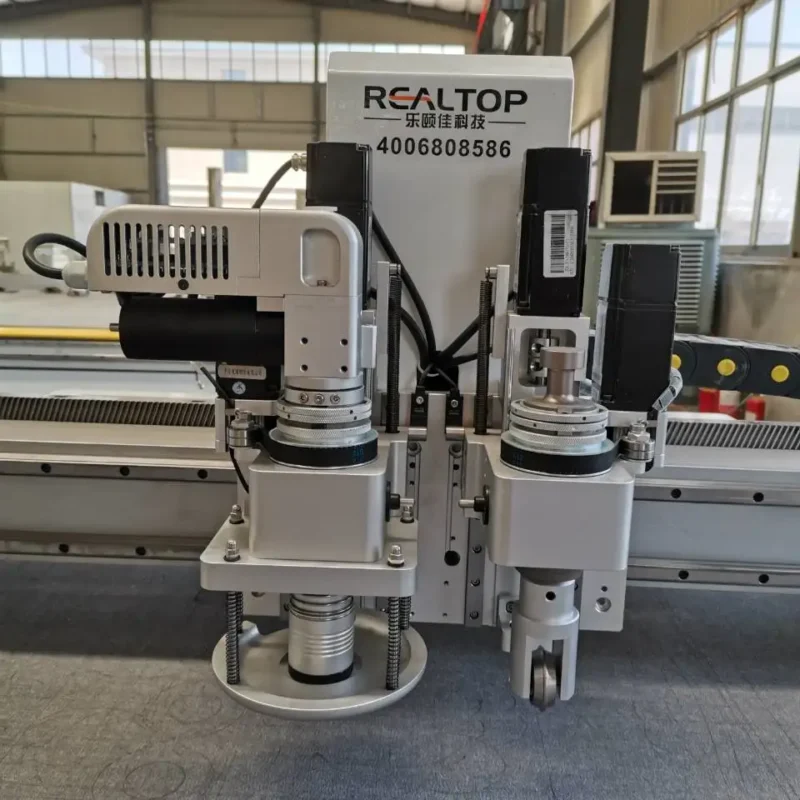
| Multifunctional Tool Head | Swiss imported knife with vibration full cutting, vibration half cutting, cursor location |
| Tool Head Options | Oscillating knife, pneumatic knife, high-power vibrating knife, circular knife, V cutting knife, drag knife, creasing wheel, dotted line knife, punching, brush |
| Visual Positioning | Small CCD camera mark point positioning, panoramic camera recognition, projection positioning |
| Safety Device | Infrared sensors, anti-collision beam sensors, emergency stop |
| Control Panel | Touch screen with multiple language support |
| Instruction System | HP-GL compatible format |
| Software File Formats | PLT, DXF, AI |
| Language Options | English, Russian, Italian, Chinese, customizable |
| Warranty | 1 year |
| Assembly State | Fully assembled |
| Standards | CE (declaration where applicable) |
Application Suitability
| Application | Material or Output |
|---|---|
| Packaging and carton sample making | Corrugated cardboard, honeycomb cardboard, grey board |
| Signage and display production | Foam board, PVC, soft glass, sticker, film |
| Garment and footwear cutting | Fabric, textile, leather, shoe material, luggage material |
| Automotive interior fabrication | Sponge, composite leather, gasket material, foam |
| Sealing and industrial gaskets | Rubber, PTFE, ETFE, PP, PE, carbon fiber, fiberglass |
| Soft furnishings and floor coverings | Carpet, non-woven fabric, PU, EVA, XPE |
Why Board Grade Matters More Than Working Area When Choosing a CNC Oscillating Knife Cutting Machine for Sale
Specifying on table size alone is how sample rooms end up with machines that cannot hold down small die-cut blanks or crush the flute on double-wall corrugated.
I spent years running installations across Latin America, and the pattern repeats: a buyer selects a flatbed based on sheet dimensions, ships it overseas, and then discovers the vacuum zoning was configured for full-sheet nesting rather than small packaging blanks. The parts lift during the final pass, the creasing wheel skips, and three days vanish into re-fixturing and reprogramming. The RT-D2516/RT-S2516 addresses this through configurable vacuum zones on a magnesium-aluminum alloy table and a tool head roster that lets you swap between an oscillating knife for through-cutting, a V cutting knife for slot milling, and a creasing wheel for fold lines — all on the same gantry [NEED_CITE: vacuum zoning strategies for flatbed digital cutting tables].
Matching the Tool Head to the Board, Not the Brochure
A packaging sample room rarely runs one material. Monday might be 300 gsm kraft-liner corrugated, Wednesday could be 2 mm honeycomb, and Friday brings laminated grey board for luxury box prototypes. The RT-D2516/RT-S2516 carries up to ten tool options — oscillating knife, pneumatic knife, V cutting knife, drag knife, creasing wheel, dotted line knife, punching, and more — so the operator changes the head rather than the machine. This matters because a drag knife that slices vinyl cleanly will tear the top liner on B-flute if the wrong blade geometry is forced into the job.
From Sample Room to Short-Run Production
The choice between a flat working table and the auto-feeding conveyor table determines whether the machine stays in prototyping or moves into batch output. The Germany-imported conveyor belt on the auto-feeding option allows continuous material advance, which shortens load-unload cycles when running repeat carton styles across a full shift. For a CNC oscillating knife cutting machine for sale at this working area, the difference between manual sheet loading and conveyor feed becomes visible once daily volume climbs past a few dozen sheets [NEED_CITE: conveyor versus flat table throughput in digital packaging cutting].
Reading the Spec Sheet Against Real Production Conditions
The 7.5 kW vacuum pump paired with the PVDF-coated magnesium-aluminum table provides hold-down force across the 1600 × 2500 mm surface. What the spec sheet does not spell out is how zoning affects small parts: a single large zone works for full-sheet nesting, but gasket blanks under 50 mm can drift without segmented vacuum control. The repeated accuracy of ≤0.1 mm and the Swiss imported knife with vibration full and half cutting are engineered for tight contour work — provided the vacuum zone matches the blank footprint. The servo options, Delta or Panasonic, influence long-term positional stability under continuous cycling rather than peak speed.
The Cost of Skipping the Material Trial
A buyer once received a machine configured for standard grey board, then loaded high-grammage kraft-liner on day one. The V-groove knife produced ragged slot walls because the blade angle and depth were set for a softer substrate. Three days of on-site adjustment followed. Requesting a sample cutting report on your actual material — your corrugated grade, your foam density, your laminate stack — turns that risk into a documented baseline before the machine leaves the factory [NEED_CITE: sample cutting verification in CNC equipment procurement].
Why Buyers Source This Platform Here
In-house design covers both knife and laser cutting technologies, so the buyer selects the method that fits the material rather than adapting the material to one method. Tool head and table configuration are specified per substrate and production volume, not picked from a fixed menu. CCD camera and panoramic vision positioning options are confirmed against the buyer’s printed mark style before order. Software file format compatibility — PLT, DXF, AI — is validated against the buyer’s existing nesting workflow. Voltage, plug type, and control panel language are locked in before production starts, not discovered at uncrating.
Documentation & Verification
- Machine specification sheet listing confirmed tool head and vacuum zone configuration
- Electrical schematic with 380V ±10% voltage confirmation and plug type for destination market
- Sample cutting report on buyer-supplied corrugated, foam, or fabric before dispatch
- Factory test record documenting repeated accuracy and cutting cycle on agreed material
- Software licence and PLT / DXF / AI file format compatibility note
- Spare parts list matched to installed tool heads and servo motor brand
Installation, Commissioning & Support
- Requires a level floor with clearance for the 3450 × 2300 × 1250 mm overall dimensions and operator access
- Dedicated 380V ±10% circuit rated for 9 kW machine load plus 7.5 kW vacuum pump draw
- Arrives fully assembled; rigging plan needed for door clearance at destination facility
- First-run commissioning includes tool head calibration, vacuum zone mapping, and servo tuning
- Operator training covers Swiss knife blade changes, creasing wheel pressure, and CCD mark registration
- Wear parts kit includes oscillating knife blades, V-groove inserts, and creasing wheel spares
What to Include in Your Inquiry
Send the material type, thickness range, and maximum sheet dimensions you intend to run. Specify your daily volume so the flat or auto-feeding table option can be matched to your workflow. Confirm your facility voltage, frequency, and preferred control panel language to avoid rework after delivery.
Frequently Asked Questions
Q: How do I choose between oscillating knife, drag knife, and creasing wheel for my board grade?
A: Oscillating knife handles through-cutting on corrugated and honeycomb up to the rated thickness. Drag knife suits thinner substrates like sticker and film where a clean shear edge is needed. Creasing wheel scores fold lines without cutting through. The correct head depends on your board flute profile and whether the job requires full cut, kiss cut, or crease only. A sample cutting report on your actual stock confirms the choice.
Q: What cutting speed can I expect on double-wall corrugated?
A: The published range is 200–800 mm/s, but the achievable speed depends on board grade, flute count, and contour complexity. Dense double-wall with intricate die lines runs slower than simple straight cuts on single-wall. Request a sample cutting report with cycle time measured on your own material to establish a realistic baseline before order.
Q: Which visual positioning option fits printed carton contour cutting?
A: The small CCD camera handles mark-point positioning for registered prints with consistent fiducial marks. The panoramic camera recognition suits larger sheets where multiple printed features must be located across the full 1600 × 2500 mm area. Projection positioning assists manual alignment. Your print mark style and registration tolerance determine which option fits.
Q: When should I choose the auto-feeding conveyor over the flat table?
A: The auto-feeding table with the Germany-imported conveyor belt suits batch runs where the same carton style repeats across many sheets. The flat table fits sample rooms running one-off prototypes with frequent material swaps. If your daily workflow shifts between prototyping and short-run production, discuss both options during the specification stage.
Q: What electrical and software details must be confirmed before shipment?
A: The machine operates on 380V ±10%, so your local supply voltage and frequency must match. Plug type, control panel language, and software file format compatibility with your PLT, DXF, or AI nesting workflow are confirmed before production. An electrical schematic and voltage confirmation sheet are included in the documentation package.
Tool-First Selection Strategy — the RT-D2516/RT-S2516 oscillating knife platform is built around matching the cutting head to the material, not forcing one method across incompatible substrates.
Technical Specifications
| Parameter | Value |
|---|---|
| Product Type | CNC Oscillating Knife Cutting Machine |
| Model | RT-D2516/RT-S2516 |
| Working Area | 1600 × 2500 mm |
| Overall Dimensions | 3450 × 2300 × 1250 mm |
| Rated Power | 9 kW |
| Voltage | 380V ±10% |
| Translational Velocity | 800–2000 mm/s |
| Cutting Speed | 200–800 mm/s (basis not stated in source — confirm material / thickness) |
| Cutting Thickness | ≤100 mm (varies with material) |
| Repeated Accuracy | ≤0.1 mm |
| Transmission System | Digital servo motor, linear guide, synchronous belt, ball screw |
| Servo Motor Options | Delta (China) or Panasonic (Japan) |
| Vacuum Pump | 7.5 kW |
| Vacuum Table | Magnesium-aluminum alloy, fluorocarbon PVDF powder spraying, anodic and hard oxidation |
| Working Table Options | Flat table or auto-feeding table (Germany imported conveyor belt) |
| Multifunctional Tool Head | Swiss imported knife with vibration full cutting, vibration half cutting, cursor location |
| Tool Head Options | Oscillating knife, pneumatic knife, high-power vibrating knife, circular knife, V cutting knife, drag knife, creasing wheel, dotted line knife, punching, brush |
| Visual Positioning | Small CCD camera mark point positioning, panoramic camera recognition, projection positioning |
| Safety Device | Infrared sensors, anti-collision beam sensors, emergency stop |
| Control Panel | Touch screen with multiple language support |
| Instruction System | HP-GL compatible format |
| Software File Formats | PLT, DXF, AI |
| Language Options | English, Russian, Italian, Chinese, customizable |
| Warranty | 1 year |
| Assembly State | Fully assembled |
| Standards | CE (declaration where applicable) |
Application Suitability
| Application | Material or Output |
|---|---|
| Packaging and carton sample making | Corrugated cardboard, honeycomb cardboard, grey board |
| Signage and display production | Foam board, PVC, soft glass, sticker, film |
| Garment and footwear cutting | Fabric, textile, leather, shoe material, luggage material |
| Automotive interior fabrication | Sponge, composite leather, gasket material, foam |
| Sealing and industrial gaskets | Rubber, PTFE, ETFE, PP, PE, carbon fiber, fiberglass |
| Soft furnishings and floor coverings | Carpet, non-woven fabric, PU, EVA, XPE |
Why Board Grade Matters More Than Working Area When Choosing a CNC Oscillating Knife Cutting Machine for Sale
Specifying on table size alone is how sample rooms end up with machines that cannot hold down small die-cut blanks or crush the flute on double-wall corrugated.
I spent years running installations across Latin America, and the pattern repeats: a buyer selects a flatbed based on sheet dimensions, ships it overseas, and then discovers the vacuum zoning was configured for full-sheet nesting rather than small packaging blanks. The parts lift during the final pass, the creasing wheel skips, and three days vanish into re-fixturing and reprogramming. The RT-D2516/RT-S2516 addresses this through configurable vacuum zones on a magnesium-aluminum alloy table and a tool head roster that lets you swap between an oscillating knife for through-cutting, a V cutting knife for slot milling, and a creasing wheel for fold lines — all on the same gantry [NEED_CITE: vacuum zoning strategies for flatbed digital cutting tables].
Matching the Tool Head to the Board, Not the Brochure
A packaging sample room rarely runs one material. Monday might be 300 gsm kraft-liner corrugated, Wednesday could be 2 mm honeycomb, and Friday brings laminated grey board for luxury box prototypes. The RT-D2516/RT-S2516 carries up to ten tool options — oscillating knife, pneumatic knife, V cutting knife, drag knife, creasing wheel, dotted line knife, punching, and more — so the operator changes the head rather than the machine. This matters because a drag knife that slices vinyl cleanly will tear the top liner on B-flute if the wrong blade geometry is forced into the job.
From Sample Room to Short-Run Production
The choice between a flat working table and the auto-feeding conveyor table determines whether the machine stays in prototyping or moves into batch output. The Germany-imported conveyor belt on the auto-feeding option allows continuous material advance, which shortens load-unload cycles when running repeat carton styles across a full shift. For a CNC oscillating knife cutting machine for sale at this working area, the difference between manual sheet loading and conveyor feed becomes visible once daily volume climbs past a few dozen sheets [NEED_CITE: conveyor versus flat table throughput in digital packaging cutting].
Reading the Spec Sheet Against Real Production Conditions
The 7.5 kW vacuum pump paired with the PVDF-coated magnesium-aluminum table provides hold-down force across the 1600 × 2500 mm surface. What the spec sheet does not spell out is how zoning affects small parts: a single large zone works for full-sheet nesting, but gasket blanks under 50 mm can drift without segmented vacuum control. The repeated accuracy of ≤0.1 mm and the Swiss imported knife with vibration full and half cutting are engineered for tight contour work — provided the vacuum zone matches the blank footprint. The servo options, Delta or Panasonic, influence long-term positional stability under continuous cycling rather than peak speed.
The Cost of Skipping the Material Trial
A buyer once received a machine configured for standard grey board, then loaded high-grammage kraft-liner on day one. The V-groove knife produced ragged slot walls because the blade angle and depth were set for a softer substrate. Three days of on-site adjustment followed. Requesting a sample cutting report on your actual material — your corrugated grade, your foam density, your laminate stack — turns that risk into a documented baseline before the machine leaves the factory [NEED_CITE: sample cutting verification in CNC equipment procurement].
Why Buyers Source This Platform Here
In-house design covers both knife and laser cutting technologies, so the buyer selects the method that fits the material rather than adapting the material to one method. Tool head and table configuration are specified per substrate and production volume, not picked from a fixed menu. CCD camera and panoramic vision positioning options are confirmed against the buyer’s printed mark style before order. Software file format compatibility — PLT, DXF, AI — is validated against the buyer’s existing nesting workflow. Voltage, plug type, and control panel language are locked in before production starts, not discovered at uncrating.
Documentation & Verification
- Machine specification sheet listing confirmed tool head and vacuum zone configuration
- Electrical schematic with 380V ±10% voltage confirmation and plug type for destination market
- Sample cutting report on buyer-supplied corrugated, foam, or fabric before dispatch
- Factory test record documenting repeated accuracy and cutting cycle on agreed material
- Software licence and PLT / DXF / AI file format compatibility note
- Spare parts list matched to installed tool heads and servo motor brand
Installation, Commissioning & Support
- Requires a level floor with clearance for the 3450 × 2300 × 1250 mm overall dimensions and operator access
- Dedicated 380V ±10% circuit rated for 9 kW machine load plus 7.5 kW vacuum pump draw
- Arrives fully assembled; rigging plan needed for door clearance at destination facility
- First-run commissioning includes tool head calibration, vacuum zone mapping, and servo tuning
- Operator training covers Swiss knife blade changes, creasing wheel pressure, and CCD mark registration
- Wear parts kit includes oscillating knife blades, V-groove inserts, and creasing wheel spares
What to Include in Your Inquiry
Send the material type, thickness range, and maximum sheet dimensions you intend to run. Specify your daily volume so the flat or auto-feeding table option can be matched to your workflow. Confirm your facility voltage, frequency, and preferred control panel language to avoid rework after delivery.
Frequently Asked Questions
Q: How do I choose between oscillating knife, drag knife, and creasing wheel for my board grade?
A: Oscillating knife handles through-cutting on corrugated and honeycomb up to the rated thickness. Drag knife suits thinner substrates like sticker and film where a clean shear edge is needed. Creasing wheel scores fold lines without cutting through. The correct head depends on your board flute profile and whether the job requires full cut, kiss cut, or crease only. A sample cutting report on your actual stock confirms the choice.
Q: What cutting speed can I expect on double-wall corrugated?
A: The published range is 200–800 mm/s, but the achievable speed depends on board grade, flute count, and contour complexity. Dense double-wall with intricate die lines runs slower than simple straight cuts on single-wall. Request a sample cutting report with cycle time measured on your own material to establish a realistic baseline before order.
Q: Which visual positioning option fits printed carton contour cutting?
A: The small CCD camera handles mark-point positioning for registered prints with consistent fiducial marks. The panoramic camera recognition suits larger sheets where multiple printed features must be located across the full 1600 × 2500 mm area. Projection positioning assists manual alignment. Your print mark style and registration tolerance determine which option fits.
Q: When should I choose the auto-feeding conveyor over the flat table?
A: The auto-feeding table with the Germany-imported conveyor belt suits batch runs where the same carton style repeats across many sheets. The flat table fits sample rooms running one-off prototypes with frequent material swaps. If your daily workflow shifts between prototyping and short-run production, discuss both options during the specification stage.
Q: What electrical and software details must be confirmed before shipment?
A: The machine operates on 380V ±10%, so your local supply voltage and frequency must match. Plug type, control panel language, and software file format compatibility with your PLT, DXF, or AI nesting workflow are confirmed before production. An electrical schematic and voltage confirmation sheet are included in the documentation package.
商品评价
There are no reviews yet.