


Fast Delivery
Quick, reliable shipping to any location.

Free & easy returns
Return this item by mail or in store within 90 days for a full refund.
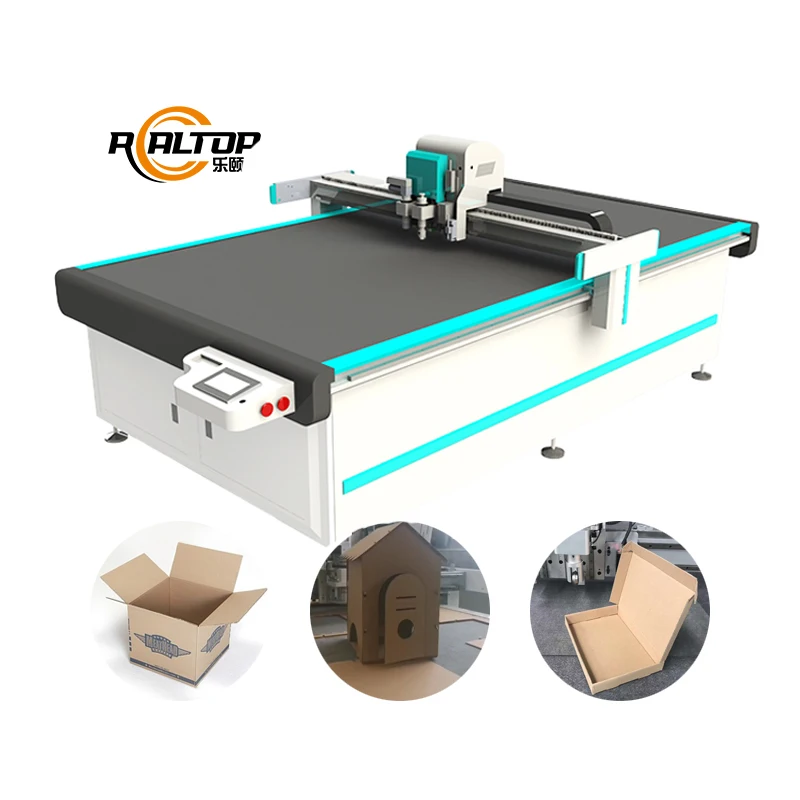
Tool Head Matching — Configuring oscillating knife, drag knife, and creasing wheel options per material specification before order confirmation, not after delivery.
Technical Specifications
| Parameter | Value |
|---|---|
| Model | RT-D2516/RT-S2516 |
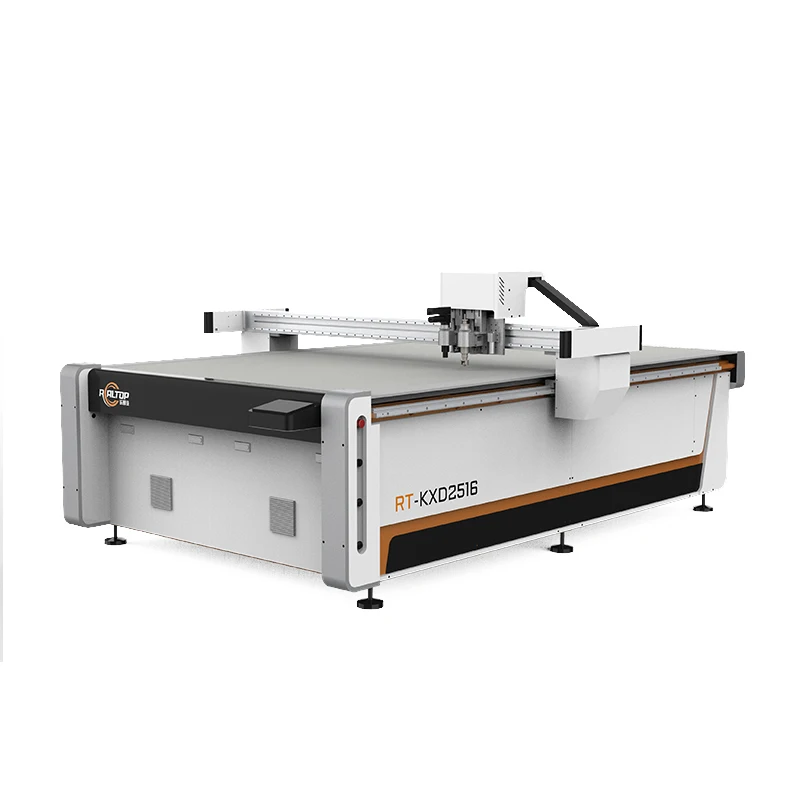
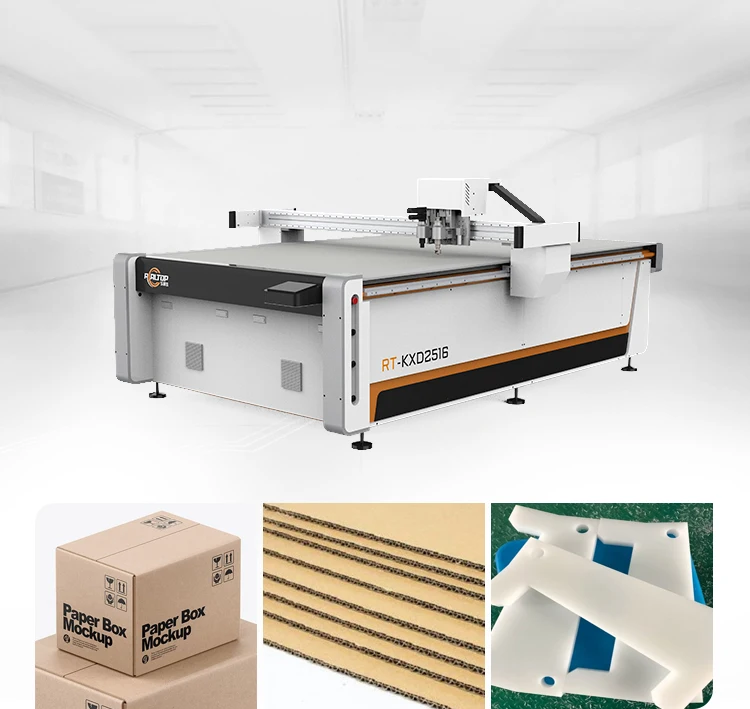
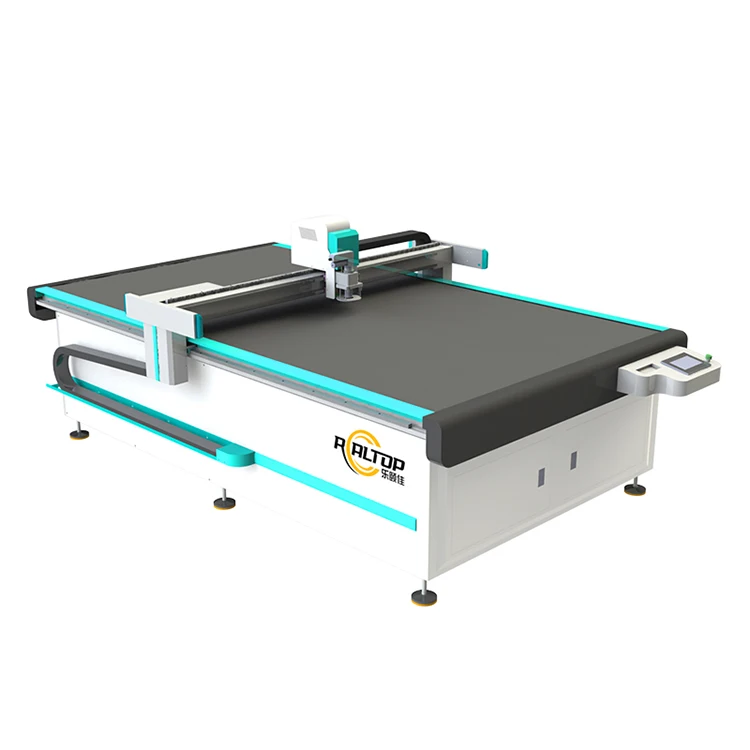
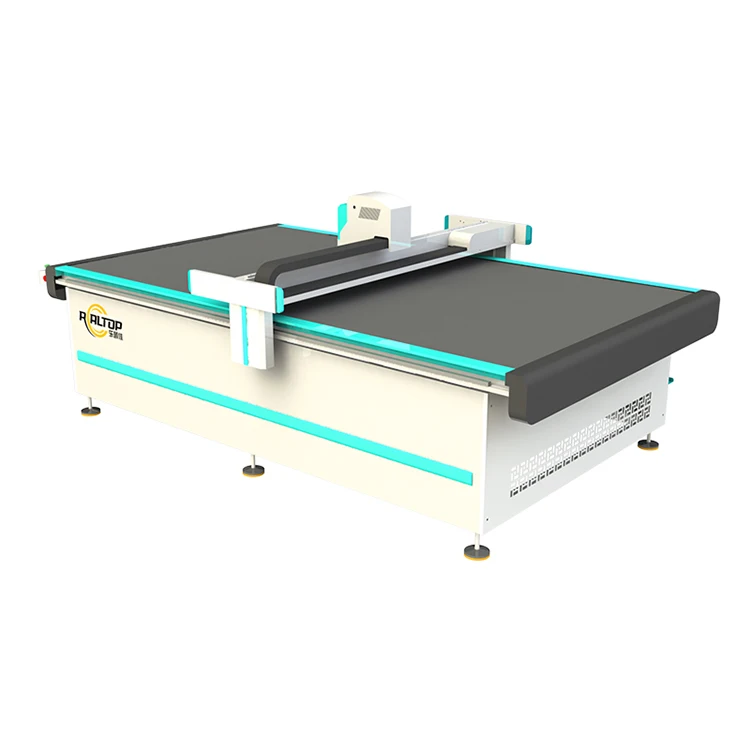
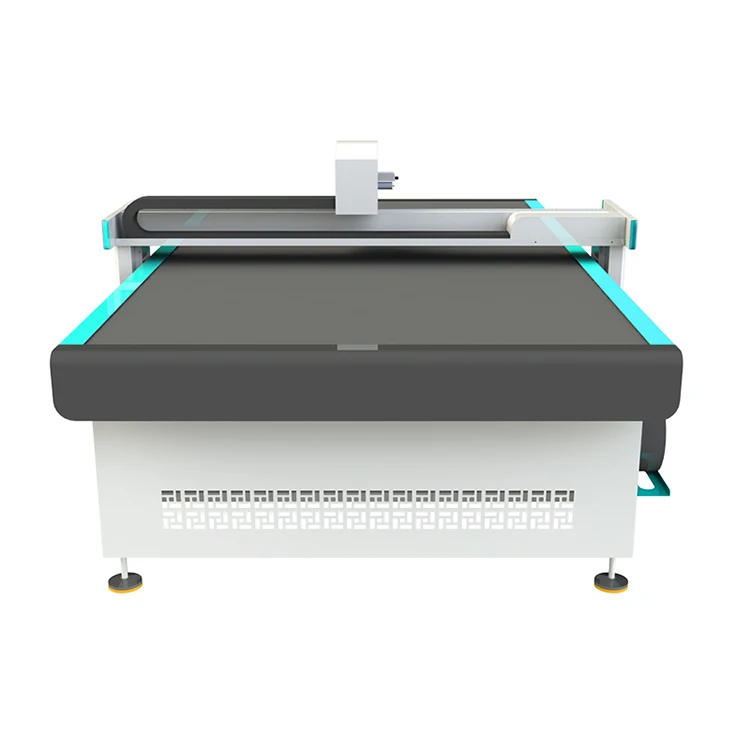
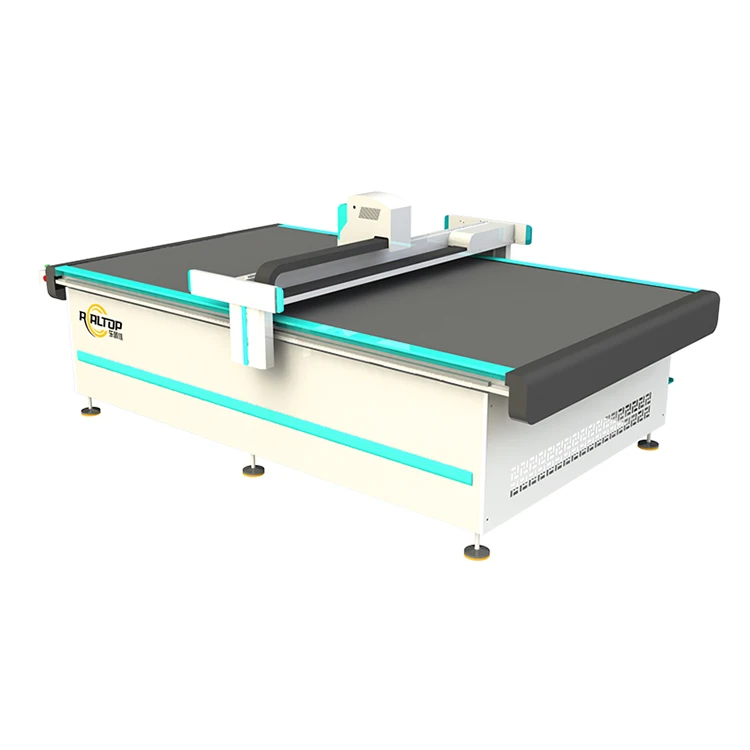
| Product Type | CNC Box Cutting Machine Cardboard Foam Oscillating Knife Tool |
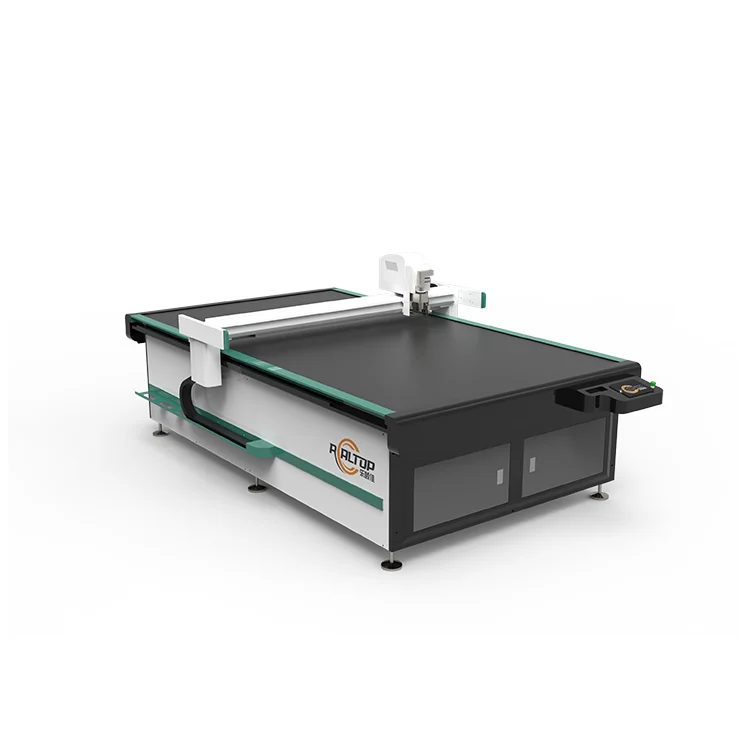
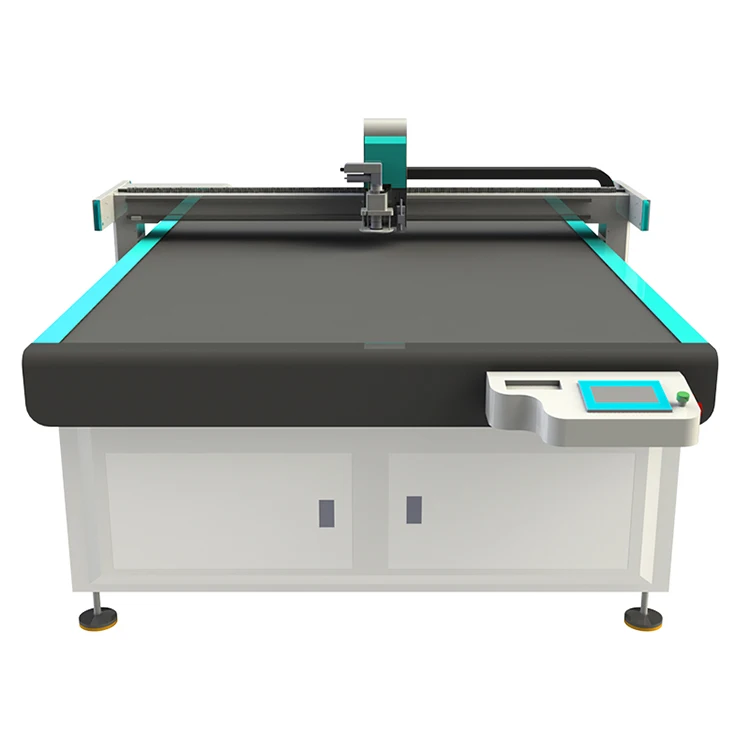
| Working Area | 1600×2500 mm |
| Machine Size | 3450×2300×1250 mm |
| Rated Power | 9 kW |
| Translational Velocity | 800–2000 mm/s |
| Repeated Accuracy | ≤0.1 mm |
| Transmission System | Digital servo motor, linear guide, synchronous belt, ball screw |
| Fixed Table Option | Flatbed working table or auto-feeding conveyor table |
| Platform | Aluminum air box platform, integrated box adsorption |
| Vacuum Pump | 7.5 kW |
| Voltage | 380V ±10% |
| Instruction System | HP-GL compatible format |
| Control Panel | Touch screen, multiple languages supported |
| Safety Device | Infrared sensors with responsive stop |
| Visual Positioning Options | Small CCD mark point, panoramic camera recognition, projection positioning |
Application Suitability
| Application | Material or Output |
|---|---|
| Carton sample making and short-run packaging | Corrugated board, grey board, folding carton stock |
| Advertising and display fabrication | Foam board, PVC sheet, vinyl, acrylic |
| Gasket and seal production | Rubber sheet, silicone, composite fiber |
| Automotive interior trimming | Sponge composite leather, flexible foam, textile |
| Protective packaging and inserts | EPE foam, EVA, cross-linked polyethylene |
Why Working Area Alone Cannot Define a CNC Box Cutting Machine Cardboard Foam Oscillating Knife Tool
A machine chosen only by table size fails when material thickness and tool head capability do not align with the production job.
I have seen buyers specify a 1600×2500 mm working area and assume the machine will handle their full material range. Then the first sheet of high-density grey board arrives, and the knife head chatters across the surface instead of cutting through. The edge comes out crushed and fibrous. [NEED_CITE: oscillating knife cutting mechanics for high-density fibreboard] The real issue is never the table — it is whether the motor torque, knife frequency, and hold-down pressure match the material density at the speed the buyer needs to run.
Matching Knife Frequency to Board Density
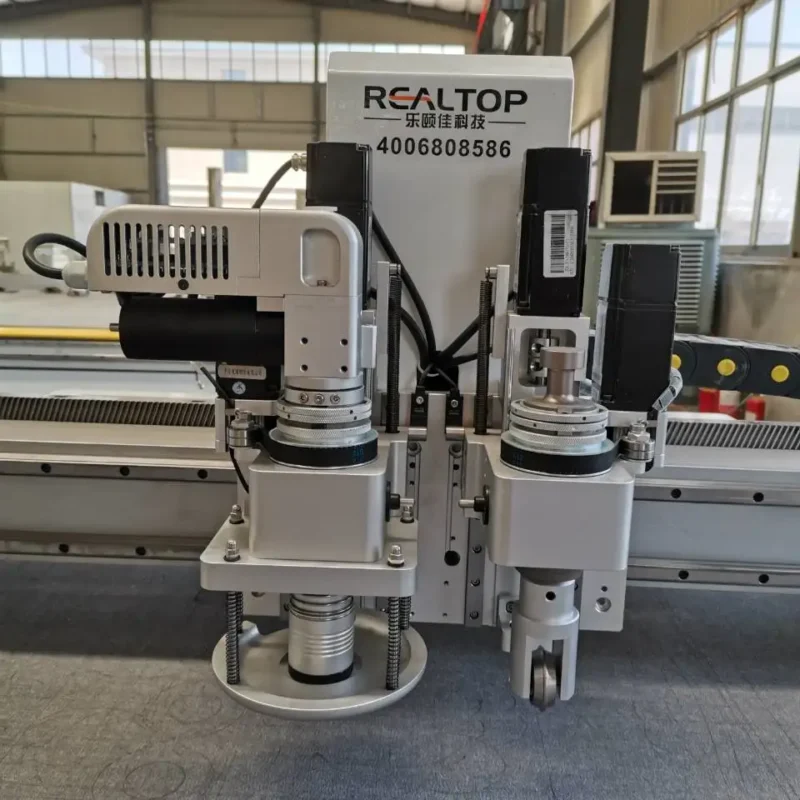
The Swiss-imported oscillating knife head on the RT-D2516/RT-S2516 delivers vibration full cutting, half cutting, and cursor location in one setup. Full cutting drives the blade through the entire thickness of corrugated or foam stock in a single pass. Half cutting scores the surface for fold lines on carton blanks, which matters when a packaging sample must fold cleanly along a crease without cracking the printed surface. The oscillation frequency determines how the blade behaves inside dense materials — too low and the edge tears, too high and thin materials lift off the table. This is why a CNC box cutting machine cardboard foam oscillating knife tool must be matched to the buyer’s actual stock, not just their largest sheet dimension.
Vacuum Zoning for Small Parts and Contour Work
The aluminum air box platform with integrated box adsorption divides the 1600×2500 mm surface into controllable vacuum zones. When cutting small gasket pieces or narrow carton flaps, full-table suction wastes energy and can still leave lightweight parts drifting at high travel speeds. Zoned vacuum keeps only the active cutting area engaged. [NEED_CITE: vacuum hold-down principles for flatbed digital cutters] Combined with CCD mark point or panoramic camera positioning, the system tracks printed registration marks on pre-printed carton stock, cutting contour shapes to the printed outline rather than to a fixed coordinate.
Reading the Specification Sheet for Real Cutting Capacity
Translational velocity of 800–2000 mm/s and repeated accuracy of ≤0.1 mm define what the RT-D2516/RT-S2516 can sustain during continuous operation. But the meaningful number for a packaging buyer is cutting speed through their specific board grade at a given thickness. A 3 mm corrugated sheet cuts differently from a 2 mm grey board of the same nominal weight because fibre density changes blade drag. The 9 kW rated power and 7.5 kW vacuum pump must be evaluated together — insufficient vacuum allows material shift that no amount of knife precision can correct. Software compatibility with PLT, DXF, and AI files determines whether the buyer’s existing nesting workflow transfers directly or requires re-drawing.
What Happens When the Wrong Tool Head Ships
Buyers who skip material sampling before order confirmation sometimes discover the problem on their own shop floor. A pneumatic knife that slices vinyl cleanly will crush multi-layer corrugated board because the downward pressure profile is wrong for rigid stock. [NEED_CITE: tool head selection criteria for flatbed knife cutters] A creasing wheel set to the wrong depth scores the top liner without compressing the flute, so the carton blank folds unevenly. These are not machine defects — they are configuration mismatches that a pre-shipment sample cutting test on the buyer’s own material would have caught.
Why Buyers Source This Range Here
The RT-D2516/RT-S2516 is part of a catalogue covering both knife and laser cutting technologies, so buyers compare methods against their material before committing to one. Tool head and table configuration is specified per material type and daily volume, not offered as a fixed package. CCD camera positioning for printed contour work is confirmed against the buyer’s actual print contrast and mark size before the machine is built. Voltage, control language, and plug type are locked to the destination market at quotation stage. Sample cutting on the buyer’s own material is standard before shipment authorization.
Documentation & Verification
- Machine specification sheet confirming working area, tool head list, and voltage for destination market
- Electrical schematic with voltage confirmation matching buyer’s local supply standard
- Tool head and table configuration list tied to buyer’s material type and thickness
- Sample cutting report on buyer’s own material showing edge quality and CCD tracking result
- Software licence and file format compatibility note for PLT, DXF, AI, and nesting integration
- Factory test record with CE declaration documentation where applicable
Installation, Commissioning & Support
- Floor space planning for 3450×2300 mm footprint plus material infeed and offtake clearance
- Dedicated 380V ±10% circuit with stable supply to protect the 9 kW rated power system
- Flatbed table leveling and vacuum zone calibration on the aluminum air box platform
- Touch screen control panel language setup and HP-GL instruction system configuration at first power-on
- Tool head changeover training for oscillating knife, creasing wheel, and drag knife operations
- Spare parts list covering Swiss knife blades, vacuum seals, and drive belt tensioning schedule
Before You Request a Quotation
Send the material type, board grade, and maximum thickness you plan to cut, along with the largest sheet size in your production mix. Confirm your local voltage and frequency so the electrical system is specified correctly. If you run printed carton stock, share a sample print so CCD tracking can be validated before the machine enters build.
Frequently Asked Questions
Q: How do I choose between oscillating knife, drag knife, and creasing wheel for my carton work?
A: Oscillating knife handles thicker corrugated and foam board with a vibrating blade that cuts without crushing flutes. Drag knife suits thinner flexible materials like vinyl and card stock where a drawn blade gives a clean edge. Creasing wheel scores fold lines without penetrating the surface. A single CNC box cutting machine cardboard foam oscillating knife tool can carry multiple heads, and the right combination depends on your daily material mix and sample requirements.
Q: What print quality is needed for reliable CCD camera contour tracking?
A: The small CCD mark point system and panoramic camera recognition both require printed registration marks with sufficient contrast against the board surface. Low-contrast marks or marks printed on heavily textured stock reduce tracking reliability at higher travel speeds. Send a printed sample so the camera system can be calibrated and verified against your specific print standard before the machine ships.
Q: How does sheet size affect the right table format choice?
A: The 1600×2500 mm working area accommodates standard carton board sheets and nesting layouts for multiple small parts. If your production uses roll-fed material or continuous printed stock, the auto-feeding conveyor option with Germany-imported belt stock reduces manual sheet loading. The choice between flatbed and auto-feeding depends on your daily volume and whether jobs run as single sheets or continuous feed.
Q: Can the control system and software work with my existing design files?
A: The touch screen control panel supports multiple languages, and the instruction system accepts HP-GL compatible format. Software compatibility covers PLT, DXF, and AI file imports. If your current nesting workflow uses a specific third-party system, file format compatibility and nesting integration are confirmed before order so there is no gap between your design stage and the machine’s cutting output.
Q: What electrical preparation is needed at the installation site?
A: The machine runs on 380V ±10% with a 9 kW rated power draw plus the 7.5 kW vacuum pump, so a dedicated circuit with stable voltage is required. Voltage, plug type, and control language are confirmed to match the destination country at quotation stage. An electrical schematic is supplied with the documentation package so your electrician can prepare the supply point before the machine arrives.
Tool Head Matching — Configuring oscillating knife, drag knife, and creasing wheel options per material specification before order confirmation, not after delivery.
Technical Specifications
| Parameter | Value |
|---|---|
| Model | RT-D2516/RT-S2516 |
| Product Type | CNC Box Cutting Machine Cardboard Foam Oscillating Knife Tool |
| Working Area | 1600×2500 mm |
| Machine Size | 3450×2300×1250 mm |
| Rated Power | 9 kW |
| Translational Velocity | 800–2000 mm/s |
| Repeated Accuracy | ≤0.1 mm |
| Transmission System | Digital servo motor, linear guide, synchronous belt, ball screw |
| Fixed Table Option | Flatbed working table or auto-feeding conveyor table |
| Platform | Aluminum air box platform, integrated box adsorption |
| Vacuum Pump | 7.5 kW |
| Voltage | 380V ±10% |
| Instruction System | HP-GL compatible format |
| Control Panel | Touch screen, multiple languages supported |
| Safety Device | Infrared sensors with responsive stop |
| Visual Positioning Options | Small CCD mark point, panoramic camera recognition, projection positioning |
Application Suitability
| Application | Material or Output |
|---|---|
| Carton sample making and short-run packaging | Corrugated board, grey board, folding carton stock |
| Advertising and display fabrication | Foam board, PVC sheet, vinyl, acrylic |
| Gasket and seal production | Rubber sheet, silicone, composite fiber |
| Automotive interior trimming | Sponge composite leather, flexible foam, textile |
| Protective packaging and inserts | EPE foam, EVA, cross-linked polyethylene |
Why Working Area Alone Cannot Define a CNC Box Cutting Machine Cardboard Foam Oscillating Knife Tool
A machine chosen only by table size fails when material thickness and tool head capability do not align with the production job.
I have seen buyers specify a 1600×2500 mm working area and assume the machine will handle their full material range. Then the first sheet of high-density grey board arrives, and the knife head chatters across the surface instead of cutting through. The edge comes out crushed and fibrous. [NEED_CITE: oscillating knife cutting mechanics for high-density fibreboard] The real issue is never the table — it is whether the motor torque, knife frequency, and hold-down pressure match the material density at the speed the buyer needs to run.
Matching Knife Frequency to Board Density
The Swiss-imported oscillating knife head on the RT-D2516/RT-S2516 delivers vibration full cutting, half cutting, and cursor location in one setup. Full cutting drives the blade through the entire thickness of corrugated or foam stock in a single pass. Half cutting scores the surface for fold lines on carton blanks, which matters when a packaging sample must fold cleanly along a crease without cracking the printed surface. The oscillation frequency determines how the blade behaves inside dense materials — too low and the edge tears, too high and thin materials lift off the table. This is why a CNC box cutting machine cardboard foam oscillating knife tool must be matched to the buyer’s actual stock, not just their largest sheet dimension.
Vacuum Zoning for Small Parts and Contour Work
The aluminum air box platform with integrated box adsorption divides the 1600×2500 mm surface into controllable vacuum zones. When cutting small gasket pieces or narrow carton flaps, full-table suction wastes energy and can still leave lightweight parts drifting at high travel speeds. Zoned vacuum keeps only the active cutting area engaged. [NEED_CITE: vacuum hold-down principles for flatbed digital cutters] Combined with CCD mark point or panoramic camera positioning, the system tracks printed registration marks on pre-printed carton stock, cutting contour shapes to the printed outline rather than to a fixed coordinate.
Reading the Specification Sheet for Real Cutting Capacity
Translational velocity of 800–2000 mm/s and repeated accuracy of ≤0.1 mm define what the RT-D2516/RT-S2516 can sustain during continuous operation. But the meaningful number for a packaging buyer is cutting speed through their specific board grade at a given thickness. A 3 mm corrugated sheet cuts differently from a 2 mm grey board of the same nominal weight because fibre density changes blade drag. The 9 kW rated power and 7.5 kW vacuum pump must be evaluated together — insufficient vacuum allows material shift that no amount of knife precision can correct. Software compatibility with PLT, DXF, and AI files determines whether the buyer’s existing nesting workflow transfers directly or requires re-drawing.
What Happens When the Wrong Tool Head Ships
Buyers who skip material sampling before order confirmation sometimes discover the problem on their own shop floor. A pneumatic knife that slices vinyl cleanly will crush multi-layer corrugated board because the downward pressure profile is wrong for rigid stock. [NEED_CITE: tool head selection criteria for flatbed knife cutters] A creasing wheel set to the wrong depth scores the top liner without compressing the flute, so the carton blank folds unevenly. These are not machine defects — they are configuration mismatches that a pre-shipment sample cutting test on the buyer’s own material would have caught.
Why Buyers Source This Range Here
The RT-D2516/RT-S2516 is part of a catalogue covering both knife and laser cutting technologies, so buyers compare methods against their material before committing to one. Tool head and table configuration is specified per material type and daily volume, not offered as a fixed package. CCD camera positioning for printed contour work is confirmed against the buyer’s actual print contrast and mark size before the machine is built. Voltage, control language, and plug type are locked to the destination market at quotation stage. Sample cutting on the buyer’s own material is standard before shipment authorization.
Documentation & Verification
- Machine specification sheet confirming working area, tool head list, and voltage for destination market
- Electrical schematic with voltage confirmation matching buyer’s local supply standard
- Tool head and table configuration list tied to buyer’s material type and thickness
- Sample cutting report on buyer’s own material showing edge quality and CCD tracking result
- Software licence and file format compatibility note for PLT, DXF, AI, and nesting integration
- Factory test record with CE declaration documentation where applicable
Installation, Commissioning & Support
- Floor space planning for 3450×2300 mm footprint plus material infeed and offtake clearance
- Dedicated 380V ±10% circuit with stable supply to protect the 9 kW rated power system
- Flatbed table leveling and vacuum zone calibration on the aluminum air box platform
- Touch screen control panel language setup and HP-GL instruction system configuration at first power-on
- Tool head changeover training for oscillating knife, creasing wheel, and drag knife operations
- Spare parts list covering Swiss knife blades, vacuum seals, and drive belt tensioning schedule
Before You Request a Quotation
Send the material type, board grade, and maximum thickness you plan to cut, along with the largest sheet size in your production mix. Confirm your local voltage and frequency so the electrical system is specified correctly. If you run printed carton stock, share a sample print so CCD tracking can be validated before the machine enters build.
Frequently Asked Questions
Q: How do I choose between oscillating knife, drag knife, and creasing wheel for my carton work?
A: Oscillating knife handles thicker corrugated and foam board with a vibrating blade that cuts without crushing flutes. Drag knife suits thinner flexible materials like vinyl and card stock where a drawn blade gives a clean edge. Creasing wheel scores fold lines without penetrating the surface. A single CNC box cutting machine cardboard foam oscillating knife tool can carry multiple heads, and the right combination depends on your daily material mix and sample requirements.
Q: What print quality is needed for reliable CCD camera contour tracking?
A: The small CCD mark point system and panoramic camera recognition both require printed registration marks with sufficient contrast against the board surface. Low-contrast marks or marks printed on heavily textured stock reduce tracking reliability at higher travel speeds. Send a printed sample so the camera system can be calibrated and verified against your specific print standard before the machine ships.
Q: How does sheet size affect the right table format choice?
A: The 1600×2500 mm working area accommodates standard carton board sheets and nesting layouts for multiple small parts. If your production uses roll-fed material or continuous printed stock, the auto-feeding conveyor option with Germany-imported belt stock reduces manual sheet loading. The choice between flatbed and auto-feeding depends on your daily volume and whether jobs run as single sheets or continuous feed.
Q: Can the control system and software work with my existing design files?
A: The touch screen control panel supports multiple languages, and the instruction system accepts HP-GL compatible format. Software compatibility covers PLT, DXF, and AI file imports. If your current nesting workflow uses a specific third-party system, file format compatibility and nesting integration are confirmed before order so there is no gap between your design stage and the machine’s cutting output.
Q: What electrical preparation is needed at the installation site?
A: The machine runs on 380V ±10% with a 9 kW rated power draw plus the 7.5 kW vacuum pump, so a dedicated circuit with stable voltage is required. Voltage, plug type, and control language are confirmed to match the destination country at quotation stage. An electrical schematic is supplied with the documentation package so your electrician can prepare the supply point before the machine arrives.
商品评价
There are no reviews yet.