

Fast Delivery
Quick, reliable shipping to any location.

Free & easy returns
Return this item by mail or in store within 90 days for a full refund.
Tool Head Configuration per Material — A buyer sourcing a textile cutter often selects on working area alone, only to discover the standard oscillating knife cannot cleanly slice high-elasticity lycra blends or dense foam without ragged edges or crushed fibers.
Technical Specifications
| Parameter | Value |
|---|---|
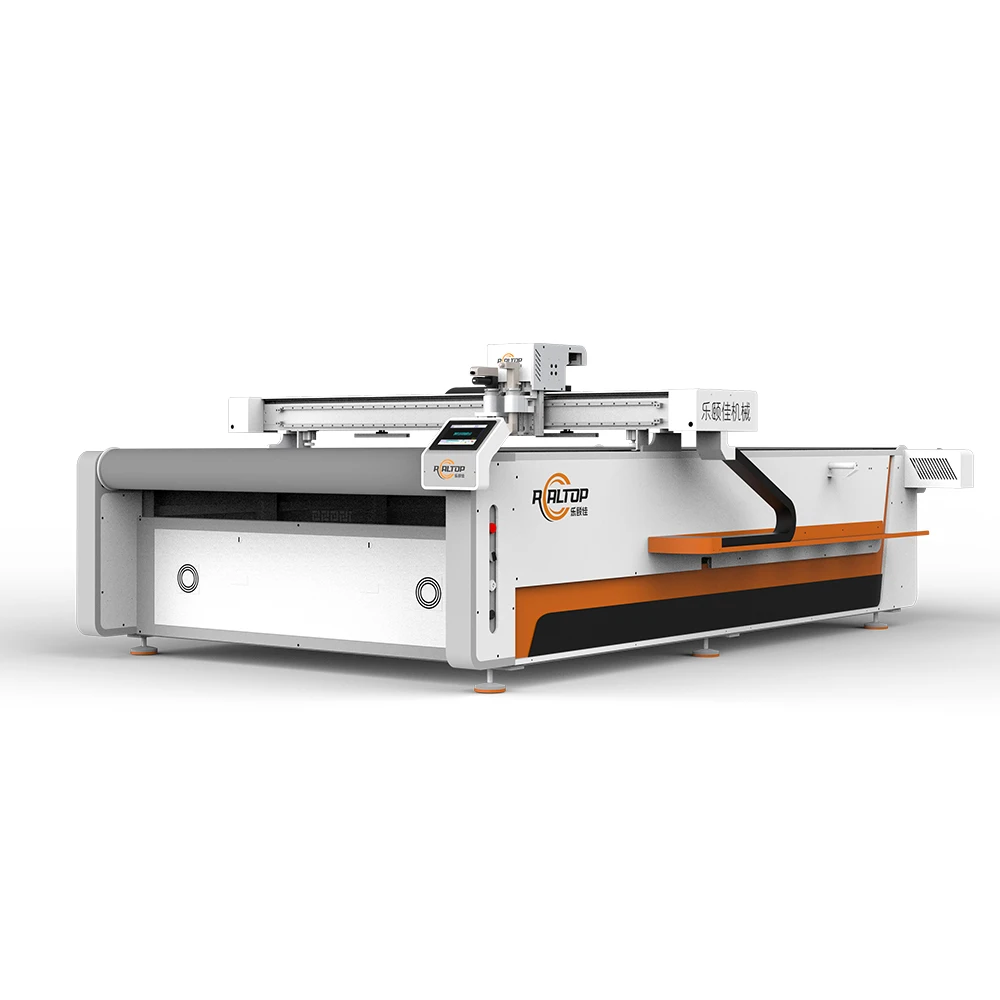
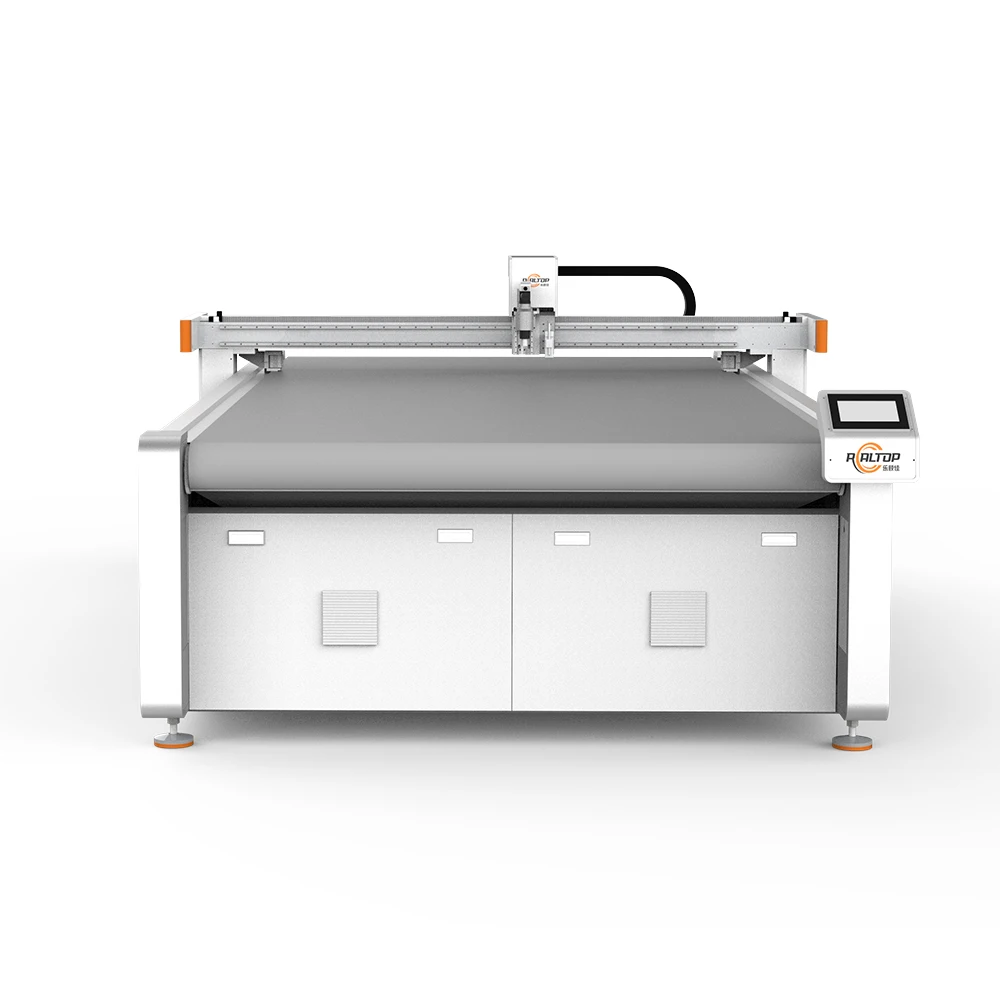
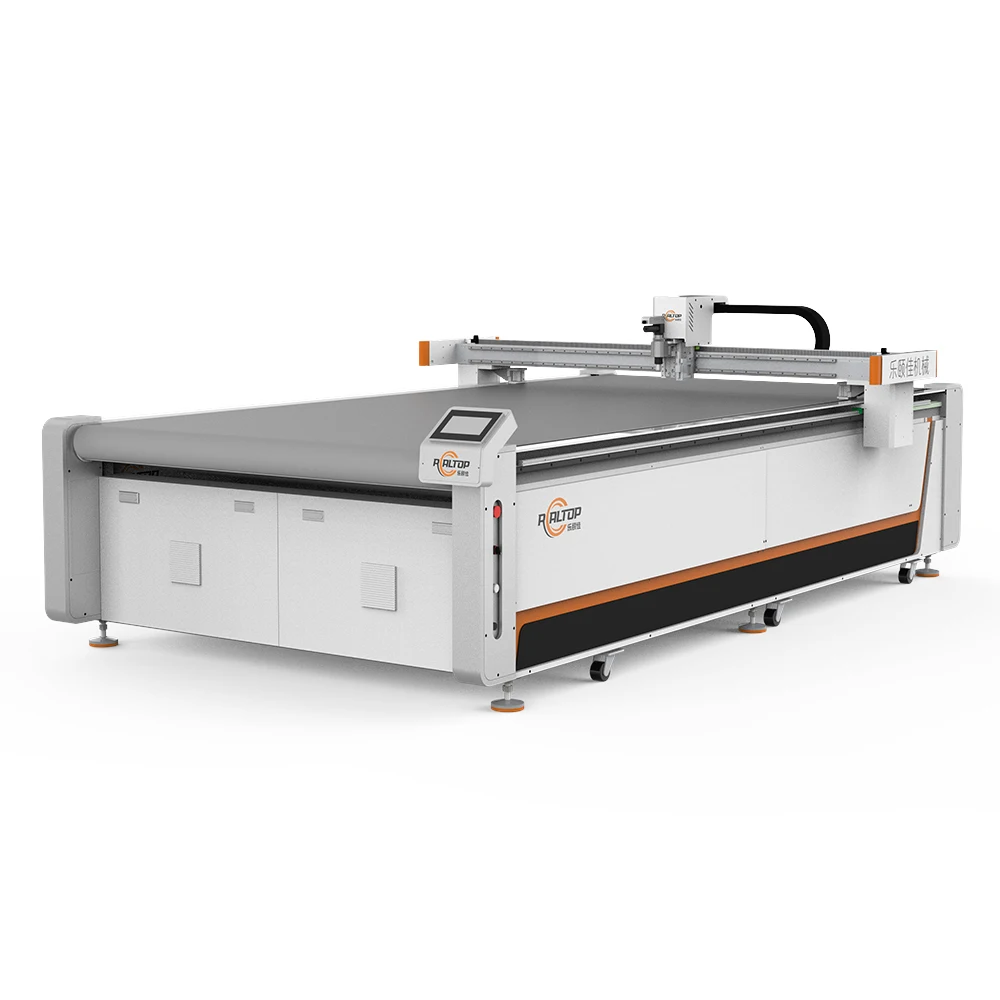
| Product Type | CNC Oscillating Knife Cutting Machine |
| Working Area | 1600 × 2500 mm |
| Machine Size | 3450 × 2300 × 1250 mm |
| Rated Power | 9 kW |
| Voltage | 380V ±10% |
| Translational Velocity | 800–2000 mm/s |
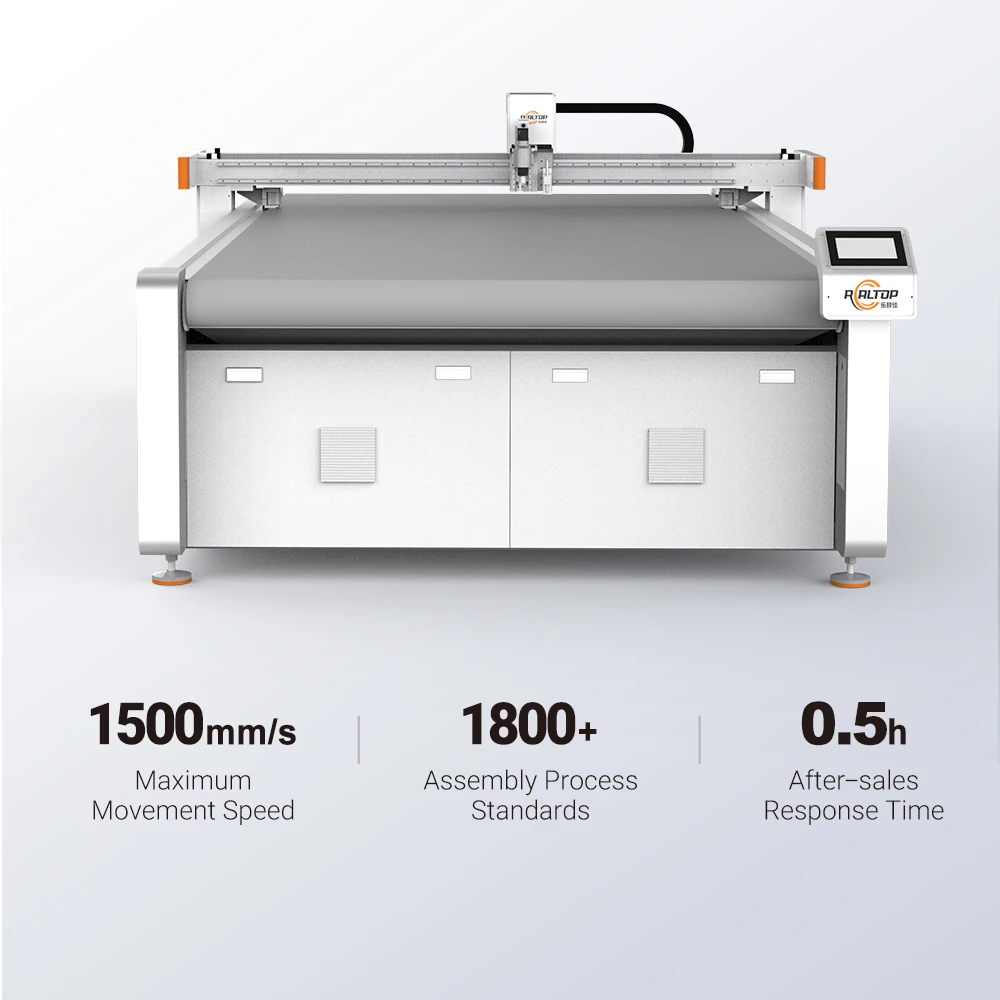
| Cutting Speed | 200–800 mm/s (varies by material) |
| Repeated Accuracy | ≤0.1 mm |
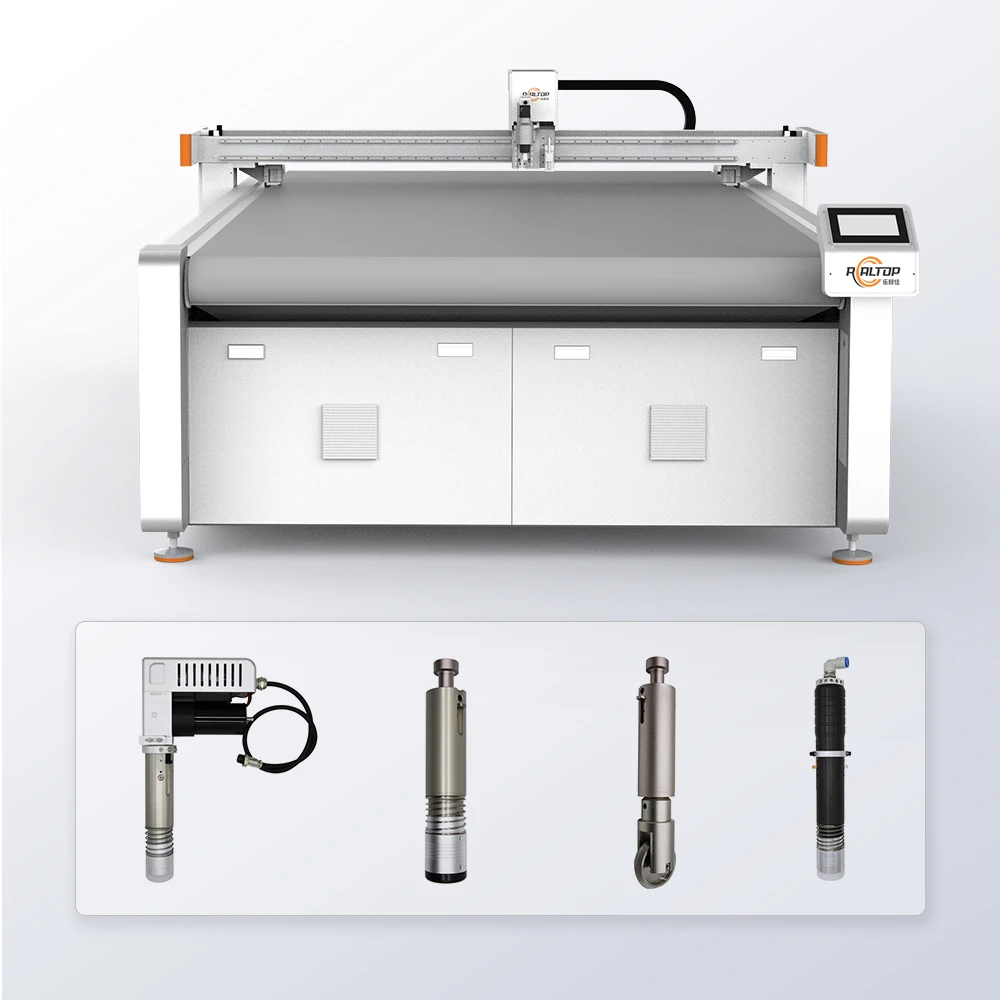
| Tool Head Options | Oscillating knife, pneumatic knife, high-power vibrating knife, circular knife, V-cutting knife, drag knife, creasing wheel, dotted line knife, punch, brush |
| Cutting Thickness | ≤100 mm (varies with material) |
| Table Type | Flatbed working table / Auto-feeding conveyor table |
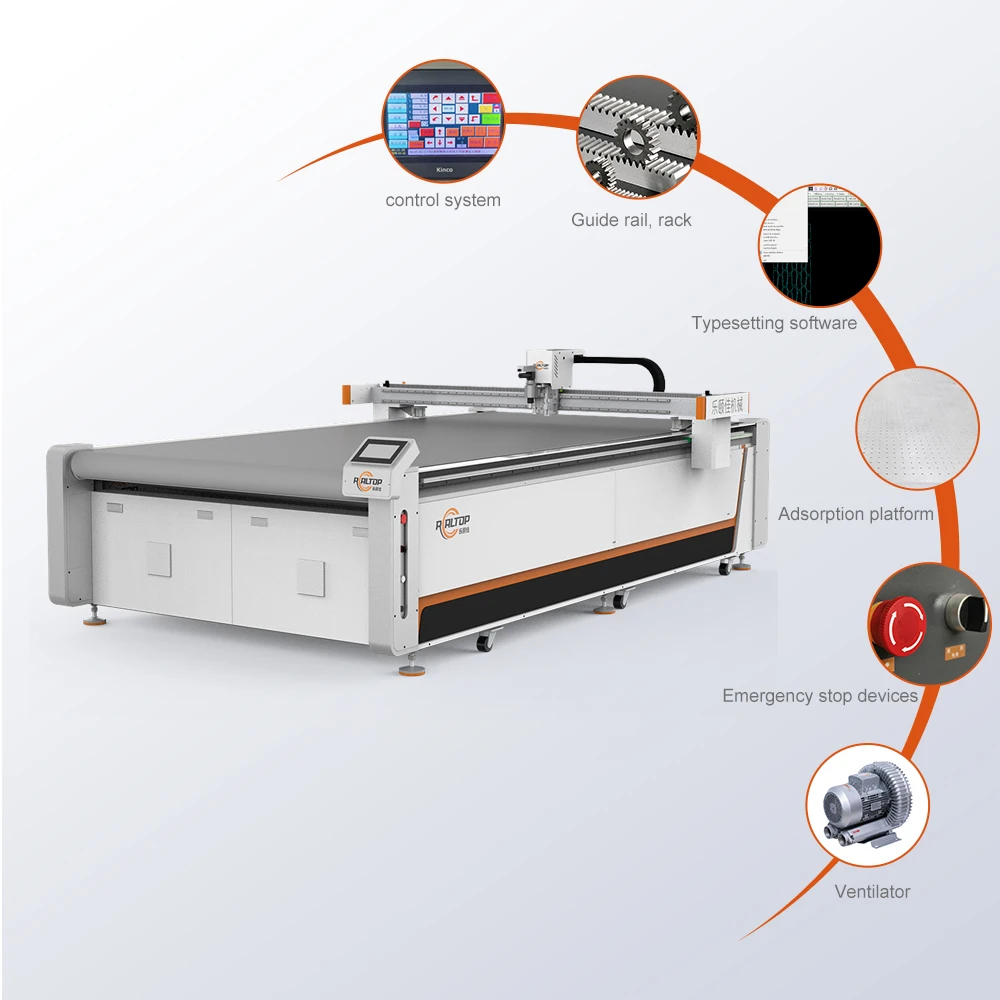
| Vacuum Pump | 7.5 kW (aviation aluminum shell, built-in silencer sponge) |
| Vacuum Table | Magnesium-aluminum alloy, fluorocarbon PVDF powder sprayed, anodic oxidation |
| Transmission System | Digital servo motor (Delta or Panasonic optional), linear guide, synchronous belt, ball screw |
| Rail | Taiwan Hiwin |
| Conveyor Belt | Germany imported |
| Control System | CNC with touch screen control panel (multi-language supported) |
| Visual Positioning | Small CCD camera mark point / panoramic camera / projection positioning |
| Software Compatibility | PLT, DXF, AI formats; HP-GL compatible; auto nesting software |
| Safety Device | Infrared induction blocking, anti-collision sensors, emergency stop (resume in situ) |
| Frame | Thick-walled seamless steel welded, high-temperature tempering, CNC machined |
| Cutting Method | Blade physical cutting (no burr, no burnt edge, no discoloration) |
| Warranty | 1 year (domestic and overseas) |
Application Suitability
| Application | Material or Output |
|---|---|
| Apparel and garment fabric cutting | Single-layer and multi-layer woven, knit, lycra blends |
| Footwear and luggage material cutting | Leather, PU, EVA, synthetic uppers |
| Automotive interior soft trim | Foam, PU, composite panels, sound-deadening mats |
| Carpet and sponge processing | Non-woven fabric, high-density sponge, tufted rolls |
| Gasket and sealing pad production | Rubber, silicone, fiber-reinforced sheet |
| Packaging sample making | Corrugated cardboard, carton board, foam inserts |
| Advertising and signage | Vinyl, PVC film, sticker, self-adhesive graphic |
Why the Tool Head Question Must Come Before the Price
Matching the blade mechanism to the material prevents the most common failure mode in fabric cutting: ragged edges on stretch textiles and crushed cells in foam.
When a machine is specified by bed size alone, the default oscillating knife may handle standard cotton but struggle with high-elasticity lycra blends or dense EVA foam. The blade frequency, amplitude and tool geometry must align with the tensile behavior of each material. I once saw a buyer receive a machine that performed well on woven polyester, only to find the same settings pulled and distorted a four-way stretch fabric — requiring a complete parameter recalibration and a different pneumatic knife assembly. [NEED_CITE: material-specific tooling requirements in digital cutting]
A CNC textile cutting machine manufacturer that offers a full tool head range — oscillating, pneumatic, circular, drag, and creasing wheel — lets you reconfigure for different jobs rather than forcing one cutting method across every material in your shop.
Flatbed versus Auto-Feeding: Choosing the Right Table for Your Volume
Garment workshops running short markers and sample pieces typically benefit from a flatbed table, where operators lay fabric manually and vacuum zoning holds small pattern pieces securely. For high-volume production cutting continuous rolls of knit or woven fabric, an auto-feeding conveyor table with a Germany-imported belt moves material through the cutting zone without manual repositioning.
The vacuum system on this lineup uses a 7.5 kW pump with a magnesium-aluminum alloy table surface, treated with fluorocarbon PVDF powder spray and anodic oxidation. This resists wear from repeated blade contact and maintains suction flatness across the 1600 × 2500 mm working area. A textile cutting machine manufacturer that offers both table configurations allows you to scale from sampling to bulk production within the same machine family.
Visual Positioning and Contour Accuracy for Printed Textiles
Printed fabrics and sublimated sportswear panels require the cutter to follow registered marks rather than rely on file coordinates alone. This system supports small CCD camera mark point positioning, panoramic camera recognition, and projection positioning — giving buyers options depending on print density and production speed.
A panoramic camera scans the full bed to locate distortion in stretch fabrics after printing and heat transfer, adjusting cut paths in real time. For simpler jobs with consistent mark placement, the small CCD mark point sensor is sufficient and faster to configure. The CNC textile cutting machine manufacturer provides these as selectable options rather than a single fixed solution, so you pay only for the positioning accuracy your workflow requires. [NEED_CITE: CCD camera positioning standards in textile cutting]
Servo Drive, Rail and Repeated Accuracy Explained
The 0.1 mm repeated accuracy specification depends on the interaction between the digital servo motor, Taiwan Hiwin linear rail and ball screw drive. In multi-layer cutting, even small cumulative drift across a long marker causes the bottom plies to shift relative to the top — producing mismatched pattern pieces that fail during sewing assembly.
Servo motors from Delta or Panasonic are offered as options, allowing buyers to match the drive brand to their existing service network. The synchronous belt and ball screw combination handles both high-speed traversal at up to 2000 mm/s and precise cutting passes at 200–800 mm/s, depending on material density. The 9 kW rated power supports the vacuum pump and drive system simultaneously without voltage sag during peak load.
What Happens When the Vacuum Zoning Does Not Match the Part Size
Small pattern pieces on a full-size vacuum table can lift during cutting if the vacuum zones are not sectioned properly. A single-zone table pulls air across the entire surface, but tiny collar or cuff pieces near the edge lose suction as surrounding areas are already cut open. The result is a shifted or incomplete cut that wastes material and stops production.
Proper vacuum zoning divides the table into independently controlled sections, so suction concentrates only where the blade is actively working. Buyers evaluating a CNC textile cutting machine manufacturer should confirm the zone count and switching logic before committing to an order, especially if their production mix includes many small parts alongside full-panel cuts. [NEED_CITE: vacuum table zoning impact on small part cutting accuracy]
Why Buyers Source the Cutting Method Lineup Here
Realtop designs and produces both knife and laser cutting systems in-house, so a buyer comparing blade cutting against CO2 laser for a specific textile can test both methods on the same material before choosing. The tool head and table configuration are specified per material and production volume rather than sold as a fixed package.
Software compatibility with PLT, DXF, AI formats and HP-GL instruction sets is confirmed against the buyer’s existing nesting workflow before order placement. Voltage, control language and plug type are verified for the destination market — covering 380V ±10% with customizable language options including English, Russian, Italian and Chinese. Sample cutting on the buyer’s own fabric at the target thickness and speed is conducted before commitment, producing a documented report rather than a generic demonstration.
Documentation & Verification
- Machine specification sheet confirming working area, tool head list and table type before order
- Sample cutting report on buyer’s fabric at target thickness and speed
- Electrical schematic with voltage, frequency and plug type confirmed per destination
- Software licence and file format compatibility note verified against buyer’s nesting workflow
- Factory test record documenting repeated accuracy and vacuum performance before dispatch
- Operation and maintenance manual in selected control language with spare parts list
Installation, Commissioning & Support
- 3450 × 2300 × 1250 mm footprint requires level concrete floor with clearance for conveyor feed and operator access
- 380V ±10% dedicated circuit with confirmed frequency and plug type matching local supply
- Fully assembled shipment verified; on-site leveling and vacuum seal check at commissioning
- First-run parameter tuning on buyer’s material for cutting speed, blade frequency and vacuum zone mapping
- Operator training on touch screen control panel in confirmed language covering nesting software workflow
- Spare blade and conveyor belt wear parts list provided with recommended replacement intervals
What to Share with Your Supplier Before Quoting
Provide the exact fabric composition, weight per square meter and whether you cut single-layer samples or multi-layer production markers. Specify your daily output target and whether your material arrives on rolls or as flat sheets. Confirm your workshop voltage, frequency and the control language your operators require, so the CNC textile cutting machine manufacturer can configure the system and run a relevant sample test before you commit.
Frequently Asked Questions
Q: When should I choose knife cutting over laser for my textile?
A: Blade cutting produces clean edges without burning, discoloration or sealed edges — important for garment fabrics that must remain breathable and soft. Laser is better suited for synthetic materials where edge sealing prevents fraying, such as nylon webbing or filter cloth. A textile cutting machine manufacturer offering both methods lets you test each on your actual material before deciding.
Q: How do I size the working area and table type for my production?
A: A 1600 × 2500 mm flatbed suits sample rooms and low-volume variety where operators load fabric manually. An auto-feeding conveyor table handles continuous roll goods for high-throughput garment production, advancing material automatically between cuts. Your daily marker count and roll width determine which configuration fits.
Q: What electrical details must be confirmed before shipment?
A: Voltage, frequency and plug type differ across markets — a machine wired for 380V 50Hz may not operate on a 60Hz supply without motor and drive recalibration. Confirm these values along with your preferred control panel language before production begins, so the CNC textile cutting machine manufacturer configures the electrical cabinet and documentation accordingly.
Q: How do I match the tool head to my material and thickness?
A: Standard woven fabrics typically use an oscillating knife, while high-elasticity knits may require a pneumatic or circular knife to prevent distortion. Foam and gasket materials above 20 mm often need a high-power vibrating knife with specific blade geometry. Testing on your actual material at your target thickness confirms the right tool head selection.
Q: Will the software work with my existing design and nesting files?
A: The control system imports PLT, DXF and AI formats and accepts HP-GL compatible instructions. Automatic nesting software optimizes material yield across the marker. Before ordering, share a sample file from your current workflow so the CNC textile cutting machine manufacturer verifies import accuracy and nesting compatibility with your production process.
Tool Head Configuration per Material — A buyer sourcing a textile cutter often selects on working area alone, only to discover the standard oscillating knife cannot cleanly slice high-elasticity lycra blends or dense foam without ragged edges or crushed fibers.
Technical Specifications
| Parameter | Value |
|---|---|
| Product Type | CNC Oscillating Knife Cutting Machine |
| Working Area | 1600 × 2500 mm |
| Machine Size | 3450 × 2300 × 1250 mm |
| Rated Power | 9 kW |
| Voltage | 380V ±10% |
| Translational Velocity | 800–2000 mm/s |
| Cutting Speed | 200–800 mm/s (varies by material) |
| Repeated Accuracy | ≤0.1 mm |
| Tool Head Options | Oscillating knife, pneumatic knife, high-power vibrating knife, circular knife, V-cutting knife, drag knife, creasing wheel, dotted line knife, punch, brush |
| Cutting Thickness | ≤100 mm (varies with material) |
| Table Type | Flatbed working table / Auto-feeding conveyor table |
| Vacuum Pump | 7.5 kW (aviation aluminum shell, built-in silencer sponge) |
| Vacuum Table | Magnesium-aluminum alloy, fluorocarbon PVDF powder sprayed, anodic oxidation |
| Transmission System | Digital servo motor (Delta or Panasonic optional), linear guide, synchronous belt, ball screw |
| Rail | Taiwan Hiwin |
| Conveyor Belt | Germany imported |
| Control System | CNC with touch screen control panel (multi-language supported) |
| Visual Positioning | Small CCD camera mark point / panoramic camera / projection positioning |
| Software Compatibility | PLT, DXF, AI formats; HP-GL compatible; auto nesting software |
| Safety Device | Infrared induction blocking, anti-collision sensors, emergency stop (resume in situ) |
| Frame | Thick-walled seamless steel welded, high-temperature tempering, CNC machined |
| Cutting Method | Blade physical cutting (no burr, no burnt edge, no discoloration) |
| Warranty | 1 year (domestic and overseas) |
Application Suitability
| Application | Material or Output |
|---|---|
| Apparel and garment fabric cutting | Single-layer and multi-layer woven, knit, lycra blends |
| Footwear and luggage material cutting | Leather, PU, EVA, synthetic uppers |
| Automotive interior soft trim | Foam, PU, composite panels, sound-deadening mats |
| Carpet and sponge processing | Non-woven fabric, high-density sponge, tufted rolls |
| Gasket and sealing pad production | Rubber, silicone, fiber-reinforced sheet |
| Packaging sample making | Corrugated cardboard, carton board, foam inserts |
| Advertising and signage | Vinyl, PVC film, sticker, self-adhesive graphic |
Why the Tool Head Question Must Come Before the Price
Matching the blade mechanism to the material prevents the most common failure mode in fabric cutting: ragged edges on stretch textiles and crushed cells in foam.
When a machine is specified by bed size alone, the default oscillating knife may handle standard cotton but struggle with high-elasticity lycra blends or dense EVA foam. The blade frequency, amplitude and tool geometry must align with the tensile behavior of each material. I once saw a buyer receive a machine that performed well on woven polyester, only to find the same settings pulled and distorted a four-way stretch fabric — requiring a complete parameter recalibration and a different pneumatic knife assembly. [NEED_CITE: material-specific tooling requirements in digital cutting]
A CNC textile cutting machine manufacturer that offers a full tool head range — oscillating, pneumatic, circular, drag, and creasing wheel — lets you reconfigure for different jobs rather than forcing one cutting method across every material in your shop.
Flatbed versus Auto-Feeding: Choosing the Right Table for Your Volume
Garment workshops running short markers and sample pieces typically benefit from a flatbed table, where operators lay fabric manually and vacuum zoning holds small pattern pieces securely. For high-volume production cutting continuous rolls of knit or woven fabric, an auto-feeding conveyor table with a Germany-imported belt moves material through the cutting zone without manual repositioning.
The vacuum system on this lineup uses a 7.5 kW pump with a magnesium-aluminum alloy table surface, treated with fluorocarbon PVDF powder spray and anodic oxidation. This resists wear from repeated blade contact and maintains suction flatness across the 1600 × 2500 mm working area. A textile cutting machine manufacturer that offers both table configurations allows you to scale from sampling to bulk production within the same machine family.
Visual Positioning and Contour Accuracy for Printed Textiles
Printed fabrics and sublimated sportswear panels require the cutter to follow registered marks rather than rely on file coordinates alone. This system supports small CCD camera mark point positioning, panoramic camera recognition, and projection positioning — giving buyers options depending on print density and production speed.
A panoramic camera scans the full bed to locate distortion in stretch fabrics after printing and heat transfer, adjusting cut paths in real time. For simpler jobs with consistent mark placement, the small CCD mark point sensor is sufficient and faster to configure. The CNC textile cutting machine manufacturer provides these as selectable options rather than a single fixed solution, so you pay only for the positioning accuracy your workflow requires. [NEED_CITE: CCD camera positioning standards in textile cutting]
Servo Drive, Rail and Repeated Accuracy Explained
The 0.1 mm repeated accuracy specification depends on the interaction between the digital servo motor, Taiwan Hiwin linear rail and ball screw drive. In multi-layer cutting, even small cumulative drift across a long marker causes the bottom plies to shift relative to the top — producing mismatched pattern pieces that fail during sewing assembly.
Servo motors from Delta or Panasonic are offered as options, allowing buyers to match the drive brand to their existing service network. The synchronous belt and ball screw combination handles both high-speed traversal at up to 2000 mm/s and precise cutting passes at 200–800 mm/s, depending on material density. The 9 kW rated power supports the vacuum pump and drive system simultaneously without voltage sag during peak load.
What Happens When the Vacuum Zoning Does Not Match the Part Size
Small pattern pieces on a full-size vacuum table can lift during cutting if the vacuum zones are not sectioned properly. A single-zone table pulls air across the entire surface, but tiny collar or cuff pieces near the edge lose suction as surrounding areas are already cut open. The result is a shifted or incomplete cut that wastes material and stops production.
Proper vacuum zoning divides the table into independently controlled sections, so suction concentrates only where the blade is actively working. Buyers evaluating a CNC textile cutting machine manufacturer should confirm the zone count and switching logic before committing to an order, especially if their production mix includes many small parts alongside full-panel cuts. [NEED_CITE: vacuum table zoning impact on small part cutting accuracy]
Why Buyers Source the Cutting Method Lineup Here
Realtop designs and produces both knife and laser cutting systems in-house, so a buyer comparing blade cutting against CO2 laser for a specific textile can test both methods on the same material before choosing. The tool head and table configuration are specified per material and production volume rather than sold as a fixed package.
Software compatibility with PLT, DXF, AI formats and HP-GL instruction sets is confirmed against the buyer’s existing nesting workflow before order placement. Voltage, control language and plug type are verified for the destination market — covering 380V ±10% with customizable language options including English, Russian, Italian and Chinese. Sample cutting on the buyer’s own fabric at the target thickness and speed is conducted before commitment, producing a documented report rather than a generic demonstration.
Documentation & Verification
- Machine specification sheet confirming working area, tool head list and table type before order
- Sample cutting report on buyer’s fabric at target thickness and speed
- Electrical schematic with voltage, frequency and plug type confirmed per destination
- Software licence and file format compatibility note verified against buyer’s nesting workflow
- Factory test record documenting repeated accuracy and vacuum performance before dispatch
- Operation and maintenance manual in selected control language with spare parts list
Installation, Commissioning & Support
- 3450 × 2300 × 1250 mm footprint requires level concrete floor with clearance for conveyor feed and operator access
- 380V ±10% dedicated circuit with confirmed frequency and plug type matching local supply
- Fully assembled shipment verified; on-site leveling and vacuum seal check at commissioning
- First-run parameter tuning on buyer’s material for cutting speed, blade frequency and vacuum zone mapping
- Operator training on touch screen control panel in confirmed language covering nesting software workflow
- Spare blade and conveyor belt wear parts list provided with recommended replacement intervals
What to Share with Your Supplier Before Quoting
Provide the exact fabric composition, weight per square meter and whether you cut single-layer samples or multi-layer production markers. Specify your daily output target and whether your material arrives on rolls or as flat sheets. Confirm your workshop voltage, frequency and the control language your operators require, so the CNC textile cutting machine manufacturer can configure the system and run a relevant sample test before you commit.
Frequently Asked Questions
Q: When should I choose knife cutting over laser for my textile?
A: Blade cutting produces clean edges without burning, discoloration or sealed edges — important for garment fabrics that must remain breathable and soft. Laser is better suited for synthetic materials where edge sealing prevents fraying, such as nylon webbing or filter cloth. A textile cutting machine manufacturer offering both methods lets you test each on your actual material before deciding.
Q: How do I size the working area and table type for my production?
A: A 1600 × 2500 mm flatbed suits sample rooms and low-volume variety where operators load fabric manually. An auto-feeding conveyor table handles continuous roll goods for high-throughput garment production, advancing material automatically between cuts. Your daily marker count and roll width determine which configuration fits.
Q: What electrical details must be confirmed before shipment?
A: Voltage, frequency and plug type differ across markets — a machine wired for 380V 50Hz may not operate on a 60Hz supply without motor and drive recalibration. Confirm these values along with your preferred control panel language before production begins, so the CNC textile cutting machine manufacturer configures the electrical cabinet and documentation accordingly.
Q: How do I match the tool head to my material and thickness?
A: Standard woven fabrics typically use an oscillating knife, while high-elasticity knits may require a pneumatic or circular knife to prevent distortion. Foam and gasket materials above 20 mm often need a high-power vibrating knife with specific blade geometry. Testing on your actual material at your target thickness confirms the right tool head selection.
Q: Will the software work with my existing design and nesting files?
A: The control system imports PLT, DXF and AI formats and accepts HP-GL compatible instructions. Automatic nesting software optimizes material yield across the marker. Before ordering, share a sample file from your current workflow so the CNC textile cutting machine manufacturer verifies import accuracy and nesting compatibility with your production process.










商品评价
There are no reviews yet.