

Fast Delivery
Quick, reliable shipping to any location.

Free & easy returns
Return this item by mail or in store within 90 days for a full refund.
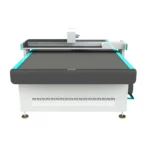
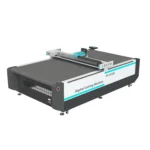
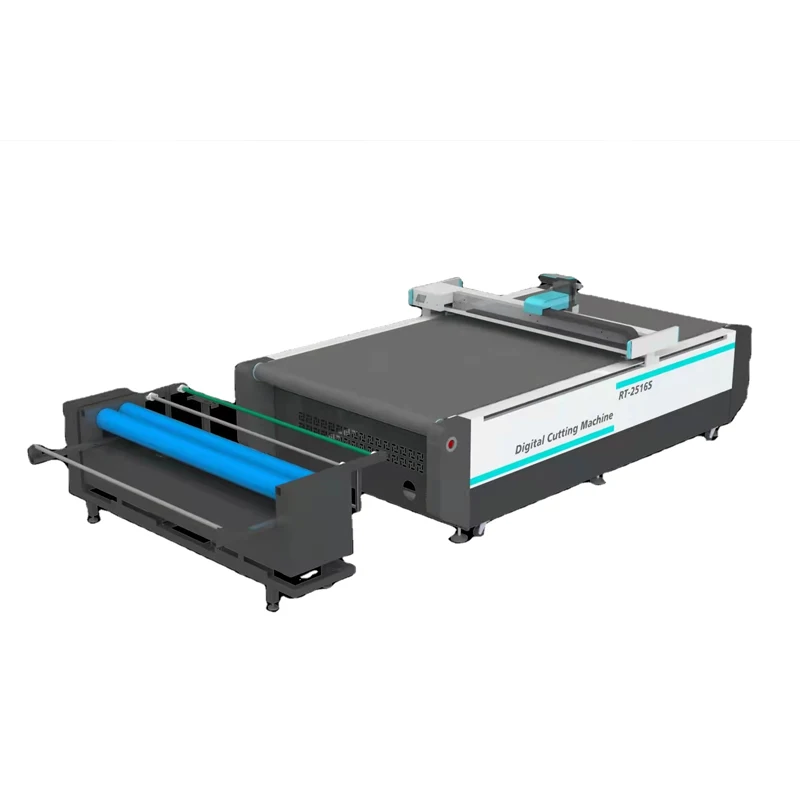
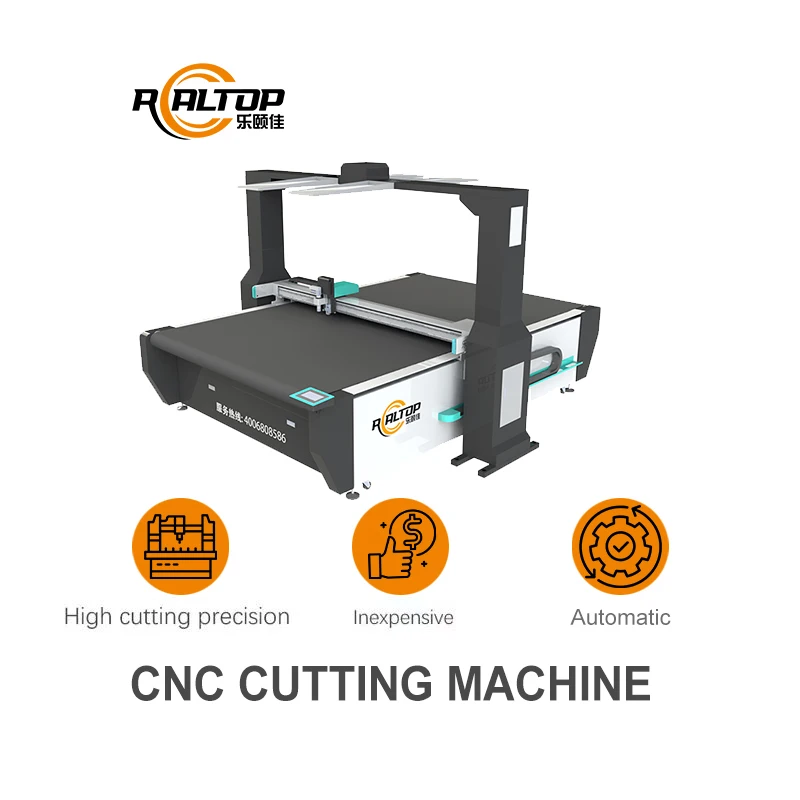
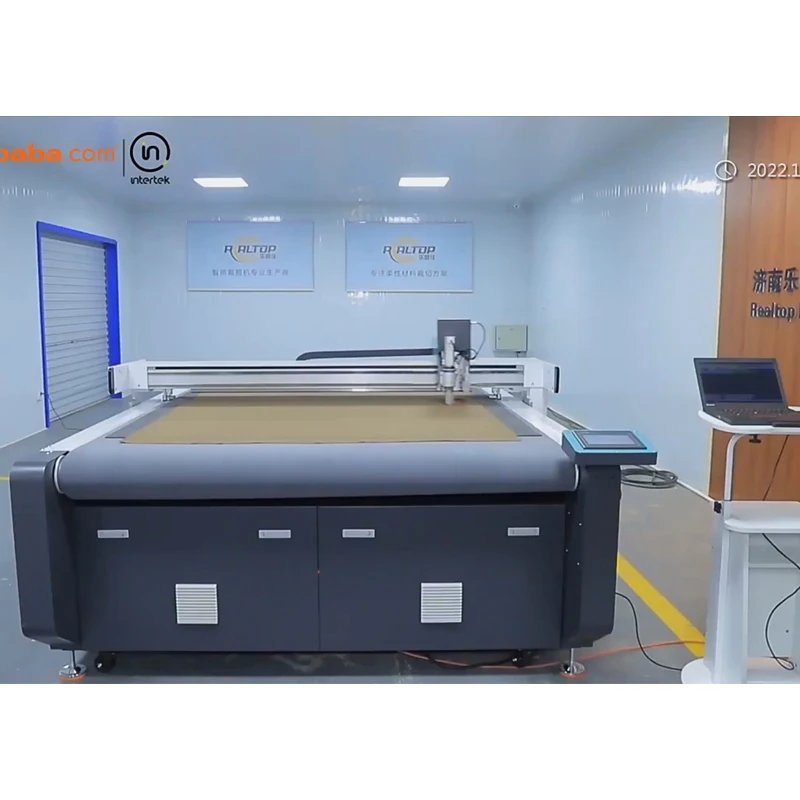
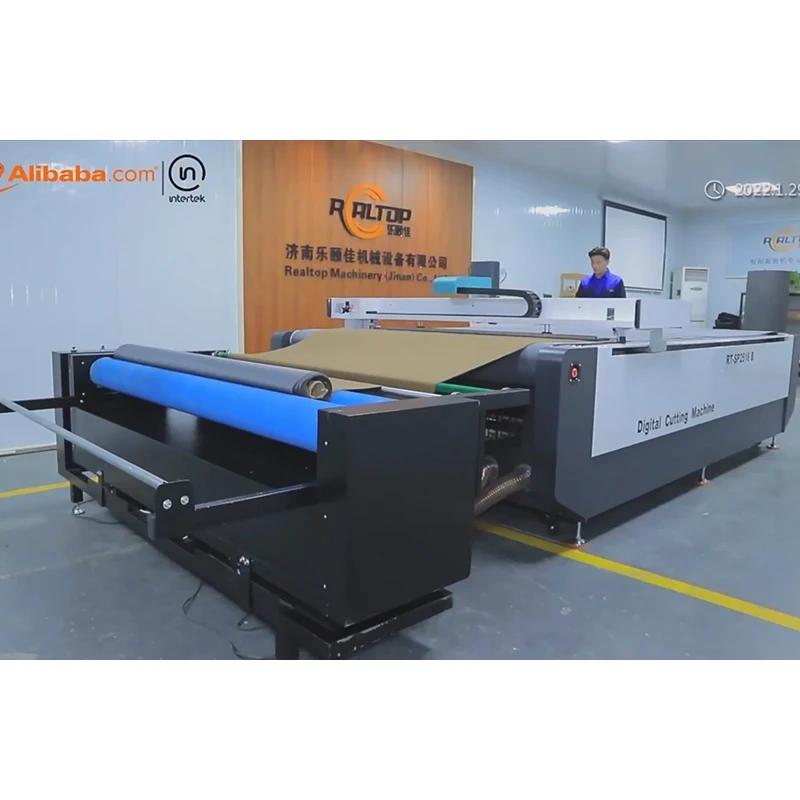
Modular Tool Head Matching — REALTOP knife and laser platforms sit under one manufacturer, letting buyers select the cutting method by material rather than forcing a single technology, as shown by the RT-D2516/RT-S2516 oscillating knife configuration with swappable round knife, marking pen and auto feeder modules.
Technical Specifications
| Parameter | Value |
|---|---|
| Model | RT-D2516/RT-S2516 |
| Product Type | CNC Oscillating Knife Cutting Machine |
| Working Area | 1600 × 2500 mm |
| Machine Size | 3450 × 2300 × 1250 mm |
| Rated Power | 9 kW |
| Cutting Thickness | Up to 50 mm depending on material density (basis to be confirmed) |
| Translational Velocity | 800–1200 mm/s |
| Repeated Accuracy | ≤0.1 mm |
| Table Type | Flat working table with high-density felt surface |
| Vacuum Pump | 7.5 kW |
| Feeding System | Auto feeding with Germany imported conveyor belt |
| Multifunctional Head | Swiss imported knife with full cutting, half cutting and cursor location |
| Servo Motor | Panasonic or Delta (configuration dependent) |
| Guide Rail | Taiwan Hiwin linear rail |
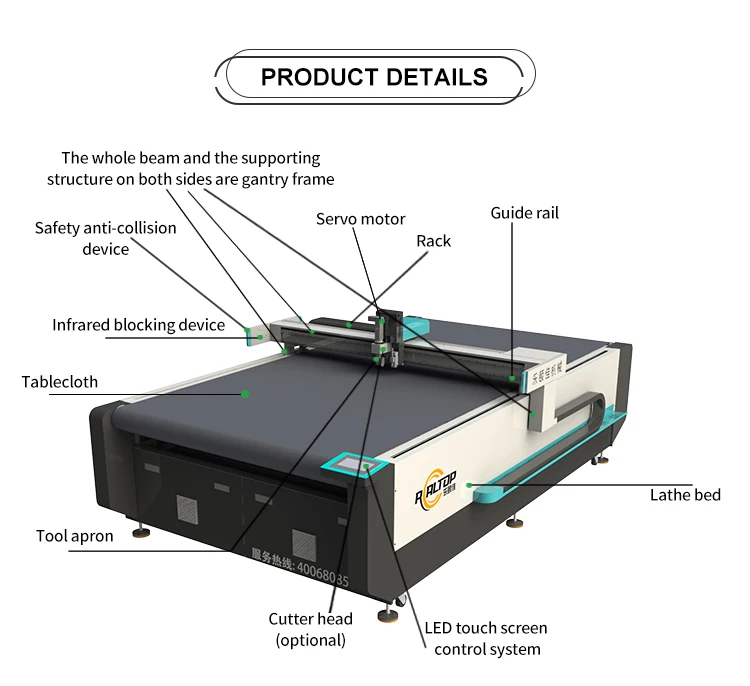
| Transmission Mechanism | Rack and pinion with synchronous belt and ball screw |
| Safety Device | Infrared sensors |
| Instruction Format | HP-GL compatible |
| Voltage | 380V ± 10% |
| Software Language | English, Russian, Italian, Chinese (customizable) |
| Standards | CE |
Application Suitability
| Application | Material or Output |
|---|---|
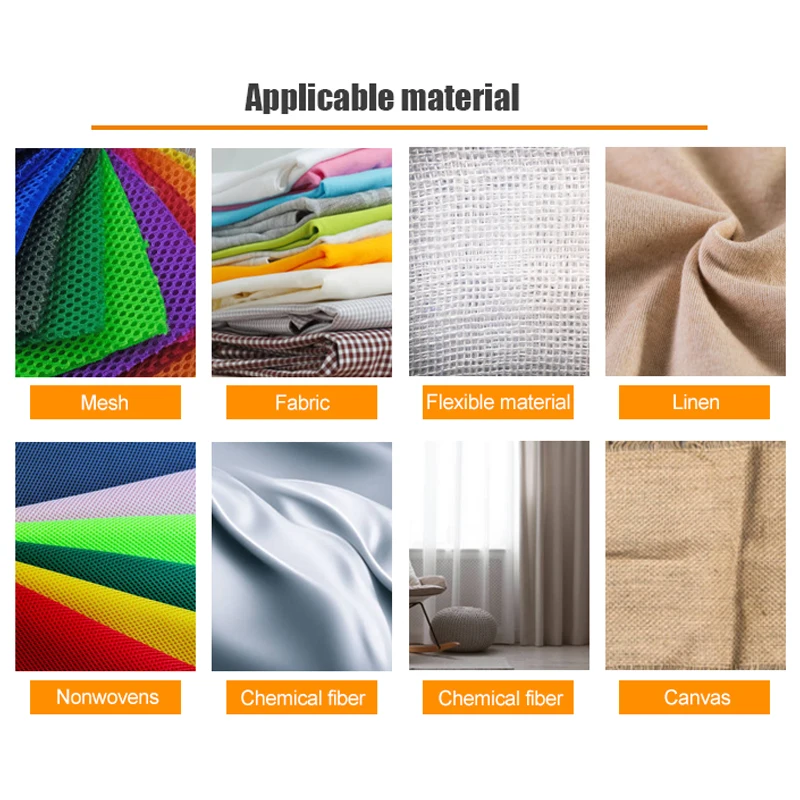
| Zebra roller blinds and window treatments | Coated blackout fabrics, layered sunscreen textiles |
| Garment and fashion fabric cutting | Single and multi-layer cotton, polyester, blended textiles |
| Automotive interior trimming | Synthetic leather, sponge composite leather, headliner fabric |
| Soft gasket and seal production | PVC, silicon, rubber, soft glass sheets |
| Footwear and leather goods | Natural and synthetic leather, flexible composite panels |
| Interior upholstery and curtain making | Heavy drapery fabric, lining material, multi-layer textile rolls |
Why Material Thickness Claims Mislead Buyers Before They Commit
Cutting depth numbers mean nothing without the material composition attached to them.
Many buyers specify a CNC oscillating knife cutting machine manufacturer based on the working area alone, only to find the machine cannot slice through their actual coated blackout fabric or layered sponge composite leather at production speed. The RT-D2516/RT-S2516 lists a cutting thickness of up to 50 mm, but that figure shifts significantly when you move from soft polyester to dense rubber gasket stock. I once watched an auto-feeding line stall on a coated zebra blind material because the shop had tested only on plain涤纶 — the grip, the blade resistance, and the vacuum hold-down all behave differently once coatings enter the equation [NEED_CITE: material density impact on oscillating knife cutting depth]. Verifying cutting capability on your specific roll stock before purchase avoids costly on-site re-commissioning.
Matching the Cutting Method to Your Material Family
The RT-D2516/RT-S2516 sits within the REALTOP knife cutting family, positioned for flexible and semi-rigid soft materials where an oscillating blade produces a clean edge without the thermal sealing or char that a CO2 laser leaves behind. For garment fabrics, automotive textiles and zebra blind rolls, the mechanical cut preserves the material hand-feel and avoids fused edges that cause downstream sewing problems.
When a buyer’s material mix includes both thin fashion textiles and thicker sponge composite leather for automotive interiors, this CNC oscillating knife cutting machine manufacturer offers the option to stay within the knife platform rather than splitting orders across two different technology vendors. The modular tool holder accepts round knives, marking pens and the auto feeder module, so product line expansion does not require a new machine base.
How Auto Feeding Changes Roll-to-Sheet Workflow
Continuous roll processing on the RT-D2516/RT-S2516 relies on the Germany imported conveyor belt and the high-density felt table surface working together with the 7.5 kW vacuum pump. The vacuum zones hold the fabric flat while the auto feeder advances the next section, which matters most on lightweight or slippery textiles like curtain lining and coated sunscreen fabrics that tend to drift on a static table.
During a commissioning trip to a South Asian window treatment factory, we spent two full days re-tuning feed rate and vacuum pressure after the customer switched from standard polyester to a heavier coated blackout material that gripped the belt differently [NEED_CITE: vacuum zoning requirements for coated textile cutting]. That on-site lesson reinforced why sample cutting on the buyer’s actual roll stock — not a generic test swatch — is the only reliable way to lock in feed speed and blade oscillation frequency before the machine ships.
Reading the Specs That Actually Affect Edge Quality
The ≤0.1 mm repeated accuracy figure comes from the rack and pinion transmission paired with Taiwan Hiwin linear rails and Panasonic or Delta servo motors. In practical cutting terms, this keeps registration tight across nested pattern pieces, which matters when garment panels must align with printed grain lines or when gasket profiles need to match mating flange dimensions.
The Swiss imported multifunctional head handles full cutting, half cutting and cursor location in a single tool station. Half cutting is particularly relevant for zebra blind production, where the blade scores through one layer of a dual-layer fabric without severing the backing, allowing the blind to fold correctly during assembly. Oscillation frequency and blade angle together determine whether a dense sponge composite leather gets a clean shear or a crushed edge, and those settings change from one material batch to the next.
What Happens When Tool Head and Table Are Mismatched
Selecting the wrong tool head for a material shows up immediately as ragged edges, delaminated composite layers or crushed foam cores that reject at the next assembly station. I have seen oscillating knife units produce acceptable edges on thin garment fabric but tear through multi-layer automotive headliner stock because the blade oscillation stroke was set for a lighter weight textile [NEED_CITE: tool head selection errors in soft material cutting].
On the table side, a vacuum zone layout that works for large curtain panels may leave small gasket pieces lifting during the cut, producing dimensional drift that scrapes the edge of tolerance. The RT-D2516/RT-S2516 flat table with high-density felt is designed for flexible materials, but if a buyer’s production mix shifts heavily toward small rigid gaskets, a different table configuration or zoning arrangement may serve better — and that conversation should happen before the order is placed.
Why Buyers Source Knife and Laser From One Manufacturer
REALTOP builds both oscillating knife and laser cutting platforms in the same facility, which means a buyer processing both woven textiles and acrylic signage can evaluate cutting method suitability with one engineering team rather than reconciling advice from two separate vendors.
The in-house design team configures tool heads and table layouts per material sample, so the RT-D2516/RT-S2516 arrives with the round knife, marking pen or auto feeder already matched to the buyer’s confirmed roll stock. Voltage, plug type and control panel language are locked in before production, not discovered as a mismatch at the destination port. Software file format compatibility is verified during the sample cutting stage, so the buyer’s existing nesting workflow transfers without manual reprogramming. Factory test records are generated on the buyer’s own material, not generic stock, giving a realistic baseline for commissioning parameters.
Documentation & Verification
- Machine specification sheet with confirmed tool head and table configuration for your material type
- Electrical schematic and voltage confirmation matching your facility supply before production begins
- Sample cutting report generated on your actual roll stock with edge quality and speed data
- Software licence and file format compatibility note for your existing nesting or CAD workflow
- Operation and maintenance manual with blade replacement intervals and vacuum pump service schedule
- Spare parts list covering belts, blades and high-density felt consumables
Installation, Commissioning & Support
- Power supply must deliver 380V ± 10% on a dedicated circuit rated for the 9 kW total machine load
- Floor space of at least 3450 × 2300 mm with clearance around the RT-D2516/RT-S2516 for roll loading and maintenance access
- Auto feeding system and conveyor belt tension calibrated on-site to match buyer’s actual roll material weight
- Vacuum pump and table zoning tested with buyer’s material to confirm hold-down on small and large pieces alike
- Operator training covers multifunctional head changeover between round knife, marking pen and cursor location modes
- Preventive maintenance schedule for Taiwan Hiwin rails, rack and pinion lubrication and felt surface replacement
Before You Request a Quote
To get an accurate configuration for your production line, share the material type, thickness range and roll width you plan to cut, along with your daily output volume and shift pattern. Let us know the voltage and frequency at your facility, the preferred control panel language, and whether your design team works in DXF, PLT or another file format. If your material has coatings, laminations or unusual surface textures, sending a sample roll section for test cutting is the fastest way to confirm edge quality and achievable feed speed.
Frequently Asked Questions
Q: How do I confirm the cutting thickness works for my specific fabric layers?
A: The RT-D2516/RT-S2516 lists up to 50 mm depending on material density, but real capability shifts with fabric composition, coating stiffness and layer count. Submit a sample of your actual roll stock — including any coated or laminated variants — and the test cutting report will document achievable depth, edge quality and feed speed for your exact material before you commit to an order.
Q: Can the machine voltage and control language be set for my country?
A: Voltage is configurable within the 380V ± 10% range, and plug type is matched to your destination market before shipment. Control panel and software language options include English, Russian, Italian and Chinese, with special languages available on request. Confirm these details during the specification review stage so there are no electrical or interface surprises at installation.
Q: Should I choose oscillating knife or CO2 laser for my textile products?
A: Oscillating knife cutting produces a mechanical edge with no thermal effect, making it suitable for garment fabrics, automotive textiles and zebra blinds where fused edges would cause sewing or folding problems. CO2 laser cutting seals synthetic edges and suits materials prone to fraying. REALTOP manufactures both platforms, so the method is selected based on your material behavior, not limited to one technology.
Q: Will the software work with my existing nesting and pattern files?
A: The instruction system accepts HP-GL compatible formats. Before order confirmation, share your typical file types and nesting workflow so compatibility is verified during the sample cutting stage. If your design software outputs in a proprietary format, the engineering team confirms conversion steps or recommends an export setting that preserves curve accuracy and registration marks.
Q: What does the sample cutting test actually cover?
A: You send a section of your production roll stock, and the test runs through cutting, half cutting and contour tracing at various feed speeds. The resulting report documents edge quality photographs, dimensional accuracy readings, recommended blade type and oscillation settings, and achievable translational velocity — giving you a documented baseline to compare against when the machine arrives on your floor.










商品评价
There are no reviews yet.