



Fast Delivery
Quick, reliable shipping to any location.

Free & easy returns
Return this item by mail or in store within 90 days for a full refund.
In-house design and production covering both knife and laser cutting technologies — Realtop engineers match the cutting method to your specific material rather than forcing one approach across all applications.
Technical Specifications
| Parameter | Value |
|---|---|
| Model | RT-D2516 / RT-S2516 |
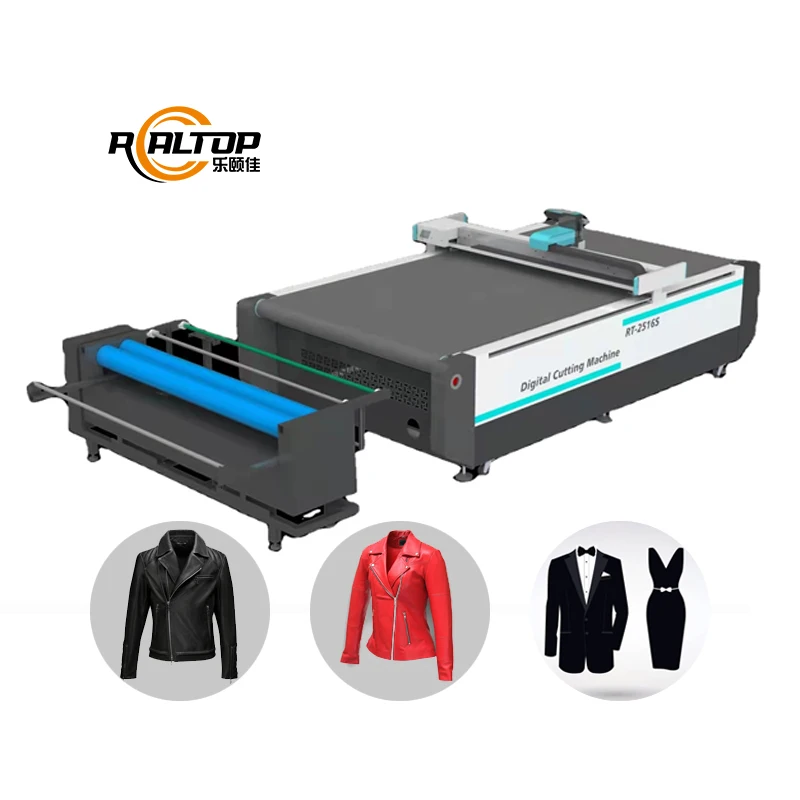
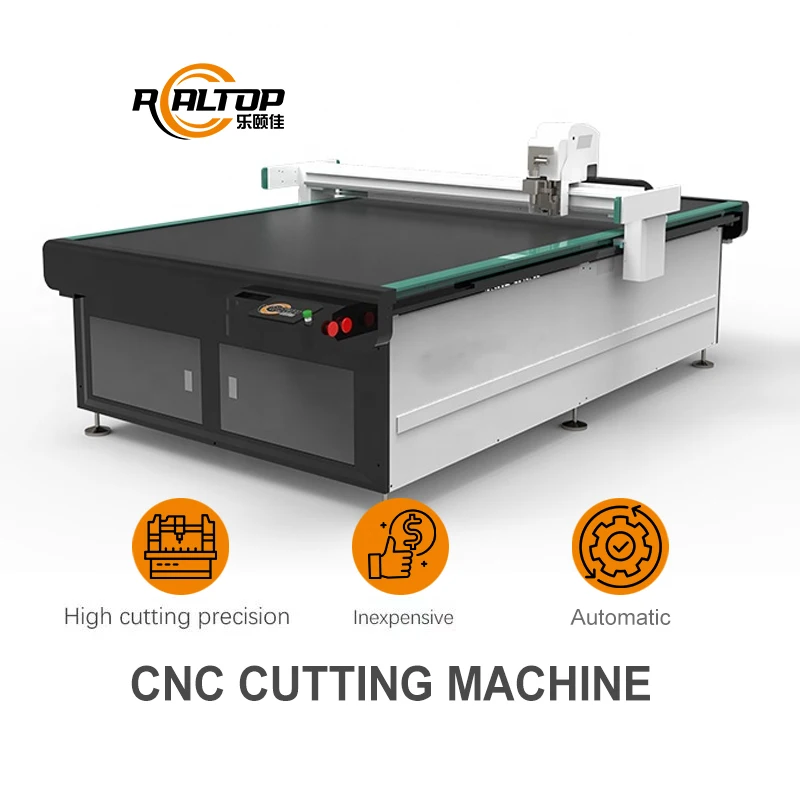
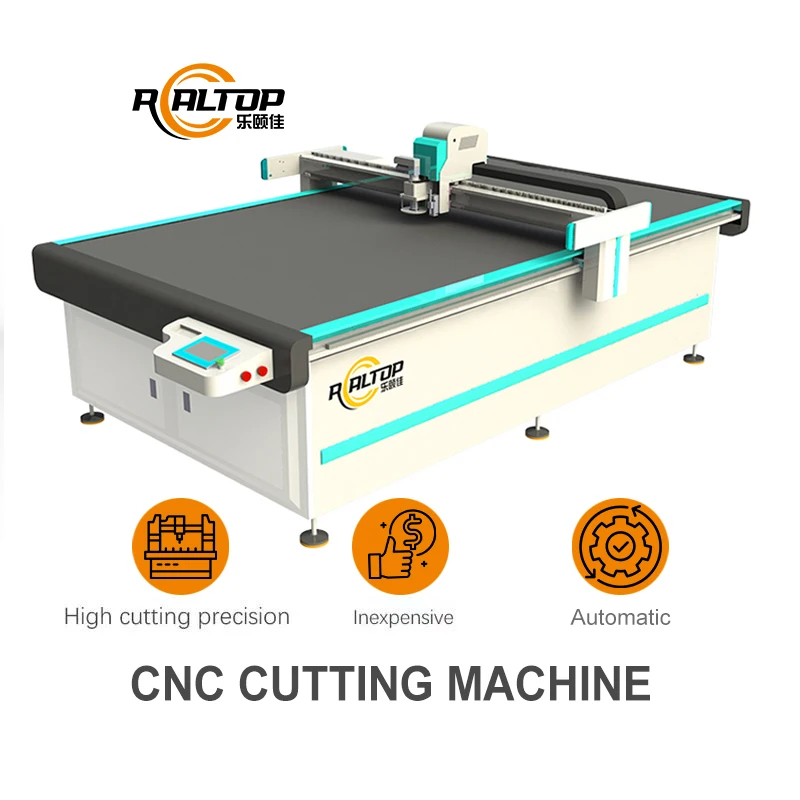
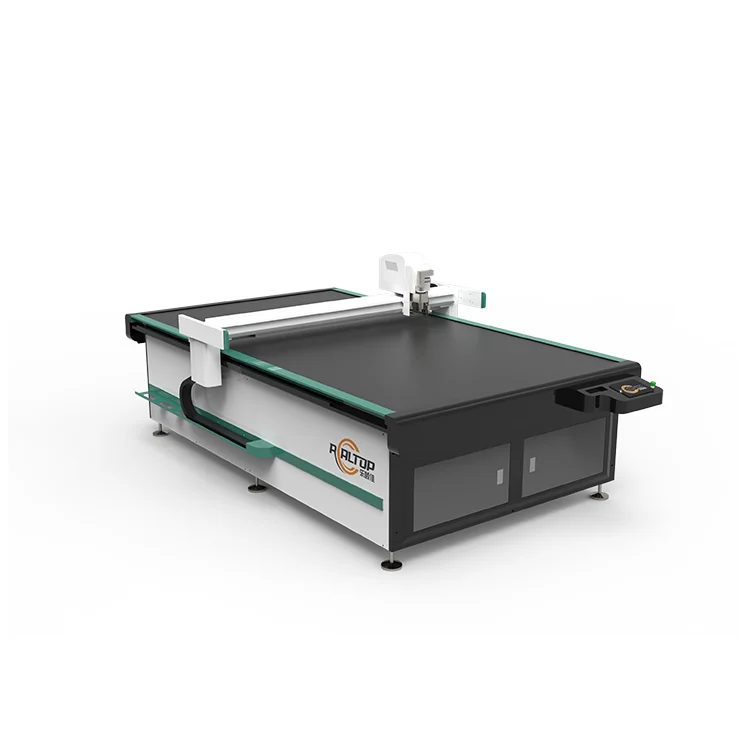
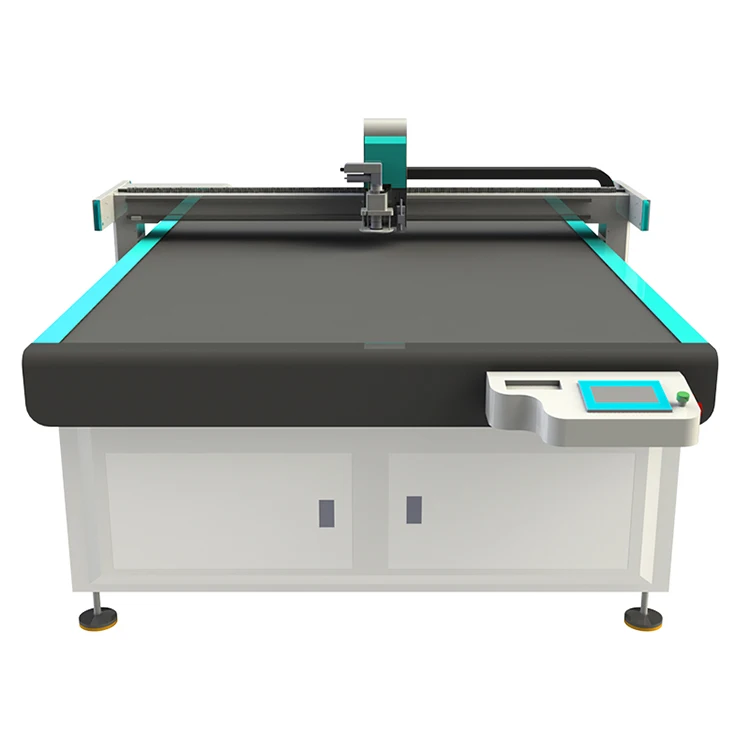
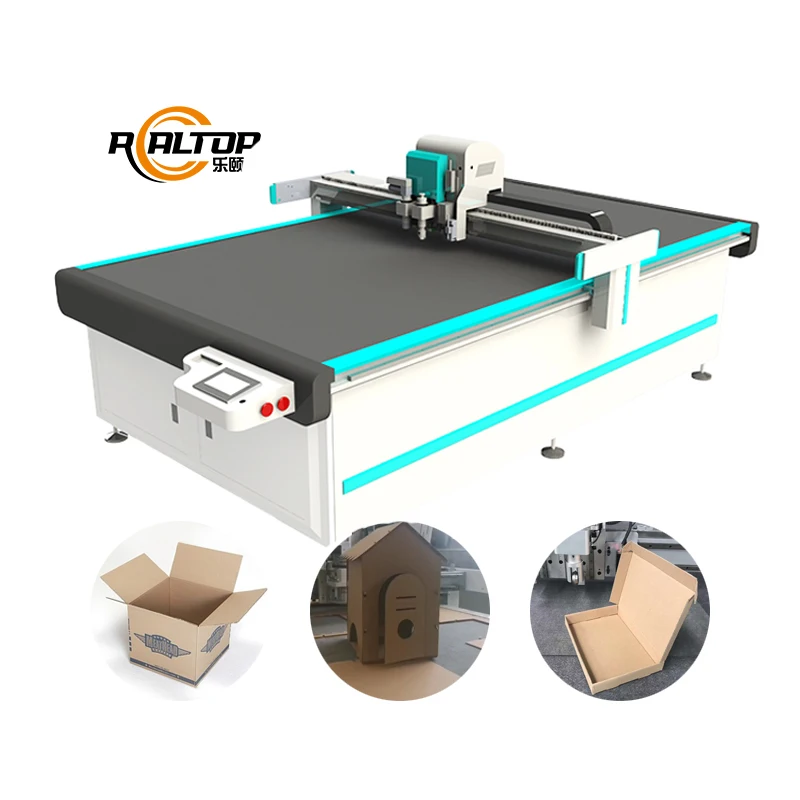
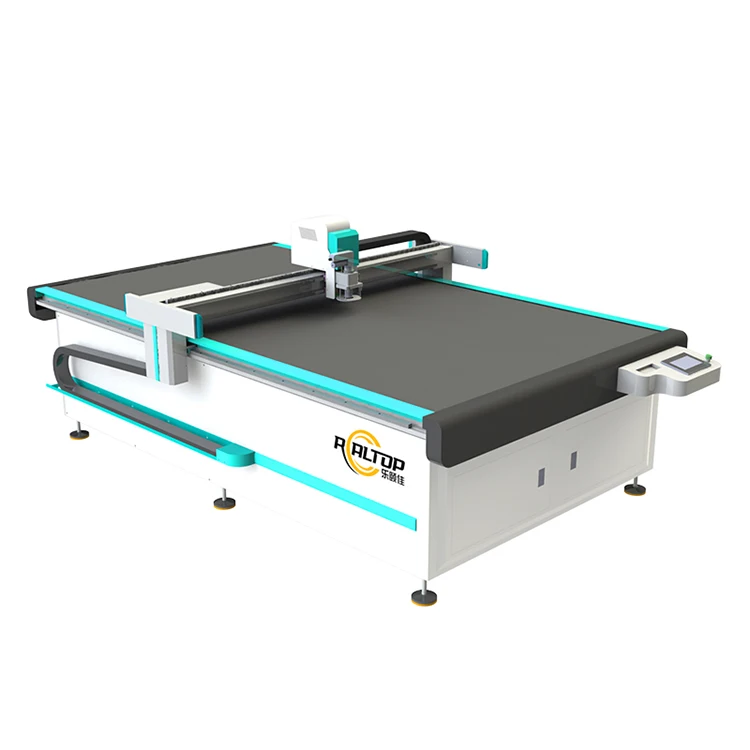
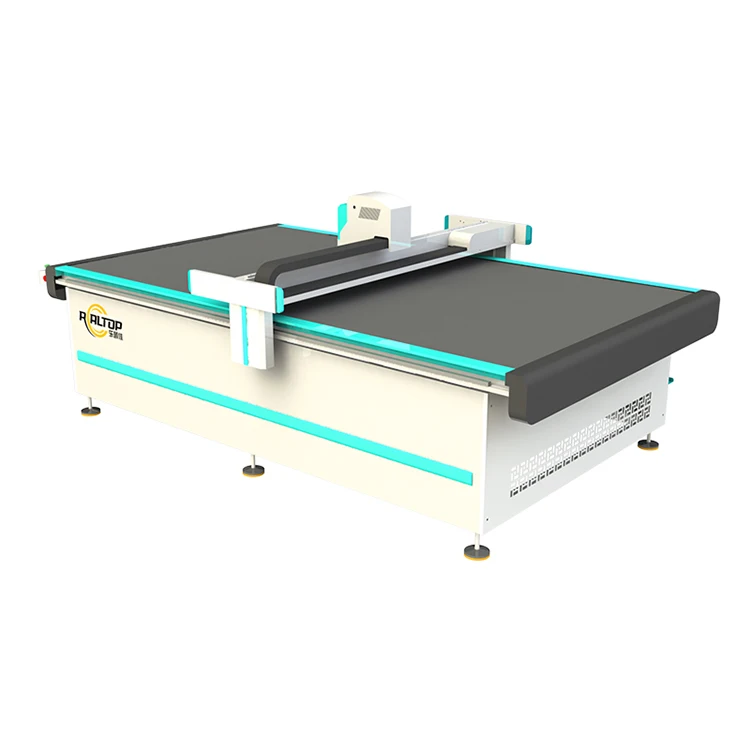
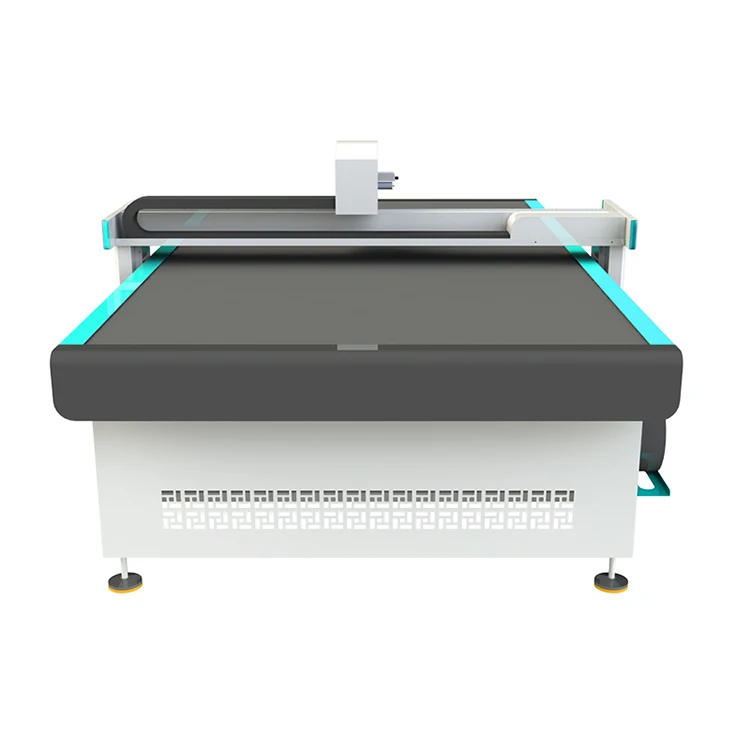
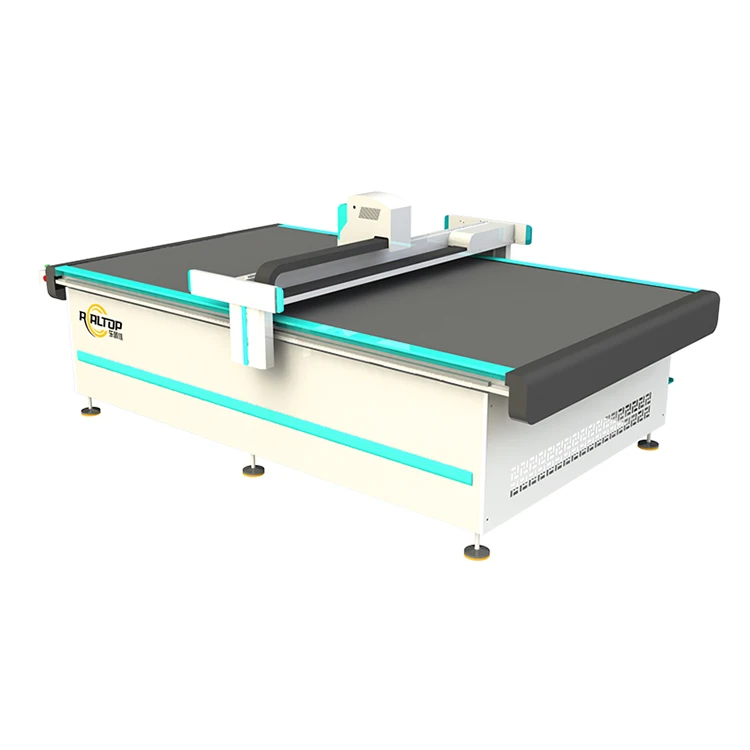
| Product Type | CNC Oscillating Knife Cutting Machine |
| Working Area | 1600 × 2500 mm |
| Overall Dimensions | 3450 × 2300 × 1250 mm |
| Rated Power | 9 kW |
| Voltage | 380V ±10% (frequency 50Hz/60Hz to be confirmed) |
| Control System | CNC (HP-GL compatible format) |
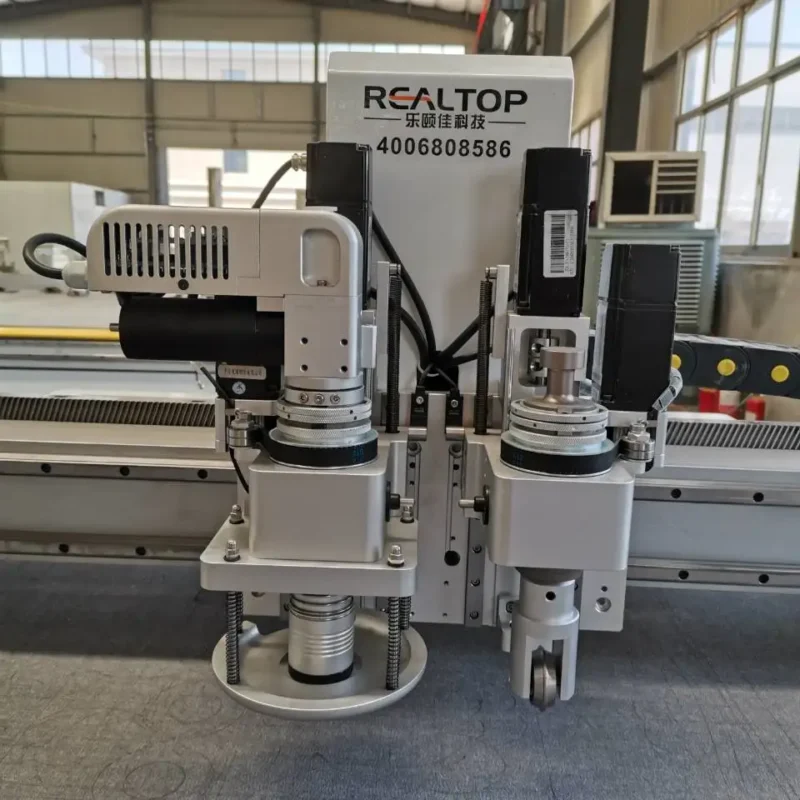
| Tool Head Type | Swiss imported knife with vibration full/half cutting; options: pneumatic knife, high-power vibrating knife, circular knife, V cutting knife, drag knife, creasing wheel, punching, brush |
| Visual Positioning | Small CCD camera mark point positioning, panoramic camera recognition, projection positioning |
| Cutting Thickness | 20 mm – 80 mm (basis not stated in source — confirm block format / material) |
| Translational Velocity | 800 – 1200 mm/s |
| Repeatability | ≤ 0.1 mm |
| Transmission System | Digital servo motor (Delta), linear guide, synchronous belt, ball screw; Taiwan Hiwin rail |
| Work Table | Magnesium-aluminum alloy vacuum adsorption table, fluorocarbon PVDF powder spraying, anodic oxidation; optional Germany imported conveyor belt with auto feeding |
| Vacuum Pump | 7.5 kW, integrated aviation aluminum shell with built-in silencer sponge |
| Safety Device | Infrared induction blocking, anti-collision on both sides of beam, emergency stop |
| Language Options | English, Russian, Italian, Chinese (special languages customizable) |
| Warranty | 1 year free warranty (domestic and abroad) |
| Certification | CE (declaration where applicable) |
Application Suitability
| Application | Material or Output |
|---|---|
| Garment and footwear production | Fabric, textile, leather, shoe material, non-woven fabric |
| Automotive interior and gasket fabrication | PU, EVA, XPE, PVC, rubber, gasket material, composite materials |
| Signage and packaging sample making | Cardboard, corrugated cardboard, foam board, sticker, film, soft glass |
| Sports and outdoor product manufacturing | Sponge, carpet, luggage material, silicon, PTFE, ETFE |
| Industrial sealing and composite fabrication | PP, PE, fiberglass, rubber, composite material layup |
Why the Tool Head Question Must Come Before the Working Area
The right tool head for your material determines edge quality and throughput far more than table size alone.
When buyers specify a CNC oscillating knife cutting machine manufacturer based only on bed dimensions, they often discover during commissioning that the chosen tool head cannot handle their actual material thickness or composition. I recall a buyer who ordered a large-format unit for automotive seating but selected a standard oscillating knife that struggled with their multi-layer composite fabric, forcing them to reconfigure the line weeks after installation [NEED_CITE: tool head selection criteria for composite materials]. The vacuum table zoning and knife frequency must align with what you actually cut every day.
Matching Cutting Technology to Your Material Stream
Realtop produces both knife and laser systems under one roof, allowing buyers to evaluate the full range before committing. A textile producer cutting natural leather might benefit from the drag knife’s clean edge, while a synthetic fabric operation could require the high-power vibrating knife to prevent fraying. The CNC oscillating knife cutting machine manufacturer can configure tool heads ranging from circular knives for continuous fabric rolls to creasing wheels for corrugated packaging samples, ensuring the machine matches your workflow rather than dictating it.
From Inquiry to Configuration: A Methodical Sequence
The process starts with your material type, thickness, sheet size, and daily volume. Only after understanding these inputs does the CNC oscillating knife cutting machine manufacturer recommend a cutting method and configuration. Sample cutting on your own material follows before any order is placed, verifying edge quality, cutting depth, and throughput against your actual production requirements. This sequence prevents the costly mismatch between machine capability and real-world application [NEED_CITE: industrial cutting machine procurement workflow].
Reading the Specifications Beyond the Headline Numbers
The 1600 × 2500 mm working area accommodates full hides and standard fabric rolls, but the magnesium-aluminum alloy vacuum table with multi-zone adsorption is what keeps small parts from lifting during high-speed cutting. The 7.5 kW vacuum pump with integrated silencer maintains consistent suction across the bed. Translational velocity of 800 – 1200 mm/s combined with repeatability of ≤ 0.1 mm means intricate patterns in garment production hold their dimensional accuracy. The Swiss imported knife assembly with vibration full and half cutting functions handles dense materials that would crush under a static drag knife. CCD camera mark point positioning and panoramic camera recognition enable contour cutting on printed textiles where registration marks must be tracked at production speed.
The Hidden Cost of Underspecified Configurations
Choosing a vacuum table without adequate zoning for small parts causes material lift and ragged edges, particularly on lightweight films and stickers. Selecting a tool head rated for thinner materials forces repeated passes on dense composites, reducing effective throughput and accelerating knife wear. When CCD contour recognition is specified but the camera cannot track printed marks at the machine’s translational velocity, production speed drops to accommodate the positioning system rather than the cutting requirement [NEED_CITE: CCD positioning accuracy at production speeds]. Voltage, plug type, and control language left unconfirmed before shipment create delays at the destination facility.
Engineering and Support Without Compromise
Realtop’s in-house design team covers both knife and laser cutting technologies, so a buyer evaluates cutting methods against material properties rather than being locked into one approach. Tool head and table configuration are specified per your material and production volume, not selected from a fixed catalogue. Software compatibility with your existing nesting workflow is confirmed before the order is finalized. Sample cutting on your own material before commitment provides a cutting report showing edge quality, depth, and cycle time. Voltage, language, and mechanical specification customization ensures the machine arrives ready for your facility’s electrical infrastructure and operator preferences.
Documentation & Verification
- Machine specification sheet listing tool head and table configuration matched to your material
- Electrical schematic with voltage and frequency confirmation for your target market
- Sample cutting report on your own material showing edge quality and throughput
- Software licence and file format compatibility note for your nesting workflow
- CE declaration where applicable for your destination market
- Factory test record documenting performance before dispatch
Installation, Commissioning & Support
- 3450 × 2300 mm footprint requires level concrete floor with clearance for material loading on all sides
- 9 kW rated power demands dedicated circuit with 380V ±10% supply; frequency to be confirmed before shipment
- Fully assembled delivery reduces on-site commissioning time; vacuum pump integrated with silencer minimizes noise during setup
- Delta digital servo motors and Taiwan Hiwin rails require initial parameter calibration for repeatability verification
- Control language set to operator preference during training; English, Russian, Italian, Chinese available as standard
- Spare parts list includes Swiss knife assemblies, vacuum pump consumables, and drive belt replacements
Preparing Your Inquiry
To receive an accurate configuration, provide your material type, maximum thickness, sheet or roll dimensions, and target daily volume. Specify your facility’s voltage and frequency, preferred control language, and any existing nesting software or file formats. If your material is a composite or specialty substrate, send a sample for cutting tests so the tool head, vacuum zoning, and feed system can be matched to your actual production conditions before quotation.
Frequently Asked Questions
Q: How do I decide between knife cutting and laser cutting for my material?
A: Knife cutting suits fabrics, foams, gaskets and composites where edge sealing is not required, while laser cutting seals edges on synthetics and cuts rigid non-metals like acrylic. Realtop produces both technologies in-house, so the decision is based on your material properties and edge quality requirements rather than technology availability.
Q: What tool head configuration fits my material thickness and volume?
A: The tool head is selected after reviewing your material type, thickness, and daily output target. Options include oscillating knife, drag knife, circular knife, creasing wheel and punching tools. Sample cutting on your actual material before order placement verifies the configuration delivers the required edge quality and throughput.
Q: Can the machine integrate with my existing nesting software?
A: The control system accepts HP-GL compatible formats. Before the order is finalized, your existing file formats and nesting workflow are tested against the machine software to confirm compatibility, preventing integration delays during commissioning.
Q: What electrical and language options are available for export markets?
A: The machine operates on 380V ±10% with frequency to be confirmed for 50Hz or 60Hz markets. Control language options include English, Russian, Italian and Chinese, with special languages customizable. Voltage, plug type and documentation are matched to your destination country before shipment.
Q: Can I send my own material for sample cutting before ordering?
A: Yes. Sample cutting on your actual material is standard practice. The resulting report documents edge quality, cutting depth and cycle time, allowing you to verify performance against your production requirements before committing to the order.
In-house design and production covering both knife and laser cutting technologies — Realtop engineers match the cutting method to your specific material rather than forcing one approach across all applications.
Technical Specifications
| Parameter | Value |
|---|---|
| Model | RT-D2516 / RT-S2516 |
| Product Type | CNC Oscillating Knife Cutting Machine |
| Working Area | 1600 × 2500 mm |
| Overall Dimensions | 3450 × 2300 × 1250 mm |
| Rated Power | 9 kW |
| Voltage | 380V ±10% (frequency 50Hz/60Hz to be confirmed) |
| Control System | CNC (HP-GL compatible format) |
| Tool Head Type | Swiss imported knife with vibration full/half cutting; options: pneumatic knife, high-power vibrating knife, circular knife, V cutting knife, drag knife, creasing wheel, punching, brush |
| Visual Positioning | Small CCD camera mark point positioning, panoramic camera recognition, projection positioning |
| Cutting Thickness | 20 mm – 80 mm (basis not stated in source — confirm block format / material) |
| Translational Velocity | 800 – 1200 mm/s |
| Repeatability | ≤ 0.1 mm |
| Transmission System | Digital servo motor (Delta), linear guide, synchronous belt, ball screw; Taiwan Hiwin rail |
| Work Table | Magnesium-aluminum alloy vacuum adsorption table, fluorocarbon PVDF powder spraying, anodic oxidation; optional Germany imported conveyor belt with auto feeding |
| Vacuum Pump | 7.5 kW, integrated aviation aluminum shell with built-in silencer sponge |
| Safety Device | Infrared induction blocking, anti-collision on both sides of beam, emergency stop |
| Language Options | English, Russian, Italian, Chinese (special languages customizable) |
| Warranty | 1 year free warranty (domestic and abroad) |
| Certification | CE (declaration where applicable) |
Application Suitability
| Application | Material or Output |
|---|---|
| Garment and footwear production | Fabric, textile, leather, shoe material, non-woven fabric |
| Automotive interior and gasket fabrication | PU, EVA, XPE, PVC, rubber, gasket material, composite materials |
| Signage and packaging sample making | Cardboard, corrugated cardboard, foam board, sticker, film, soft glass |
| Sports and outdoor product manufacturing | Sponge, carpet, luggage material, silicon, PTFE, ETFE |
| Industrial sealing and composite fabrication | PP, PE, fiberglass, rubber, composite material layup |
Why the Tool Head Question Must Come Before the Working Area
The right tool head for your material determines edge quality and throughput far more than table size alone.
When buyers specify a CNC oscillating knife cutting machine manufacturer based only on bed dimensions, they often discover during commissioning that the chosen tool head cannot handle their actual material thickness or composition. I recall a buyer who ordered a large-format unit for automotive seating but selected a standard oscillating knife that struggled with their multi-layer composite fabric, forcing them to reconfigure the line weeks after installation [NEED_CITE: tool head selection criteria for composite materials]. The vacuum table zoning and knife frequency must align with what you actually cut every day.
Matching Cutting Technology to Your Material Stream
Realtop produces both knife and laser systems under one roof, allowing buyers to evaluate the full range before committing. A textile producer cutting natural leather might benefit from the drag knife’s clean edge, while a synthetic fabric operation could require the high-power vibrating knife to prevent fraying. The CNC oscillating knife cutting machine manufacturer can configure tool heads ranging from circular knives for continuous fabric rolls to creasing wheels for corrugated packaging samples, ensuring the machine matches your workflow rather than dictating it.
From Inquiry to Configuration: A Methodical Sequence
The process starts with your material type, thickness, sheet size, and daily volume. Only after understanding these inputs does the CNC oscillating knife cutting machine manufacturer recommend a cutting method and configuration. Sample cutting on your own material follows before any order is placed, verifying edge quality, cutting depth, and throughput against your actual production requirements. This sequence prevents the costly mismatch between machine capability and real-world application [NEED_CITE: industrial cutting machine procurement workflow].
Reading the Specifications Beyond the Headline Numbers
The 1600 × 2500 mm working area accommodates full hides and standard fabric rolls, but the magnesium-aluminum alloy vacuum table with multi-zone adsorption is what keeps small parts from lifting during high-speed cutting. The 7.5 kW vacuum pump with integrated silencer maintains consistent suction across the bed. Translational velocity of 800 – 1200 mm/s combined with repeatability of ≤ 0.1 mm means intricate patterns in garment production hold their dimensional accuracy. The Swiss imported knife assembly with vibration full and half cutting functions handles dense materials that would crush under a static drag knife. CCD camera mark point positioning and panoramic camera recognition enable contour cutting on printed textiles where registration marks must be tracked at production speed.
The Hidden Cost of Underspecified Configurations
Choosing a vacuum table without adequate zoning for small parts causes material lift and ragged edges, particularly on lightweight films and stickers. Selecting a tool head rated for thinner materials forces repeated passes on dense composites, reducing effective throughput and accelerating knife wear. When CCD contour recognition is specified but the camera cannot track printed marks at the machine’s translational velocity, production speed drops to accommodate the positioning system rather than the cutting requirement [NEED_CITE: CCD positioning accuracy at production speeds]. Voltage, plug type, and control language left unconfirmed before shipment create delays at the destination facility.
Engineering and Support Without Compromise
Realtop’s in-house design team covers both knife and laser cutting technologies, so a buyer evaluates cutting methods against material properties rather than being locked into one approach. Tool head and table configuration are specified per your material and production volume, not selected from a fixed catalogue. Software compatibility with your existing nesting workflow is confirmed before the order is finalized. Sample cutting on your own material before commitment provides a cutting report showing edge quality, depth, and cycle time. Voltage, language, and mechanical specification customization ensures the machine arrives ready for your facility’s electrical infrastructure and operator preferences.
Documentation & Verification
- Machine specification sheet listing tool head and table configuration matched to your material
- Electrical schematic with voltage and frequency confirmation for your target market
- Sample cutting report on your own material showing edge quality and throughput
- Software licence and file format compatibility note for your nesting workflow
- CE declaration where applicable for your destination market
- Factory test record documenting performance before dispatch
Installation, Commissioning & Support
- 3450 × 2300 mm footprint requires level concrete floor with clearance for material loading on all sides
- 9 kW rated power demands dedicated circuit with 380V ±10% supply; frequency to be confirmed before shipment
- Fully assembled delivery reduces on-site commissioning time; vacuum pump integrated with silencer minimizes noise during setup
- Delta digital servo motors and Taiwan Hiwin rails require initial parameter calibration for repeatability verification
- Control language set to operator preference during training; English, Russian, Italian, Chinese available as standard
- Spare parts list includes Swiss knife assemblies, vacuum pump consumables, and drive belt replacements
Preparing Your Inquiry
To receive an accurate configuration, provide your material type, maximum thickness, sheet or roll dimensions, and target daily volume. Specify your facility’s voltage and frequency, preferred control language, and any existing nesting software or file formats. If your material is a composite or specialty substrate, send a sample for cutting tests so the tool head, vacuum zoning, and feed system can be matched to your actual production conditions before quotation.
Frequently Asked Questions
Q: How do I decide between knife cutting and laser cutting for my material?
A: Knife cutting suits fabrics, foams, gaskets and composites where edge sealing is not required, while laser cutting seals edges on synthetics and cuts rigid non-metals like acrylic. Realtop produces both technologies in-house, so the decision is based on your material properties and edge quality requirements rather than technology availability.
Q: What tool head configuration fits my material thickness and volume?
A: The tool head is selected after reviewing your material type, thickness, and daily output target. Options include oscillating knife, drag knife, circular knife, creasing wheel and punching tools. Sample cutting on your actual material before order placement verifies the configuration delivers the required edge quality and throughput.
Q: Can the machine integrate with my existing nesting software?
A: The control system accepts HP-GL compatible formats. Before the order is finalized, your existing file formats and nesting workflow are tested against the machine software to confirm compatibility, preventing integration delays during commissioning.
Q: What electrical and language options are available for export markets?
A: The machine operates on 380V ±10% with frequency to be confirmed for 50Hz or 60Hz markets. Control language options include English, Russian, Italian and Chinese, with special languages customizable. Voltage, plug type and documentation are matched to your destination country before shipment.
Q: Can I send my own material for sample cutting before ordering?
A: Yes. Sample cutting on your actual material is standard practice. The resulting report documents edge quality, cutting depth and cycle time, allowing you to verify performance against your production requirements before committing to the order.
商品评价
There are no reviews yet.