

Fast Delivery
Quick, reliable shipping to any location.

Free & easy returns
Return this item by mail or in store within 90 days for a full refund.
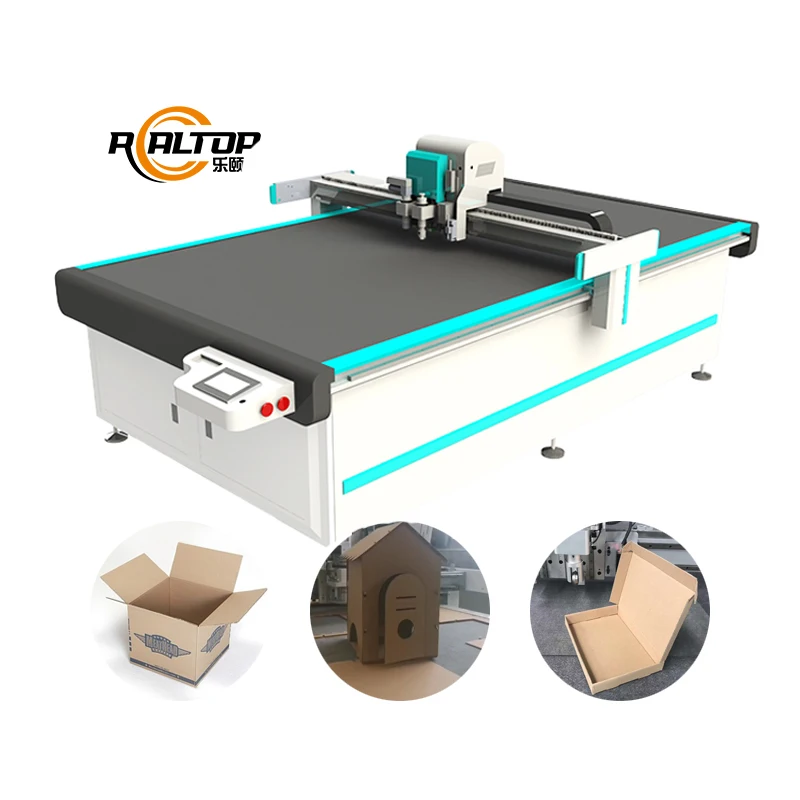
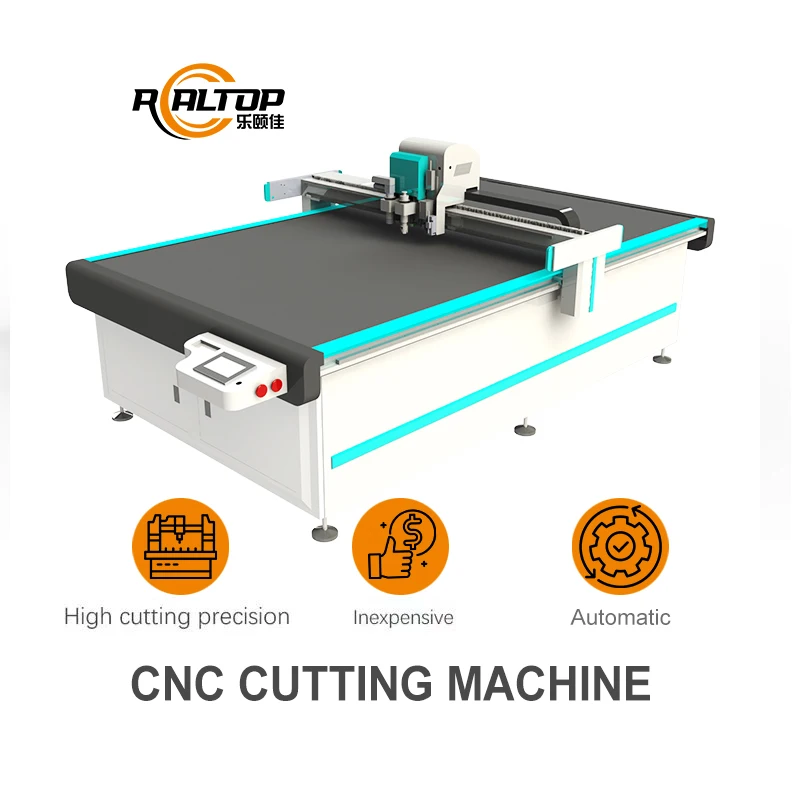
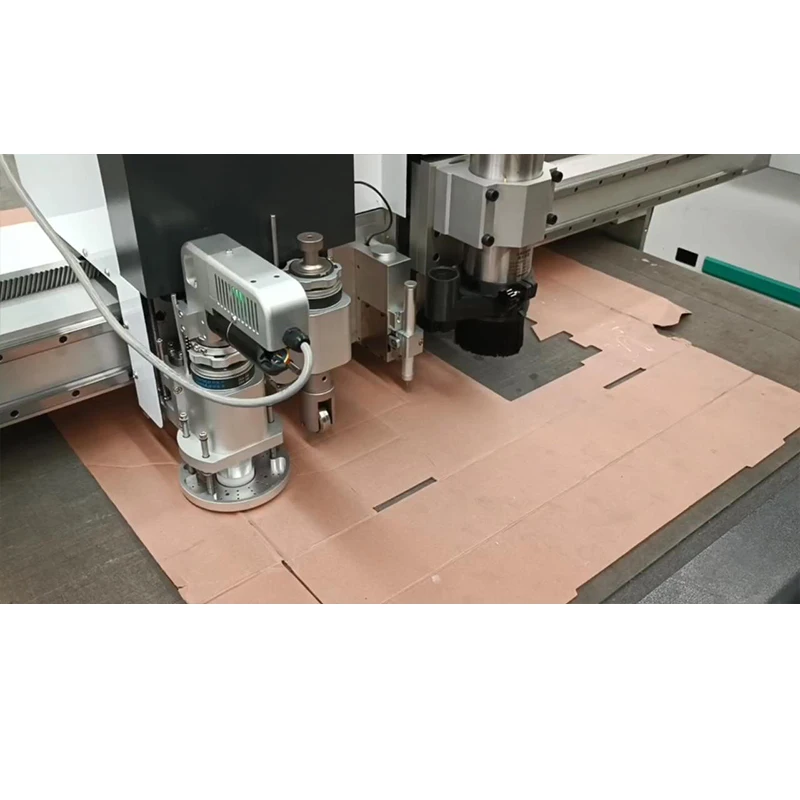
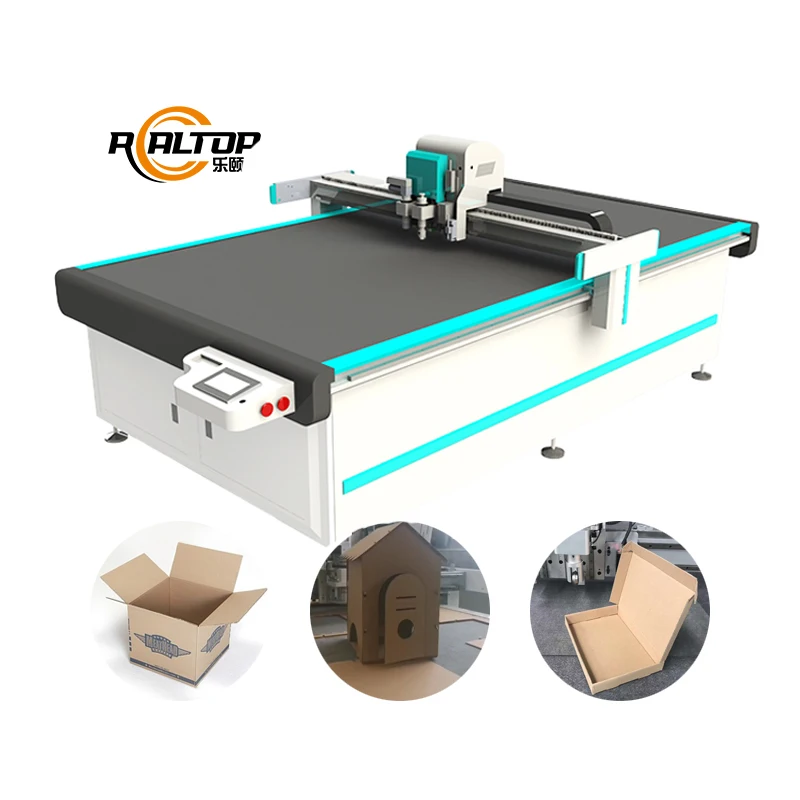
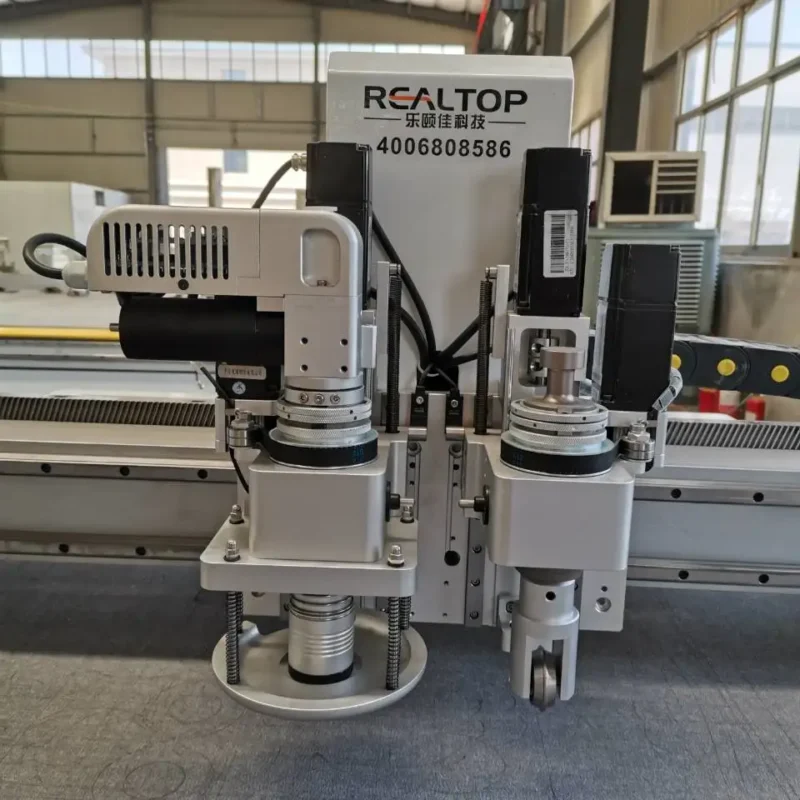
Precision-matched tool heads — Swiss-imported oscillating knife configured for full cut, half cut and cursor location across leather, PVC and composite sheets before shipment.
Technical Specifications
| Parameter | Value |
|---|---|
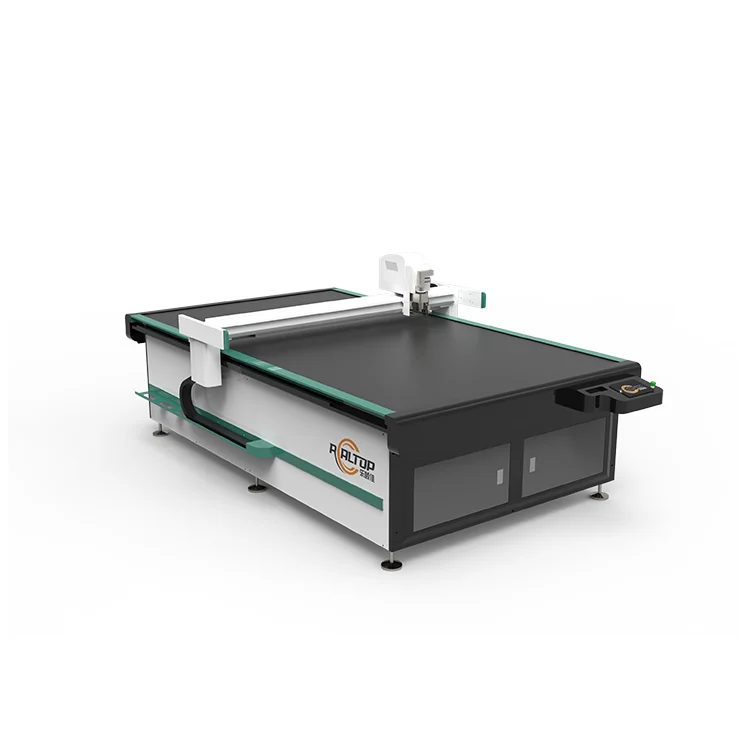
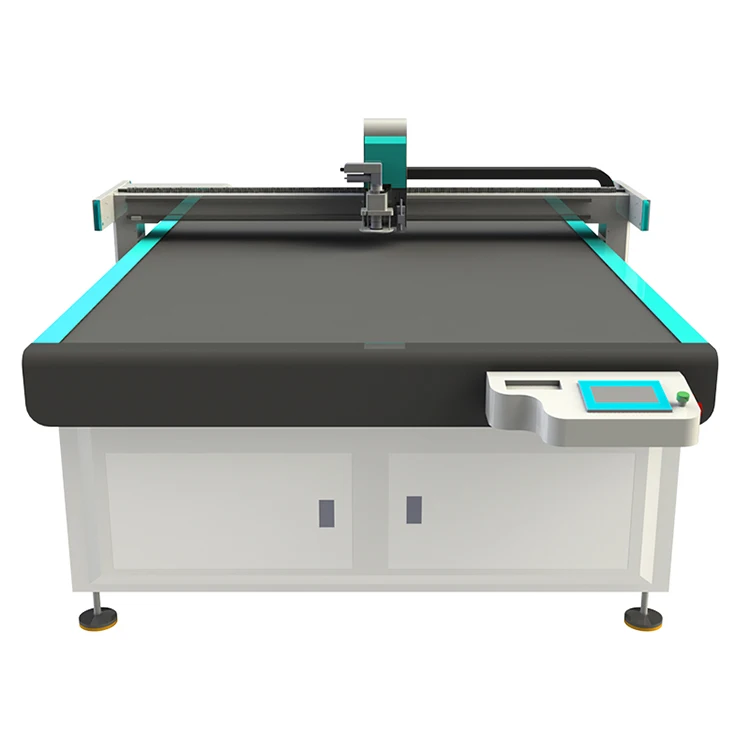
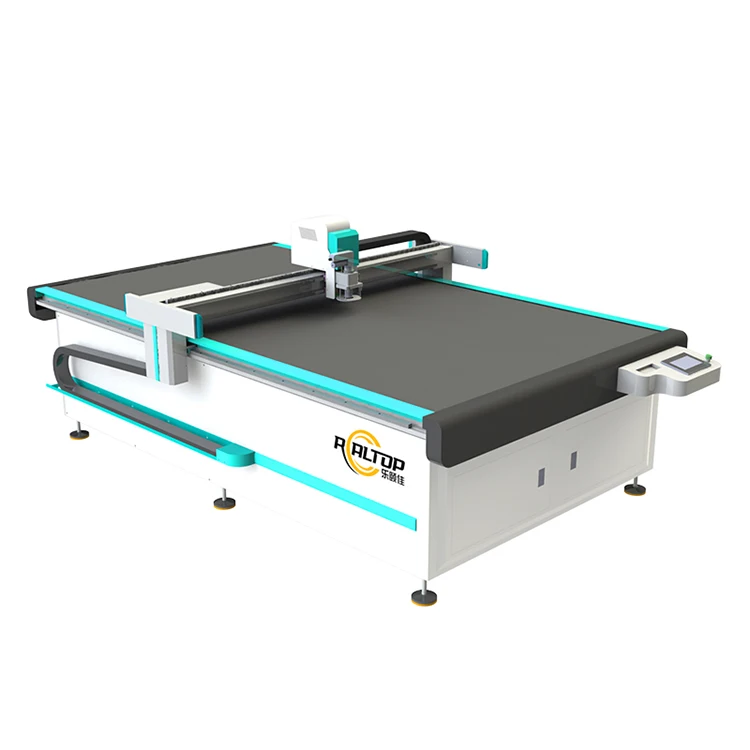
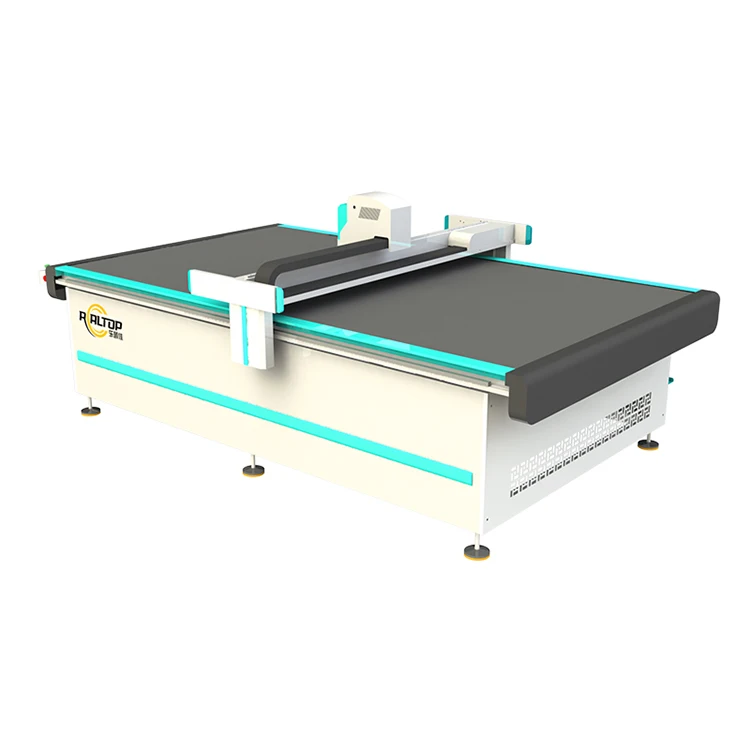
| Product Type | CNC Oscillating Knife Cutting Machine |
| Model | RT-D2516 / RT-S2516 |
| Working Area | 1600 × 2500 mm |
| Overall Dimensions | 3450 × 2300 × 1250 mm |
| Rated Power | 9 kW |
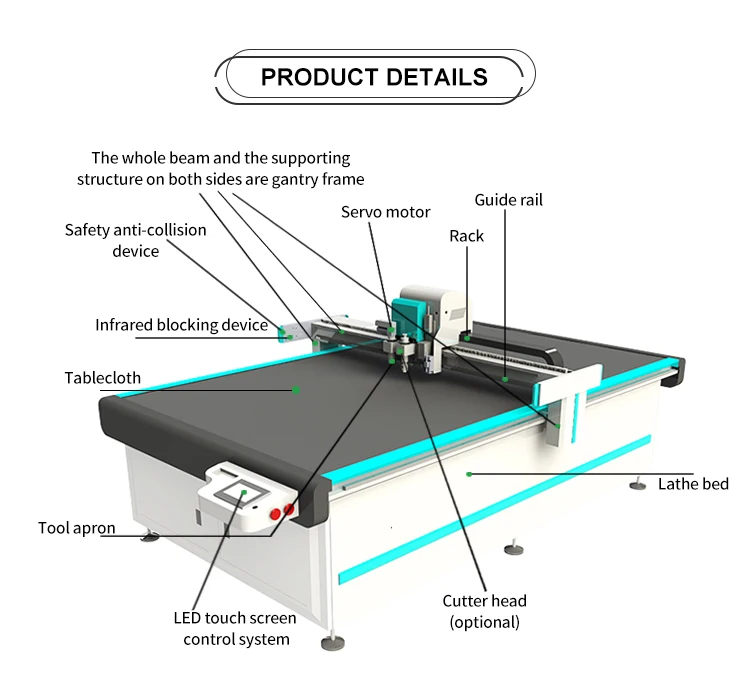
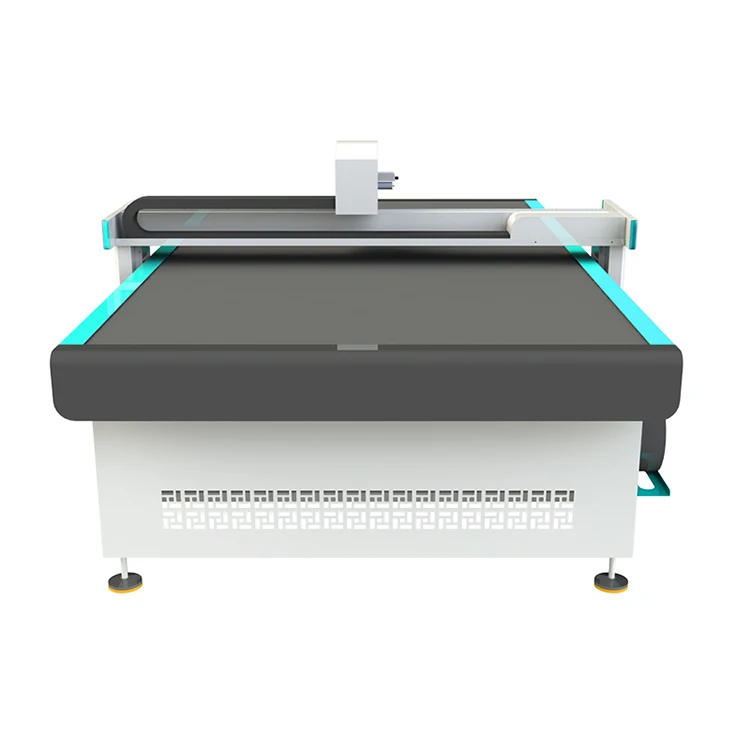
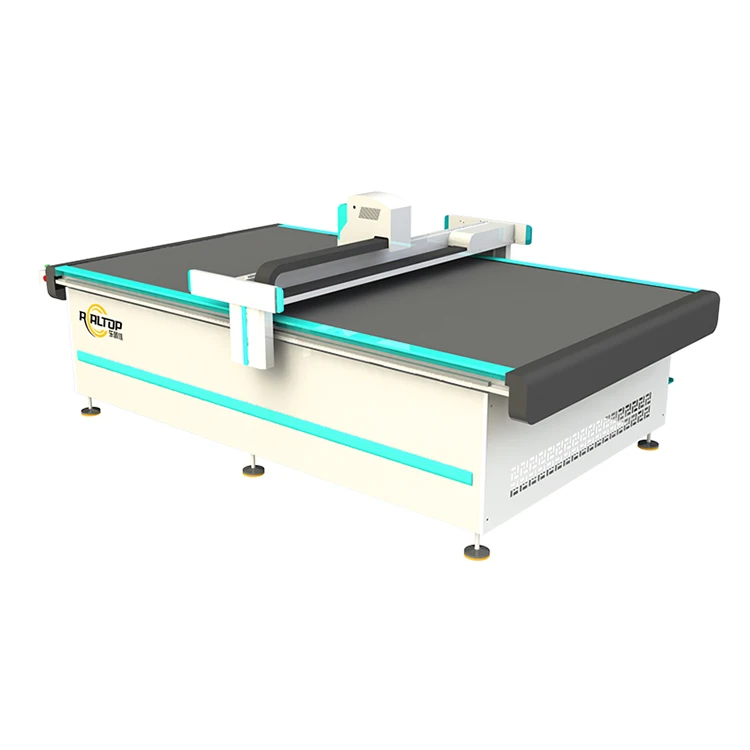
| Table Type | Flat working table with aluminum alloy honeycomb vacuum adsorption |
| Tool Head | Swiss imported knife with vibration full cutting, vibration half cutting, cursor location |
| Safety Device | Infrared sensors |
| Translational Velocity | 800–1200 mm/s |
| Cutting Speed | 200–800 mm/s (according to different cutting materials) |
| Repeated Accuracy | ≤0.1 mm |
| Transmission System | Digital servo motor, linear guide, synchronous belt, ball screw |
| Instruction System | HP-GL compatible format |
| Servo Motor | Delta |
| Guide Rail | Taiwan Hiwin |
| Conveyor Belt | Germany imported |
| Auto Feeding | Included |
| Vacuum Pump | 7.5 kW |
| Voltage | 380V ± 10% |
Application Suitability
| Application | Material or Output |
|---|---|
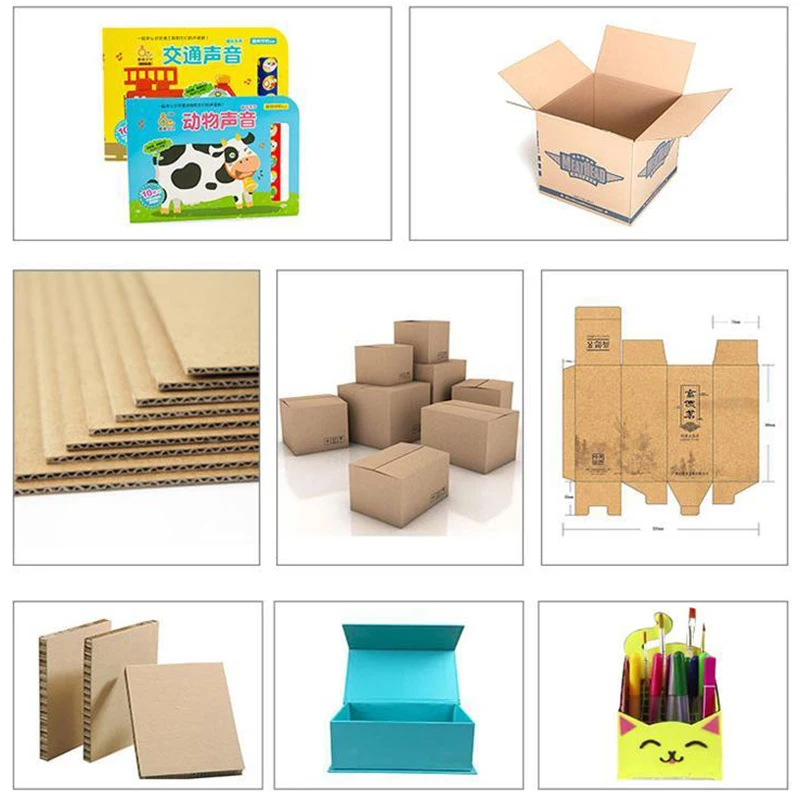
| Packaging carton and sample making | Corrugated cardboard, greyboard, honeycomb paper |
| Leather goods and footwear production | Genuine leather, PU synthetic, sponge composite leather |
| Garment and flexible material cutting | Clothing fabric, textile rolls, multi-layer cloth |
| Gasket and seal fabrication | Rubber, silicon, PVC soft sheet |
| Automotive interior trimming | Composite panels, foam-backed fabrics, soft glass |
| Signage and sticker production | Self-adhesive vinyl, reflective film, sticker stock |
| Home furnishing component cutting | Upholstery foam, soft furnishing composites |
Why the Wrong Tool Head Ruins the Entire Production Run
When a buyer selects a CNC knife cutting machine for sale based solely on working area, the tool head often becomes an afterthought — yet it determines whether edges are clean or ragged, whether foam compresses or slices, and whether the production line runs uninterrupted or halts every few meters for blade inspection. Matching the oscillating knife frequency and blade profile to your specific material thickness and density is the single most consequential configuration decision on this machine. A Swiss-imported vibrating head set up for dense leather will chatter through thin PVC if the wrong blade geometry is loaded, and a drag knife that works on cardboard will crush sponge composite layers rather than cut them. I have watched gasket producers lose an entire shift because the specification sheet listed a generic "oscillating tool" without confirming blade type, amplitude or stroke rate against the actual rubber compound on the table. [NEED_CITE: tool head and blade selection standards for oscillating knife cutting systems]
How the Cutting Method Should Follow the Material
This catalogue exists so that buyers can compare knife and laser cutting side by side before committing to a single method. Leather, PVC and foam composites each respond differently to blade contact versus thermal cutting — oscillating knife produces no burnt edge on synthetic materials, while CO2 laser seals textile edges but may melt PVC layers. The RT-D2516 and RT-S2516 models sit in the range where flatbed knife cutting handles flexible sheet materials that would deform on a conveyor-fed laser table. A CNC knife cutting machine for sale at this working area suits producers who run mixed material schedules, switching from cardboard packaging samples one day to sponge composite leather the next, without reconfiguring the entire line.
Catalogue Positioning and Configuration Logic
Each machine family in this range is grouped by material compatibility and production volume rather than by price tier. Buyers running short-run carton samples need different vacuum zoning and nesting software than those cutting multi-layer fabric for garment production at sustained throughput. The full cutting, half cutting and cursor location functions on this Swiss-imported tool head allow a single setup to score fold lines on packaging board, through-cut sticker sheets and register printed marks — functions that would otherwise require three separate machines. [NEED_CITE: flatbed digital cutting configuration for mixed material workshops]
Reading the Specs Against Your Production Reality
The 1600 × 2500 mm working area accommodates most standard sheet stock used in packaging and leather goods, but the usable cutting zone depends on how your nesting software arranges parts and whether auto-feeding is engaged for roll-fed materials. Delta servo motors paired with Taiwan Hiwin linear guides hold ≤0.1 mm repeatability, which matters when die-line accuracy on carton samples must match downstream folding and gluing tolerances. The 7.5 kW vacuum pump paired with the aluminum honeycomb table provides sufficient hold-down for rigid board, yet small sticker parts near the table edge may still lift during high-speed traversal at 1200 mm/s translational velocity — zoning the vacuum or reducing feed speed at the perimeter addresses this without sacrificing throughput on larger parts. The 9 kW rated power draw means the machine requires a dedicated 380V three-phase circuit with appropriate breaker sizing; running it on an undersized shared line risks servo faults mid-cycle.
The Cost of Skipping the Configuration Conversation
Ordering a flatbed cutter on working area alone, then discovering the vacuum table cannot hold small gasket parts flat, leads to scrap rates that compound across every production shift. I have shipped oscillating knife units to foam fabricators who specified the correct bed size but received a single-zone vacuum table — every small seal lifted during cutting and the operator spent more time repositioning material than running the program. [NEED_CITE: vacuum table zoning requirements for small-part oscillating knife cutting] Wrong voltage at the destination site can idle a machine for weeks while a step-down transformer is sourced locally, and an instruction system that cannot import the buyer’s existing DXF or PLT files forces the design team to redraw every die-line from scratch.
Why Buyers Source This Range Here
In-house design covers both knife and laser cutting technologies, so the correct method is recommended based on material behaviour rather than pushing one platform across every application. Tool head and table configuration is specified per material type and production volume before the order is confirmed, not selected from a default list. CCD camera positioning is available for printed contour work where sticker and signage producers need registered trimming. Software compatibility — file format import, nesting workflow and HP-GL instruction output — is verified against the buyer’s existing CAD environment before production starts. Sample cutting on the buyer’s own material is completed and documented before commitment, showing edge quality, cutting speed and achievable accuracy on the actual stock that will run in production. Voltage, plug type and control language are confirmed to match the destination market, avoiding the transformer-and-manual problem that strands machines on arrival.
Documentation & Verification
- Machine specification sheet listing tool head and table configuration matched to your material
- Electrical schematic with voltage and breaker confirmation for your facility supply
- Sample cutting report on your own material showing edge quality and achievable speed
- Software licence and file format compatibility note for your existing CAD workflow
- Factory test record documenting repeatability and cutting accuracy before dispatch
- Spare parts list including blade types, belts and vacuum table consumables
Installation, Commissioning & Support
- 3450 × 2300 mm footprint requires level concrete floor with anchor points for vibration isolation
- Dedicated 380V ± 10% three-phase circuit with breaker sized for 9 kW continuous draw
- Auto-feeding conveyor and vacuum pump arrive as integrated assemblies requiring on-site belt tensioning
- First-run commissioning includes vacuum zone calibration and Delta servo parameter tuning
- Operator training covers HP-GL file import, nesting setup and blade change procedures
- Spares kit shipped with initial order includes Swiss knife blades, synchronous belts and sensor components
What to Share Before Requesting a Quote
To match the correct tool head and table configuration, provide the material type, thickness range and sheet dimensions you will run most frequently. Confirm your local voltage, frequency and plug standard so the electrical package is built correctly at the factory. If you already use nesting software or a specific CAD file format, share a sample file so compatibility is verified before the machine enters production.
Frequently Asked Questions
Q: How do I choose between oscillating knife, drag knife and laser for my material?
A: Oscillating knife suits thicker flexible materials like foam, leather and composites where a vibrating blade slices cleanly without crushing. Drag knife works for thinner sheets such as vinyl and sticker stock. Laser seals synthetic edges but melts certain PVC compounds. Share your material samples so we run a cutting test and recommend the correct method before you commit.
Q: What working area size should I specify based on my sheet stock?
A: Measure your largest standard sheet and add clearance for clamp zones and tool travel. The 1600 × 2500 mm table on the RT-D2516 and RT-S2516 handles most packaging board and leather hides. If your nesting layout leaves large unused zones, a smaller table reduces vacuum pump load and floor space.
Q: Which tool head configuration avoids ragged edges on my composite material?
A: Blade geometry, oscillation frequency and cutting speed must all match your material density. Sponge composite leather needs a different blade profile than rigid greyboard. We configure the Swiss-imported oscillating head and run a sample cut on your actual stock to confirm edge quality before the machine ships.
Q: Does the software accept my existing CAD files and nesting workflow?
A: The instruction system supports HP-GL compatible format and the professional carton nesting software imports common vector file types. Send us a sample file from your current workflow so we verify import accuracy, nesting behaviour and output compatibility before production begins.
Q: What voltage and control language options are available for my market?
A: The standard electrical package runs at 380V ± 10%, but voltage, plug type and control panel language are confirmed per destination market before assembly. Share your facility supply specification so the transformer, breaker sizing and operator interface match local requirements from day one.
Precision-matched tool heads — Swiss-imported oscillating knife configured for full cut, half cut and cursor location across leather, PVC and composite sheets before shipment.
Technical Specifications
| Parameter | Value |
|---|---|
| Product Type | CNC Oscillating Knife Cutting Machine |
| Model | RT-D2516 / RT-S2516 |
| Working Area | 1600 × 2500 mm |
| Overall Dimensions | 3450 × 2300 × 1250 mm |
| Rated Power | 9 kW |
| Table Type | Flat working table with aluminum alloy honeycomb vacuum adsorption |
| Tool Head | Swiss imported knife with vibration full cutting, vibration half cutting, cursor location |
| Safety Device | Infrared sensors |
| Translational Velocity | 800–1200 mm/s |
| Cutting Speed | 200–800 mm/s (according to different cutting materials) |
| Repeated Accuracy | ≤0.1 mm |
| Transmission System | Digital servo motor, linear guide, synchronous belt, ball screw |
| Instruction System | HP-GL compatible format |
| Servo Motor | Delta |
| Guide Rail | Taiwan Hiwin |
| Conveyor Belt | Germany imported |
| Auto Feeding | Included |
| Vacuum Pump | 7.5 kW |
| Voltage | 380V ± 10% |
Application Suitability
| Application | Material or Output |
|---|---|
| Packaging carton and sample making | Corrugated cardboard, greyboard, honeycomb paper |
| Leather goods and footwear production | Genuine leather, PU synthetic, sponge composite leather |
| Garment and flexible material cutting | Clothing fabric, textile rolls, multi-layer cloth |
| Gasket and seal fabrication | Rubber, silicon, PVC soft sheet |
| Automotive interior trimming | Composite panels, foam-backed fabrics, soft glass |
| Signage and sticker production | Self-adhesive vinyl, reflective film, sticker stock |
| Home furnishing component cutting | Upholstery foam, soft furnishing composites |
Why the Wrong Tool Head Ruins the Entire Production Run
When a buyer selects a CNC knife cutting machine for sale based solely on working area, the tool head often becomes an afterthought — yet it determines whether edges are clean or ragged, whether foam compresses or slices, and whether the production line runs uninterrupted or halts every few meters for blade inspection. Matching the oscillating knife frequency and blade profile to your specific material thickness and density is the single most consequential configuration decision on this machine. A Swiss-imported vibrating head set up for dense leather will chatter through thin PVC if the wrong blade geometry is loaded, and a drag knife that works on cardboard will crush sponge composite layers rather than cut them. I have watched gasket producers lose an entire shift because the specification sheet listed a generic "oscillating tool" without confirming blade type, amplitude or stroke rate against the actual rubber compound on the table. [NEED_CITE: tool head and blade selection standards for oscillating knife cutting systems]
How the Cutting Method Should Follow the Material
This catalogue exists so that buyers can compare knife and laser cutting side by side before committing to a single method. Leather, PVC and foam composites each respond differently to blade contact versus thermal cutting — oscillating knife produces no burnt edge on synthetic materials, while CO2 laser seals textile edges but may melt PVC layers. The RT-D2516 and RT-S2516 models sit in the range where flatbed knife cutting handles flexible sheet materials that would deform on a conveyor-fed laser table. A CNC knife cutting machine for sale at this working area suits producers who run mixed material schedules, switching from cardboard packaging samples one day to sponge composite leather the next, without reconfiguring the entire line.
Catalogue Positioning and Configuration Logic
Each machine family in this range is grouped by material compatibility and production volume rather than by price tier. Buyers running short-run carton samples need different vacuum zoning and nesting software than those cutting multi-layer fabric for garment production at sustained throughput. The full cutting, half cutting and cursor location functions on this Swiss-imported tool head allow a single setup to score fold lines on packaging board, through-cut sticker sheets and register printed marks — functions that would otherwise require three separate machines. [NEED_CITE: flatbed digital cutting configuration for mixed material workshops]
Reading the Specs Against Your Production Reality
The 1600 × 2500 mm working area accommodates most standard sheet stock used in packaging and leather goods, but the usable cutting zone depends on how your nesting software arranges parts and whether auto-feeding is engaged for roll-fed materials. Delta servo motors paired with Taiwan Hiwin linear guides hold ≤0.1 mm repeatability, which matters when die-line accuracy on carton samples must match downstream folding and gluing tolerances. The 7.5 kW vacuum pump paired with the aluminum honeycomb table provides sufficient hold-down for rigid board, yet small sticker parts near the table edge may still lift during high-speed traversal at 1200 mm/s translational velocity — zoning the vacuum or reducing feed speed at the perimeter addresses this without sacrificing throughput on larger parts. The 9 kW rated power draw means the machine requires a dedicated 380V three-phase circuit with appropriate breaker sizing; running it on an undersized shared line risks servo faults mid-cycle.
The Cost of Skipping the Configuration Conversation
Ordering a flatbed cutter on working area alone, then discovering the vacuum table cannot hold small gasket parts flat, leads to scrap rates that compound across every production shift. I have shipped oscillating knife units to foam fabricators who specified the correct bed size but received a single-zone vacuum table — every small seal lifted during cutting and the operator spent more time repositioning material than running the program. [NEED_CITE: vacuum table zoning requirements for small-part oscillating knife cutting] Wrong voltage at the destination site can idle a machine for weeks while a step-down transformer is sourced locally, and an instruction system that cannot import the buyer’s existing DXF or PLT files forces the design team to redraw every die-line from scratch.
Why Buyers Source This Range Here
In-house design covers both knife and laser cutting technologies, so the correct method is recommended based on material behaviour rather than pushing one platform across every application. Tool head and table configuration is specified per material type and production volume before the order is confirmed, not selected from a default list. CCD camera positioning is available for printed contour work where sticker and signage producers need registered trimming. Software compatibility — file format import, nesting workflow and HP-GL instruction output — is verified against the buyer’s existing CAD environment before production starts. Sample cutting on the buyer’s own material is completed and documented before commitment, showing edge quality, cutting speed and achievable accuracy on the actual stock that will run in production. Voltage, plug type and control language are confirmed to match the destination market, avoiding the transformer-and-manual problem that strands machines on arrival.
Documentation & Verification
- Machine specification sheet listing tool head and table configuration matched to your material
- Electrical schematic with voltage and breaker confirmation for your facility supply
- Sample cutting report on your own material showing edge quality and achievable speed
- Software licence and file format compatibility note for your existing CAD workflow
- Factory test record documenting repeatability and cutting accuracy before dispatch
- Spare parts list including blade types, belts and vacuum table consumables
Installation, Commissioning & Support
- 3450 × 2300 mm footprint requires level concrete floor with anchor points for vibration isolation
- Dedicated 380V ± 10% three-phase circuit with breaker sized for 9 kW continuous draw
- Auto-feeding conveyor and vacuum pump arrive as integrated assemblies requiring on-site belt tensioning
- First-run commissioning includes vacuum zone calibration and Delta servo parameter tuning
- Operator training covers HP-GL file import, nesting setup and blade change procedures
- Spares kit shipped with initial order includes Swiss knife blades, synchronous belts and sensor components
What to Share Before Requesting a Quote
To match the correct tool head and table configuration, provide the material type, thickness range and sheet dimensions you will run most frequently. Confirm your local voltage, frequency and plug standard so the electrical package is built correctly at the factory. If you already use nesting software or a specific CAD file format, share a sample file so compatibility is verified before the machine enters production.
Frequently Asked Questions
Q: How do I choose between oscillating knife, drag knife and laser for my material?
A: Oscillating knife suits thicker flexible materials like foam, leather and composites where a vibrating blade slices cleanly without crushing. Drag knife works for thinner sheets such as vinyl and sticker stock. Laser seals synthetic edges but melts certain PVC compounds. Share your material samples so we run a cutting test and recommend the correct method before you commit.
Q: What working area size should I specify based on my sheet stock?
A: Measure your largest standard sheet and add clearance for clamp zones and tool travel. The 1600 × 2500 mm table on the RT-D2516 and RT-S2516 handles most packaging board and leather hides. If your nesting layout leaves large unused zones, a smaller table reduces vacuum pump load and floor space.
Q: Which tool head configuration avoids ragged edges on my composite material?
A: Blade geometry, oscillation frequency and cutting speed must all match your material density. Sponge composite leather needs a different blade profile than rigid greyboard. We configure the Swiss-imported oscillating head and run a sample cut on your actual stock to confirm edge quality before the machine ships.
Q: Does the software accept my existing CAD files and nesting workflow?
A: The instruction system supports HP-GL compatible format and the professional carton nesting software imports common vector file types. Send us a sample file from your current workflow so we verify import accuracy, nesting behaviour and output compatibility before production begins.
Q: What voltage and control language options are available for my market?
A: The standard electrical package runs at 380V ± 10%, but voltage, plug type and control panel language are confirmed per destination market before assembly. Share your facility supply specification so the transformer, breaker sizing and operator interface match local requirements from day one.
商品评价
There are no reviews yet.