


Fast Delivery
Quick, reliable shipping to any location.

Free & easy returns
Return this item by mail or in store within 90 days for a full refund.
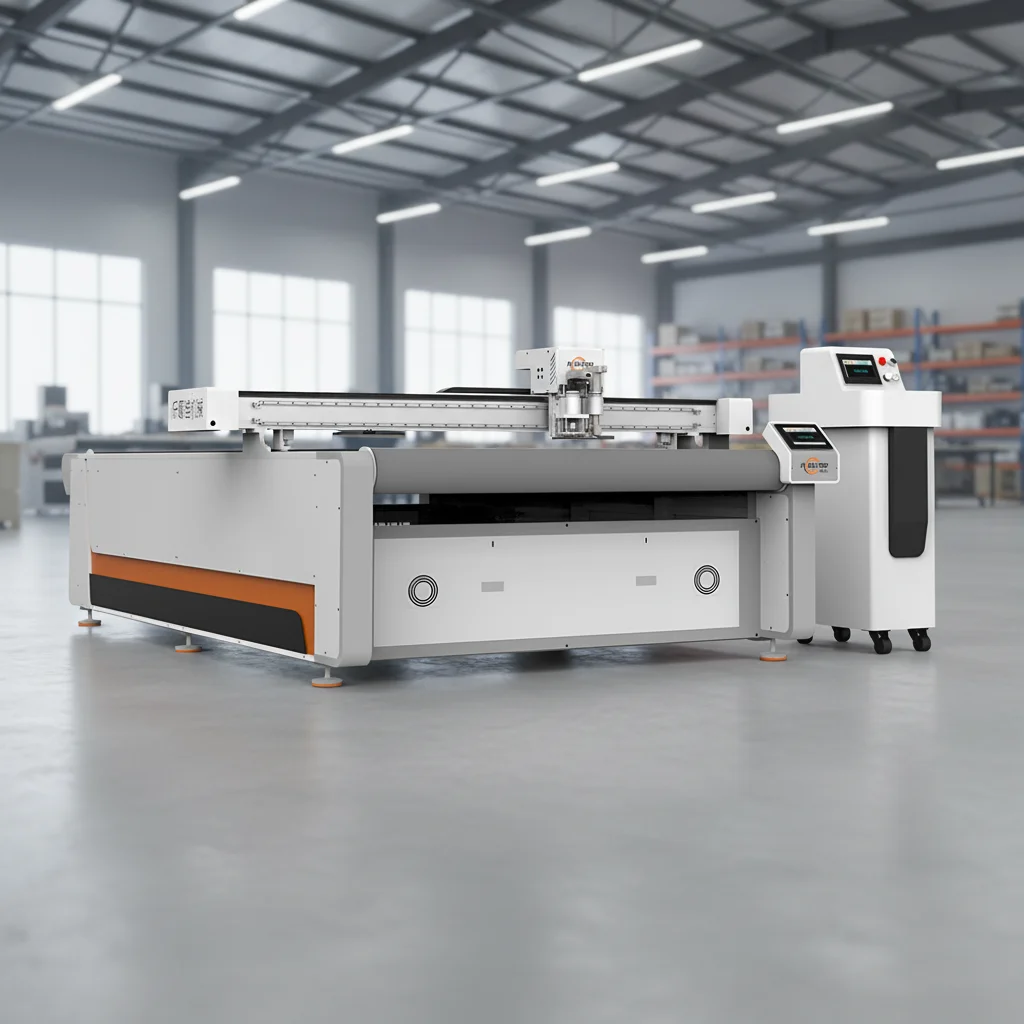
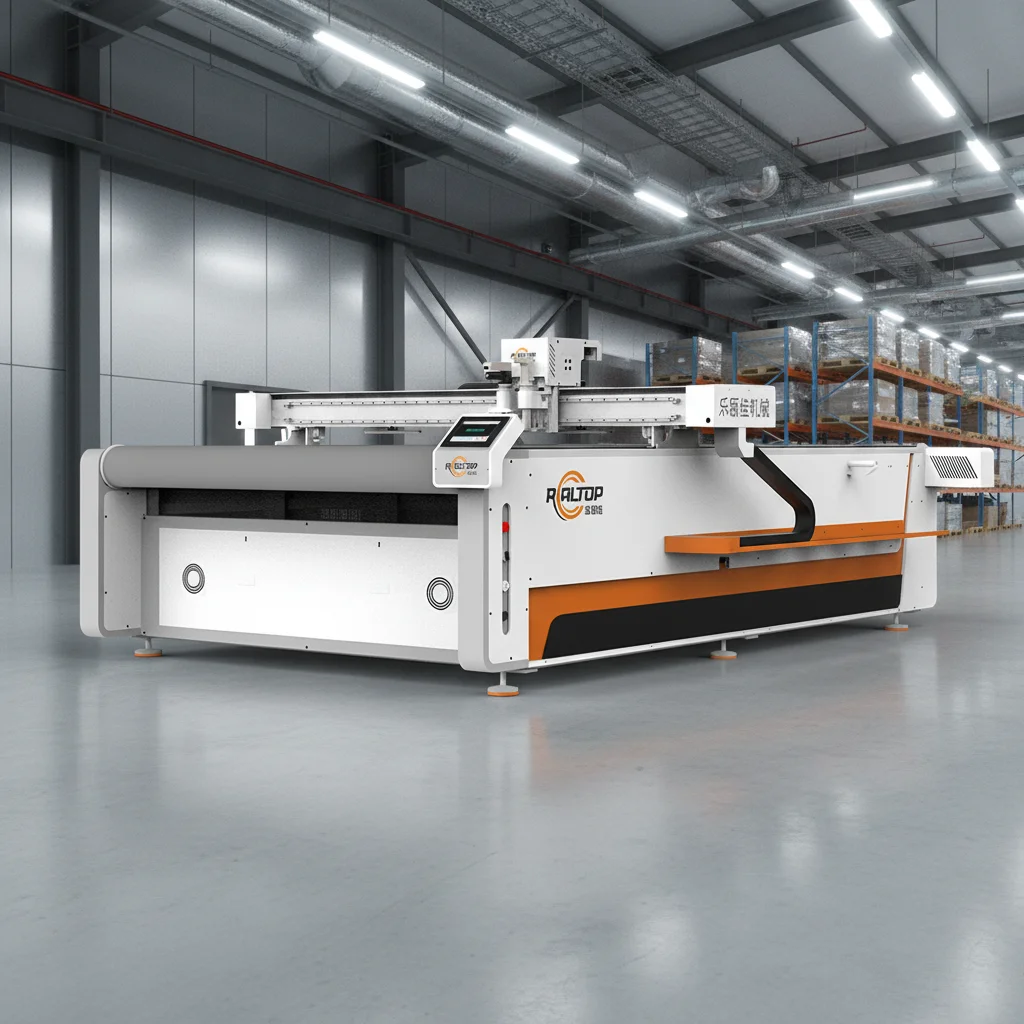
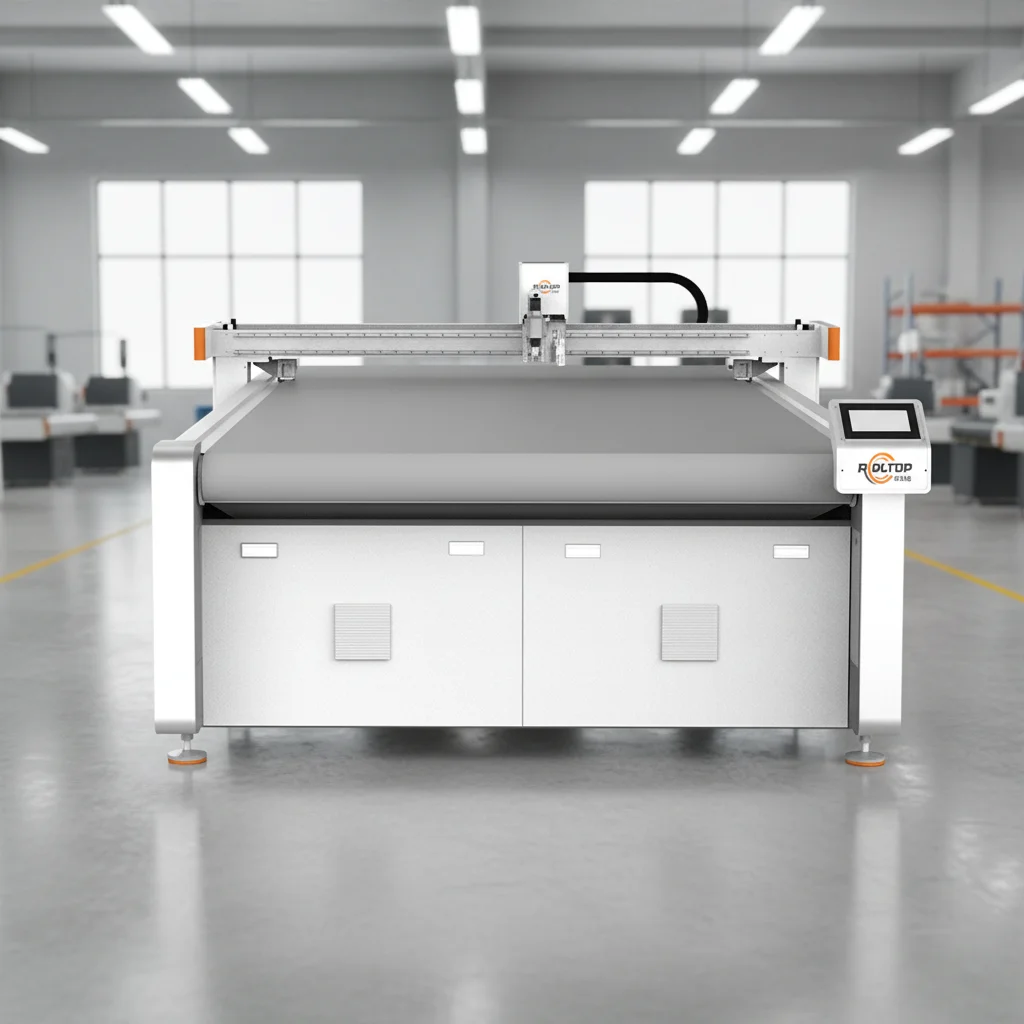
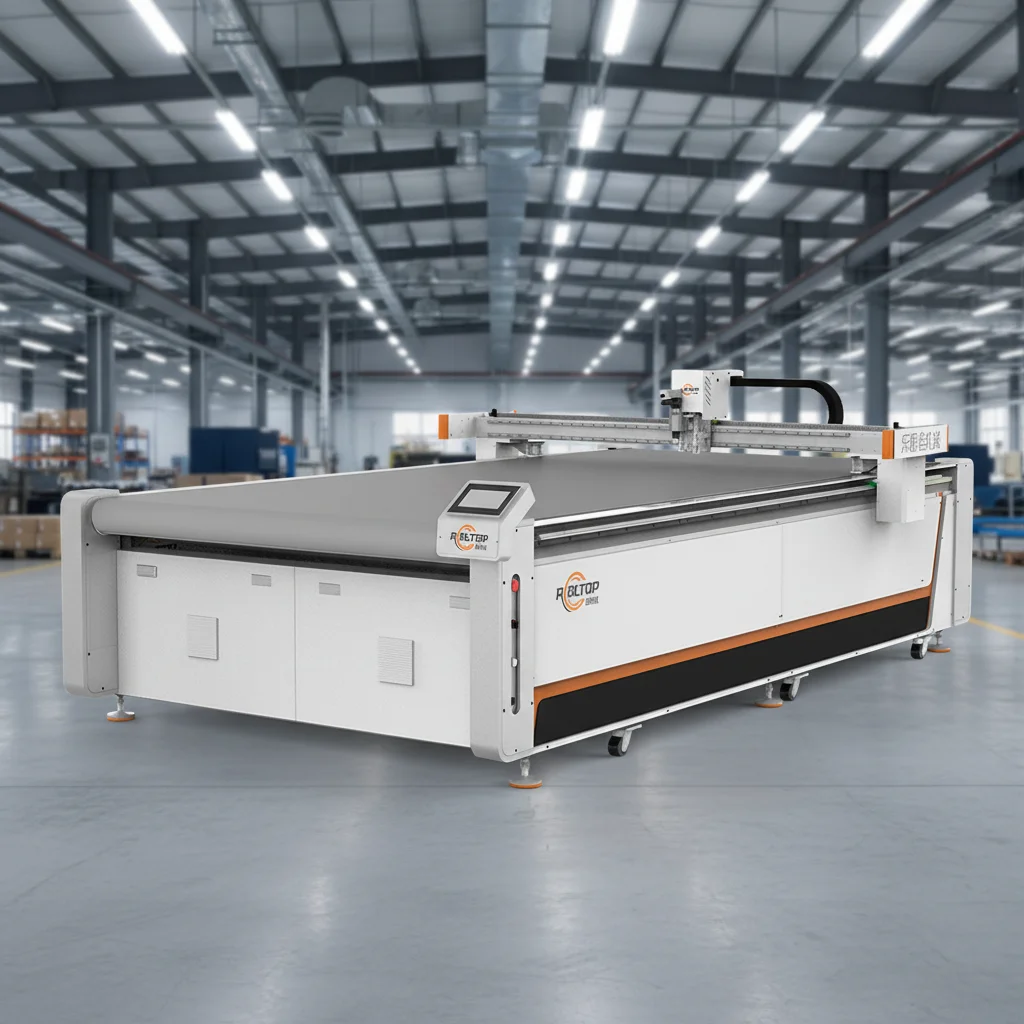
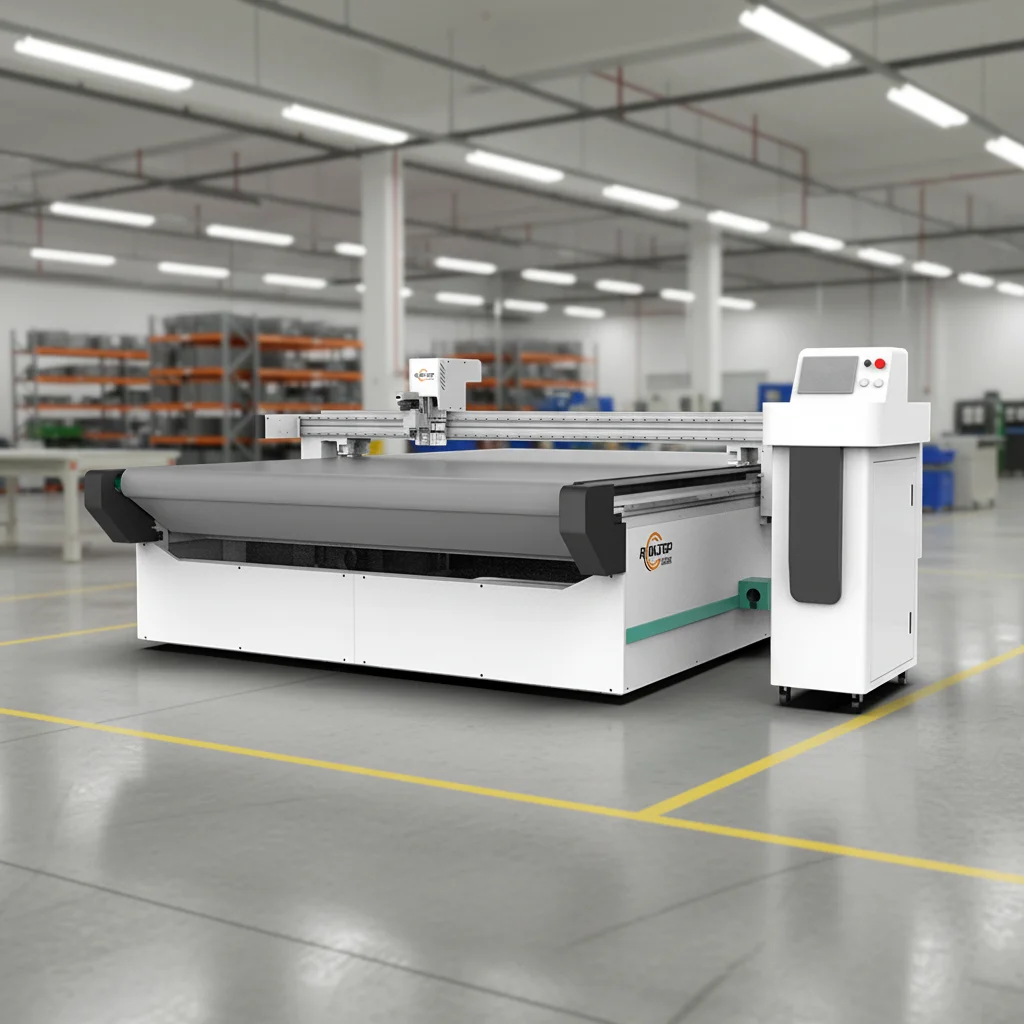
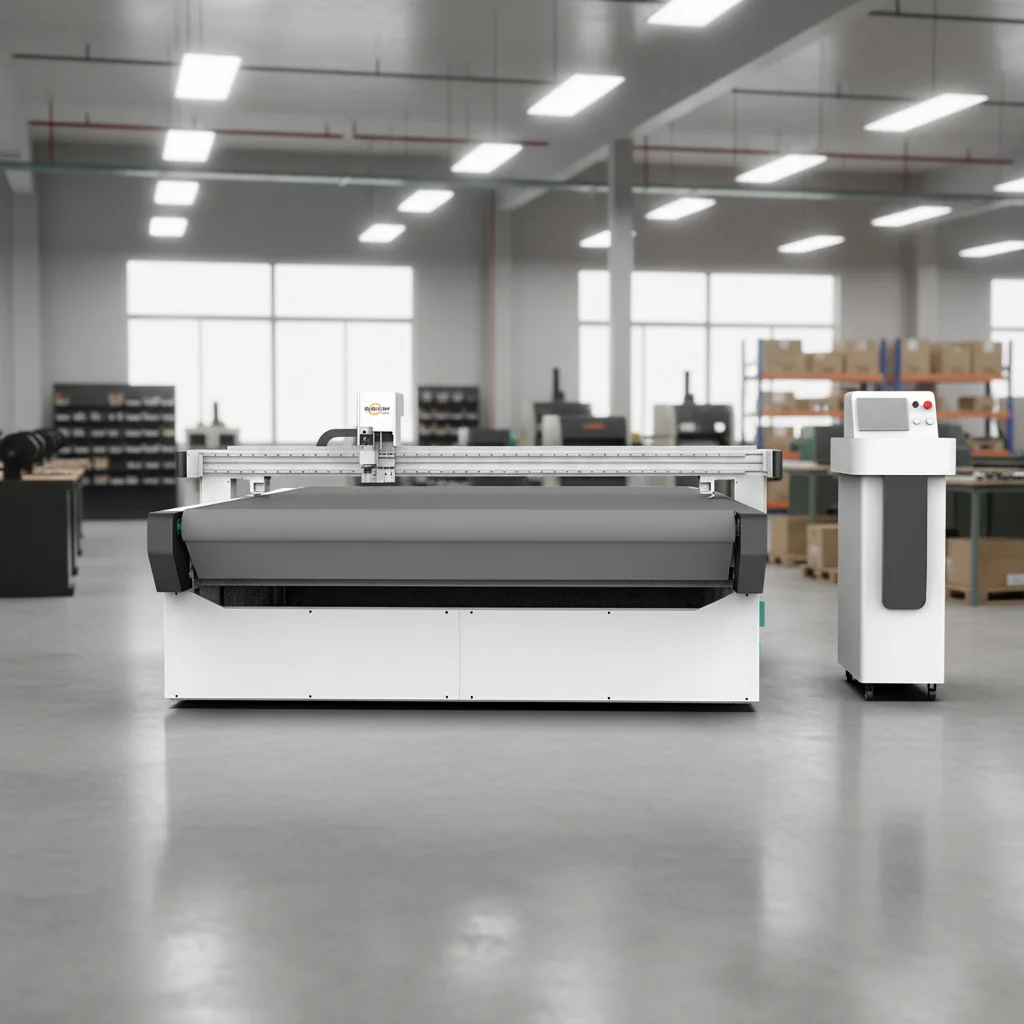
Tool Head Matched to Material — a Swiss imported vibrating knife paired with a 1600×2500 mm flat or auto-feeding table ensures fabric, leather and foam cut clean rather than crushed.
Technical Specifications
| Parameter | Value |
|---|---|
| Model | RT-D2516 / RT-S2516 |
| Product Type | CNC Oscillating Knife Cutting Machine |
| Working Area | 1600 × 2500 mm |
| Machine Overall Dimensions | 3450 × 2300 × 1250 mm |
| Rated Power | 9 kW |
| Voltage | 380V ± 10% |
| Table Type | Flat working table / Auto-feeding table |
| Cutting Thickness | ≤ 100 mm (varies with material density and tool head) |
| Cutting Speed | 200 – 800 mm/s (according to different cutting materials) |
| Translational Velocity | 800 – 2000 mm/s |
| Repeated Accuracy | ≤ 0.1 mm |
| Transmission System | Digital servo motor, linear guide, synchronous belt, ball screw |
| Servo Motor Option | Delta (Taiwan) or Panasonic (Japan) |
| Linear Guide | Taiwan Hiwin rail |
| Instruction System | HP-GL compatible format |
| Software & File Formats | Auto typesetting; supports PLT, DXF, AI |
| Control Panel | Touch screen, multi-language (EN / RU / IT / ZH, others customizable) |
| Vacuum Table Surface | Magnesium-aluminum alloy with PVDF powder spraying, anodic oxidation |
| Vacuum Pump | 7.5 kW |
| Conveyor Belt | Germany imported |
| Visual Positioning Options | Small CCD mark point, panoramic camera, projection positioning |
| Safety Devices | Infrared sensors with auto-pause, beam anti-collision, emergency stop with in-situ resume |
Application Suitability
| Application | Material or Output |
|---|---|
| Garment and footwear pattern cutting | Woven fabric, non-woven fabric, shoe material, luggage material |
| Automotive interior trim and floor mats | PU, EVA, XPE, PVC, sponge, carpet, composite materials |
| Packaging sample making and short-run die-cutting | Cardboard, corrugated cardboard, foam board, plastic box |
| Advertising and signage production | Vinyl sticker, film, PP, PE, PTFE |
| Gasket and sealing pad fabrication | Rubber, PTFE, ETFE, fiberglass, composite gasket sheets |
| Soft home furnishings | Textile cloth, leather, PU, EVA foam |
Why the Material Sample Test Matters Before Any CNC Knife Cutting Machine Manufacturer Signs the Contract
A quoted machine that cannot handle your specific material thickness and density is a machine you will return or leave idle.
Last year a buyer running automotive floor mats placed an order based on working area alone. The composite material turned out denser than the sample used during initial testing, the oscillating knife left ragged edges, and an entire batch was scrapped. Since that incident, every quotation I handle includes a cutting trial on the buyer’s actual material before the contract is signed. Edge quality, achievable cutting speed and depth are confirmed on the exact roll or sheet the buyer will run in production, not on a generic reference material. [NEED_CITE: importance of material-specific sample testing in CNC cutting procurement]
Comparing Knife and Laser Across the Full Equipment Range
Buyers surveying a complete catalogue of cutting equipment face a choice that goes beyond working area: knife or laser. Fabric producers cutting garment panels often favour an oscillating knife because it leaves sealed edges on synthetics only when laser is chosen, yet knife cutting avoids the burn marks and discoloration that CO2 lasers can produce on natural fibers. The RT-D2516 / RT-S2516 sits in the knife family and can be equipped with a Swiss imported multifunctional head that handles full cutting, half cutting and cursor location in a single setup, letting a garment or footwear shop switch between pattern cutting and creasing without changing heads.
Visual Positioning Across Contour and High-Volume Workflows
For printed contour jobs, three visual positioning options span different production realities. A small CCD camera locates printed mark points on individual pieces, a panoramic camera recognises the entire nest of printed contours on a large sheet, and projection positioning overlays the cut path onto the material for manual verification. Choosing the wrong one means either paying for camera resolution the workflow never uses, or discovering at production speed that the mark-point camera cannot track registration marks on a continuous-feed conveyor. [NEED_CITE: CCD contour recognition accuracy at production speed in CNC cutting]
Reading the Specs That Actually Shape Daily Output
The 1600 × 2500 mm working area determines the maximum single-sheet lay-up, which in turn sets how many garment panels or gasket pieces can be nested per cycle. Cutting speed ranging from 200 to 800 mm/s is material-dependent: dense foam board holds the blade at the lower end while thin textile allows the higher range, and quoting a single number without stating the material is misleading. Repeated accuracy of ≤ 0.1 mm matters most when a shoe upper must match a corresponding sole pattern within tight tolerances for downstream stitching. The 7.5 kW vacuum pump paired with a magnesium-aluminum PVDF-coated table provides the hold-down force that keeps thin film and sticker stock from lifting during high-speed traversal.
The Hidden Cost of Selecting the Wrong Table Configuration
A flat working table suits batch production where sheets are loaded and unloaded manually, while an auto-feeding table with a Germany-imported conveyor belt keeps rolls of fabric or non-woven material moving through continuous cuts. Specifying a flat table for a high-volume roll-fed operation means every sheet change halts the spindle, and the translational velocity rating of 800–2000 mm/s becomes irrelevant while the operator repositions material. On the other side, fitting a conveyor to a shop that only cuts rigid gasket sheets adds cost and maintenance without improving throughput. [NEED_CITE: flat table versus auto-feeding configuration selection in digital cutting]
Why Buyers Choose This Equipment Range
In-house design covers both knife and laser technologies, so a buyer can match cutting method to material instead of forcing one technology across every job. Tool head and table configuration are specified per material and production volume rather than offered as a single default package. CCD camera positioning is confirmed against the buyer’s actual printed stock before order. Software compatibility with PLT, DXF and AI files is verified during the sample-cut stage. Voltage, control language and plug type are documented in the electrical schematic before shipment leaves the factory floor.
Documentation & Verification
- Machine specification sheet confirming working area, tool head and table type for the selected model
- Sample cutting report run on your fabric or leather stock, noting edge quality and speed
- Electrical schematic with voltage and frequency matched to your local supply
- Software licence and file format note confirming PLT, DXF and AI import
- Factory test record documenting repeated accuracy and safety device function
- CE declaration covering the shipped unit configuration
Installation, Commissioning & Support
- 3450 × 2300 mm footprint requires level concrete floor with clearance for operator walk-around
- Dedicated 380V ± 10% circuit rated for the combined 9 kW machine and 7.5 kW vacuum pump load
- Machine arrives fully assembled; beam and gantry alignment checked on-site during commissioning
- Touch screen configured to your operator language during first power-up and training session
- Spare oscillating knife blades and vacuum table seals included in the initial parts kit
- Hiwin linear rail lubrication schedule set to weekly intervals during the training period
What to Share When Requesting a Quotation
Send the material type, thickness range and sheet or roll dimensions you plan to cut. Include your daily volume target and whether your workflow runs from sheets or continuous rolls. Confirm the local voltage and frequency at your facility so the electrical package is built to match.
Frequently Asked Questions
Q: How do I decide between knife and laser cutting methods for my material?
A: Knife cutting suits thick foams, multi-layer textiles and composites where laser would melt or burn edges. Laser is preferred when edge sealing on synthetics is required. Share your material type and thickness so the correct method is recommended before a quote is prepared.
Q: How is working area and table configuration matched to my sheet size?
A: The 1600 × 2500 mm bed accommodates most garment panels and automotive interior sheets. Flat tables fit batch cutting from sheets; auto-feeding tables suit roll-fed continuous production. Your daily volume and material format determine the right configuration.
Q: What tool head options exist and which suits my material thickness?
A: The catalogue includes oscillating knife, drag knife, creasing wheel and several specialty heads. For dense composites up to 100 mm thick, a high-power vibrating head is typical. A sample cut on your actual material confirms the correct head before order commitment.
Q: How is sample cutting on my own material conducted?
A: You send a representative sheet or roll sample to the factory. Cutting trials run across the speed and depth range, and a written report documenting edge quality, achievable speed and tool wear is returned with the quotation.
Q: What voltage and software options are confirmed before shipment?
A: The electrical schematic is matched to your local supply and confirmed before production. The control panel language and file format compatibility with PLT, DXF or AI are verified during the sample-cut stage so your existing workflow files import without modification.










商品评价
There are no reviews yet.