


Fast Delivery
Quick, reliable shipping to any location.

Free & easy returns
Return this item by mail or in store within 90 days for a full refund.
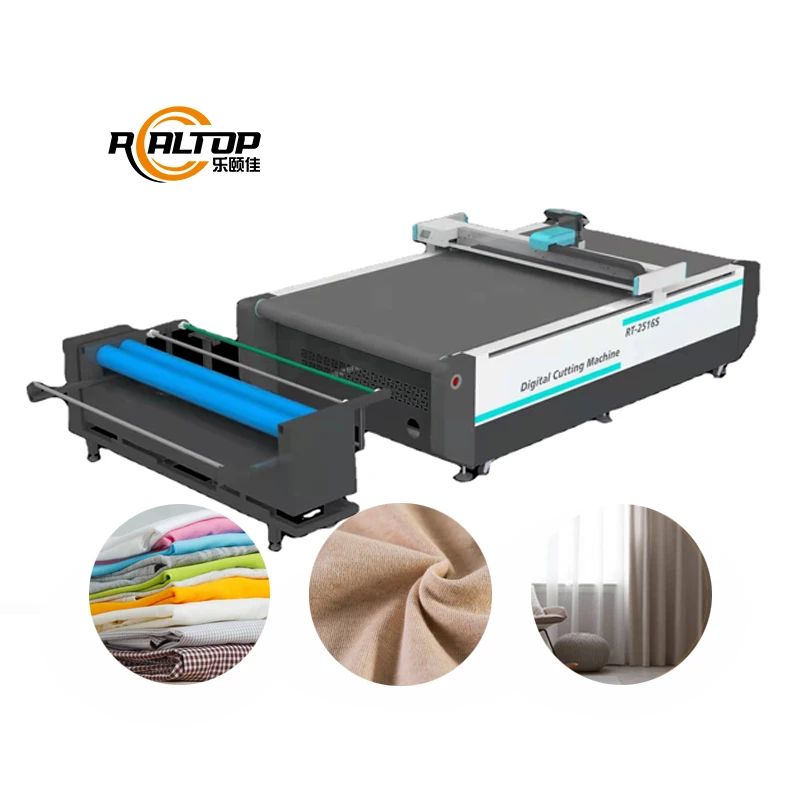
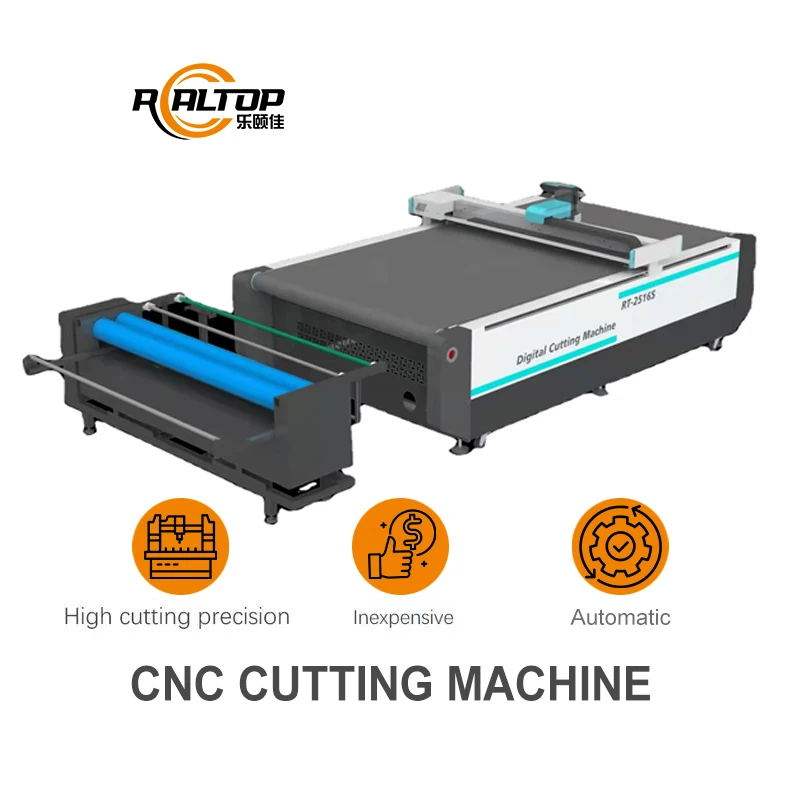
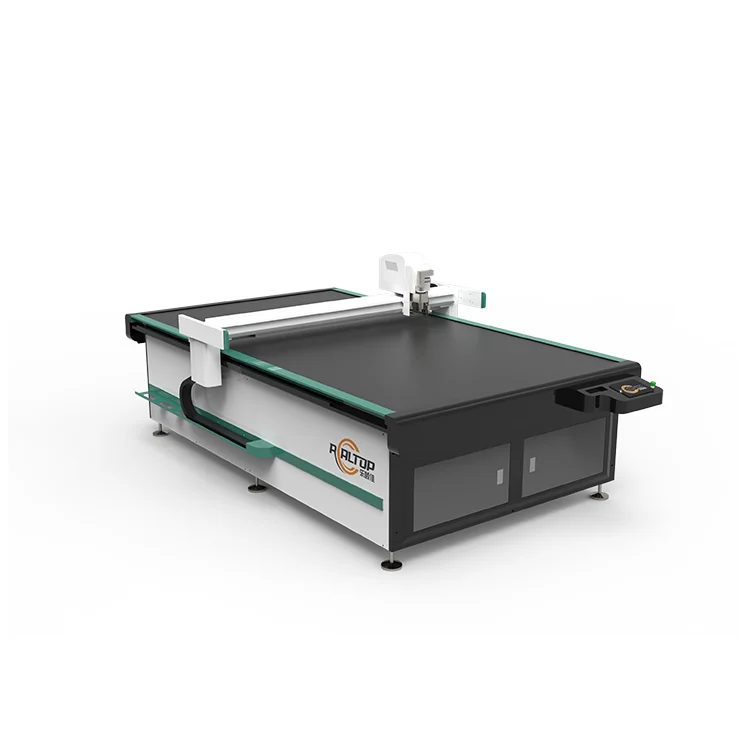
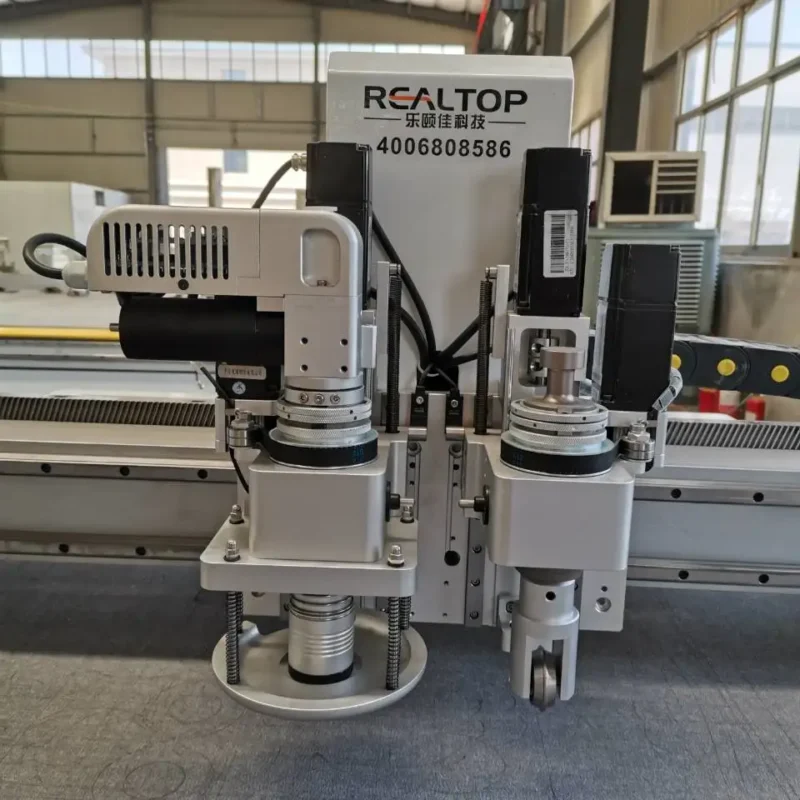
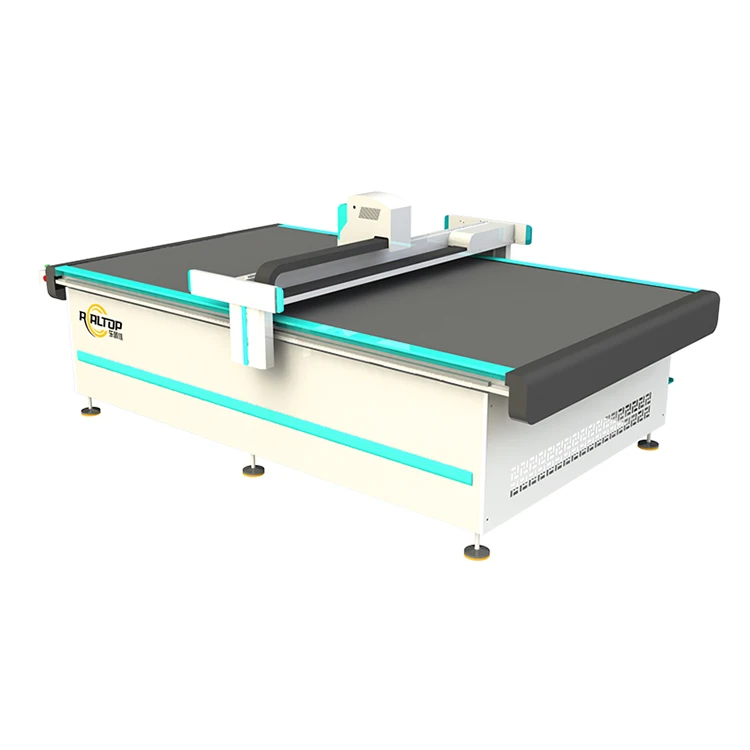
Tool head flexibility — oscillating, circular and drag knife options configurable on the same RT-D2516/RT-S2516 platform so fabric converters match the cutting method to each textile layer.
Technical Specifications
| Parameter | Value |
|---|---|
| Model | RT-D2516/RT-S2516 |
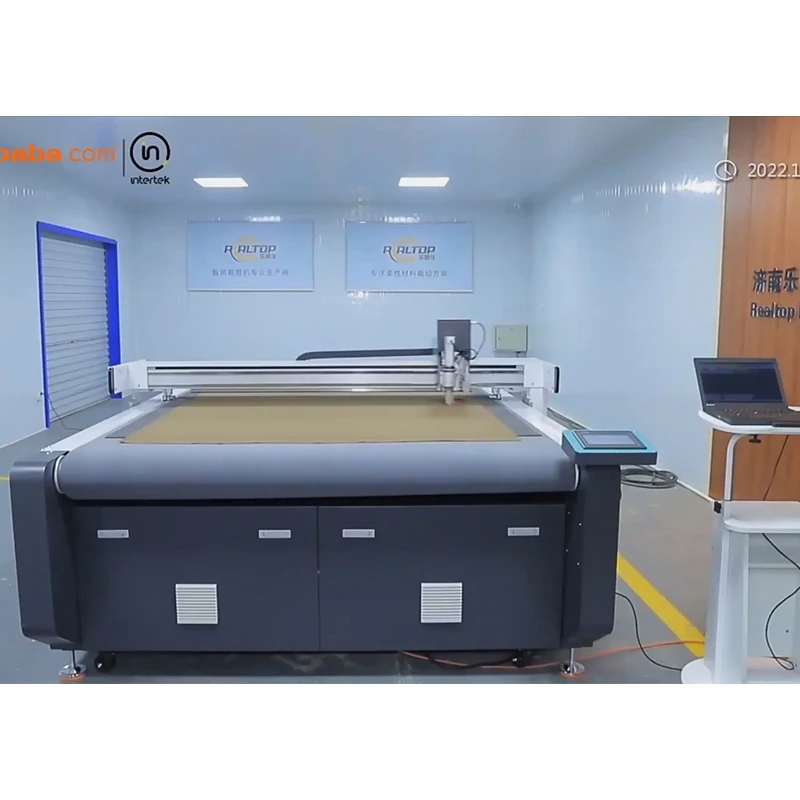
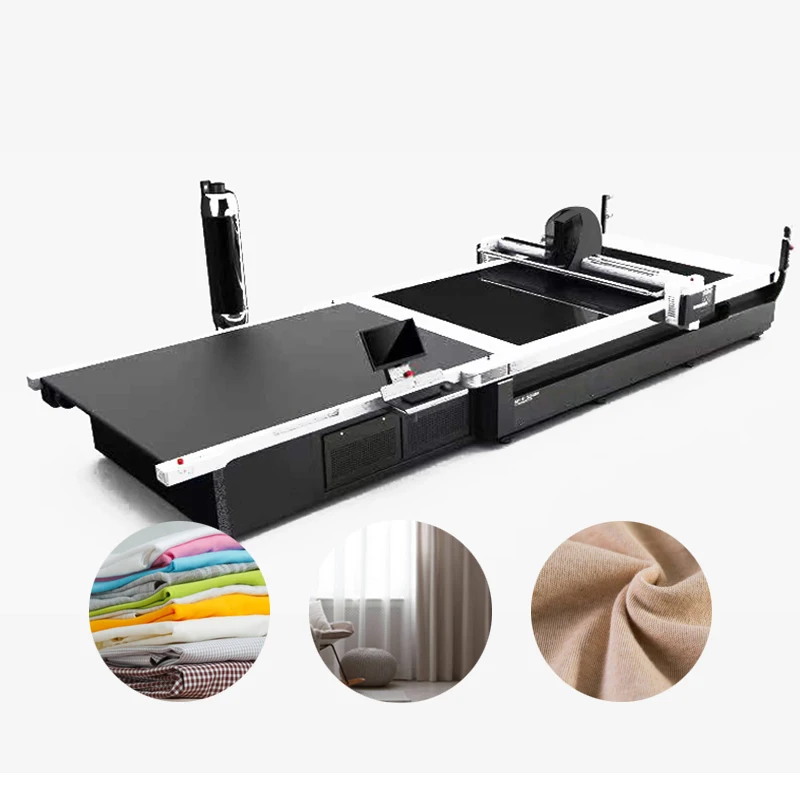
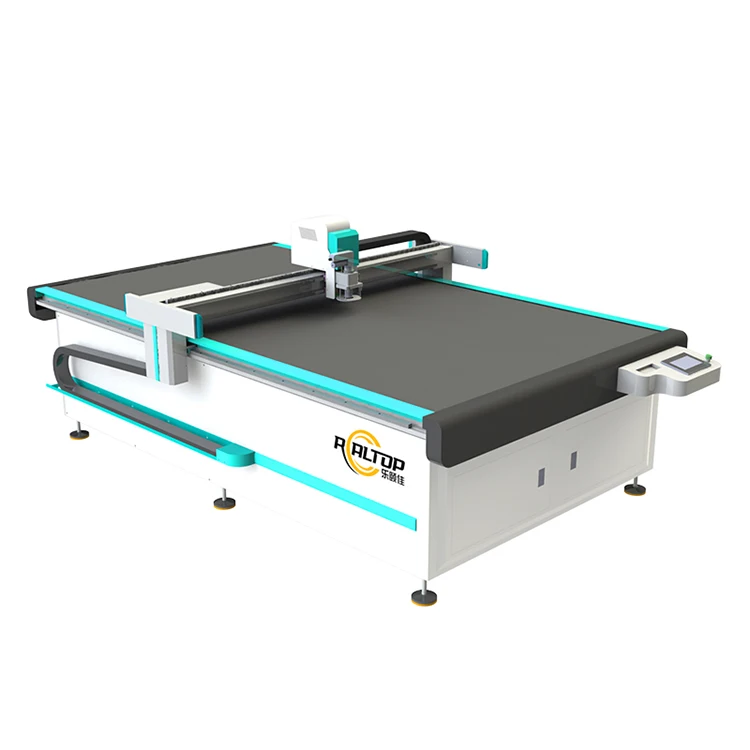
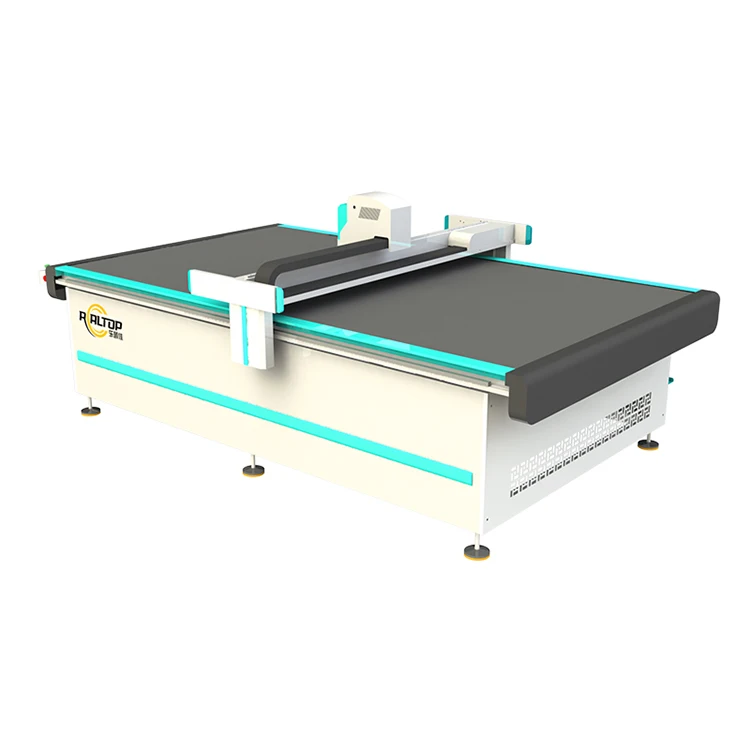
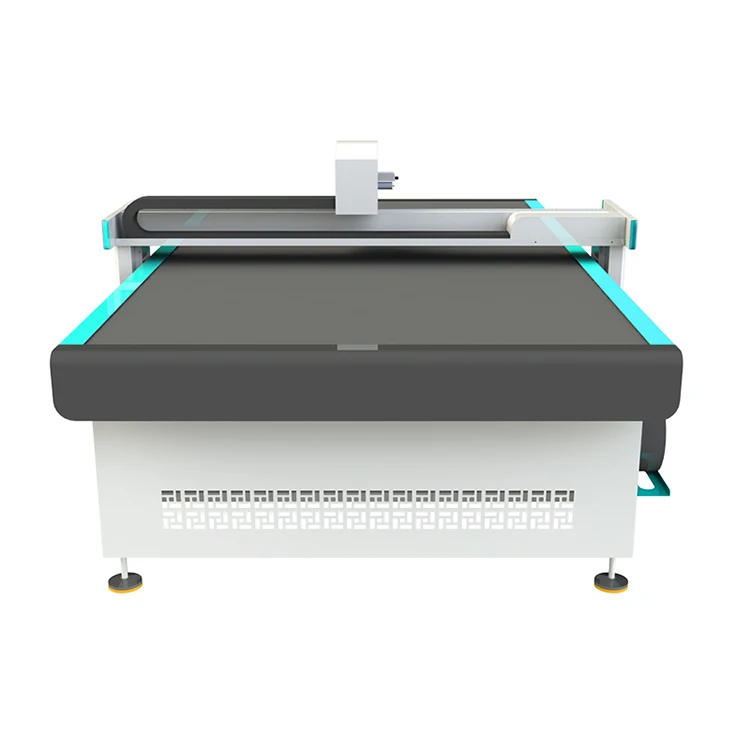
| Product Type | Auto Feeding CNC Digital Cutting Machine with Round Knife / Oscillating Knife |
| Working Area | 1600 × 2500 mm |
| Overall Dimensions | 3450 × 2300 × 1250 mm |
| Rated Power | 9 kW |
| Voltage | 380V ± 10% |
| Translational Velocity | 800 – 1200 mm/s |
| Cutting Thickness | 20 – 80 mm (depends on material type and density) |
| Repeated Accuracy | ≤ 0.1 mm |
| Table Surface | Magnesium-aluminum alloy, PVDF coated, anodized |
| Vacuum Pump | 7.5 kW, aviation aluminum shell with silencer sponge |
| Feeding System | Auto feeding with German-imported conveyor belt |
| Tool Head Options | Oscillating knife, pneumatic knife, circular knife, high-power vibrating knife, V-cutting knife, drag knife, creasing wheel, dotted line knife, punching, brush |
| Visual Positioning | Small CCD camera mark point positioning, panoramic camera recognition, projection positioning |
| Transmission | Digital servo motor (Delta optional), Taiwan Hiwin linear guide, synchronous belt, ball screw |
| Instruction Format | HP-GL compatible |
| Language Options | English, Russian, Italian, Chinese (special languages customizable) |
Application Suitability
| Application | Material or Output |
|---|---|
| Garment and footwear cutting | Multi-layer fabric, clothing cloth, shoe material, luggage material, non-woven fabric |
| Automotive interior panels | PU, EVA, XPE, composite materials, sponge |
| Carpet and floor mat production | Carpet, rubber, foam board |
| Packaging and sample making | Corrugated cardboard, cardboard, sticker, film, plastic box |
| Gasket and sealing fabrication | PTFE, ETFE, PP, PE, rubber, gasket material |
| Advertising and signage | PVC, film, sticker, fiberglass |
Why the Wrong Knife Head Turns a Fast CNC Knife Cutting Machine Manufacturer Order Into a Slow Disaster
Material thickness and fiber structure decide which tool head works — not the brochure headline.
I remember a buyer who sourced an oscillating knife table based on working area and price alone. His daily run included coated composite fabrics with a dense PVC backing. The standard oscillating head could not push through the coating layer cleanly, and ragged edges forced manual trimming on nearly every piece. The shop floor lost hours every shift before we swapped to a high-power vibrating knife with a stiffer blade holder. That delay could have been avoided with a material sample test before the purchase order was signed. [NEED_CITE: CNC knife cutting tool selection by material density]
Matching Knife Geometry to Fabric Construction
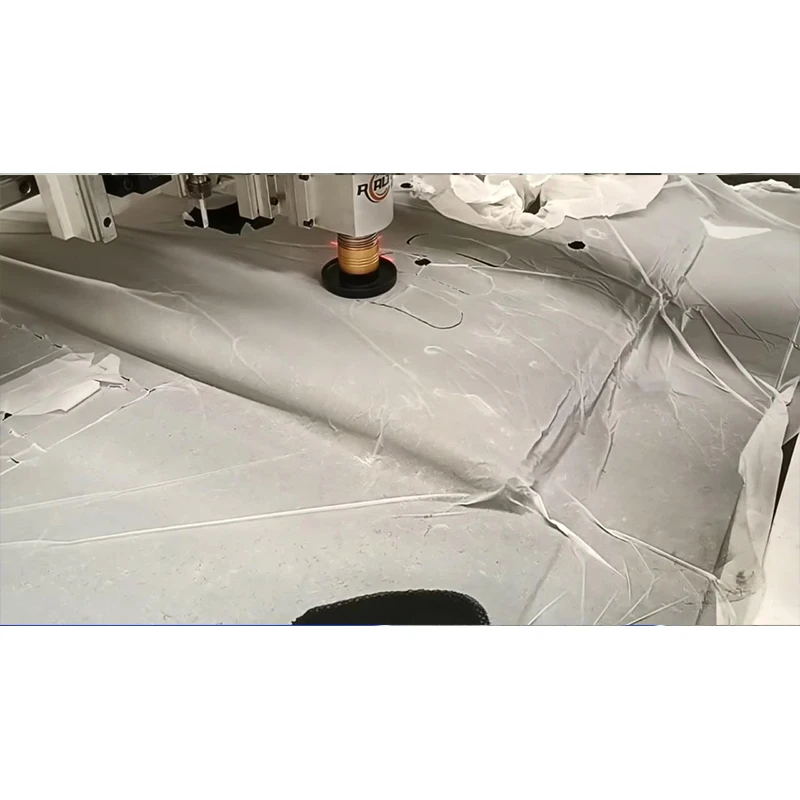
Woven textiles, knitted layers and non-woven batting each respond differently to blade motion. A circular knife slices through rolls of garment cloth at high translational speed, making it the default for straight-line panel cutting where edge sealing is not required. An oscillating knife vibrates at high frequency to penetrate multi-layer stacks of shoe material or luggage fabric without dragging the bottom plies out of alignment. Choosing the right head means the CNC digital cutting machine for sale actually reaches the throughput the production line depends on.
Conveyor Feeding for Continuous Roll Stock
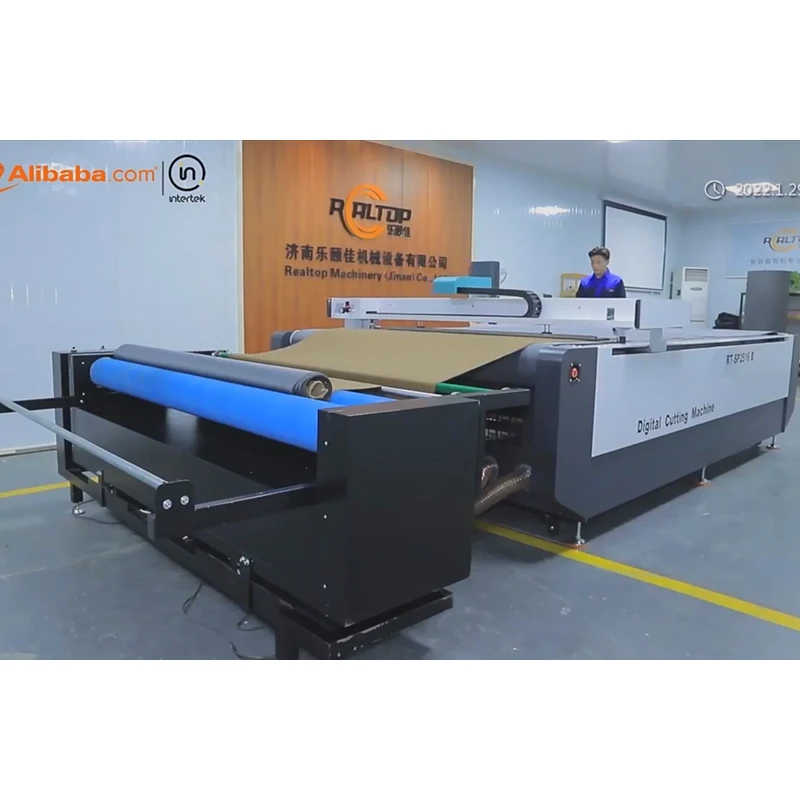
The German-imported conveyor belt on the RT-D2516/RT-S2516 moves roll-fed textile through the cutting zone without manual repositioning. This matters when a garment factory runs hundreds of meters of fabric per shift and operators cannot afford to stop the machine between every sheet length. The auto feeding system pairs with the 1600 × 2500 mm working area to handle both wide apparel fabric and narrower technical textiles like carpet or automotive interior material. [NEED_CITE: continuous conveyor cutting for roll-fed textiles]
Reading the Specs That Affect Daily Output
The 9 kW rated power covers the servo drives, vacuum pump and spindle simultaneously, so the machine does not trip a breaker when the 7.5 kW vacuum pump engages full suction on a porous non-woven layer. The Taiwan Hiwin linear guide and ball screw transmission maintain ≤ 0.1 mm repeated accuracy across the entire 2500 mm travel, which prevents nested pattern drift on long fabric runs. Magnesium-aluminum alloy table construction with PVDF coating resists the adhesive residue that accumulates when cutting sticker and film materials, keeping the vacuum surface flat over years of use. The HP-GL compatible instruction format means most nesting software in the garment and packaging industry exports files without an intermediate conversion step.
What Happens When Vacuum Zoning Does Not Match Part Size
A flatbed cutting table with a single large vacuum zone holds down big sheets well, but small gasket parts or narrow shoe upper pieces lift off the surface when the knife exits the cut. The result is a shifted contour and a scrapped piece. The RT-D2516/RT-S2516 table supports zoned vacuum adsorption so suction concentrates under the actual cut path, pinning small components firmly. Buyers who skip this check discover the problem only after installation, when their smallest parts show dimensional drift and the production manager starts questioning the entire CNC knife cutting machine manufacturer selection. [NEED_CITE: vacuum table zoning for small-part hold-down]
Why a Sample Cut Report Belongs in the Purchase File
REALTOP designs and produces both knife and laser cutting systems in-house, which means a buyer can test the same fabric on an oscillating knife and a CO2 laser before deciding which method gives the cleaner edge and faster cycle. Tool head and table configuration is specified per material type and daily volume rather than sold as a fixed package. CCD camera positioning options — small mark point, panoramic or projection — are confirmed against the buyer’s actual printed registration marks before the order ships. Voltage, control language and plug type are locked in writing so the machine arrives ready for the local electrical standard. Every unit leaves the Jinan factory with a test record cut on the buyer’s own material, not a generic demo sheet.
Documentation & Verification
- Machine specification sheet with RT-D2516/RT-S2516 voltage and frequency locked to your local grid
- Tool head and table configuration list matched to your fabric type and ply count
- Sample cutting report on your own textile or composite material before shipment
- Electrical schematic showing 9 kW power distribution and vacuum pump circuit
- Software licence and HP-GL file format compatibility note for your nesting workflow
- Factory test record with dimensional check on your production pattern
Installation, Commissioning & Support
- Floor space planning around 3450 × 2300 mm footprint plus conveyor infeed clearance
- Dedicated 380V ± 10% circuit sized for 9 kW continuous draw with vacuum pump running
- Machine arrives fully assembled; leveling and vacuum seal check on site
- First-run parameter tuning for your fabric thickness and cutting speed
- Operator training on tool head changeover and CCD mark point calibration
- Spare blade and conveyor belt wear parts list supplied with packing
What to Include When You Open an Inquiry
Send the material type, layer count, roll width and daily meterage so the tool head and conveyor length can be sized correctly. Confirm your workshop voltage, frequency and preferred control language up front. If your current nesting software exports in a specific format, share a sample file so import compatibility is verified before quotation.
Frequently Asked Questions
Q: How do I choose between oscillating knife, drag knife and round knife for my material?
A: Round knife suits straight-line cuts on single-layer roll fabric at high speed. Oscillating knife handles multi-layer stacks where blade vibration prevents ply shifting. Drag knife works for thin film and sticker contour cutting. We test your actual material to confirm which head gives the cleanest edge.
Q: What working area and conveyor length options are available for my sheet or roll stock size?
A: The RT-D2516/RT-S2516 offers a 1600 × 2500 mm cutting area with auto feeding conveyor for roll stock. Larger and smaller formats are available across the REALTOP range. Share your maximum sheet size and roll width so we match the table to your material.
Q: How does the CCD camera perform on printed marks at full production speed?
A: Small CCD mark point positioning, panoramic recognition and projection positioning are available. Performance depends on mark contrast and size relative to cutting speed. We run your printed material through the camera system before order confirmation to verify tracking accuracy.
Q: What voltage, language and control customization is confirmed before shipment?
A: Voltage is confirmed at 380V ± 10% or adjusted for your local grid. Control language options include English, Russian, Italian and Chinese, with special languages available. Plug type and electrical documentation are finalized before production starts.
Q: Can I send my material for sample cutting to verify the configuration before ordering?
A: Yes. We cut your fabric, composite or gasket material on the RT-D2516/RT-S2516 with the proposed tool head and record edge quality, cycle time and dimensional accuracy. The sample cutting report ships with the quotation so you can review real data before committing.
Tool head flexibility — oscillating, circular and drag knife options configurable on the same RT-D2516/RT-S2516 platform so fabric converters match the cutting method to each textile layer.
Technical Specifications
| Parameter | Value |
|---|---|
| Model | RT-D2516/RT-S2516 |
| Product Type | Auto Feeding CNC Digital Cutting Machine with Round Knife / Oscillating Knife |
| Working Area | 1600 × 2500 mm |
| Overall Dimensions | 3450 × 2300 × 1250 mm |
| Rated Power | 9 kW |
| Voltage | 380V ± 10% |
| Translational Velocity | 800 – 1200 mm/s |
| Cutting Thickness | 20 – 80 mm (depends on material type and density) |
| Repeated Accuracy | ≤ 0.1 mm |
| Table Surface | Magnesium-aluminum alloy, PVDF coated, anodized |
| Vacuum Pump | 7.5 kW, aviation aluminum shell with silencer sponge |
| Feeding System | Auto feeding with German-imported conveyor belt |
| Tool Head Options | Oscillating knife, pneumatic knife, circular knife, high-power vibrating knife, V-cutting knife, drag knife, creasing wheel, dotted line knife, punching, brush |
| Visual Positioning | Small CCD camera mark point positioning, panoramic camera recognition, projection positioning |
| Transmission | Digital servo motor (Delta optional), Taiwan Hiwin linear guide, synchronous belt, ball screw |
| Instruction Format | HP-GL compatible |
| Language Options | English, Russian, Italian, Chinese (special languages customizable) |
Application Suitability
| Application | Material or Output |
|---|---|
| Garment and footwear cutting | Multi-layer fabric, clothing cloth, shoe material, luggage material, non-woven fabric |
| Automotive interior panels | PU, EVA, XPE, composite materials, sponge |
| Carpet and floor mat production | Carpet, rubber, foam board |
| Packaging and sample making | Corrugated cardboard, cardboard, sticker, film, plastic box |
| Gasket and sealing fabrication | PTFE, ETFE, PP, PE, rubber, gasket material |
| Advertising and signage | PVC, film, sticker, fiberglass |
Why the Wrong Knife Head Turns a Fast CNC Knife Cutting Machine Manufacturer Order Into a Slow Disaster
Material thickness and fiber structure decide which tool head works — not the brochure headline.
I remember a buyer who sourced an oscillating knife table based on working area and price alone. His daily run included coated composite fabrics with a dense PVC backing. The standard oscillating head could not push through the coating layer cleanly, and ragged edges forced manual trimming on nearly every piece. The shop floor lost hours every shift before we swapped to a high-power vibrating knife with a stiffer blade holder. That delay could have been avoided with a material sample test before the purchase order was signed. [NEED_CITE: CNC knife cutting tool selection by material density]
Matching Knife Geometry to Fabric Construction
Woven textiles, knitted layers and non-woven batting each respond differently to blade motion. A circular knife slices through rolls of garment cloth at high translational speed, making it the default for straight-line panel cutting where edge sealing is not required. An oscillating knife vibrates at high frequency to penetrate multi-layer stacks of shoe material or luggage fabric without dragging the bottom plies out of alignment. Choosing the right head means the CNC digital cutting machine for sale actually reaches the throughput the production line depends on.
Conveyor Feeding for Continuous Roll Stock
The German-imported conveyor belt on the RT-D2516/RT-S2516 moves roll-fed textile through the cutting zone without manual repositioning. This matters when a garment factory runs hundreds of meters of fabric per shift and operators cannot afford to stop the machine between every sheet length. The auto feeding system pairs with the 1600 × 2500 mm working area to handle both wide apparel fabric and narrower technical textiles like carpet or automotive interior material. [NEED_CITE: continuous conveyor cutting for roll-fed textiles]
Reading the Specs That Affect Daily Output
The 9 kW rated power covers the servo drives, vacuum pump and spindle simultaneously, so the machine does not trip a breaker when the 7.5 kW vacuum pump engages full suction on a porous non-woven layer. The Taiwan Hiwin linear guide and ball screw transmission maintain ≤ 0.1 mm repeated accuracy across the entire 2500 mm travel, which prevents nested pattern drift on long fabric runs. Magnesium-aluminum alloy table construction with PVDF coating resists the adhesive residue that accumulates when cutting sticker and film materials, keeping the vacuum surface flat over years of use. The HP-GL compatible instruction format means most nesting software in the garment and packaging industry exports files without an intermediate conversion step.
What Happens When Vacuum Zoning Does Not Match Part Size
A flatbed cutting table with a single large vacuum zone holds down big sheets well, but small gasket parts or narrow shoe upper pieces lift off the surface when the knife exits the cut. The result is a shifted contour and a scrapped piece. The RT-D2516/RT-S2516 table supports zoned vacuum adsorption so suction concentrates under the actual cut path, pinning small components firmly. Buyers who skip this check discover the problem only after installation, when their smallest parts show dimensional drift and the production manager starts questioning the entire CNC knife cutting machine manufacturer selection. [NEED_CITE: vacuum table zoning for small-part hold-down]
Why a Sample Cut Report Belongs in the Purchase File
REALTOP designs and produces both knife and laser cutting systems in-house, which means a buyer can test the same fabric on an oscillating knife and a CO2 laser before deciding which method gives the cleaner edge and faster cycle. Tool head and table configuration is specified per material type and daily volume rather than sold as a fixed package. CCD camera positioning options — small mark point, panoramic or projection — are confirmed against the buyer’s actual printed registration marks before the order ships. Voltage, control language and plug type are locked in writing so the machine arrives ready for the local electrical standard. Every unit leaves the Jinan factory with a test record cut on the buyer’s own material, not a generic demo sheet.
Documentation & Verification
- Machine specification sheet with RT-D2516/RT-S2516 voltage and frequency locked to your local grid
- Tool head and table configuration list matched to your fabric type and ply count
- Sample cutting report on your own textile or composite material before shipment
- Electrical schematic showing 9 kW power distribution and vacuum pump circuit
- Software licence and HP-GL file format compatibility note for your nesting workflow
- Factory test record with dimensional check on your production pattern
Installation, Commissioning & Support
- Floor space planning around 3450 × 2300 mm footprint plus conveyor infeed clearance
- Dedicated 380V ± 10% circuit sized for 9 kW continuous draw with vacuum pump running
- Machine arrives fully assembled; leveling and vacuum seal check on site
- First-run parameter tuning for your fabric thickness and cutting speed
- Operator training on tool head changeover and CCD mark point calibration
- Spare blade and conveyor belt wear parts list supplied with packing
What to Include When You Open an Inquiry
Send the material type, layer count, roll width and daily meterage so the tool head and conveyor length can be sized correctly. Confirm your workshop voltage, frequency and preferred control language up front. If your current nesting software exports in a specific format, share a sample file so import compatibility is verified before quotation.
Frequently Asked Questions
Q: How do I choose between oscillating knife, drag knife and round knife for my material?
A: Round knife suits straight-line cuts on single-layer roll fabric at high speed. Oscillating knife handles multi-layer stacks where blade vibration prevents ply shifting. Drag knife works for thin film and sticker contour cutting. We test your actual material to confirm which head gives the cleanest edge.
Q: What working area and conveyor length options are available for my sheet or roll stock size?
A: The RT-D2516/RT-S2516 offers a 1600 × 2500 mm cutting area with auto feeding conveyor for roll stock. Larger and smaller formats are available across the REALTOP range. Share your maximum sheet size and roll width so we match the table to your material.
Q: How does the CCD camera perform on printed marks at full production speed?
A: Small CCD mark point positioning, panoramic recognition and projection positioning are available. Performance depends on mark contrast and size relative to cutting speed. We run your printed material through the camera system before order confirmation to verify tracking accuracy.
Q: What voltage, language and control customization is confirmed before shipment?
A: Voltage is confirmed at 380V ± 10% or adjusted for your local grid. Control language options include English, Russian, Italian and Chinese, with special languages available. Plug type and electrical documentation are finalized before production starts.
Q: Can I send my material for sample cutting to verify the configuration before ordering?
A: Yes. We cut your fabric, composite or gasket material on the RT-D2516/RT-S2516 with the proposed tool head and record edge quality, cycle time and dimensional accuracy. The sample cutting report ships with the quotation so you can review real data before committing.
商品评价
There are no reviews yet.