


Fast Delivery
Quick, reliable shipping to any location.

Free & easy returns
Return this item by mail or in store within 90 days for a full refund.
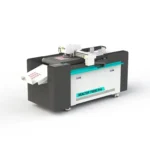
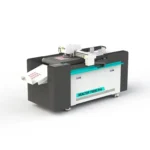
Precision Configured for Your Material — Every RTT6080 or RTT6080 Pro is set up with the specific tool head, vacuum zoning and CCD calibration matched to your label stock, validated through sample cutting before the crate is sealed.
Technical Specifications
| Parameter | Value |
|---|---|
| Model | RTT6080 / RTT6080 Pro |
| Product Type | CNC Digital Label Cutting Plotter |
| Max Working Area | 600mm × 800mm |
| Tool Group | Cutting tool, kiss cutting tool, creasing tool, CCD camera; high speed oscillating knife (RTT6080 Pro only) |
| Max Cutting Speed | 1500mm/s (basis not stated in source — confirm material / thickness) |
| Cutting Thickness | ≤2mm (RTT6080) / ≤5mm (RTT6080 Pro) |
| Positioning Accuracy | 0.05mm |
| File Formats | DXF, PLT, PDF, AI |
| Transfer Method | Ethernet port |
| Rated Power | 3.2kW |
| Voltage & Frequency | 220V / 380V, 50Hz |
| Key Features | CCD contour recognition, multi-tool head configuration, vacuum table, Ethernet RIP integration |
| Standards | CE |
Application Suitability
| Application | Material or Output |
|---|---|
| Digital label and sticker finishing | Vinyl, PP film, adhesive label stock up to 2mm (RTT6080) or 5mm (RTT6080 Pro) |
| Short-run custom decal production | Pre-printed vinyl and transfer film with CCD contour tracking |
| Small-format packaging sample making | Folding carton, kraft board and corrugated mock-ups up to 5mm |
| Vehicle-wrap and signage graphics | Adhesive vinyl contour cutting from printed sheets |
| Thin film and foil kiss cutting | Reflective film, window tint and specialty foil on liner |
Why "CCD Contour Recognition" Often Fails at Production Speed
Buyers compare CNC digital label cutting plotter for sale listings that all claim CCD camera positioning, yet printed contour jobs regularly arrive with misaligned cuts and scrapped sheets. The camera specification alone does not tell you whether the system can track registration marks on reflective or low-contrast label stock at full travel speed. I once watched an entire batch of thick reflective film labels get scrapped because the camera could not lock onto the printed marks fast enough. Since then, I insist on running the buyer’s actual printed material through the system before any configuration is finalised. [NEED_CITE: CCD registration reliability on reflective and metallic label substrates]
Matching the Tool Head to Your Label Stock
The RTT6080 carries a drag knife, kiss cutting tool, creasing wheel and CCD camera as its standard group, which covers most vinyl and thin-film label runs. The RTT6080 Pro adds a high speed oscillating knife that handles thicker label stock and gasket material up to 5mm without crushing the face material. Selecting the wrong tool for a given film thickness produces ragged edges or incomplete kiss cuts that leave the liner scored. A CNC digital label cutting plotter for sale with the right head eliminates the need for secondary trimming.
Ethernet Workflow for Print-and-Cut Shops
Digital print shops running short-run custom stickers need a direct path from RIP software to the cutting table. The Ethernet port on both models accepts DXF, PLT, PDF and AI files, removing the USB stick shuffle that slows down changeovers. When the file format and nesting workflow are confirmed before the order, operators can send jobs straight from their existing print management system to the plotter without learning a new nesting interface. [NEED_CITE: RIP-to-cutter Ethernet integration standards in digital print shops]
Reading the Numbers That Actually Matter
The 0.05mm positioning accuracy is the figure that governs whether tight-register labels cut inside or outside the printed border — even a small drift compounds across a sheet of 600 × 800mm. The 3.2kW rated power supports the vacuum pump, servo drives and tool head simultaneously without tripping a standard workshop circuit, but buyers should still verify that a dedicated 220V or 380V line at 50Hz is available at the installation point. The CCD camera relies on consistent lighting and calibrated contrast thresholds; its accuracy degrades if the shop environment introduces variable ambient light across the cutting bed.
The Hidden Cost of Skipping a Sample Cut
A buyer who specifies a CNC digital label cutting plotter for sale based on working area alone often discovers after delivery that the vacuum table zoning cannot hold small die-cut labels flat during high-speed travel. Lifted edges shift the sheet, the CCD loses its registration mark, and the remaining cuts on that sheet are offset. Another frequent issue is a kiss cutting tool set too deep, scoring the release liner so the label will not peel cleanly. These problems surface only when the machine runs the buyer’s own material under realistic production conditions. [NEED_CITE: vacuum table zoning effectiveness on small-format die-cut labels]
Why Buyers Spec with Us for Small-Format Cutting
In-house design covers both knife and CCD integration, so the tool head is matched to the label material rather than forced into a one-size-fits-all setup. Voltage and control language are confirmed and documented before the machine leaves the Jinan workshop — no surprises on the dock. Every unit ships with a sample cutting report produced on the buyer’s own label stock, so the parameters that delivered acceptable edge quality are recorded and repeatable. Software licence and file format compatibility notes travel with the machine, preventing workflow standstills on day one. A one-year warranty covers mechanical and electrical components, and the spare parts list is built around the consumables your label runs actually consume.
Documentation & Verification
- Machine specification sheet listing the exact tool head and vacuum table configuration shipped
- Electrical schematic confirming voltage and frequency wired for your facility
- Sample cutting report on your label stock with edge quality and CCD tracking parameters recorded
- Factory test record showing positioning accuracy verified before crate closure
- Software licence key and file format compatibility note for DXF, PLT, PDF and AI import
- Spare parts list covering oscillating knife blades, drag knife tips and creasing wheels
Installation, Commissioning & Support
- Dedicated 220V or 380V circuit at 50Hz required for the 3.2kW rated power draw
- Vacuum pump exhaust routed to workshop extraction or external vent
- CCD camera calibrated on your printed label stock during first-day commissioning
- Ethernet port tested with your RIP software for end-to-end file transfer
- Oscillating knife and drag knife blade replacement demonstrated for operator maintenance
- Creasing wheel pressure adjusted to your specific carton board thickness
What to Include in Your Inquiry
Send the exact label material type, thickness and sheet dimensions you run most often, along with a sample of the printed artwork including registration marks. Specify your workshop voltage and frequency, preferred control panel language, and whether your RIP outputs DXF, PLT, PDF or AI. If daily volume and floor space are already defined, include those so the working area and conveyor options can be matched accordingly.
Frequently Asked Questions
Q: How do I verify CCD contour recognition accuracy on my specific printed label stock before ordering?
A: We run your actual printed material — including reflective, metallic or low-contrast stocks — through the CCD system and produce a sample cutting report. The report records tracking speed, mark detection reliability and cut-to-print offset, so you see real performance data before committing to the purchase.
Q: Which tool head fits my label material and thickness?
A: The RTT6080 drag knife and kiss cutting tool handle vinyl, PP film and thin adhesive stock up to 2mm. For thicker label board, gasket material or foam up to 5mm, the RTT6080 Pro adds a high speed oscillating knife that cuts cleanly without crushing the face material.
Q: What voltage and plug configuration is confirmed for my country?
A: Both models support 220V and 380V at 50Hz. Your target voltage, plug type and frequency are confirmed in writing before production, and the electrical schematic shipped with the machine matches the configuration actually wired inside the cabinet.
Q: Which file formats does the software accept, and can it integrate with my existing RIP?
A: The system accepts DXF, PLT, PDF and AI files transferred via Ethernet. We confirm software licence and file format compatibility before shipment, and test the data path from your specific RIP output to the machine during commissioning.
Q: What spare parts should I stock for daily label production?
A: The spare parts list shipped with your machine covers oscillating knife blades, drag knife tips, creasing wheels and CCD lighting elements. We recommend keeping one full set of each consumable on hand so blade changes and minor replacements do not interrupt your production schedule.










商品评价
There are no reviews yet.